Overview
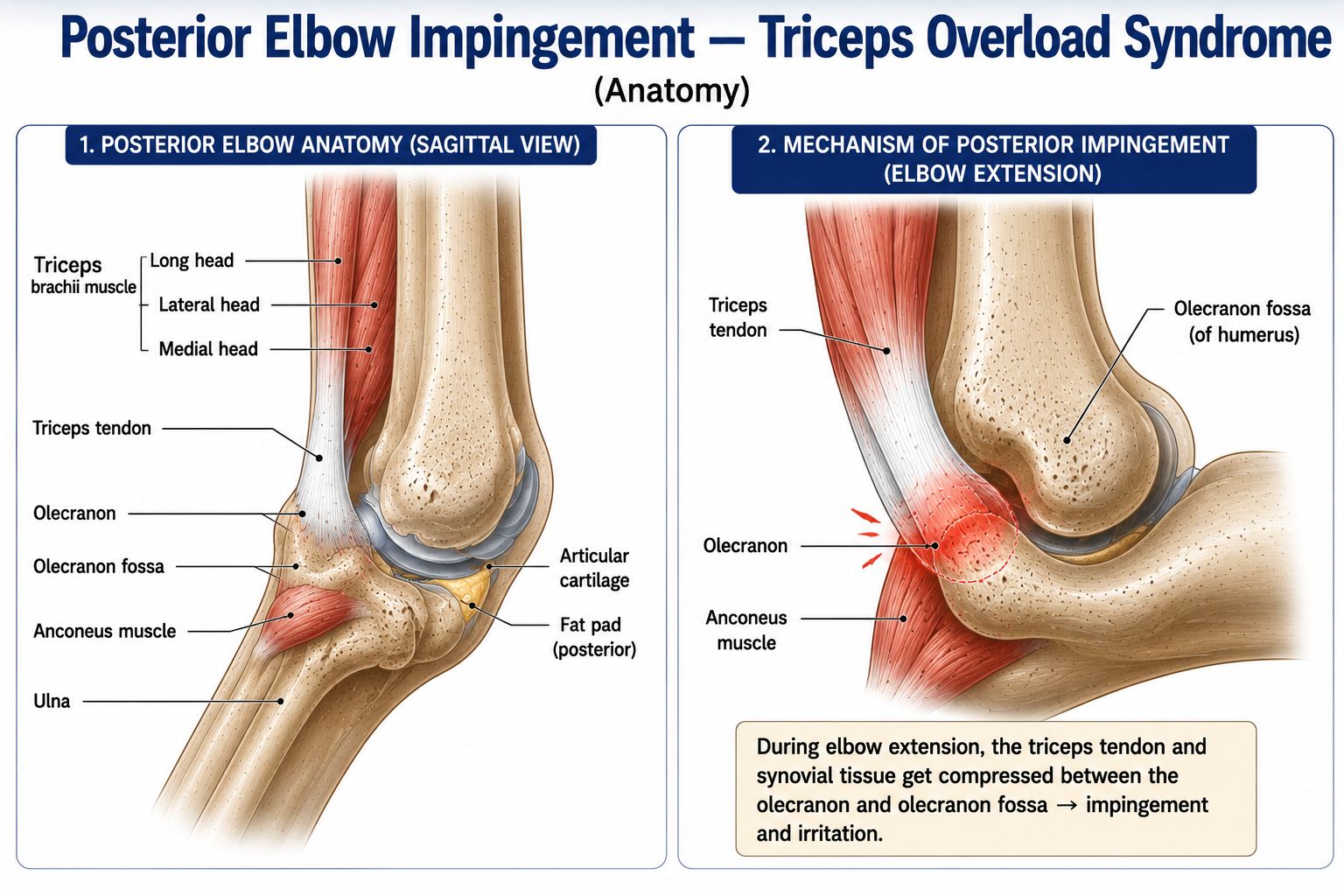
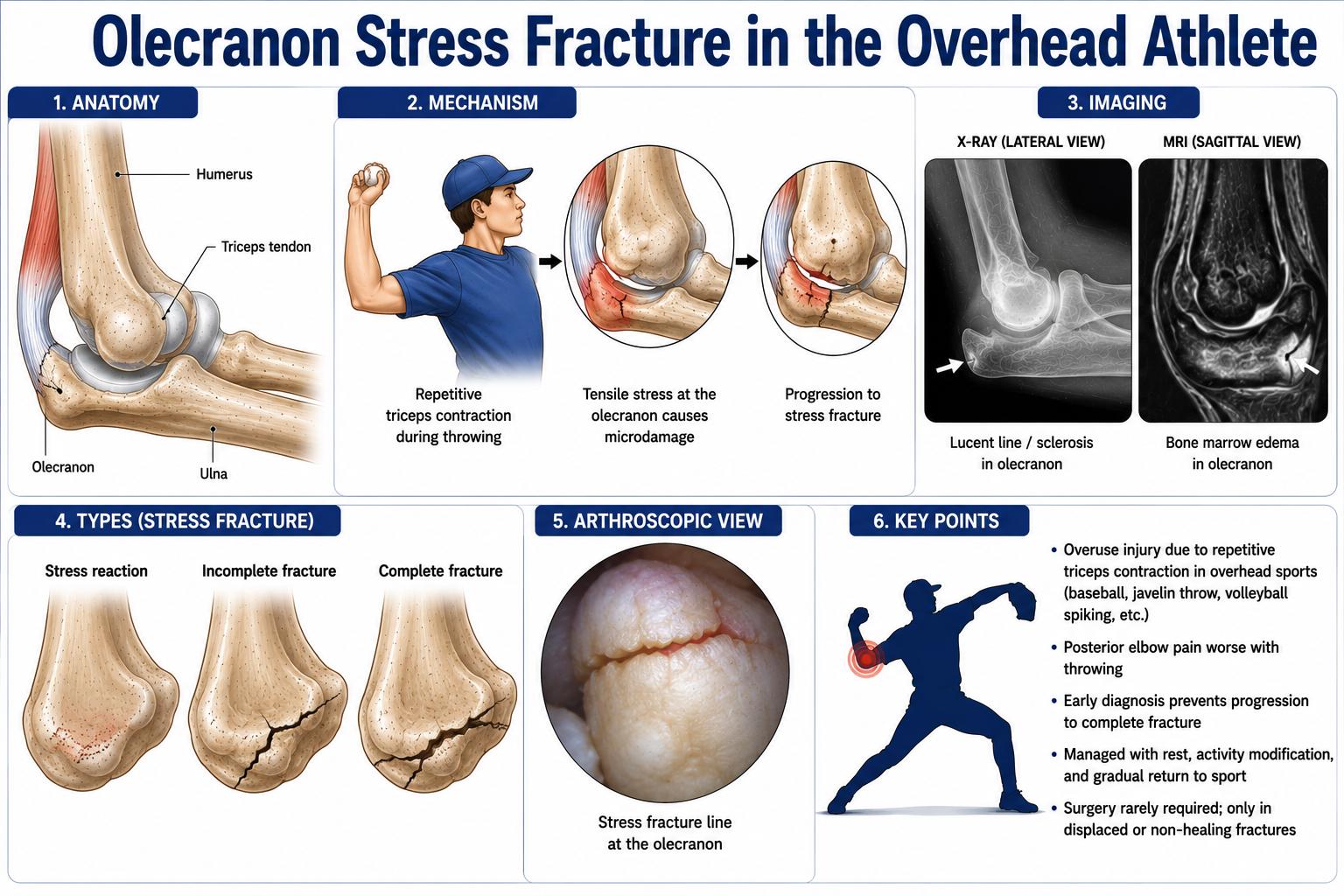
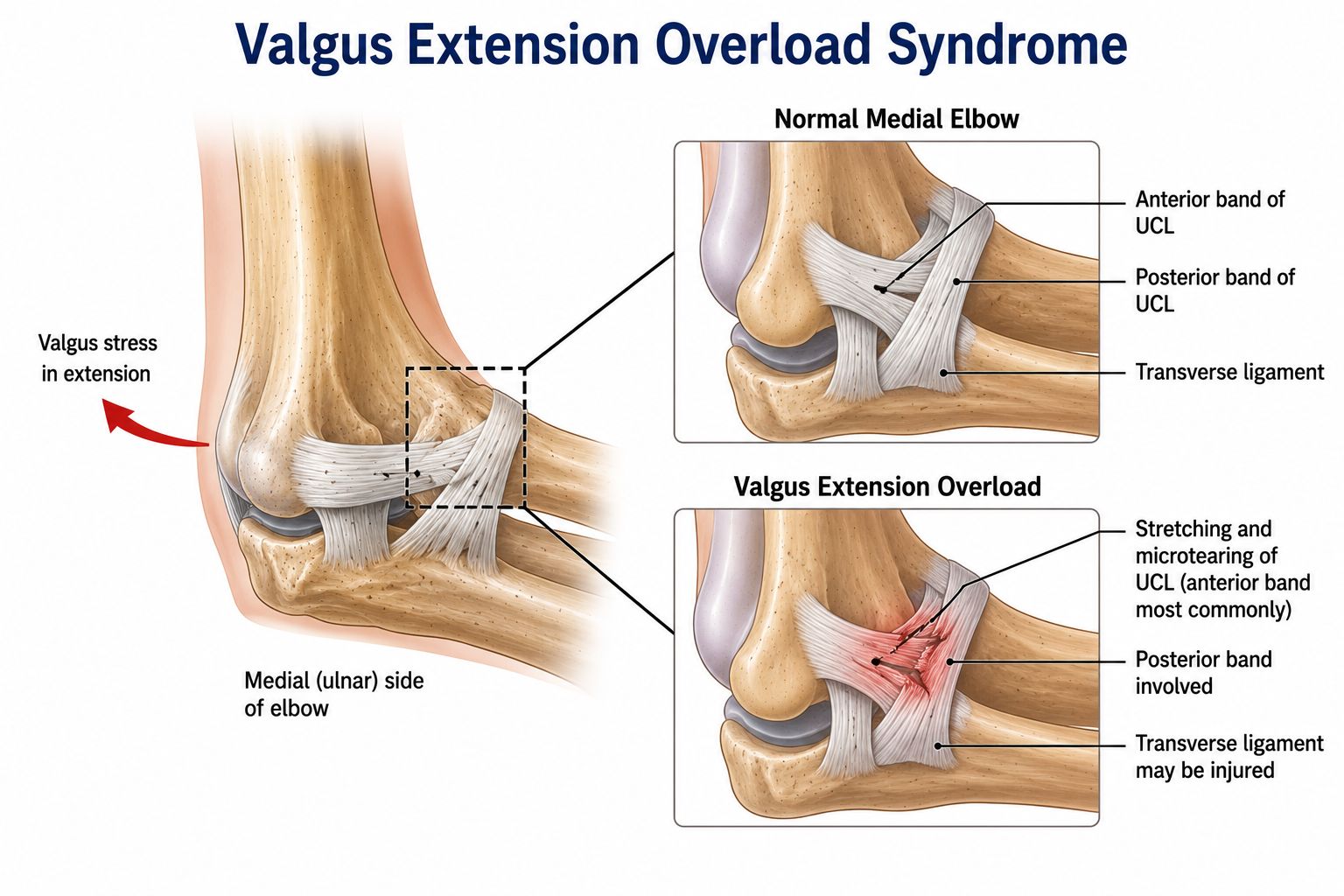
Valgus extension overload syndrome (VEOS) is a condition specific to competitive throwing athletes in which the repeated valgus stress and extension forces during the throwing motion cause characteristic pathological changes in the posteromedial elbow. During the acceleration and deceleration phases of throwing, the olecranon tip is driven into the posteromedial trochlear groove with extreme force — repetitively, at high velocity, over thousands of throws.
This repetitive impingement causes: (1) formation of osteophytes (bone spurs) on the posteromedial olecranon tip; (2) chondromalacia (cartilage damage) on the posteromedial trochlea; (3) loose body formation from osteophyte fragmentation; and (4) posterior capsular thickening. These changes create a vicious cycle — osteophytes worsen impingement, further driving osteophyte formation and cartilage damage.
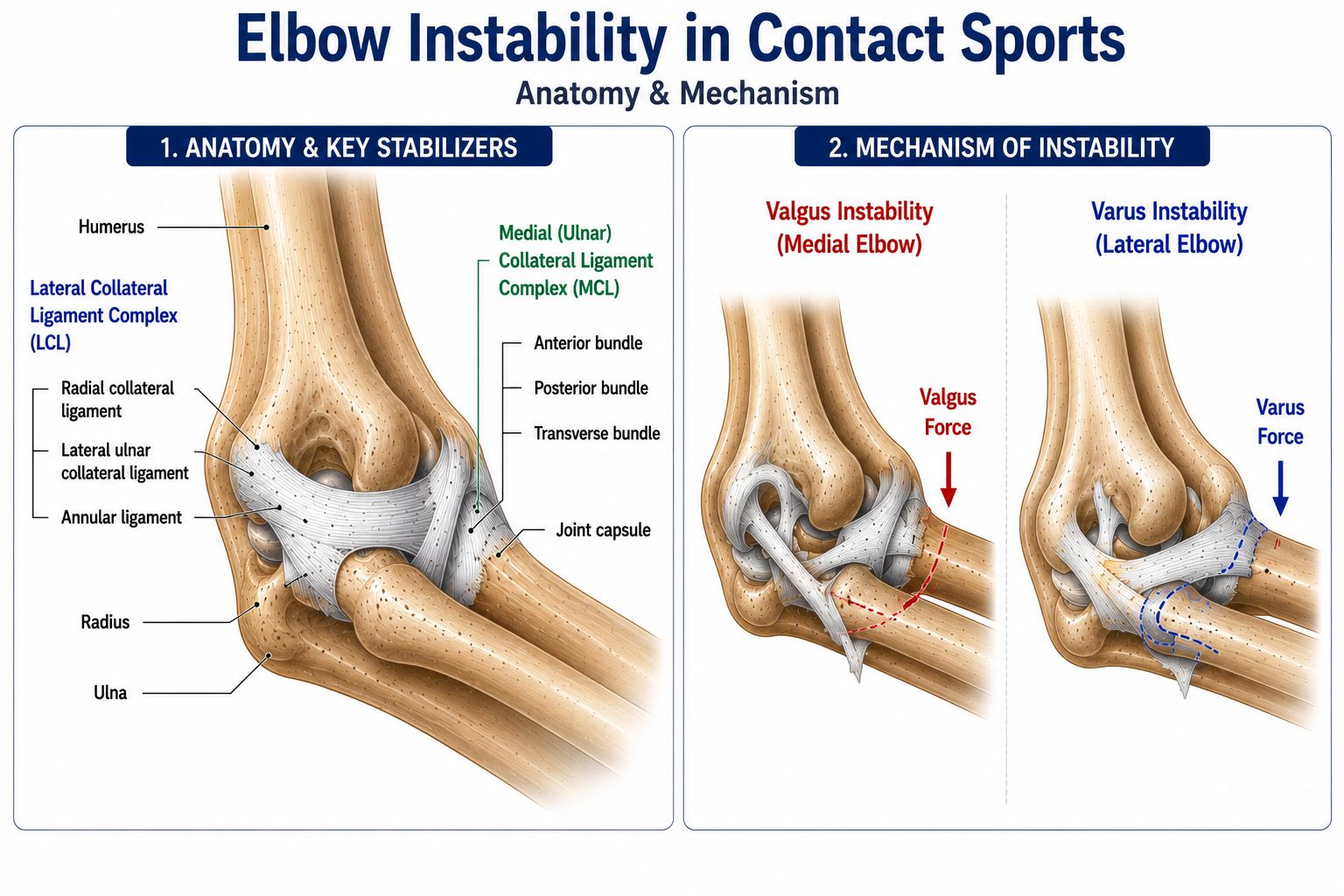
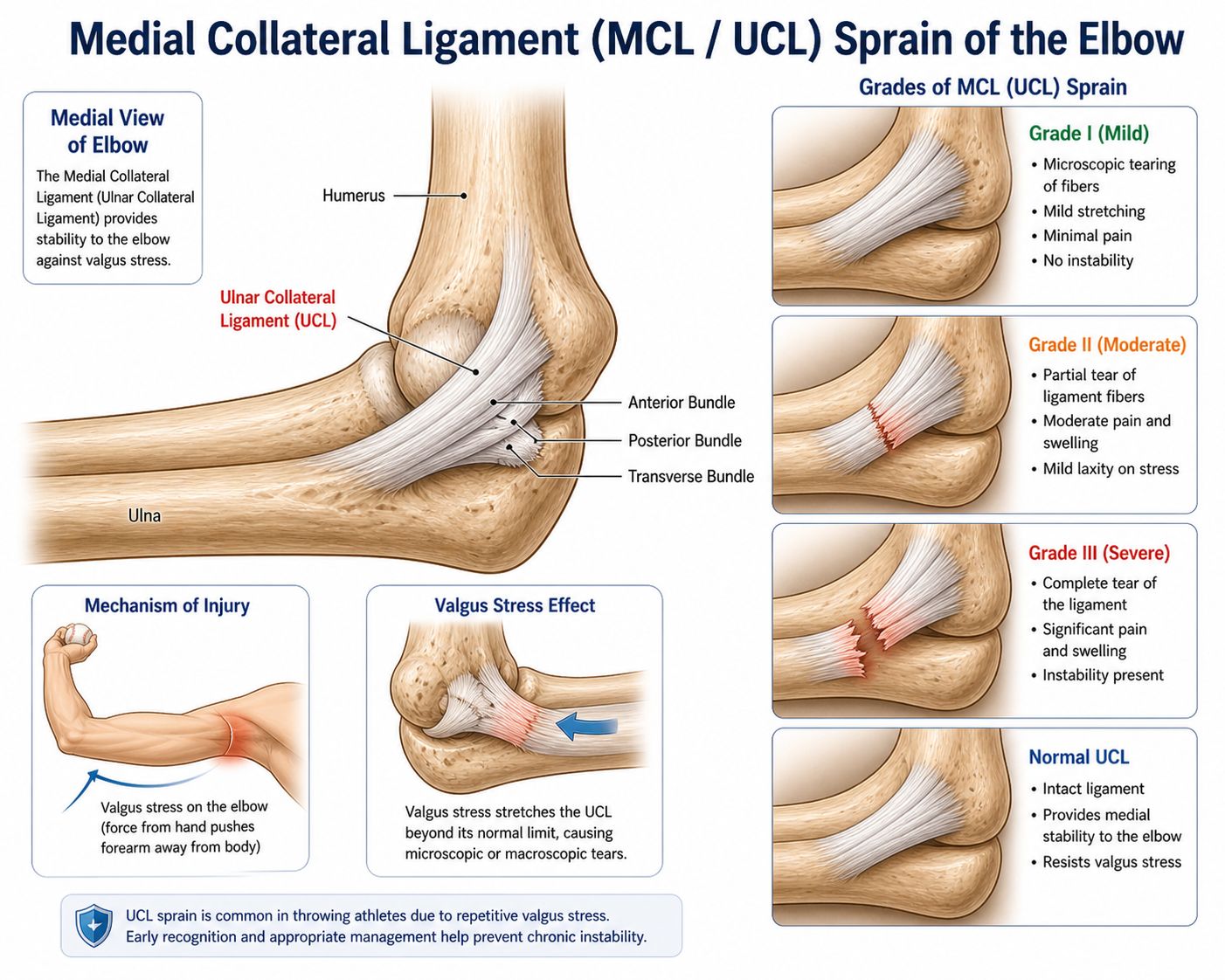
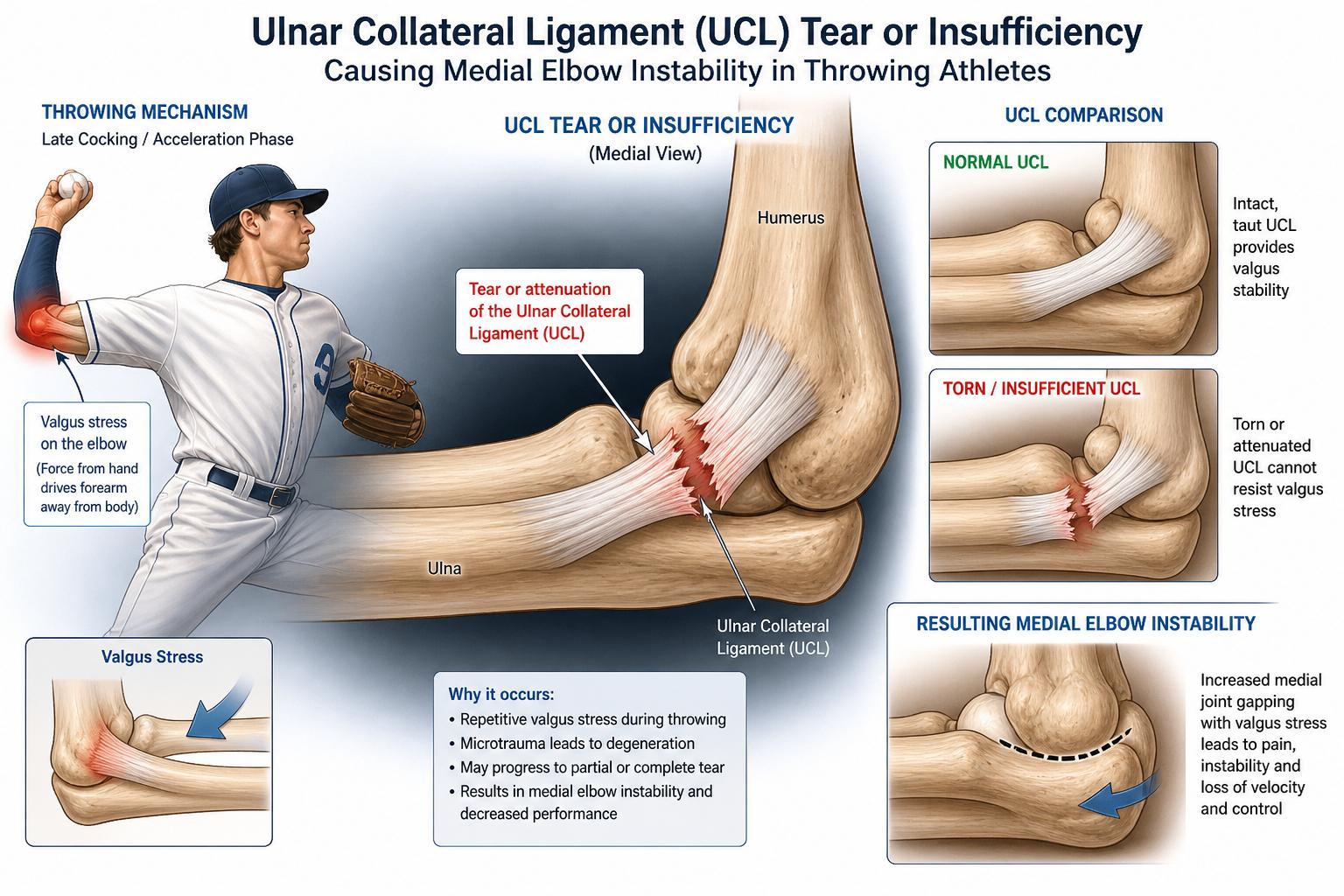
Critically, VEOS rarely occurs in isolation — in the majority of competitive throwers, the valgus extension overload is driven by or concurrent with UCL insufficiency (Condition 13). When the UCL is deficient, the bony posteromedial structures are subjected to even greater stress as they compensate for ligamentous instability. Treatment of VEOS without assessing and addressing the UCL leads to early symptom recurrence.
Quick Facts | Details |
Also Known As | VEOS, Posteromedial Impingement, Thrower’s Elbow — Posterior, Olecranon Tip Impingement |
Affected Area | Posteromedial olecranon tip and posteromedial trochlear groove; medial elbow (concurrent UCL involvement common) |
Who It Affects | Competitive overhead throwing athletes — cricket fast bowlers, baseball pitchers, javelin throwers, quarterbacks; adult and adolescent; predominantly dominant arm |
Prevalence | One of the most common elbow conditions in competitive throwers; estimated to affect 20–30% of professional baseball pitchers at some point in their career; increasingly recognised in cricket fast bowlers |
Treatment | Rest from throwing; physiotherapy; if conservative fails: arthroscopic posteromedial osteophyte excision + posterior capsulectomy; assess and address concurrent UCL insufficiency; graduated return-to-throw programme 3–6 months post-op |
Causes & Risk Factors
- Repetitive valgus + extension force during throwing — the late cocking and acceleration phases generate extreme medial valgus force; the deceleration phase drives the olecranon into the posteromedial trochlear groove
- High throwing velocity and volume — professional and elite level bowlers/pitchers at greatest risk due to cumulative load
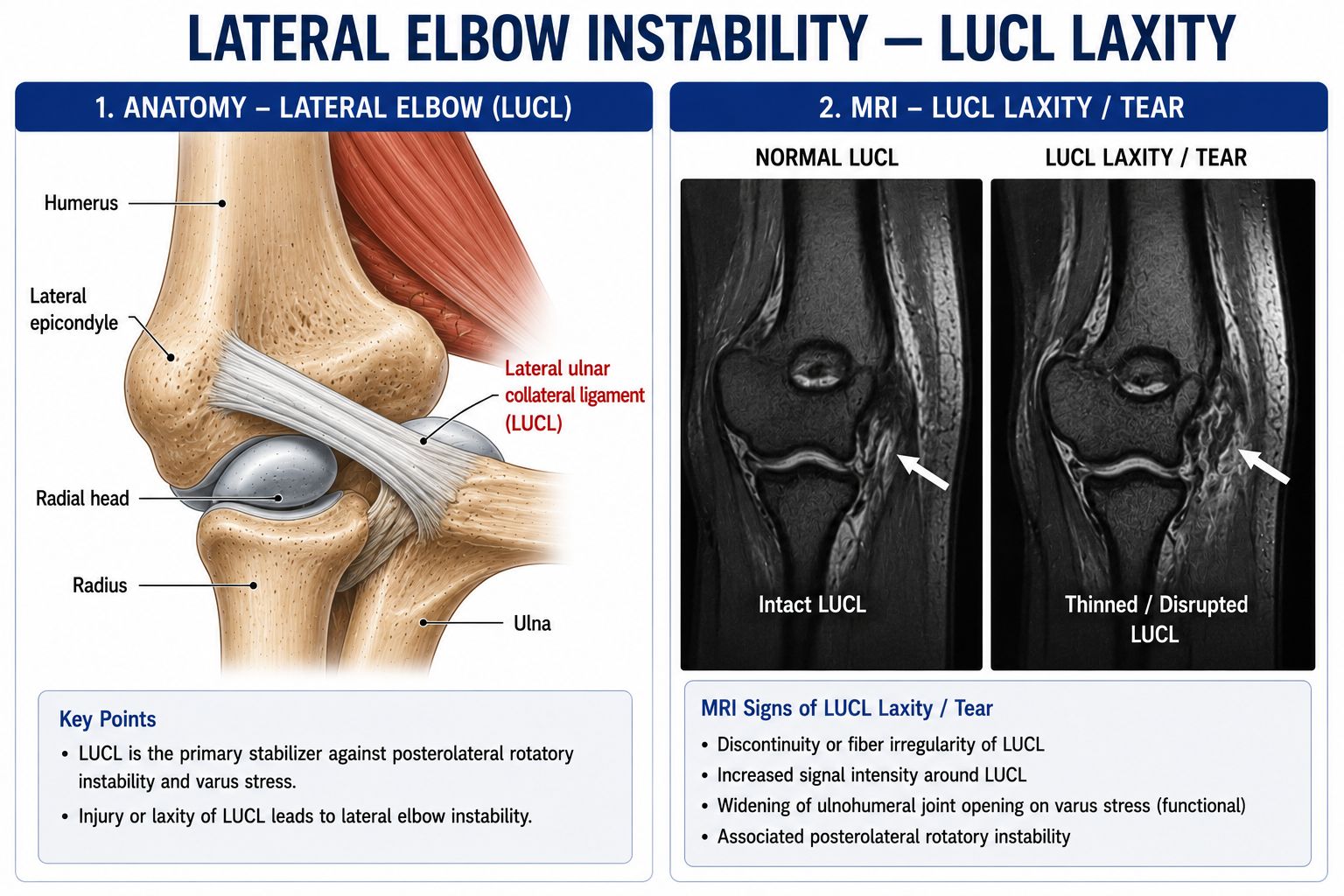
- UCL insufficiency — when the UCL is lax, the posteromedial bony structures compensate for lost ligamentous stability; UCL insufficiency is present in 40–60% of patients presenting with VEOS
- Poor throwing mechanics — excessive trunk side-bend, early pronation, reduced stride length; all increase medial elbow forces
- Year-round throwing without adequate off-season recovery — insufficient time for bone remodelling to keep pace with osteophyte formation
- Prior medial elbow injuries — previous UCL sprains or flexor-pronator strains increase posteromedial loading
Symptoms
- Medial and posterior elbow pain during the late acceleration phase — well-localised to the posteromedial elbow; pain maximal as the elbow reaches terminal extension during the throw
- Pain at the end of the throwing motion — specifically during deceleration and follow-through
- Reduced throwing velocity or accuracy — the athlete unconsciously reduces effort to avoid pain
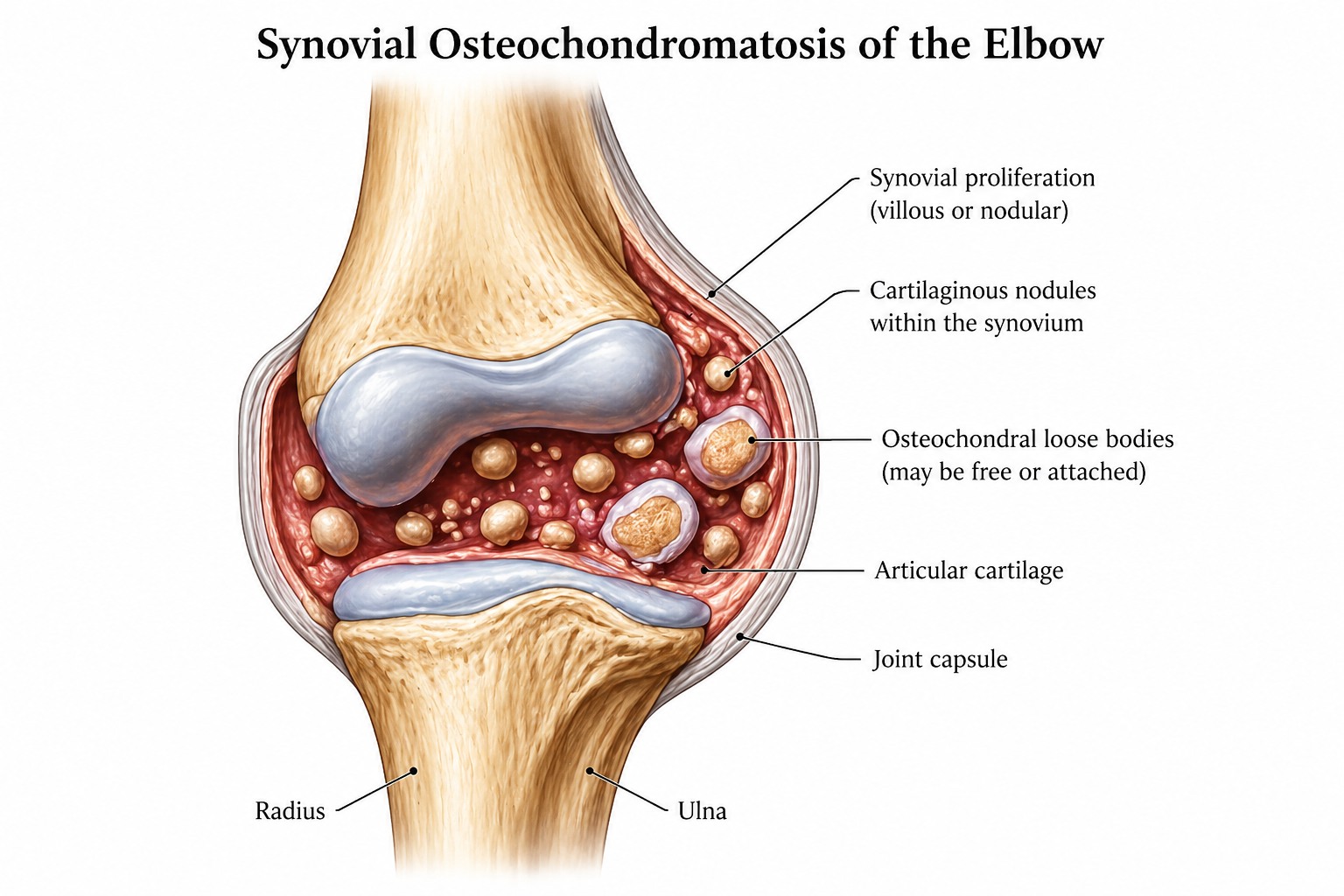
- Locking or catching — if loose bodies have formed from osteophyte fragmentation
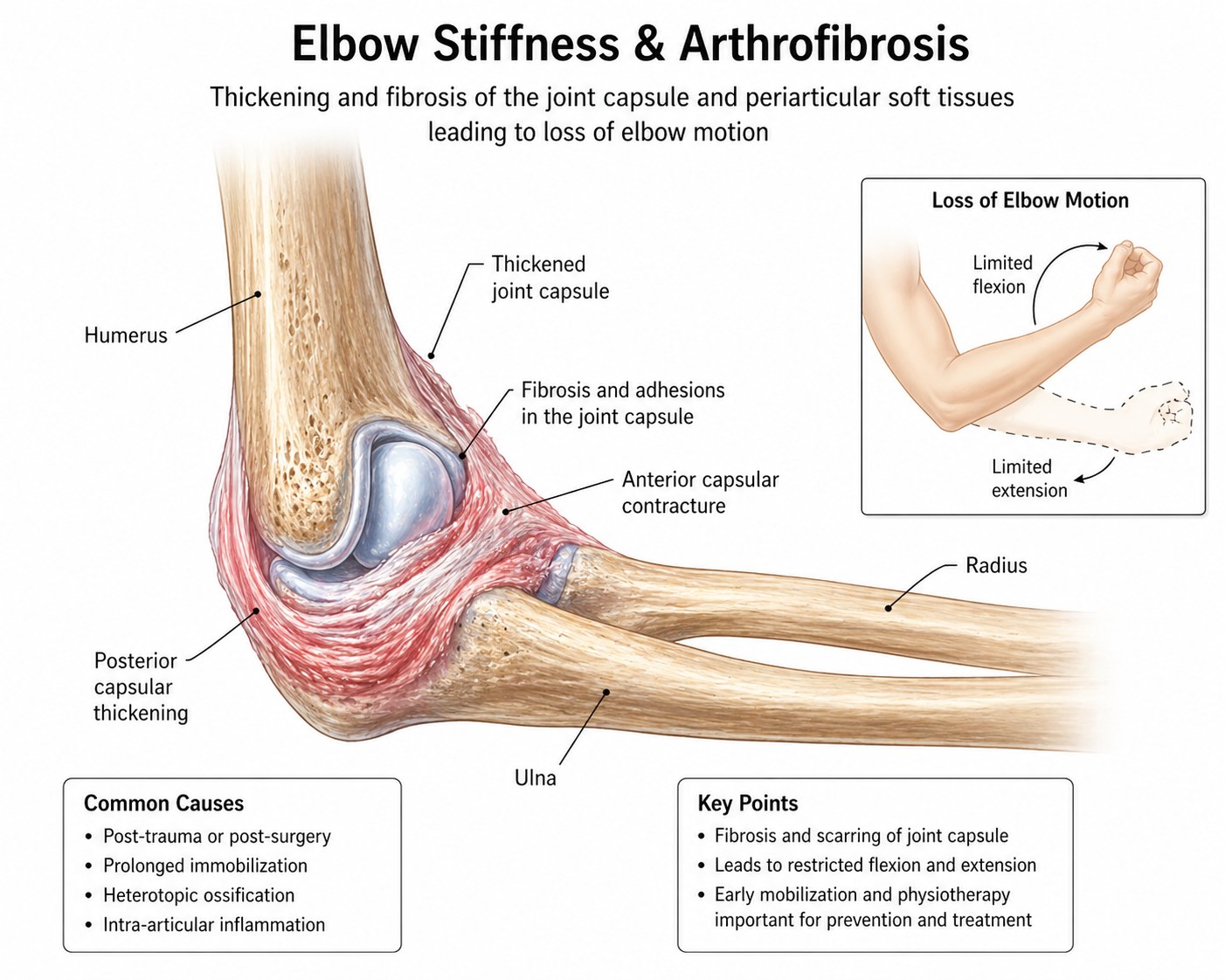
- Flexion contracture — loss of terminal extension of the elbow; common in throwers even without symptoms, but progressive loss suggests advancing disease
- Posteromedial tenderness — on direct palpation over the posteromedial olecranon and trochlear groove
- Crepitus — a grinding or clicking sensation during elbow extension
- Concurrent valgus instability symptoms — in cases with associated UCL insufficiency
How is it Diagnosed?
- Clinical examination — valgus extension overload test: apply valgus stress while passively extending the elbow from 90° toward terminal extension; pain reproduced posteromedially = positive; assess UCL (moving valgus stress test); measure flexion contracture
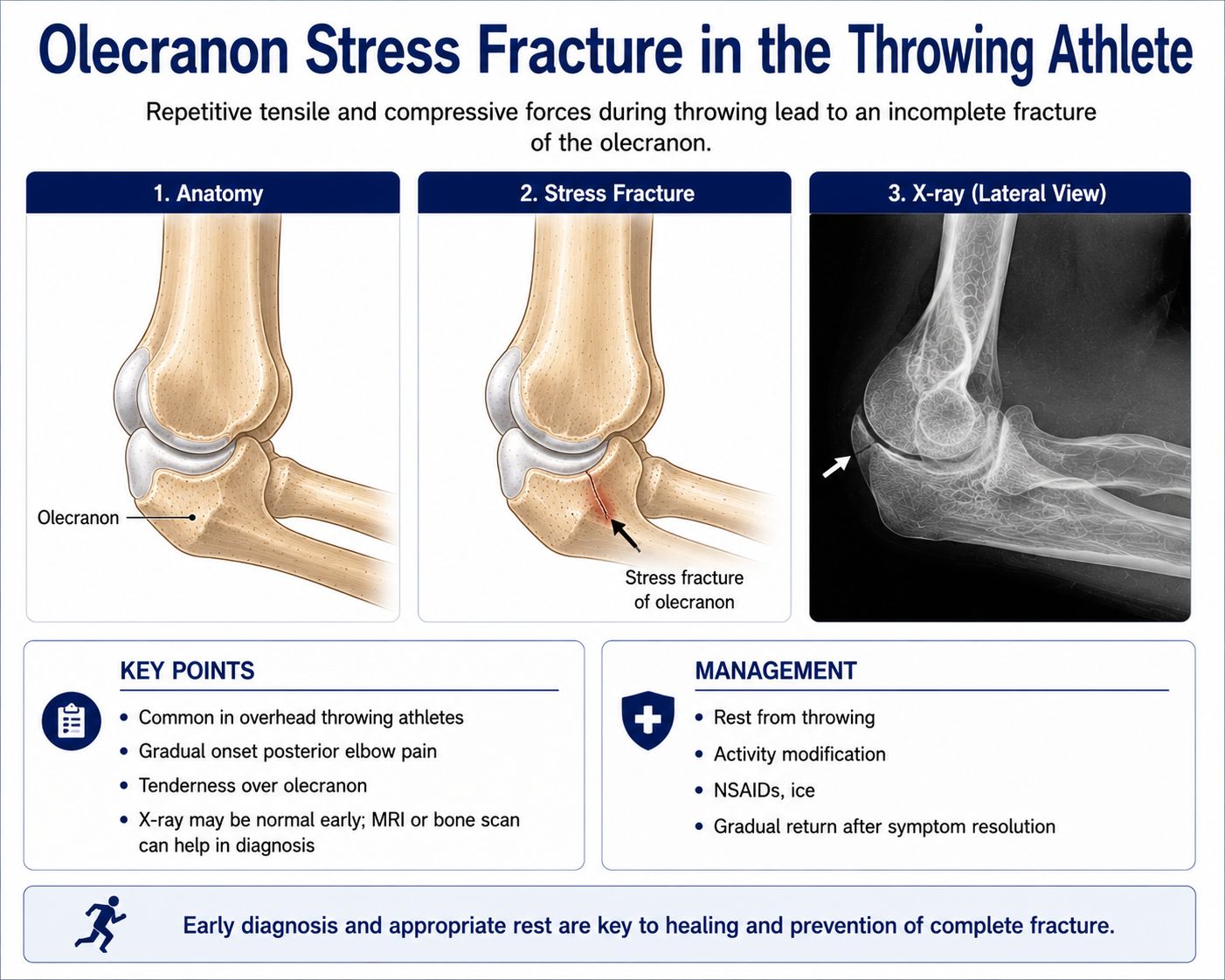
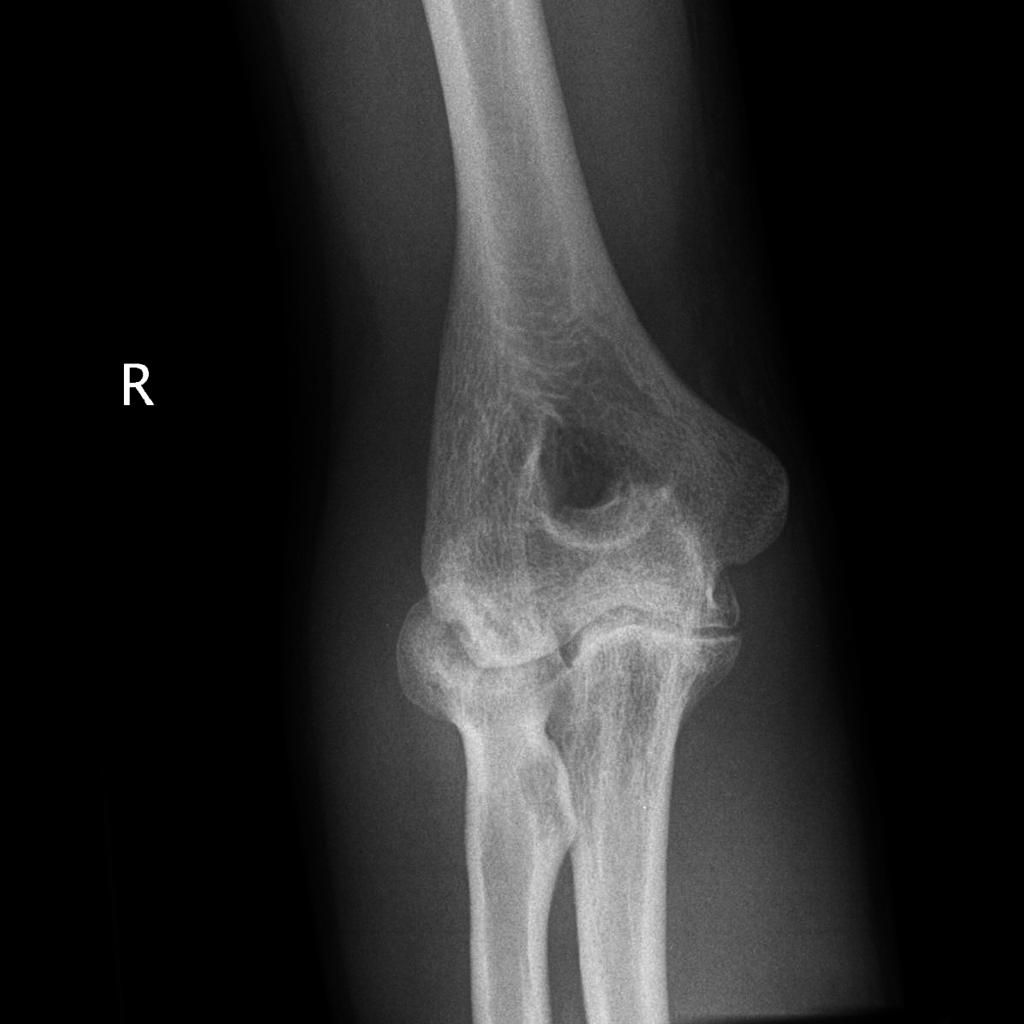
- Plain X-rays (AP + lateral) — posteromedial osteophyte at olecranon tip; loose bodies in posterior joint; posteromedial trochlear sclerosis; assess for concurrent medial calcification (UCL)
- CT scan — detailed mapping of osteophyte size, location, and loose body count; critical for surgical planning
- MRI ± arthrogram — assesses concurrent UCL integrity; posteromedial cartilage damage; concurrent chondromalacia; bone marrow oedema
- Ultrasound — identifies osteophytes and loose bodies; dynamic UCL stress assessment; guides injection

Treatment Options
Treatment Type | Details |
Activity Modification & Rest | Complete rest from throwing 4–6 weeks; posterior elbow icing; activity modification to pain-free training; addressing training load and mechanics before return |
Physiotherapy | Restore full ROM; flexor-pronator strengthening (dynamic UCL stabilisers); periscapular and rotator cuff conditioning; biomechanics review and correction; graduated return-to-throw protocol |
Anti-inflammatory Management | NSAIDs for acute flares; ultrasound-guided corticosteroid injection into the posterior joint (short-term relief only; does not address the structural cause) |
Arthroscopic Posteromedial Osteophyte Excision | Standard surgical treatment for refractory VEOS; posterior and posterolateral portals; systematic survey of the posterior compartment; excision of osteophytes from the posteromedial olecranon and trochlear groove using shaver and bur; removal of all loose bodies; posterior capsulectomy; CRITICAL: do not remove more than 3mm of the olecranon tip — removing too much destabilises the UCL attachment |
Concurrent UCL Assessment | Mandatory at the same operative setting: arthroscopic valgus stress test (>1mm medial ulnohumeral opening confirms UCL insufficiency); if UCL deficient: plan UCL reconstruction concurrently or as staged second procedure 3–6 months after arthroscopy |
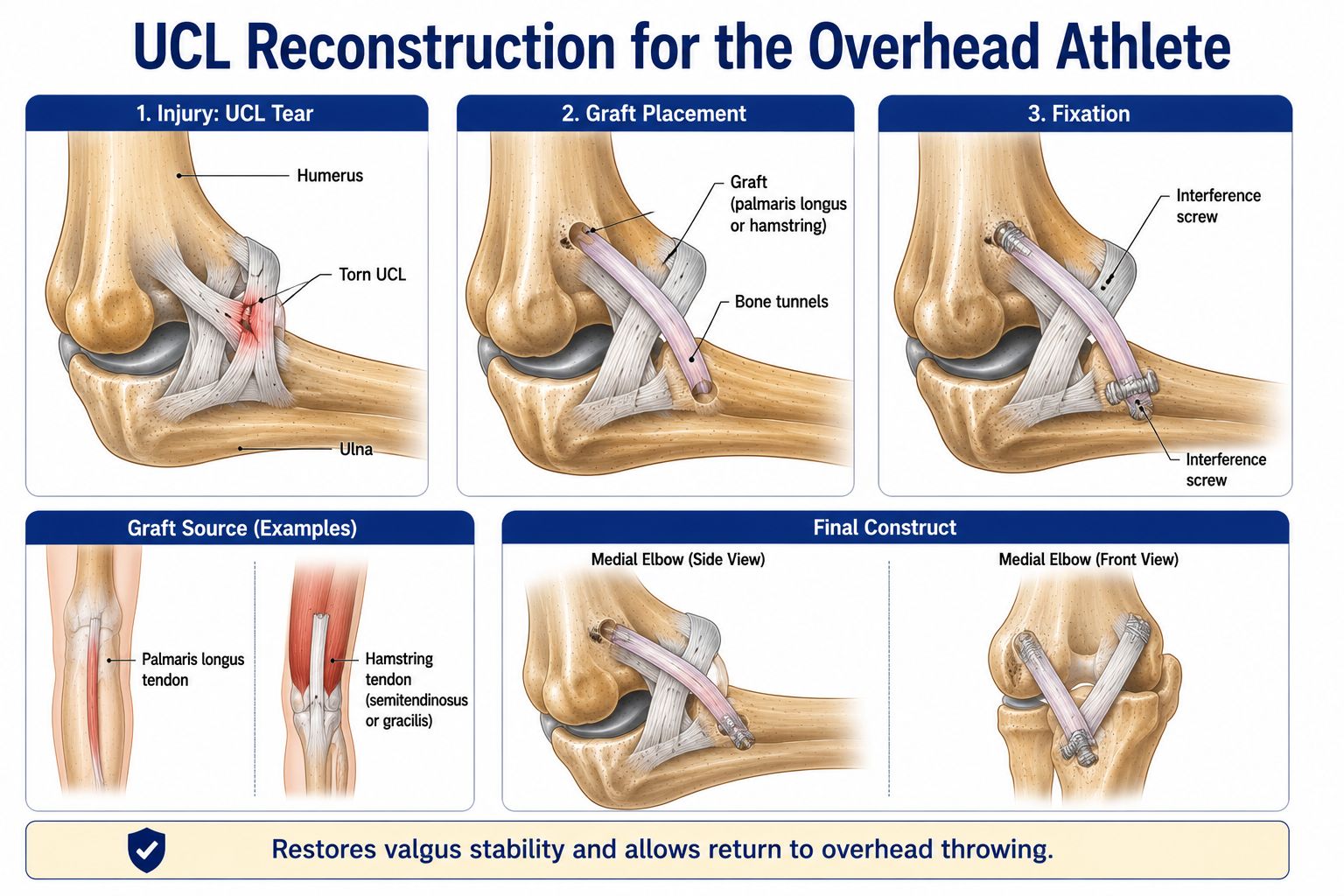
UCL Reconstruction (Concurrent) | Tommy John procedure at the same or staged setting when UCL insufficiency confirmed; without UCL reconstruction in a UCL-deficient athlete, VEOS will recur within 1–2 seasons; see Condition 13 and 62 |
Recovery & Rehabilitation
- After arthroscopic osteophyte excision alone: sling 48 hours; active ROM from day 1; interval throwing programme begins month 1–2; return to competitive throwing 3–4 months
- If concurrent UCL reconstruction: recovery driven by UCL graft healing; return to competitive throwing 9–12 months (see Condition 62)
- Biomechanics: video analysis and correction of throwing mechanics is MANDATORY before return to competition — if the mechanical faults driving VEOS are not corrected, recurrence within 1–2 seasons
- Annual surveillance: if UCL was addressed, MRI at 6 months post-UCL reconstruction; arthroscopic surgery sites monitored clinically
- Osteophyte recurrence: if UCL insufficiency was present but not addressed, osteophytes reform within 12–24 months; this is the most common cause of failed VEOS treatment
Why choose Dr Senthilvelan?
Valgus extension overload syndrome requires a surgeon who understands the interplay between the bony posteromedial changes and the concurrent UCL pathology that drives them. Dr Senthilvelan assesses every VEOS patient for UCL insufficiency and coordinates the arthroscopic osteophyte excision with UCL management — arthroscopic alone, or a planned combined procedure — to give the athlete the best chance of a durable return to competitive performance.
Frequently Asked Questions
1. I am a fast bowler with posterior elbow pain — how do I know if it is VEOS?
The key features that point to VEOS in a fast bowler are: pain specifically during or at the end of your delivery (particularly during deceleration and follow-through), tenderness on the posteromedial aspect of the elbow tip, and loss of terminal extension. X-ray or CT will typically show a bony spur (osteophyte) at the posteromedial olecranon tip. An MRI is essential to assess whether the UCL is also involved — which determines the full treatment plan.
2. Can I just have the bone spurs removed and avoid the ligament surgery?
It depends on whether your UCL is deficient. If your UCL is intact and functioning normally, arthroscopic osteophyte excision alone is highly effective — providing good relief and return to bowling in 3–4 months. However, if your UCL is insufficient (which affects 40–60% of throwers with VEOS), removing the osteophytes without addressing the UCL means the underlying valgus instability continues to load the posteromedial bony structures. The osteophytes reform within one to two seasons. Addressing the UCL — even if it requires a longer recovery (9–12 months) — provides a durable solution.
3. What is the valgus extension overload test?
The valgus extension overload test is a clinical examination manoeuvre in which the examiner applies a valgus (outward) stress to the elbow while passively moving it from approximately 90° of flexion through to full extension. In a patient with VEOS, this movement drives the posteromedial olecranon tip against the trochlear groove — reproducing the exact pain pattern the athlete experiences during the late phase of the throwing action. Reproduction of posteromedial pain at 120–70° of flexion during this test is strongly positive.
4. How much bone is removed during the arthroscopic surgery?
The surgery involves removing the osteophyte from the posteromedial olecranon tip using an arthroscopic shaver and burr. The amount removed is carefully limited — typically no more than 3mm from the olecranon tip. This is a critical technical point: the posterior band of the UCL attaches along the medial olecranon, and removing too much bone can inadvertently disrupt this attachment and worsen valgus instability. The goal is to remove the mechanical impingement while preserving the structural integrity of the olecranon.
5. Will VEOS affect my throwing career permanently?
Not necessarily — with appropriate treatment and mechanics correction, many elite athletes return to competitive throwing at the same or higher level. The key determinants of long-term outcome are: (1) whether the UCL was assessed and appropriately managed; (2) whether the throwing mechanics driving the VEOS were identified and corrected; and (3) whether adequate recovery time was allowed before returning to full competition. Athletes who rush the return or who continue with the same mechanics recur more frequently.