Overview
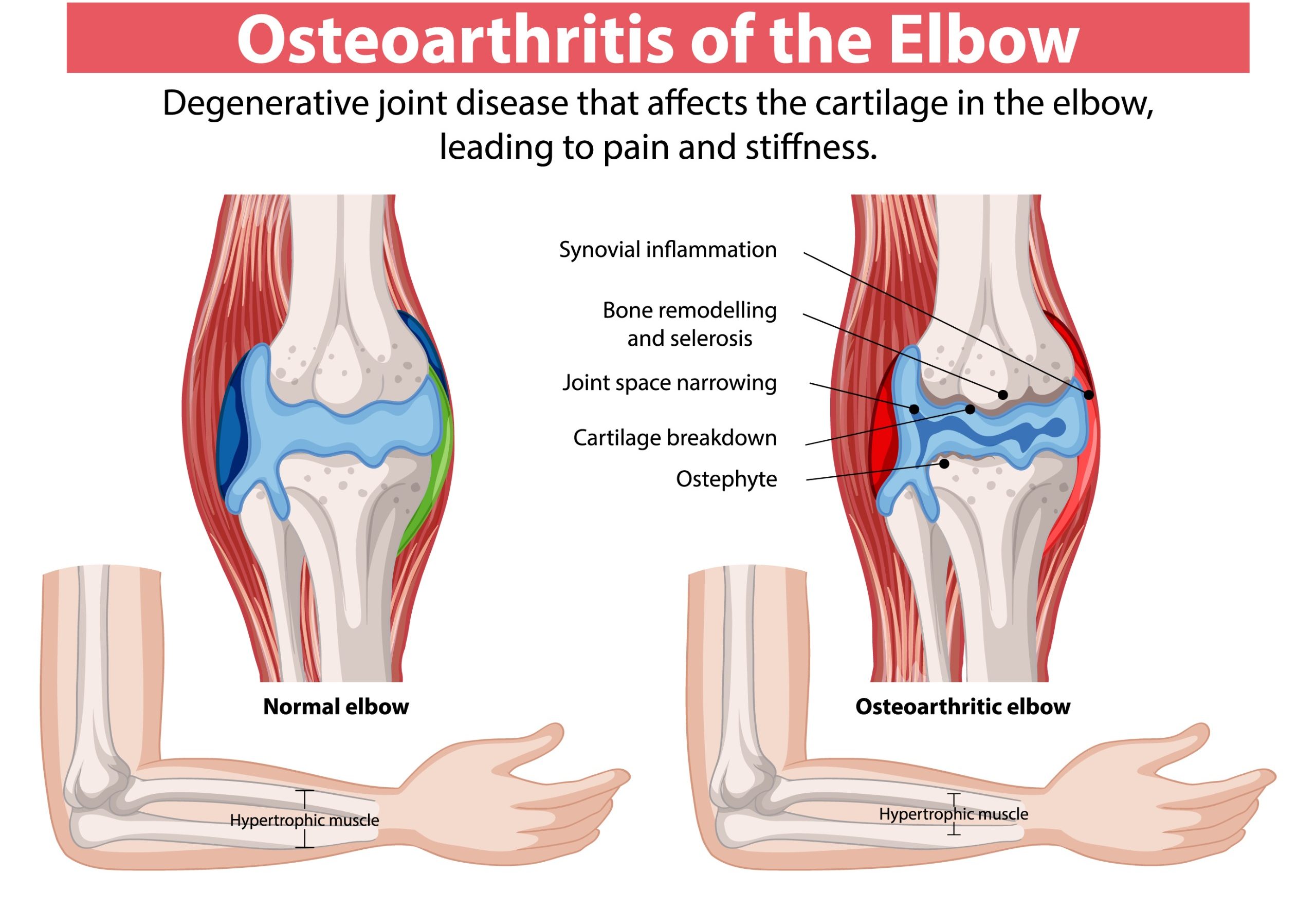
Septic arthritis of the elbow is a bacterial infection of the joint and is a surgical emergency. Bacteria — most commonly Staphylococcus aureus — enter the joint through the bloodstream, direct inoculation (penetrating injury, injection), or extension from adjacent infection. Once inside the joint, bacteria multiply rapidly and release enzymes that destroy articular cartilage within hours to days.
The consequences of delayed treatment are severe: irreversible cartilage loss, joint destruction, osteomyelitis, and potentially life-threatening sepsis. Recognition and urgent treatment — within 6–12 hours of presentation — are critical to preserving joint function.
Dr Senthilvelan performs urgent arthroscopic washout of the infected elbow at MIOT International, taking advantage of the minimally invasive approach for thorough lavage with minimal soft tissue disruption.
Quick Facts | Details |
Also Known As | Infectious Arthritis — Elbow, Pyogenic Elbow Arthritis, Bacterial Elbow Arthritis |
Affected Area | Ulnohumeral and radiocapitellar joints; periarticular soft tissues may be involved in advanced cases |
Who It Affects | Any age group; higher risk in immunocompromised patients, IV drug users, patients with RA, diabetes, prosthetic joints, or recent elbow surgery or injection |
Prevalence | Elbow is the third most common large joint affected by septic arthritis (after knee and hip); incidence 2–10 per 100,000/year; up to 11 per 100,000 in high-risk groups |
Treatment | SURGICAL EMERGENCY: urgent arthroscopic washout + débridement + IV antibiotics. Delayed treatment results in irreversible cartilage loss within 24–48 hours. |
Causes & Risk Factors
- Staphylococcus aureus — most common organism in all age groups; MRSA in healthcare-associated cases
- Streptococcal species — group A, group B, and Streptococcus pneumoniae
- Haematogenous spread — bacteria seeded from a distant site of infection (skin, urinary tract, dental)
- Intra-articular injection — corticosteroid injection; risk approximately 1 in 15,000 injections
- Penetrating injury — cuts, animal bites, needlestick injuries directly contaminating the joint
- Post-surgical infection — following elbow arthroscopy, arthroplasty, or fracture fixation
- Gonococcal arthritis — Neisseria gonorrhoeae in sexually active young adults
- Risk factors — RA, diabetes mellitus, immunosuppression, HIV, IV drug use, prosthetic joints
Symptoms
- Acute severe pain — rapid onset; exquisitely tender; pain with any passive movement of the elbow
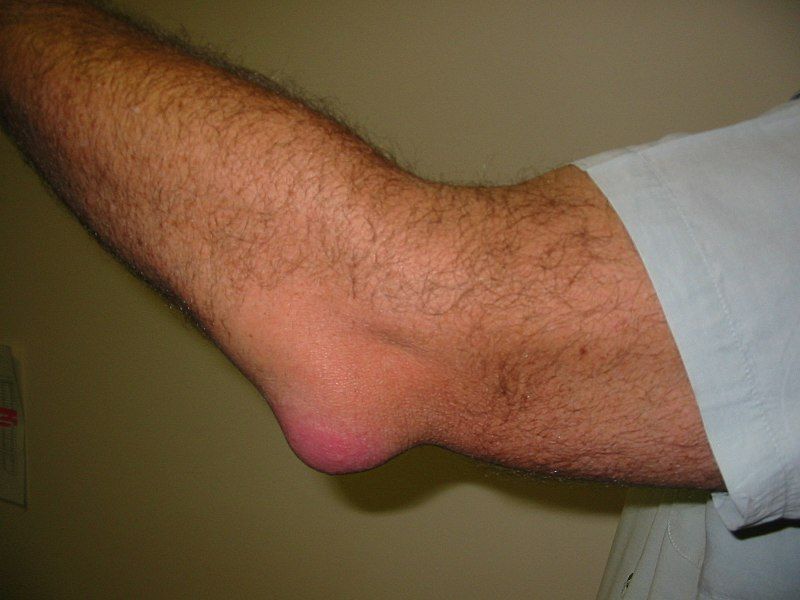
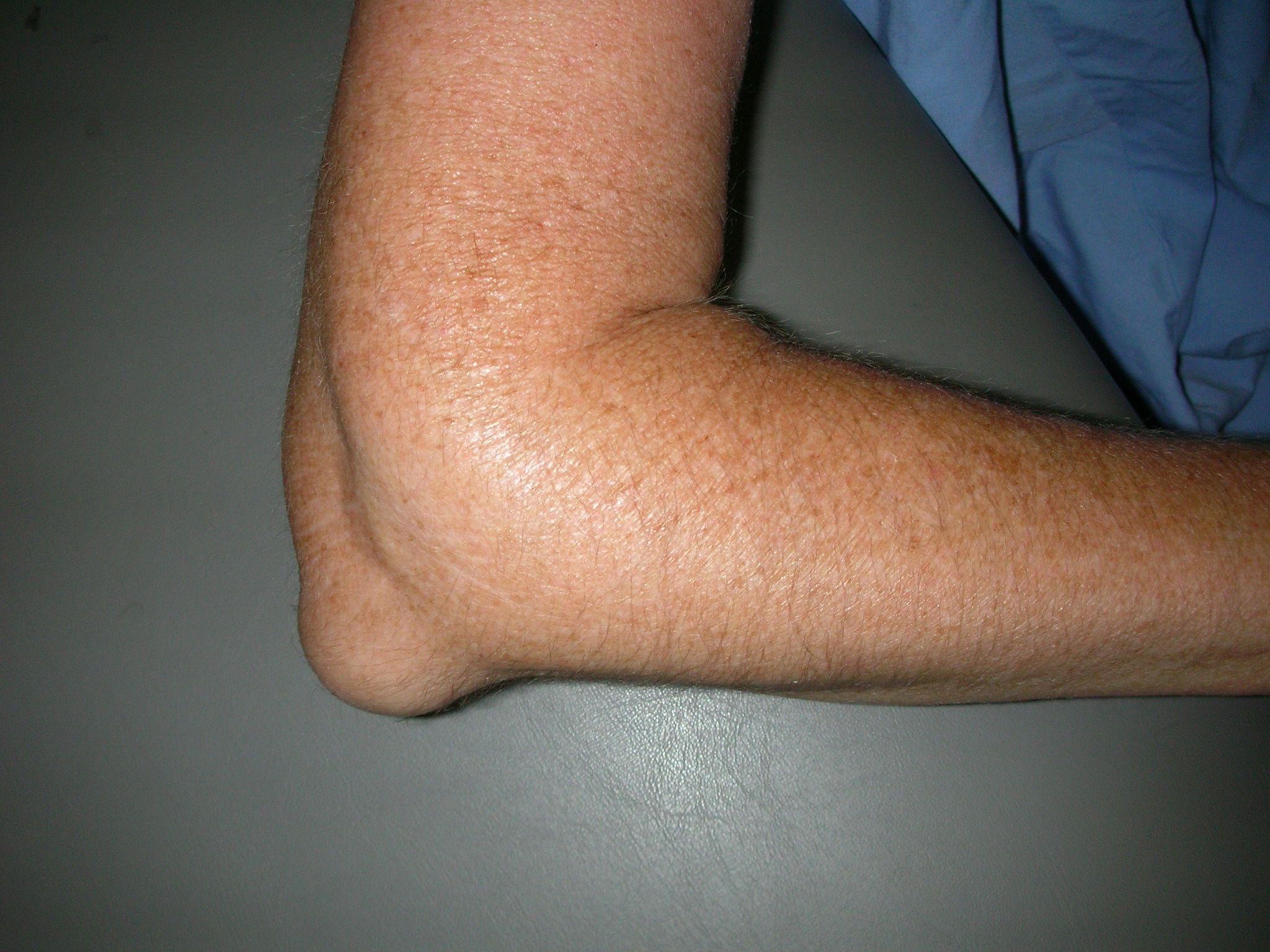
- Swelling — diffuse, warm, boggy swelling around the entire joint
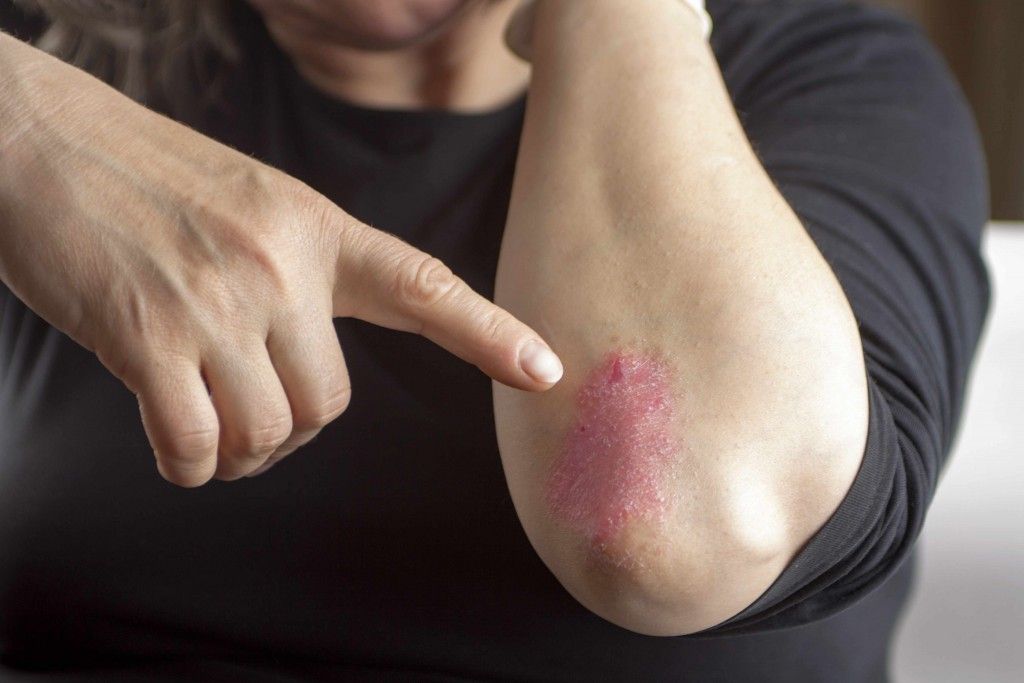
- Erythema (redness) — diffuse redness over the joint, warm to touch
- Systemic fever — temperature >38.5°C; rigors; tachycardia; malaise; may be absent in immunocompromised patients
- Held position — patient holds the elbow in approximately 90° flexion (maximum joint volume)
- Inability to use the arm
- IMPORTANT: In elderly or immunocompromised patients, systemic features may be minimal — high index of suspicion essential
How is it Diagnosed?
- URGENT joint aspiration — MANDATORY: Gram stain, culture and sensitivity, crystal examination, WBC count
- Joint fluid findings: WBC >50,000 cells/µL (often >100,000); >90% polymorphonuclear neutrophils
- Blood tests — FBC (raised WBC), CRP (often >100 mg/L), ESR, blood cultures, renal and liver function
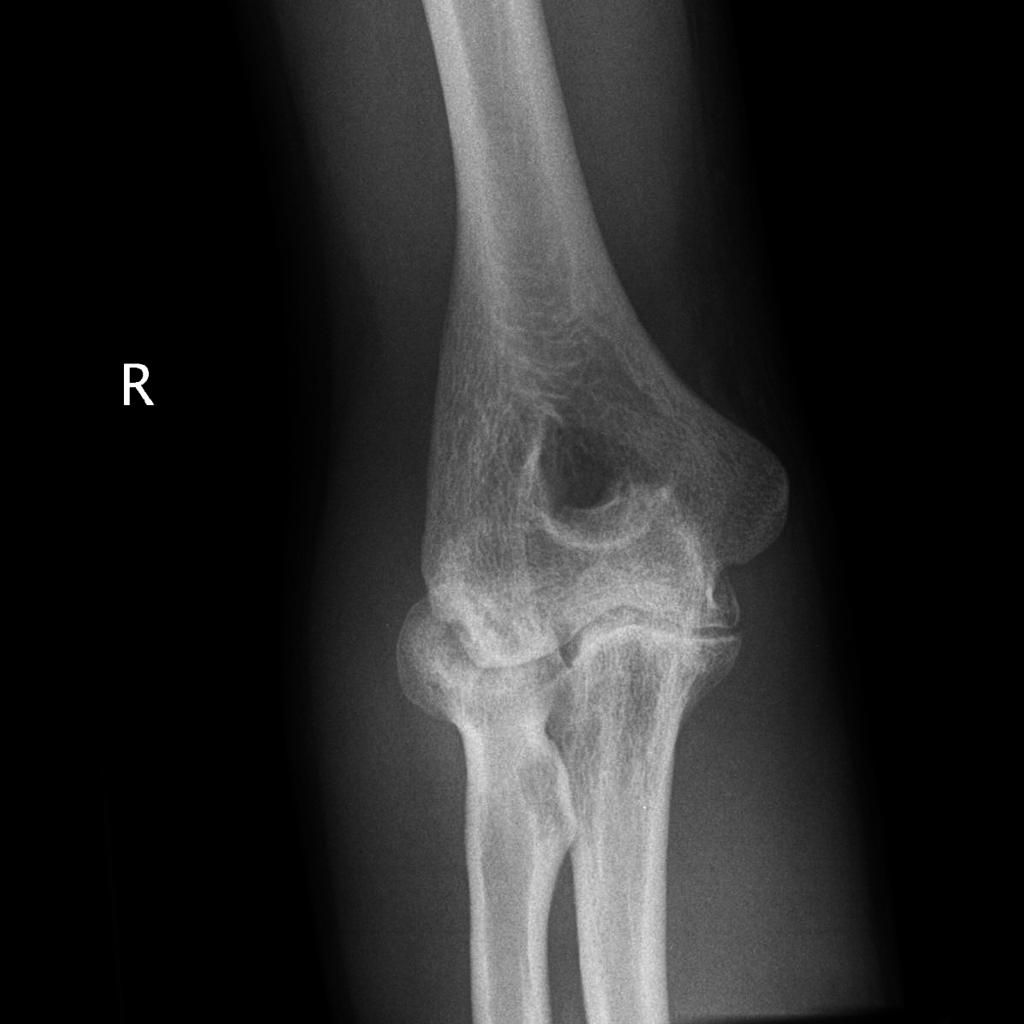
- Plain X-rays — may be normal early; look for soft tissue swelling or gas in joint
- Ultrasound — confirms joint effusion; guides aspiration
- MRI — most sensitive for periarticular extension or osteomyelitis; does not delay urgent surgical management
- CRITICAL: Never allow investigations to delay surgical drainage — this is a time-critical emergency
Treatment Options
Treatment Type | Details |
URGENT: Arthroscopic Washout | Copious irrigation with 9–12 litres of saline; removal of purulent material, fibrin, and infected synovium; intraoperative cultures taken; drain placed; repeated washout within 48–72 hours if poor response |
Open Drainage (if needed) | Required if: arthroscopic access inadequate, adjacent abscess, periprosthetic infection, osteomyelitis |
IV Antibiotics | Started AFTER cultures; empirical: flucloxacillin 2g qds (MSSA cover); MRSA risk: vancomycin; continue IV minimum 2–4 weeks; switch to oral based on sensitivities |
Repeated Washout | If systemic signs persist or CRP fails to fall: repeat arthroscopic washout within 48–72 hours |
Oral Antibiotics & Discharge | Step down when CRP normalising and clinically improving; total antibiotics 4–6 weeks guided by microbiology |
Rehabilitation | Early active-assisted movement once infection controlled; physiotherapy to recover ROM; joint damage assessment at 3–6 months |
Recovery & Rehabilitation
- Outcome is directly related to speed of treatment — delay of even 24–48 hours significantly increases cartilage damage
- After successful treatment: physiotherapy begins within days; ROM recovery over 6–12 weeks; most patients regain good function if treated early
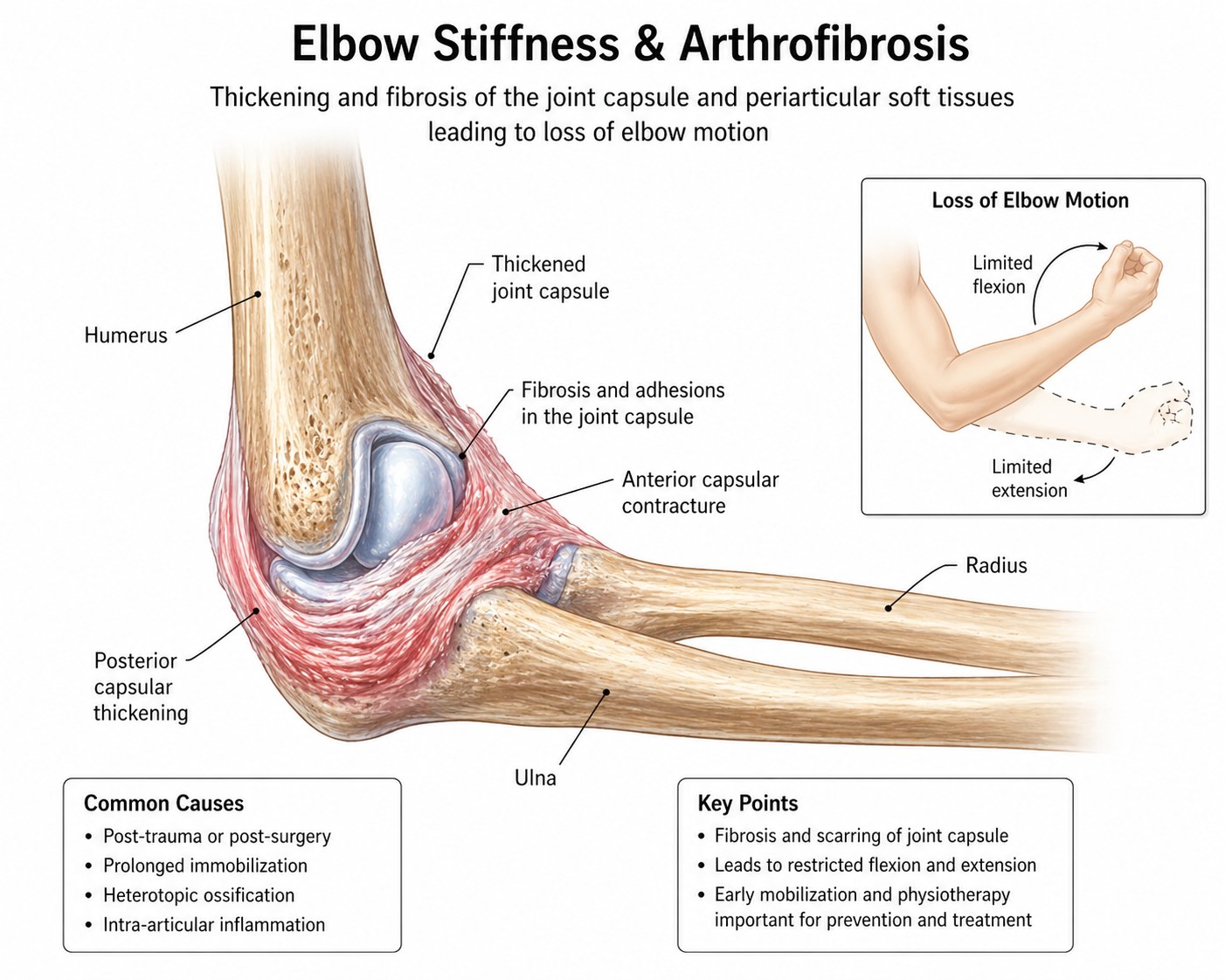
- Residual stiffness — common; may require arthroscopic capsular release at 3–6 months if contracture persists
- Failed treatment (late presentation, resistant organism): may result in chronic infection or joint destruction requiring complex reconstruction
- Follow-up CRP and clinical assessment at 6 weeks, 3 months, and 6 months
Why choose Dr Senthilvelan?
Septic arthritis is a true surgical emergency where outcomes depend critically on speed of diagnosis and surgical intervention. Dr Senthilvelan performs urgent arthroscopic elbow washout at MIOT International, one of Chennai’s leading tertiary hospitals, with 24-hour access to emergency surgical facilities, microbiology, and intensive care support.
Frequently Asked Questions
1. How quickly does septic arthritis damage the elbow joint?
Cartilage damage begins within 8–24 hours of bacterial joint infection. The destructive enzymes released by bacteria and the body’s own neutrophils rapidly break down the collagen matrix of articular cartilage. This is why septic arthritis is treated as a surgical emergency — every hour of delay increases the risk of permanent joint damage. Patients with frank joint infection should be taken to theatre urgently.
2. Can septic arthritis of the elbow be treated with antibiotics alone, without surgery?
In the vast majority of cases — no. Antibiotics alone cannot adequately penetrate an infected joint because the avascular cartilage, fibrin, and biofilm create barriers to antibiotic delivery. Surgical drainage — removing the pus, infected synovium, and inflammatory debris — is essential for eradicating the infection. There is very limited role for repeated aspiration-alone, and surgery remains the standard of care.
3. I recently had a corticosteroid injection in my elbow and now it is red and very painful — could it be infected?
Yes — this is a medical emergency. Post-injection infection can occur and presents within hours to days of an injection with rapidly increasing pain, redness, swelling, and fever. Do not wait and observe — seek emergency orthopaedic assessment immediately. When it does occur it requires urgent surgical treatment.
4. My child has a hot, painful, swollen elbow — could it be septic arthritis?
A hot, swollen, painful elbow with fever in a child is septic arthritis until proven otherwise. Children can develop septic arthritis from haematogenous spread — bacteria seeding the joint from the bloodstream. This is an emergency — seek immediate assessment. In children under 4 years, Kingella kingae is a common organism. Prompt surgical washout under general anaesthesia is the standard of care.
5. After my elbow infection was treated, the joint is still very stiff. Will this improve?
Some degree of post-septic stiffness is common, particularly if there was any delay in treatment or if multiple washouts were required. Physiotherapy is the first-line treatment and should begin as soon as the infection is controlled. Most patients see progressive improvement over 3–6 months. If a significant flexion contracture persists beyond 6 months and is functionally limiting, arthroscopic capsular release can be performed to restore movement.