Overview
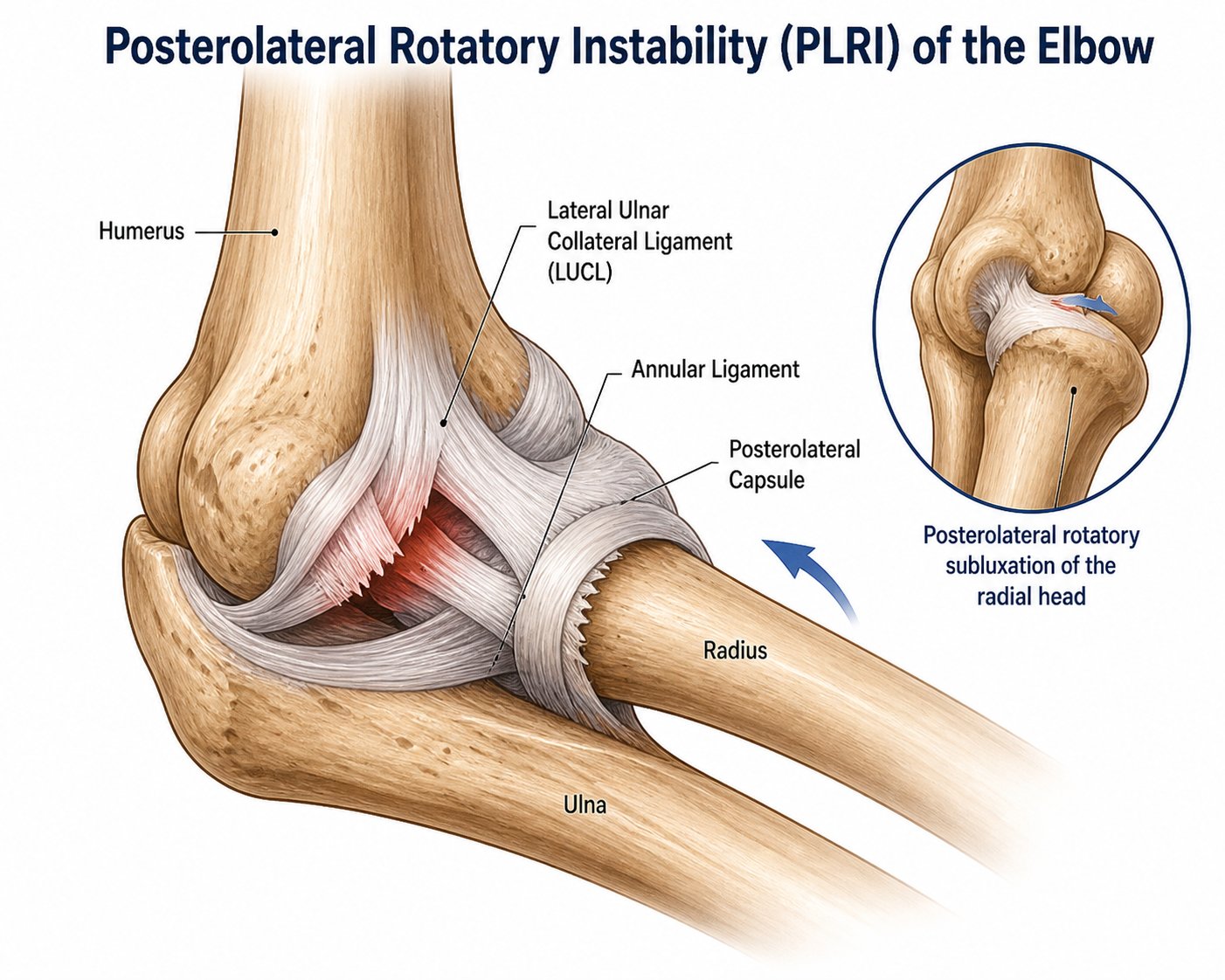
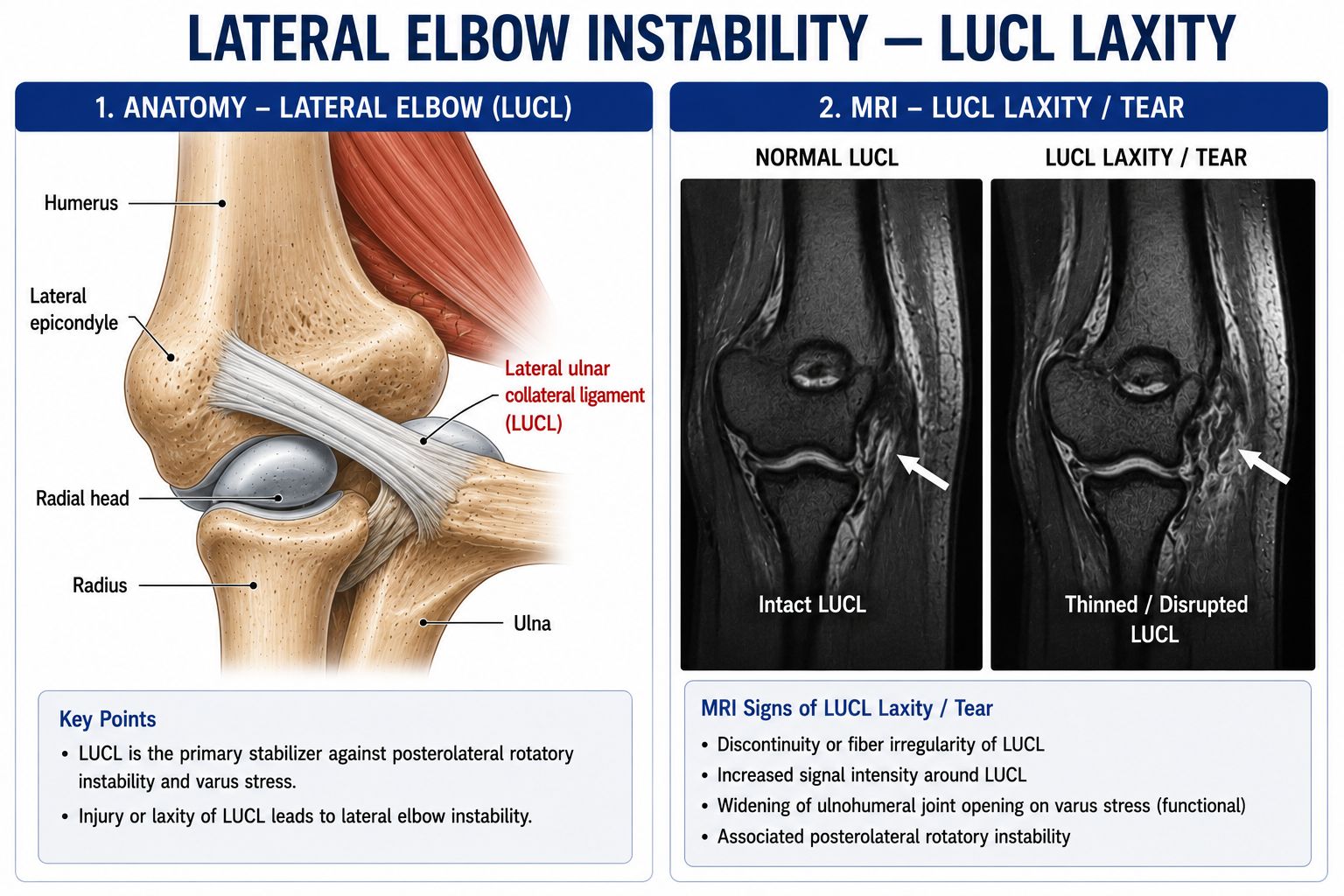
Lateral elbow instability from LUCL laxity represents the chronic, non-acute form of posterolateral rotatory instability (PLRI). While acute PLRI (Condition 14) typically follows a specific traumatic event (dislocation, lateral elbow surgery), LUCL laxity can develop more gradually — from repeated minor insults (multiple corticosteroid injections, minor falls), from the progressive attenuation caused by cubitus varus deformity, or from generalised ligamentous laxity.
LUCL laxity presents as a lateral elbow that gives way or snaps with specific activities — characteristically pushing up from a chair, reaching overhead, or performing press-up movements. Between episodes of instability, the elbow may ache on the lateral side. The condition is distinct from acute instability in that the elbow does not dislocate — it subluxates transiently then reduces.
Treatment is tailored to severity: mild LUCL laxity with minimal functional impact responds to dynamic stability training (periscapular and forearm conditioning); symptomatic instability affecting daily activities requires LUCL reconstruction. The technical priorities are identical to acute PLRI reconstruction: isometric graft placement on the lateral epicondyle and correct graft tensioning.
Quick Facts | Details |
Also Known As | LUCL Laxity, Lateral Elbow Ligamentous Laxity, Lateral Instability — Elbow, LUCL Insufficiency |
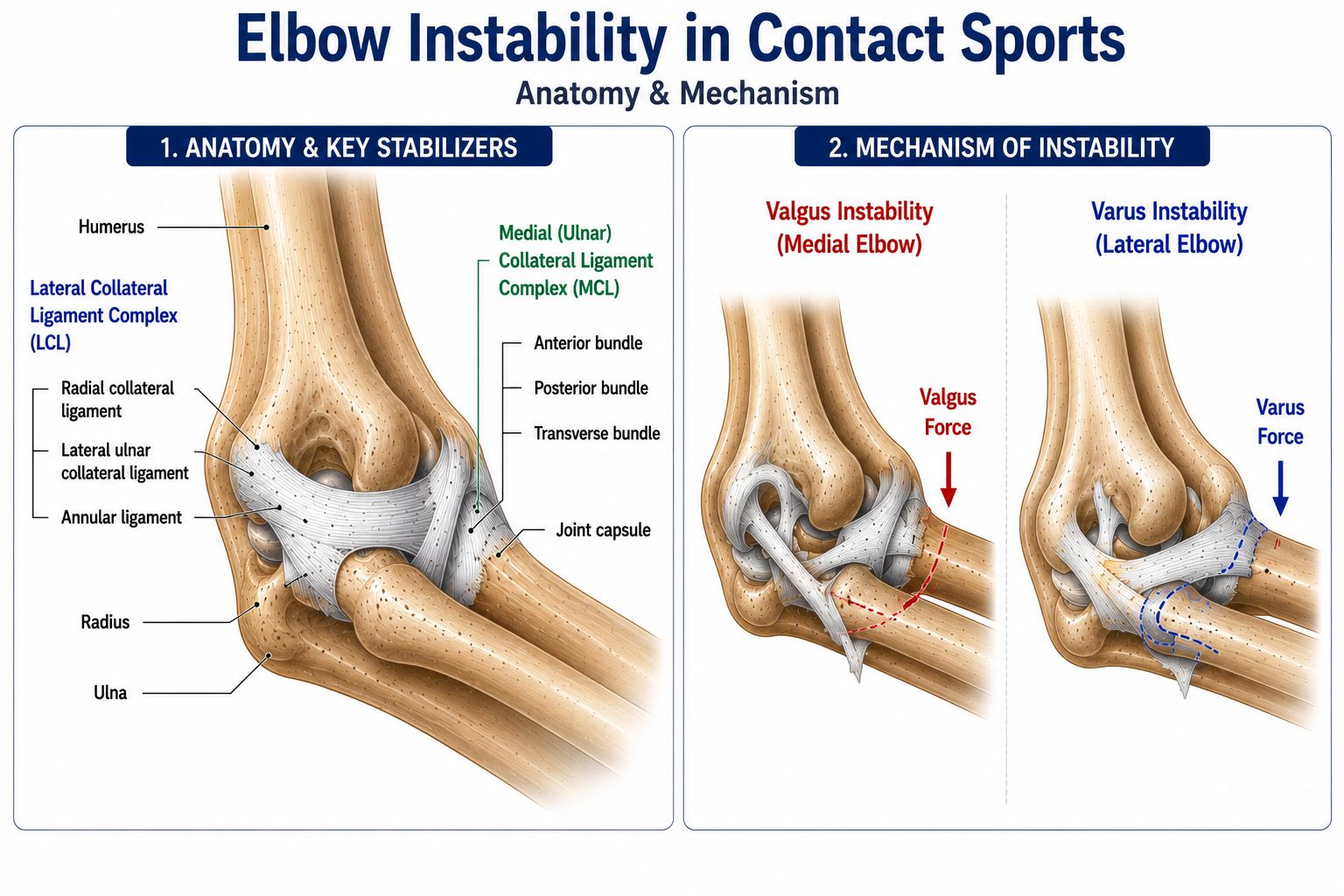
Affected Area | Lateral ulnar collateral ligament (LUCL) complex — the lateral elbow stabiliser preventing posterolateral rotatory subluxation of the ulna and radius relative to the humerus |
Who It Affects | Adults of any age; commonly following elbow dislocation (incomplete LUCL healing), lateral elbow surgery (inadvertent LUCL damage), repeated lateral elbow injections, or cubitus varus deformity; also generalised ligamentous laxity in hypermobile individuals |
Prevalence | LUCL laxity is the most common pattern of chronic elbow instability; significantly underdiagnosed as a cause of lateral elbow pain, snapping, or giving way; often initially managed as lateral epicondylalgia |
Treatment | Physiotherapy and dynamic stability training for mild cases; LUCL reconstruction with palmaris longus graft through isometric bone tunnels for symptomatic instability; avoid varus-supination stress during recovery; cubitus varus: concurrent corrective osteotomy |
Causes & Risk Factors
- Elbow dislocation with incomplete healing — the LUCL fails to heal to its epicondylar origin after reduction; the elbow feels stable in a brace but remains lax clinically and on examination
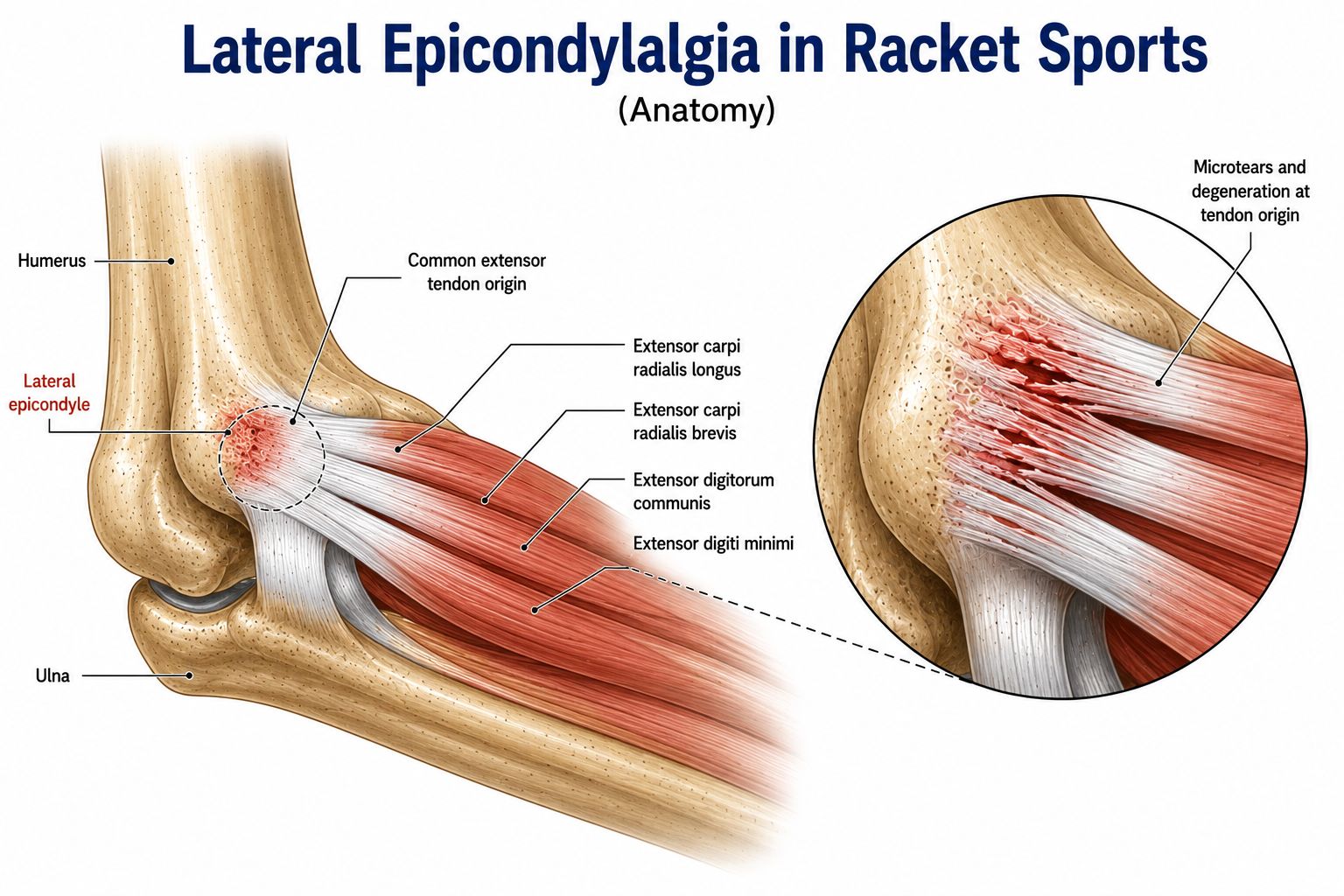
- Lateral elbow surgery — over-release of the common extensor origin during open tennis elbow surgery can inadvertently damage the posterior LUCL fibres
- Repeated lateral elbow corticosteroid injections — progressive weakening of periligamentous tissue over multiple injection cycles
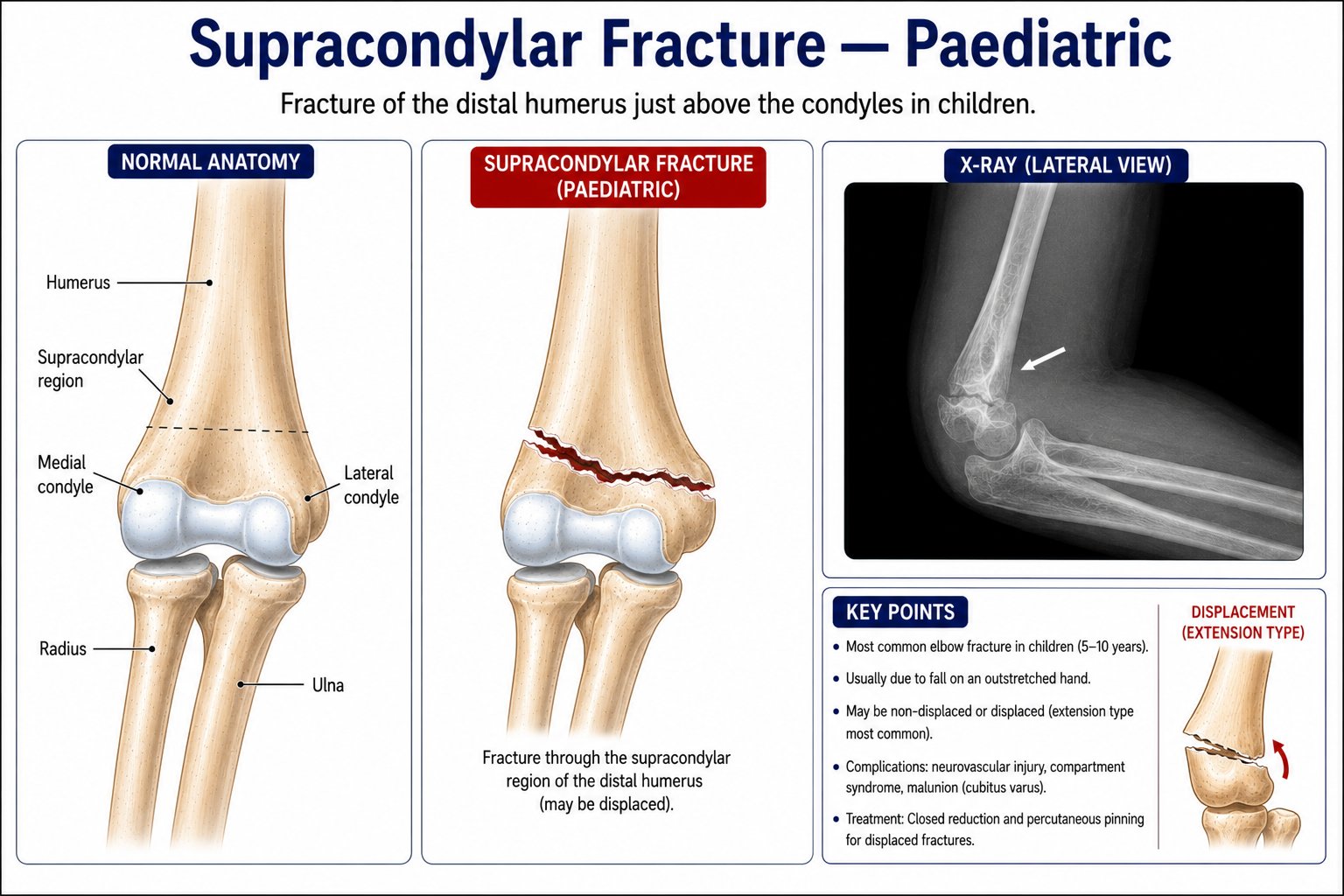
- Cubitus varus deformity — from supracondylar fracture malunion; creates chronic varus-supination force that progressively attenuates the LUCL
- Generalised ligamentous laxity — Ehlers-Danlos syndrome, benign joint hypermobility; the LUCL is one of many loose ligaments
- Idiopathic — constitutional LUCL laxity without identifiable precipitating factor
Symptoms
- Lateral elbow giving way or snapping — particularly during pushing activities, rising from a chair, reaching overhead with the elbow extended
- Apprehension — fear of the elbow dislocating; the patient modifies activities to avoid the position of instability
- Lateral elbow aching — persistent low-grade lateral pain, particularly after activities
- Reduced function — inability to do press-ups, push up from a chair, or carry loads with the elbow extended without apprehension
- History of prior dislocation, lateral elbow surgery, or repeated injections
- Positive pivot shift or chair push-up test
How is it Diagnosed?
- Clinical examination — lateral pivot shift test; chair push-up test; compare with contralateral side; assess for concurrent VEOS or cubitus varus
- MRI — LUCL attenuation or avulsion at lateral epicondyle; posterior capsular laxity; lateral joint widening
- Ultrasound — LUCL thickness and continuity; dynamic stress assessment
- EUA + arthroscopy — definitive; lateral joint opening on varus stress confirms LUCL insufficiency
Treatment Options
Treatment Type | Details |
Physiotherapy (Mild Laxity) | Dynamic stability training; periscapular strengthening; forearm extensor conditioning; proprioception exercises; functional bracing in varus-unloading position during provocative activities |
Functional Bracing | Hinged elbow brace restricting terminal extension and supination; useful for mild laxity or while awaiting surgery; does not correct structural ligamentous insufficiency but allows symptom management |
LUCL Reconstruction | Palmaris longus graft (or gracilis if absent); passed through bone tunnel at the isometric point on the lateral epicondyle (centre of capitellum on lateral fluoroscopy) and through the ulna at the crista supinatoris; tensioned at 30° flexion with forearm pronated; see Condition 14 for full technical details |
Concurrent Cubitus Varus Correction | For patients with cubitus varus as the underlying driver: corrective osteotomy (dome or lateral closing-wedge) combined with LUCL reconstruction; without deformity correction, the varus force will stretch the new graft and cause recurrence |
Post-operative Bracing | Posterior splint 2 weeks; hinged brace weeks 2–6; avoid varus-supination stress for 12 weeks post-operatively |
Recovery & Rehabilitation
- After LUCL reconstruction: physiotherapy from day 1; full ROM by 8 weeks; strengthening 6–12 weeks; return to full activity 4–6 months
- Expected outcomes: 85–90% good-excellent stability; most patients return to all daily activities without apprehension
- Concurrent cubitus varus correction: longer recovery 6–9 months for bony healing and functional restoration
- Recurrence: <10% with isometric graft placement; higher if cubitus varus not addressed
Why choose Dr Senthilvelan?
LUCL reconstruction for lateral elbow instability requires precise isometric graft placement — the single most important technical factor determining long-term stability. Dr Senthilvelan identifies the isometric point on the lateral epicondyle with fluoroscopic guidance and performs graft tensioning at the optimal position to achieve durable lateral stability.
Frequently Asked Questions
1. My elbow gives way when I push up from a chair — what is this?
Giving way specifically when pushing up from a chair is the classic symptom of posterolateral rotatory instability (PLRI) from LUCL laxity. The position of elbow extension + forearm supination + axial load is the specific combination that stresses the LUCL. When the LUCL is lax, the forearm bones transiently subluxate posterolaterally relative to the humerus in this position — causing the giving way sensation. Specialist examination with the lateral pivot shift test can reproduce and confirm this finding.
2. I have had multiple lateral elbow injections — could they have caused my instability?
Multiple deep corticosteroid injections into the lateral elbow region have been associated with LUCL complex weakening. While a single injection is very unlikely to cause instability, repeated injections may progressively weaken the periligamentous tissues. If you have developed symptoms of lateral elbow giving way or apprehension after multiple lateral elbow injections, LUCL laxity should be assessed with clinical examination and MRI.
3. Can physiotherapy strengthen the LUCL?
Not directly — the LUCL is a ligament and cannot be strengthened through exercise. However, the muscles around the elbow provide dynamic stability that partially compensates for ligamentous laxity. Periscapular strengthening, forearm extensor conditioning, and proprioceptive training can reduce the functional impact of mild LUCL laxity. For significant structural ligamentous insufficiency causing symptomatic instability, physiotherapy alone is insufficient and surgical reconstruction is needed.
4. Is LUCL reconstruction the same as Tommy John surgery?
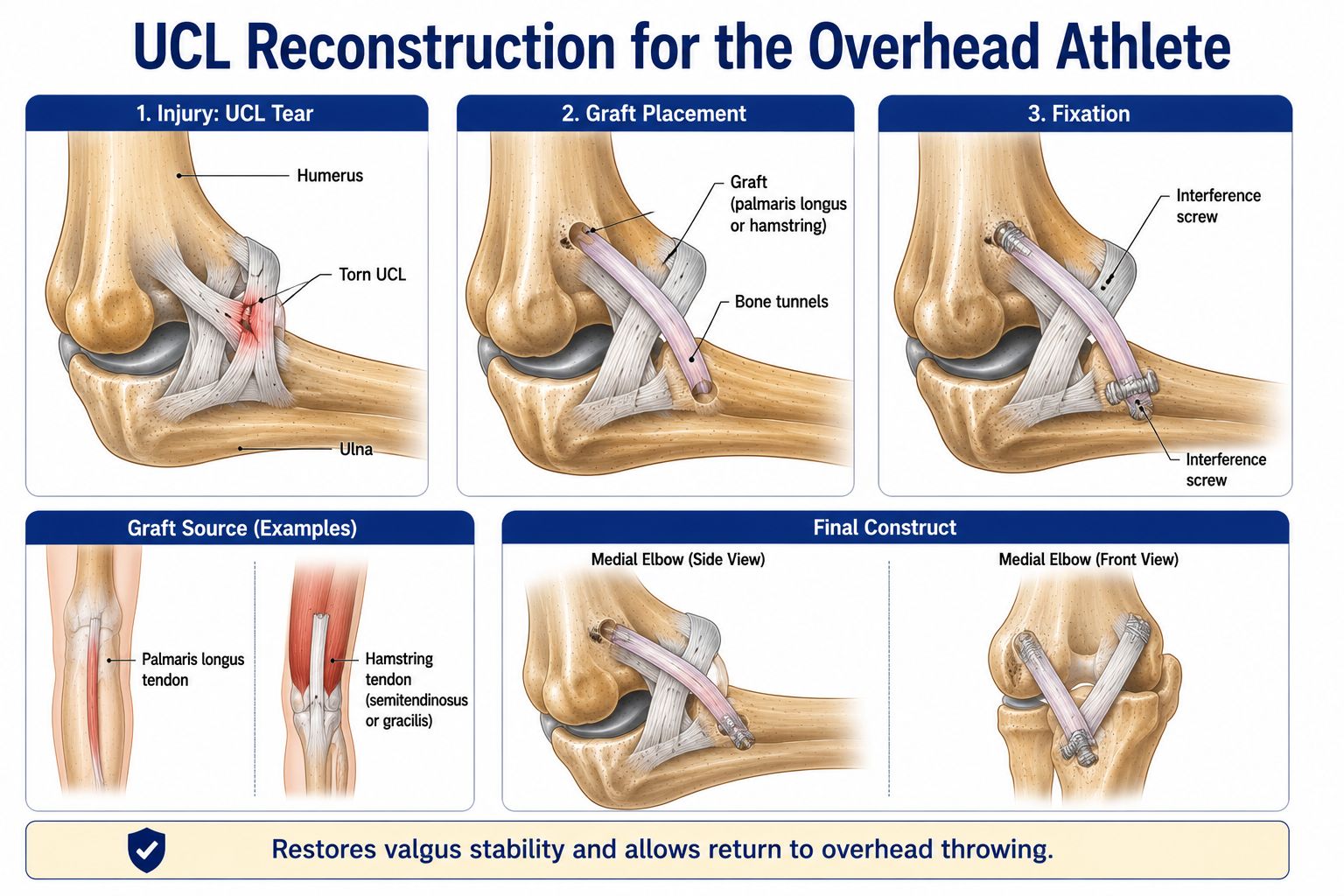
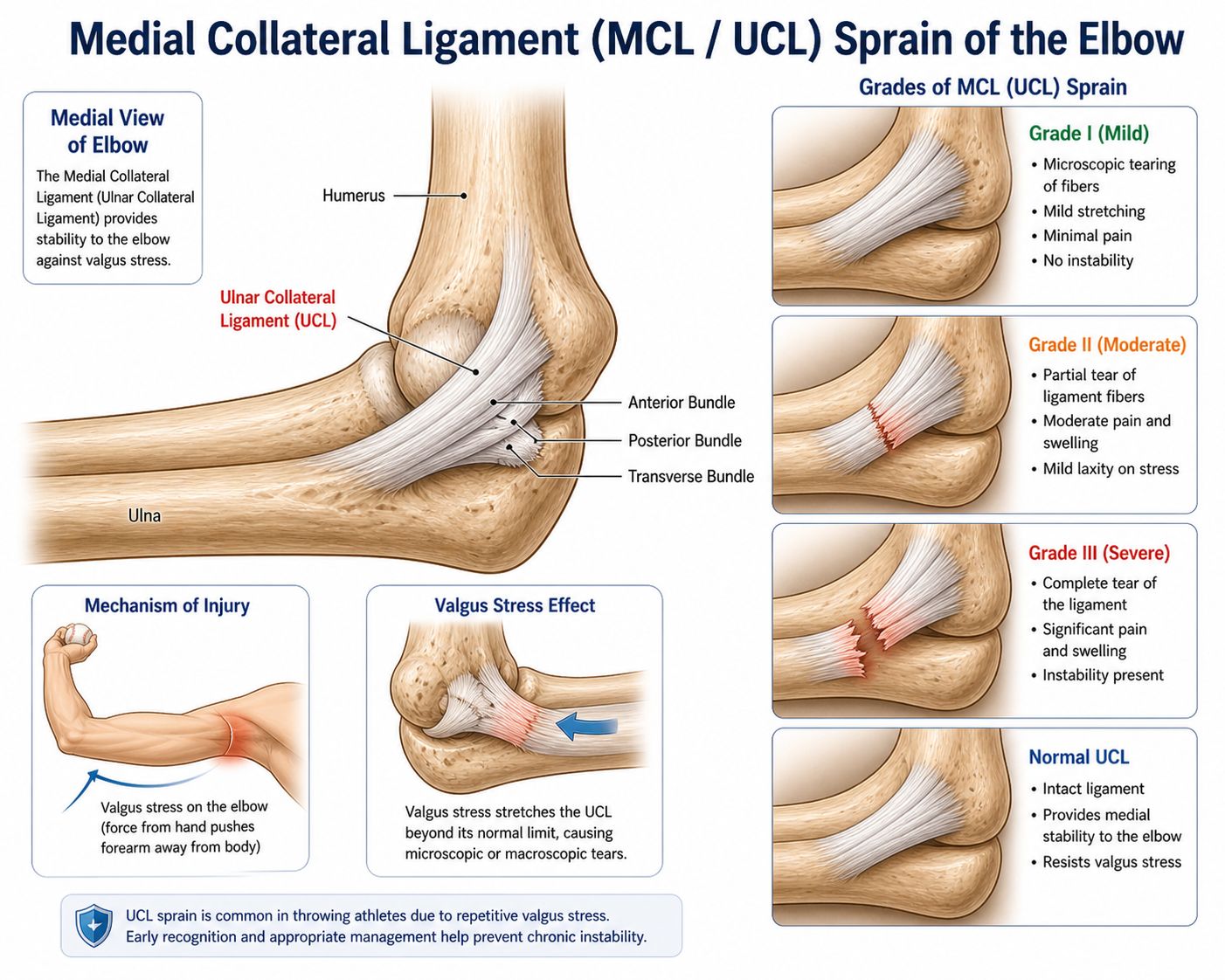
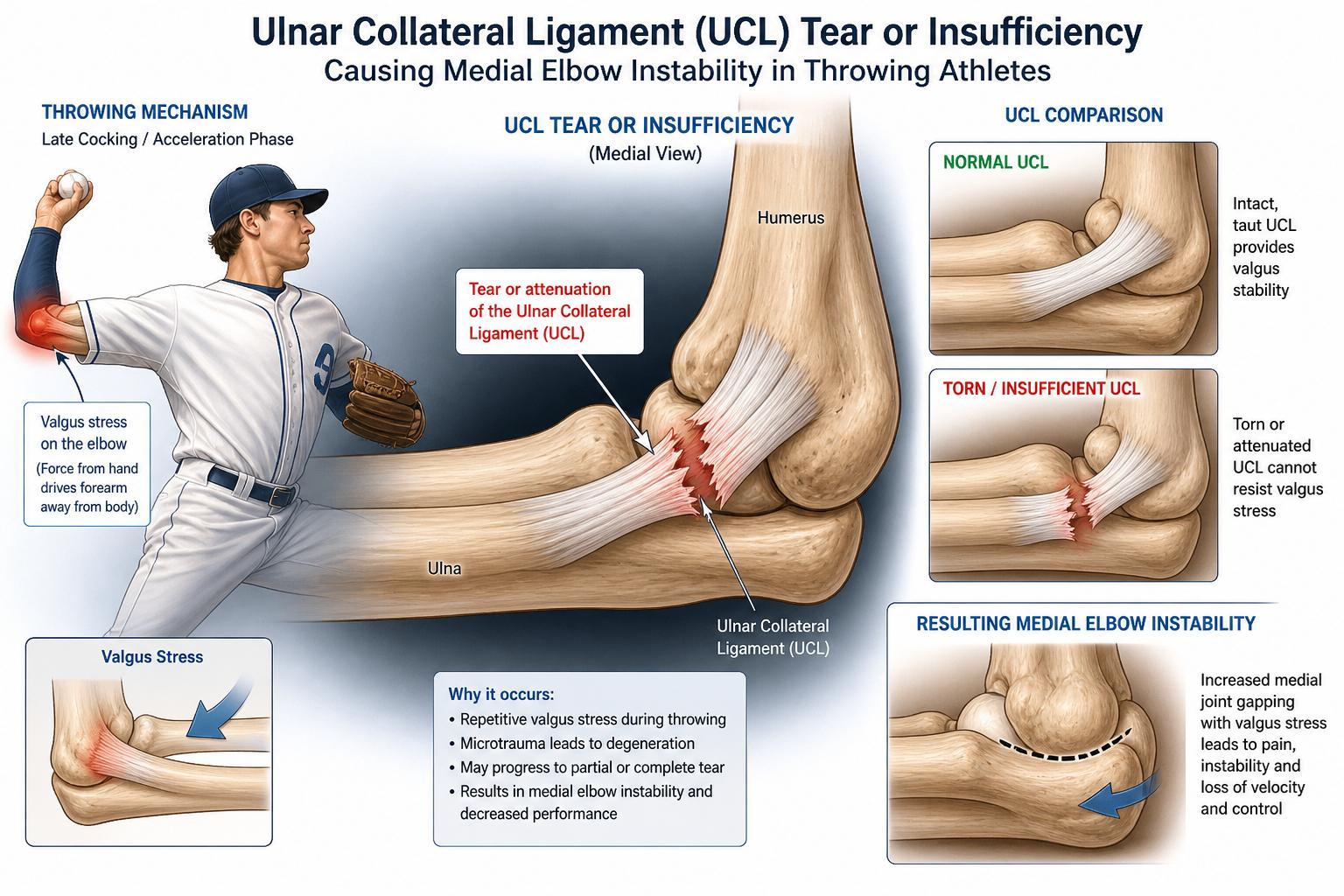
No — they are different procedures targeting different ligaments. Tommy John surgery (UCL reconstruction) addresses the medial collateral ligament on the inner side of the elbow and is performed for valgus instability in throwing athletes. LUCL reconstruction addresses the lateral ulnar collateral ligament on the outer side of the elbow and is performed for posterolateral rotatory instability. Both use similar techniques (tendon graft through bone tunnels) but at different anatomical locations on opposite sides of the elbow.
5. How long before I can return to normal activities after LUCL reconstruction?
Most daily activities (eating, dressing, light reaching) can resume within 2–4 weeks of surgery. Office work is possible at 2–4 weeks. Activities involving elbow extension, forearm supination, and axial loading (pushing up from a chair, carrying heavy bags, press-ups) are avoided for 12 weeks while the reconstruction heals. Return to sport is typically at 4–6 months. A hinged elbow brace is worn for the first 6 weeks and during high-risk activities for the first 12 weeks.