Overview
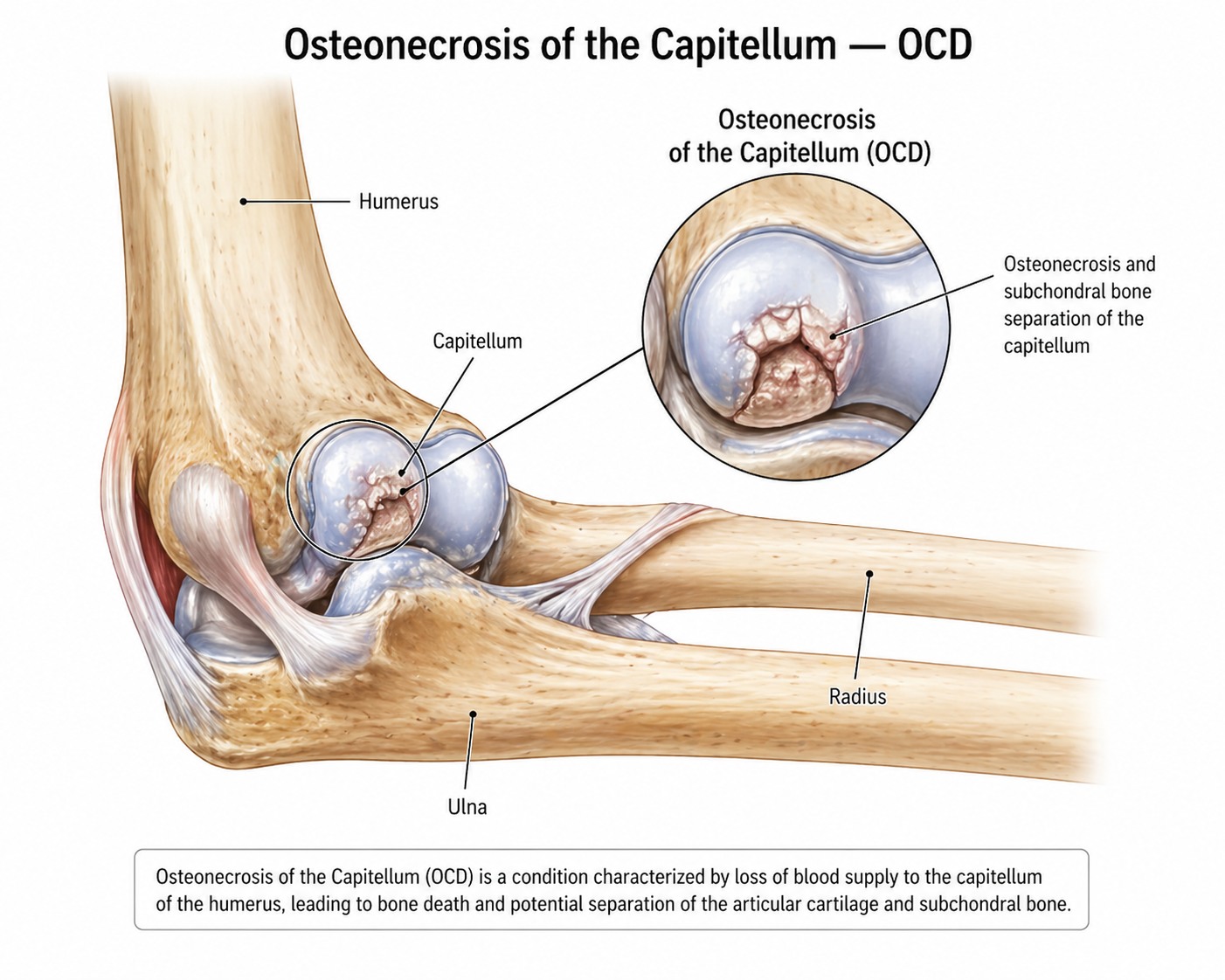
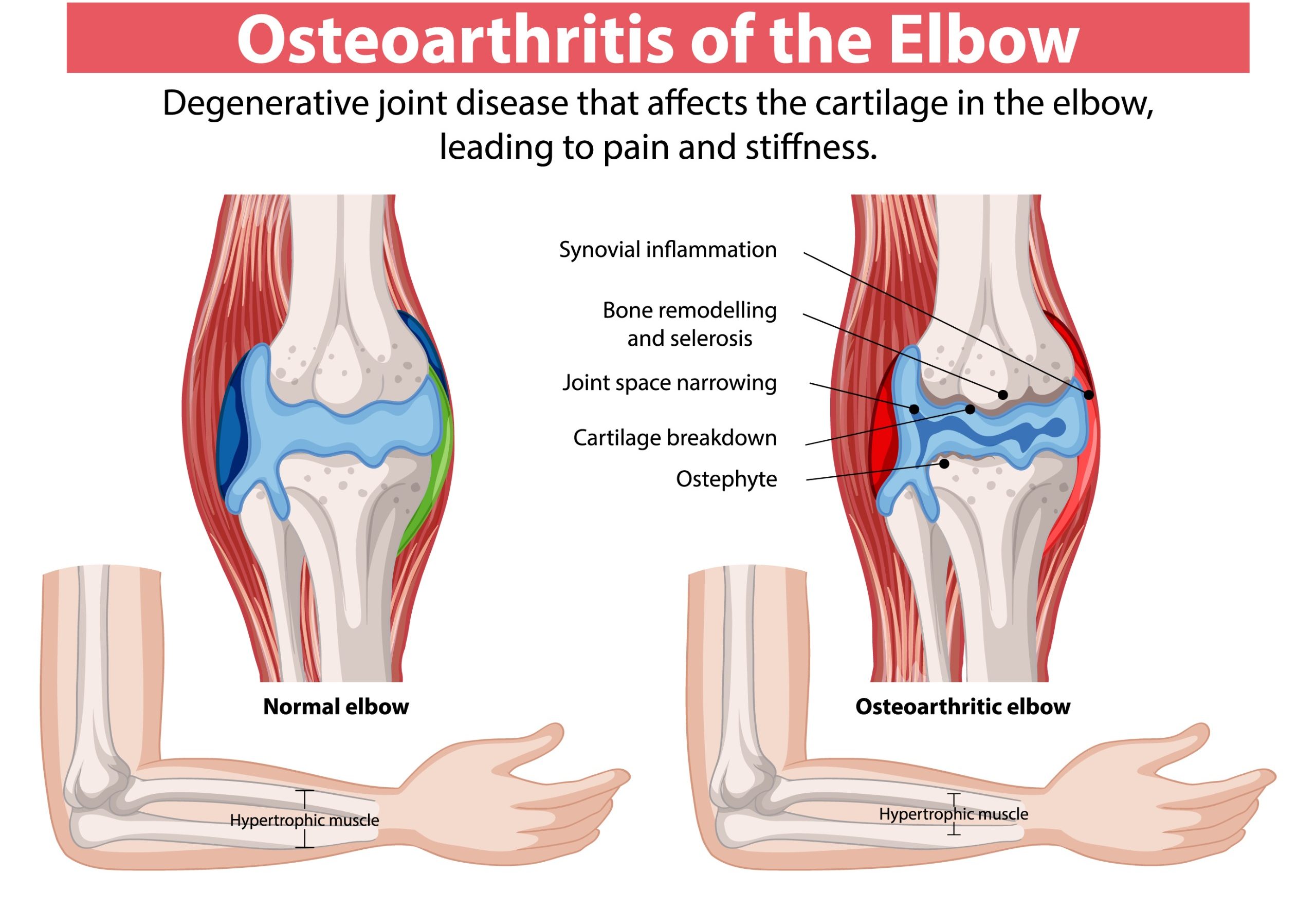
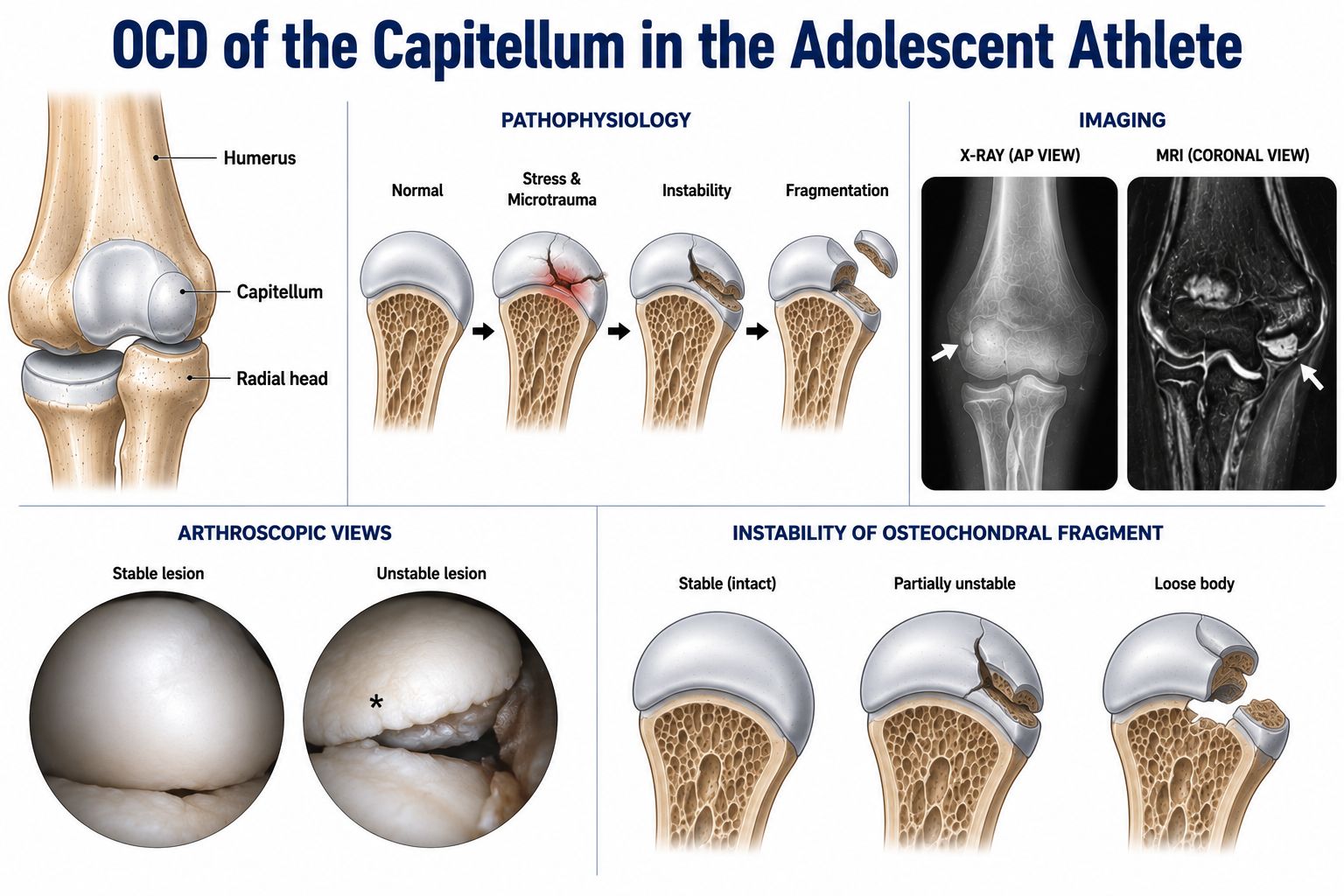
Osteochondritis dissecans (OCD) of the capitellum is a focal area of subchondral bone death caused by repetitive valgus compression loading of the radiocapitellar joint in adolescent athletes. During throwing and gymnastics loading, the radial head compresses the capitellum with forces that exceed the capitellar blood supply capacity — since the capitellum receives its entire blood supply from a single end artery entering posteriorly, it is uniquely vulnerable to ischaemia from compression.
OCD lesions progress through distinct stages: the subchondral bone dies (Grade I: bone oedema, intact overlying cartilage); the overlying cartilage begins to separate from the dead bone (Grade II: cartilage fissure, partial detachment); and the fragment completely detaches and becomes a loose body within the joint (Grade III: complete detachment, loose body present). Grade I lesions can heal with conservative management; Grades II and III require surgery.
Early diagnosis is critical. An athlete with Grade I OCD who rests completely for 3–6 months has an excellent chance of healing without surgery and returning to competitive sport. An athlete who continues to throw through lateral elbow pain progresses through Grades II and III — requiring increasingly complex surgery with less predictable outcomes. Lateral elbow pain in any adolescent throwing athlete must be investigated urgently.
Quick Facts | Details |
Also Known As | Capitellar OCD, Osteochondritis Dissecans — Elbow, OCD Lesion — Lateral Elbow |
Affected Area | Capitellum of the distal humerus — the rounded lateral articular surface that articulates with the radial head; subchondral bone and overlying articular cartilage |
Who It Affects | Adolescent athletes aged 11–16 years; overhead throwers (cricket bowlers, baseball pitchers) and gymnasts predominantly; almost exclusively the dominant arm; boys slightly more affected than girls |
Prevalence | Seen in 2–3% of overhead athletes presenting with lateral elbow pain; significant cause of lateral elbow pain in adolescent athletes and the most important lateral elbow diagnosis in this age group; the most common elbow articular cartilage condition requiring surgery in young athletes |
Treatment | Grade I (stable, intact cartilage): complete rest from throwing/loading 3–6 months with serial MRI; Grade II–III (unstable or fragment detached): arthroscopic débridement + microfracture (lesions <2cm) or fragment fixation (large lesions); return to sport guided by objective healing |
Causes & Risk Factors
- Repetitive radiocapitellar compression during throwing — the late cocking and acceleration phases compress the radial head against the capitellum; repetitive microtrauma exceeds the capitellar blood supply capacity
- End-artery blood supply — the capitellum receives a retrograde blood supply from a single end artery; there is no collateral circulation; any vascular compromise causes focal bone death
- Gymnastics loading — weight-bearing through the extended elbow during vaulting, floor work, and bar exercises creates sustained compressive loads
- Rapid growth phase — during the adolescent growth spurt, the vascular supply to the capitellum is under particular stress as the bone grows faster than its vascularity
- Training volume overload — excessive throwing or gymnastics repetitions without adequate recovery
- Dominant arm predisposition — almost all cases affect the dominant arm used for throwing or gymnastics loading
Symptoms
- Lateral elbow pain during throwing or gymnastics loading — the primary symptom; well-localised to the radiocapitellar region on the outer side of the elbow
- Reduced range of motion — loss of full elbow extension (flexion contracture); even a 5–10° loss is a significant warning sign in an adolescent athlete
- Lateral elbow swelling — effusion from the radiocapitellar joint
- Locking or catching — if a loose fragment has detached (Grade III); often a dramatic sudden onset of locking during a throw
- Activity-related aching — pain with racket sports, gymnastics, and any compressive elbow loading
- Tenderness over the radiocapitellar joint — on direct palpation in the lateral elbow, 2–3cm distal to the lateral epicondyle
- Decreased throwing performance — athlete subconsciously reduces effort
How is it Diagnosed?
- Clinical examination — lateral elbow tenderness; range of motion measurement; radiocapitellar compression test (axial load through the forearm in rotation reproduces pain); assess for locking
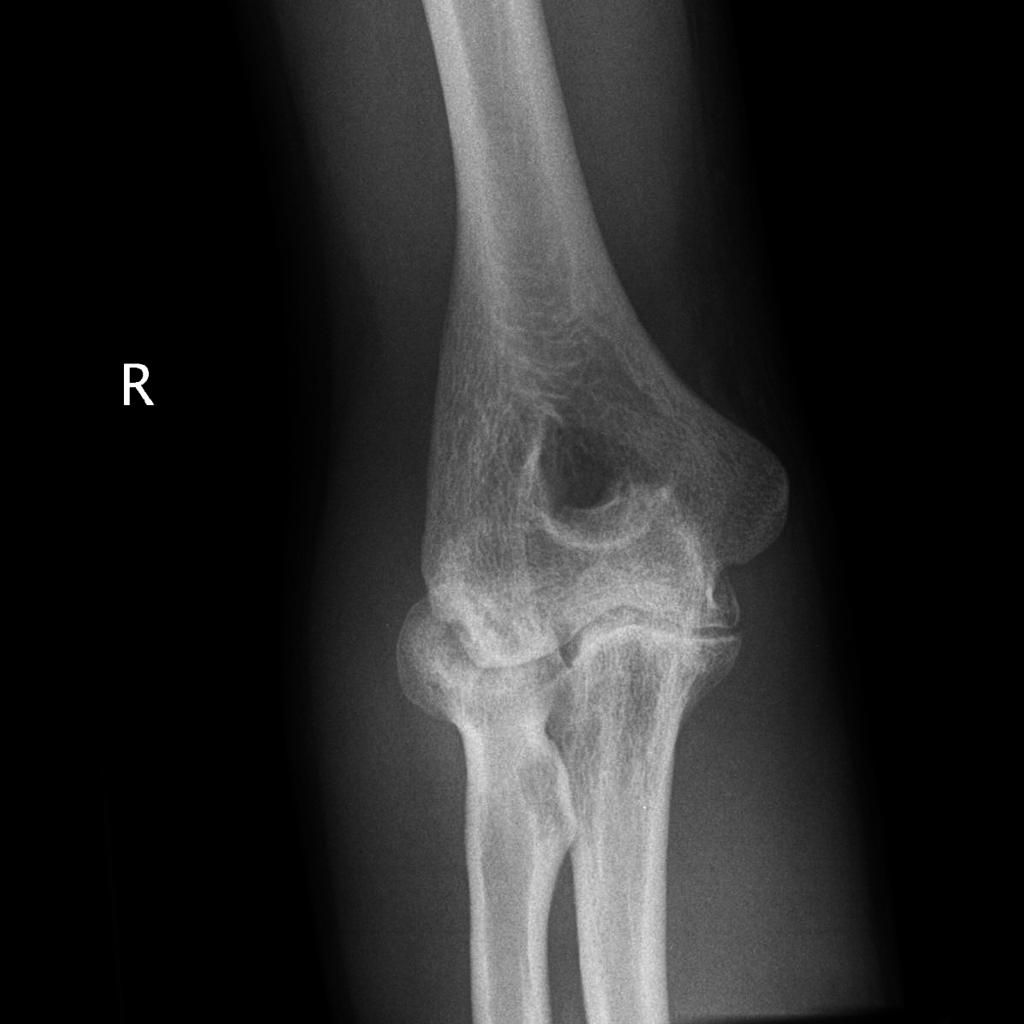
- Plain X-rays (AP + lateral) — may be normal in early Grade I; irregular or lucent areas on the capitellum in later grades; radiolucency with a sclerotic border; loose bodies (Grade III)
- MRI (investigation of choice) — T2 signal changes in the capitellum; bone marrow oedema; cartilage signal; lesion size measurement; stability assessment (T2 fluid rim around the fragment indicates unstable lesion); concurrent assessment of the radial head articular surface
- CT scan — precise 3D mapping of lesion size, location, and bone architecture; essential for surgical planning in Grades II–III; identifies loose bodies not visible on X-ray
- Arthroscopy — definitive assessment of cartilage stability; “probe test” distinguishes stable (firmly attached) from unstable (fissured, movable) lesion under direct vision
Treatment Options
Treatment Type | Details |
Complete Rest — Grade I (Stable) | Absolute cessation of all throwing and compressive elbow loading for 3–6 months; serial MRI at 3 months confirms healing; graduated return to activity only when MRI shows lesion resolution; 85% healing rate with complete rest for stable Grade I lesions |
Arthroscopic Débridement + Microfracture — Grade II–III Small Lesions (<2cm) | Unstable cartilage debrided to stable margins; subchondral bone perforated with arthroscopic awl (3–4mm depth, 3–4mm spacing) to release marrow elements and stimulate fibrocartilage formation; loose bodies retrieved; recommended for lesions <2cm diameter without large bony defects |
Fragment Fixation — Large Unstable Lesions (>1cm with Large Fragment) | For large partially detached fragments with adequate bone on the fragment: arthroscopic or mini-open fixation with bioabsorbable pins or 1.0–1.5mm headless compression screws; best results in skeletally immature patients with open growth plates where healing potential is greatest |
Osteochondral Autograft Transfer (OATS) | For large unstable lesions or failed microfracture: osteochondral plugs harvested from the knee (non-weight-bearing zone) and press-fit into the capitellar defect; restores hyaline cartilage surface; most technically demanding procedure; good results for properly selected lesions |
Retrograde Drilling (Grade I Non-Healing) | For Grade I lesions not healing after 3–6 months of rest: retrograde drilling through the capitellum under arthroscopic guidance to improve vascular access to the ischaemic zone without violating the articular surface; may stimulate healing in non-responders |
Recovery & Rehabilitation
- Grade I conservative: if MRI confirms healing at 3 months, graduated return-to-throw programme over 2–3 months; return to competitive throwing 6–9 months from diagnosis
- After arthroscopic débridement + microfracture: immediate gentle ROM; no throwing 6 weeks; fibrocartilage maturation 3–6 months; return to throwing 6–9 months; return to competition 9–12 months
- After fragment fixation: protected from loading 6–8 weeks; MRI at 6 months confirms healing; return to competitive throwing 9–12 months
- Outcome: Grade I conservative — 85% return to sport; arthroscopic treatment Grades II–III — 70–80% return to competitive throwing; long-term radiocapitellar arthritis risk is higher in Grade III regardless of treatment
- Annual MRI for 2 years post-treatment to monitor healing and exclude recurrence
Why choose Dr Senthilvelan?
OCD of the capitellum requires urgent recognition and a carefully graded treatment decision — conservative for stable lesions, arthroscopic intervention for unstable. Dr Senthilvelan has specific expertise in capitellar OCD management in adolescent athletes, from the systematic arthroscopic survey and probe testing to microfracture, fragment fixation, and OATS reconstruction for the most complex lesions.
Frequently Asked Questions
1. My child has lateral elbow pain from bowling — how serious could this be?
Lateral elbow pain in an adolescent bowler or pitcher must be taken seriously and investigated urgently with X-ray and MRI. The most important diagnosis to exclude is OCD of the capitellum. A Grade I (stable) lesion detected early has an 85% chance of healing completely with rest alone. However, if the athlete continues to bowl through the pain, the lesion can progress to Grade II or III — requiring more complex surgery with a longer recovery and a less certain outcome. Never dismiss lateral elbow pain in a young throwing athlete as ‘just a strain’.
2. What is the difference between a stable and unstable OCD lesion?
A stable OCD lesion (Grade I) has intact overlying articular cartilage — the dead bone is contained under a normal cartilage surface, and the fragment cannot move. These lesions have significant healing potential with rest. An unstable lesion (Grade II–III) has cartilage that has fissured, cracked, or completely separated — allowing fluid to enter beneath the fragment (visible on MRI as a T2 fluid rim). Unstable lesions do not reliably heal with rest alone and require arthroscopic intervention. This distinction is the most important factor in treatment planning.
3. Can a completely detached fragment (Grade III) be put back?
Sometimes — if the detached fragment is large, has good bone on its back surface, and the articular cartilage is still viable, arthroscopic fixation of the fragment back into its bed (using bioabsorbable pins or tiny headless screws) can achieve healing in 70–80% of cases, particularly in skeletally immature patients. If the fragment is too small, fragmented, or the cartilage is no longer viable, it is removed arthroscopically and the bone bed treated with microfracture or osteochondral autograft transfer to fill the defect.
4. How long does my child need to rest from gymnastics or throwing?
For a stable Grade I OCD lesion, complete rest from the sport is recommended for a minimum of 3 months, with MRI at 3 months to assess healing. If healing is confirmed, a graduated return programme begins — typically taking another 2–3 months before return to competitive sport. Total time from diagnosis to competition is typically 6–9 months. This is a significant commitment, particularly for young elite athletes, but it is far preferable to the alternative: continuing to load the lesion until it becomes unstable and requires surgical intervention with a 9–12 month recovery.
5. Will OCD cause permanent damage to my child's elbow?
Most athletes who are diagnosed early (Grade I) and comply with the rest protocol achieve complete or near-complete healing without permanent consequences. However, Grade III lesions — particularly those left untreated for a long time — are associated with a higher risk of early-onset radiocapitellar arthritis in adulthood (typically from the third decade onwards). This risk is related to the degree of articular surface damage at the time of treatment, not to the surgery itself. This is why early diagnosis and prompt rest is the most important public health message for young throwing athletes.