Overview
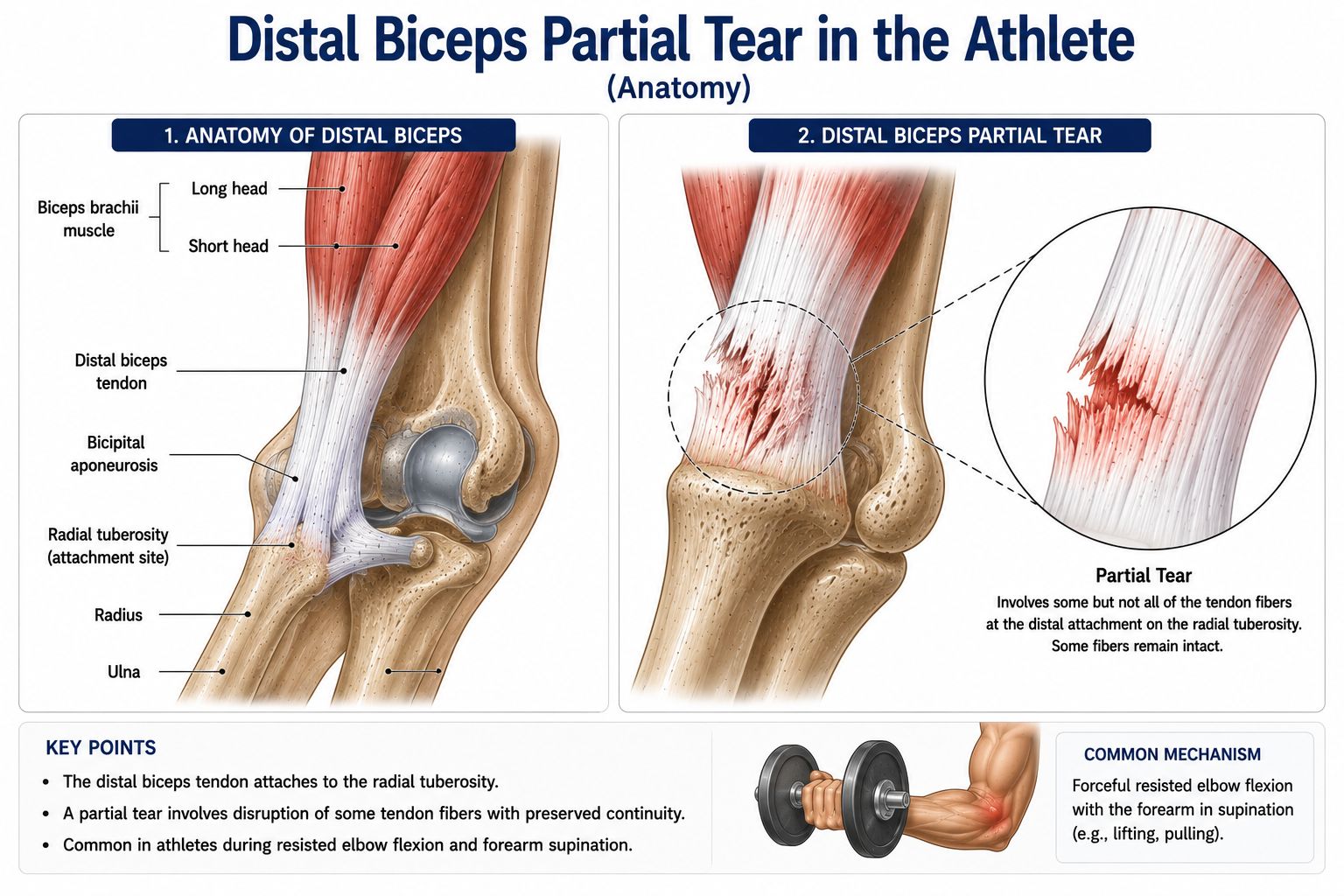
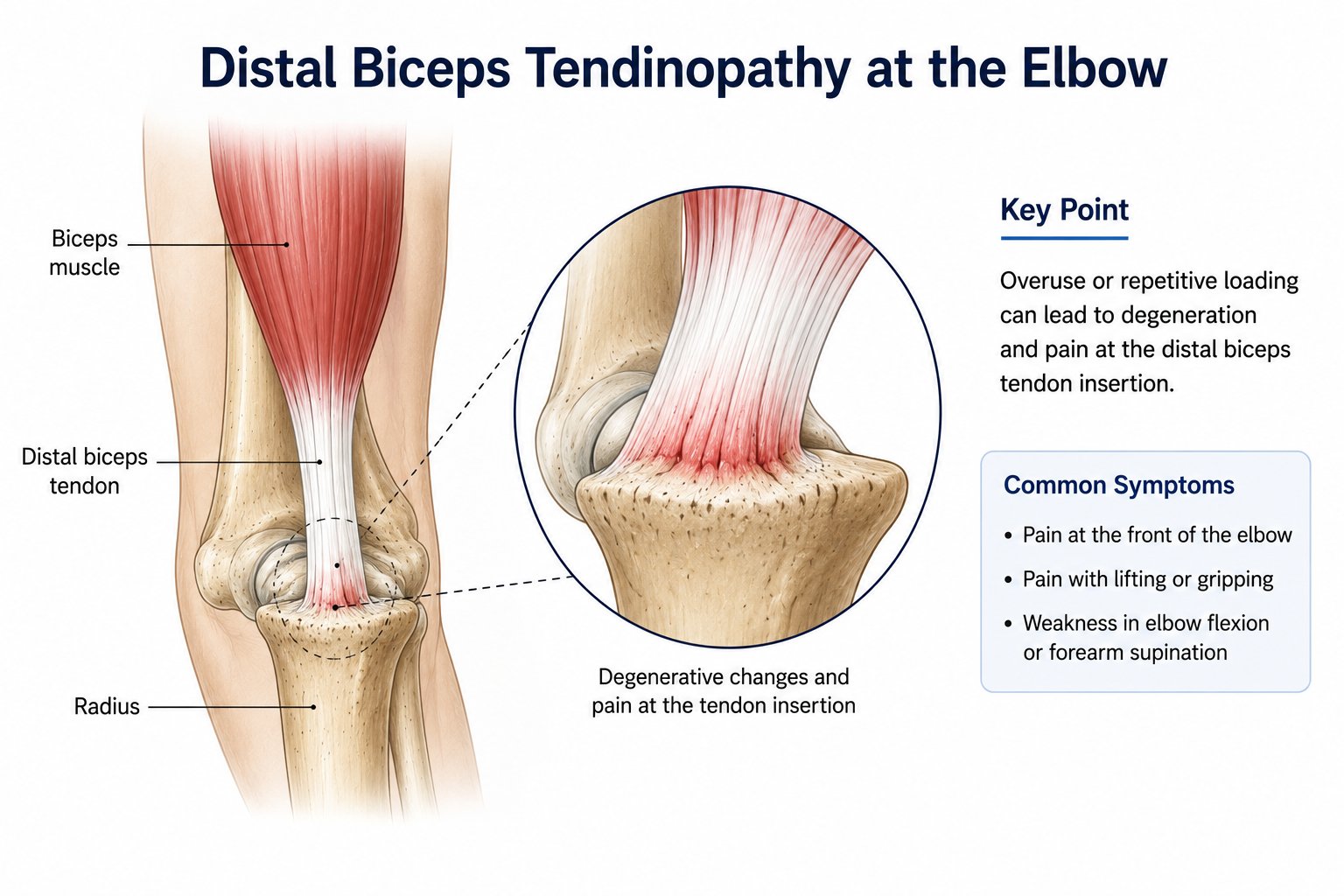
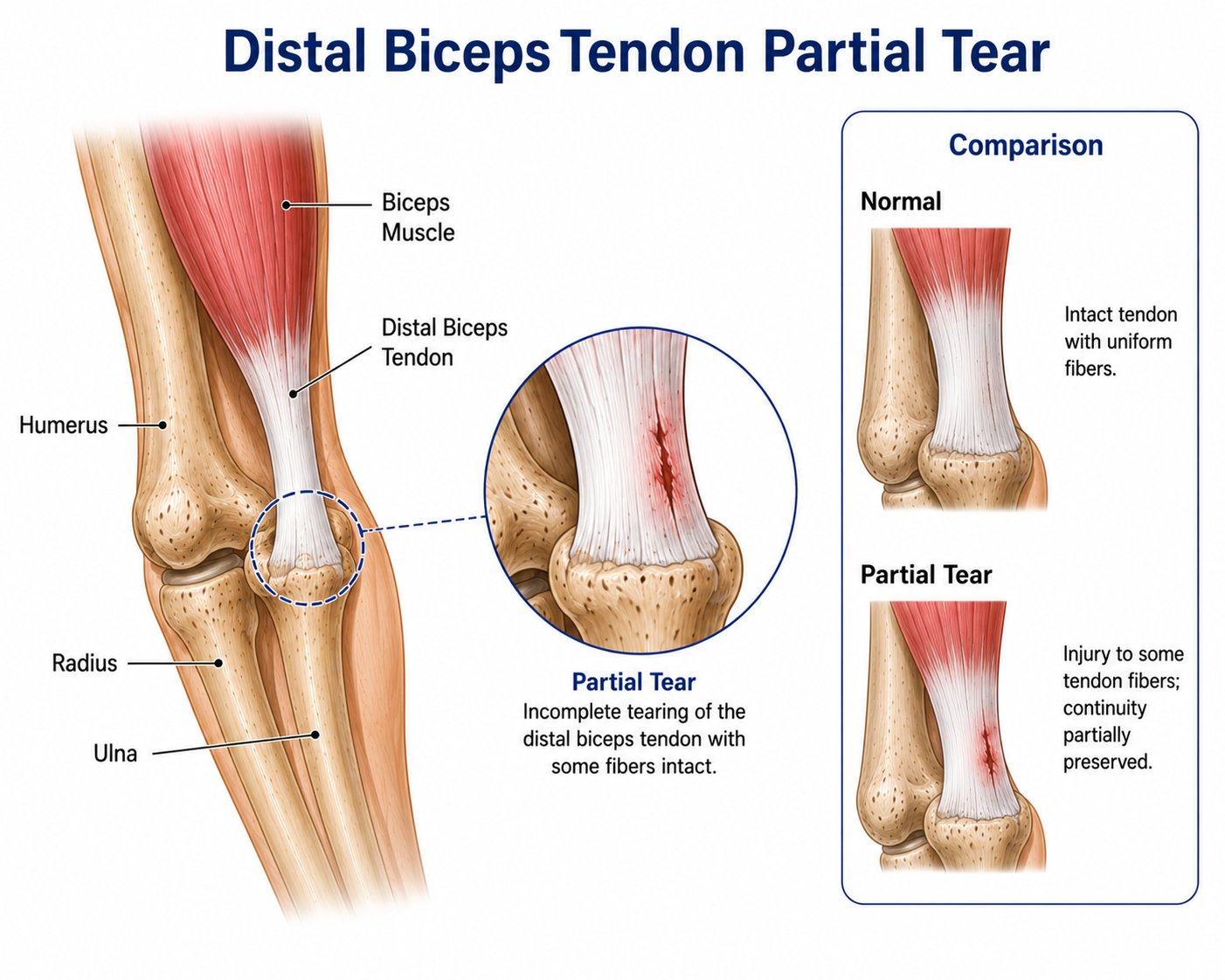
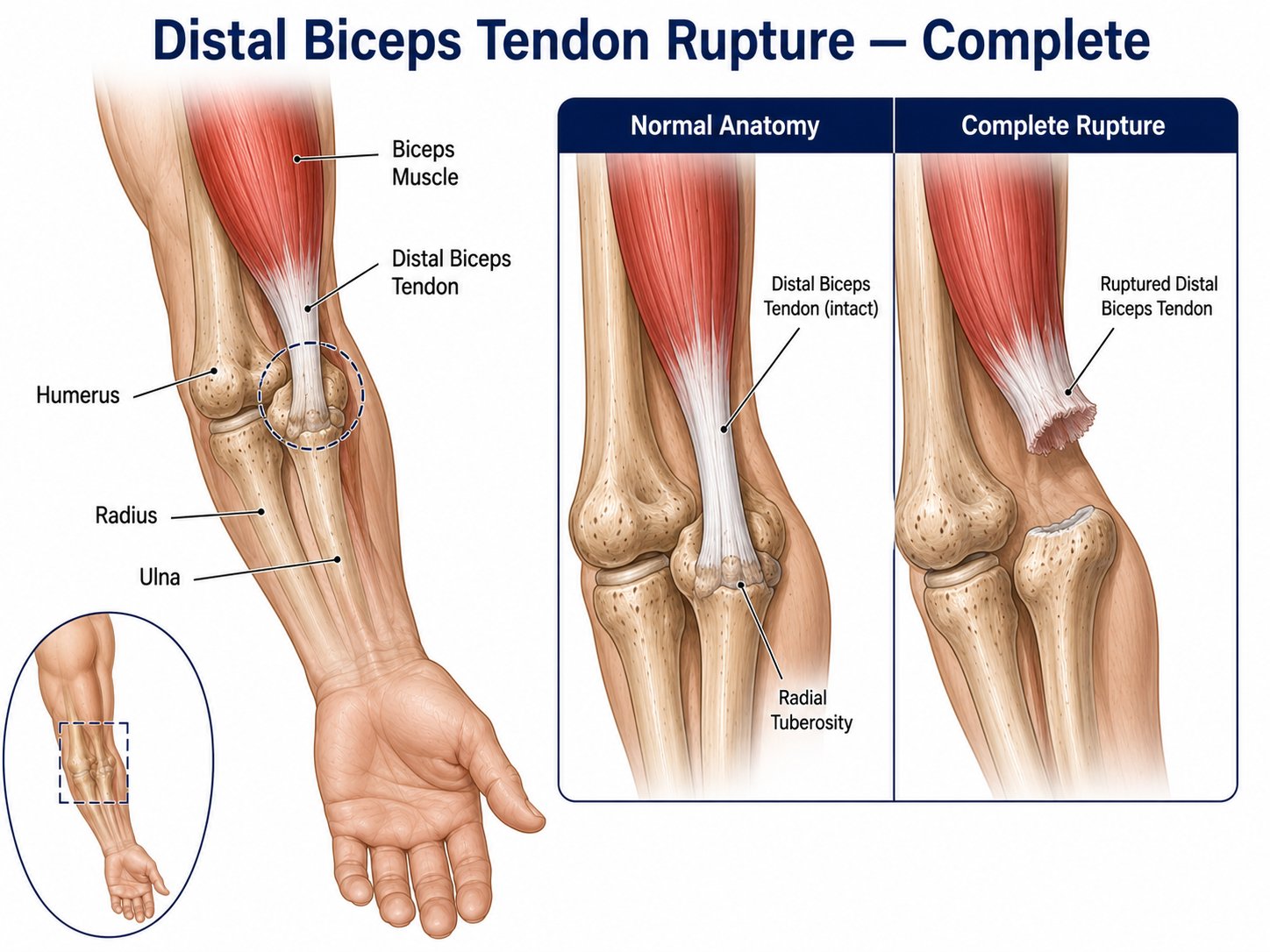
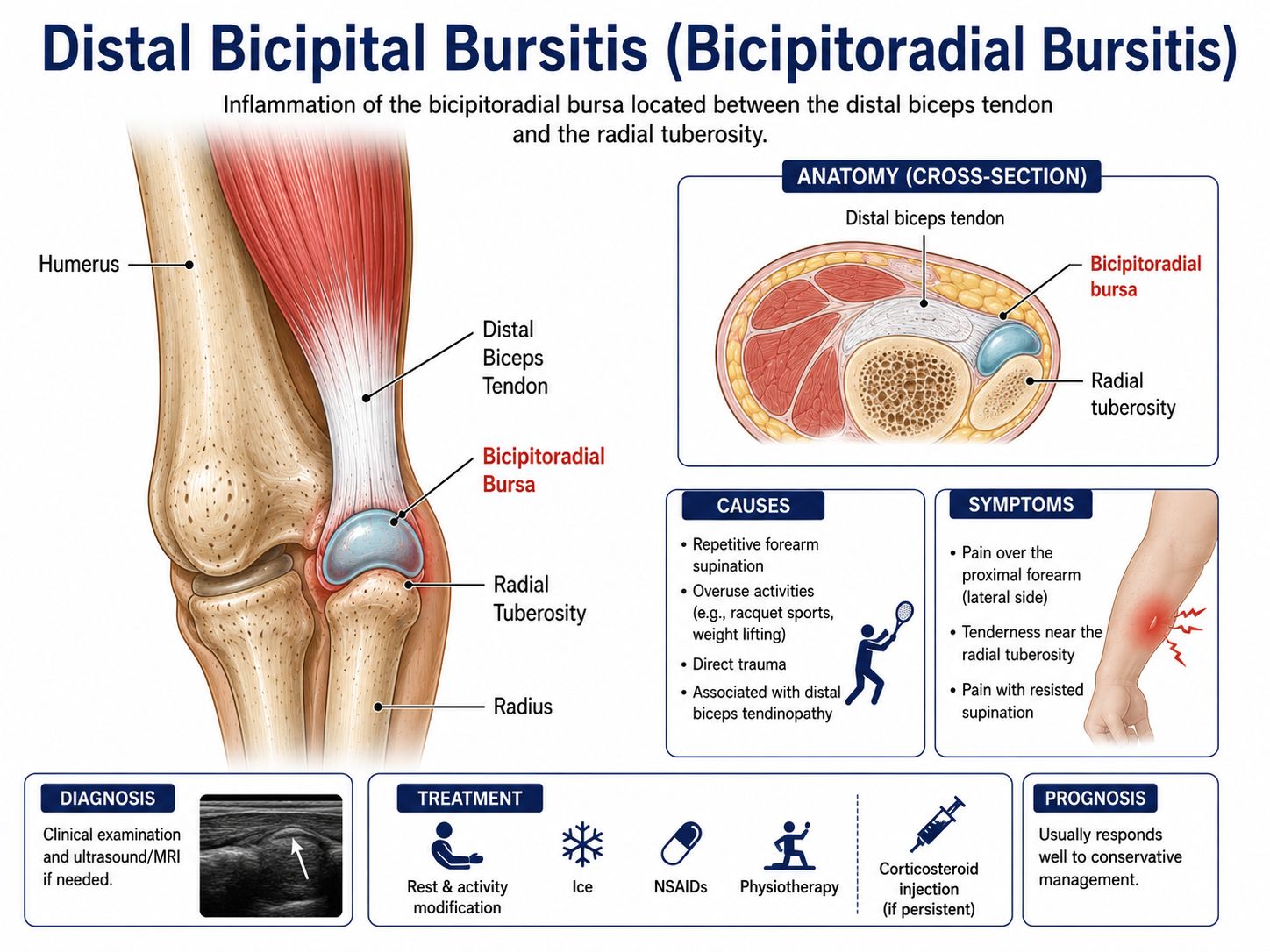
The bicipitoradial bursa is a small synovial bursa that lies between the distal biceps tendon and the radial tuberosity, lubricating the tendon’s movement over the tuberosity during forearm rotation. Inflammation of this bursa (bicipitoradial bursitis) is an important but frequently overlooked cause of anterior elbow pain — it closely mimics distal biceps tendinopathy and partial tear, both clinically and on superficial assessment.
The bursa can become inflamed through repetitive mechanical friction (during forearm rotation), from direct trauma, or as part of a systemic inflammatory arthropathy (RA, CPPD, gout). The enlarged bursa can cause a characteristic fullness or swelling in the antecubital fossa and can produce symptoms specifically with forearm rotation movements — particularly full supination, which brings the radial tuberosity closest to the biceps tendon.
The critical clinical decision in bicipitoradial bursitis is to always exclude a concurrent partial or complete distal biceps tendon tear using MRI. Treating bursitis with a steroid injection when there is a concurrent partial tear risks further tendon weakening. The MRI with FABS sequence is the key investigation before any injection into this region.
Quick Facts | Details |
Also Known As | Bicipitoradial Bursitis, Distal Biceps Bursitis, Radial Tuberosity Bursitis |
Affected Area | Bicipitoradial bursa — the synovial bursa lying between the distal biceps tendon and the radial tuberosity; anterior antecubital fossa |
Who It Affects | Adults aged 30–60 years; more common in men; associated with repetitive forearm rotation activities (manual workers, racket sport players, weightlifters); can also occur as an isolated inflammatory condition or secondary to partial biceps tear |
Prevalence | Uncommon in isolation; frequently coexists with distal biceps tendinopathy or partial tear; the bicipitoradial bursa may also be enlarged in CPPD, RA, or other inflammatory conditions; precise incidence uncertain |
Treatment | NSAIDs and relative rest; ultrasound-guided aspiration and corticosteroid injection into the bursa (NOT the tendon); MRI to exclude concurrent partial biceps tear; surgical bursectomy if recurrent or chronic |
Causes & Risk Factors
- Repetitive forearm rotation — mechanical friction between the distal biceps tendon and the radial tuberosity during pronation-supination; more friction during supination when the tuberosity rotates to face the tendon
- Occupational exposure — any repetitive forearm rotation work: plumbers, electricians, bartenders, assembly workers
- Direct trauma — a blow to the anterior elbow directly compressing the bursa
- Concurrent distal biceps tendinopathy or partial tear — the degenerated tendon irritates the adjacent bursa
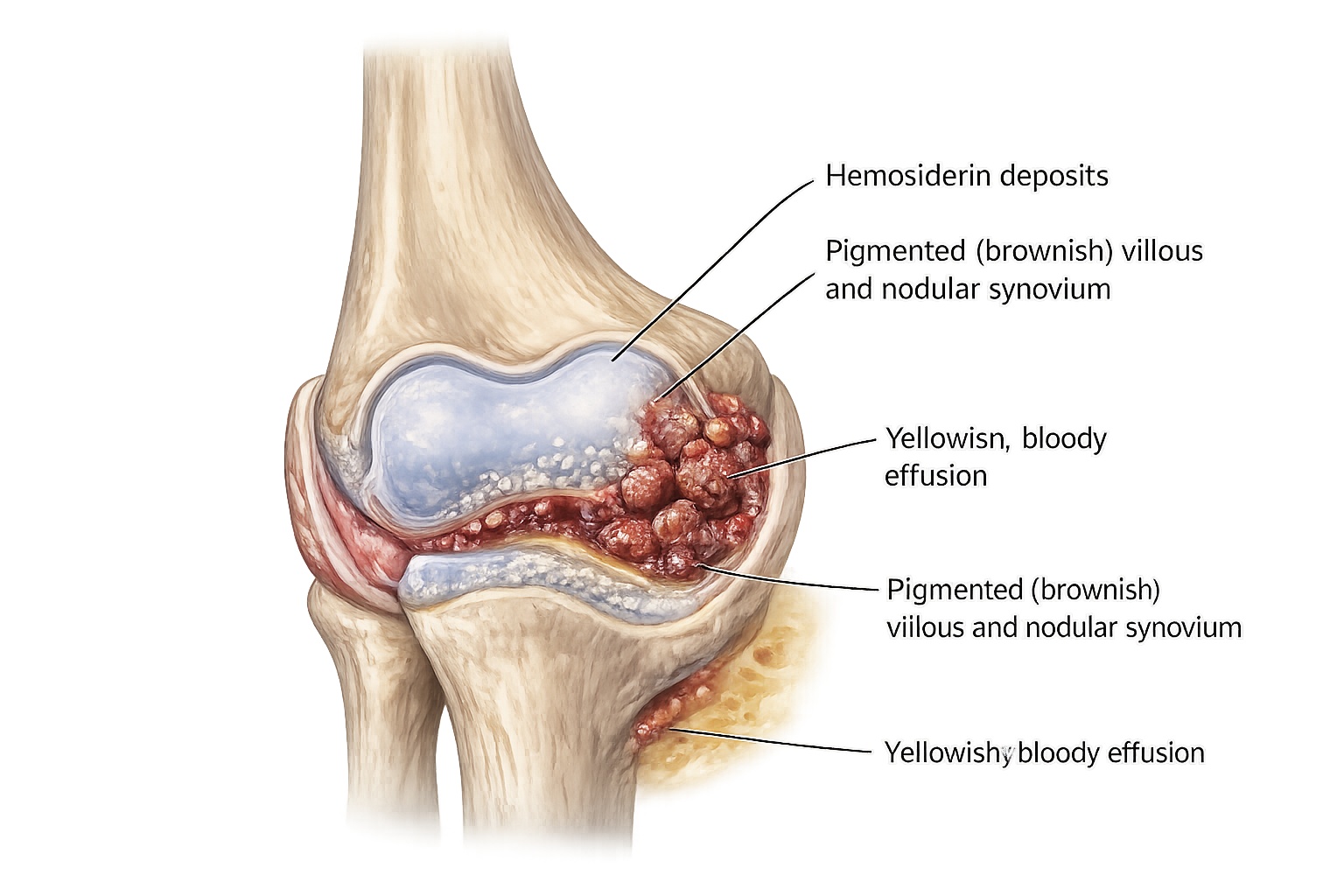
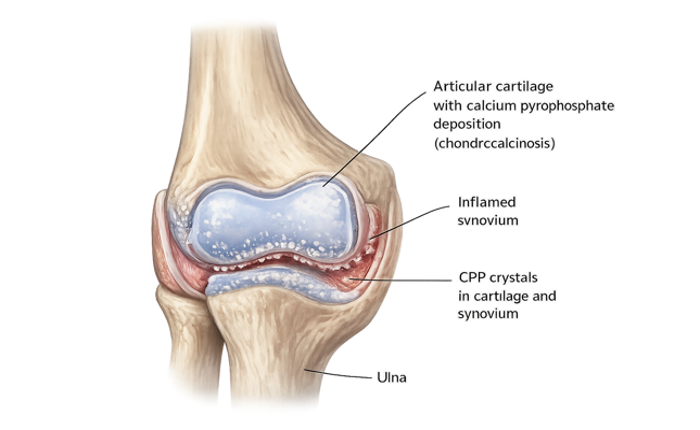
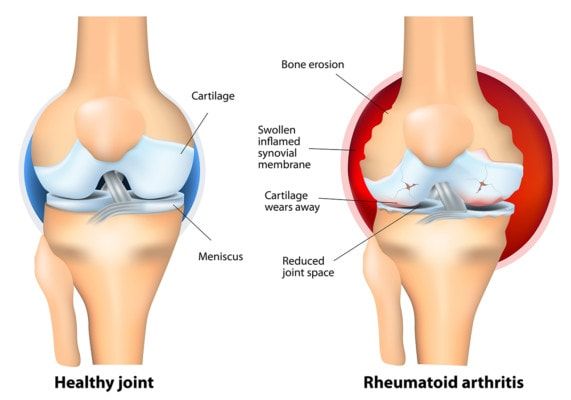
- Inflammatory arthropathy — RA, CPPD, and gout can all cause synovial proliferation in the bicipitoradial bursa
- Weightlifting — heavy biceps curls with full supination throughout the range maximally loads the bicipitoradial interface
- Distal biceps tendon thickening — a bulbous tendon footprint reduces the space between tendon and tuberosity, increasing friction
Symptoms
- Anterior elbow pain — in the antecubital fossa, medial to the biceps tendon; localised fullness or aching
- Pain reproduced by full forearm supination against resistance — the most consistent provocative test; supination brings the radial tuberosity closest to the biceps tendon, compressing the inflamed bursa
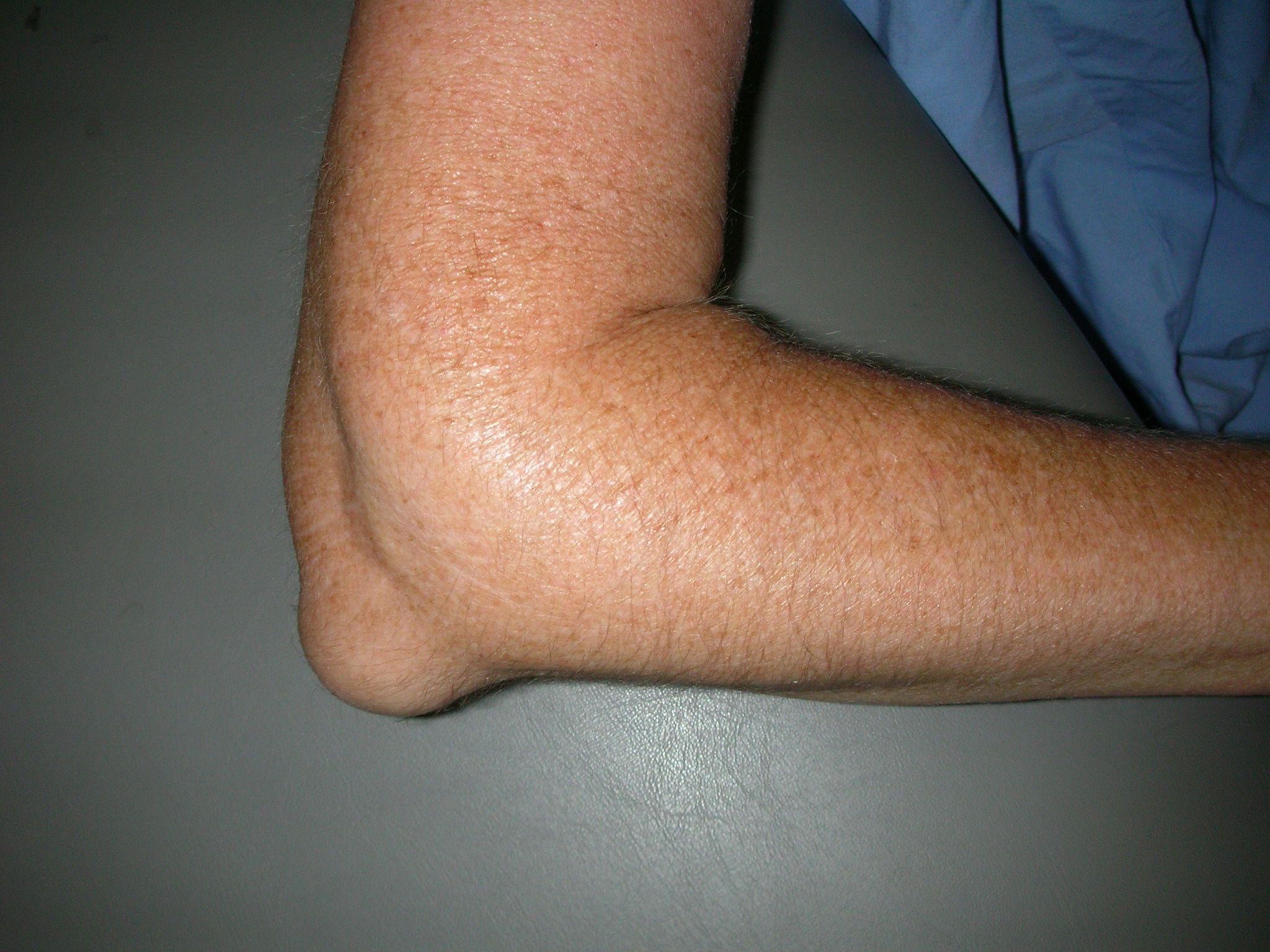
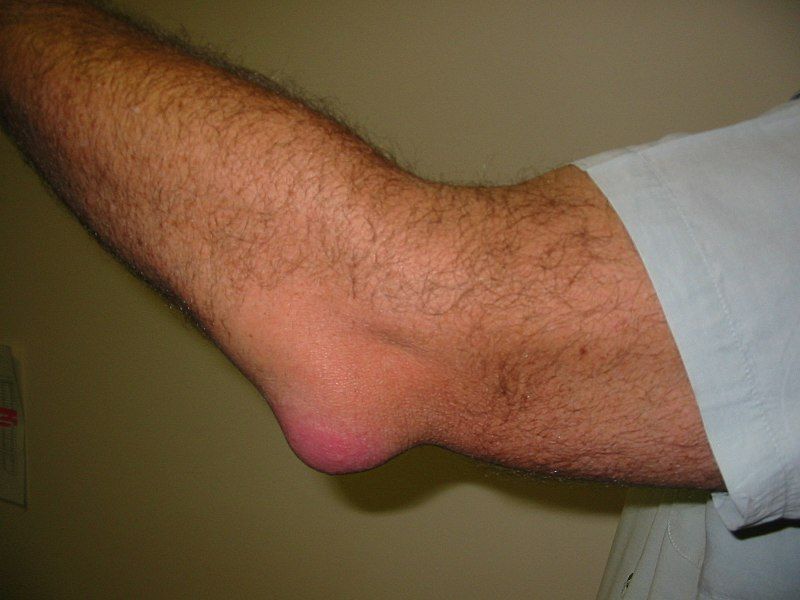
- Swelling — a visible or palpable fullness in the antecubital fossa medial to the biceps tendon; in large bursal enlargement, a visible fluctuant mass
- Pain with resisted elbow flexion in supination — the position that loads both the biceps and the bicipitoradial interface
- Reproduced by direct palpation — deep pressure in the antecubital fossa over the bicipitoradial bursa
- Reduced forearm rotation — pain limits full supination range in acute bursitis
- Hook test negative — the hook test should be negative (indicating the biceps tendon is intact); positive hook test with concurrent swelling suggests both bursitis and biceps tendon pathology
How is it Diagnosed?
- Clinical examination — antecubital fossa tenderness (medial to biceps tendon); resisted supination provocation; hook test (exclude tendon rupture); forearm rotation range; assess for systemic inflammatory features
- Ultrasound — most accessible investigation; identifies bursal fluid (anechoic collection adjacent to the distal biceps tendon and radial tuberosity); measures bursal size; guides aspiration; concurrent tendon assessment
- MRI with FABS sequence — ESSENTIAL before any injection; identifies bursal enlargement; concurrent partial or complete biceps tendon tear; T2 fluid signal within the bursa; differentiates from complete tear
- Blood tests — if systemic inflammatory arthropathy suspected: FBC, CRP, ESR, RF, anti-CCP, uric acid
- Bursal fluid analysis — if aspiration performed: send for WBC count, crystals, Gram stain and culture; excludes infection, gout, CPPD

Treatment Options
Treatment Type | Details |
Rest & NSAIDs | Relative rest from provocative forearm rotation activities; oral or topical NSAIDs for 2–4 weeks; effective for mild bursitis |
Ultrasound-Guided Aspiration | Aspiration of the bursal fluid under real-time ultrasound guidance; removes the mechanical pressure contributing to pain; fluid sent for analysis; can be done in clinic |
Ultrasound-Guided Corticosteroid Injection | Following aspiration, corticosteroid (triamcinolone) injected into the bursa; provides excellent anti-inflammatory effect; NOTE: the injection must be confirmed within the bursa, NOT into the biceps tendon — MRI should be performed before injection to exclude partial tear; maximum 3 injections |
MRI-Guided Exclusion of Tear | Always perform MRI (FABS sequence) before corticosteroid injection when there is uncertainty about concurrent biceps tear — intratendinous injection in the context of a partial tear risks progression to complete rupture |
Physiotherapy | Address the underlying mechanical cause; modify forearm rotation loading; progressive return to activity |
Surgical Bursectomy | For chronic, recurrent, or large bicipitoradial bursitis refractory to aspiration and injection; single anterior incision; complete bursectomy; address concurrent biceps tendon pathology (débridement, partial repair); day-case procedure; very effective |
Recovery & Rehabilitation
- After aspiration and injection: pain relief within 48–72 hours; activity restriction 1–2 weeks; progressive return to rotation activities over 4–6 weeks
- Recurrence: possible if the underlying mechanical cause (repetitive rotation) is not modified; 20–30% recurrence rate after single injection; surgical bursectomy has the lowest recurrence
- After surgical bursectomy: sling 48 hours; immediate ROM; physiotherapy from week 1; return to full activity 4–6 weeks; return to manual work 4–8 weeks
- MRI at 3 months post-treatment to confirm bursal resolution and reassess tendon integrity in cases with initial concern for partial tear
Why choose Dr Senthilvelan?
Bicipitoradial bursitis requires precise ultrasound-guided injection technique to ensure the corticosteroid is delivered into the bursa and not into the biceps tendon — a distinction with important consequences. Dr Senthilvelan performs all injections under real-time ultrasound guidance and always obtains MRI to exclude a concurrent biceps tear before any injection at the distal biceps insertion.
Frequently Asked Questions
1. How is bicipitoradial bursitis different from a biceps tendon problem?
Both cause anterior elbow pain in the antecubital fossa, but they affect different structures. Bicipitoradial bursitis is inflammation of the bursa (a small fluid-filled sac) between the biceps tendon and the radial tuberosity. It is characterised by pain specifically with full forearm supination and a soft, fluctuant swelling in the antecubital fossa. Biceps tendinopathy or partial tear causes pain more directly along the tendon and with resisted elbow flexion or supination, and there may be localised tendon tenderness. MRI with the FABS sequence definitively distinguishes the two and identifies if they are co-existing.
2. Why is it important to do an MRI before a steroid injection for this condition?
This is a critical safety consideration. Corticosteroid injection into the bicipitoradial bursa can be very effective for isolated bursitis. However, if there is a concurrent partial distal biceps tendon tear and the corticosteroid accidentally enters the already-weakened tendon substance, it can further degrade tendon collagen and increase the risk of progression to a complete rupture. MRI with the FABS sequence precisely identifies whether a partial tear is present and how close it is to the injection zone. This information is essential for safe injection planning.
3. I have a lump at the front of my elbow that is soft and fluctuant — is this the bursa?
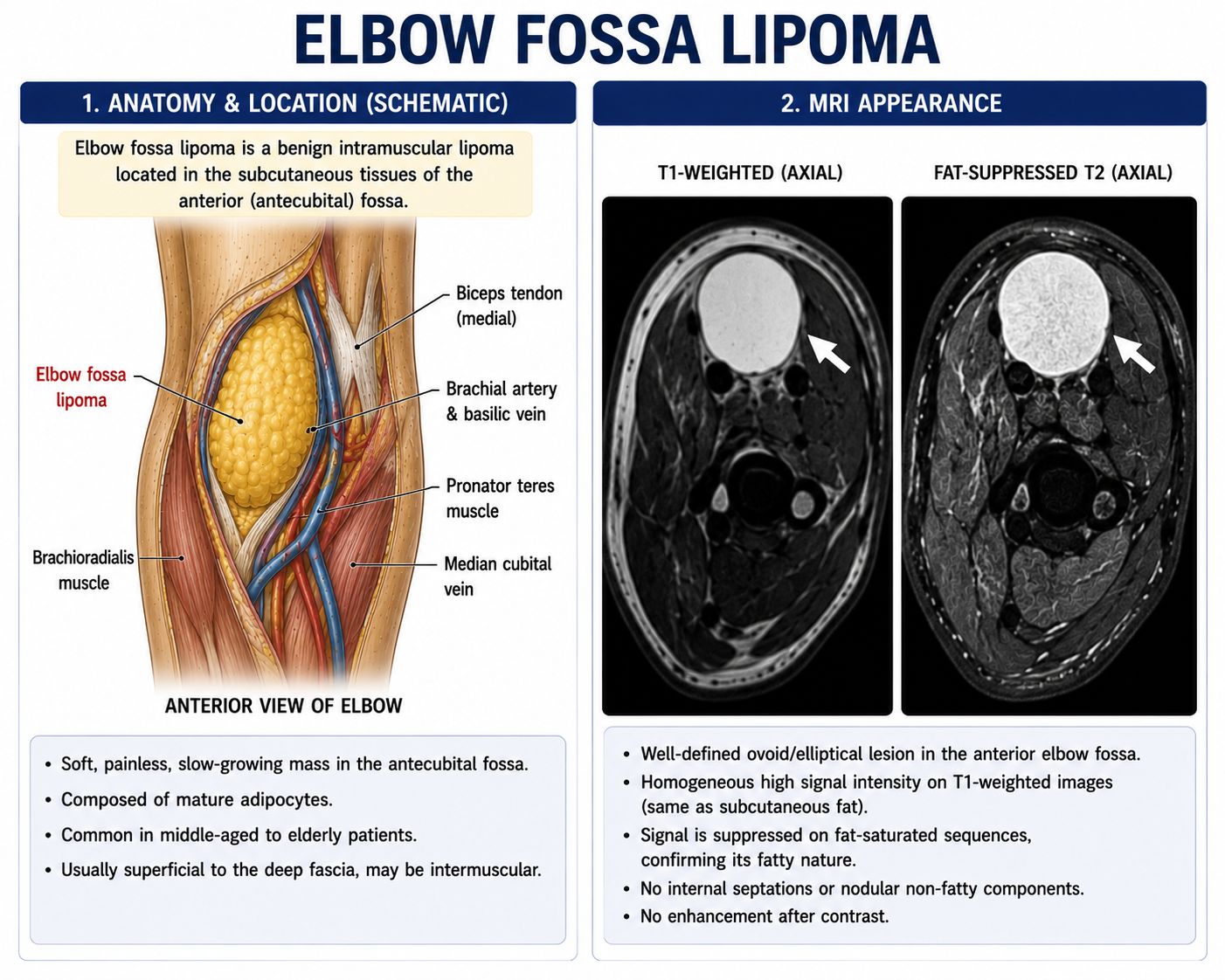
Yes — a soft, fluctuant (fluid-filled and compressible) swelling in the antecubital fossa (the front of the elbow crease) that is painful with forearm rotation is characteristic of bicipitoradial bursal enlargement. Ultrasound will confirm the fluid-filled nature of the swelling and its relationship to the biceps tendon. This is distinct from a hard, non-compressible lump (which might suggest calcification, a lipoma, or a bone-related lesion) and from the diffuse soft tissue swelling seen in acute tendon rupture.
4. Can bicipitoradial bursitis develop from an inflammatory condition like rheumatoid arthritis?
Yes — any inflammatory arthropathy, including rheumatoid arthritis, psoriatic arthritis, and crystal arthropathies (gout, CPPD), can cause synovial proliferation and bursal enlargement at the bicipitoradial bursa. In this context, the bursa contains proliferative synovium rather than simple reactive fluid. Bursal fluid analysis (aspirated for WBC count, crystal examination, and culture) helps distinguish inflammatory from mechanical bursitis. Treatment of inflammatory bursitis includes optimising the systemic disease management in addition to local aspiration and injection.
5. How many times can the bursa be injected before surgery is needed?
A maximum of 3 corticosteroid injections into the bicipitoradial bursa over a 12-month period is the generally accepted limit. Repeated corticosteroid injections cause progressive degeneration of the bursal wall and, importantly, risk weakening the adjacent biceps tendon if the injection is not precisely placed. If symptoms recur after 2–3 injections, surgical bursectomy — which permanently removes the bursa — provides durable resolution with a low recurrence rate. The procedure is straightforward and well-tolerated as a day-case operation.