Overview
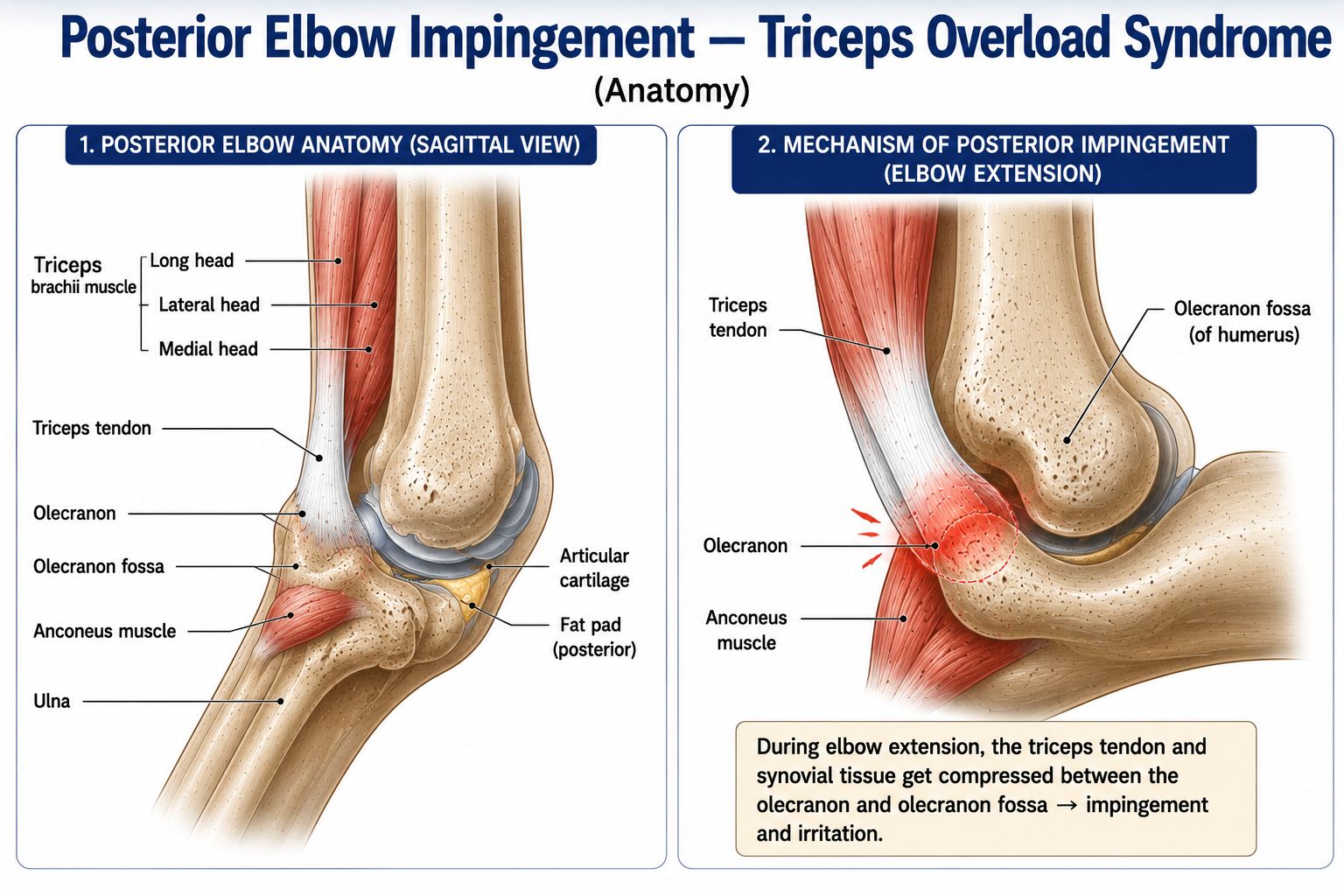
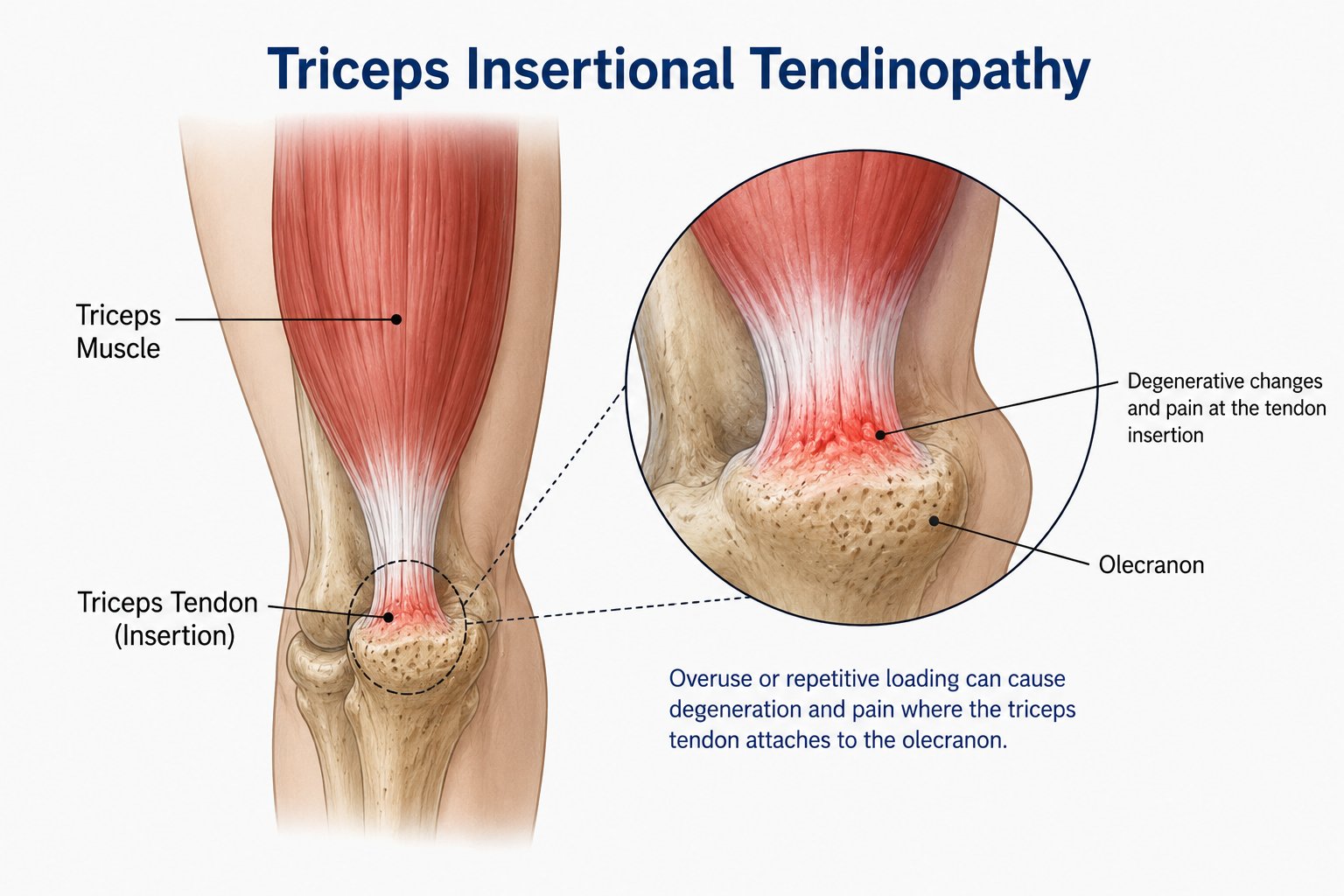
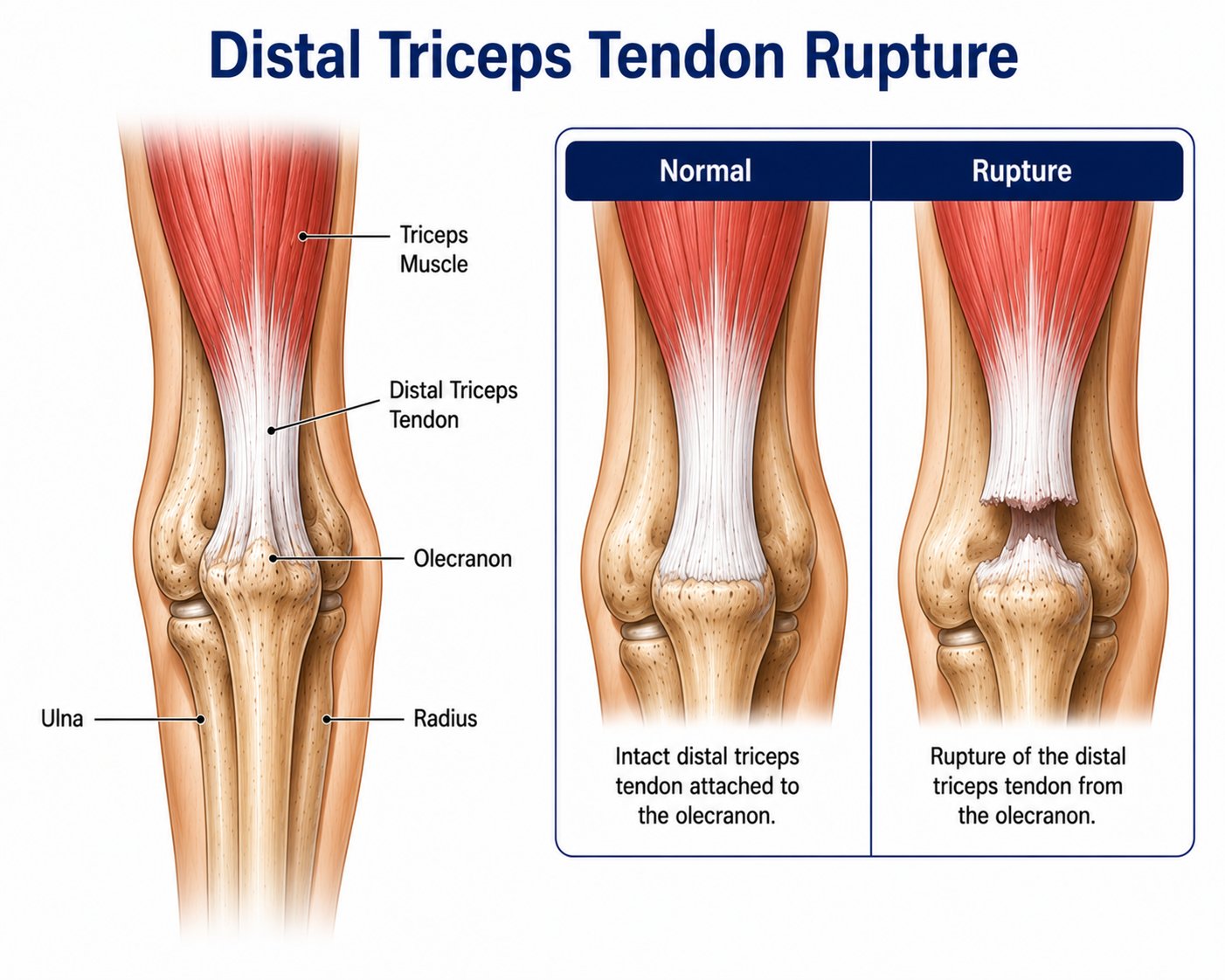
The triceps tendon inserts broadly onto the olecranon process of the proximal ulna and is responsible for elbow extension — the ability to straighten the arm against gravity and resistance. A distal triceps rupture results in loss of active elbow extension power, which significantly impairs pushing, pressing, and reaching activities.
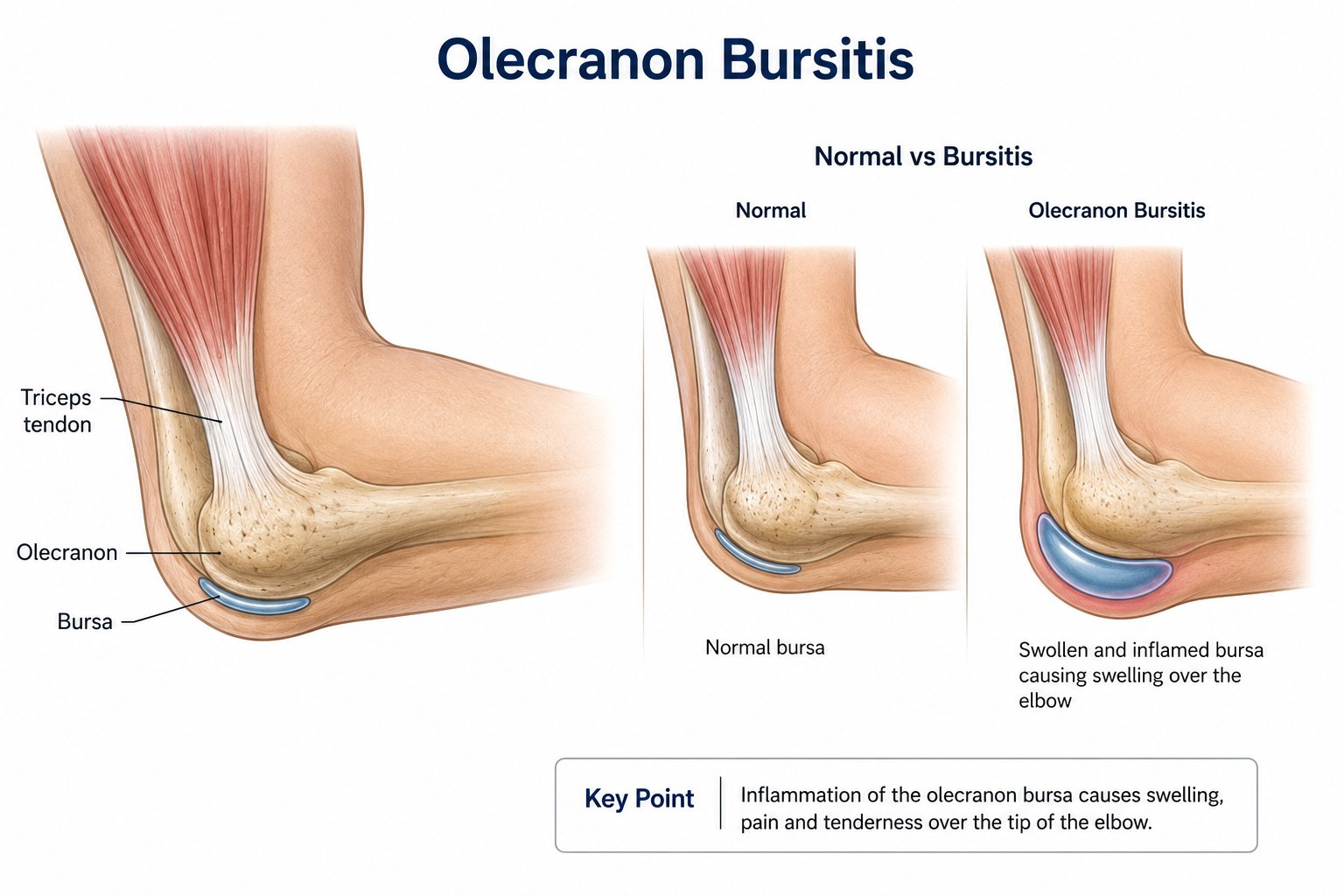
Triceps rupture is the rarest major tendon rupture, but its rarity means it is frequently missed — initially misdiagnosed as a posterior elbow contusion, olecranon fracture (the avulsion variant), or olecranon bursitis. A high index of suspicion is needed: any patient presenting with posterior elbow pain after a fall and difficulty extending the elbow against gravity should be examined carefully for triceps tendon disruption.
The injury most commonly occurs through an eccentric loading mechanism — the triceps fires to decelerate elbow flexion during a fall, and the force exceeds the tendon’s tensile strength. The tendon typically avulses from the olecranon, sometimes with a small bone fragment (bony avulsion). Surgical repair within the first 3–4 weeks gives the best outcomes.
Quick Facts | Details |
Also Known As | Triceps Tendon Avulsion, Triceps Rupture, Distal Triceps Avulsion |
Affected Area | Distal triceps tendon at its insertion onto the olecranon process of the proximal ulna |
Who It Affects | Adults; more common in men; typically follows an eccentric triceps loading mechanism (fall onto an outstretched arm); also associated with anabolic steroid use, systemic corticosteroids, renal osteodystrophy, and olecranon corticosteroid injections |
Prevalence | The rarest of the major tendon ruptures — less than 1% of all tendon injuries; approximately 0.8 per 100,000 per year; often missed or confused with olecranon fracture on initial presentation |
Treatment | Complete rupture in active patients: surgical reinsertion onto olecranon via drill holes or suture anchors ± augmentation; partial tears <50%: conservative; elderly low-demand: observe but expect permanent extensor weakness |
Causes & Risk Factors
- Eccentric overload — a fall onto an outstretched arm with the triceps contracting to decelerate elbow flexion; the classic mechanism
- Direct blow to the posterior elbow — direct trauma to the olecranon region during contact sports; the tendon is compressed between the blow and the underlying bone
- Weightlifting — bench press accidents; the triceps is maximally loaded during the push phase; sudden failure causes rupture
- Anabolic steroid use — the most frequently associated systemic factor; causes tendon degeneration and dramatically increased rupture risk
- Systemic corticosteroids — long-term steroid use weakens tendon collagen quality
- Renal osteodystrophy and secondary hyperparathyroidism — metabolic bone disease weakens the bone-tendon interface; triceps avulsion can occur with minimal trauma
- Olecranon corticosteroid injection — direct injection into the olecranon bursa (or inadvertently into the triceps tendon) can weaken the tendon-bone interface
- Pre-existing olecranon tendinopathy — degenerate triceps insertion is more prone to complete avulsion
Symptoms
- Posterior elbow pain — sudden onset at the point of the elbow; following a specific injury event
- Inability to extend the elbow against gravity — the key functional deficit; the patient can flex normally but cannot push the elbow straight
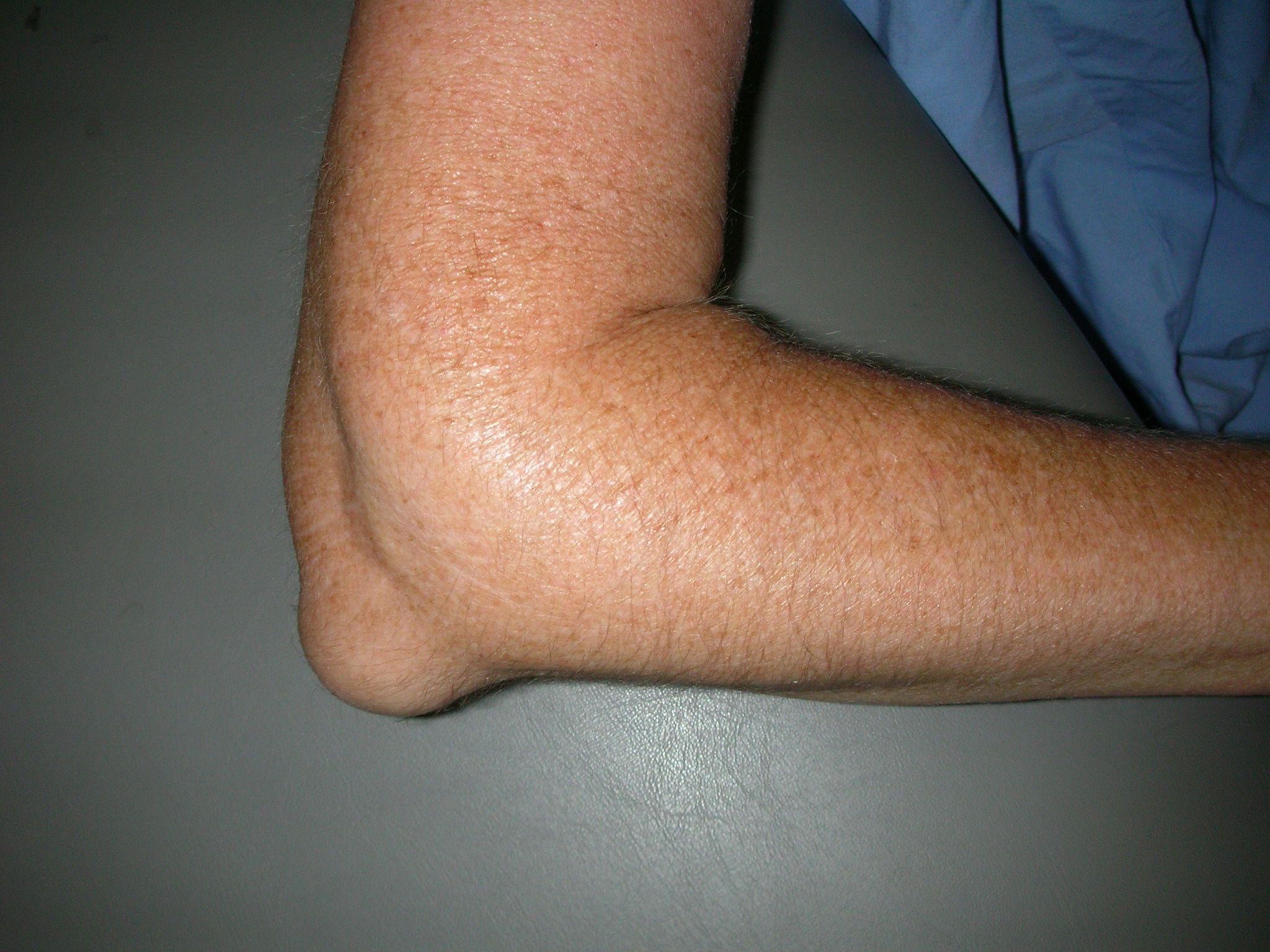
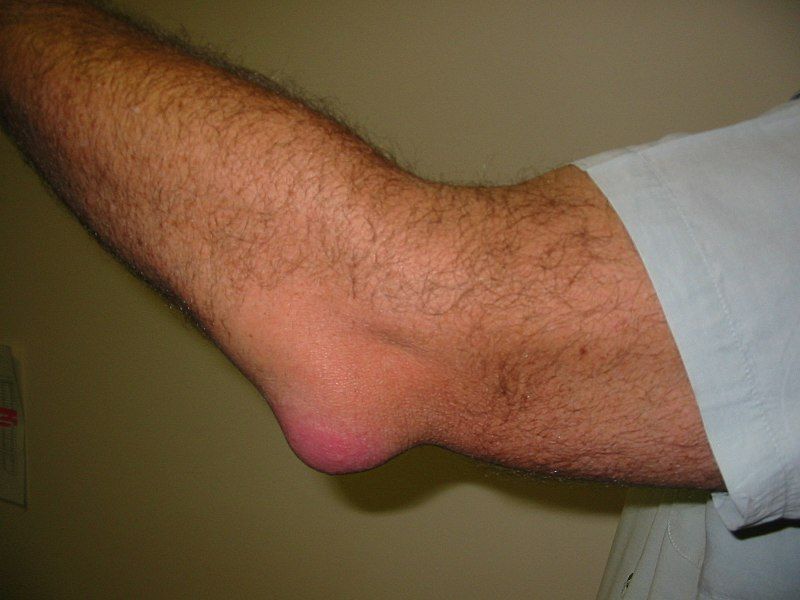
- Palpable gap — in complete ruptures, a defect is often palpable at the olecranon insertion just proximal to the tip of the elbow
- Swelling and bruising — posterior elbow swelling; often initially attributed to olecranon bursitis
- Weakness of push activities — pushing a door, bench pressing, rising from a chair using the arms
- Positive modified Thompson test — with the elbow flexed over the edge of the table, squeezing the triceps muscle belly should cause passive elbow extension; no extension = complete tear (modified from the calf squeeze test for Achilles)
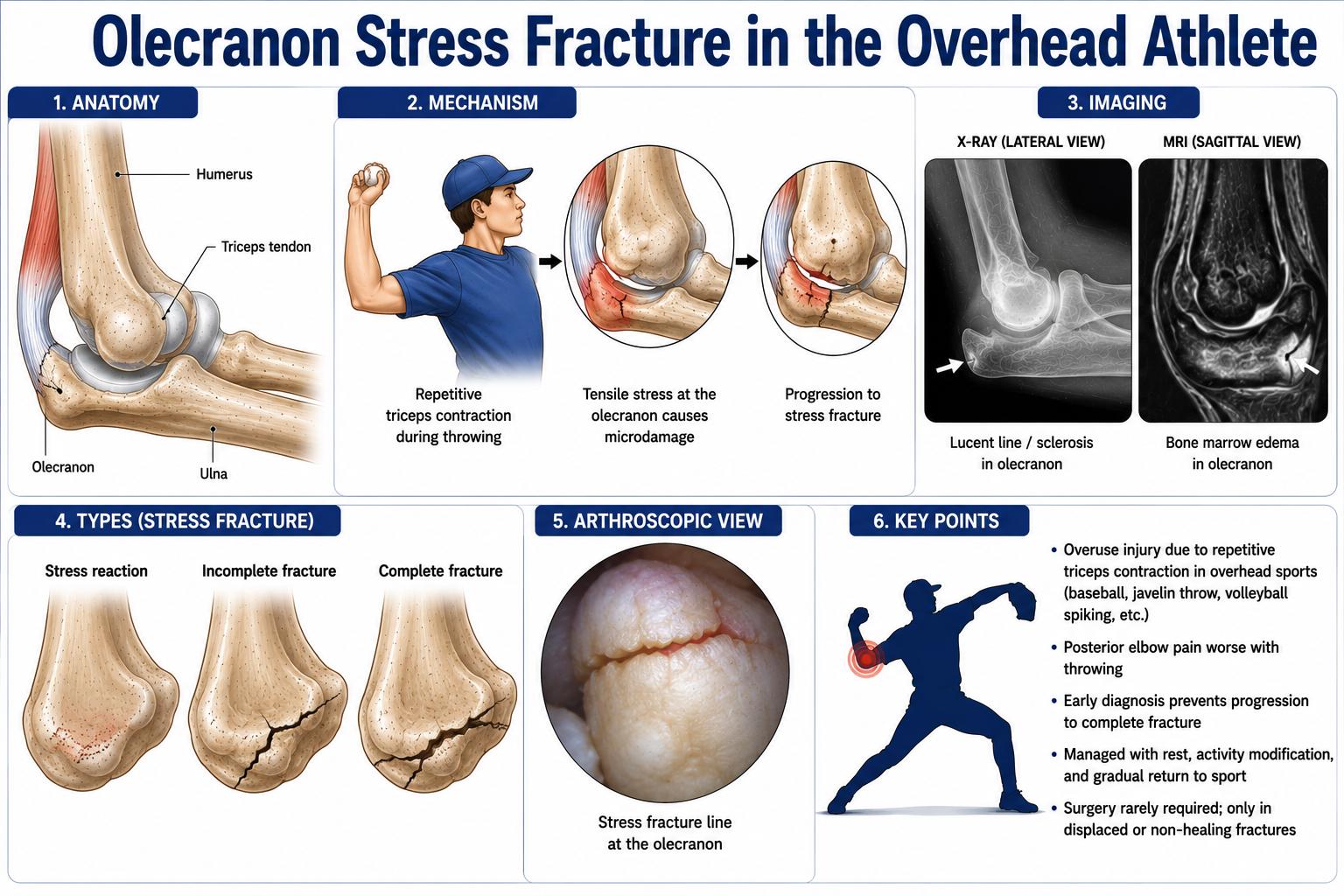
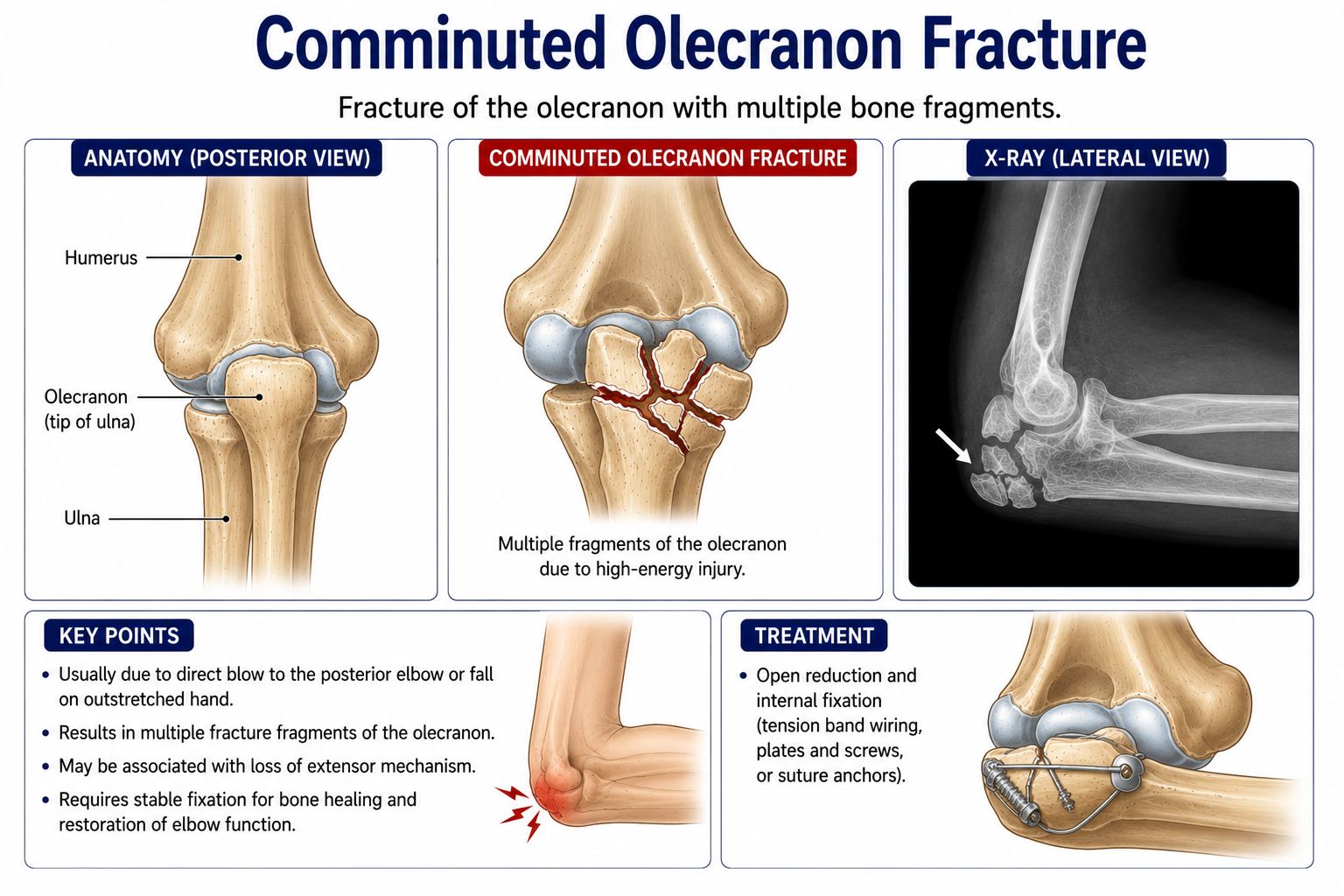
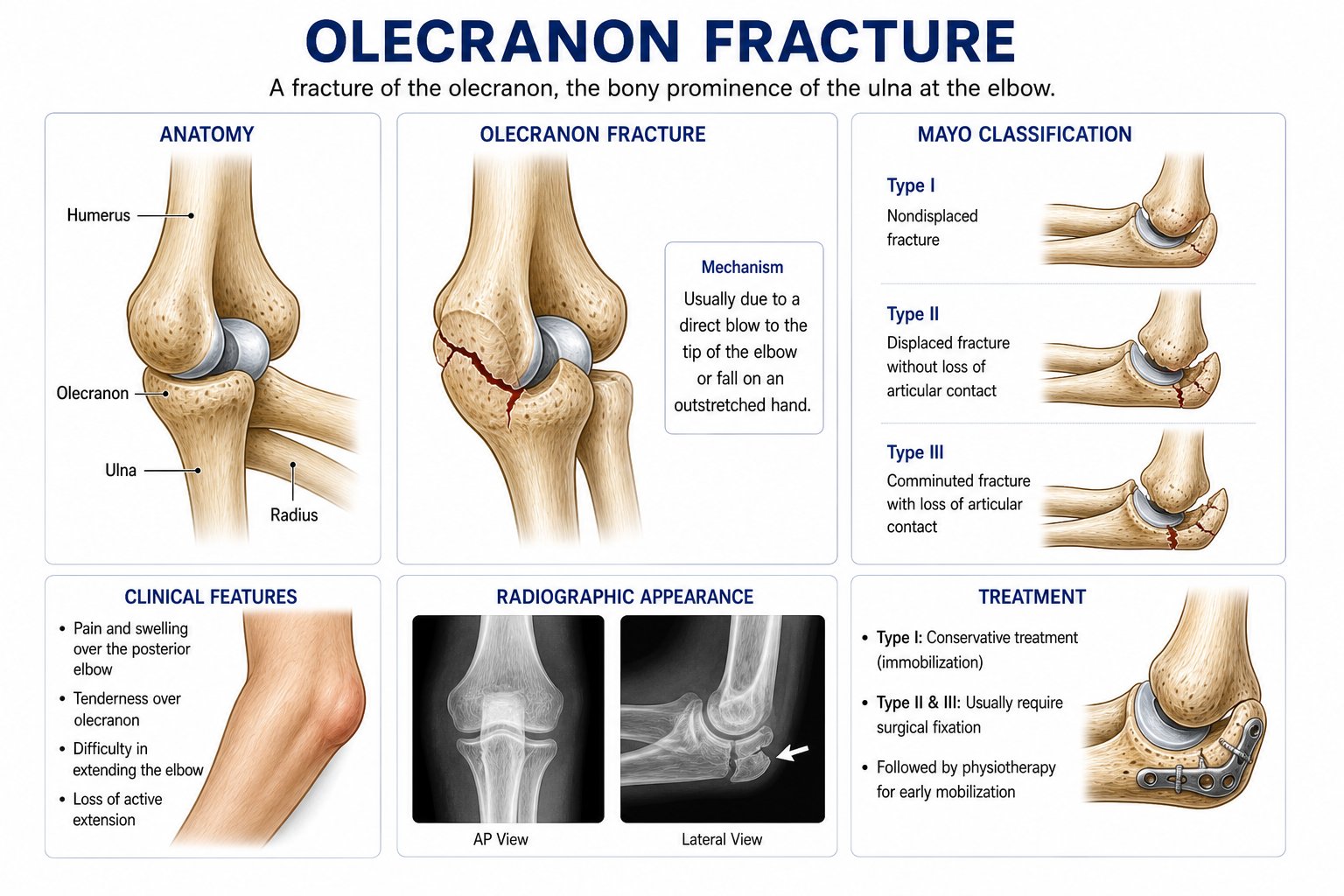
- Olecranon avulsion variant — a small bony fragment visible on the lateral X-ray; misidentified as an olecranon fracture
How is it Diagnosed?
- Clinical examination — palpable defect at the olecranon; modified Thompson test; inability to extend the elbow against gravity; assess skin integrity over the olecranon
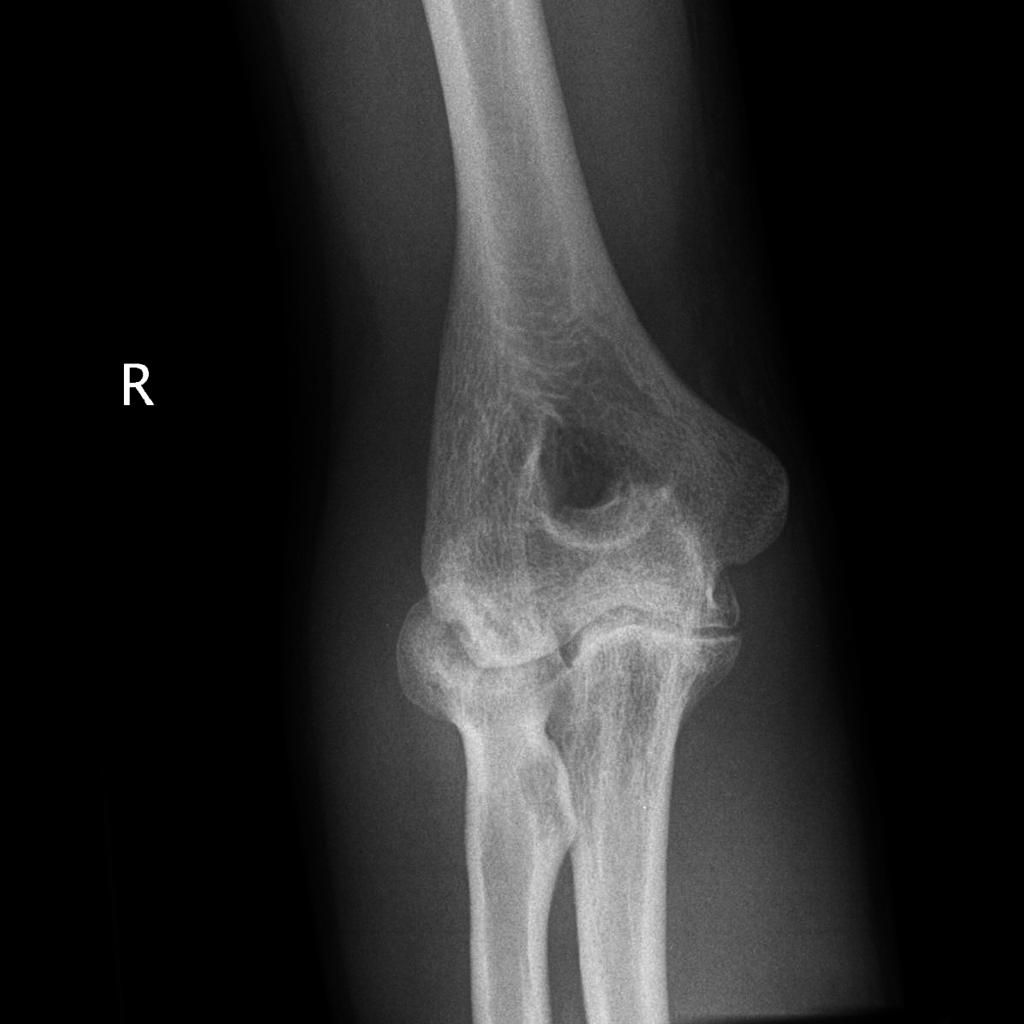
- Plain X-rays (AP + lateral) — assess for an olecranon avulsion fragment; small calcified fragment proximal to the olecranon tip; exclude olecranon fracture
- Ultrasound — identifies tendon gap and tear extent; partial vs complete; measures retraction distance; real-time dynamic assessment during triceps contraction
Treatment Options
Treatment Type | Details |
Surgical Repair (Complete Acute Rupture) | Posterior elbow incision; identify and retrieve retracted tendon end; protect ulnar nerve medially; freshen the olecranon footprint; reinsert through bone tunnels (Krakow sutures threaded through 2–3 drill holes in the olecranon) or suture anchors; augment with lateral triceps expansion where possible; repair done with the elbow in full extension |
Augmentation (Graft) | For chronic tears (>4 weeks) where the tendon is retracted, scarred, and of poor quality: augment with ipsilateral palmaris longus, plantaris, or acellular dermal allograft; restores length and strength to the repair |
Partial Tear (<50%) Conservative | Rest, activity modification, and avoidance of extension loading for 4–6 weeks; physiotherapy; return to activity gradually; MRI at 3 months to confirm healing; surgery for failed conservative treatment |
Non-Operative (Complete Tear — Elderly Low-Demand) | Immobilisation in extension for 4–6 weeks; physiotherapy; permanent loss of active extension against gravity; suitable for very elderly, frail, or medically unfit patients with low functional demands |
Recovery & Rehabilitation
- After surgical repair: posterior splint in extension for 4 weeks; passive ROM (gentle flexion only to 60° for first 4 weeks to protect repair); active ROM from week 4; full ROM targeted by 10 weeks
- Progressive extension strength training from week 10 onwards
- Return to manual work: 3–4 months; return to gym and pressing exercises: 4–6 months
- Extension strength recovery: 85–90% of contralateral side by 6 months; most patients return to full pre-injury function
- Complications: re-rupture (uncommon, <5%); post-operative stiffness; olecranon bursitis over the hardware; ulnar nerve irritation
- Key message: acute repair within 3–4 weeks gives the best outcomes; chronic repair requires augmentation and has less predictable but still useful results
Why choose Dr Senthilvelan?
Distal triceps tendon rupture is rare but important — it is the missed diagnosis in many cases presenting as ‘posterior elbow pain’. Dr Senthilvelan has experience in all repair techniques including transosseous tunnel repair, anchor fixation, and augmented graft reconstruction for chronic cases, achieving reliable restoration of elbow extension power.
Frequently Asked Questions
1. I fell and hurt the back of my elbow — how do I know if I have ruptured my triceps tendon?
The key test is whether you can extend the elbow against gravity — that is, hold the arm so that the elbow hangs downwards and try to straighten it. If you cannot generate extension movement against the pull of gravity, the triceps tendon is likely completely torn. If extension is present but weak and painful, a partial tear is more likely. A palpable gap just proximal to the tip of the elbow (between the pulled-back tendon end and the olecranon) is strongly suggestive of a complete rupture. Seek urgent assessment — repair in the first 3–4 weeks gives the best outcomes.
2. Why is triceps rupture rare compared to biceps or quadriceps rupture?
The triceps tendon is intrinsically stronger than the biceps tendon and inserts over a much broader footprint on the olecranon. It is also less commonly placed under the high eccentric loads that cause other tendon ruptures — the positions in which the triceps fails (deceleration during a fall, bench press) are less common in everyday activity than the loaded elbow flexion positions that stress the biceps. The one population in which triceps rupture is disproportionately common is anabolic steroid users — the steroids cause tendon degeneration that reduces the triceps’s normal strength advantage.
3. What happens if a triceps rupture is not repaired?
An unrepaired complete triceps rupture results in permanent inability to actively extend the elbow against gravity or resistance. The patient can still extend the elbow if the arm is in a gravity-neutral position (shoulder abducted to 90°), using the anconeus and forearm extensors, but cannot push, press, or reach above the head effectively. This is severely disabling for any manual worker or active adult. Non-operative management is only appropriate for very elderly, low-demand patients where the functional loss is acceptable.
4. Does a triceps repair require a long period of immobilisation?
Yes — the early phase of recovery requires protecting the repair while the tendon heals back to bone. The elbow is splinted in extension for the first 4 weeks, with only very gentle passive flexion to 60° during this period. Active extension exercises are not performed for the first 4 weeks to avoid tensioning the repair. Active ROM begins at 4 weeks, and progressive loading begins at 10 weeks. The full recovery timeline to return to pressing and manual work is 3–4 months.
5. Can I have the surgery done if it has been more than a month since my injury?
Yes, but the surgery becomes significantly more complex with increasing delay. After 4 weeks, the tendon end retracts further and becomes encased in scar tissue. The tendon tissue itself degenerates and shortens. Direct repair without augmentation may be impossible. Reconstruction using a tendon graft (palmaris longus, plantaris, or acellular dermal allograft) is required to bridge the gap and restore length. These augmented repairs are more complex, have a longer recovery, and outcomes are less predictable — but still give useful functional recovery in most patients. Surgery at any stage is better than leaving a complete rupture unrepaired.