Overview
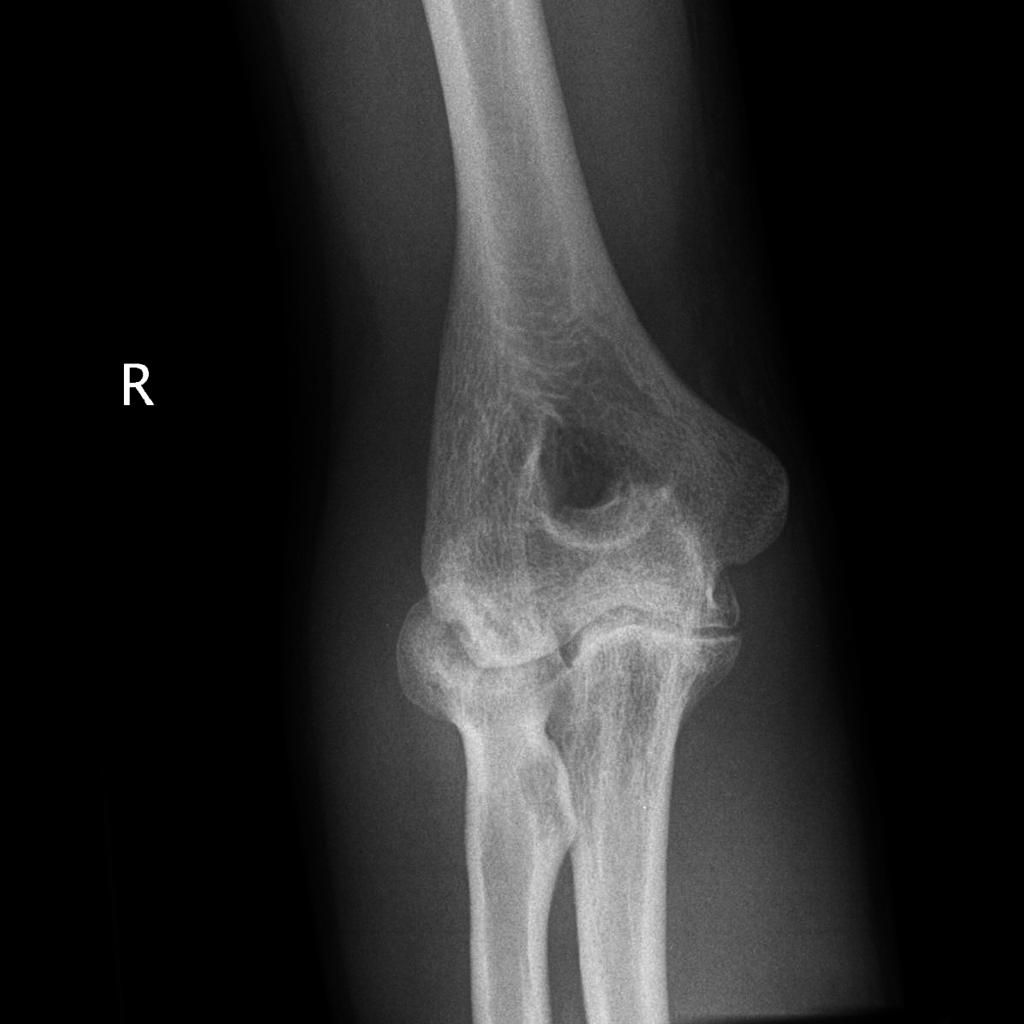
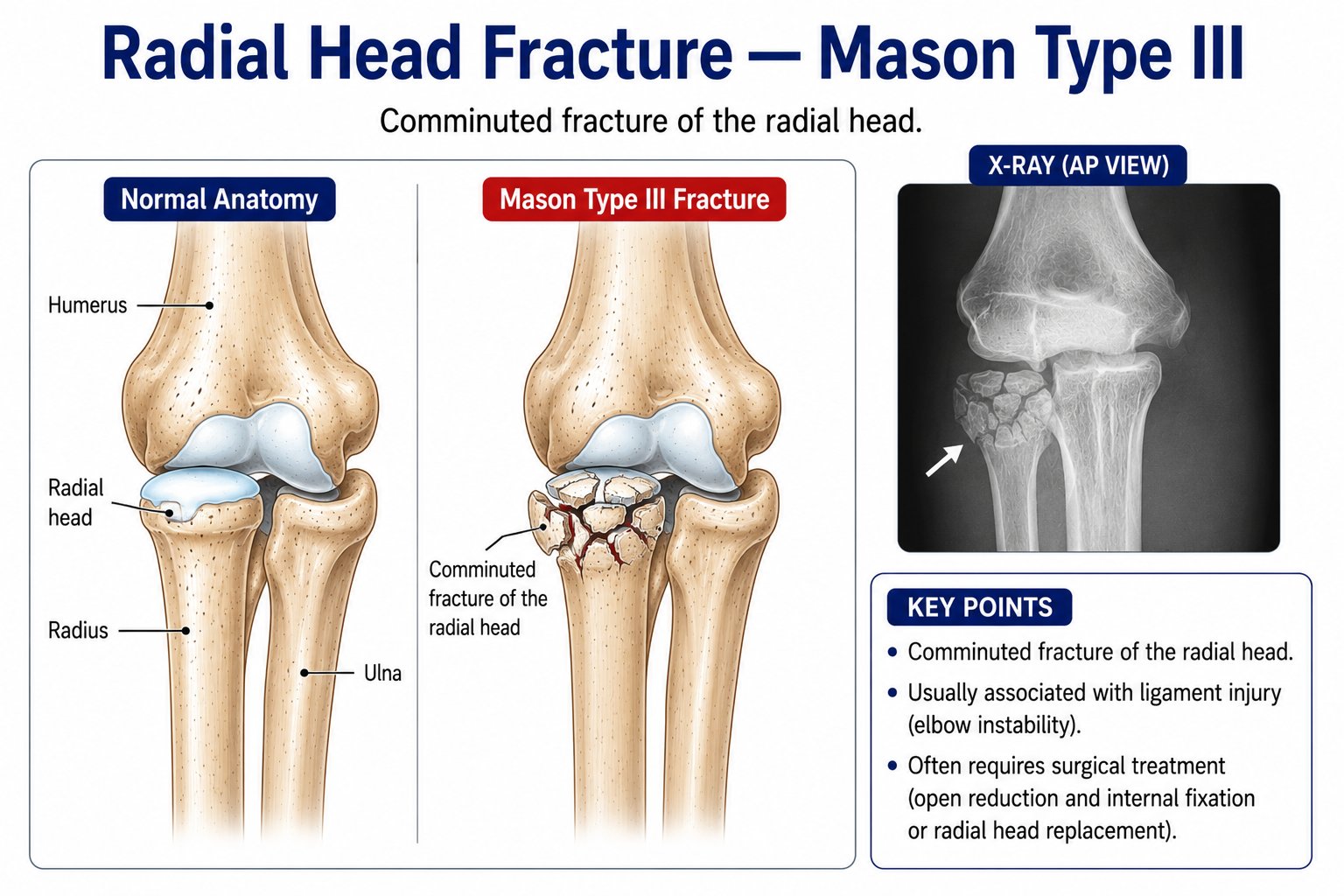
A Mason Type III radial head fracture is a comminuted fracture with three or more fragments — the radial head is fragmented to the point where accurate reconstruction and stable internal fixation are not technically feasible. The fractured head must be replaced with a metal prosthesis (radial head replacement/arthroplasty) to restore the critical lateral column stability that the radial head provides.
The radial head has three critical functions: it provides lateral column support to the elbow (resisting valgus force); it transmits axial load from the forearm to the capitellum (approximately 40% of axial load at the elbow); and it stabilises the proximal radioulnar joint (preventing Essex-Lopresti instability). Excision of the radial head without replacement removes all three of these functions — leading to valgus deformity, radioulnar instability, and proximal migration of the radius (Essex-Lopresti).
Modern metal modular radial head prostheses closely replicate the native anatomy and are inserted as press-fit stems within the radial neck. They do not require cement. The prosthesis is sized to recreate the native head height — which is the most critical technical aspect: an oversized prosthesis causes capitellar overload and arthritis, while an undersized prosthesis fails to restore stability.
Quick Facts | Details |
Also Known As | Mason III Radial Head Fracture, Comminuted Radial Head Fracture, Radial Head Replacement Indication |
Affected Area | Entire radial head — three or more fragments; unreconstructable by ORIF; proximal radioulnar joint; radiocapitellar joint |
Who It Affects | Adults of any age; higher-energy mechanisms than Types I–II; often associated with elbow dislocation, LCL disruption, and Essex-Lopresti injury; most complex radial head fracture pattern |
Prevalence | Mason Type III accounts for approximately 20% of radial head fractures; the incidence of associated injuries (LCL disruption, coronoid fracture, Essex-Lopresti) is much higher in Type III than Types I or II |
Treatment | Metal modular radial head replacement (NOT excision alone); ORIF only if <3 fragments; Essex-Lopresti: replacement mandatory; address concurrent LCL disruption and coronoid fracture at the same setting |
Causes & Risk Factors
- Higher-energy fall onto an outstretched hand — same mechanism as Type I and II but greater force magnitude
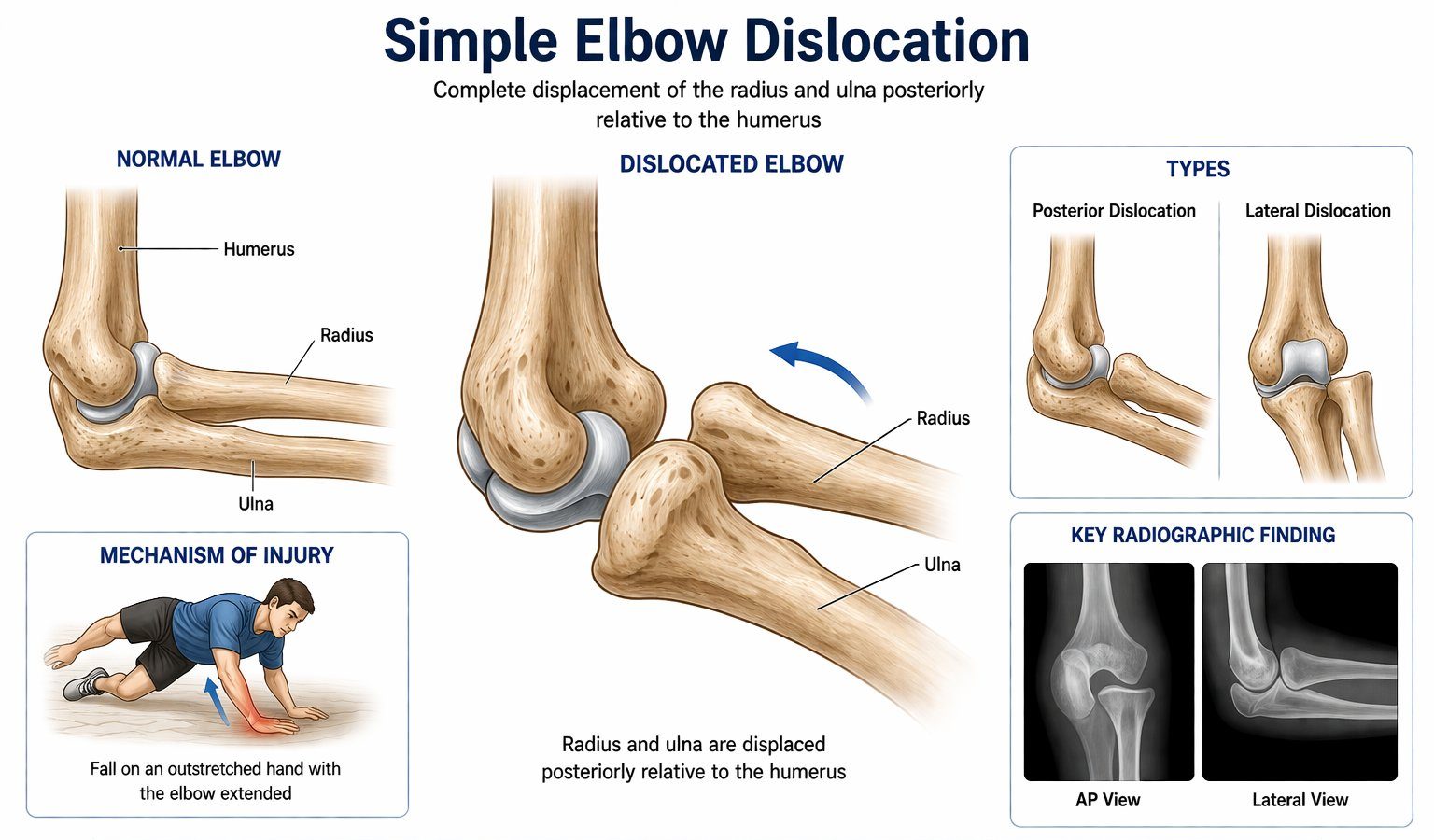
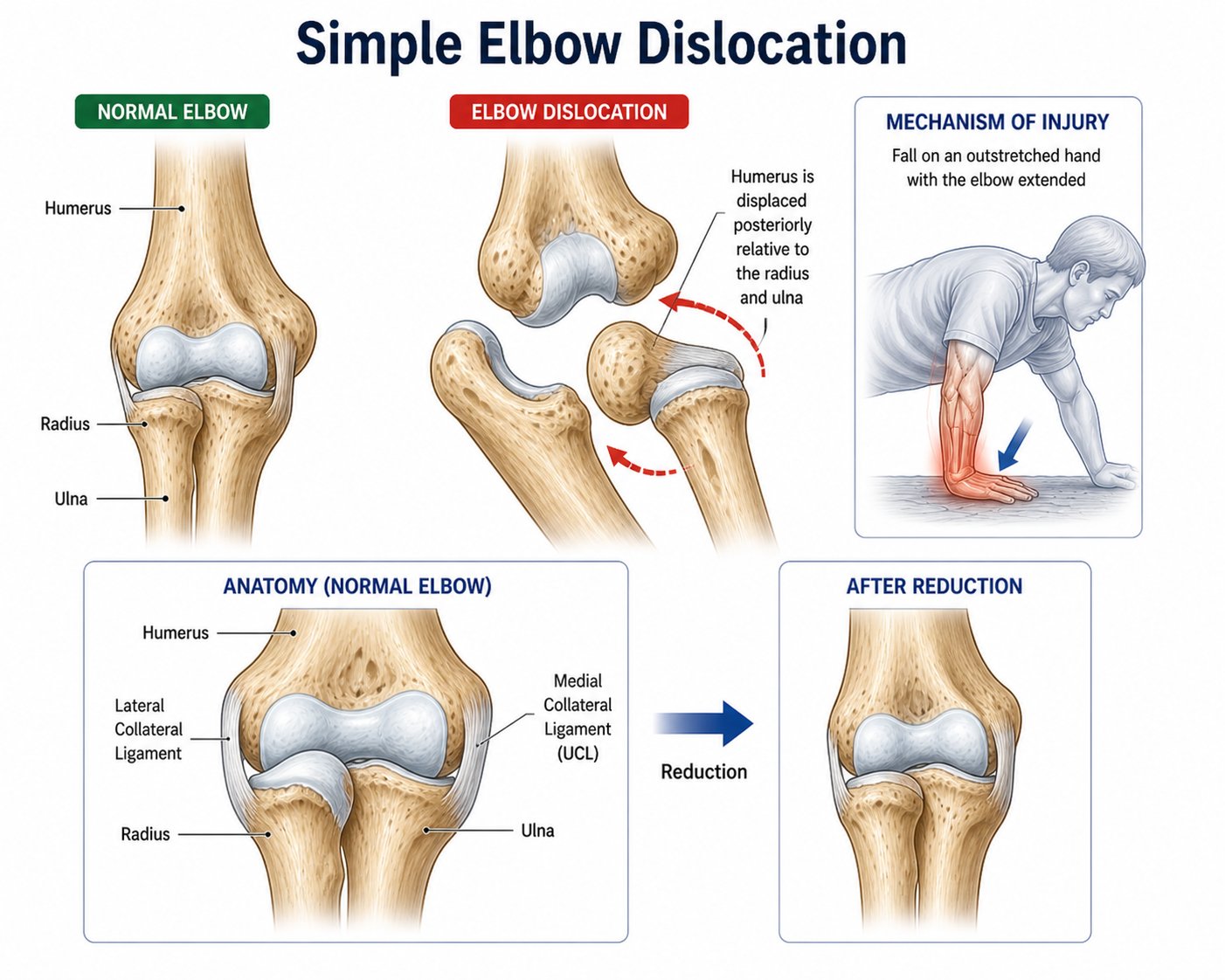
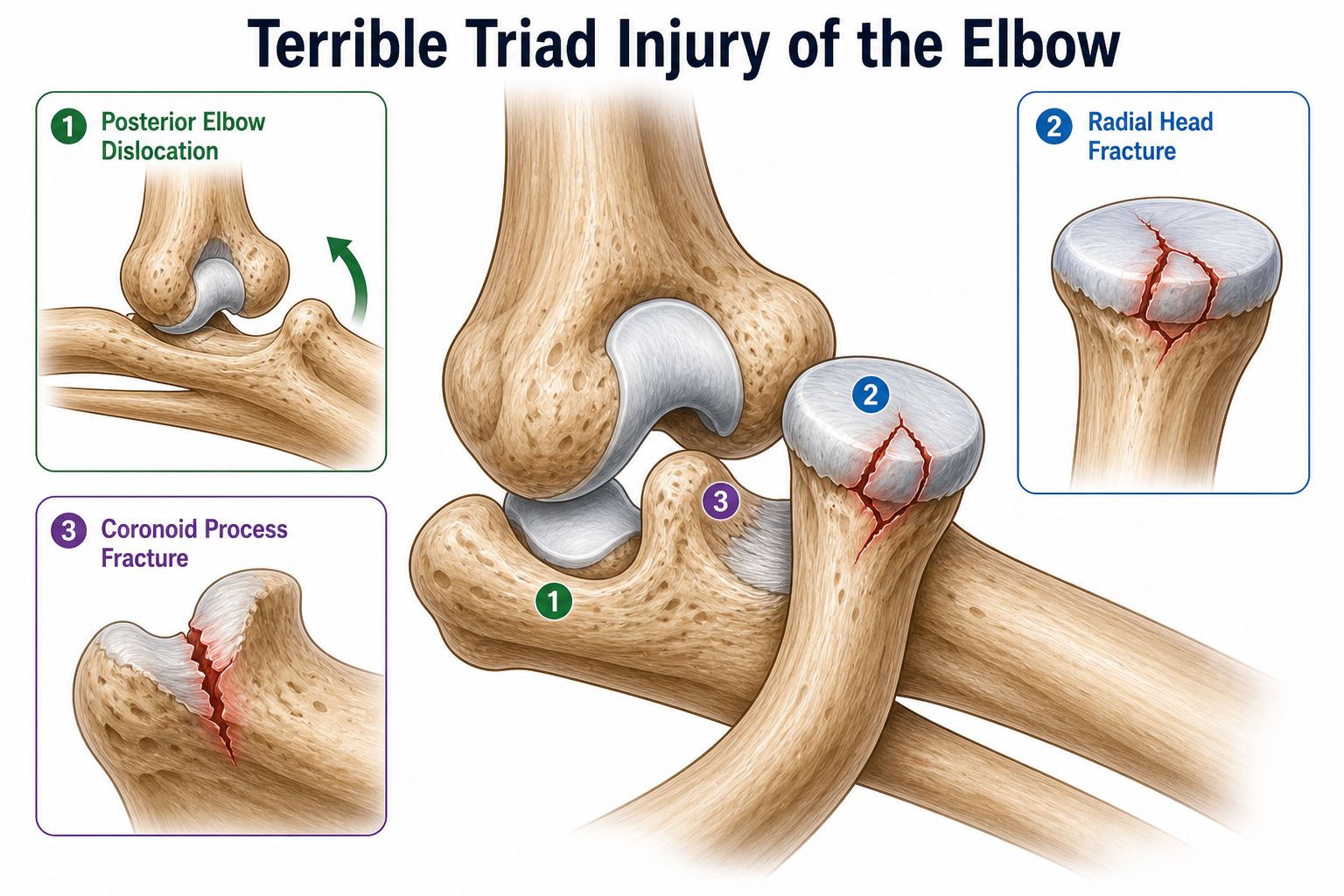
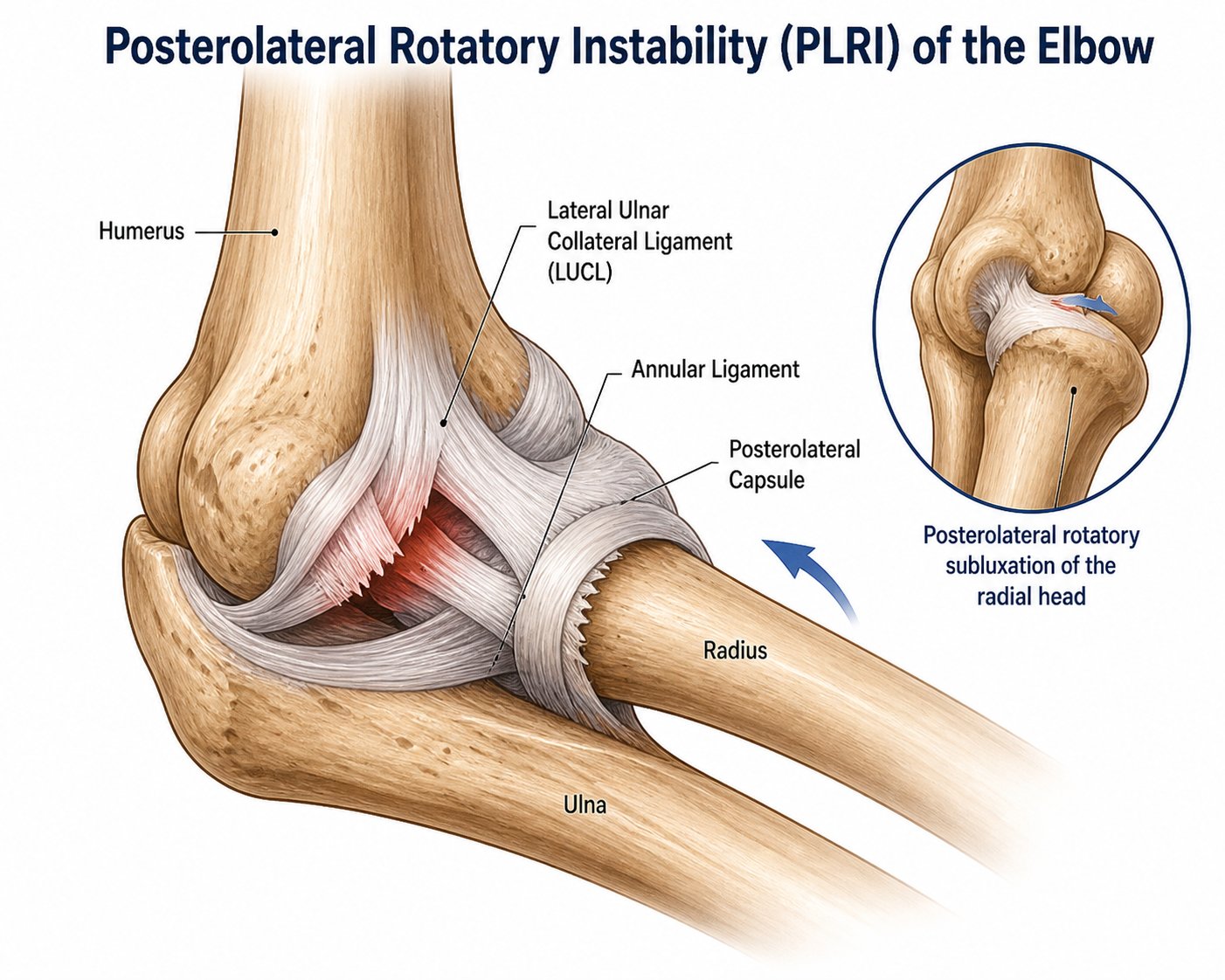
- Associated elbow dislocation — the radial head fractures as the elbow dislocates posterolaterally; the LCL is always disrupted in this setting
- Motor vehicle accidents — significant impact force; often bilateral or polytrauma context
- Valgus stress with axial loading — the radial head is crushed against the capitellum by combined valgus and axial force
Symptoms
- Acute severe lateral elbow pain — following a significant injury event
- Inability to rotate the forearm — complete loss of pronation and supination; multiple fragments block rotation
- Elbow deformity — if concurrent dislocation; the elbow appears posteriorly displaced
- Gross swelling and bruising — lateral elbow; often dramatic haemarthrosis
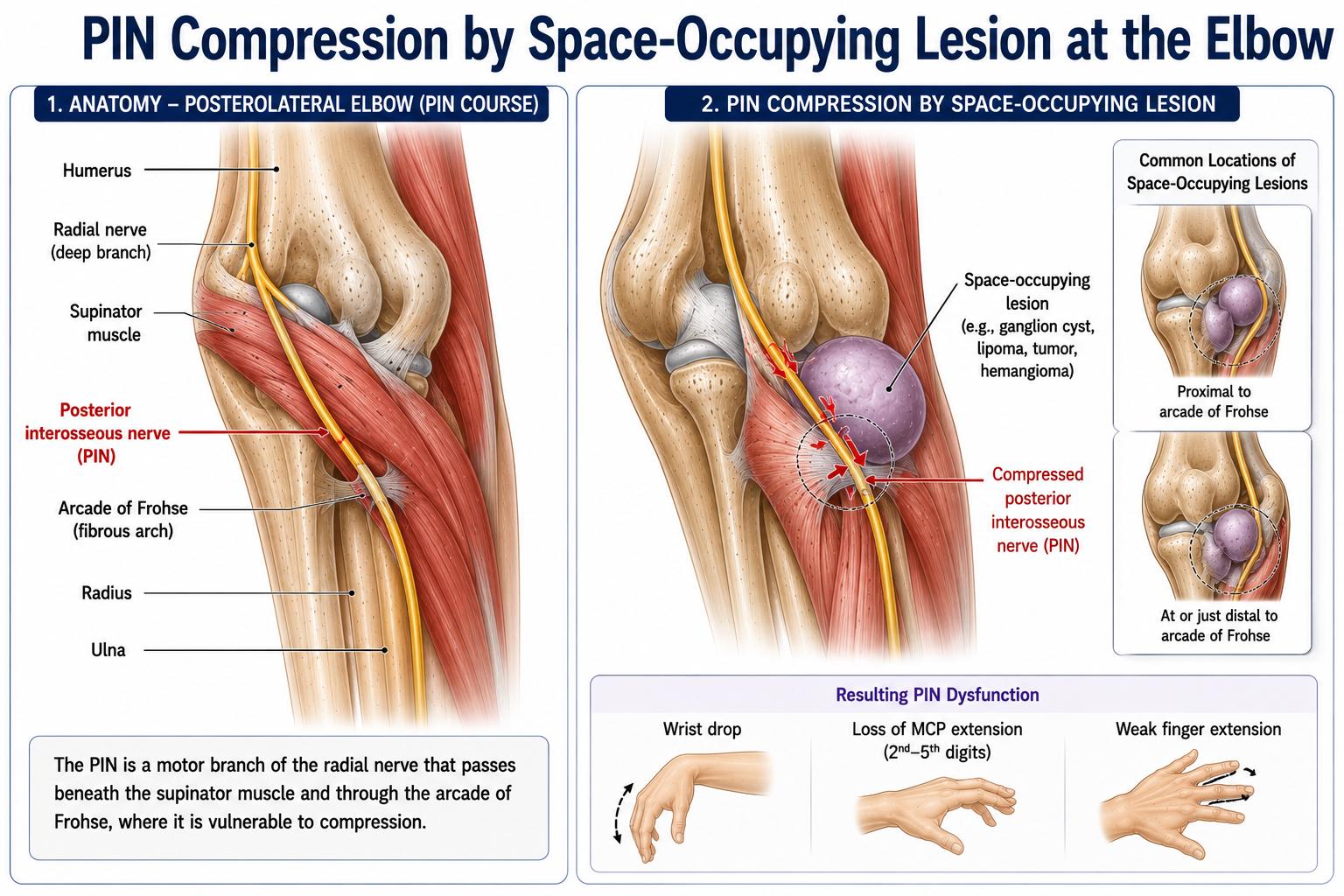
- Neurovascular compromise assessment — check PIN (finger extension); radial pulse; median nerve
- Wrist pain — assess for Essex-Lopresti (DRUJ disruption + interosseous membrane injury); critical to diagnose in every Mason III fracture
How is it Diagnosed?
- Plain X-rays — comminuted radial head; three or more fragments; associated dislocation; fat pad signs; wrist X-ray for Essex-Lopresti (DRUJ widening)
- CT scan — ESSENTIAL; define fragment count, size, and reconstruction feasibility; 3D reconstruction; concurrent coronoid and capitellar injury assessment
- Assess Essex-Lopresti — lateral elbow pain + wrist pain + axial forearm instability after Mason III; squeeze test and X-ray of wrist (radioulnar joint widening); MRI if uncertain
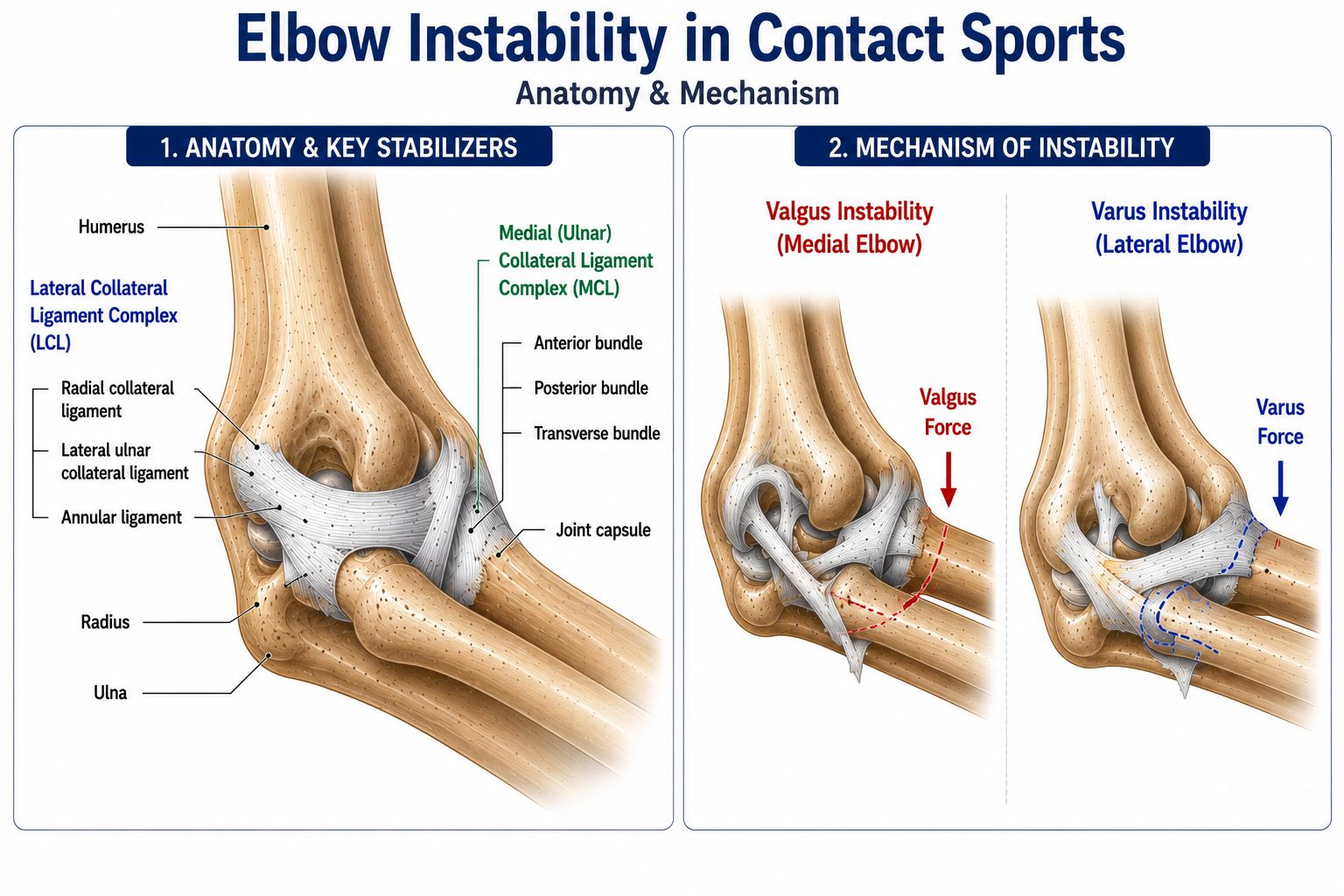
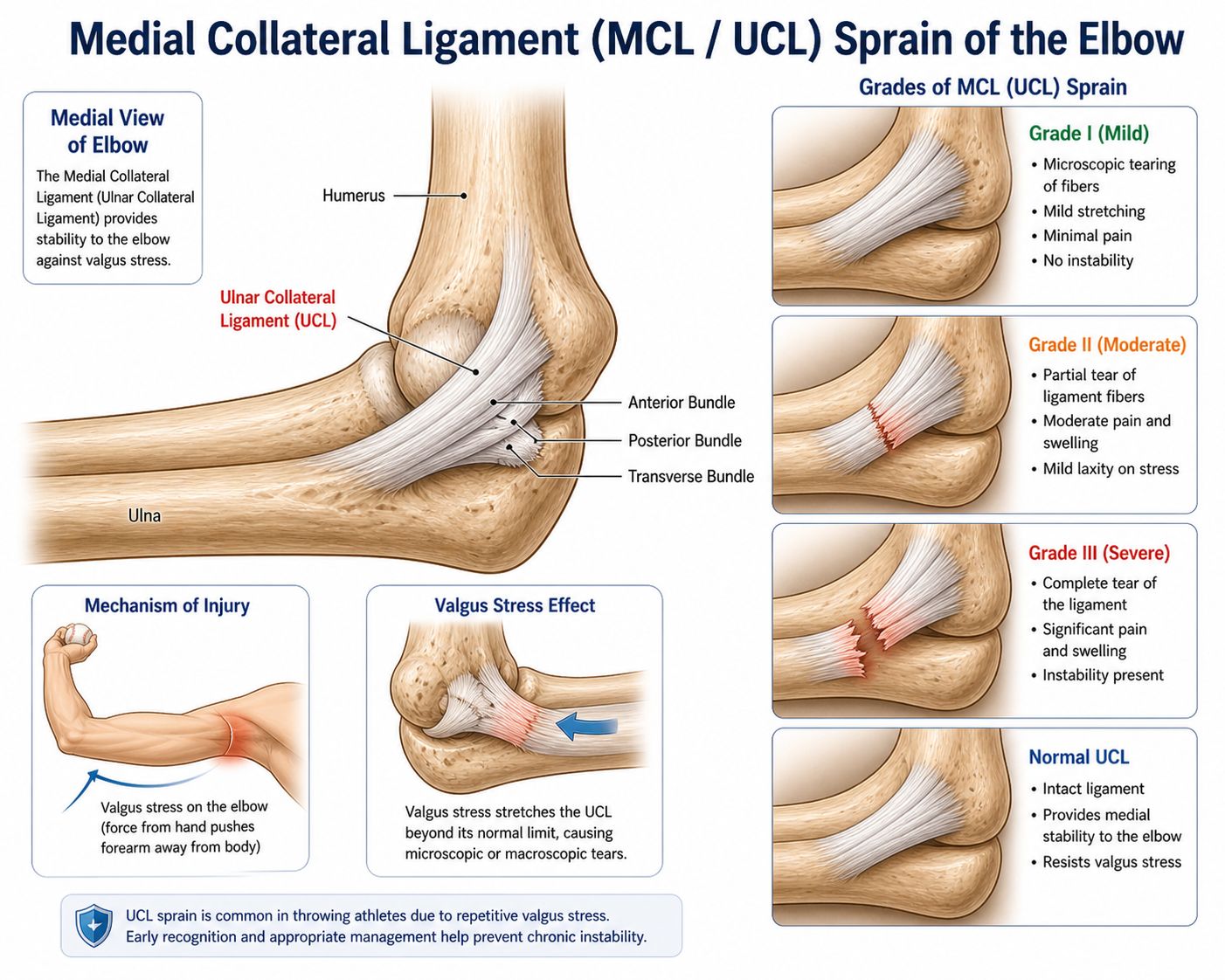
- Clinical stability assessment — test for LCL and MCL disruption under fluoroscopy; valgus and varus stress
Treatment Options
Treatment Type | Details |
Radial Head Replacement (Gold Standard) | Metal modular prosthesis (Evolent, Katalyst, SBi); press-fit stem in radial neck; sized to restore native head height (check on intra-operative fluoroscopy: radial head articular surface should be flush with the lateral margin of the coronoid); monopolar or bipolar design; do NOT over-stuff the joint |
ORIF (Exception: <3 Fragments) | If fragments are large (2 only), good bone quality, anatomical reconstruction possible: ORIF with headless screws; only if reconstruction produces a stable, congruent head; otherwise replacement is mandatory |
NEVER Excision Alone | Excision of the radial head without replacement is contraindicated in: Essex-Lopresti injury; elbow dislocation with LCL disruption; MCL insufficiency; any setting where lateral column support is needed |
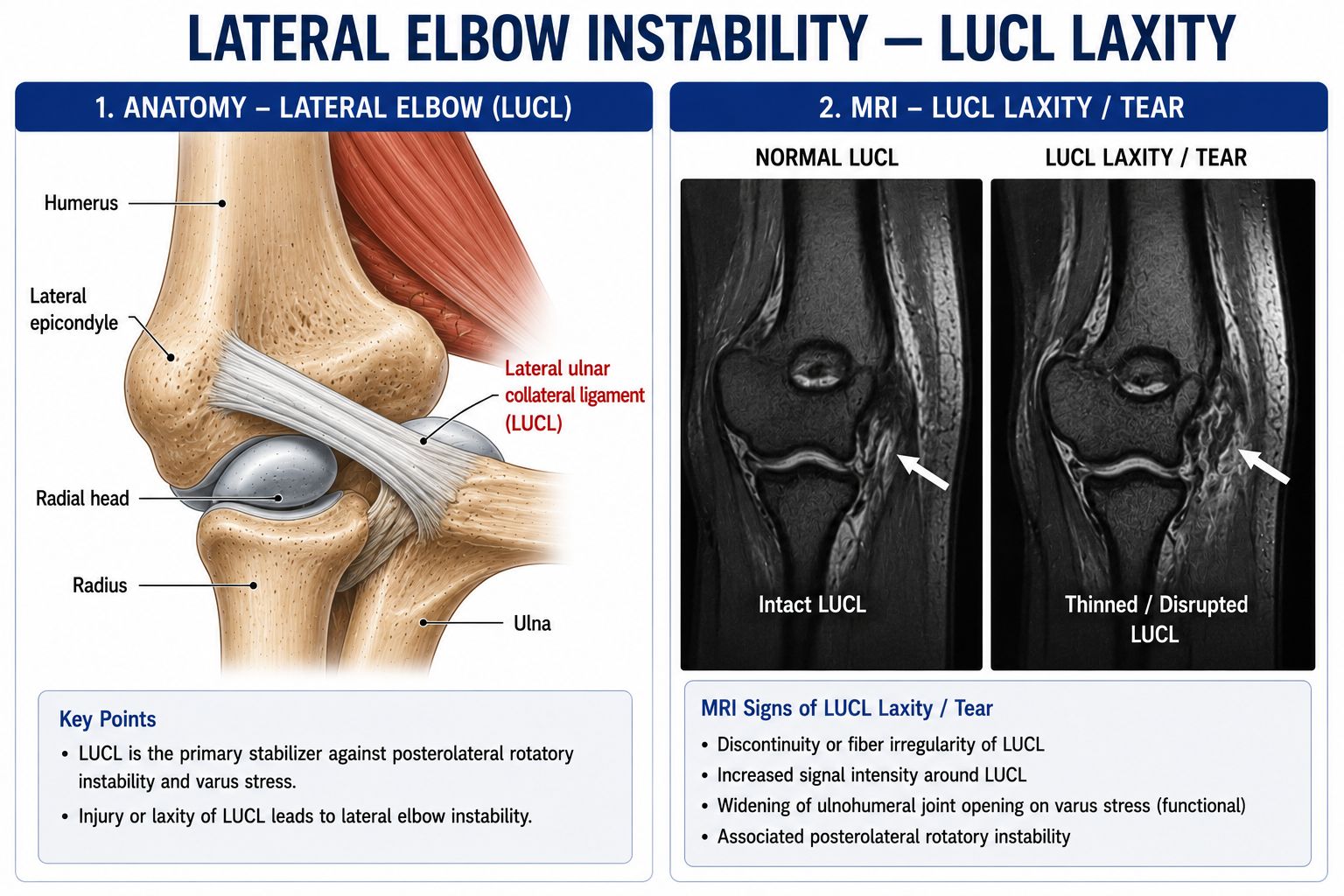
Address Concurrent LCL Disruption | After replacement: test elbow stability under fluoroscopy; if LCL torn: suture anchor repair to the lateral epicondyle; perform concurrently with replacement |
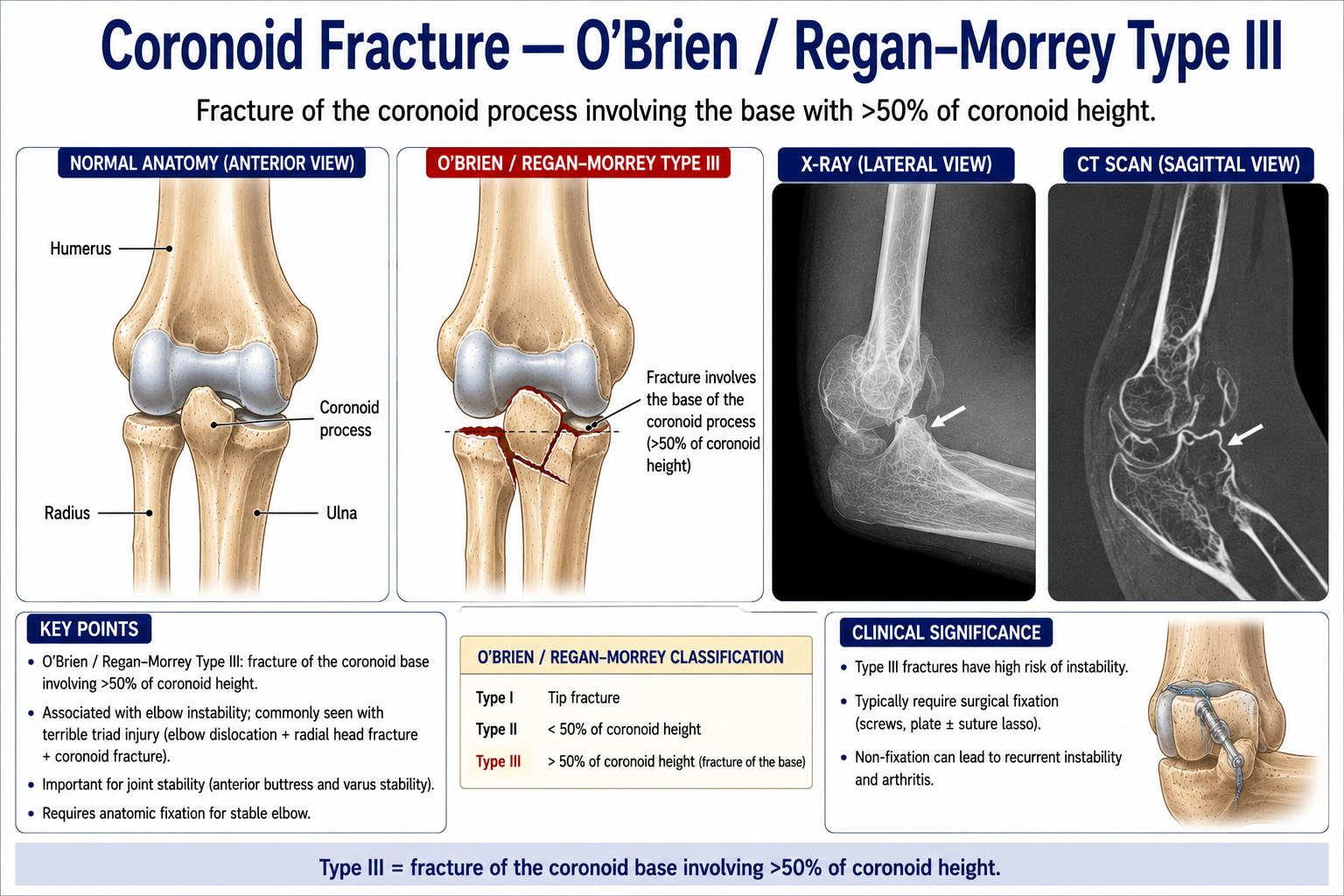
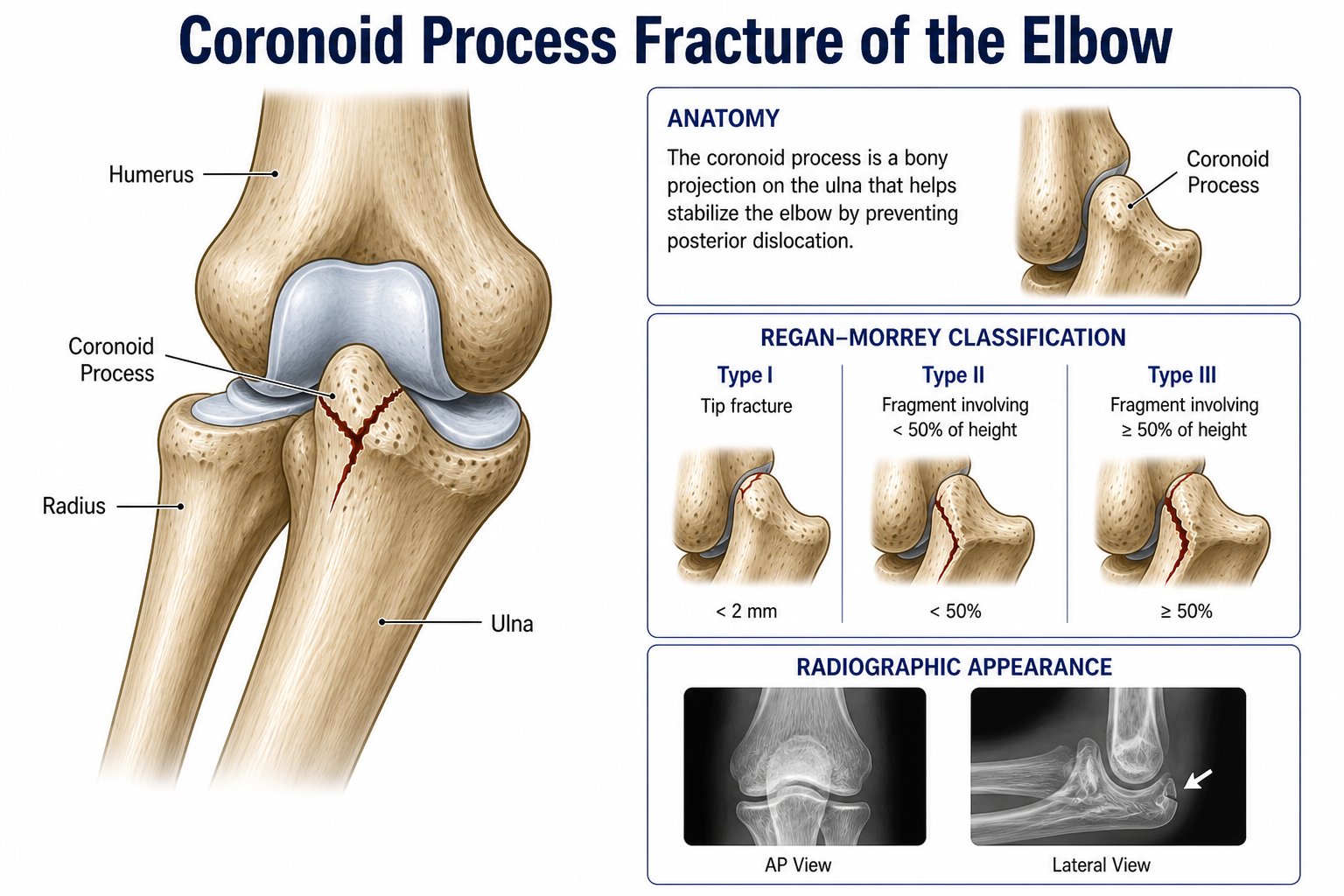
Address Concurrent Coronoid Fracture | If coronoid fracture present (terrible triad pattern): ORIF coronoid first → then radial head replacement → then LCL repair (see Condition 16) |
Essex-Lopresti Management | If confirmed: radial head replacement mandatory; DRUJ assessed post-replacement; if still unstable: transfixation pin across the DRUJ for 6 weeks; interosseous membrane reconstruction (if chronic) |
Recovery & Rehabilitation
- After radial head replacement: sling 48 hours; active-assisted ROM from day 1–2; forearm rotation and elbow flexion-extension exercises immediately
- Full ROM targeted by 6 weeks; strengthening from 6 weeks
- Return to work: office work 2–4 weeks; manual work 3–4 months
- Prosthesis longevity: metal radial head replacements are very durable; loosening uncommon in the medium term; most patients do not require revision
- Outcome: 80–90% good-excellent results with appropriate prosthesis sizing and concurrent injury management
- Essex-Lopresti: recovery longer (3–6 months); wrist and forearm rotation monitored carefully
Why choose Dr Senthilvelan?
Radial head replacement for Mason III fractures requires experience in prosthesis sizing, concurrent injury identification, and systematic reconstruction. Dr Senthilvelan performs radial head replacement with routine lateral stability assessment and addresses any concurrent ligament disruption at the same operative setting.
Frequently Asked Questions
1. What is radial head replacement and how long does it last?
Radial head replacement involves removing the fractured radial head fragments and inserting a metal prosthesis that replicates the shape and size of the native radial head. The stem sits within the radial neck canal (press-fit, no cement needed). Modern metal modular prostheses are very durable and typically last many years without loosening. Results at 5–10 year follow-up show the majority of patients retain good function with low revision rates. The prosthesis is not removed unless it causes problems.
2. Why can the radial head not just be removed without replacing it?
Essex-Lopresti injury is a serious combination of radial head fracture, interosseous membrane (IOM) tear, and distal radioulnar joint (DRUJ) disruption — caused by an axial load force transmitted from the radial head up the full length of the forearm. When the radial head is fractured, the axial load is transmitted through the interosseous membrane to the DRUJ, tearing both. If the radial head is excised without replacement in this setting, the radius migrates proximally, the DRUJ dislocates permanently, and the result is permanent forearm instability and disability. Radial head replacement is mandatory in Essex-Lopresti injury to restore the length of the radial column.
3. What is Essex-Lopresti injury and how serious is it?
Essex-Lopresti injury is a serious combination of radial head fracture, interosseous membrane (IOM) tear, and distal radioulnar joint (DRUJ) disruption — caused by an axial load force transmitted from the radial head up the full length of the forearm. When the radial head is fractured, the axial load is transmitted through the interosseous membrane to the DRUJ, tearing both. If the radial head is excised without replacement in this setting, the radius migrates proximally, the DRUJ dislocates permanently, and the result is permanent forearm instability and disability. Radial head replacement is mandatory in Essex-Lopresti injury to restore the length of the radial column.
4. How do I know if my prosthesis is the right size?
Correct prosthesis sizing is the most critical technical aspect of radial head replacement. The most reliable intra-operative check is fluoroscopy: the articular surface of the prosthesis should be flush with the lateral margin of the coronoid process — not proud above it (overstuffing) and not recessed below it (undersizing). An overstuffed prosthesis causes increased capitellar contact force, accelerated cartilage wear, and stiffness. Post-operatively, radiographs at the 6-week follow-up appointment assess for appropriate medial ulnohumeral joint space, which confirms correct sizing.
5. Will I be able to rotate my forearm normally after a radial head replacement?
Yes — forearm rotation is preserved and typically very good after radial head replacement. The prosthesis replicates the native radial head geometry and sits within the proximal radioulnar joint, allowing the same rotational mechanics as the native anatomy. Forearm rotation exercises begin within 24–48 hours of surgery and are the focus of early physiotherapy. Most patients regain near-full pronation and supination within 6 weeks of surgery.