Overview
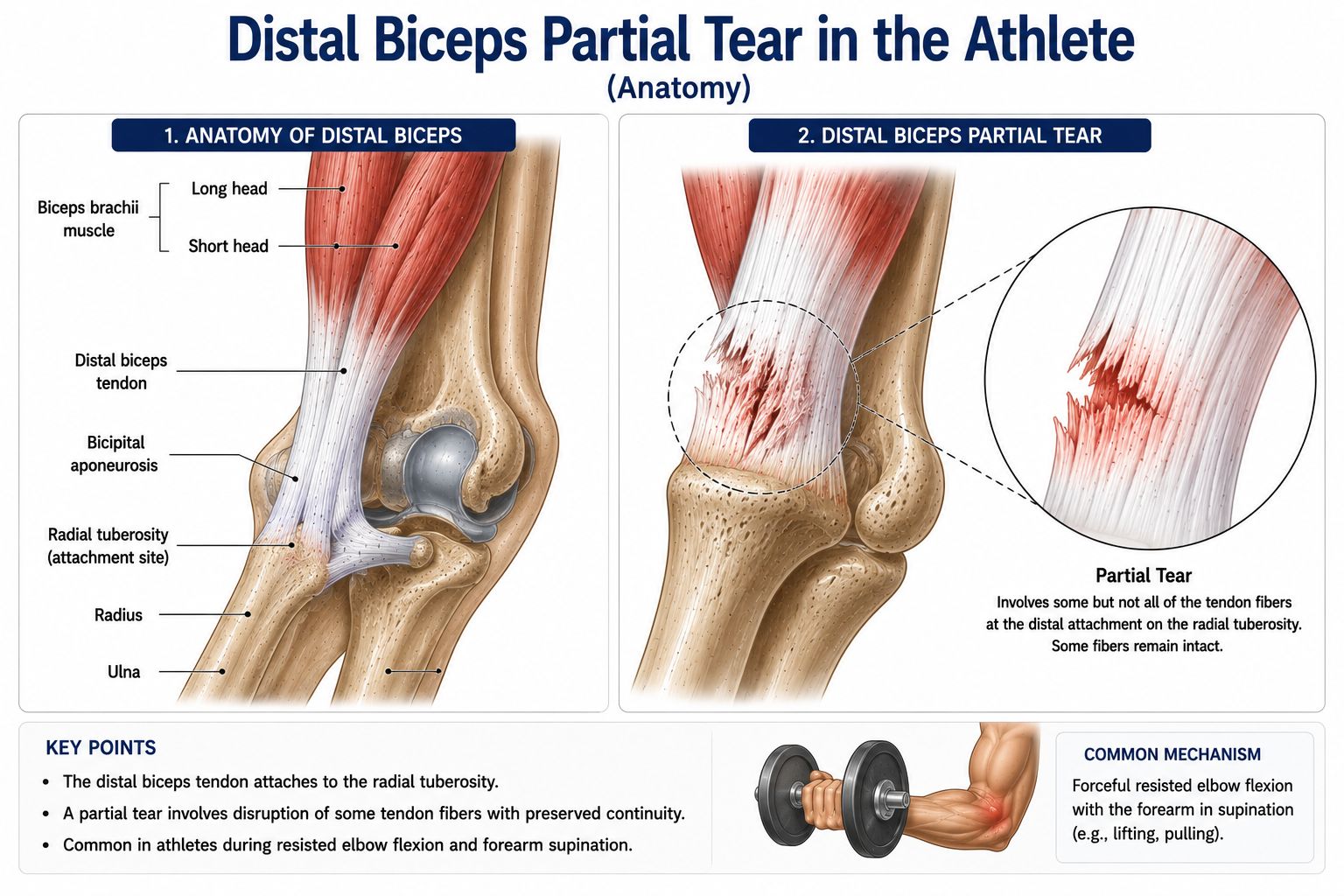
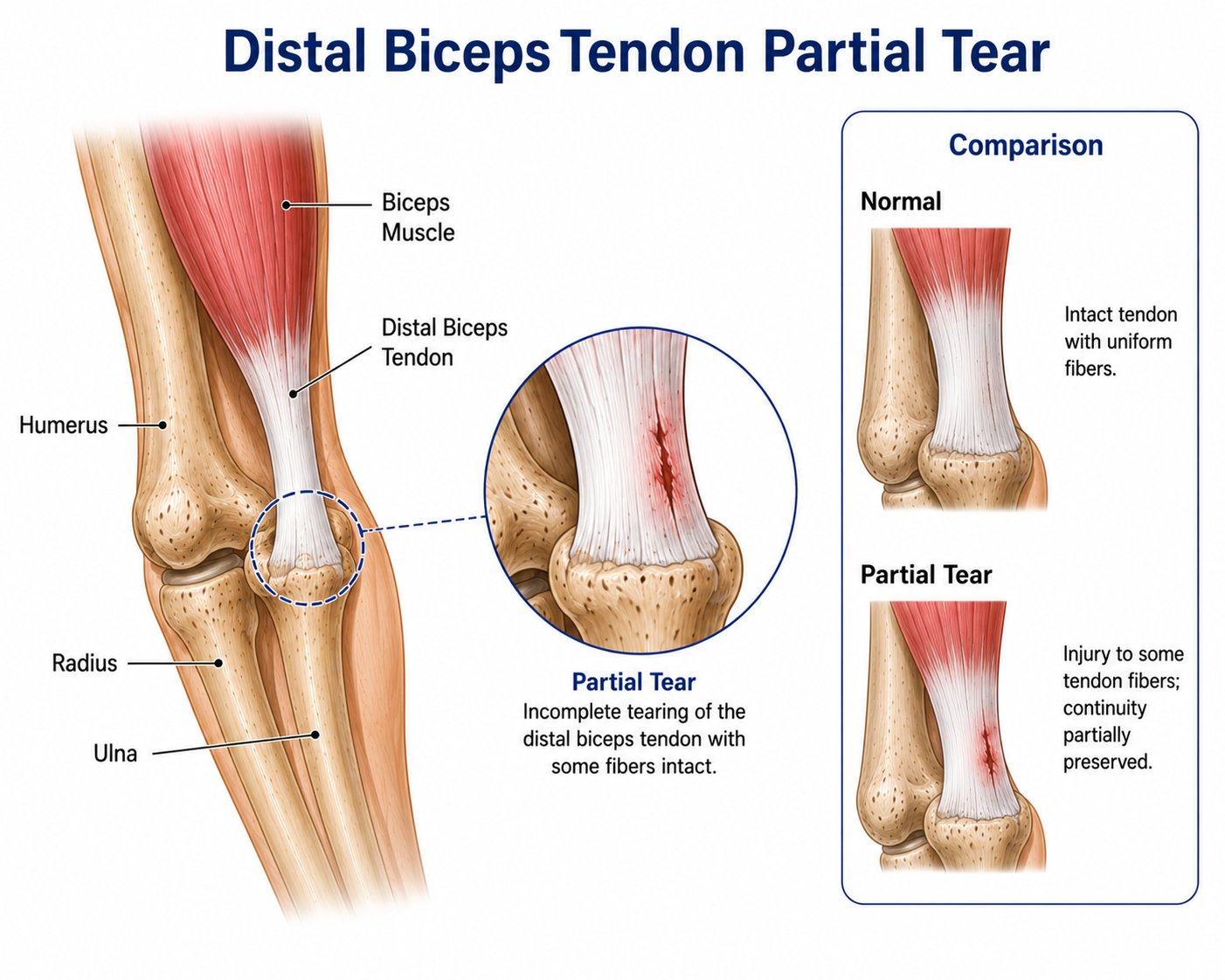
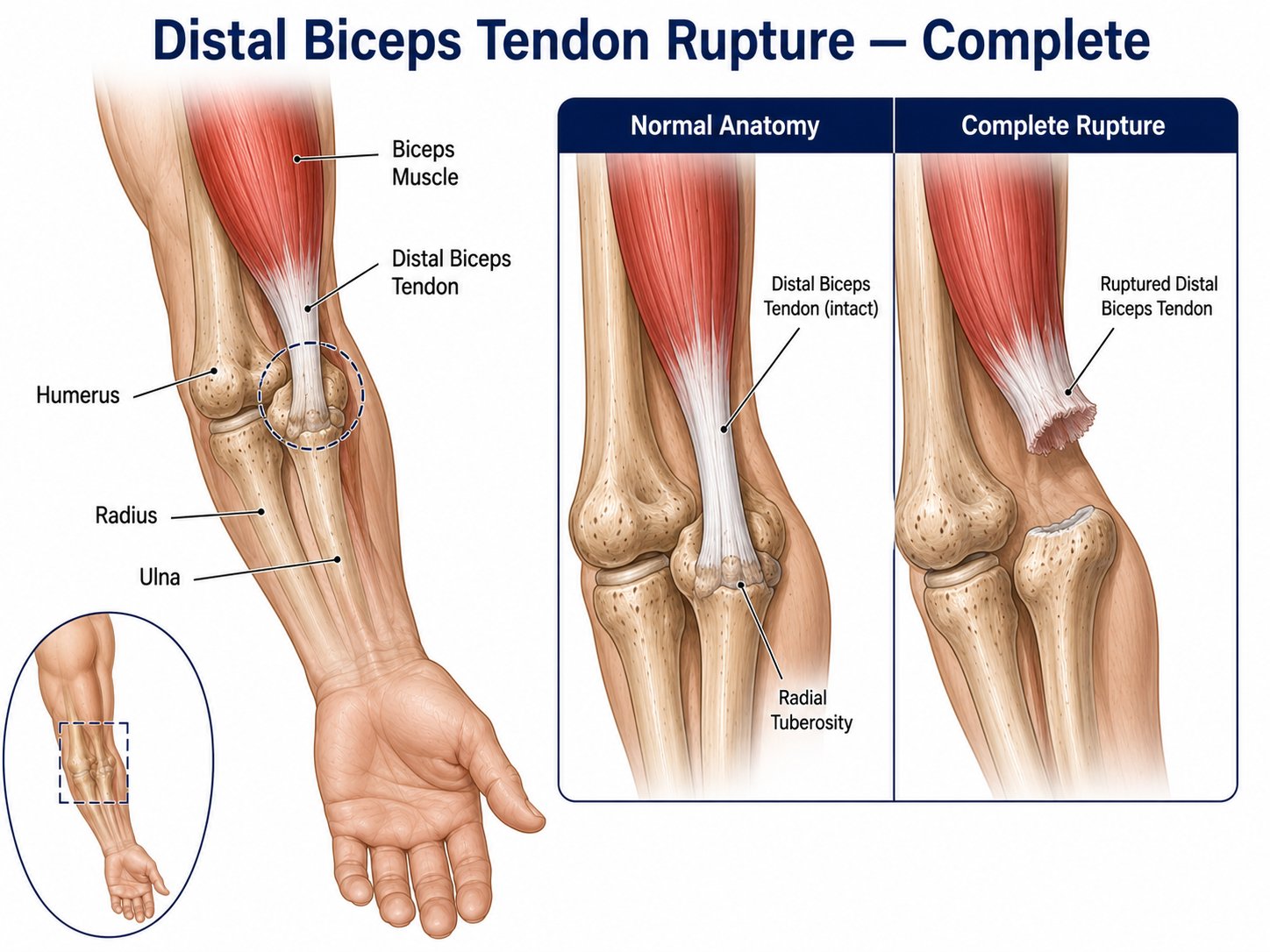
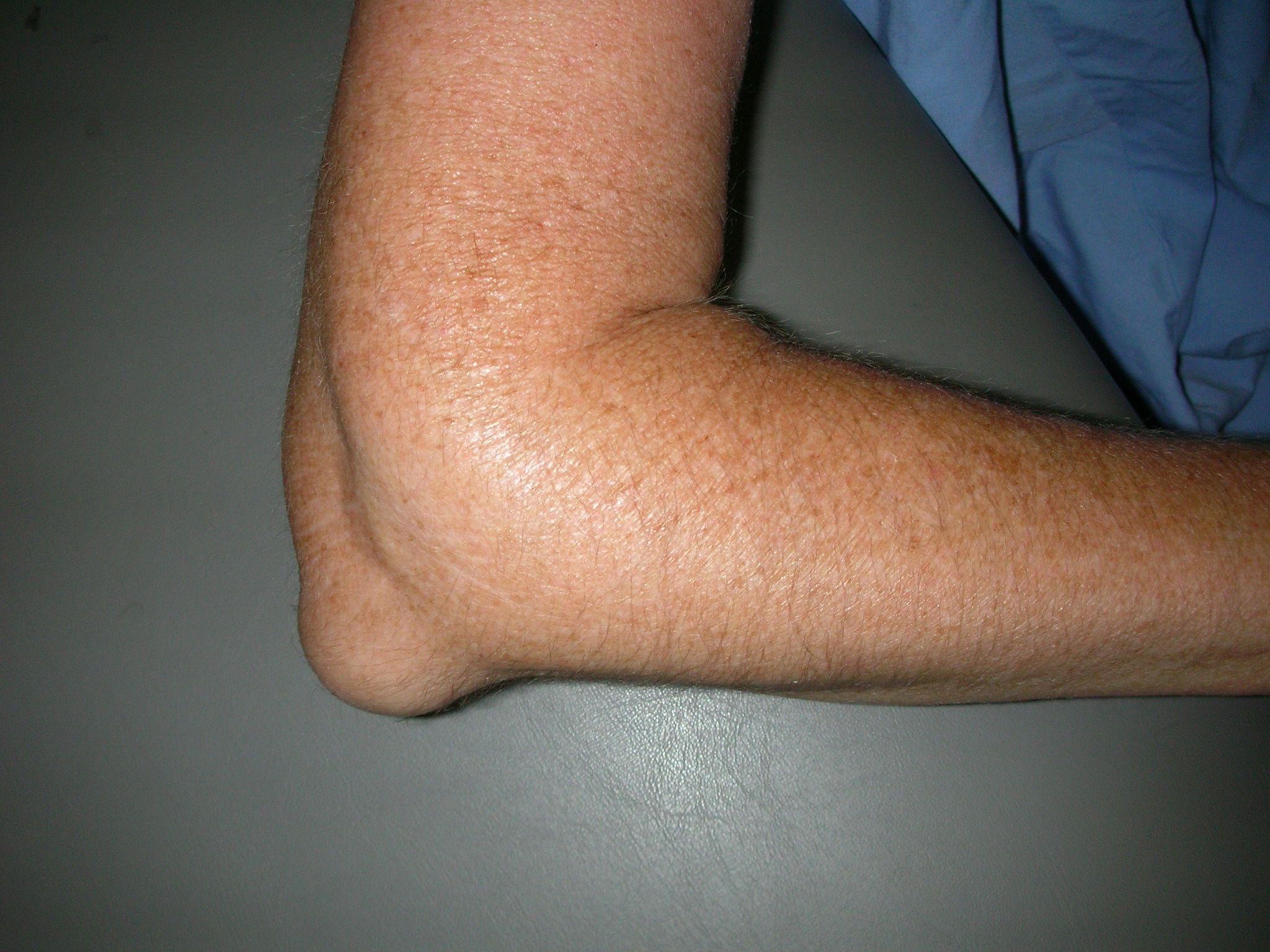
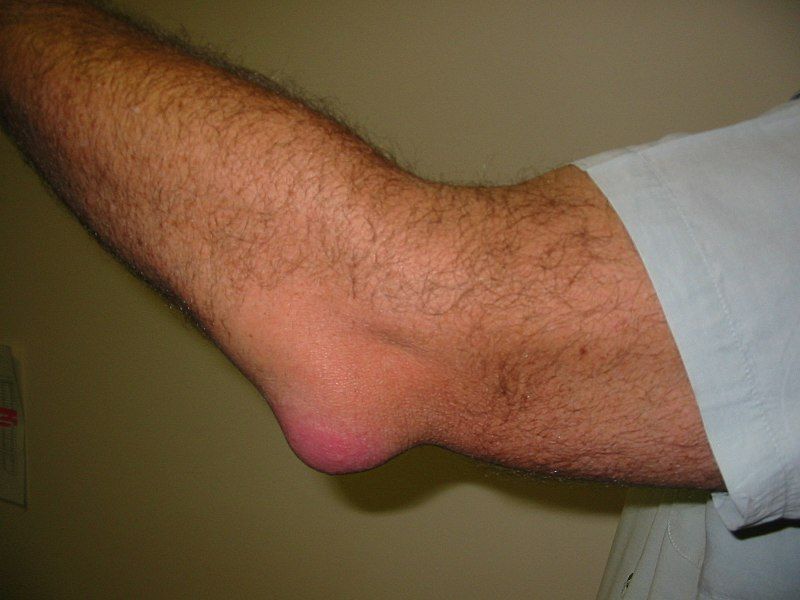
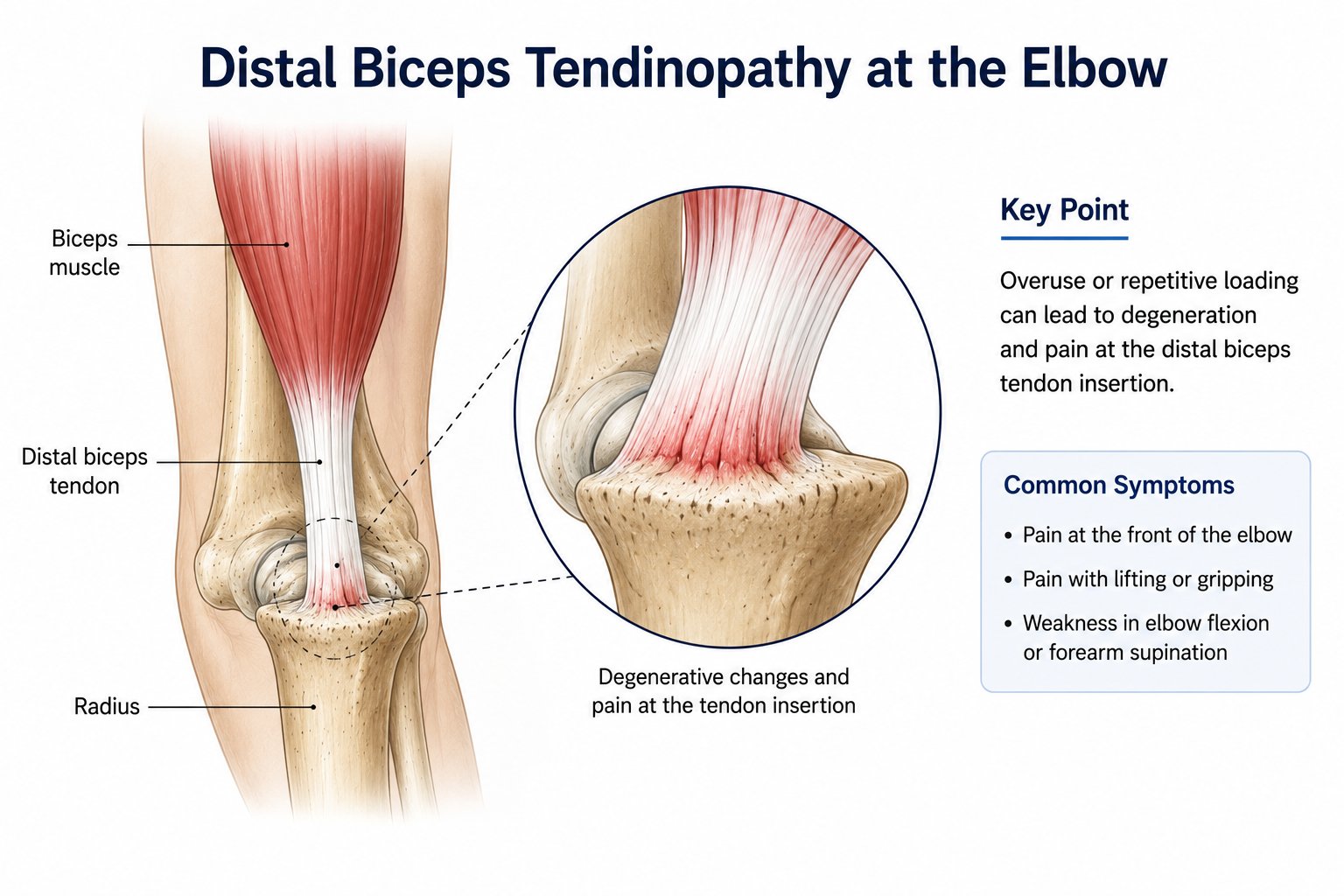
Distal biceps tendinopathy is the degenerative condition affecting the distal biceps tendon — in the absence of a complete or significant partial tear — presenting as persistent anterior elbow pain with resisted elbow flexion and supination. It represents the same angiofibroblastic degeneration seen in other tendinopathies, occurring at the vulnerable watershed zone of the distal biceps tendon approximately 1–2cm proximal to the radial tuberosity insertion.
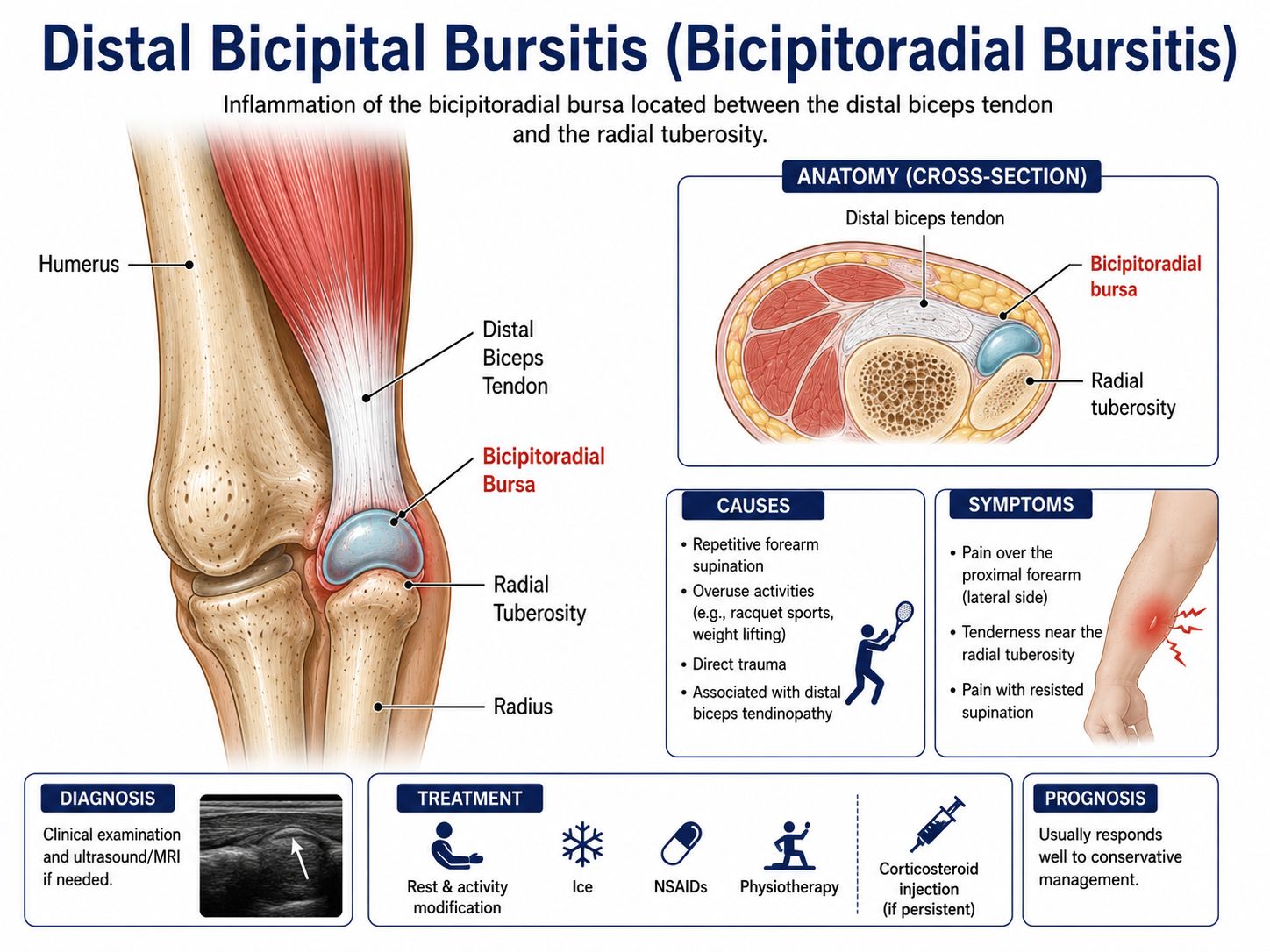
The bicipitoradial space — the narrow channel between the distal biceps tendon and the radial tuberosity — is a site of particular mechanical vulnerability. During forearm rotation, the radial tuberosity sweeps against the biceps tendon, creating repetitive frictional forces. When this space is anatomically narrow (in individuals with a large radial tuberosity or prominent bicipital tuberosity), mechanical impingement of the tendon can accelerate degeneration.
Distal biceps tendinopathy is an important condition to recognise and treat proactively, as it represents the continuum toward partial and complete rupture. Identifying and addressing tendinopathy at this stage — before significant tendon disruption — gives the best chance of avoiding the need for surgical tendon repair.
Quick Facts | Details |
Also Known As | Distal Biceps Tendinitis, Biceps Insertion Tendinopathy, Distal Biceps Tendinosis |
Affected Area | Distal biceps tendon from the musculotendinous junction to the radial tuberosity insertion; bicipitoradial space |
Who It Affects | Active adults aged 30–55 years; more common in men; weightlifters, manual workers, and overhead athletes; often precedes complete or partial distal biceps rupture if untreated |
Prevalence | Less common than proximal biceps tendinopathy (long head) but clinically important; distal biceps tendinopathy with intact tendon accounts for a proportion of anterior elbow pain presentations; often misdiagnosed as bicipitoradial bursitis |
Treatment | Eccentric physiotherapy; activity load modification; ultrasound-guided corticosteroid injection (bursa, NOT tendon) or PRP; surgical débriment or bicipitoradial space decompression if refractory |
Causes & Risk Factors
- Repetitive elbow flexion and supination loading — the primary mechanism; lifting weights, carrying loads, and overhead work create cyclical loading of the distal biceps
- Mechanical impingement in the bicipitoradial space — tendon compression during forearm rotation, particularly pronation, between the biceps tendon and the radial tuberosity
- Bicipitoradial bursitis — associated bursal inflammation can secondarily cause tendon degeneration through adjacent mechanical effects
- Weightlifting overload — sudden increase in training volume or the use of supinated-grip exercises (barbell curls, chin-ups) without adequate progressive loading
- Age-related tendon degeneration — the distal biceps becomes increasingly degenerate after the fourth decade, particularly at the watershed zone
- Smoking and anabolic steroid use — both impair tendon collagen quality and healing capacity
- Anatomical predisposition — a narrow bicipitoradial space with a prominent radial tuberosity creates mechanical impingement
Symptoms
- Anterior elbow pain — in the antecubital fossa, along the distal biceps tendon; aching with activity and sharp with provocative loading
- Pain with resisted supination — the most consistent provocative test; turning screwdrivers, opening jars
- Pain with resisted elbow flexion — particularly under load (lifting weights, carrying)
- Tenderness along the distal biceps tendon — palpation along the tendon from the musculotendinous junction to the insertion
- No Popeye deformity — the tendon is intact; no proximal retraction
- Hook test positive for tendon continuity — the cord is felt on hook test, distinguishing tendinopathy from complete rupture
- Pain with forced passive elbow extension — stretches the biceps and loads the insertion
- Mild supination strength reduction — mild (10–20%) weakness compared to the contralateral side; much less than in complete rupture
How is it Diagnosed?
- Clinical examination — hook test (confirms tendon integrity); resisted supination test; palpation along the tendon; passive extension stretch; compare supination strength bilaterally
- MRI with FABS sequence — T2 signal within the tendon at the insertion zone (tendinopathy); excludes partial or complete tear; assesses bicipitoradial space width; T2 fluid in bicipitoradial bursa
- Ultrasound — tendon thickening, hypoechoic foci (tendinopathy); Doppler neovascularity; concurrent bursitis; dynamic assessment during forearm rotation
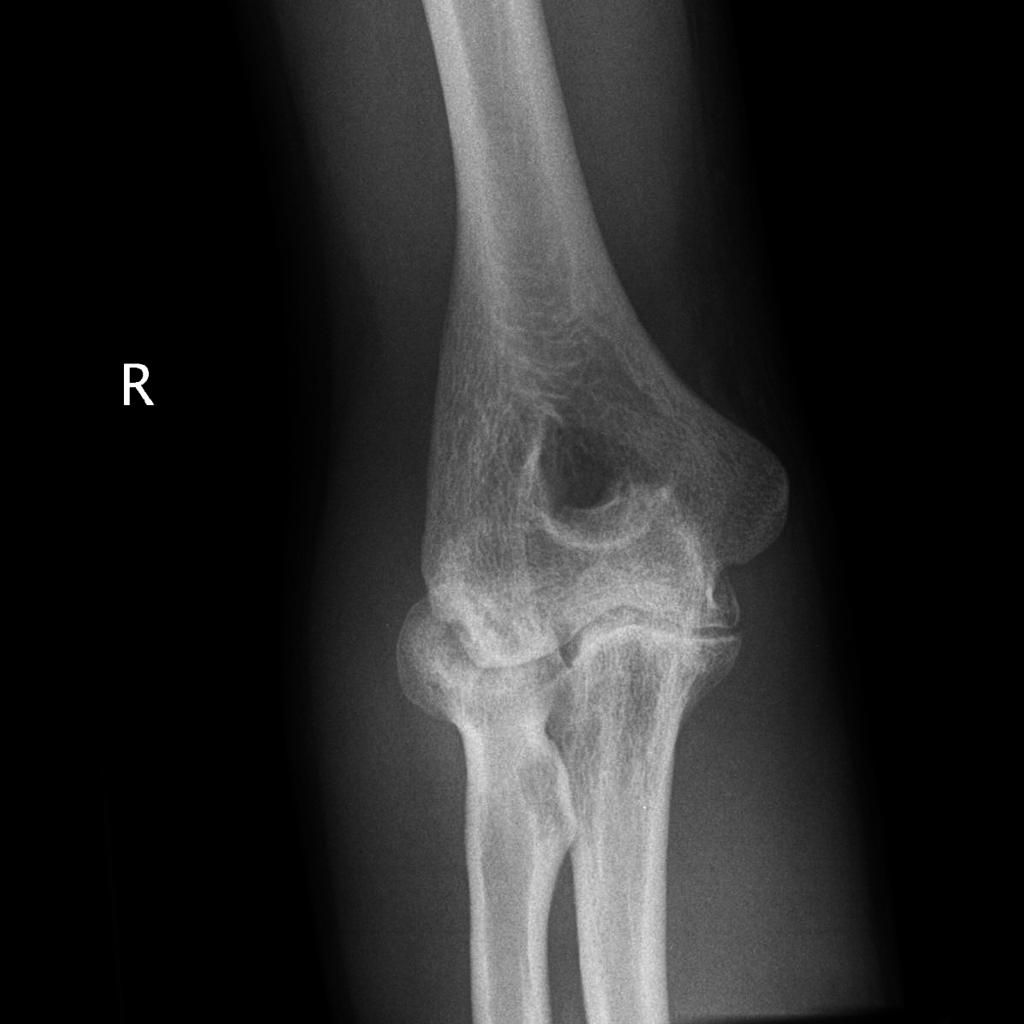
- X-rays — usually normal; occasionally shows a prominent radial tuberosity or bicipital tuberosity hypertrophy

Treatment Options
Treatment Type | Details |
Activity Modification & Rest | Reduce resisted supination and elbow flexion loading; avoid heavy barbell curls and chin-ups; rest 4–6 weeks from provocative activities |
Eccentric Physiotherapy | Eccentric biceps and supinator loading programme; the cornerstone of conservative treatment; 6–12 weeks; progressed carefully within the pain-free range |
PRP Injection | Ultrasound-guided PRP into the degenerate tendon zone; preferred over corticosteroid injection (which risks tendon weakening at the insertion); 6 weeks relative rest from supination loading after injection |
Corticosteroid Injection (Bursa) | If concurrent bicipitoradial bursitis: ultrasound-guided injection into the bursa, not the tendon; provides anti-inflammatory relief; FIRST confirm no significant partial tear on MRI |
Extracorporeal Shockwave (ESWT) | For tendinopathy with associated calcification at the insertion; 3–5 sessions |
Surgical Decompression (Bicipitoradial Space) | For persistent pain despite 6 months conservative treatment; anterior approach; open or arthroscopic decompression of the bicipitoradial space; debridement of degenerate tendon tissue; radial tuberosity partial resection if anatomically narrow space; bursectomy concurrent |
Recovery & Rehabilitation
- Conservative: most cases improve over 3–6 months with eccentric loading and load management
- PRP injection: 6 weeks relative rest; return to full activity 10–12 weeks
- After surgical decompression: immediate ROM; sling 1 week; physiotherapy from week 1; return to full loading at 3–4 months
- Surveillance: patients with distal biceps tendinopathy should be monitored — progression to partial or complete rupture is a risk if overloading continues before healing is confirmed
Why choose Dr Senthilvelan?
Distal biceps tendinopathy requires precise differentiation from bicipitoradial bursitis, partial tear, and complete rupture — conditions that require very different management. Dr Senthilvelan uses FABS-sequence MRI and ultrasound to accurately characterise the pathology and provides a tailored treatment plan targeting the specific tissue involved.
Frequently Asked Questions
1. How is distal biceps tendinopathy different from a biceps tear?
Distal biceps tendinopathy means the tendon is intact but degenerating — causing pain without significant structural disruption. A partial tear has disrupted some of the tendon fibres (detectable on MRI), while a complete tear means the tendon has fully avulsed from the radial tuberosity (causing the Popeye deformity and significant weakness). The hook test helps distinguish: if a cord can be hooked under the tendon at the elbow, it is intact (tendinopathy or partial tear). Complete absence of the cord indicates rupture. MRI with the FABS sequence definitively quantifies the extent of any tear.
2. Can I continue going to the gym with distal biceps tendinopathy?
With appropriate modification, yes. Complete rest is not necessary. The key is to avoid the most provocative exercises — particularly heavy barbell curls, supinated pull-ups, and chin-ups — and replace them with pain-free alternatives. Hammer curls (neutral forearm grip) and resistance band exercises at sub-maximal intensity can maintain biceps conditioning without aggravating the tendon. An eccentric loading programme, guided by a physiotherapist, is the most important exercise intervention.
3. Why is PRP preferred over corticosteroid for this condition?
Corticosteroid injection into the distal biceps tendon at its insertion weakens the tendon-bone interface by inhibiting collagen synthesis and promoting local tenocyte apoptosis. This is particularly concerning at the insertion zone where the tendon is already degenerating — there is a real risk of accelerating progression to complete rupture. PRP, in contrast, delivers concentrated growth factors that stimulate tendon cell activity and collagen production, promoting repair rather than weakening. PRP is therefore strongly preferred for any tendinopathy at or near a tendon insertion.
4. What is the FABS sequence MRI and why is it recommended?
FABS stands for Forearm Abducted, Bicep Supinated — it describes the patient position during this specific MRI sequence. The patient lies with the arm raised above the head, forearm supinated. This straightens the distal biceps tendon along its length, rather than the typical position where the tendon wraps around the radial tuberosity. The FABS sequence provides far superior visualisation of the tendon-bone junction, making it the gold standard for assessing distal biceps tendon pathology and quantifying the extent of any tear.
5. Is surgery required for distal biceps tendinopathy?
Surgery is rarely needed — less than 10% of patients with distal biceps tendinopathy ultimately require surgical intervention. The vast majority respond to 3–6 months of eccentric physiotherapy, load modification, and (if needed) PRP injection. Surgery is considered only for truly refractory cases: pain persisting beyond 6 months despite optimal conservative treatment, confirmed significant bicipitoradial space impingement on imaging, or concurrent findings (significant partial tear, persistent bursitis) that require surgical addressing.