Overview
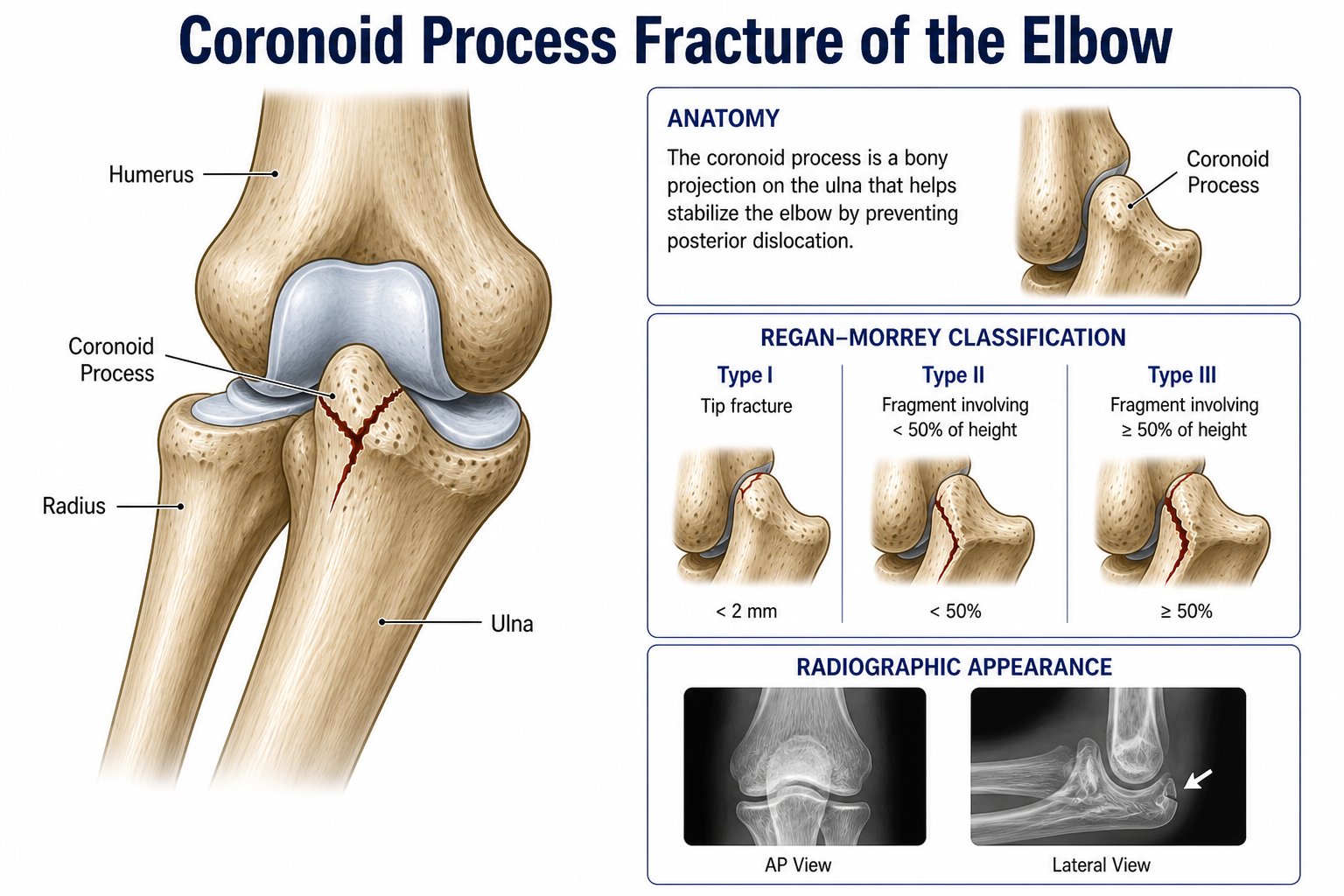
The coronoid process is the anterior bony projection of the proximal ulna critical for elbow stability. It provides the primary bony resistance to posterior displacement of the ulnohumeral joint — without an intact coronoid, the elbow will subluxate posteriorly under any compressive load. It is also the attachment point of the anterior UCL band, the anterior capsule, and the brachialis muscle.
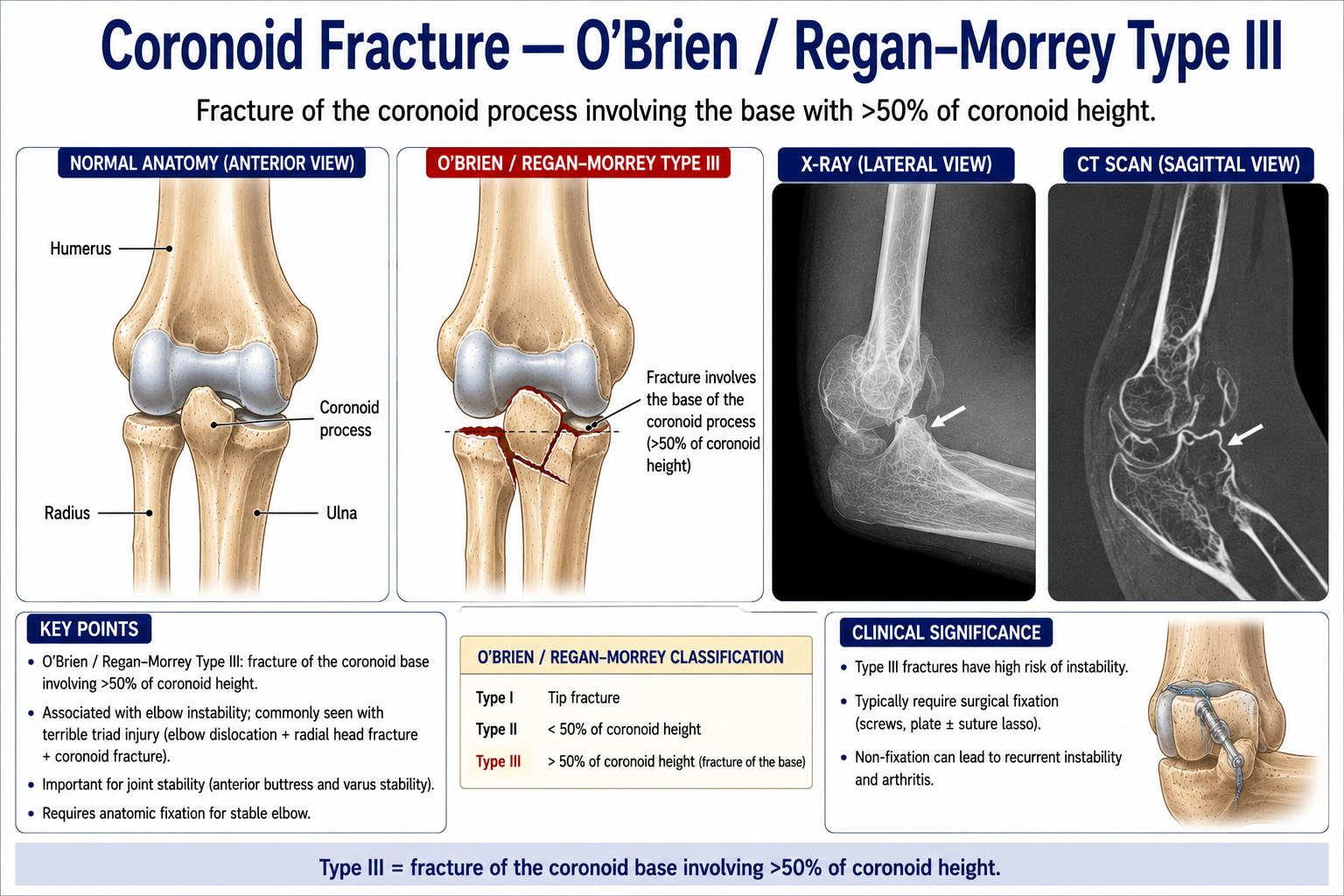
Coronoid fractures are classified by the Regan-Morrey system (Types I–III based on fragment size) or the O’Brien classification (which additionally identifies the anteromedial facet subtype — important because it disrupts bony support for the medial ligament complex even when small).
The key principle in coronoid fracture management is that fragment size alone does not determine treatment — stability of the elbow does. Even a small coronoid fracture in an unstable elbow may need to be fixed if it is preventing concentric reduction.
Quick Facts | Details |
Also Known As | Coronoid Fracture, Coronoid Process Avulsion, O’Brien Type Coronoid Fracture, Anteromedial Facet Fracture |
Affected Area | Coronoid process of the proximal ulna — the anterior bony projection providing the primary bony restraint against posterior subluxation of the ulnohumeral joint |
Who It Affects | Adults of any age; most commonly associated with elbow dislocations or varus posteromedial rotational injuries |
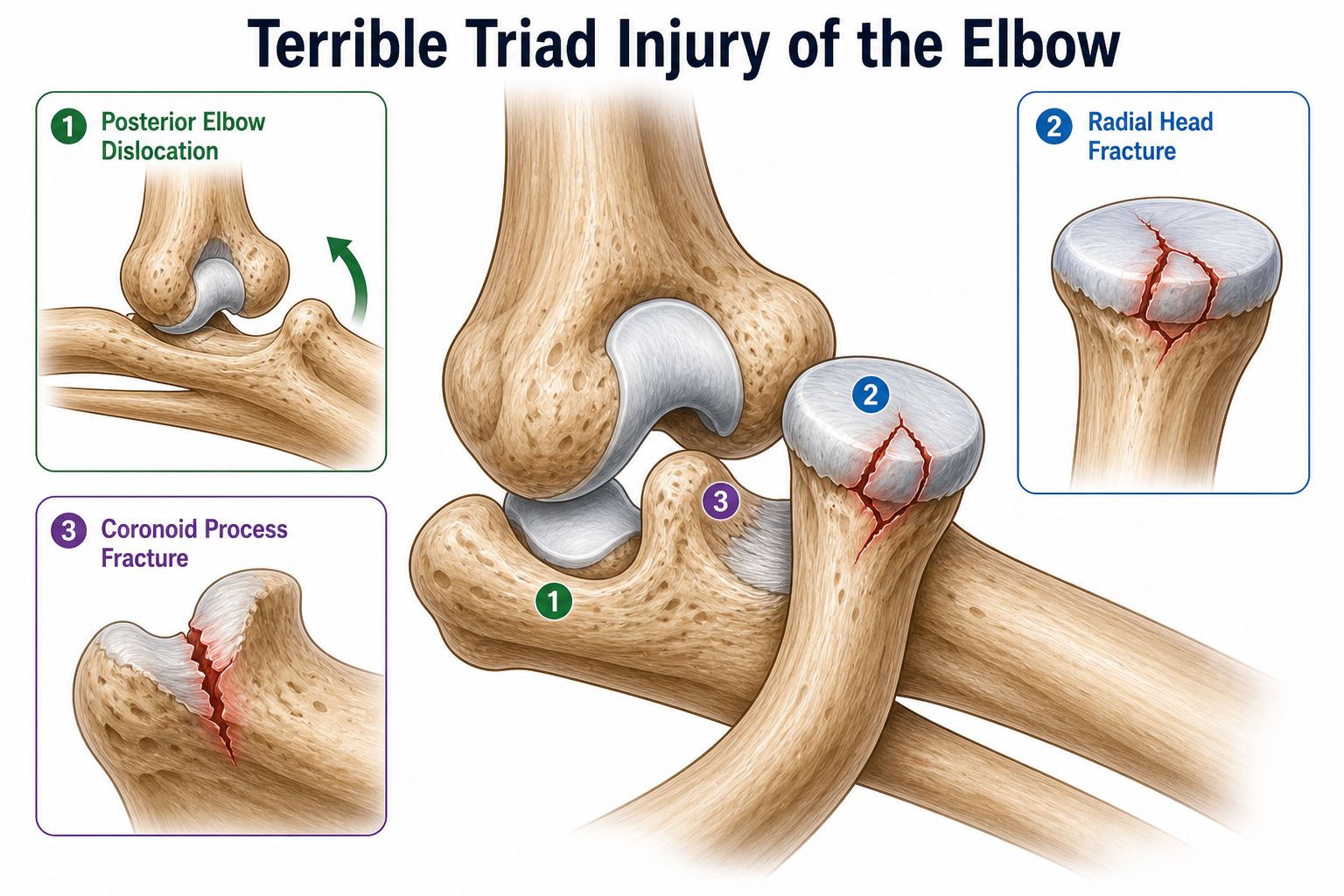
Prevalence | Coronoid fractures occur in approximately 10–15% of elbow injuries; isolated coronoid fractures are rare; most commonly seen in the context of elbow dislocation (terrible triad) or varus posteromedial rotational injury |
Treatment | Type I (tip <25%): non-operative; Type II (<50%): non-op or ORIF if unstable; Type III (>50%): ORIF via medial or anterior approach; anteromedial facet: ORIF with buttress plate |
Causes & Risk Factors
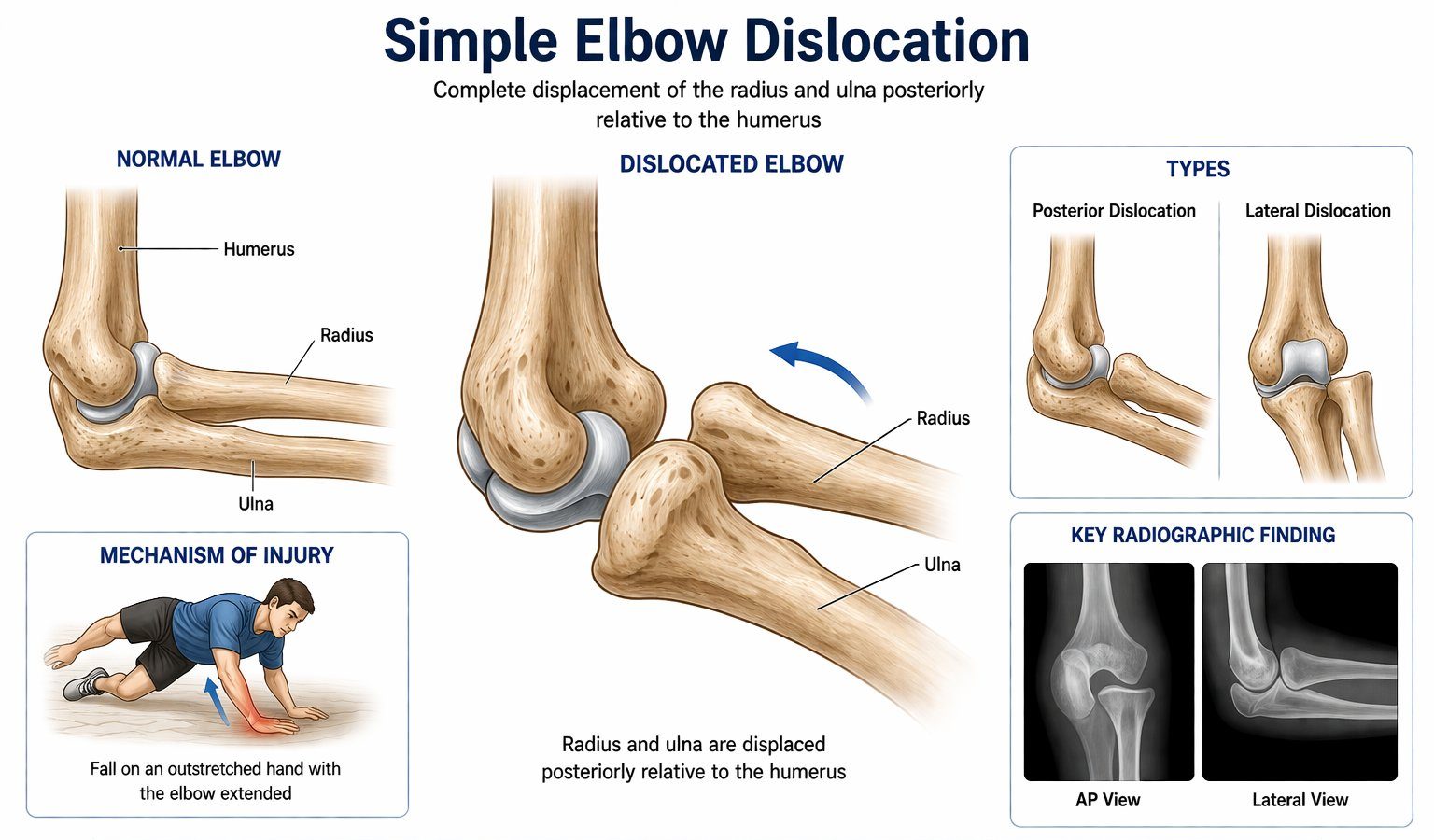
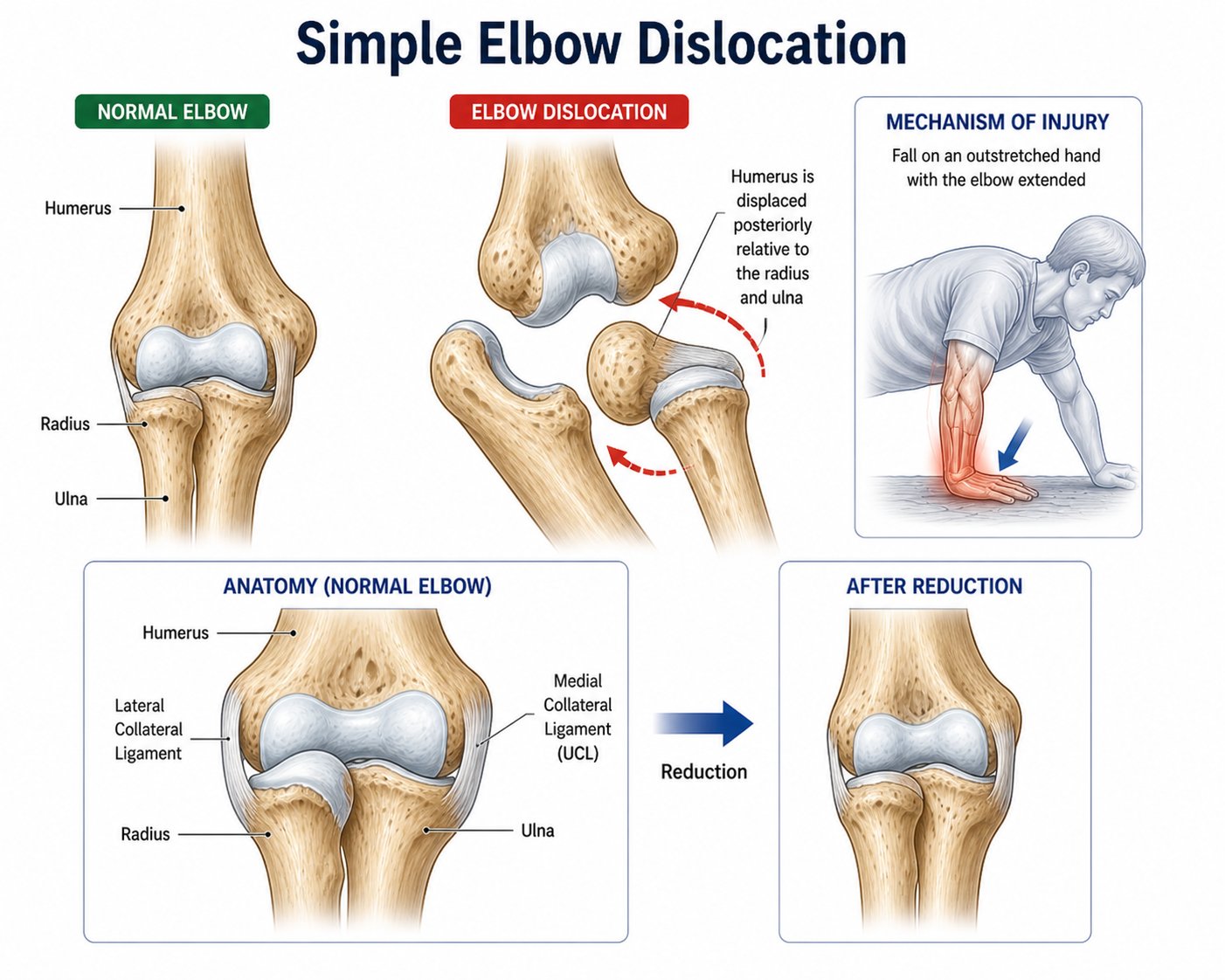
- Elbow dislocation — most common setting; the coronoid shears off as the forearm displaces posteriorly
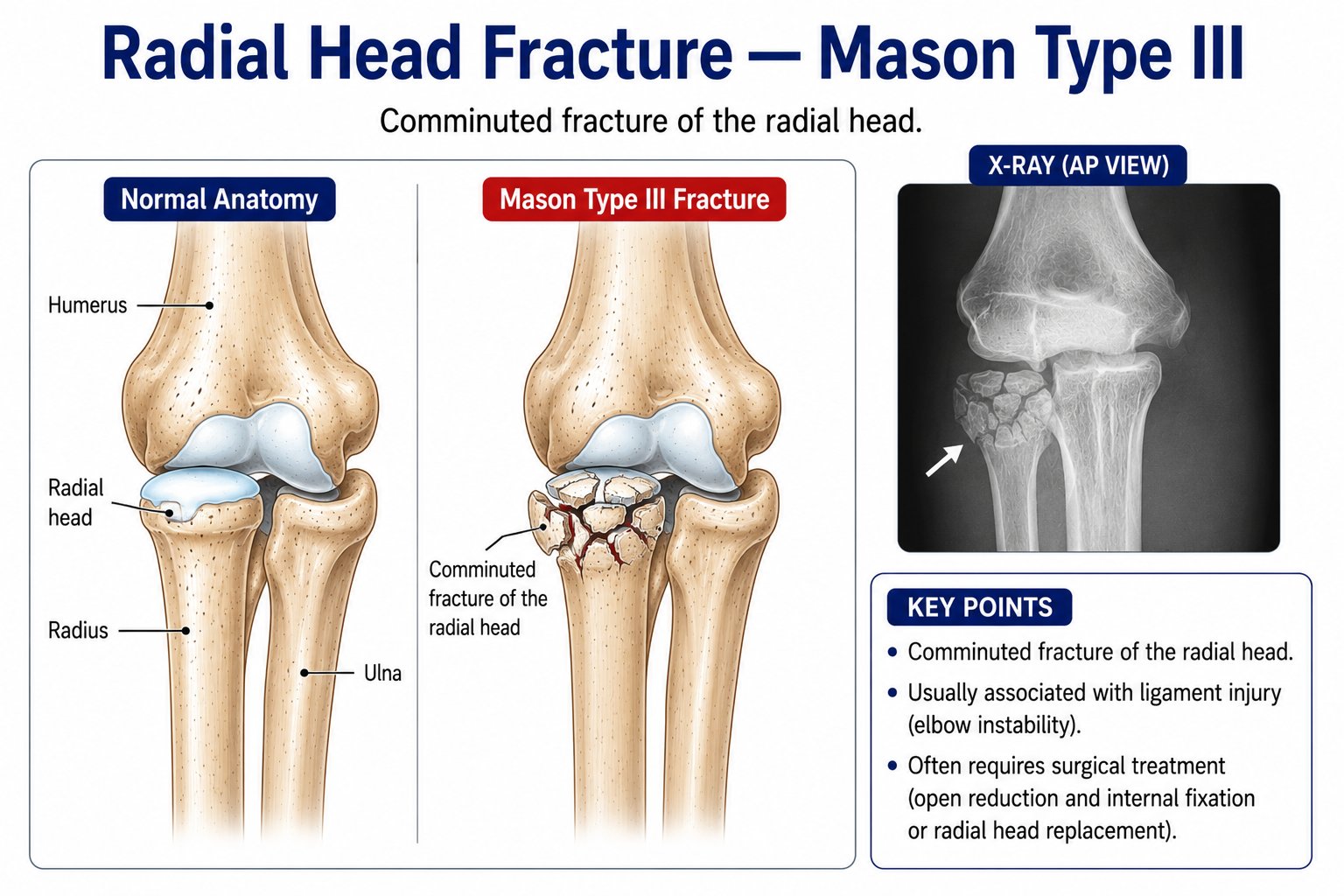
- Terrible triad injury — radial head + coronoid + dislocation; see Condition 16
- Varus posteromedial rotational injury (VPMRI) — varus stress plus axial load; shears the anteromedial facet specifically
- Fall onto an outstretched hand — axial load on a partially flexed elbow; radial head impinges against capitellum and coronoid against trochlea
- Direct trauma — direct blow to the anterior elbow; rare mechanism for isolated coronoid fracture
Symptoms
- Anterior elbow pain — localised to the antecubital fossa over the coronoid
- Swelling — haemarthrosis rapidly distends the joint
- Restriction of movement — particularly terminal extension
- Elbow instability — giving way or instability in associated dislocation cases
- Pain with forearm rotation if radiocapitellar joint also injured
- Bruising — anterior elbow; may extend to medial side in anteromedial facet injuries
How is it Diagnosed?
- Clinical examination — anterior tenderness; stability at multiple flexion angles; varus stress for anteromedial facet pattern
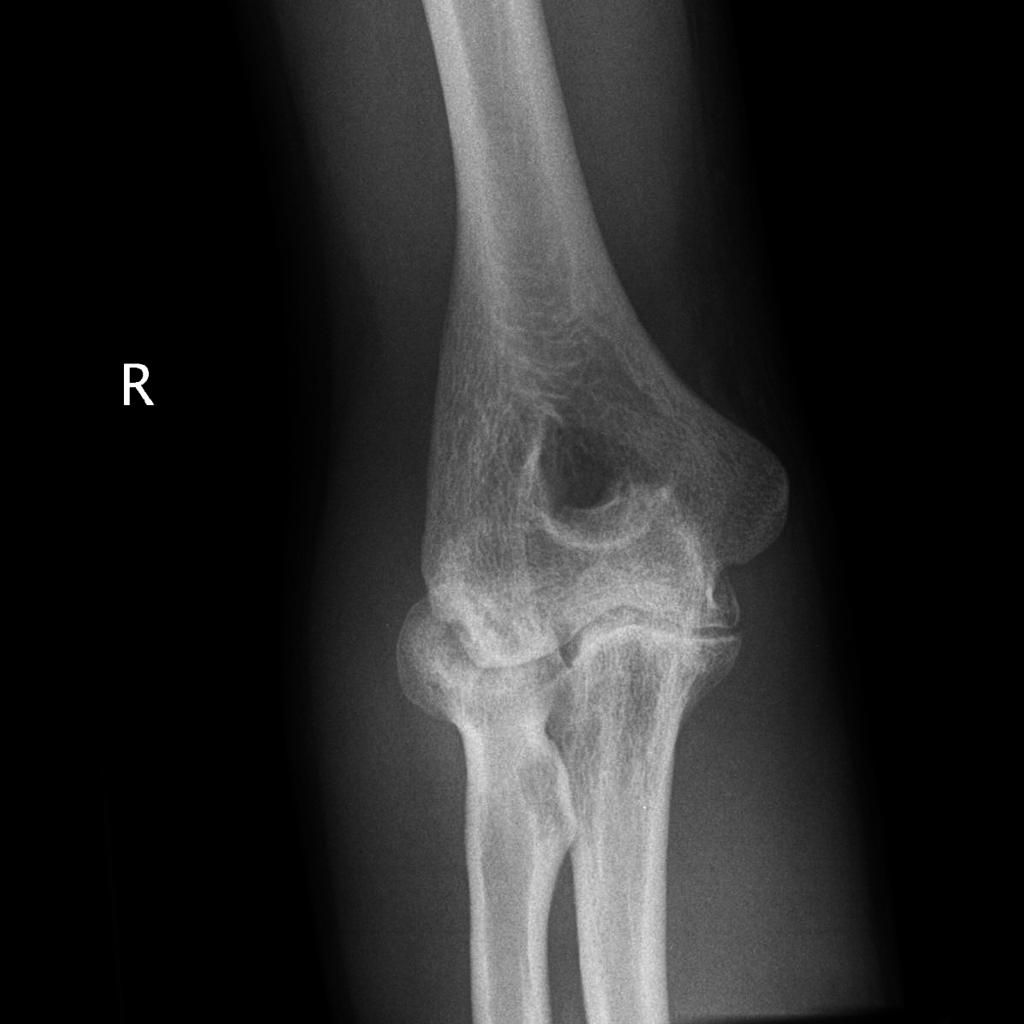
- Plain X-rays — lateral view: fragment visible anterior to trochlea; anteromedial facet fractures often missed on plain films
- CT scan — MANDATORY; defines fragment size, location (tip vs anteromedial facet vs basal), rotation, and associated injuries; 3D reconstruction very helpful
- Examination under anaesthesia — definitive stability testing when clinical picture is equivocal
Treatment Options
Treatment Type | Details |
Non-Operative (Type I Tip Fracture) | For isolated Type I (<25%) in stable elbow; hinged brace; early motion from week 1–2; weekly X-ray first 3 weeks to check for redisplacement |
Non-Operative (Type II Partial) | For Type II (<50%) in stable elbow after dislocation; posterior splint 1 week, then hinged brace; surgery if re-dislocation or instability develops |
ORIF via Anterior Approach | For Type II in unstable elbow, Type III (>50%); Henry anterior approach or lateral window; 2mm or 2.7mm headless compression screws |
Suture-Lasso Technique (Small Anteromedial Fragments) | Sutures through drill hole in fragment tied over cortex; captures fragment and UCL insertion; medial approach; for fragments not amenable to screw fixation |
Buttress Plate (Anteromedial Facet) | Contoured mini-fragment plate from medial side; very effective for restoring medial column support; protect ulnar nerve throughout |
Concurrent Injuries | Address radial head (ORIF or replacement) and LCL repair in same operative setting; do not manage the coronoid in isolation if other injuries present |
Recovery & Rehabilitation
- Non-operative: hinged brace 4–6 weeks; physiotherapy from week 1; return to full activity 6–12 weeks
- After ORIF: posterior splint 48 hours then hinged brace; physiotherapy immediately; no active extension against resistance for 6 weeks; return to light work 6–8 weeks; manual work 3–4 months
- Key complication: elbow stiffness — early motion is critical to prevent this
- Outcome after ORIF: 80–90% good-excellent stability and function when performed correctly
- Post-operative X-ray at 2 and 6 weeks to confirm maintained reduction
Why choose Dr Senthilvelan?
The coronoid process is small but surgically demanding — correct approach selection, fragment identification, and fixation technique require specialist experience. Dr Senthilvelan has trained in all coronoid fixation techniques including suture-lasso, headless screw, and buttress plating, and understands the critical role of the coronoid within the overall elbow stability equation.
Frequently Asked Questions
1. I was told I have a tiny coronoid chip fracture — why does it need surgery?
Fragment size alone does not determine whether surgery is needed — it is the stability of the elbow that matters. Even a small coronoid tip fracture, in the context of an elbow dislocation with LCL disruption, can be the critical missing piece preventing the elbow from remaining reduced. Your surgeon will assess elbow stability after reduction. If stable through a full arc, surgery is not required. If the elbow is unstable or the fragment represents the anteromedial facet, fixation is necessary.
2. What is the anteromedial facet and why is it different from other coronoid fractures?
The anteromedial facet is the inner (medial) part of the coronoid tip that supports the medial edge of the trochlea and serves as the bony attachment for the UCL. Anteromedial facet fractures occur through a varus posteromedial rotational mechanism and are important because even a small fracture here disrupts medial column support in a way a simple tip fracture does not. These are frequently missed on plain X-rays but clearly shown on CT.
3. How is the coronoid accessed surgically?
Access depends on the fracture pattern. The anterior (Henry) approach provides direct access for larger coronoid fragments. The medial (Hotchkiss over-the-top) approach is preferred for anteromedial facet fractures and medial buttress plates. A lateral or combined approach may be used when concurrent radial head fixation is required. The ulnar nerve is identified and protected throughout any medial approach.
4. Will I lose movement after coronoid fracture surgery?
Stiffness is the most common complication. The key to preventing stiffness is early mobilisation — beginning within days of surgery. Most patients achieve a functional arc (30–130°) with compliance. Immobilisation is kept to a minimum — typically just 24–48 hours in a posterior splint, then a hinged brace allowing motion.
5. Can a coronoid fracture heal on its own without surgery?
Small Type I tip fractures in stable elbows can heal without surgery, managed in a hinged brace with early physiotherapy. Healing is confirmed on X-ray at 4–6 weeks. However, if the elbow is unstable (fracture is part of a dislocation) or the fracture involves a significant portion of the coronoid (>50% or anteromedial facet), surgical fixation is needed to prevent chronic instability and post-traumatic arthritis.