Overview
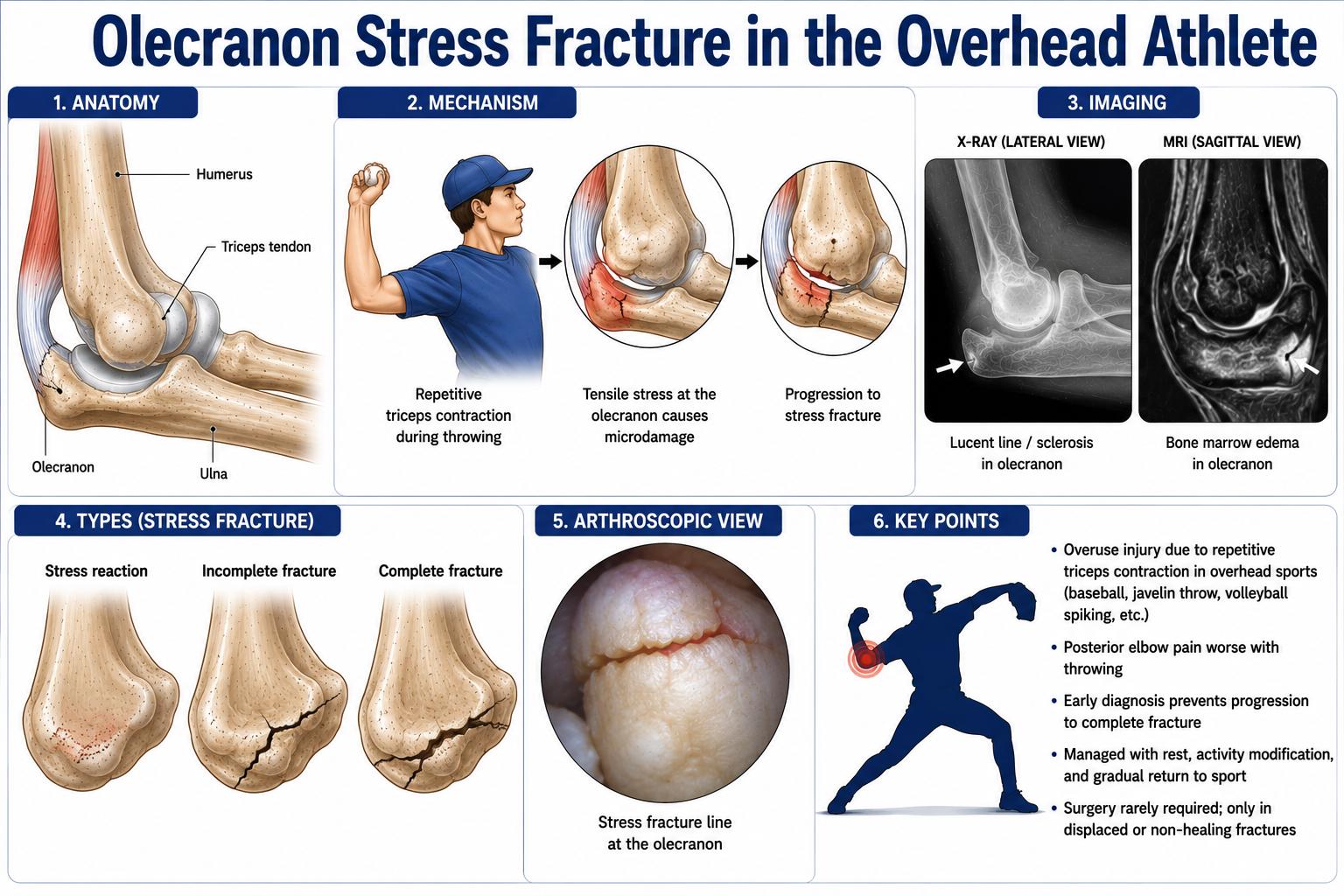
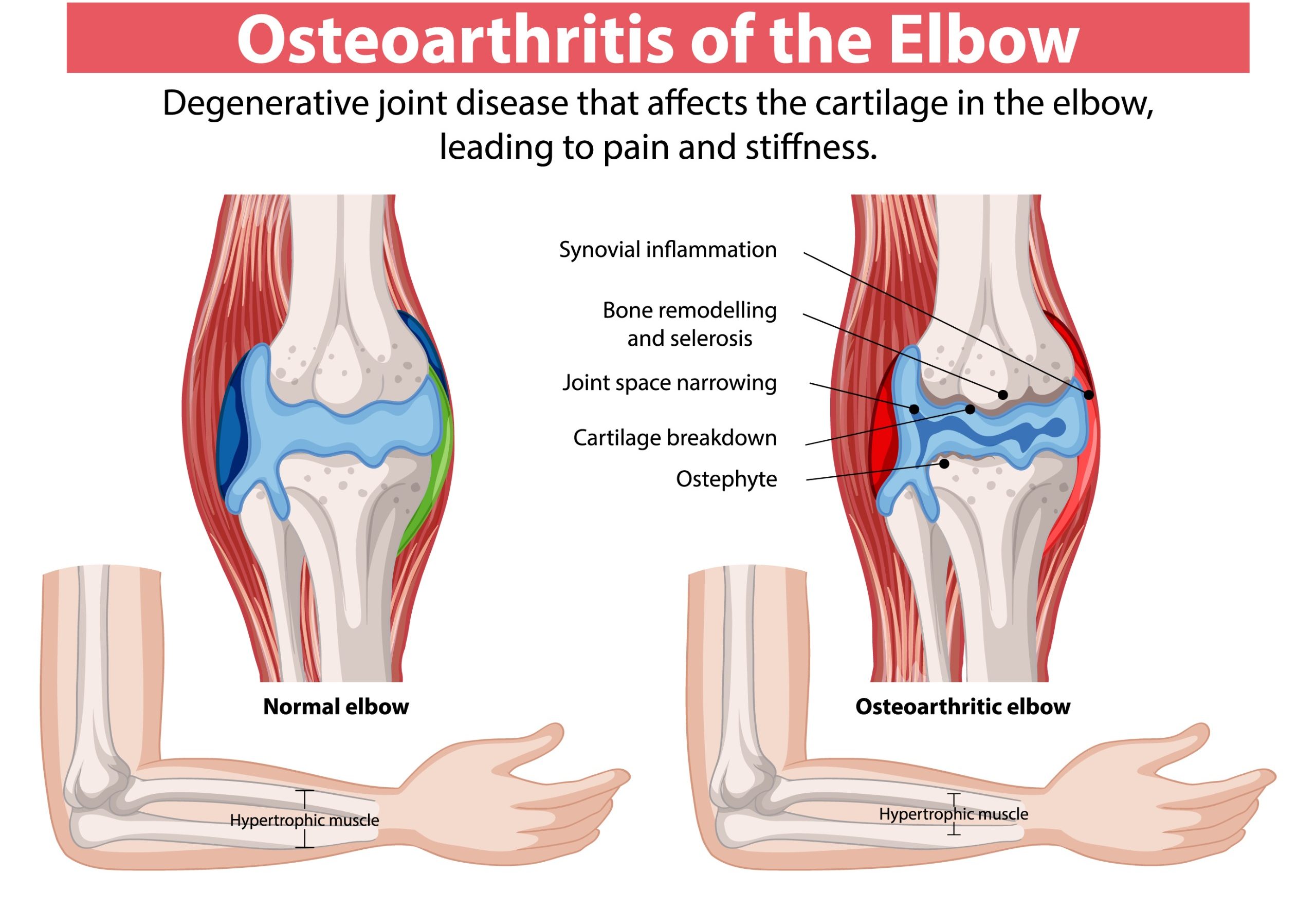
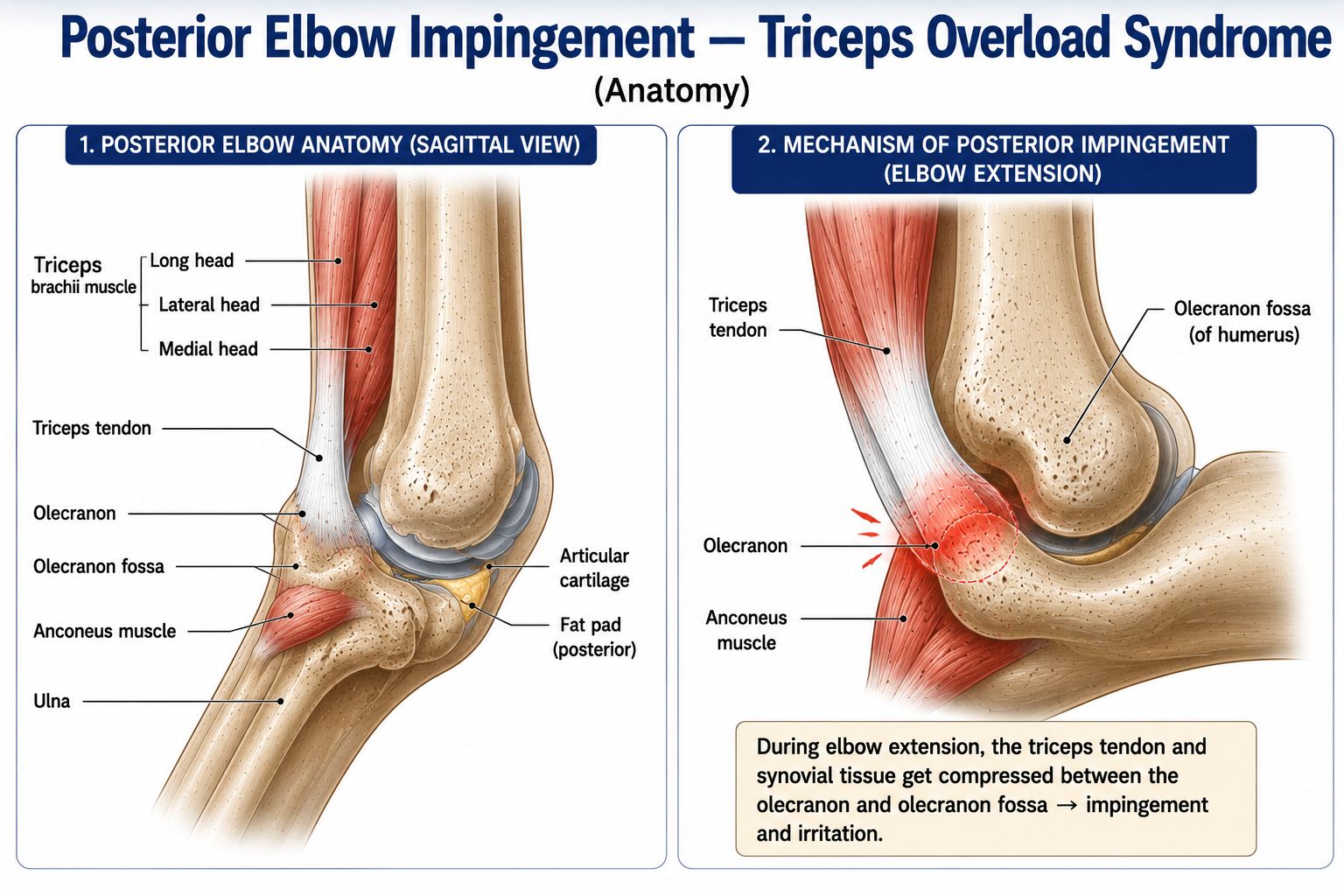
Posterior elbow impingement occurs when the olecranon tip repetitively impacts the posterior wall of the olecranon fossa during terminal elbow extension — causing reactive bone formation (osteophytes), posterior capsular thickening, chondromalacia of the posterior articular surfaces, and loose body formation. In athletes, this occurs through high-force, rapid elbow extension movements rather than the valgus-driven mechanism of VEOS in throwers.
In boxers and martial artists, the explosive elbow extension during a punch or strike drives the olecranon tip into the posterior fossa with extreme force. In gymnasts, hyperextension of the elbow during weight-bearing activities creates a similar impingement. In bench press athletes, the terminal extension at the lockout of a heavy bench press loads the posterior elbow.
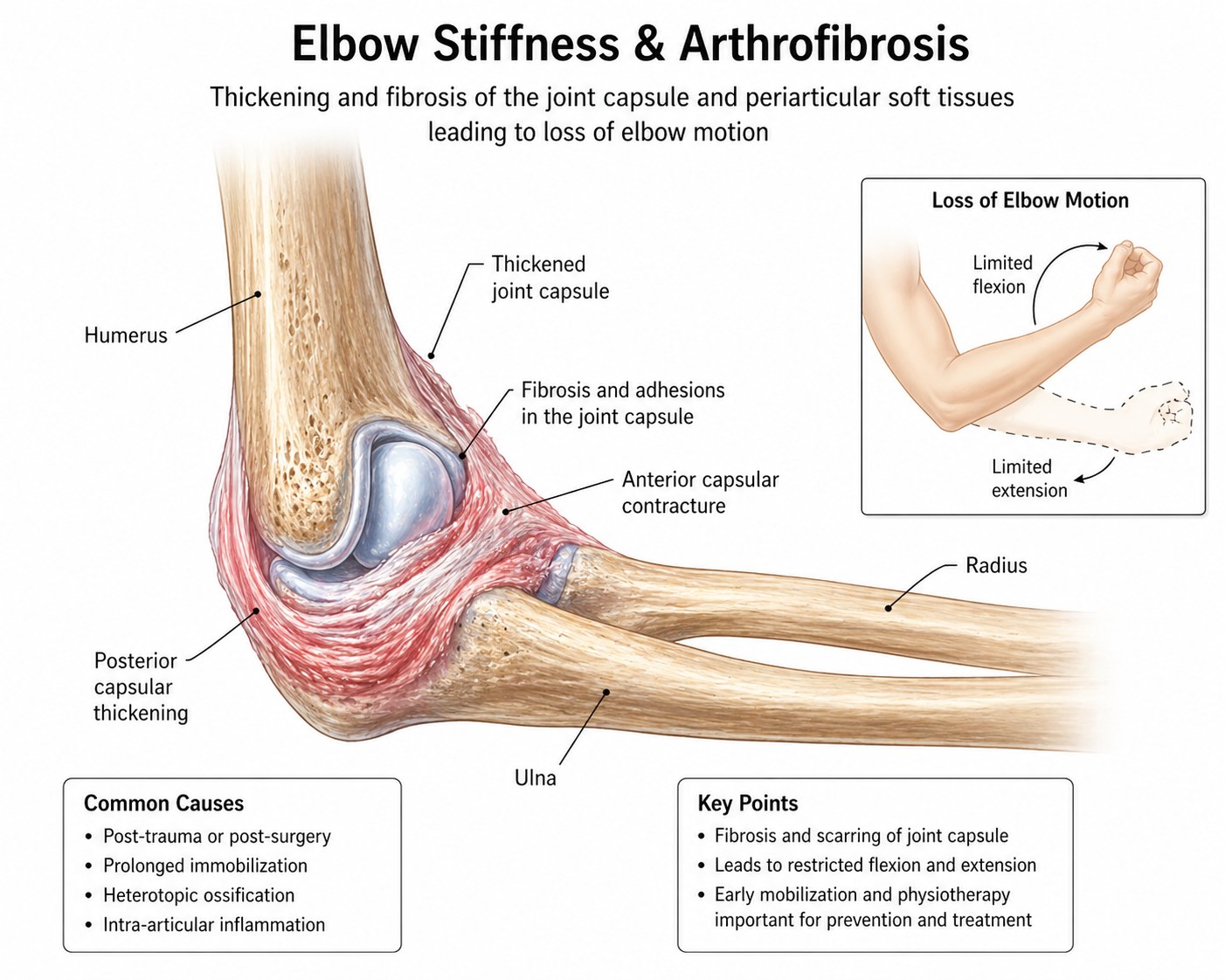
Posterior impingement presents as a very specific posterior elbow pain during terminal extension and may be associated with a loss of full extension (the joint becomes blocked by osteophytes). Arthroscopic posterior osteophyte excision and posterior capsulectomy is highly effective — providing pain relief and restoration of terminal extension in the majority of athletes.
Quick Facts | Details |
Also Known As | Posterior Elbow Impingement, Posterior Olecranon Impingement, Triceps Overload, Posterior Elbow Impingement Syndrome |
Affected Area | Posterior elbow compartment — olecranon tip, olecranon fossa, posterior capsule, posterior humeral cortex; the area assessed and decompressed during arthroscopic posterior elbow surgery |
Who It Affects | Athletes performing repetitive high-force elbow extension — boxers, martial artists, gymnasts, weightlifters (bench press athletes), javelin throwers, and overhead athletes; adults and adolescents |
Prevalence | Posterior elbow impingement is a recognised but underdiagnosed cause of posterior elbow pain in athletes; frequently coexists with VEOS in throwing athletes; a distinct diagnosis in non-throwing athletes performing explosive elbow extension |
Treatment | Activity modification; physiotherapy; ultrasound-guided corticosteroid injection into the posterior joint; arthroscopic posterior osteophyte excision + posterior capsulectomy if conservative fails; address concurrent pathology (UCL, VEOS) |
Causes & Risk Factors
- Repetitive high-force elbow extension — the olecranon is repeatedly driven into the posterior fossa at high velocity; seen in boxers, martial artists, gymnasts
- Weightlifting lockout — the terminal extension phase of bench press, overhead press, and dips with heavy loads
- Javelin throwing — the elbow extends rapidly and forcefully during the release phase
- Elbow hyperextension tendency — athletes with slight elbow hyperextension (cubitus recurvatum) are more prone to posterior impingement
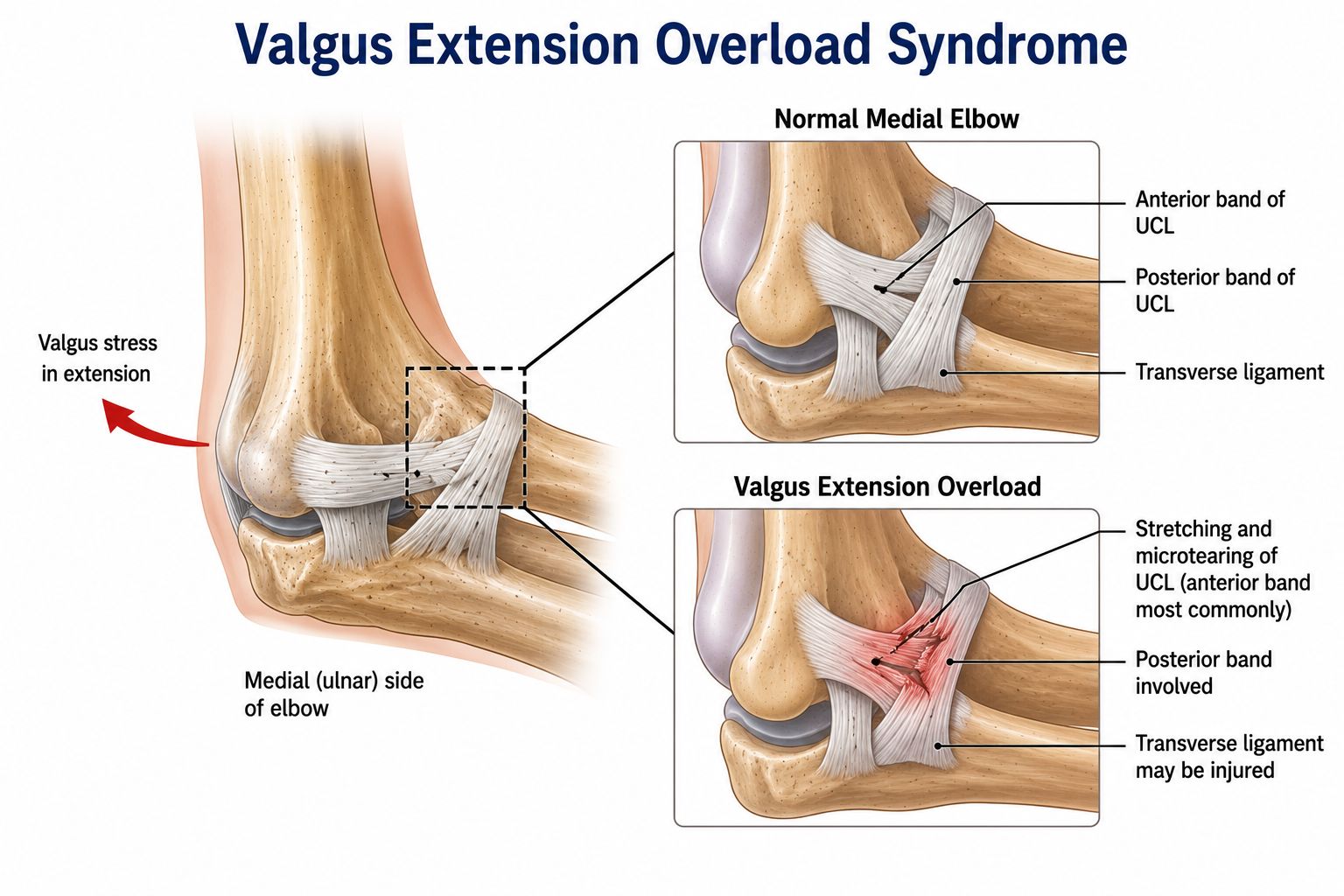
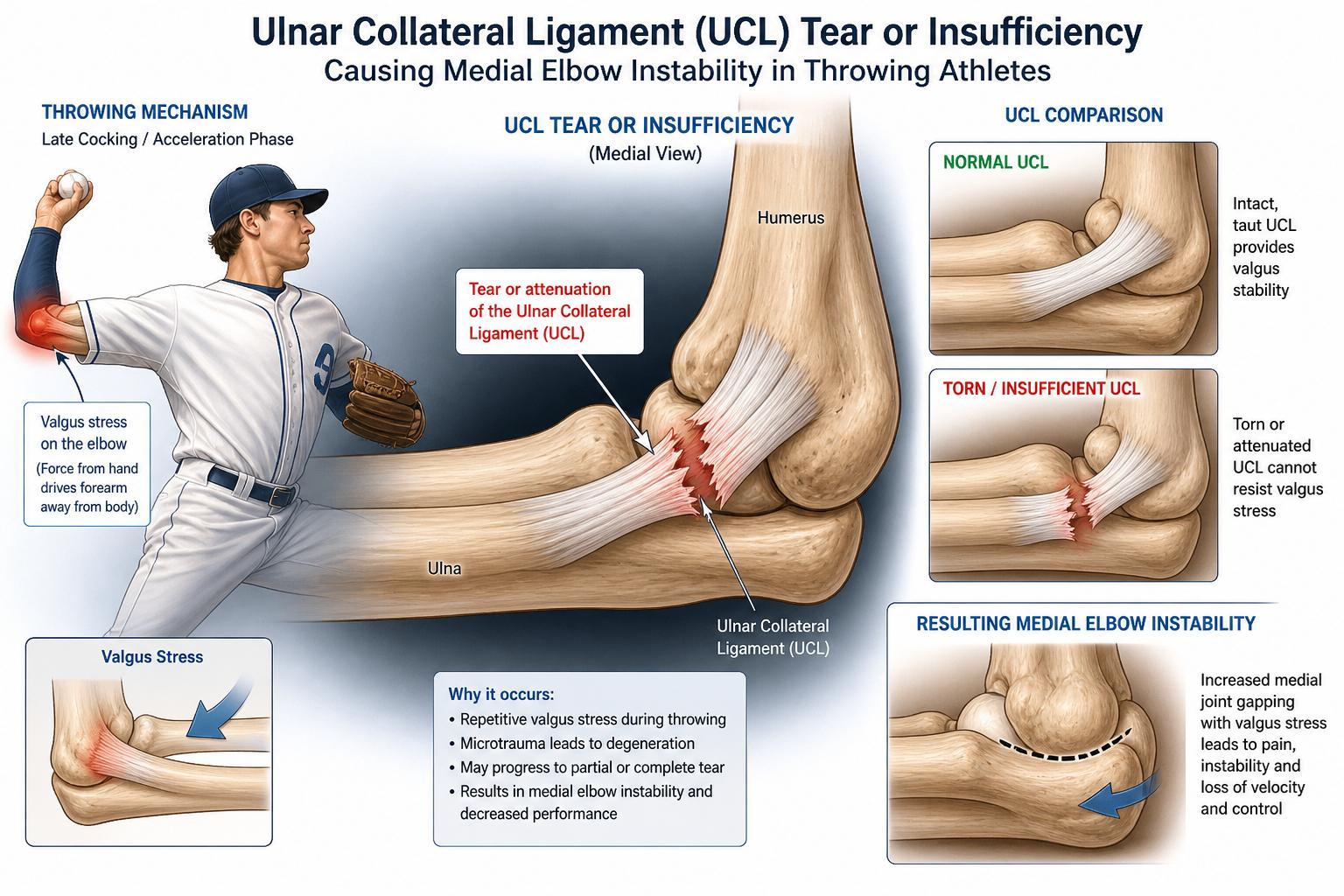
- Valgus extension overload (throwing athletes) — VEOS creates posteromedial impingement (Condition 61); pure posterior impingement in non-throwers involves the central olecranon tip rather than the posteromedial aspect
- Reactive osteophyte formation — once the first osteophyte forms, it worsens each extension cycle; a progressive self-perpetuating process
Symptoms
- Posterior elbow pain during terminal extension — specifically at the end of the extension arc; well-localised to the posterior elbow
- Pain with boxing punches, gym lockouts, or gymnastic extension — the provocation is highly specific to terminal elbow extension
- Loss of terminal extension (extension block) — if osteophytes are large enough to mechanically block full extension; the athlete “hits a wall” near terminal extension
- Posterior elbow swelling — intermittent effusion; more apparent after activity
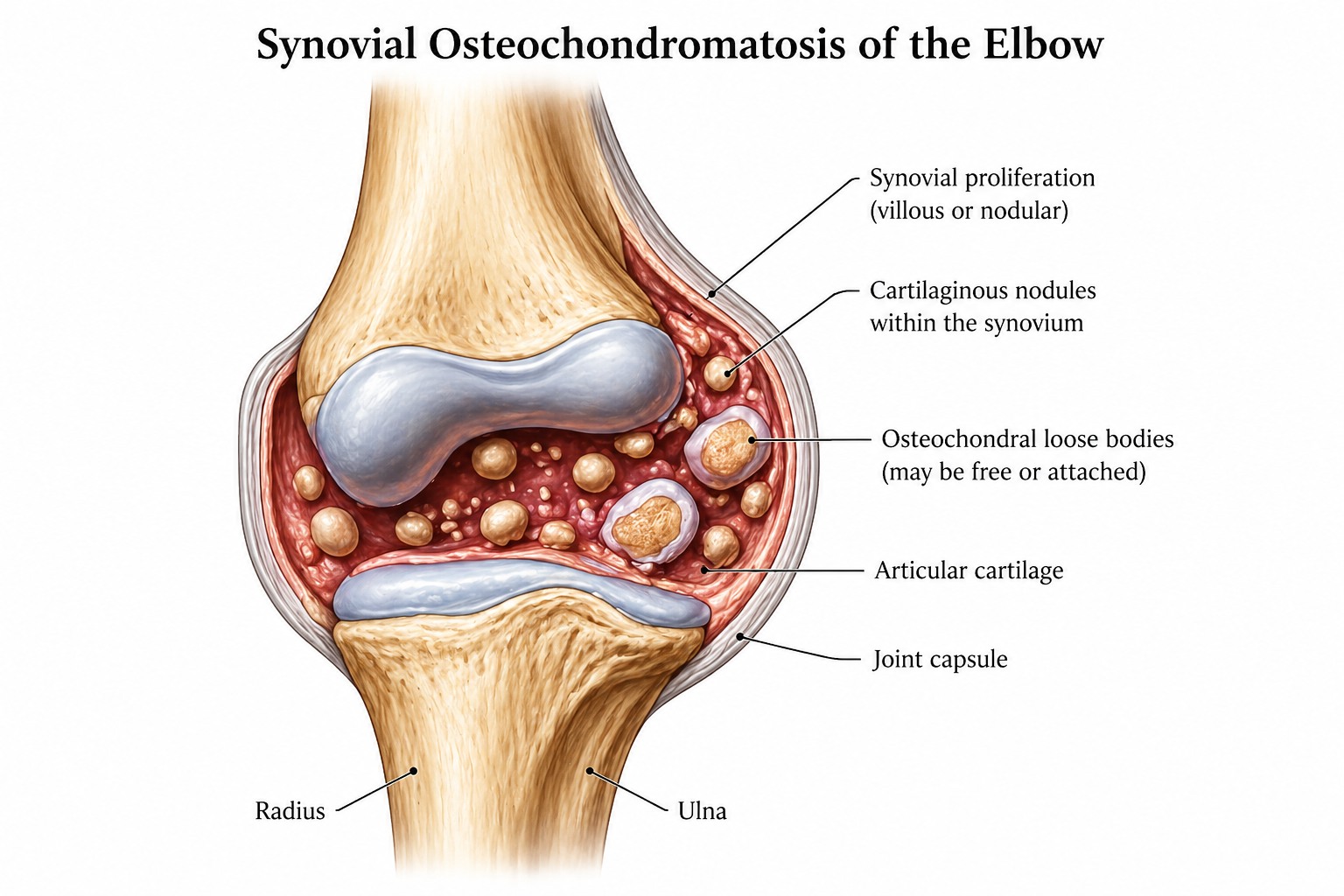
- Locking or catching — if loose bodies have formed from osteophyte fragmentation
- Posterior elbow tenderness — directly over the olecranon and posterior fossa; palpable osteophyte in some patients
How is it Diagnosed?
- Clinical examination — passive terminal extension: reproduce pain or find a mechanical block; active extension against resistance: posterior elbow pain; palpate for osteophytes; assess for VEOS (medial pain component) and UCL
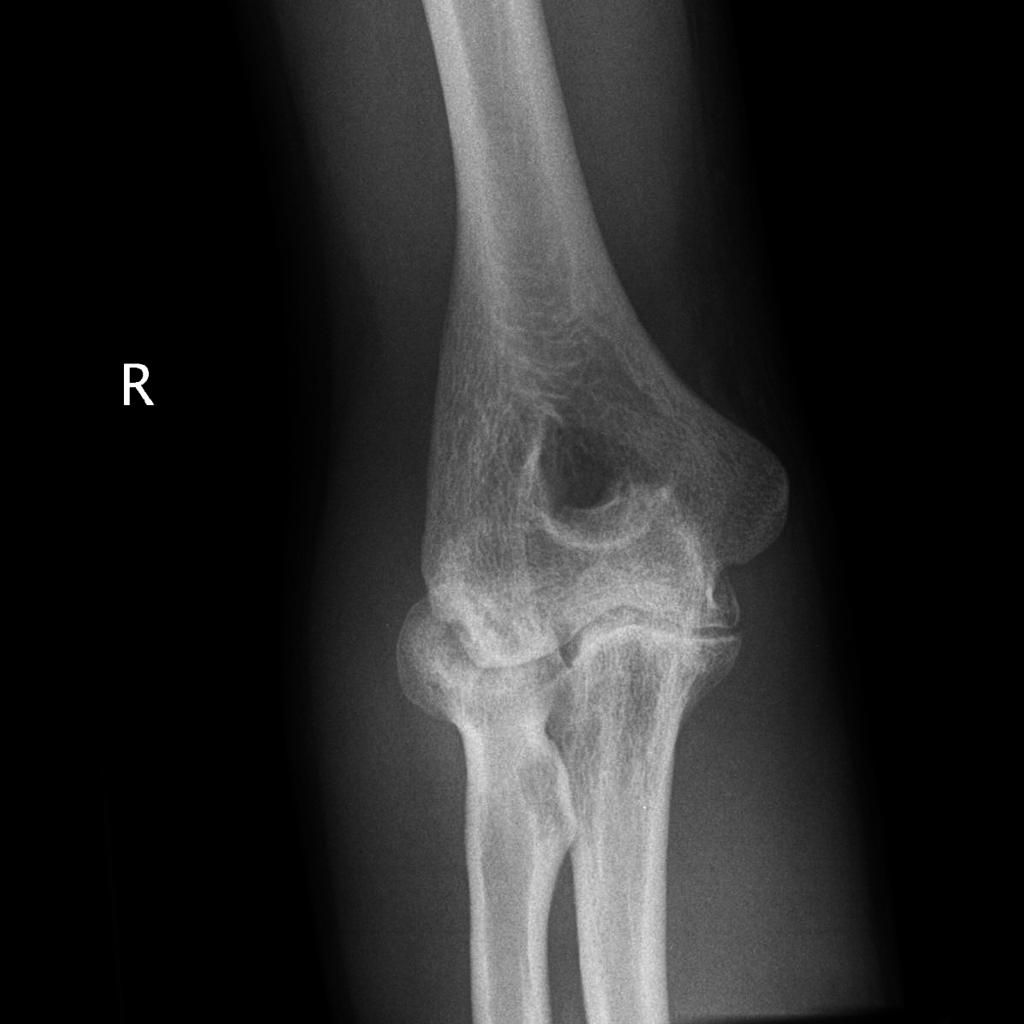
- Plain X-rays (AP + lateral) — posterior olecranon osteophyte; loose bodies in the olecranon fossa; posterior impingement changes
- CT scan — precise osteophyte size and location; loose body count and position; surgical planning
- MRI — posterior compartment assessment; posterior capsular thickening; chondromalacia of posterior articular surfaces; loose bodies; concurrent UCL and VEOS assessment
Treatment Options
Treatment Type | Details |
Activity Modification | Avoid high-force terminal extension movements; modify training programme (replace lockout exercises with partial-range alternatives); reduce punch/strike volume |
Physiotherapy | Posterior elbow flexibility (capsular stretching); anti-inflammatory modalities; address shoulder and trunk mechanics contributing to terminal elbow extension force |
Corticosteroid Injection | Ultrasound-guided injection into the posterior joint or posterior capsule; provides 4–8 weeks of symptomatic relief; not curative for structural osteophytes but useful for flare management |
Arthroscopic Posterior Osteophyte Excision | Standard surgical treatment: posterior portals; systematic posterior compartment survey; excision of olecranon osteophyte with shaver and burr; removal of all loose bodies; posterior capsulectomy (excision of thickened posterior capsule to restore terminal extension); protect ulnar nerve throughout; day-case procedure |
Address Concurrent Pathology | Concurrent VEOS: address posteromedial osteophytes at the same arthroscopic setting; Concurrent UCL insufficiency: plan UCL reconstruction staged or concurrent |
Recovery & Rehabilitation
- After arthroscopic posterior decompression: sling 48 hours; immediate active ROM; physiotherapy from day 1; return to sport 4–8 weeks
- Expected outcomes: resolution of posterior pain in 85–90%; restoration of terminal extension in those with extension block
- Return to boxing/martial arts: 4–6 weeks; return to heavy bench pressing: 6–8 weeks; return to throwing: 3–4 months (if concurrent VEOS addressed)
- Recurrence: if the activity that caused the impingement is resumed without modification, osteophyte re-formation occurs — modifying the terminal extension load and technique is important for prevention
Why choose Dr Senthilvelan?
Posterior elbow impingement requires a systematic arthroscopic assessment of the posterior compartment combined with concurrent evaluation for VEOS and UCL insufficiency. Dr Senthilvelan’s arthroscopic approach ensures complete osteophyte excision and loose body removal, with concurrent management of all associated elbow pathology in a single procedure.
Frequently Asked Questions
1. I box competitively and have started to get pain at the back of my elbow when I throw a punch — is this posterior impingement?
Yes — this is a classic presentation of posterior elbow impingement in a boxer. The explosive elbow extension during a punch drives the olecranon tip into the posterior olecranon fossa with high force. Repetitive impacts cause reactive bone spurs (osteophytes) to form on the olecranon tip. Plain X-ray will typically show this osteophyte, and CT or MRI defines its size and whether loose bodies have formed. Arthroscopic excision of the osteophyte is highly effective — most boxers return to full training within 4–6 weeks.
2. Can I still train during treatment?
With modification, yes. The key is avoiding maximal-effort terminal extension movements while the posterior elbow is inflamed. In boxing terms, this means reducing heavy bag work, pad work, and sparring that involves full-force punching. Shadow boxing and technique work within a pain-free range can continue. For gym athletes, avoiding full lockout on bench press (stopping just short of terminal extension) while maintaining the rest of the workout is appropriate. The goal is to allow the inflammation to settle while maintaining conditioning.
3. Is there any difference between posterior impingement and VEOS?
Yes — VEOS (valgus extension overload syndrome, Condition 61) is a throwing-specific condition where posteromedial impingement occurs because of the valgus force during throwing. The impingement is on the posteromedial side, driven by UCL loading. Pure posterior impingement (this condition) involves the central olecranon tip impacting the posterior fossa during terminal extension, without the medial valgus component. In practice, the two conditions coexist in many throwers, and arthroscopic surgery addresses both simultaneously through posterior portals.
4. How is the arthroscopic surgery performed and what is the recovery like?
Arthroscopic posterior decompression is a day-case procedure performed under general or regional anaesthesia. Small keyhole incisions are made at the back of the elbow; a camera and instruments access the posterior compartment. The osteophyte on the olecranon tip is removed using a motorised shaver and burr, any loose bodies are retrieved, and the thickened posterior capsule is released (capsulectomy). Total operating time is approximately 30–45 minutes. Recovery is fast — a sling for 48 hours, then active elbow exercises from day 1. Return to sport is typically 4–8 weeks.
5. Will the osteophyte grow back after surgery?
If the activity that caused the osteophyte is resumed without modification, there is a risk of recurrence — osteophytes are a reactive response to repetitive bone-on-bone impingement. However, if the activity volume and technique are appropriately modified (avoiding extreme terminal extension loads, correcting mechanics that force the elbow into hyperextension), recurrence rates are low. For boxers and martial artists, coaching input on punch mechanics and guard position can reduce the terminal extension impact. Athletes who return without modification have higher recurrence rates.