Overview
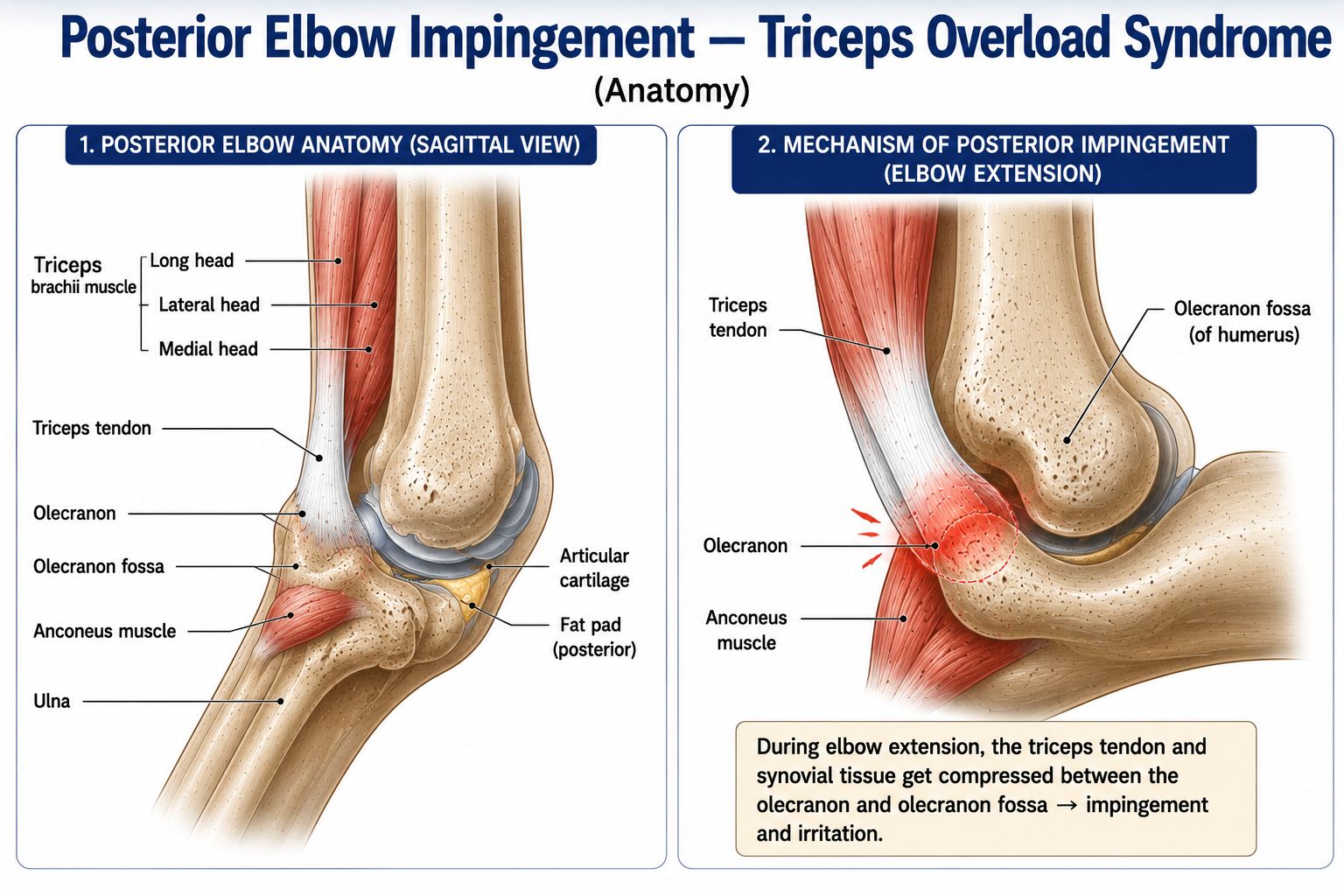
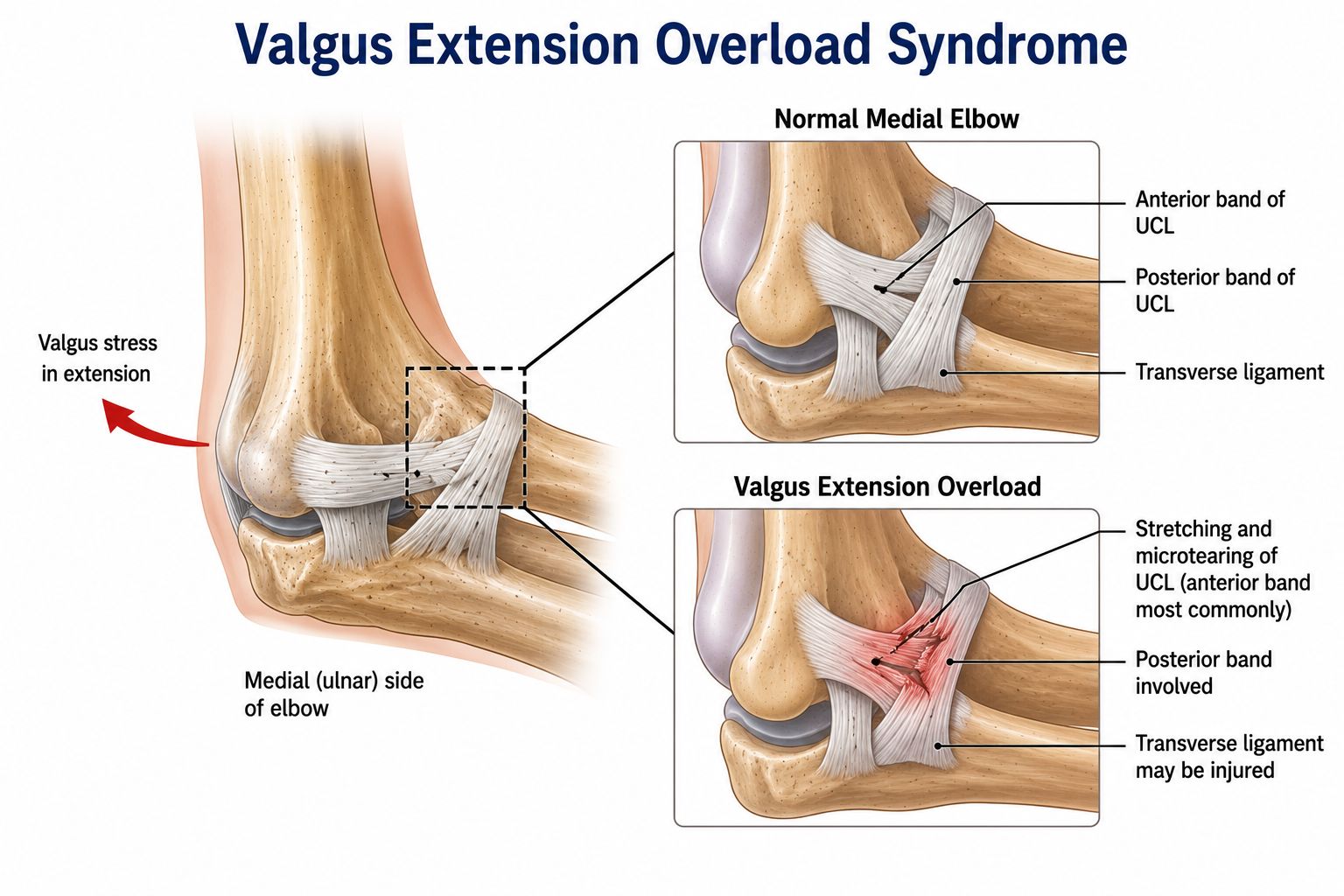
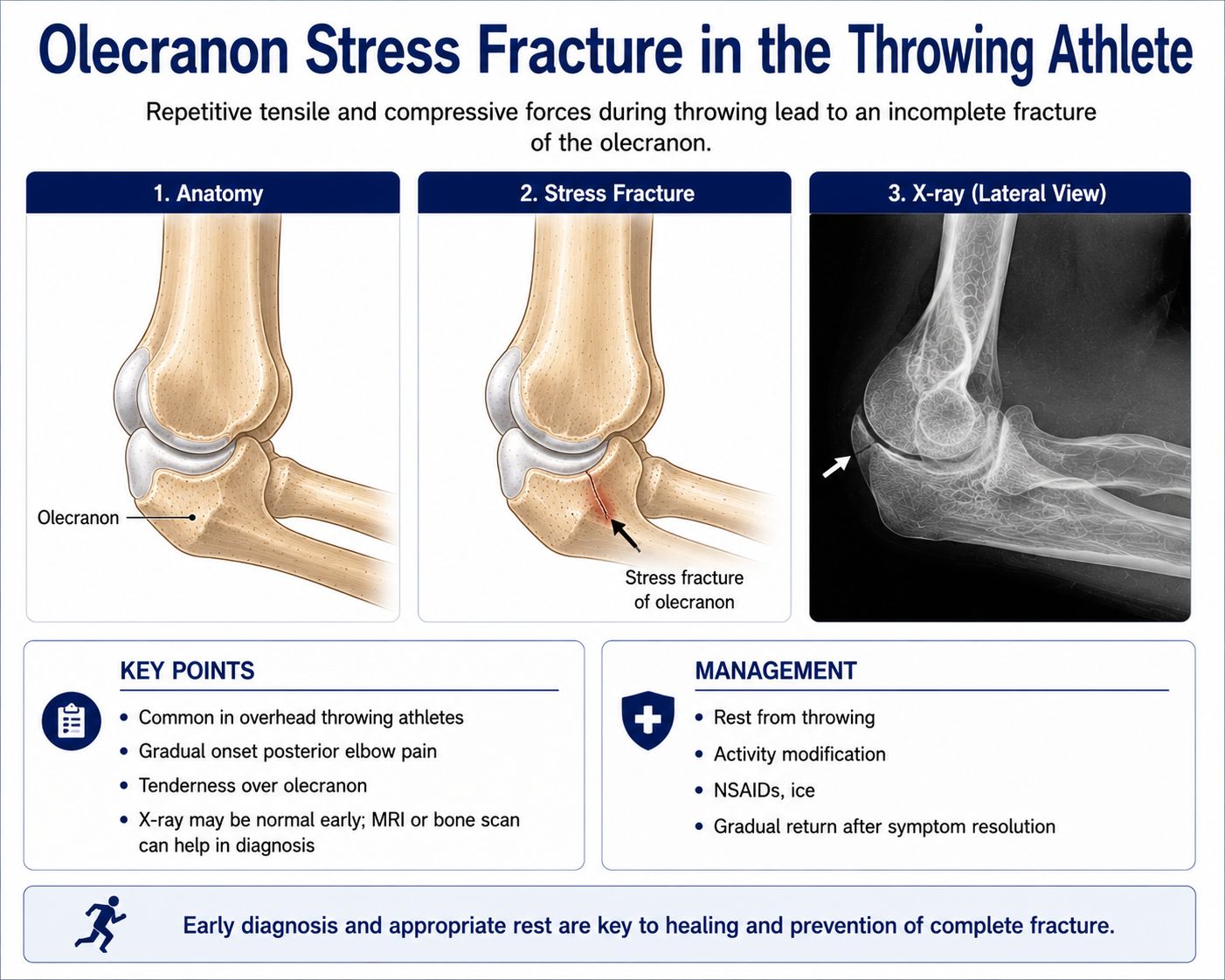
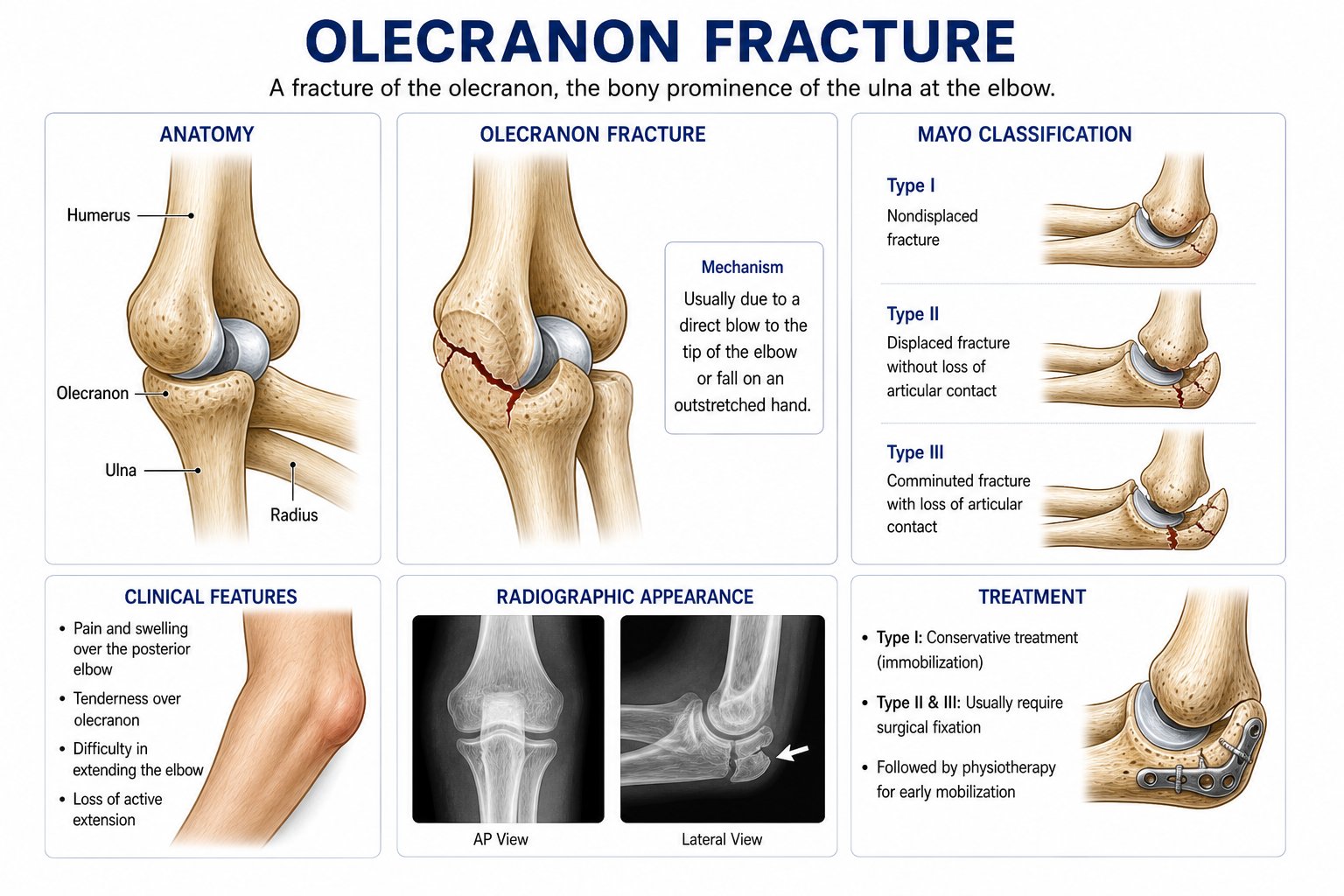
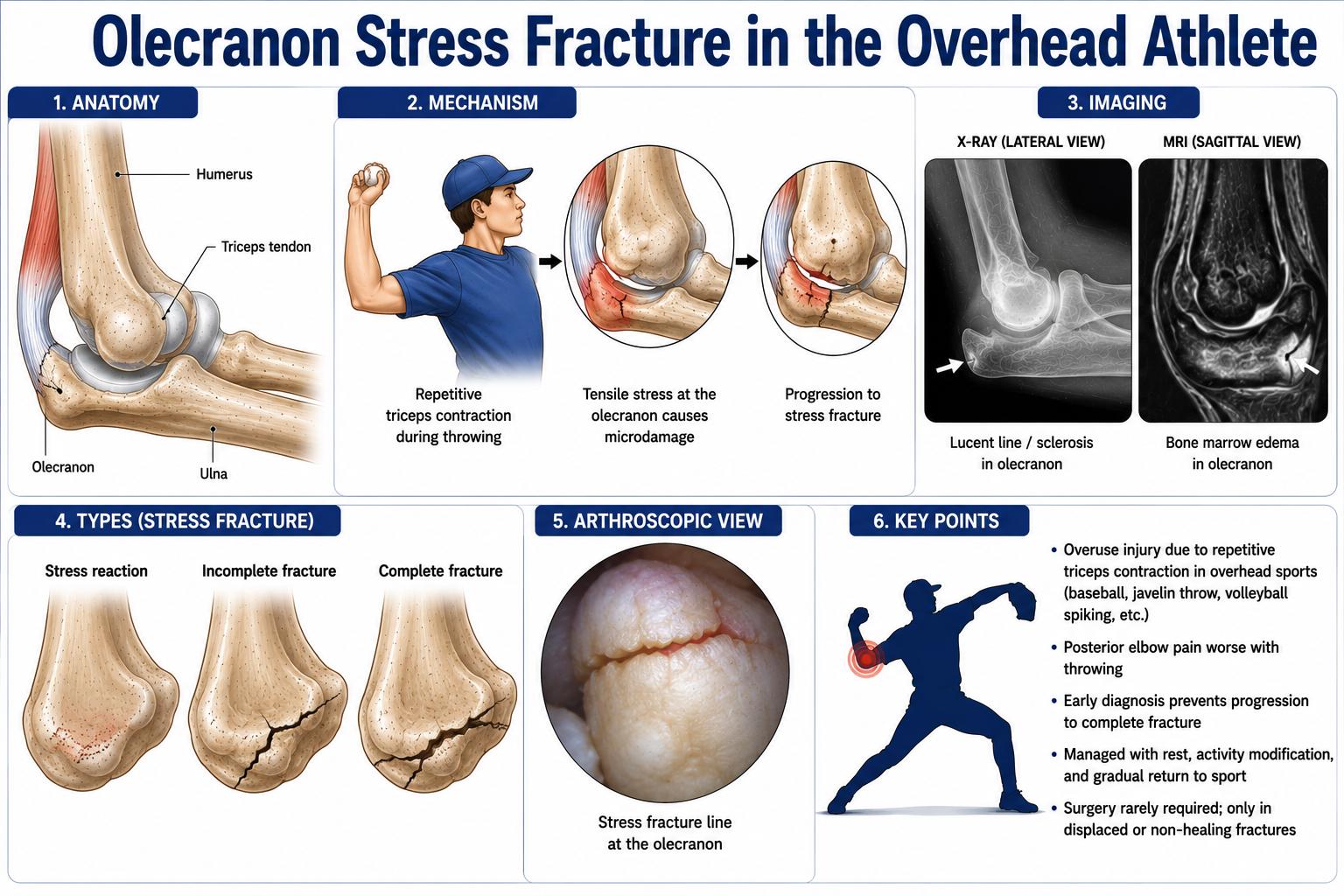
Olecranon stress fractures in overhead athletes are fatigue fractures caused by the repetitive extreme loading of the olecranon during the throwing cycle. During the acceleration phase of throwing, the olecranon tip is driven into the olecranon fossa with enormous extension force; during deceleration, the triceps applies a rapid tensile force through the olecranon; and throughout, the medial valgus stress creates a shear force at the posteromedial olecranon. The combination of these cyclic stresses, applied at high velocity across thousands of throws, can exceed the bone’s remodelling capacity and cause a fatigue fracture.
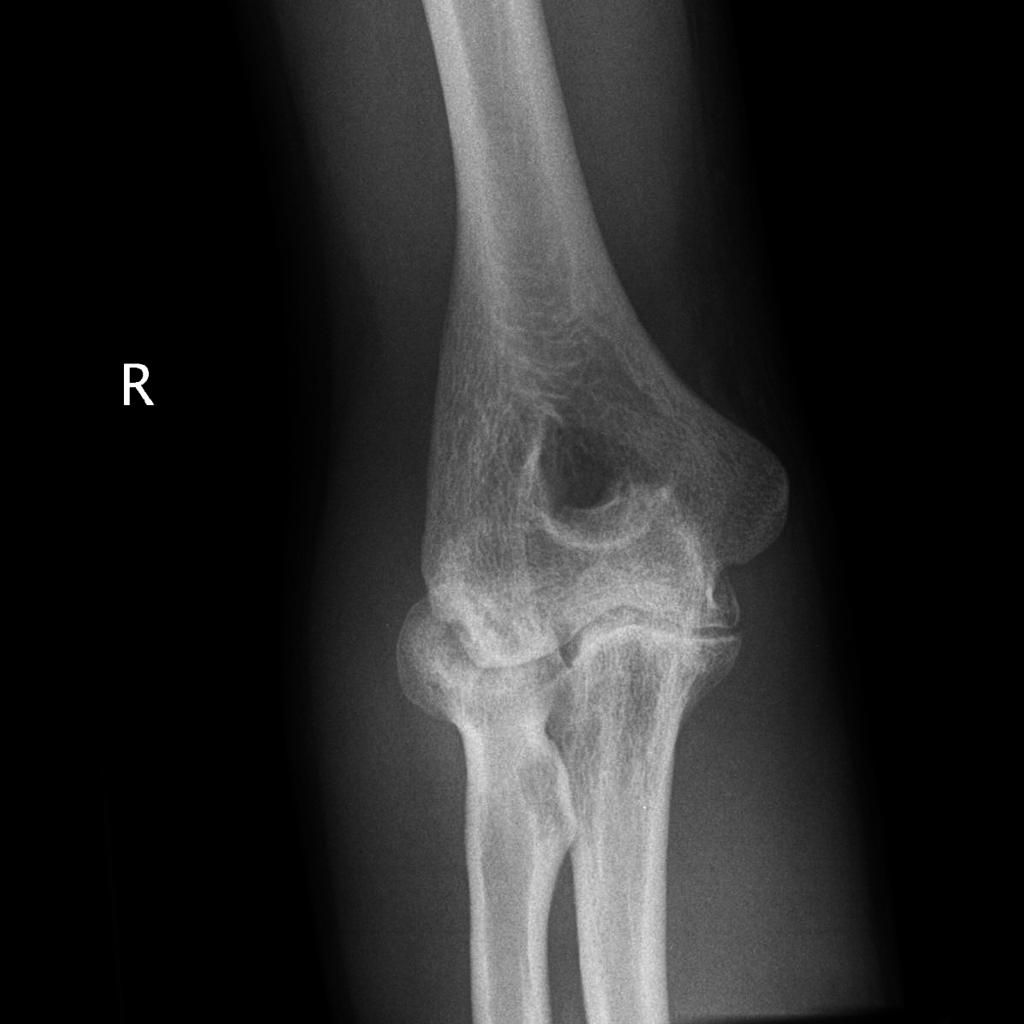
The condition typically presents insidiously — progressive posterior elbow aching during or after throwing, without a specific acute event. Because early stress fractures are frequently invisible on plain X-ray, the diagnosis requires MRI — which shows characteristic bone marrow oedema and periosteal reaction at the midolecranon. Any overhead athlete with progressive posterior elbow aching localised to the olecranon must have MRI to exclude a stress fracture.
This is identical to Condition 58 (Olecranon Stress Fracture — Throwing Athlete) but is presented here within the Sports category to allow sports-specific pathway content for the website. The treatment principles are the same, with emphasis here on the sports medicine pathway, return-to-sport criteria, and biomechanics intervention.
Quick Facts | Details |
Also Known As | Thrower’s Olecranon Stress Fracture, Olecranon Fatigue Fracture, Posterior Elbow Stress Fracture |
Affected Area | Midolecranon — the junction of the proximal and middle thirds of the olecranon process; perpendicular to the axis of the intramedullary canal |
Who It Affects | Competitive overhead athletes — cricket fast bowlers, baseball pitchers, javelin throwers, volleyball players; adolescent and adult; typically affects the dominant arm; also seen in racket sport players |
Prevalence | Uncommon but career-threatening in overhead sport populations; incidence in professional fast bowlers may be as high as 5–10% over a career; one of the most serious elbow diagnoses in the throwing athlete |
Treatment | Non-displaced: complete rest from throwing 3–6 months + bone stimulator; ORIF with intramedullary cancellous screw if non-union at 3 months or displacement; return to competitive throwing 6–12 months; mandatory biomechanics review before return |
Causes & Risk Factors
- Valgus extension overload — the combined valgus and extension forces during throwing create tensile stress across the midolecranon perpendicular to the bone axis
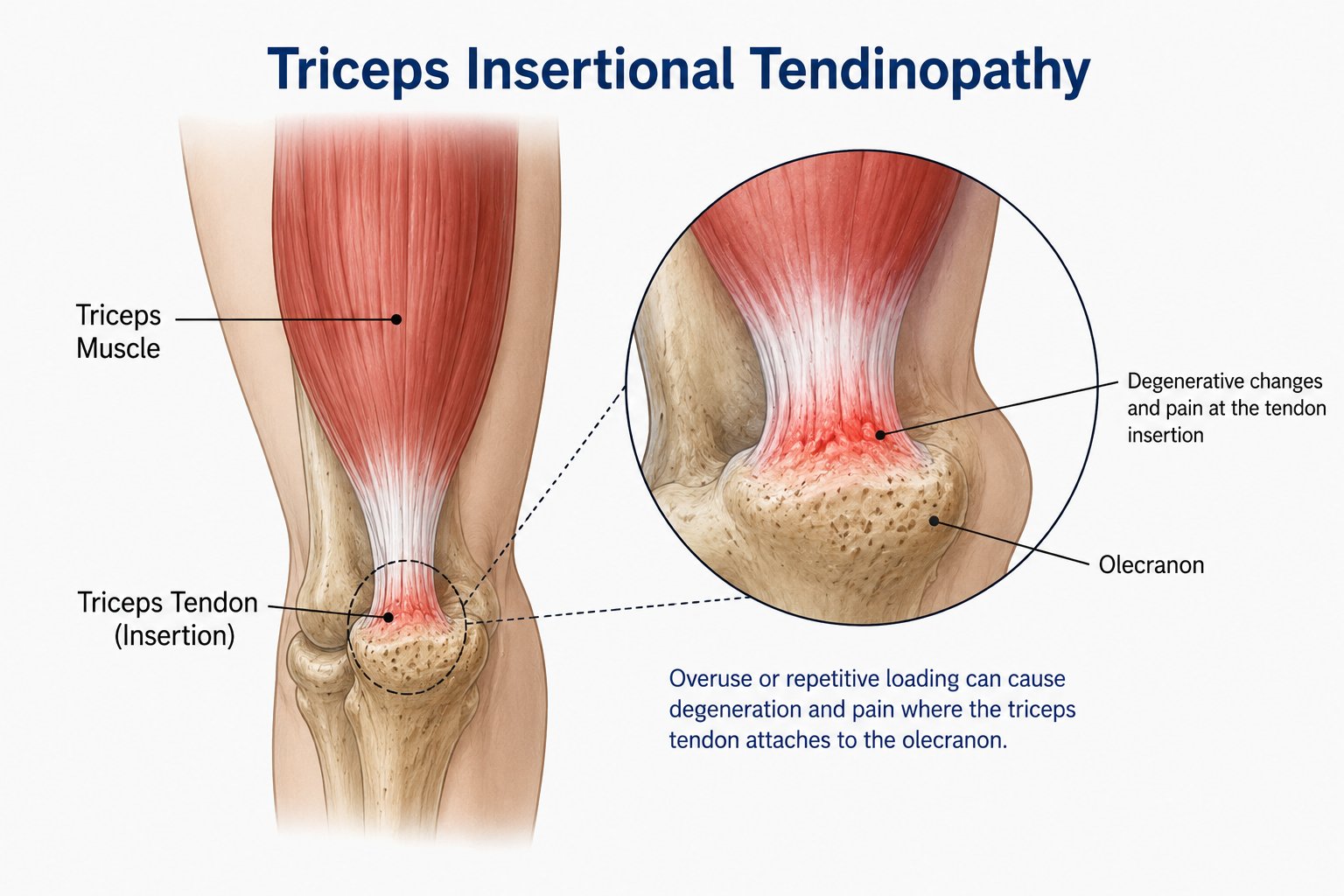
- Triceps traction — rapid eccentric triceps contraction during the deceleration phase applies a tensile force at the olecranon insertion
- High training volume — professional athletes, year-round training without adequate off-season
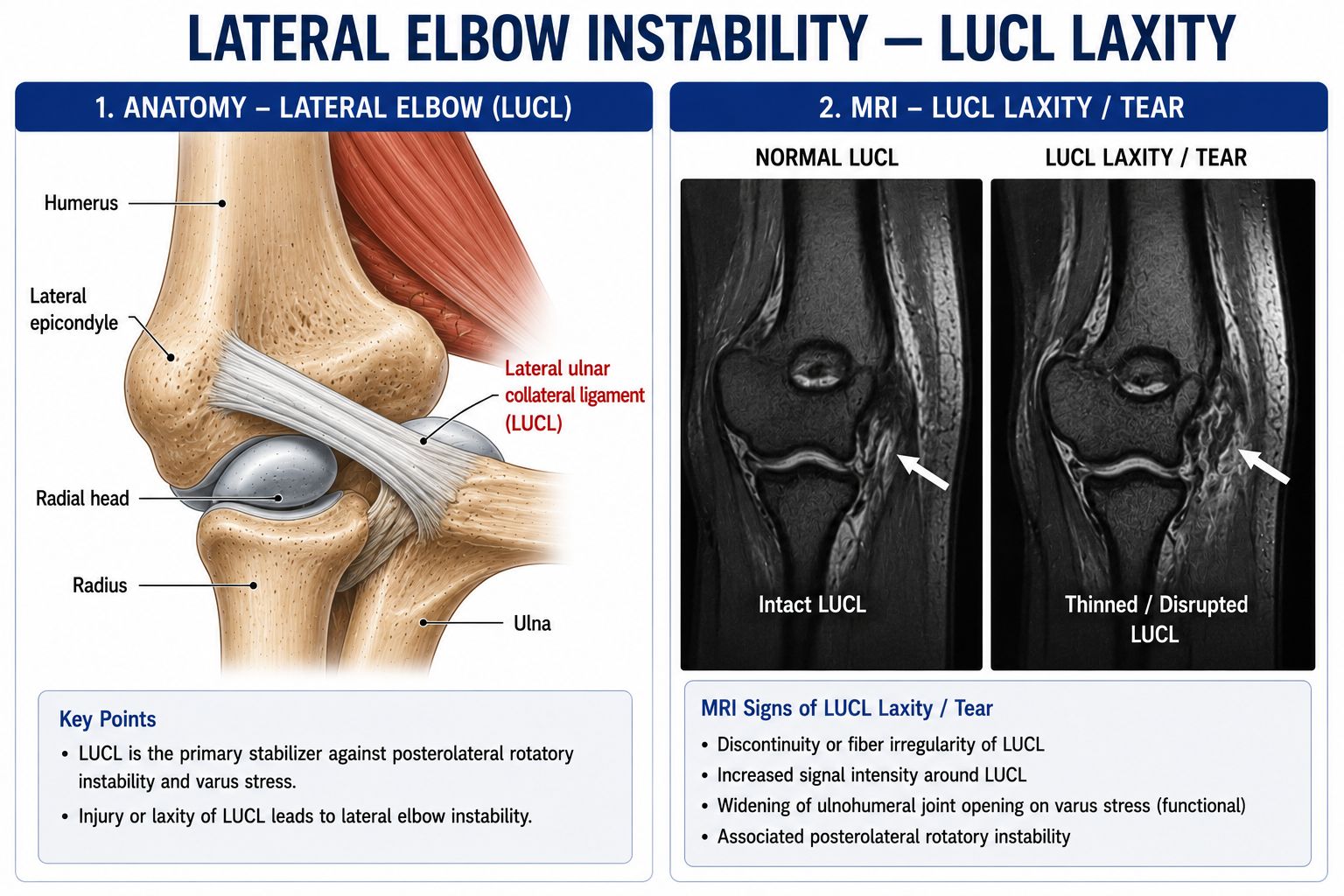
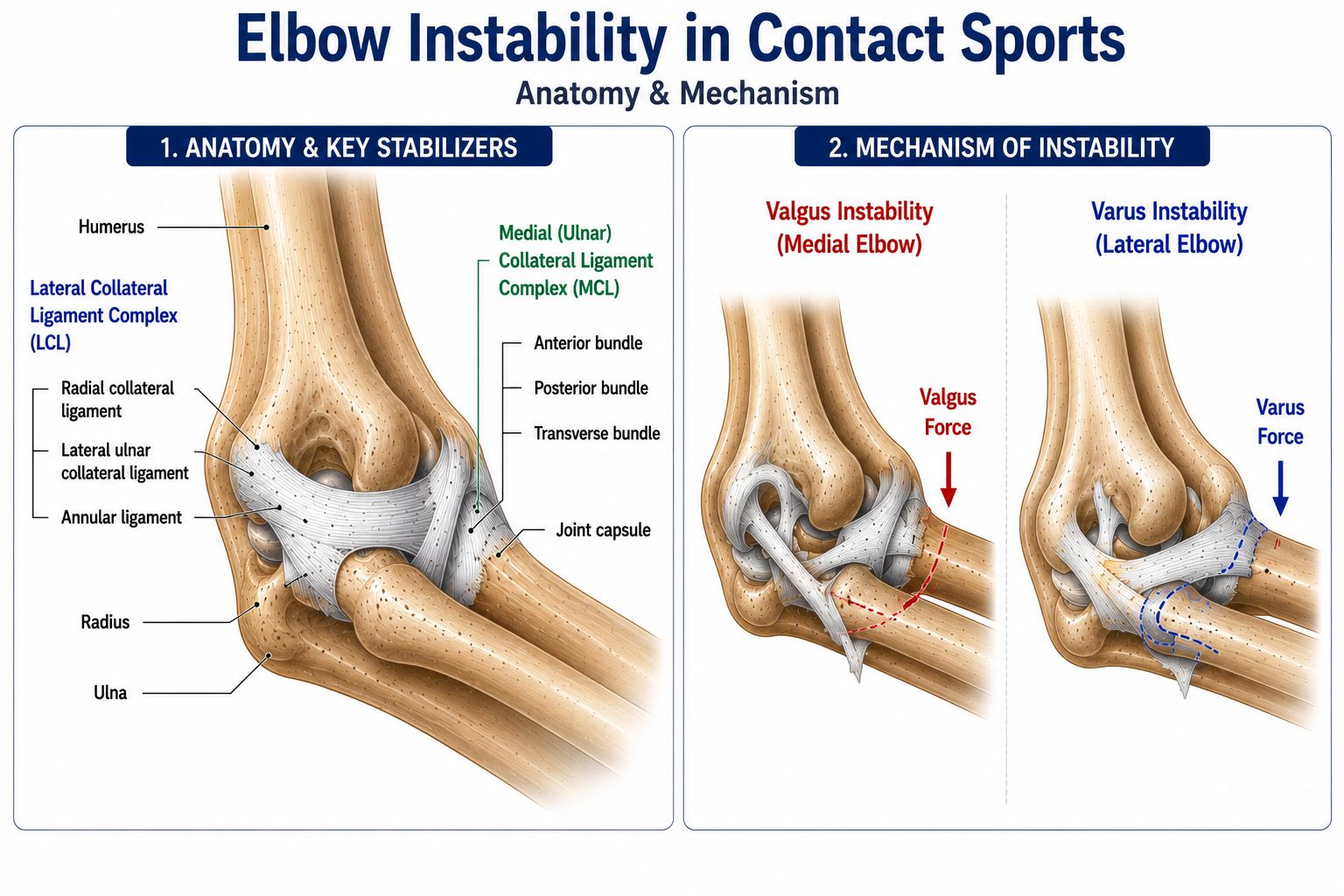
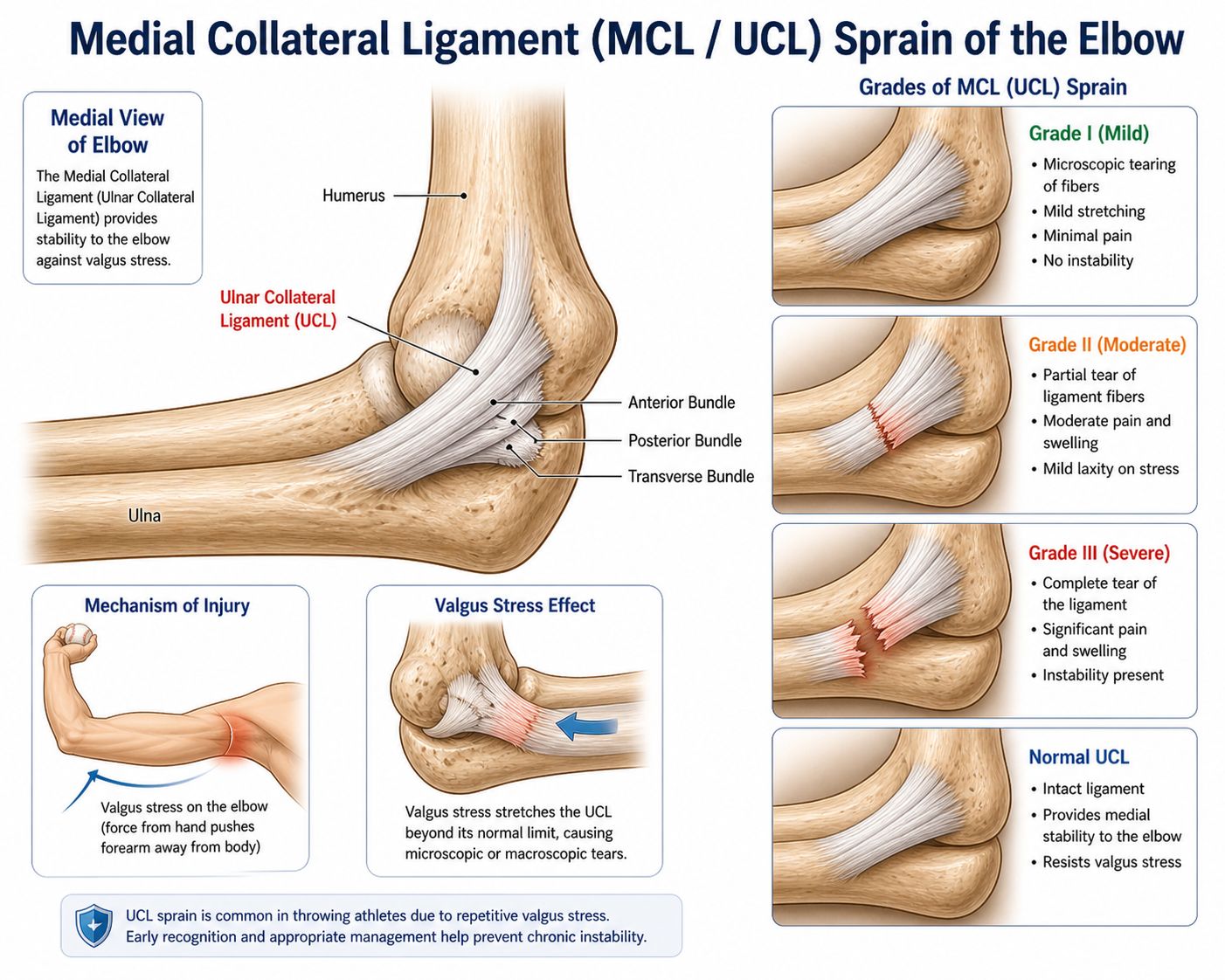
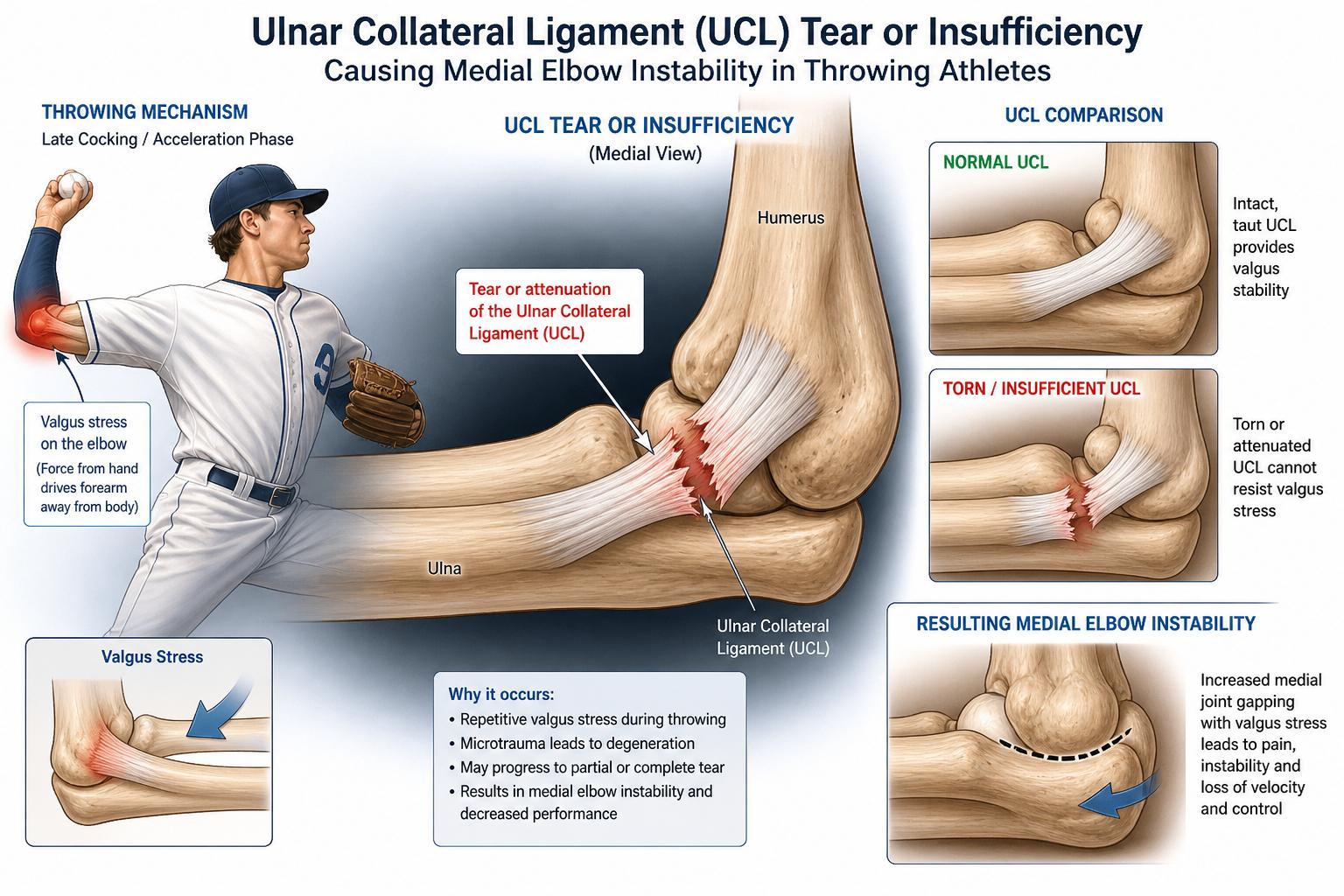
- Concurrent UCL insufficiency — when the UCL is lax, valgus force is transmitted to the bony posteromedial structures rather than absorbed by the ligament
- Biomechanical risk factors — excessive trunk side-bend, high release point, reduced run-up speed (cricket); all increase the peak elbow stress
- Relative energy deficiency (RED-S) — impairs bone remodelling in both male and female athletes
Symptoms
- Progressive posterior elbow aching — initially after throwing; then during throwing; eventually at rest and at night
- Point tenderness at the midolecranon — the most reliable clinical finding; exquisitely tender on direct palpation
- Pain with resisted elbow extension — triceps contraction stresses the fracture
- No acute injury event — insidious onset; this is the key distinguishing feature from acute fracture
- Night pain — a particularly significant finding; stress fractures in bone under cyclic loading often produce background aching at rest
- Reduced bowling or pitching performance without obvious cause
How is it Diagnosed?
- Plain X-rays — often NORMAL early; subtle periosteal reaction or fracture line in established cases; always obtain X-rays first but do not be falsely reassured by normal results
- MRI (investigation of choice) — bone marrow oedema (T2 signal) at the midolecranon; periosteal oedema; fracture line (hypointense on all sequences); concurrent UCL and VEOS assessment; sensitivity for early stress fractures exceeds 90%
- CT scan — defines fracture line displacement and extent when MRI shows oedema; essential before surgical planning
- Bone scan (SPECT) — focally increased uptake at the olecranon; available when MRI is contraindicated

Treatment Options
Treatment Type | Details |
Complete Rest from Throwing (First-Line) | Absolute cessation of all throwing; modified activity programme (non-throwing conditioning); serial MRI at 6 and 12 weeks to monitor healing; bone stimulator (LIPUS) daily throughout rest period |
Nutritional Assessment | Assess relative energy deficiency (RED-S), vitamin D status, and calcium intake; correct deficiencies; involve sports dietitian |
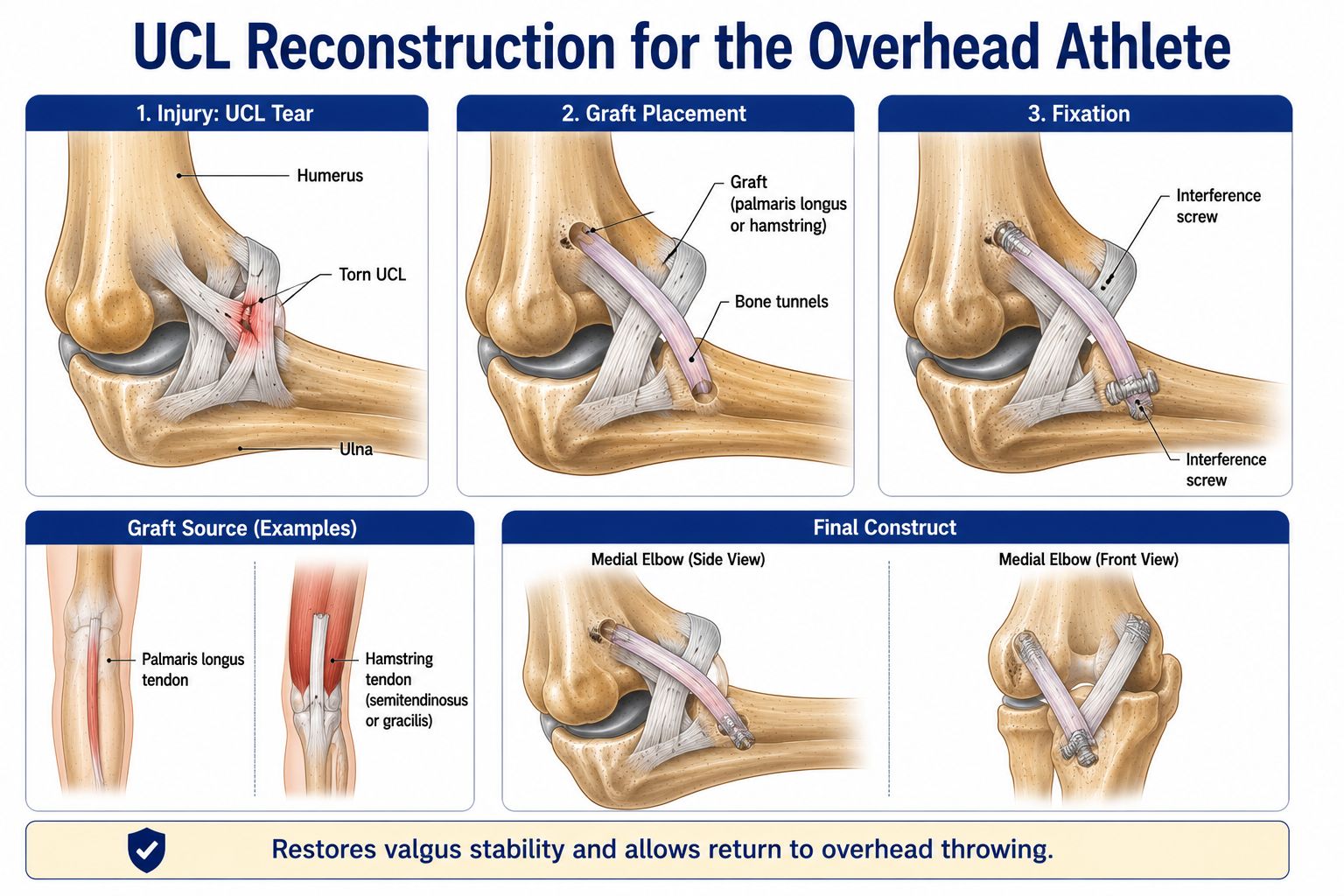
ORIF — Intramedullary Compression Screw | Indication: no MRI healing at 10–12 weeks; displaced fracture; complete fracture; established non-union; posterior approach; large partially-threaded cancellous screw or headless compression screw directed along the intramedullary axis; achieves interfragmentary compression; day-case procedure |
Bone Grafting (Non-Union) | For sclerotic non-unions: curettage, decortication, and autologous cancellous bone graft from the iliac crest or distal radius; packed into the non-union site; compress with intramedullary screw |
Screw Removal After Healing | Recommended at 12–18 months post-insertion in active throwers; the screw in the medullary canal creates a stress riser that could predispose to fracture around the screw tip under continued high-load throwing |
Biomechanics Intervention | MANDATORY before return to competition: video analysis of bowling/pitching action; identify mechanical risk factors (trunk side-bend, arm speed asymmetry, stride length); coaching correction; without mechanics intervention, recurrence rate is 15–20% |
Recovery & Rehabilitation
- Conservative (non-displaced, healing on MRI): return to flat-ground throwing at month 3–4; competitive bowling 6–9 months from diagnosis
- After ORIF: sling 2 weeks; progressive ROM from week 2; flat-ground throwing begins month 2; competitive throwing 4–6 months post-op
- Screw removal: 12–18 months post-insertion; outpatient procedure
- Long-term: players who complete mechanics review and correct identified risk factors have recurrence rates of <5%; those who return without correction: 15–20% recurrence
- Bilateral assessment: contralateral olecranon MRI in professional athletes; bilateral stress reactions are not uncommon
Why choose Dr Senthilvelan?
Olecranon stress fractures in elite athletes require accurate MRI diagnosis, appropriate timing of surgical intervention (not too early, not too delayed), and integration with the athlete’s return-to-sport programme. Dr Senthilvelan has experience managing this injury in high-level cricket and other overhead sports, including both the surgical and the sports medicine pathways.
Frequently Asked Questions
1. My X-ray was normal but I still have posterior elbow pain when I bowl — could I have a stress fracture?
Yes — this is a classic presentation. Olecranon stress fractures are frequently invisible on plain X-ray in the early stages. MRI is the essential next step: it shows the characteristic bone marrow oedema and periosteal reaction even before a fracture line is visible. Any overhead athlete with progressive posterior elbow pain at the olecranon tip — particularly if it is worsening rather than improving with rest — should have an MRI regardless of a normal X-ray. Early diagnosis and rest gives the best chance of healing without surgery.
2. I had surgery and the screw is now in my elbow — how long must it stay?
The intramedullary screw for olecranon stress fracture fixation is generally left in place until the fracture has fully healed (confirmed on X-ray — typically 4–6 months after surgery) and the athlete has returned to full competitive throwing and completed a season. It is then electively removed at approximately 12–18 months post-insertion. The reason for removal is that a metal screw within the medullary canal of a bone under repeated throwing loads creates a stress concentration point that could predispose to fracture around the screw tip. Removal is a straightforward outpatient procedure.
3. Could my UCL also be involved in this injury?
Yes — UCL insufficiency and olecranon stress fractures frequently coexist. When the UCL is deficient, the valgus force during throwing is transmitted through the bony posteromedial structures rather than being absorbed by the ligament — creating the repetitive stress that causes the stress fracture. Every athlete with an olecranon stress fracture should have MRI evaluation of the UCL. If UCL insufficiency is confirmed, it should be addressed as part of the overall management — typically after the stress fracture has healed — to prevent recurrence of the bony overload.
4. How do I know when I am ready to return to bowling competitively?
Return to competitive bowling is guided by objective criteria, not just time. The athlete must have: (1) confirmed fracture healing on MRI or X-ray; (2) full pain-free range of motion; (3) normal strength on grip and elbow extension testing compared to the contralateral side; (4) pain-free completion of the full interval throwing programme at competitive velocity and volume; and (5) clearance from the biomechanics assessment confirming that the identified mechanical risk factors have been corrected. Meeting all these criteria — typically at 6–9 months — is more reliable than a time-based return.
5. I had an olecranon stress fracture last season and have been told it might come back — is this right?
There is a 15–20% recurrence rate in athletes who return to throwing without correcting the biomechanical factors that drove the original stress fracture. If your bowling or pitching action has a specific risk factor — excessive trunk side-bend, a particular shoulder position, muscle fatigue at release point — and this was not addressed as part of your rehabilitation, the same mechanical overload will be applied to the olecranon each time you bowl. A thorough video biomechanics analysis and coaching intervention, integrated into your return-to-sport programme, is the most effective prevention strategy.