Overview
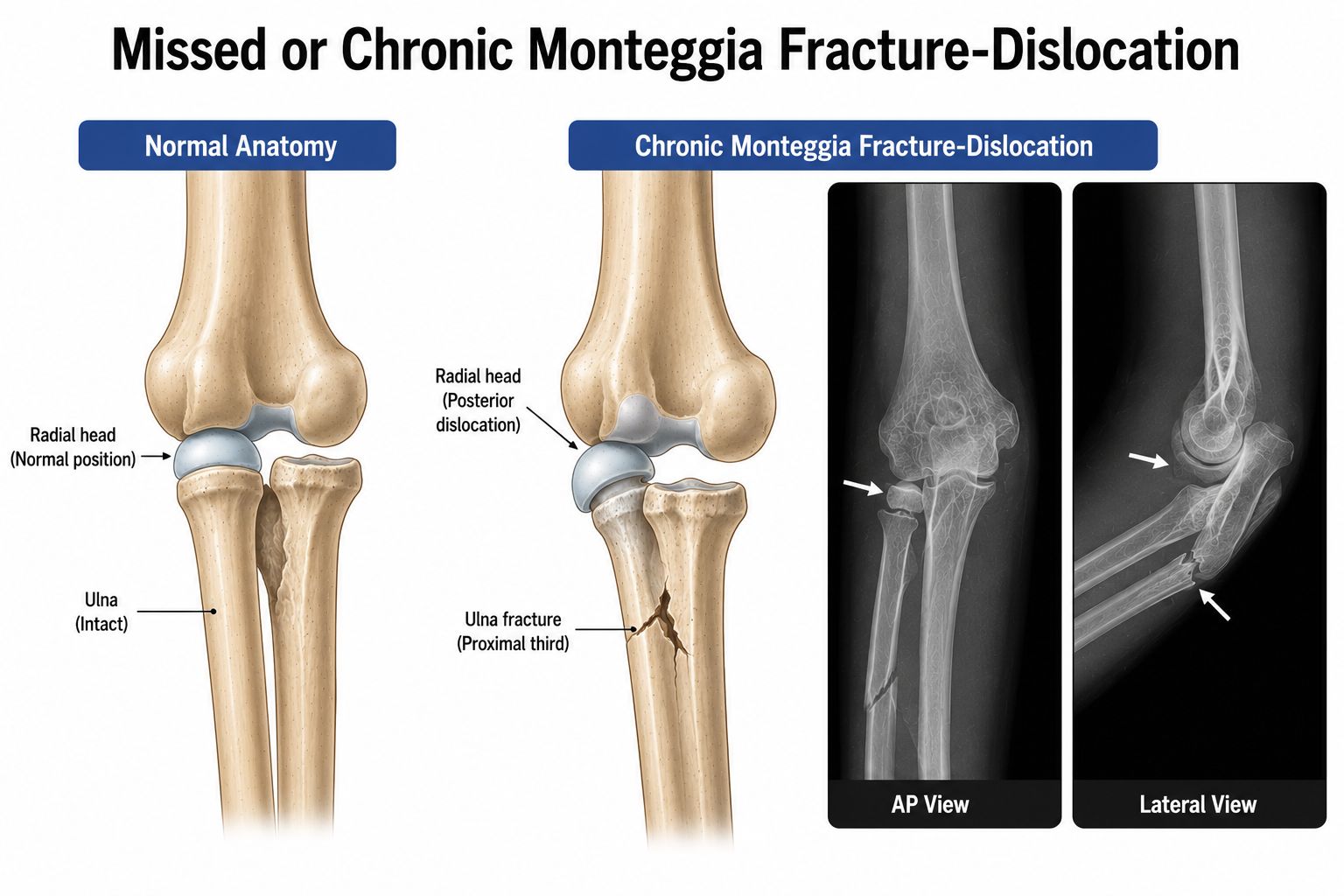
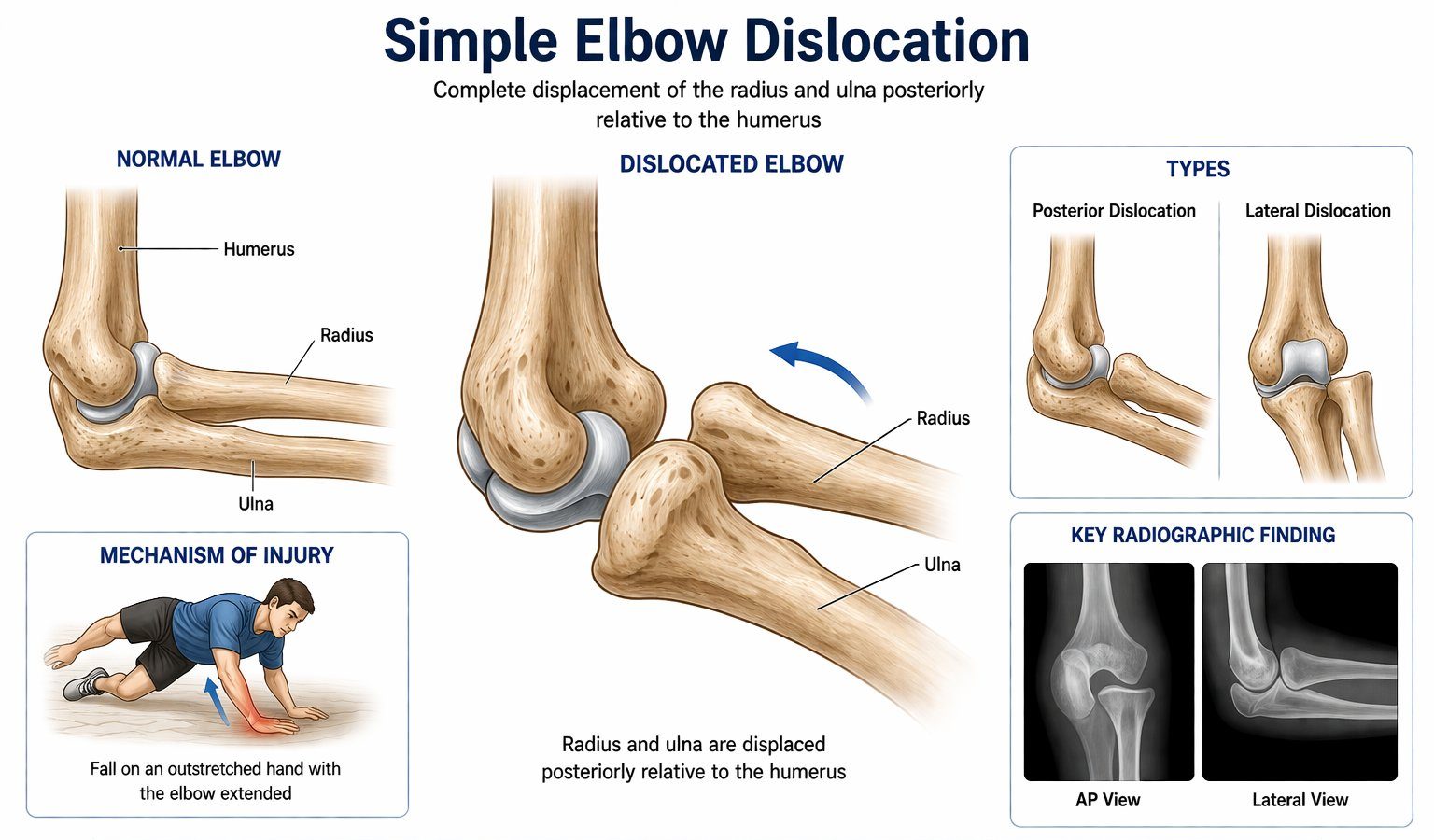
Elbow instability in contact sport athletes spans a spectrum from acute simple dislocation — the most common presentation — through to complex fracture-dislocations with multiple structural disruptions. The management approach must be athlete-specific: the same injury that can be managed conservatively in a sedentary individual may require surgical reconstruction in a contact sport athlete who will return to full-contact training and competition.
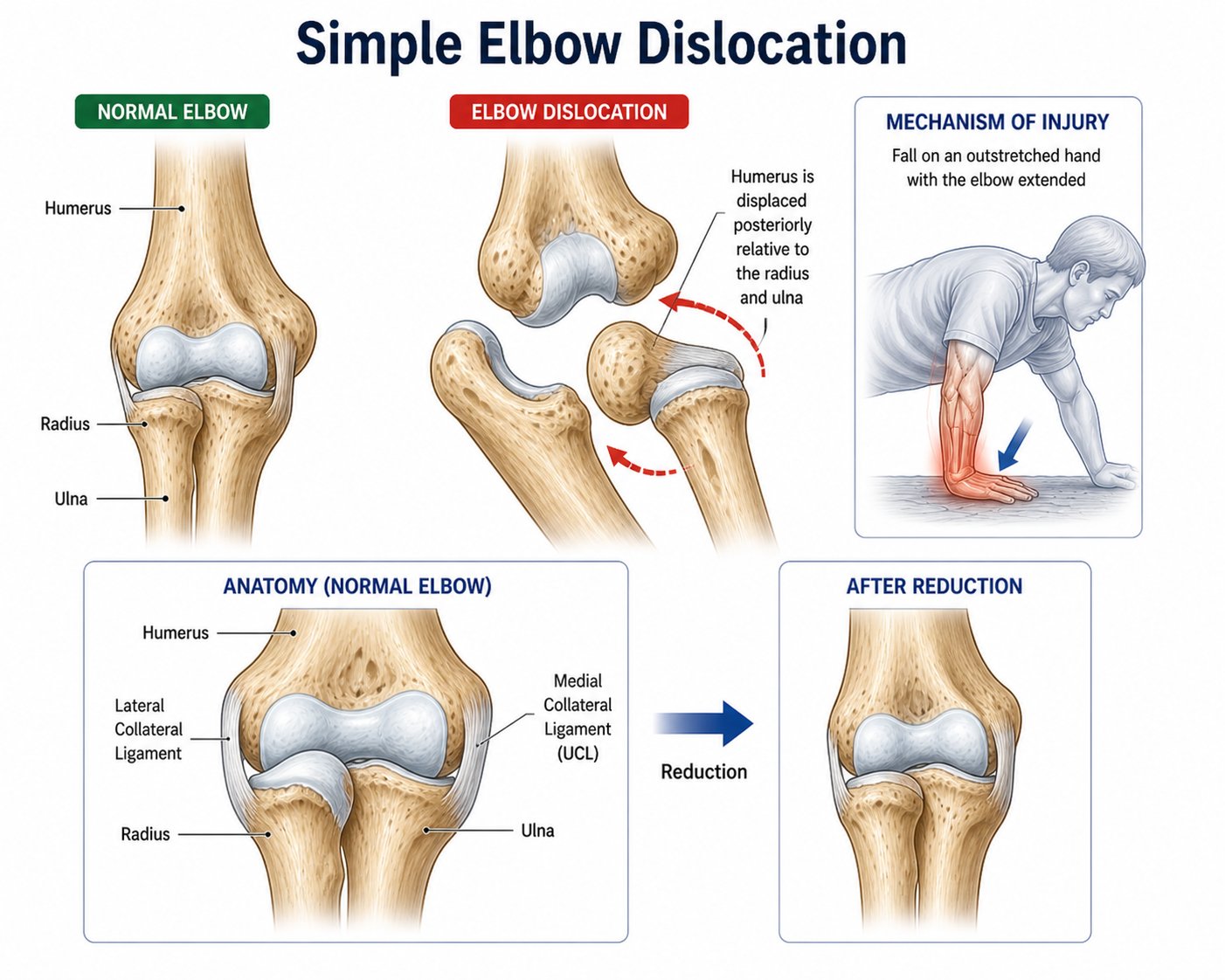
Acute simple elbow dislocations in athletes are initially managed with prompt closed reduction and a short period of immobilisation in a hinged brace — identical to the general population approach (Condition 17). The critical athlete-specific decision is the return-to-sport timeline and whether protective bracing should be worn during the first competitive season back. Athletes have a higher expectation of full structural recovery and a lower tolerance for residual instability.
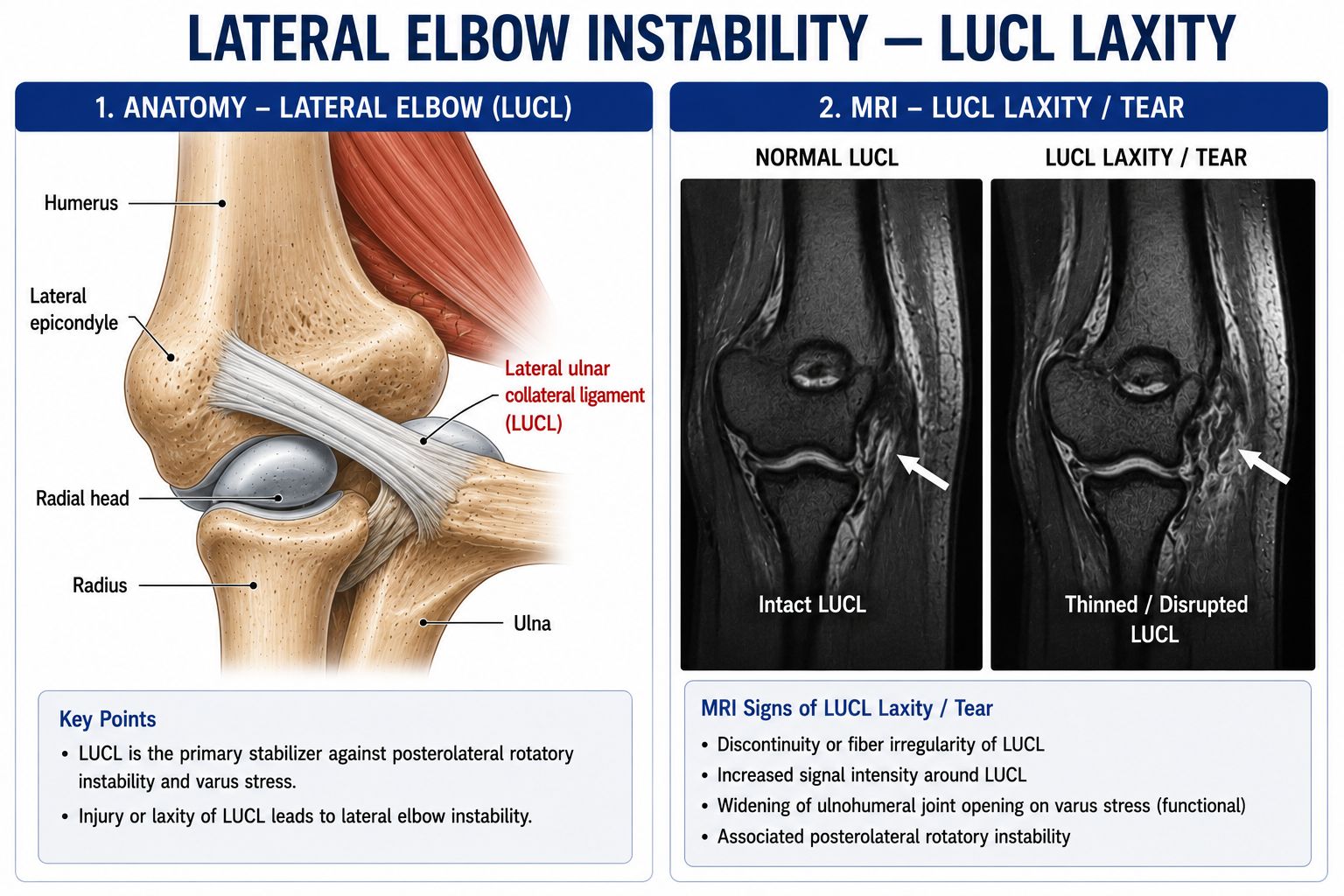
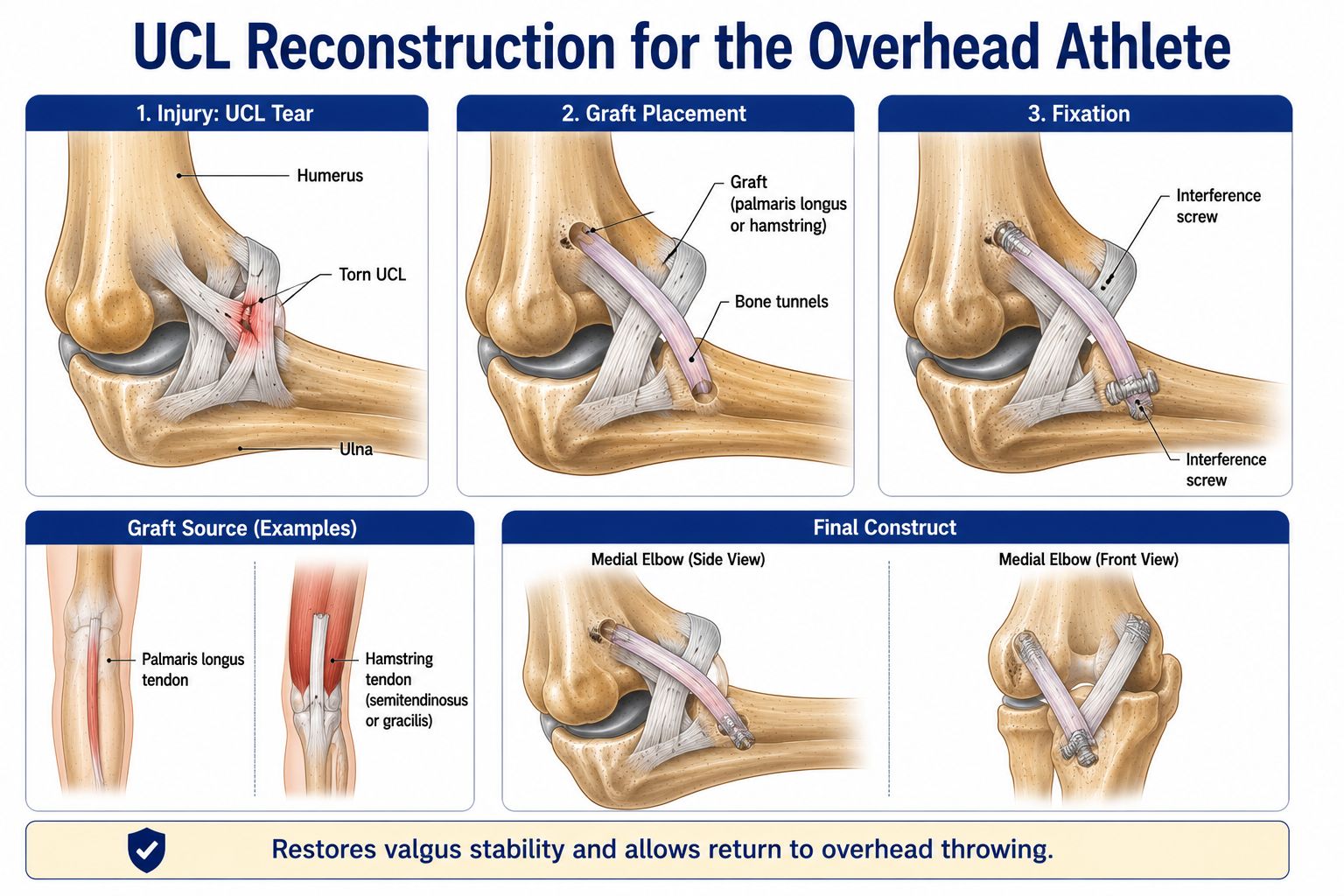
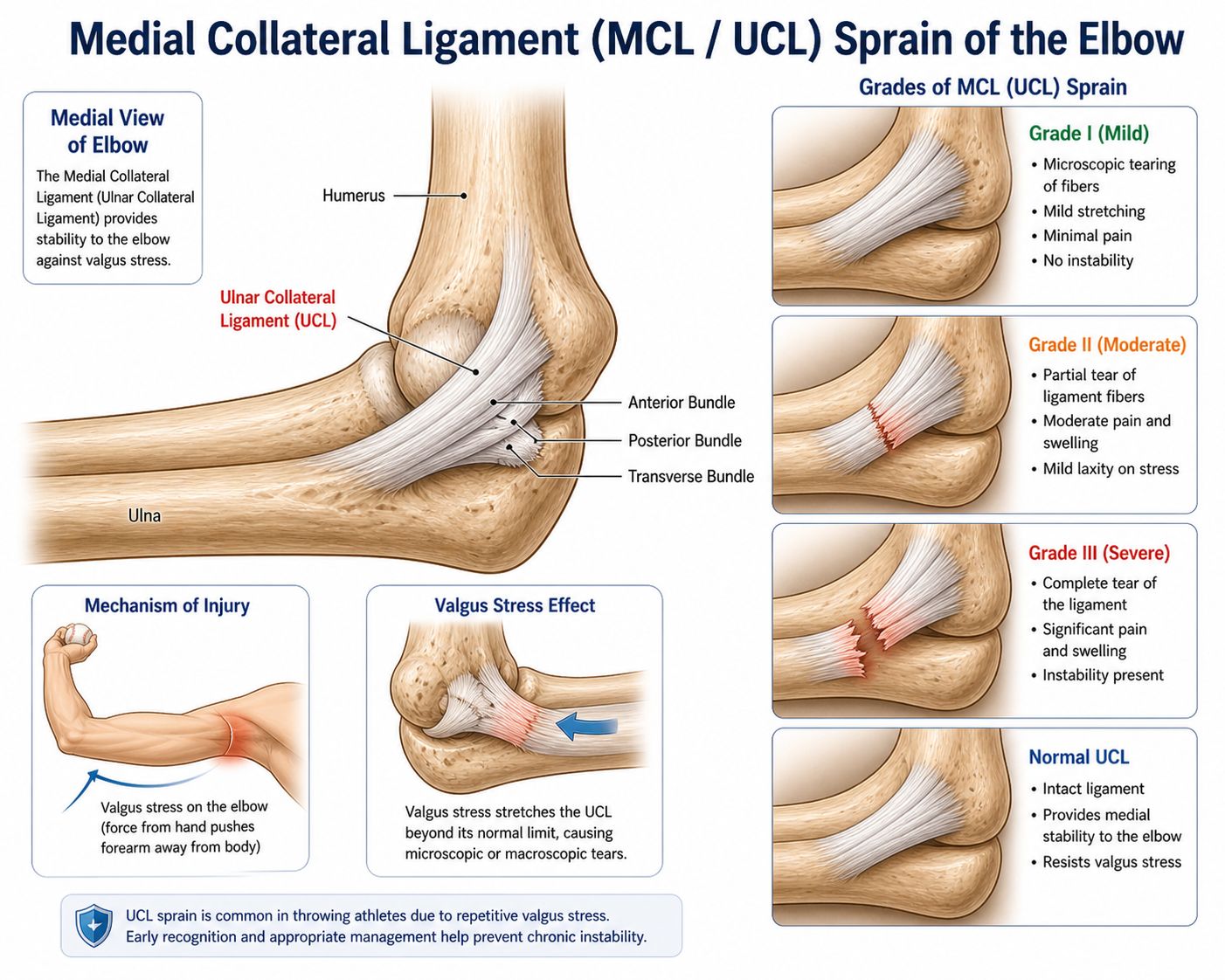
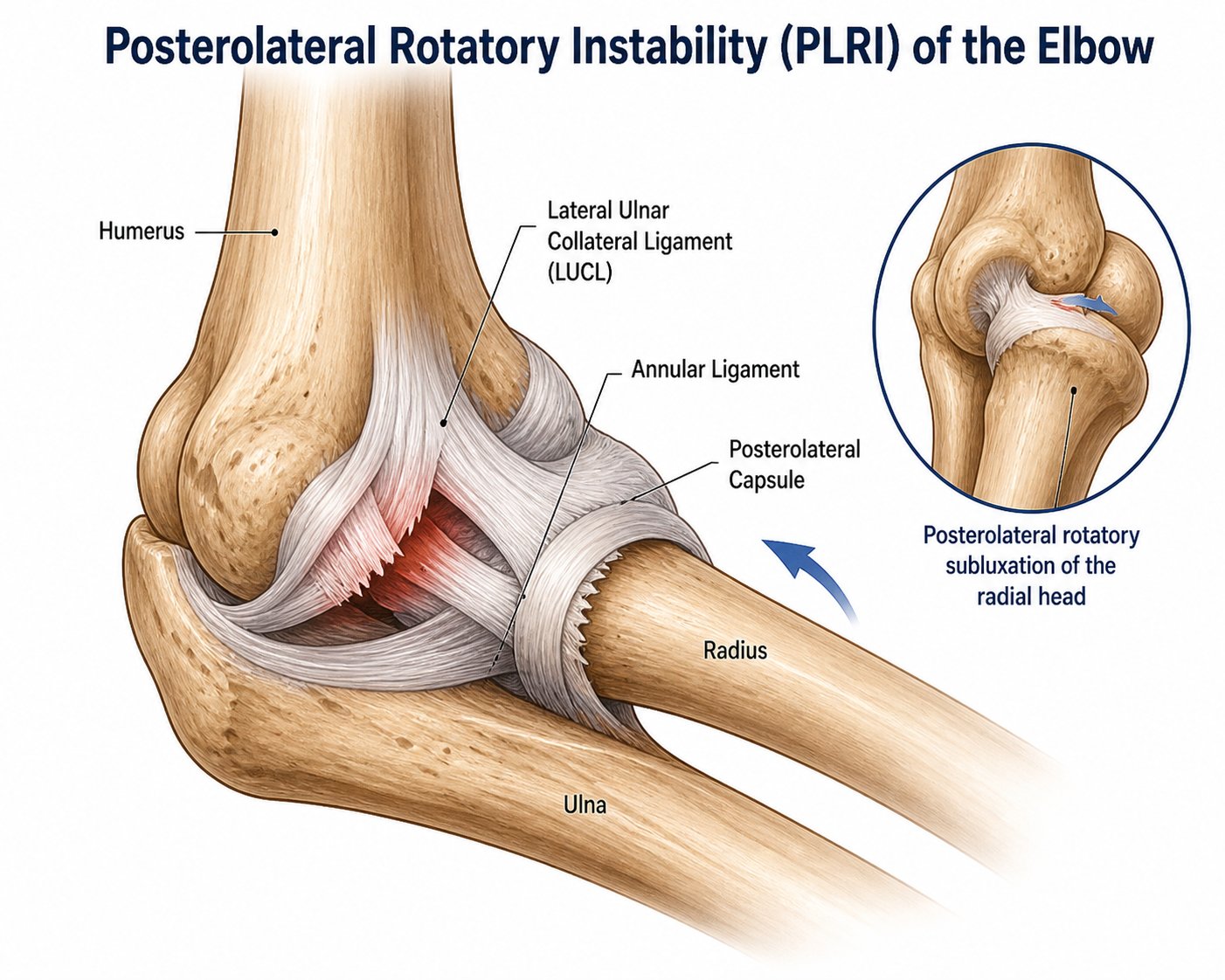
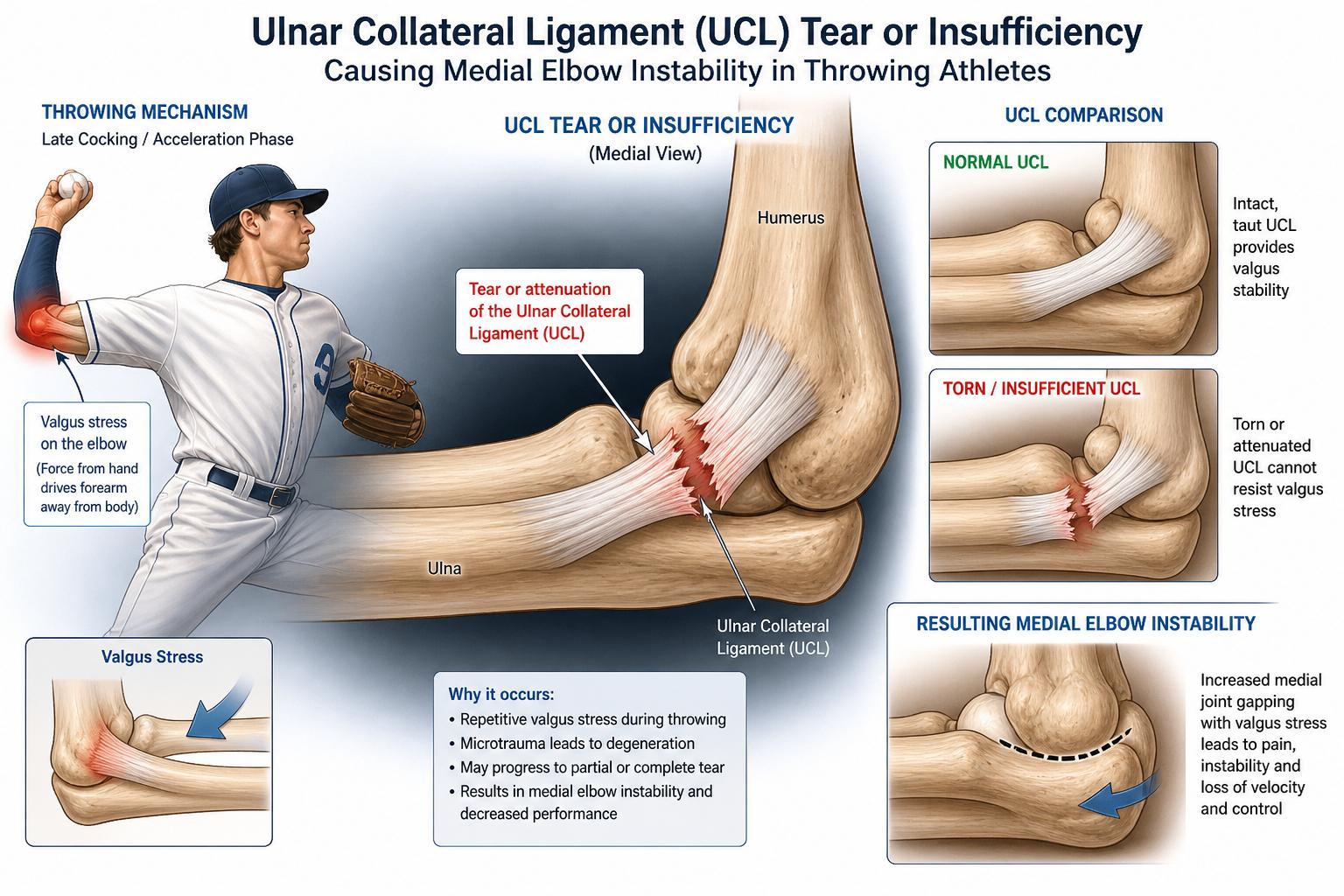
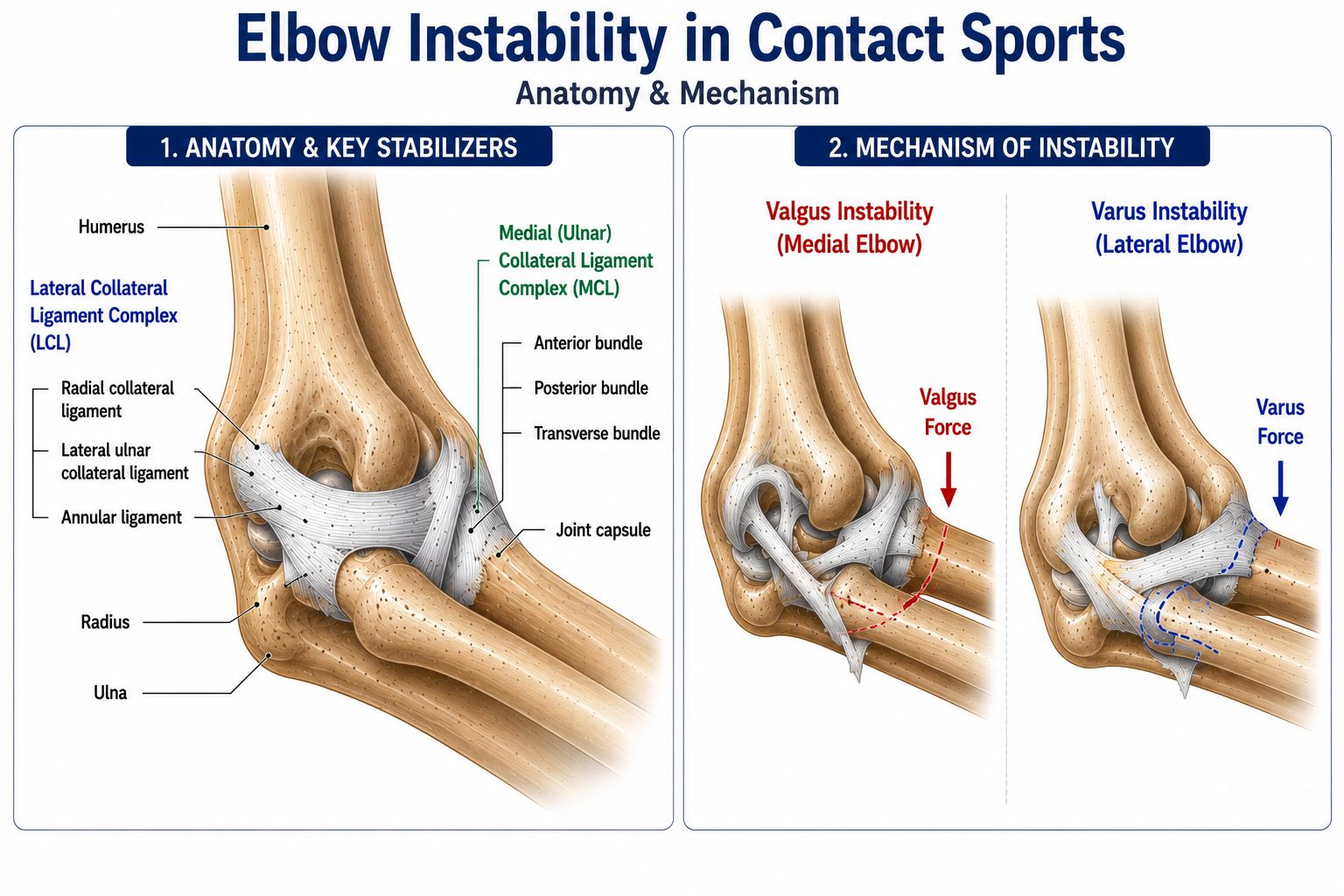
Chronic or recurrent elbow instability following contact sport injury requires targeted surgical reconstruction based on the specific ligament(s) disrupted. PLRI (LUCL reconstruction) is the most common pattern; valgus instability (UCL reconstruction) occurs in throwing and racket sport athletes. Assessment with examination under anaesthesia and arthroscopy definitively identifies the instability pattern and guides reconstruction.
Quick Facts | Details |
Also Known As | Athletic Elbow Instability, Contact Sport Elbow Dislocation, Recurrent Elbow Subluxation — Athlete |
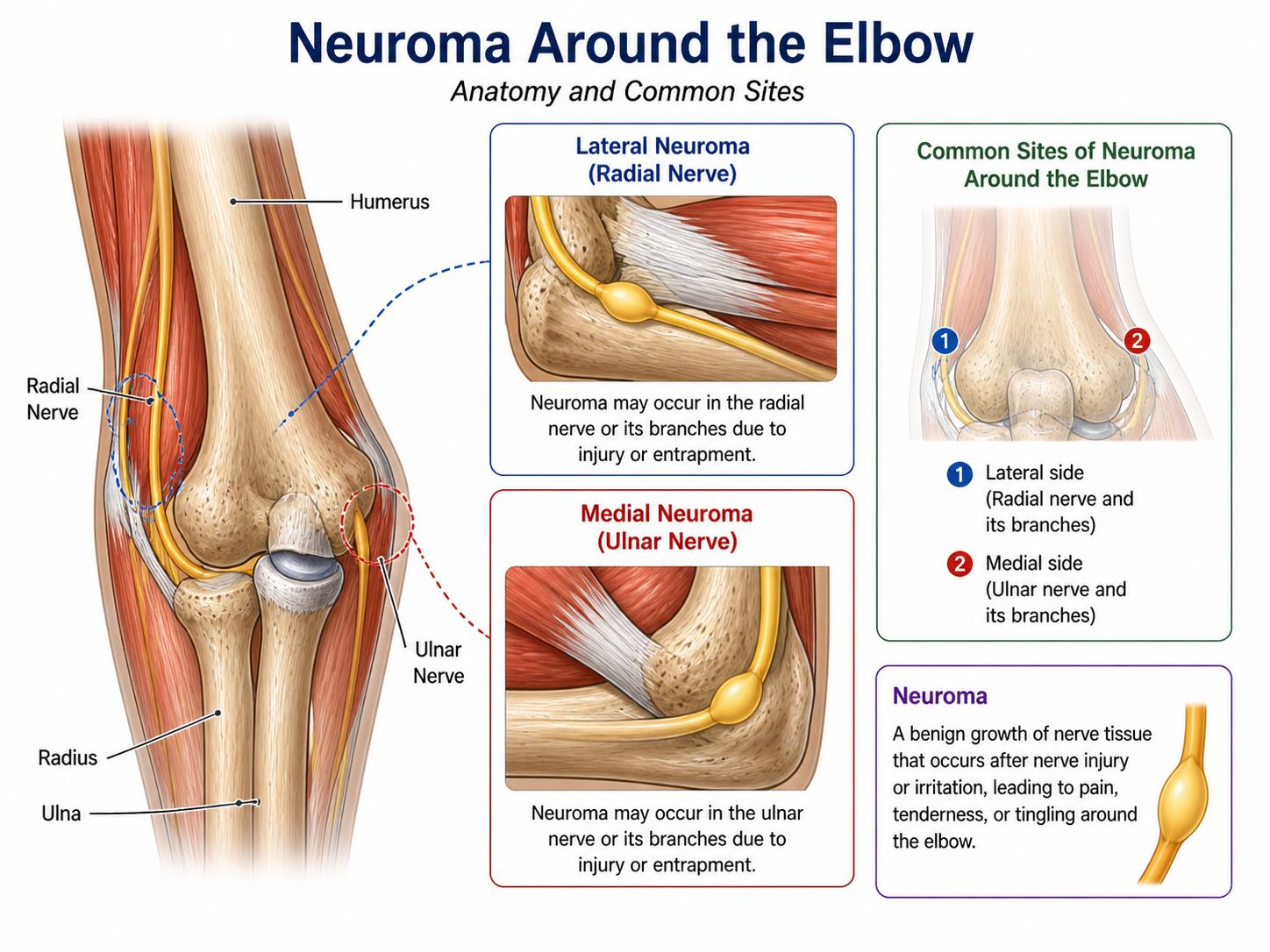
Affected Area | Medial and lateral collateral ligament complexes; radiocapitellar and ulnohumeral joints; coronoid process and radial head (in complex injury patterns) |
Who It Affects | Contact sport athletes — rugby players, judokas, wrestlers, MMA fighters, gymnasts, and collision sport participants; adults and adolescents; any athlete falling or being tackled with force transmitted to the elbow |
Prevalence | Elbow dislocations are the second most common large joint dislocation (after shoulder); contact sports account for a significant proportion; recurrent elbow instability after sport dislocation affects approximately 2–5% of athletes; an important cause of sport retirement or performance limitation if not correctly managed |
Treatment | Acute dislocation: closed reduction + early mobilisation in hinged brace; Complex/unstable: systematic surgical reconstruction (coronoid + radial head + LCL ± MCL); Chronic recurrent instability: LUCL or UCL reconstruction depending on pattern; return to sport criteria-based |
Causes & Risk Factors
- Direct tackle or fall — axial load and valgus or varus force applied during a rugby tackle, judo throw, or martial arts technique
- Fall onto outstretched arm — the classic dislocation mechanism in gymnastics, cycling, and field sports
- Hyperextension injury — elbow forced into hyperextension during a contact sport event
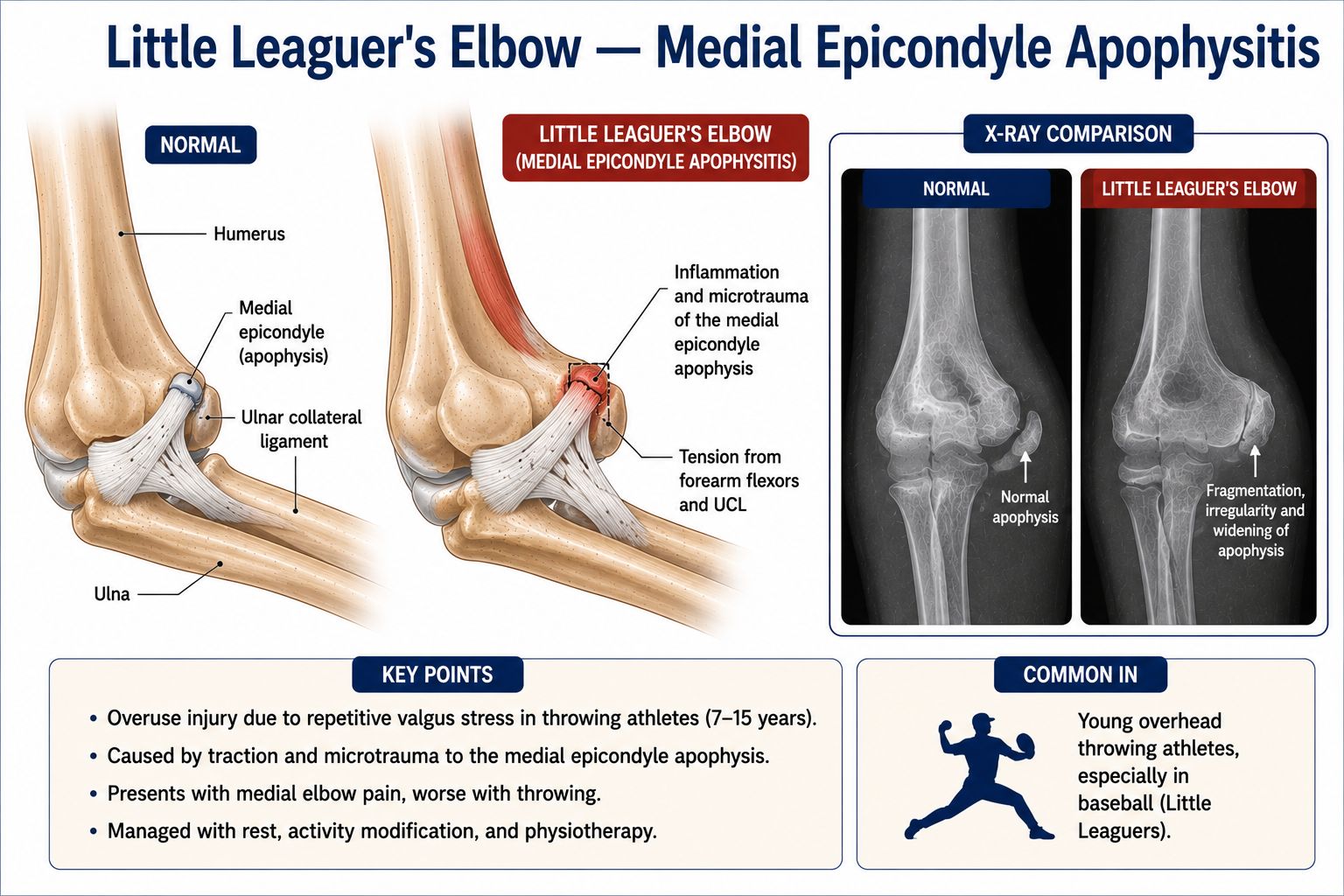
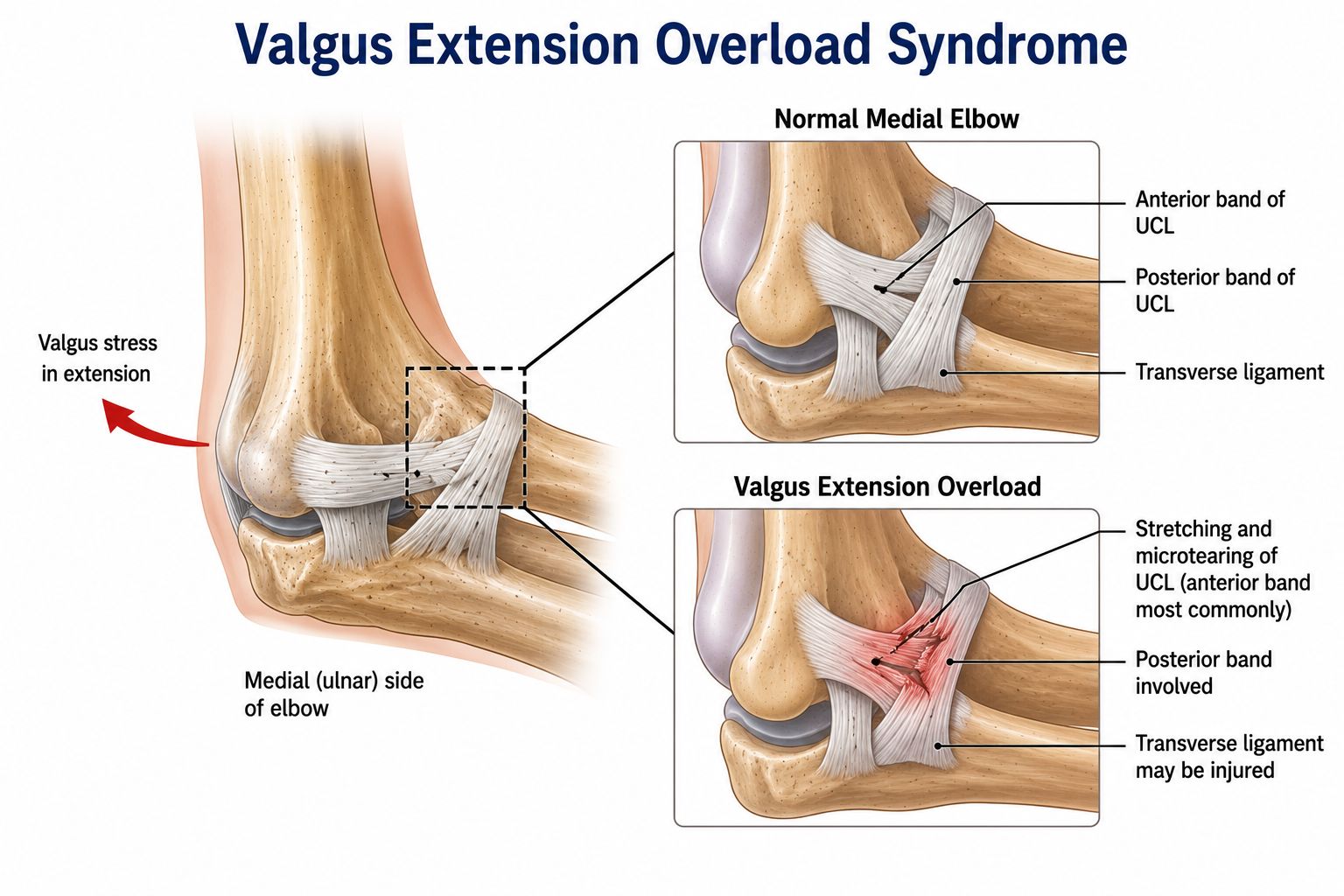
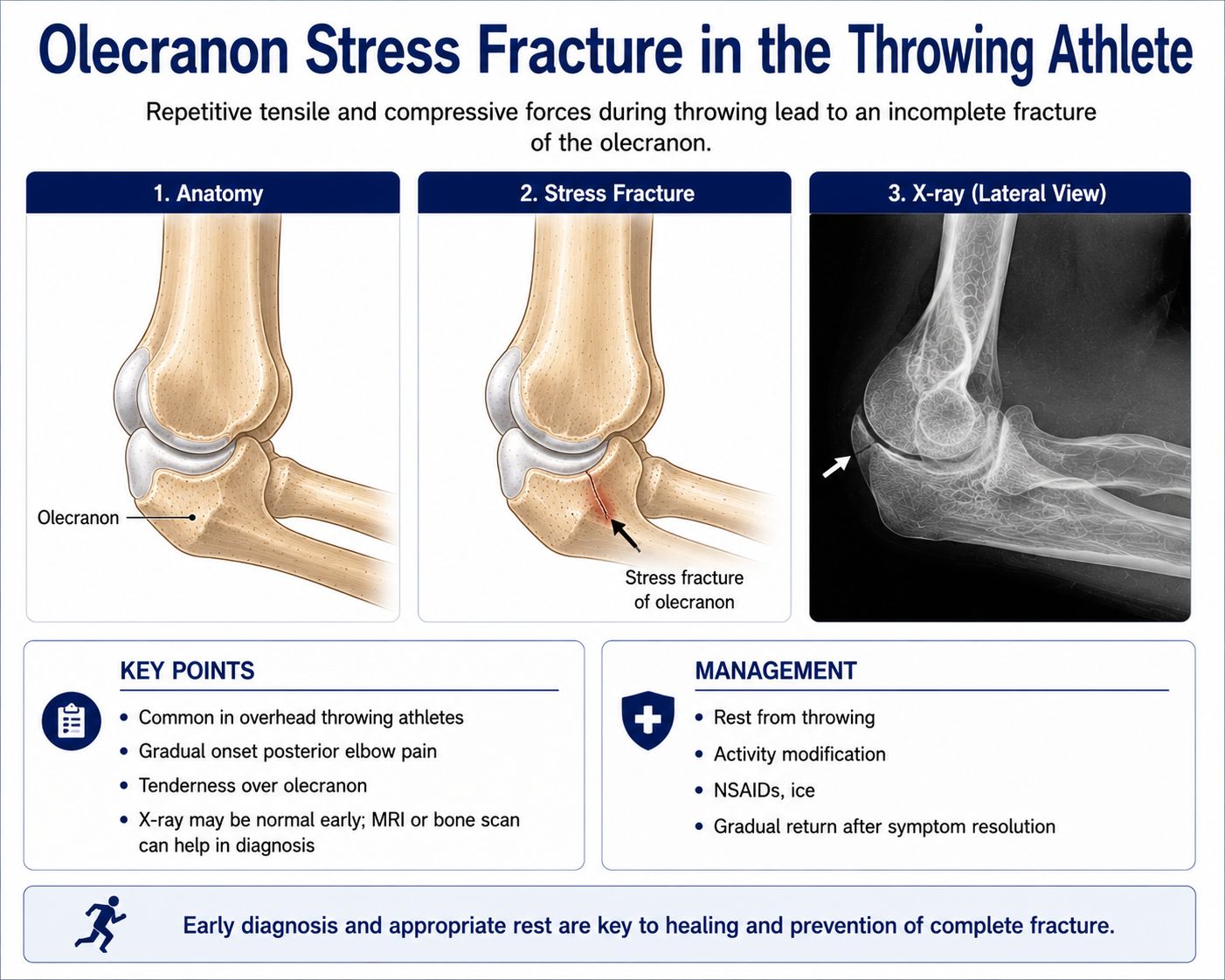
- Repetitive valgus loading — in throwing sports and overhead athletes, accumulative UCL fatigue
- Inadequate rehabilitation of prior dislocation — athletes returning to contact sport before ligament healing is complete; incomplete soft tissue recovery
- Anatomical predisposition — generalised ligamentous laxity in hypermobile athletes
Symptoms
- Acute: severe elbow pain, immediate inability to use the arm, visible deformity, elbow locked in 30–60° flexion
- Chronic: recurrent episodes of elbow giving way, clunking, or subluxation during contact activities
- Apprehension — fear of the elbow dislocating during specific movements; athlete modifies technique unconsciously
- Performance decline — athlete avoids high-risk positions; reduced speed, power, or technique due to elbow apprehension
- Lateral elbow symptoms — giving way when pushing out of a tackle or when weight-bearing through the extended elbow
- Medial elbow symptoms — valgus instability in throwing or racket athletes; medial aching during deceleration
How is it Diagnosed?
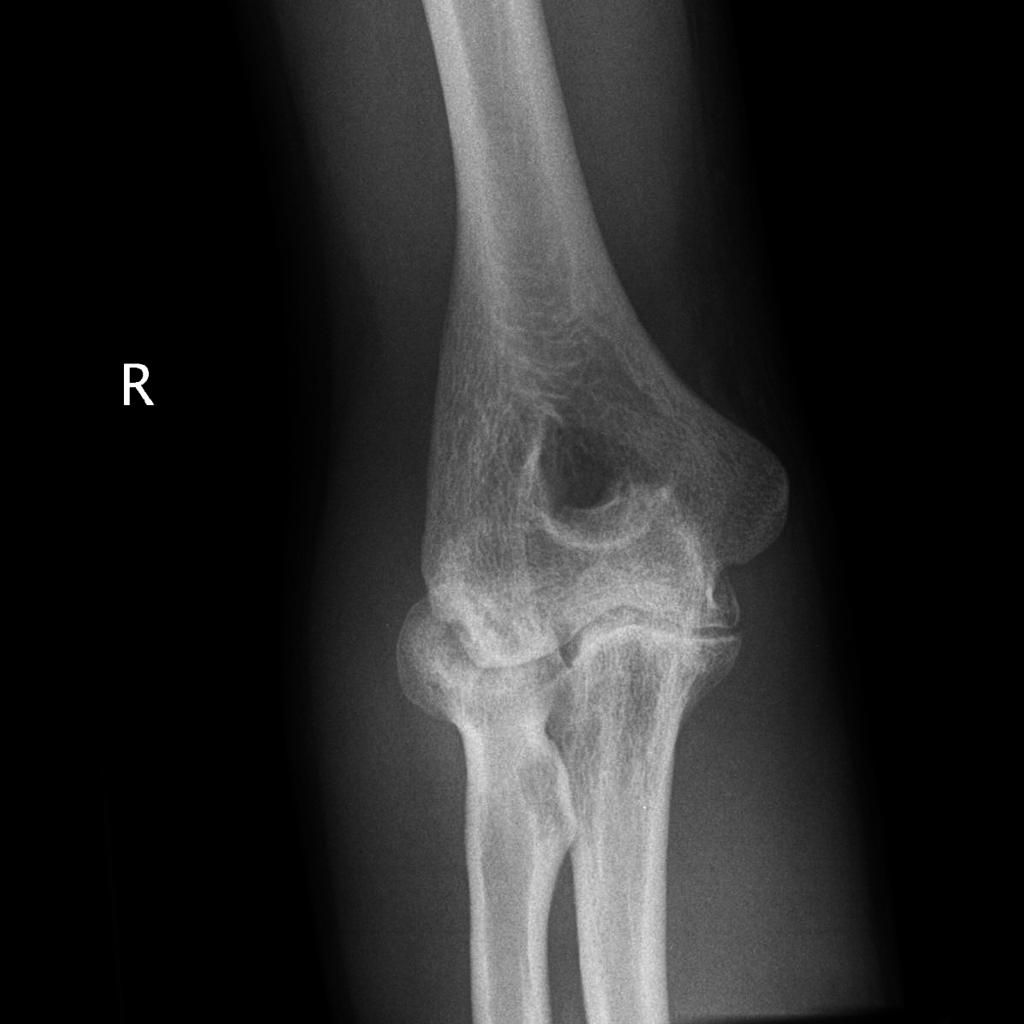
- Acute: clinical examination for neurovascular status; X-ray (confirm reduction concentricity; assess for fractures); post-reduction stability test
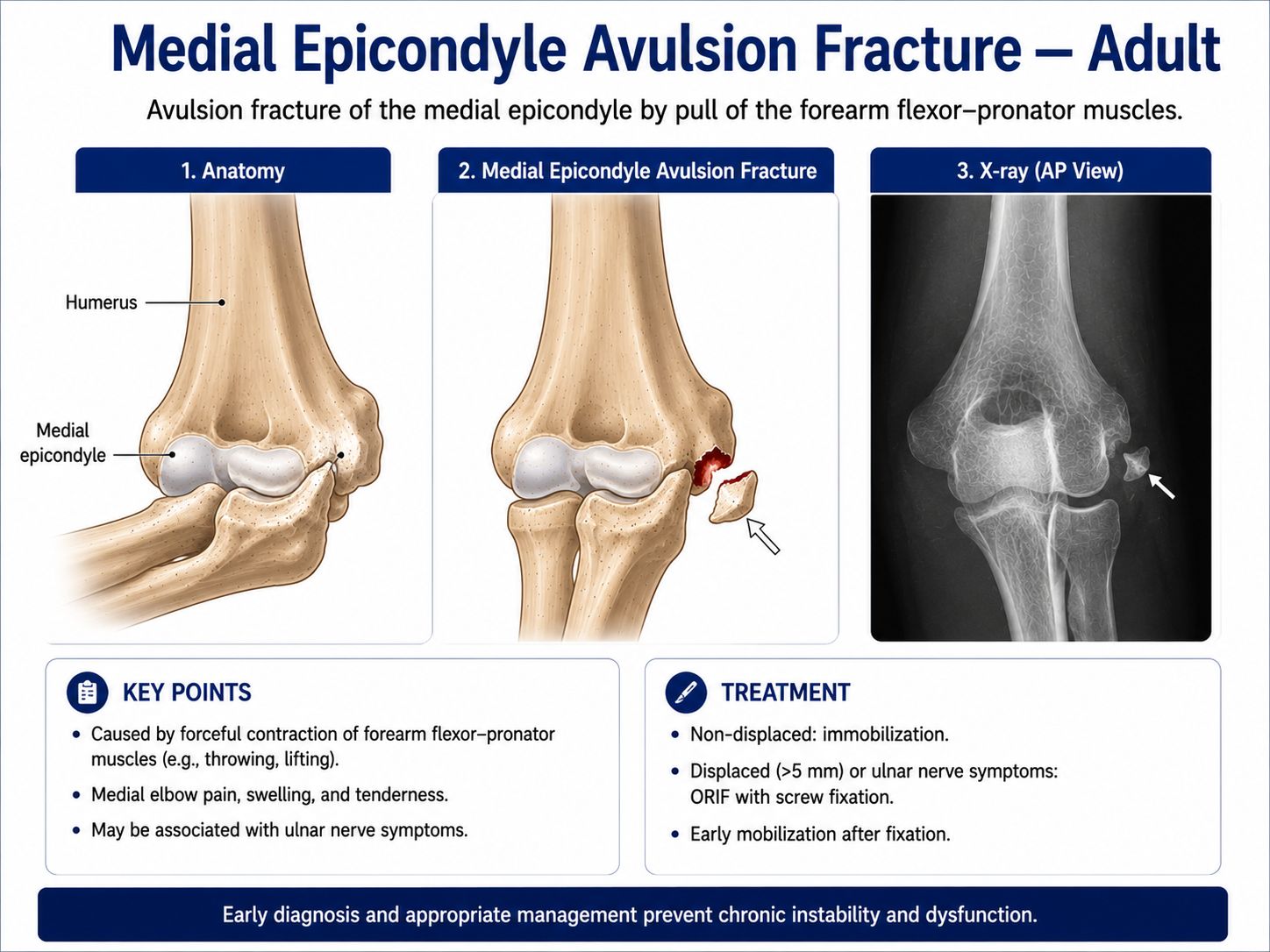
- Chronic: lateral pivot shift test (LUCL); valgus stress test (UCL); chair push-up test; assessment for bony deficiency
- MRI — ligament quality; cartilage status; bony deficiency assessment
- Examination under anaesthesia + arthroscopy — definitive instability pattern identification; guides reconstruction
Treatment Options
Treatment Type | Details |
Acute Dislocation — Closed Reduction | Urgent reduction under procedural sedation; post-reduction X-ray; neurovascular check; post-reduction stability assessment; hinged brace 0–130° for 6 weeks; physiotherapy from week 1; return to contact sport 3–4 months |
Protective Bracing for Return to Contact Sport | Custom-fitted hinged elbow brace for the first full competitive season after dislocation; restricts terminal extension and varus-supination stress; allows contact sport participation with reduced re-dislocation risk |
LUCL Reconstruction (Chronic PLRI) | Palmaris longus graft through isometric bone tunnels; tensioned in forearm pronation; protects against varus-supination stress of contact sport; see Condition 14; return to contact sport 4–6 months |
UCL Reconstruction (Valgus Instability) | Tommy John procedure for valgus instability in throwing/racket athletes; see Condition 62; return to contact/throwing sport 9–12 months |
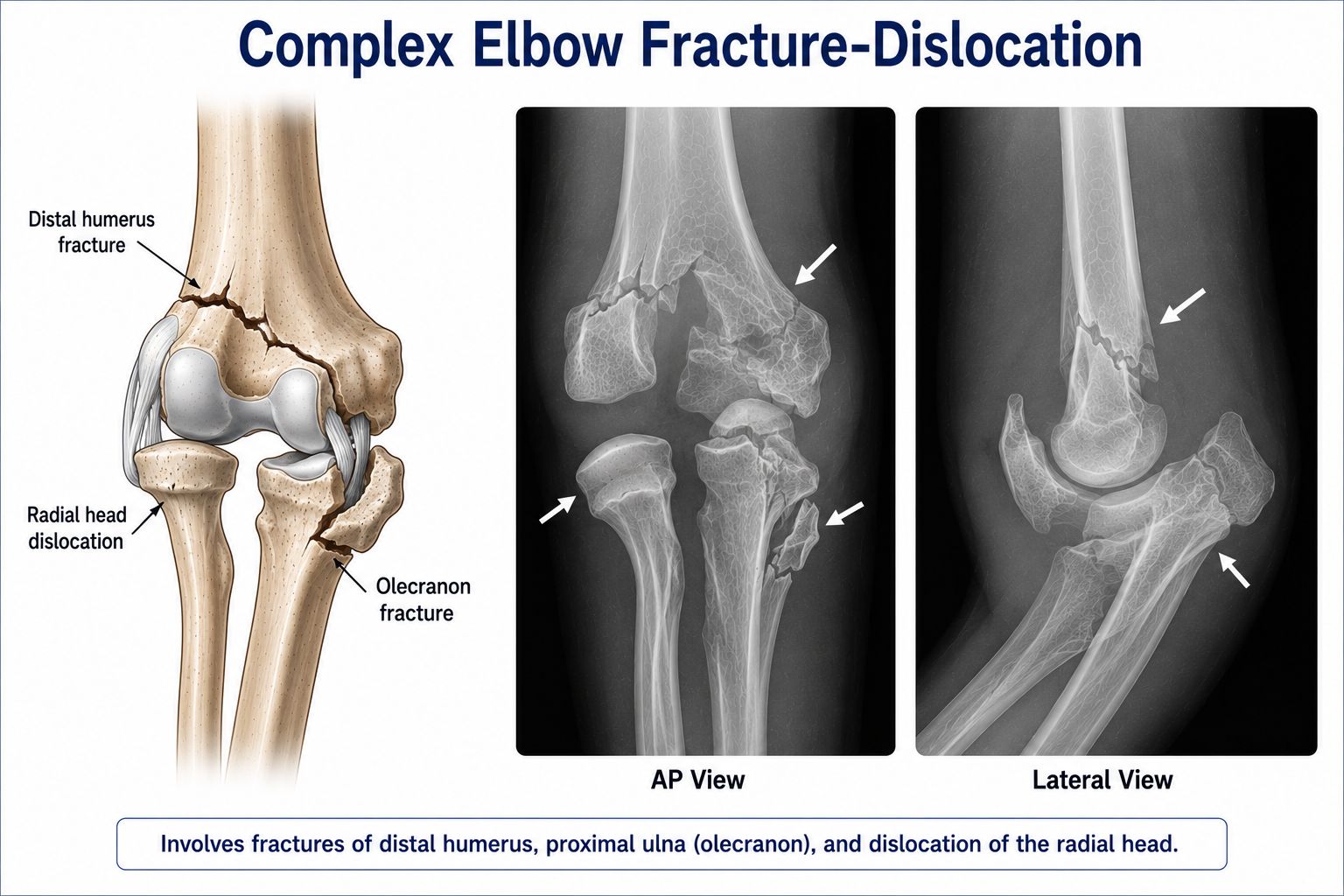
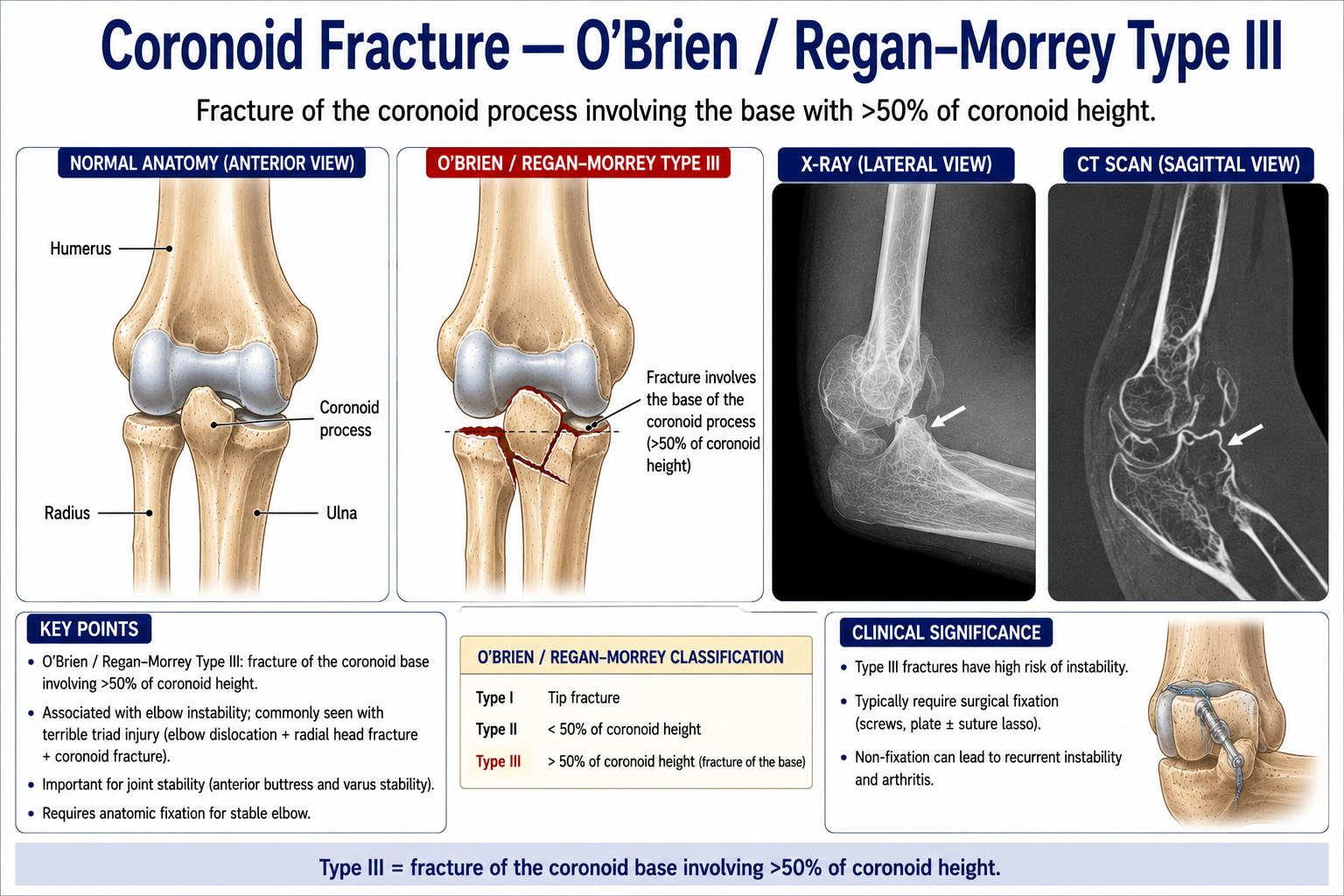
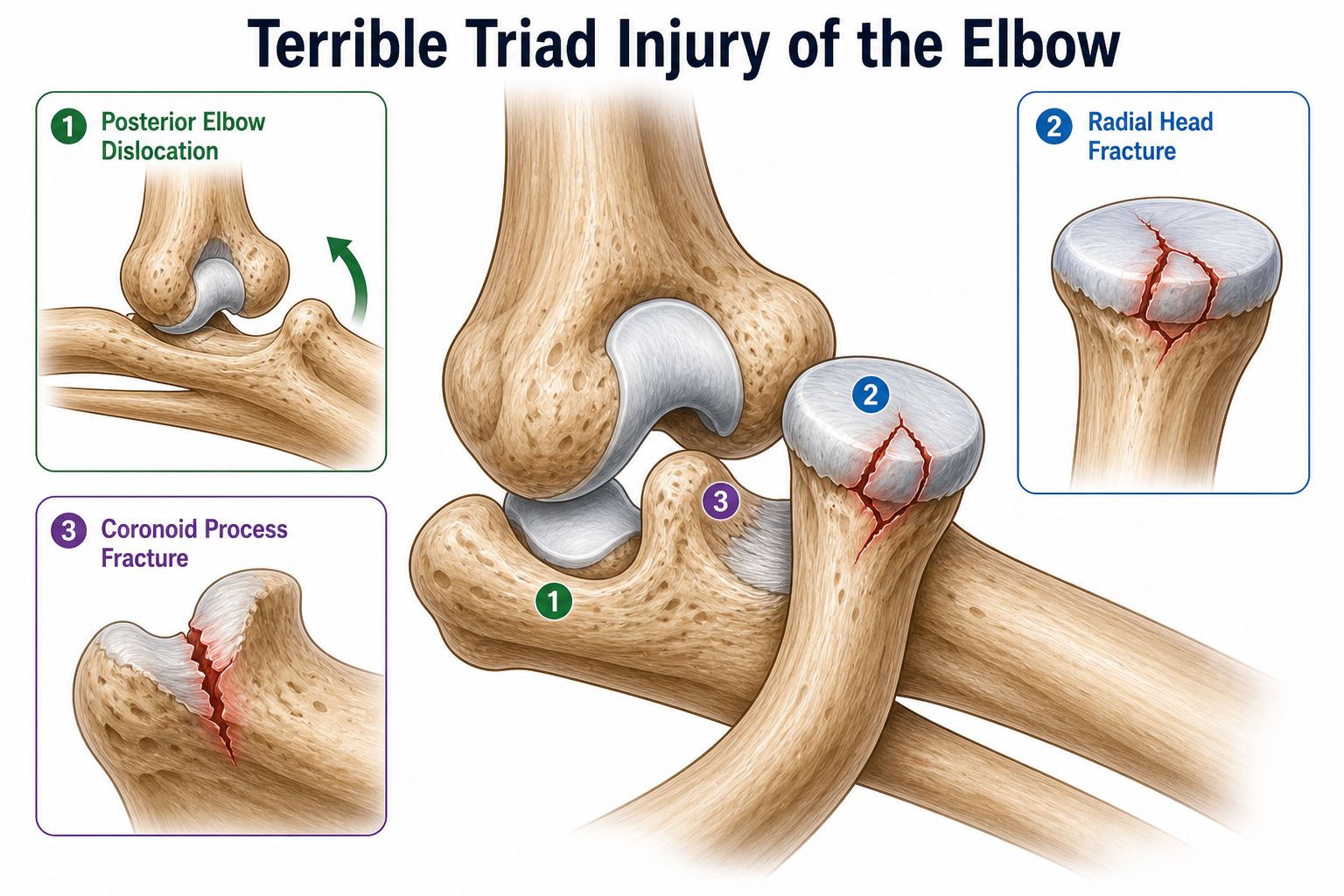
Systematic Reconstruction (Complex Injury) | For complex fracture-dislocations: systematic O’Brien sequence (coronoid + radial head + LCL ± MCL); see Conditions 16 and 60 |
Return-to-Sport Criteria | Full pain-free ROM; 90% strength vs contralateral side; negative instability tests (pivot shift, valgus stress); sport-specific loading tasks completed pain-free without apprehension; bracing plan for return season |
Recovery & Rehabilitation
- Acute simple dislocation: physiotherapy from week 1; hinged brace 6 weeks; return to non-contact training 6–8 weeks; contact sport 3–4 months; protective brace for first season back
- LUCL reconstruction: 4–6 months return to contact sport; hinged brace for first season
- UCL reconstruction (thrower): 9–12 months
- Complex reconstruction: 4–6 months (depends on complexity; hinged brace for return season)
- Key principle: return to contact sport is criteria-based, not purely time-based — objective stability testing must confirm adequate healing before contact
Why choose Dr Senthilvelan?
Elbow instability in contact sport athletes requires an athlete-centred approach — matching the stability requirement of the sport to the treatment and rehabilitation plan. Dr Senthilvelan assesses every athlete for the specific instability pattern, addresses it with targeted reconstruction, and designs a return-to-sport programme appropriate for the demands of their specific sport.
Frequently Asked Questions
1. I dislocated my elbow playing rugby 3 months ago — can I go back to playing?
Return to contact rugby after elbow dislocation is typically at 3–4 months, provided: you have full pain-free range of motion; the elbow is clinically stable on examination; you have completed a progressive strength and proprioception programme; and your physiotherapist and surgeon are satisfied with your recovery. It is strongly recommended to wear a custom-fitted hinged elbow brace for the first full season back — this significantly reduces re-dislocation risk during contact. If your elbow remains unstable or is giving way, further investigation is needed before contact.
2. I have a repeat elbow dislocation every time I grapple in judo — what can be done?
Recurrent elbow dislocation with grappling activities is most commonly due to persistent PLRI (posterolateral rotatory instability) — the LUCL did not heal after the original dislocation. This causes the elbow to subluxate when loaded in the specific combination of extension + supination + axial compression that occurs during judo grappling. LUCL reconstruction surgically restores this lateral stability. Most athletes with PLRI can return to judo at 4–6 months after LUCL reconstruction, with protective bracing for the first season.
3. Is an elbow brace effective for preventing re-dislocation in contact sports?
Yes — a well-fitted custom hinged elbow brace provides meaningful protection against re-dislocation by limiting the range of elbow extension and preventing the varus-supination stress that most commonly causes lateral elbow instability. Studies in contact sport athletes show significantly reduced re-dislocation rates with brace use during the first year after elbow dislocation. The brace does not fully replace proper ligament healing — bracing should accompany an appropriate rehabilitation programme, not substitute for it.
4. My elbow was dislocated in an MMA fight and I also have a small fracture — is this more serious?
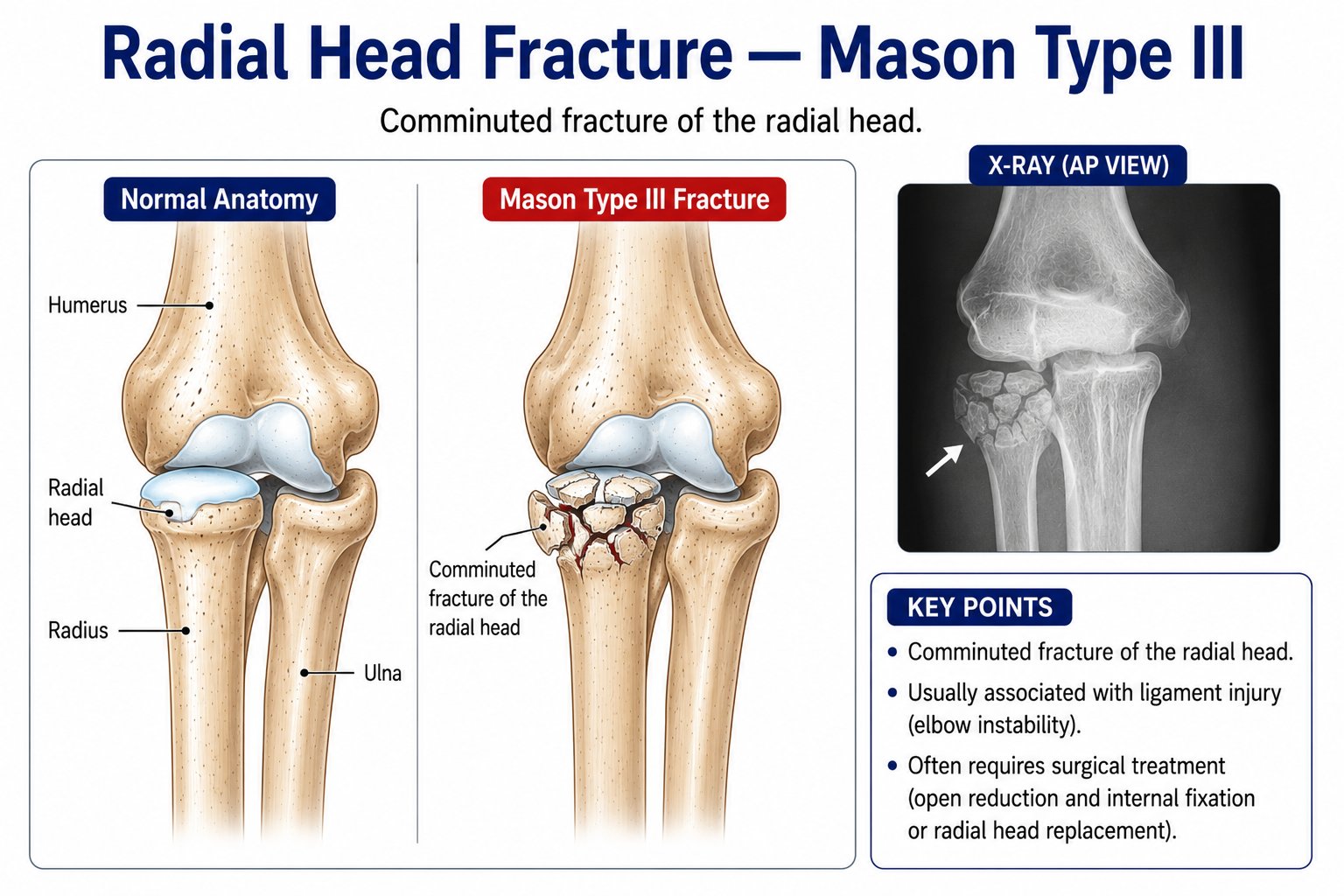
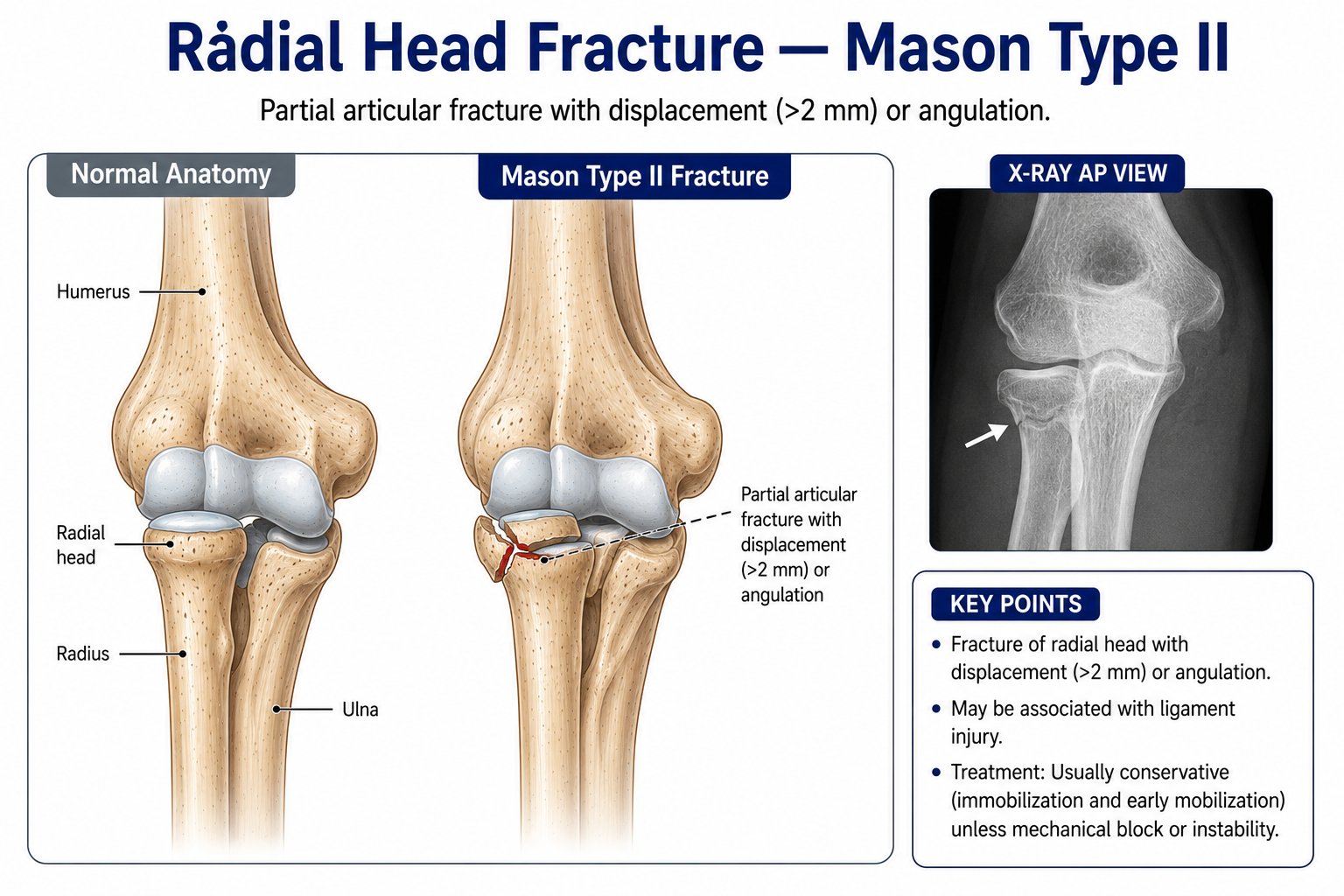
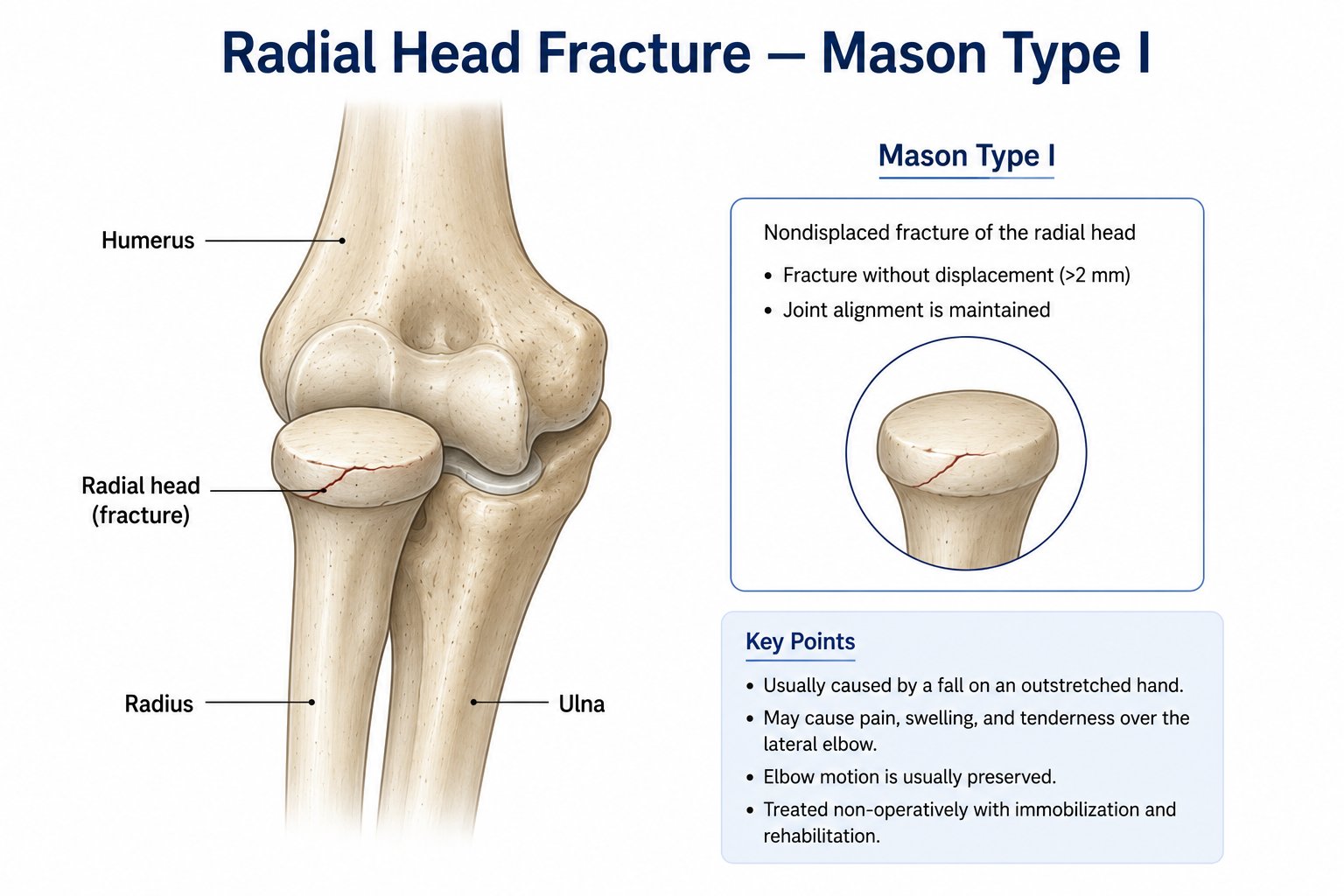
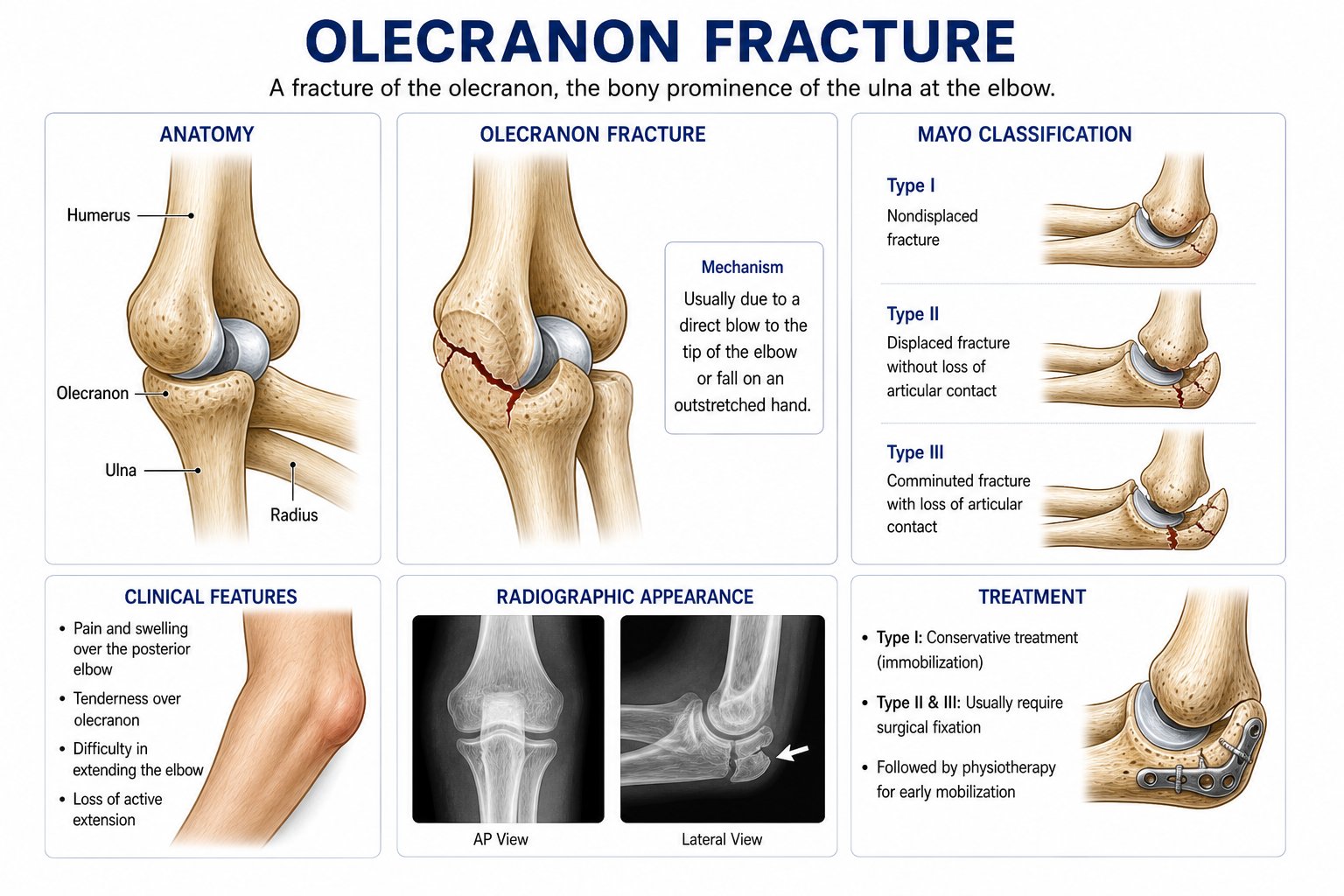
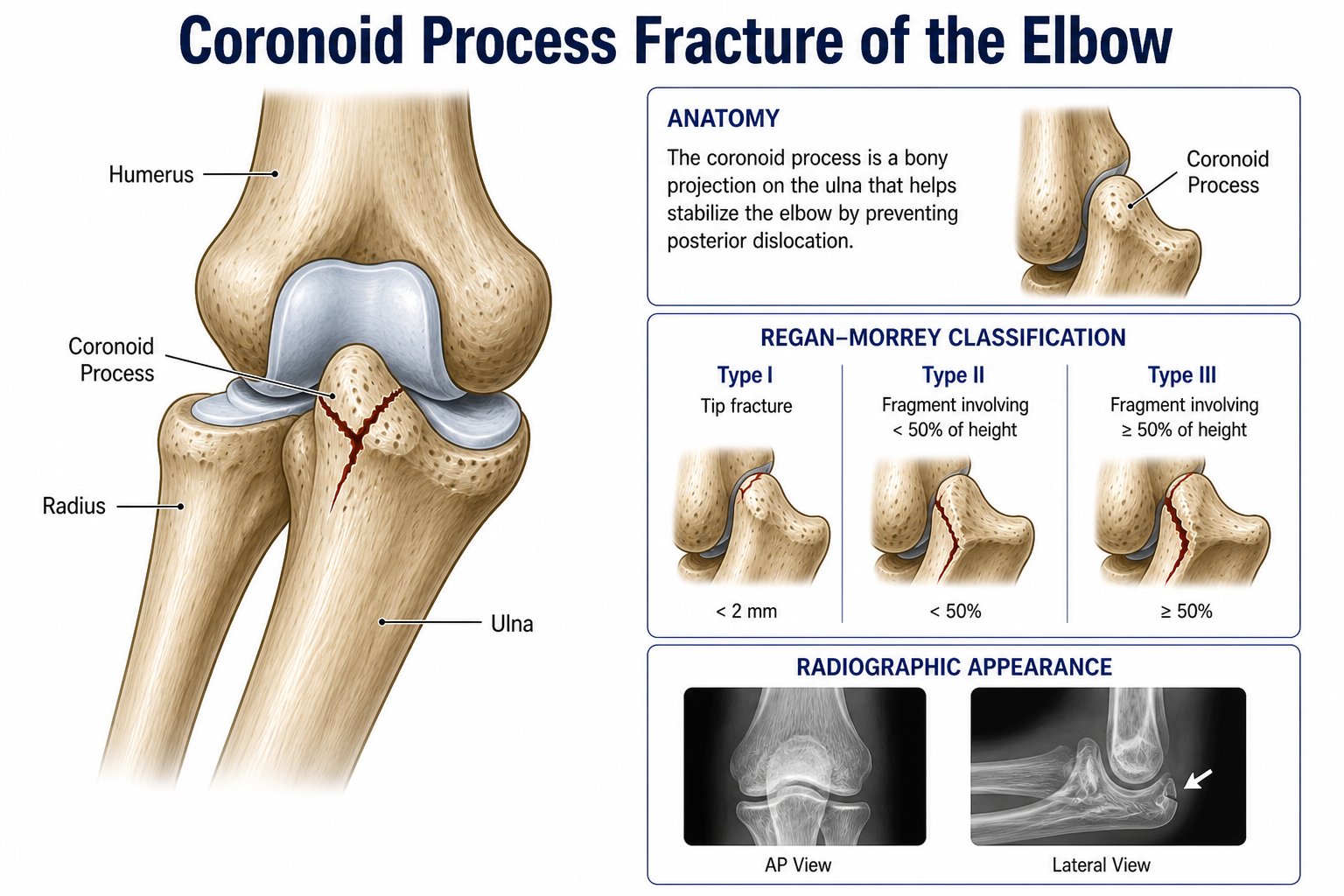
Yes — an elbow dislocation with a fracture (even a small one of the coronoid tip or radial head) represents a complex fracture-dislocation, not a simple dislocation. The fracture removes one of the bony stabilisers that normally prevents re-dislocation after reduction. Complex fracture-dislocations in athletes require specialist assessment — CT to define the fracture pattern, stability testing under fluoroscopy, and often surgical fixation of the fracture to restore stability before physiotherapy and return to MMA training. Management should not be the same as for a simple dislocation.
5. Can I return to wrestling or MMA at the same competitive level after elbow reconstruction surgery?
Yes — with the appropriate reconstruction and a full rehabilitation programme, the majority of combat sport athletes return to competitive training and competition at the same or higher level. The return timeline depends on the procedure performed: LUCL reconstruction for PLRI (4–6 months), UCL reconstruction for valgus instability (9–12 months), or complex reconstruction (4–6 months with concurrent bony fixation). Targeted rehabilitation specific to the demands of grappling — including isometric and progressive supination resistance training — is integrated into the return-to-sport programme.