Overview
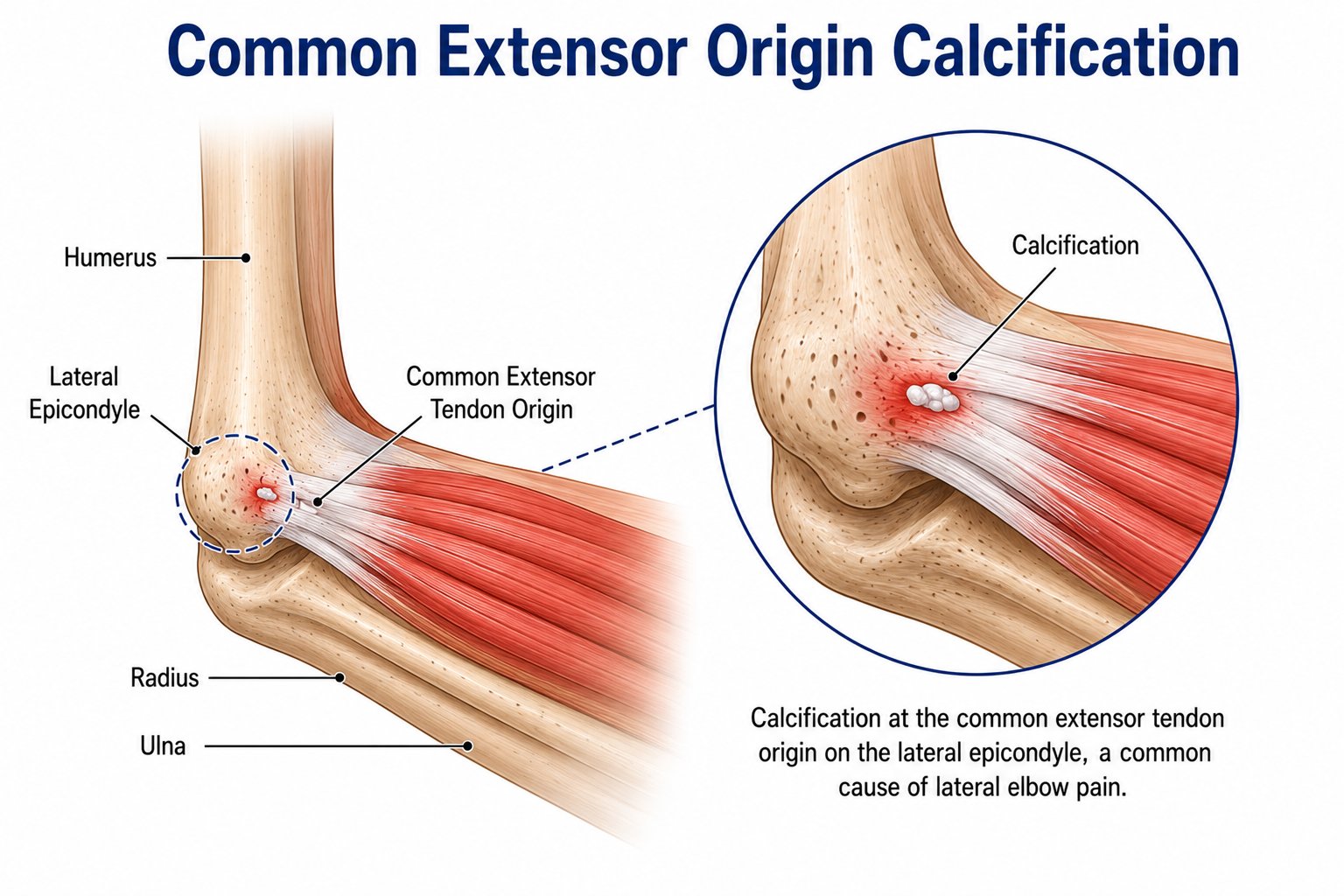
Common extensor origin calcification is the deposition of calcium hydroxyapatite crystals within or adjacent to the common extensor tendon at the lateral epicondyle. It follows the same four-phase biological progression as calcific tendinopathy of the shoulder: formative phase (calcium crystalises within degenerative tendon matrix), resting phase (calcification stabilises), resorptive phase (the most painful acute phase — the calcium liquefies and exerts pressure), and post-calcific phase (calcium is removed and tendon remodels).
The most symptomatic phase is the resorptive phase — when the calcium deposit becomes fluid-filled and under pressure, causing acute severe pain that can be disproportionate to the relatively small deposit size. During this phase, ultrasound-guided barbotage (aspiration and lavage of the liquid calcium) can dramatically resolve symptoms.
Formative-phase calcification (chalky or fibrous deposits) responds less well to aspiration but may respond to shockwave therapy. Refractory cases require surgical excision.
Quick Facts | Details |
Also Known As | Calcific Tendinopathy — Elbow, Calcific Lateral Epicondylalgia, Hydroxyapatite Deposition Disease (HADD) — Elbow |
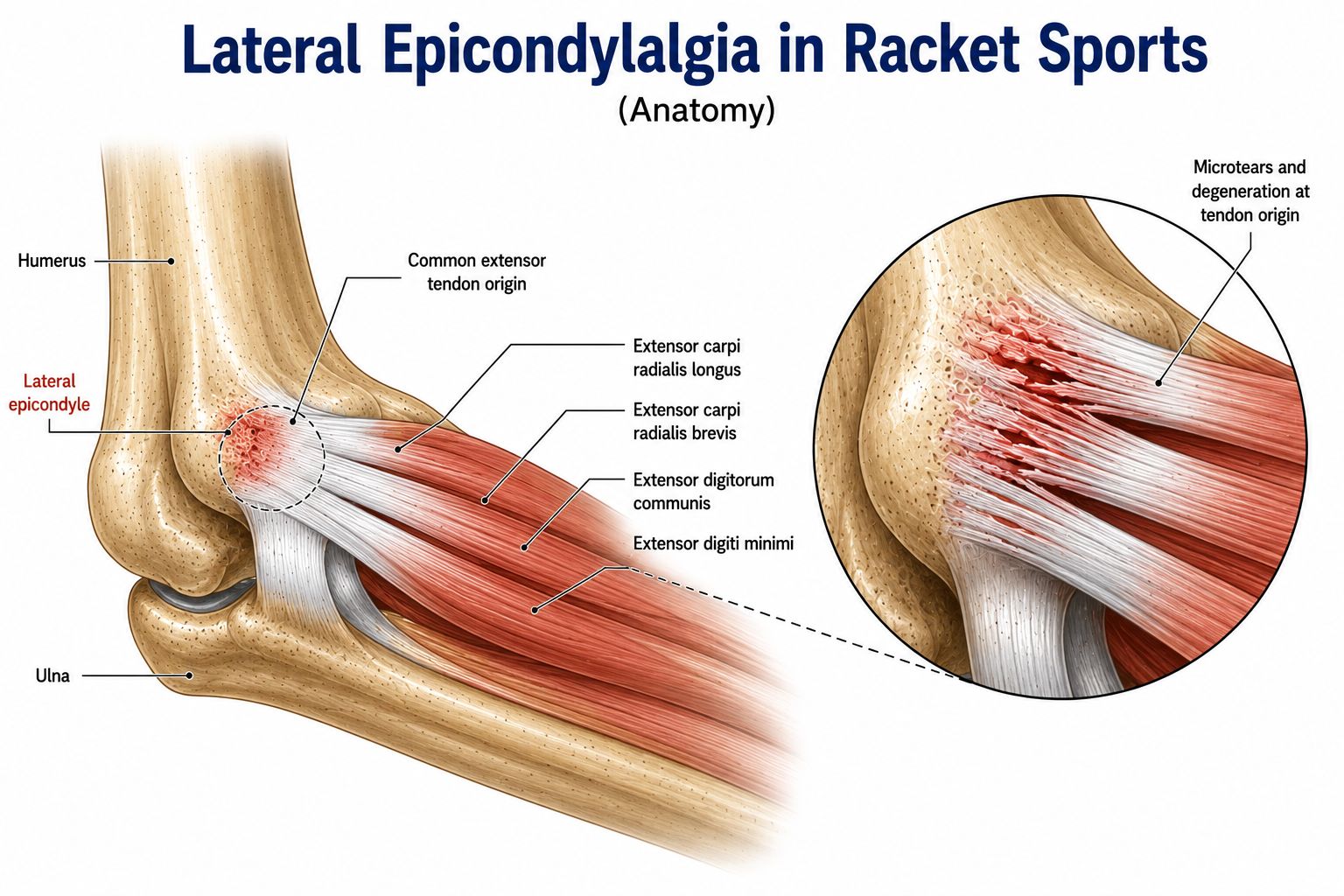
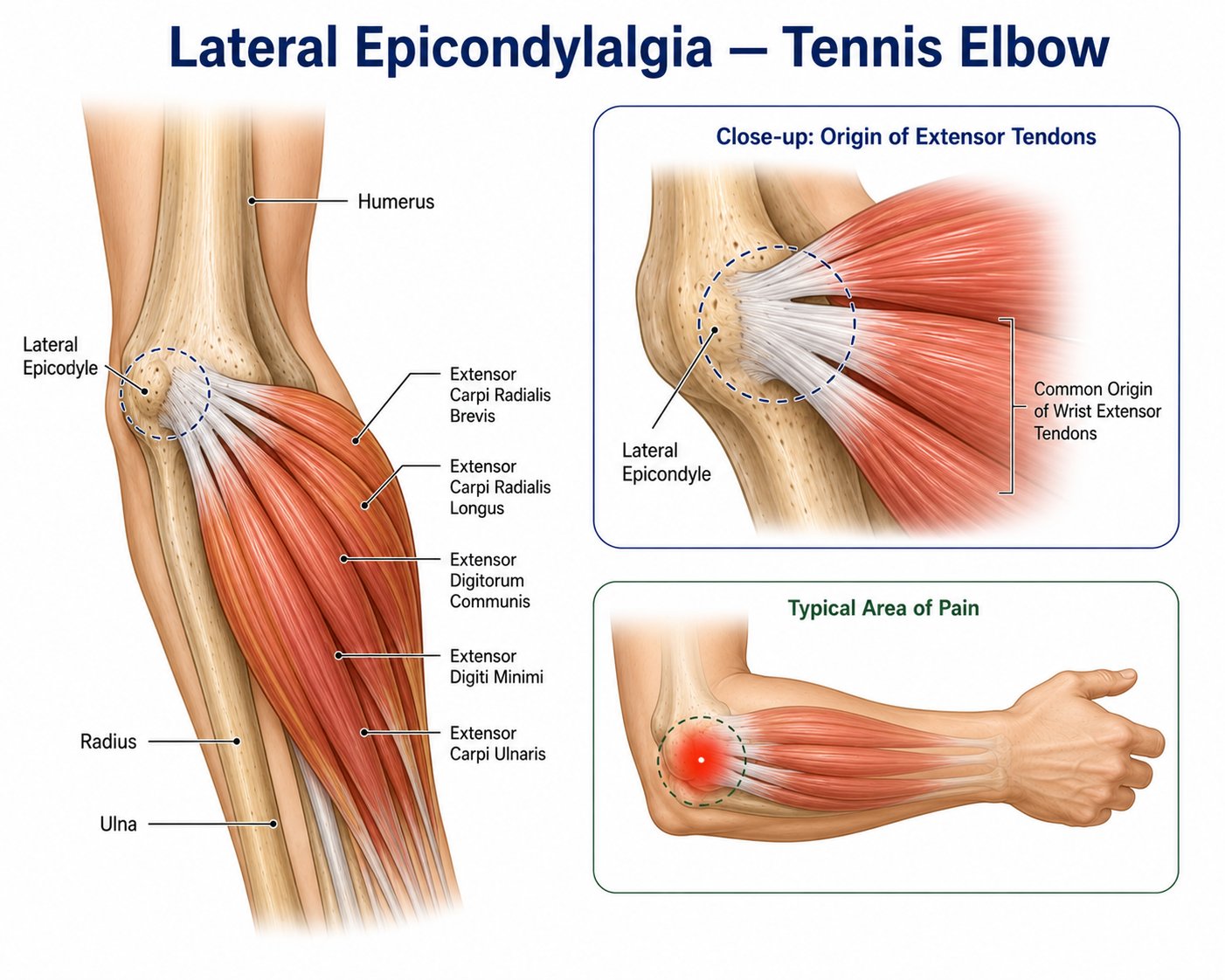
Affected Area | Common extensor origin at the lateral epicondyle; primarily within or adjacent to the ECRB tendon; may extend into the extensor digitorum communis |
Who It Affects | Adults aged 30–60 years; women slightly more affected than men; associated with metabolic disorders (diabetes, hypothyroidism); similar population to tennis elbow; often co-exists with lateral epicondylalgia |
Prevalence | Calcification at the lateral epicondyle is found in approximately 7–22% of patients investigated for lateral elbow pain; frequently associated with but distinct from non-calcific tennis elbow; can be an incidental X-ray finding in asymptomatic individuals |
Treatment | ESWT (extracorporeal shockwave therapy) first-line for acute phase; ultrasound-guided percutaneous needle aspiration and lavage (PNAL/barbotage) for liquid-phase calcium; surgical excision for refractory or fibrous-phase calcium deposits |
Causes & Risk Factors
- Reactive calcification in degenerative tendon — the same angiofibroblastic tendinopathy seen in tennis elbow creates a hypoxic, acidic microenvironment that promotes hydroxyapatite crystal precipitation
- Metabolic predisposition — diabetes mellitus and hypothyroidism are both associated with increased hydroxyapatite deposition throughout the body
- Repetitive microtrauma — the ECRB origin is subjected to repetitive loading; focal areas of degeneration serve as nucleation points for calcium crystal formation
- Idiopathic — many cases have no identifiable cause; likely a combination of local tendon biology and systemic metabolic factors
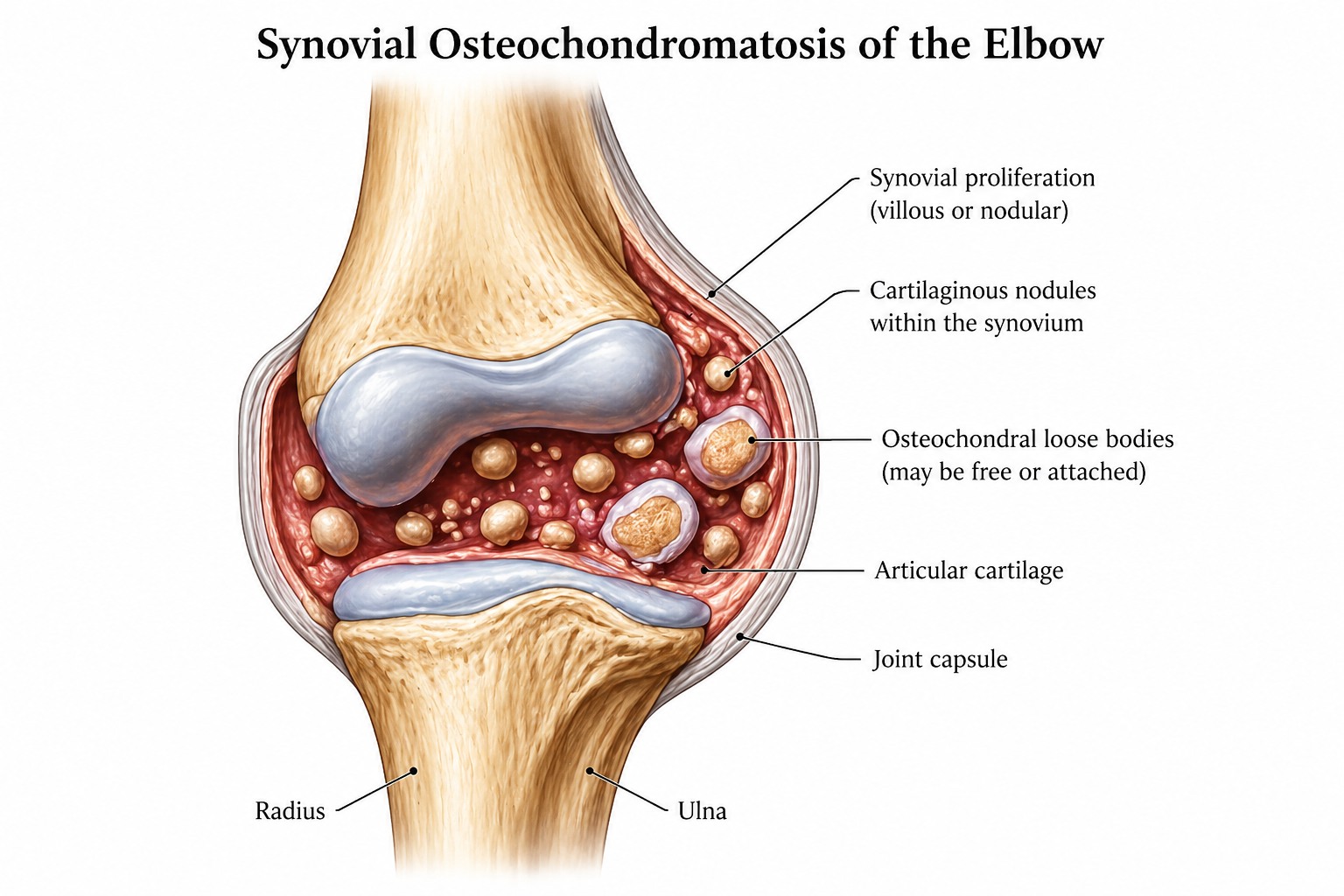
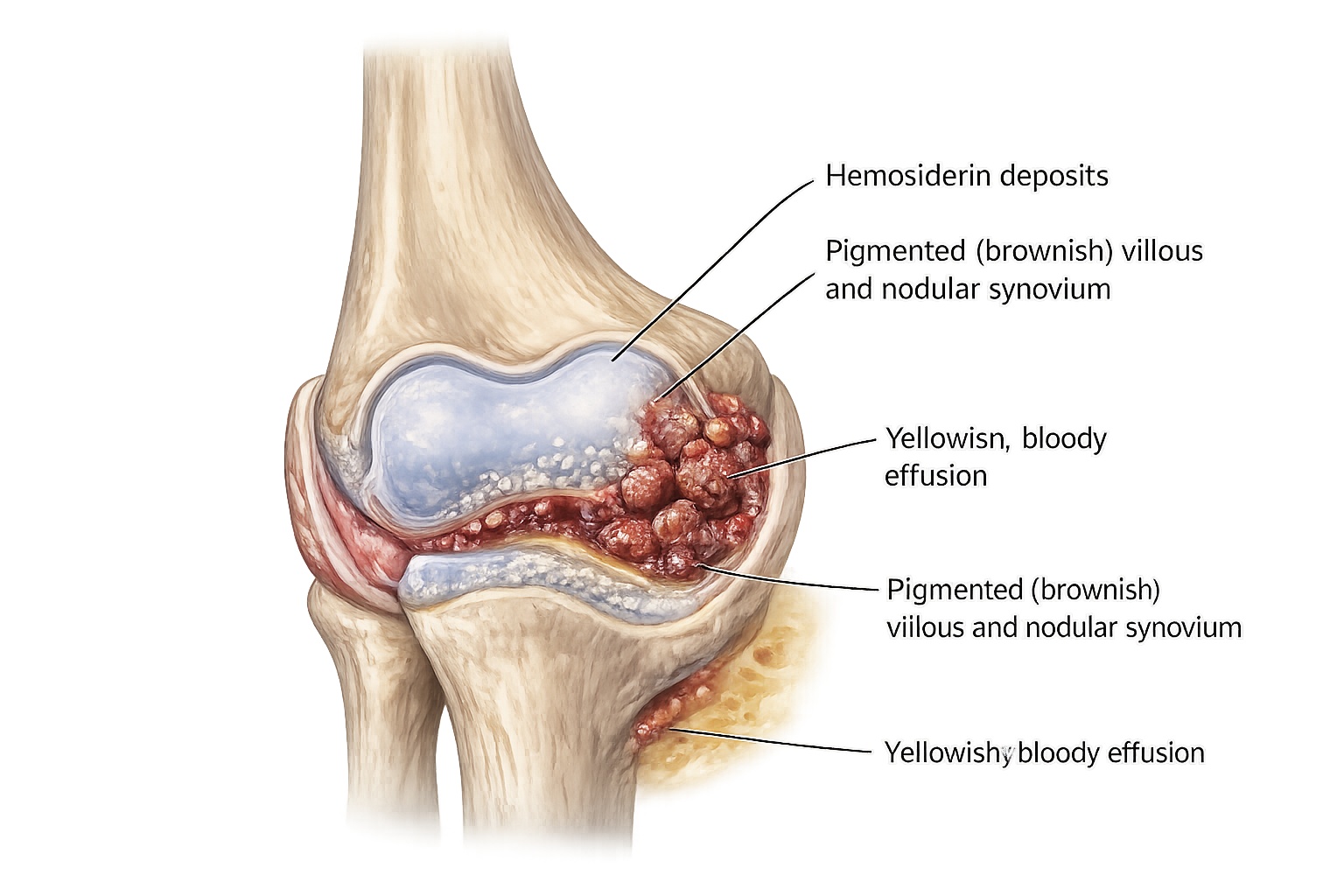
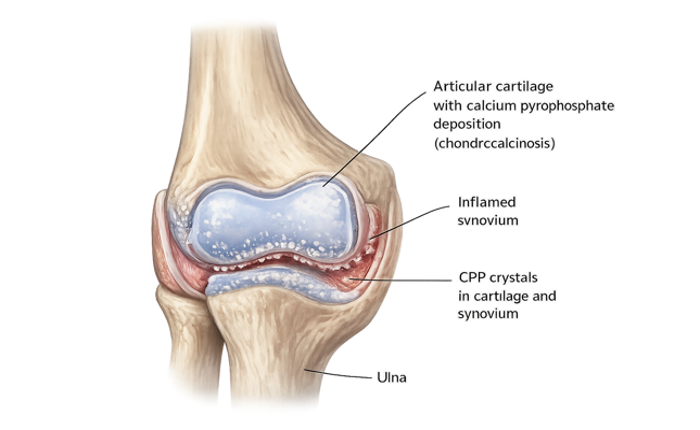
- May co-exist with PVNS, CPPD, or other crystal deposition conditions around the elbow
Symptoms
- Acute severe lateral elbow pain — the resorptive phase produces sudden onset, intense pain that is often out of proportion to clinical findings; may be confused with septic arthritis or gout acutely
- Chronic lateral elbow aching — similar to tennis elbow; the formative phase is often asymptomatic or produces only low-grade background pain
- Tenderness over the lateral epicondyle — at or around the calcification site; often exquisitely tender in the acute resorptive phase
- Pain with grip activities — wrist extension and gripping load the common extensor origin and provoke symptoms
- Reduced range of motion in acute phase — protective guarding; local oedema
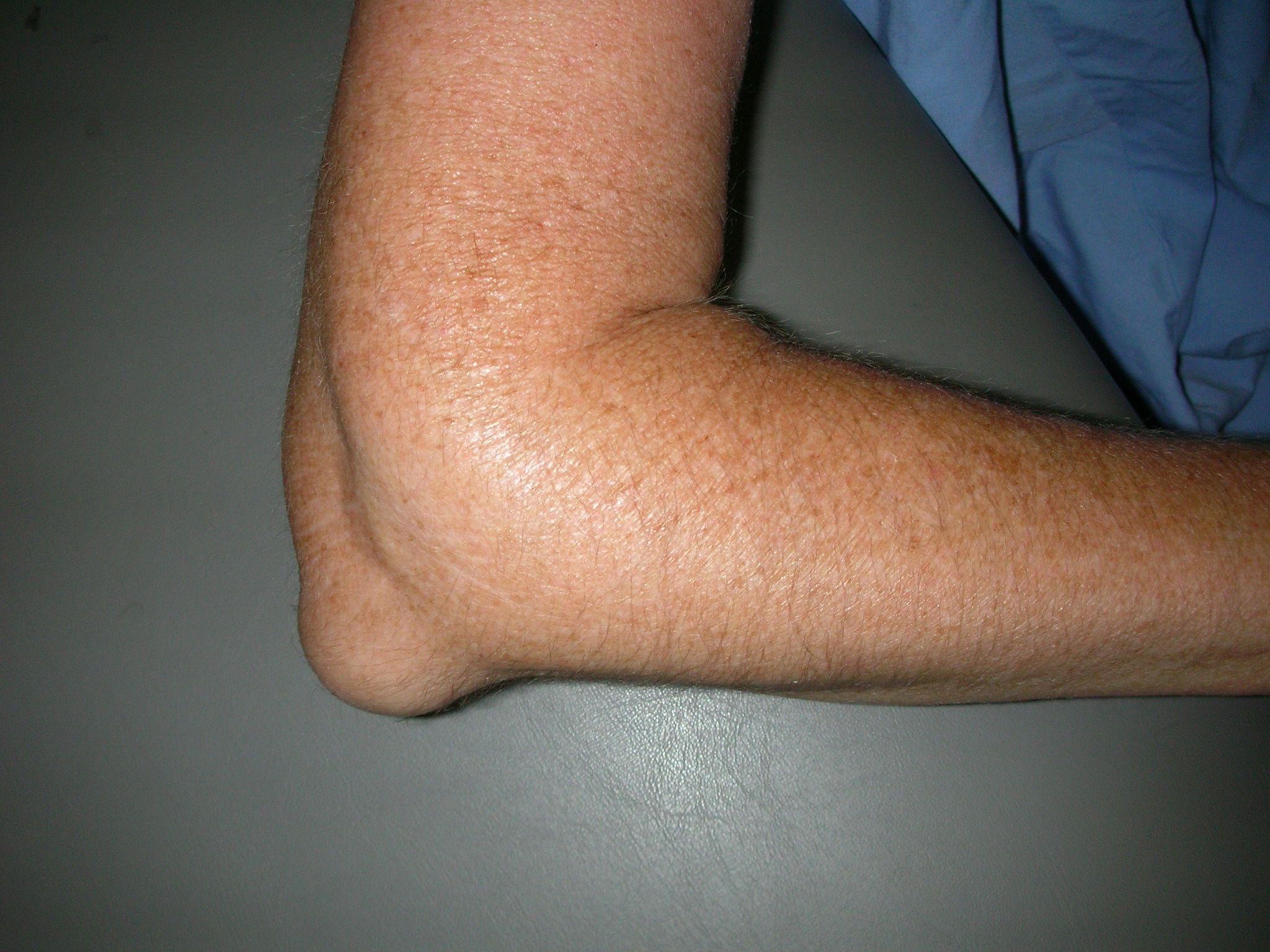
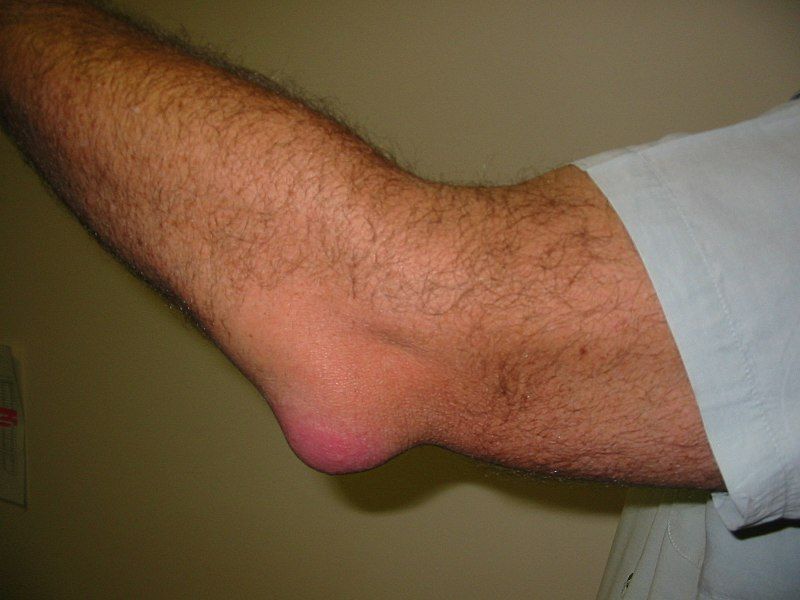
- Palpable nodule — occasionally the calcification is large enough to be palpable through the lateral soft tissues
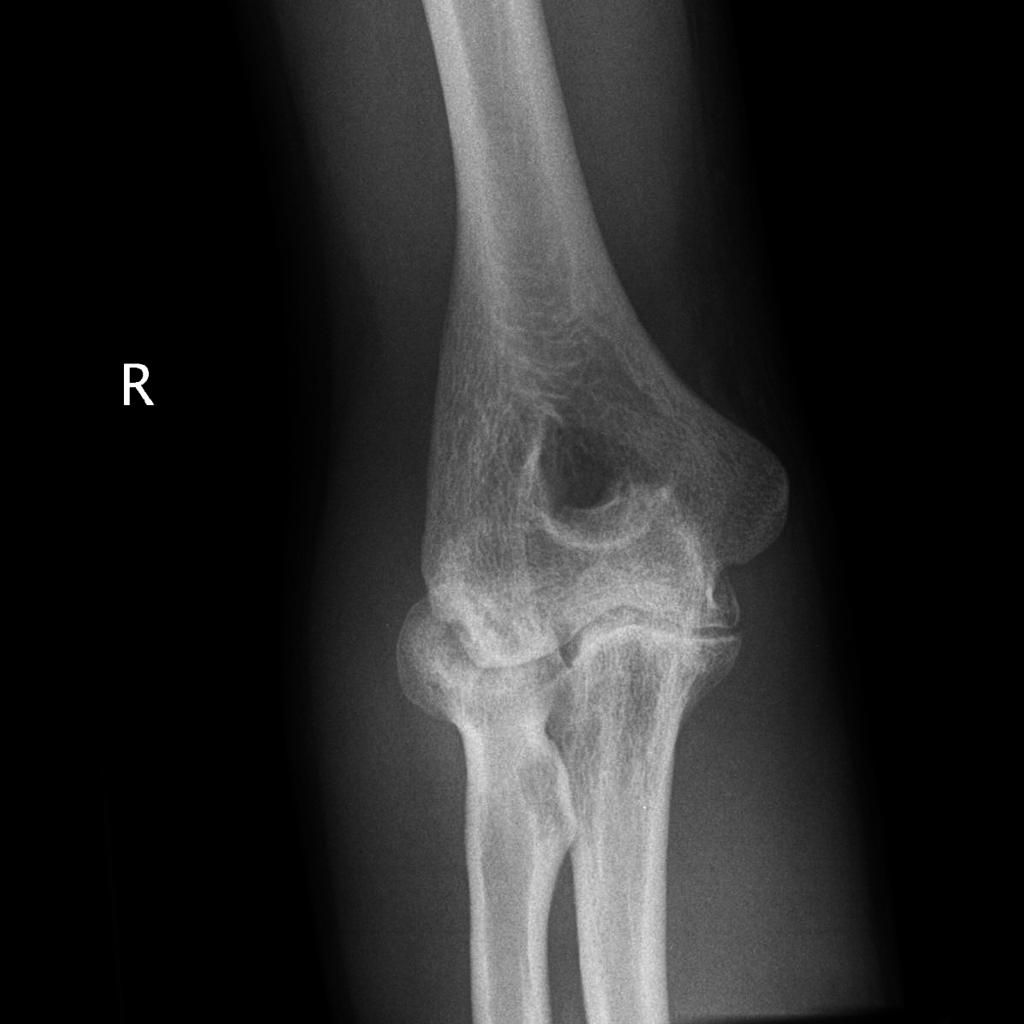
- Calcification visible on X-ray — lateral elbow radiograph typically confirms the diagnosis
How is it Diagnosed?
- Plain X-rays (AP + lateral elbow) — identifies calcification at the lateral epicondyle; describes morphology (fluffy/ill-defined = resorptive, active phase; dense/homogeneous = formative/resting phase); helps plan treatment
- Ultrasound — defines the size and location of the deposit; assesses the consistency (liquid = aspiratable; hard/fibrous = not); Doppler for associated tendinopathy; guides PNAL (barbotage)
- MRI — bone marrow oedema in acute resorptive phase; associated tendinopathy; excludes other causes of lateral elbow pain
- Blood tests — exclude gout (uric acid), CPPD (calcium, ferritin, Mg) and septic arthritis if acute severe pain
Treatment Options
Treatment Type | Details |
NSAID & Rest (Acute Phase) | Anti-inflammatory medication for the acute resorptive phase; rest from provocative activity; ice; corticosteroid injection to rapidly reduce acute inflammation if pain is severe (ultrasound-guided peritendinous, not intratendinous) |
Extracorporeal Shockwave Therapy (ESWT) | Focused or radial shockwave applied to the lateral epicondyle over 3–5 sessions; stimulates resorption of calcification via mechanotransduction and increased local vascularity; most effective for formative-phase (hard/dense) deposits; 60–70% significant improvement at 6 months |
Ultrasound-Guided Percutaneous Needle Aspiration & Lavage (PNAL/Barbotage) | For liquid-phase (resorptive) calcium deposits identifiable as hypoechoic fluid on ultrasound; needle passed into the deposit under real-time ultrasound guidance; calcium aspirated (paste-like cream); saline lavage through the deposit; dramatically effective for liquid-phase calcium; 80–90% symptom resolution; single session usually sufficient |
Physiotherapy | Post-acute: eccentric extensor loading programme; restore normal ECRB function; concurrent tendinopathy management; important adjunct to all treatments |
Surgical Excision | Reserved for refractory cases (>6 months with ESWT and PNAL failing); arthroscopic or open excision of the calcium deposit; concurrent ECRB tendon release if co-existing tennis elbow; day-case procedure; highly effective |
Recovery & Rehabilitation
- Acute resorptive phase: typically self-limiting within 2–6 weeks; the body eventually resorbs the calcium spontaneously
- After PNAL (barbotage): dramatic relief usually within 48–72 hours; resume normal activities 1–2 weeks
- After ESWT: gradual improvement over 6–12 weeks; 3–5 sessions required
- After surgical excision: return to light activity 2–3 weeks; full activity 6–8 weeks
- Long-term: calcium deposits do not reliably recur after successful PNAL or surgical excision; ESWT may need to be repeated if residual calcium persists
Why choose Dr Senthilvelan?
Dr Senthilvelan offers ultrasound-guided barbotage for liquid-phase calcific tendinopathy and ESWT for formative-phase deposits, providing targeted, non-surgical management for most patients with calcific lateral epicondylalgia. Surgical excision is reserved for the minority who fail these measures.
Frequently Asked Questions
1. I was diagnosed with calcification at my elbow — does it always need treatment?
No — calcification found incidentally on an X-ray without symptoms does not need treatment. Many adults have calcification at the lateral epicondyle as an asymptomatic finding. Treatment is only indicated when the calcification is causing pain that is affecting daily function. The most important phase to treat actively is the acute resorptive phase, when the calcium becomes liquid and under pressure — this phase causes intense pain that responds very well to ultrasound-guided barbotage (aspiration and lavage).
2. What is barbotage and how quickly does it work?
Barbotage is a procedure in which a needle is passed under ultrasound guidance directly into a liquid-phase calcium deposit. The deposit is punctured multiple times, aspirated (the calcium paste drawn out through the needle), and then lavaged (washed) with saline. Most patients experience dramatic pain relief within 24–72 hours as the pressure within the deposit is relieved and the calcium is removed. The procedure takes approximately 15–20 minutes, is performed under local anaesthetic, and requires no sedation or theatre.
3. How is calcific lateral epicondylalgia different from regular tennis elbow?
Both affect the common extensor origin at the lateral epicondyle, but the calcium deposit adds an additional pain generator — particularly in the acute resorptive phase when the calcium is liquid and under pressure. This produces a pain that is often much more intense and acute than typical tennis elbow. X-ray or ultrasound identifies the calcium deposit, distinguishing it from non-calcific tennis elbow. Management differs: regular tennis elbow responds to physiotherapy and PRP; calcific disease responds to barbotage (liquid phase) or shockwave (formative phase).
4. Can shockwave therapy break up the calcium?
Yes — extracorporeal shockwave therapy (ESWT) can effectively break up and stimulate resorption of calcium deposits in the tendon. The acoustic shock waves create a mechanical disruption of the calcium crystal structure, promoting vascularisation and inflammatory-mediated resorption. ESWT is most effective for dense, formative-phase calcification (where barbotage is not possible because the calcium is not liquid). Results are seen over 6–12 weeks and typically require 3–5 sessions. Success rates are approximately 60–70% for significant symptom reduction.
5. Will the calcium come back after treatment?
After successful barbotage of a liquid-phase deposit, recurrence is uncommon — the calcium has been removed and the biological conditions that led to its resorption are no longer present. After ESWT, the calcium is broken down and resorbed gradually, and recurrence rates are low. After surgical excision, the deposit is completely removed and recurrence at the same site is very rare. However, patients with a systemic predisposition (diabetes, hypothyroidism) may be at risk of new deposits forming at other sites over time.