Overview
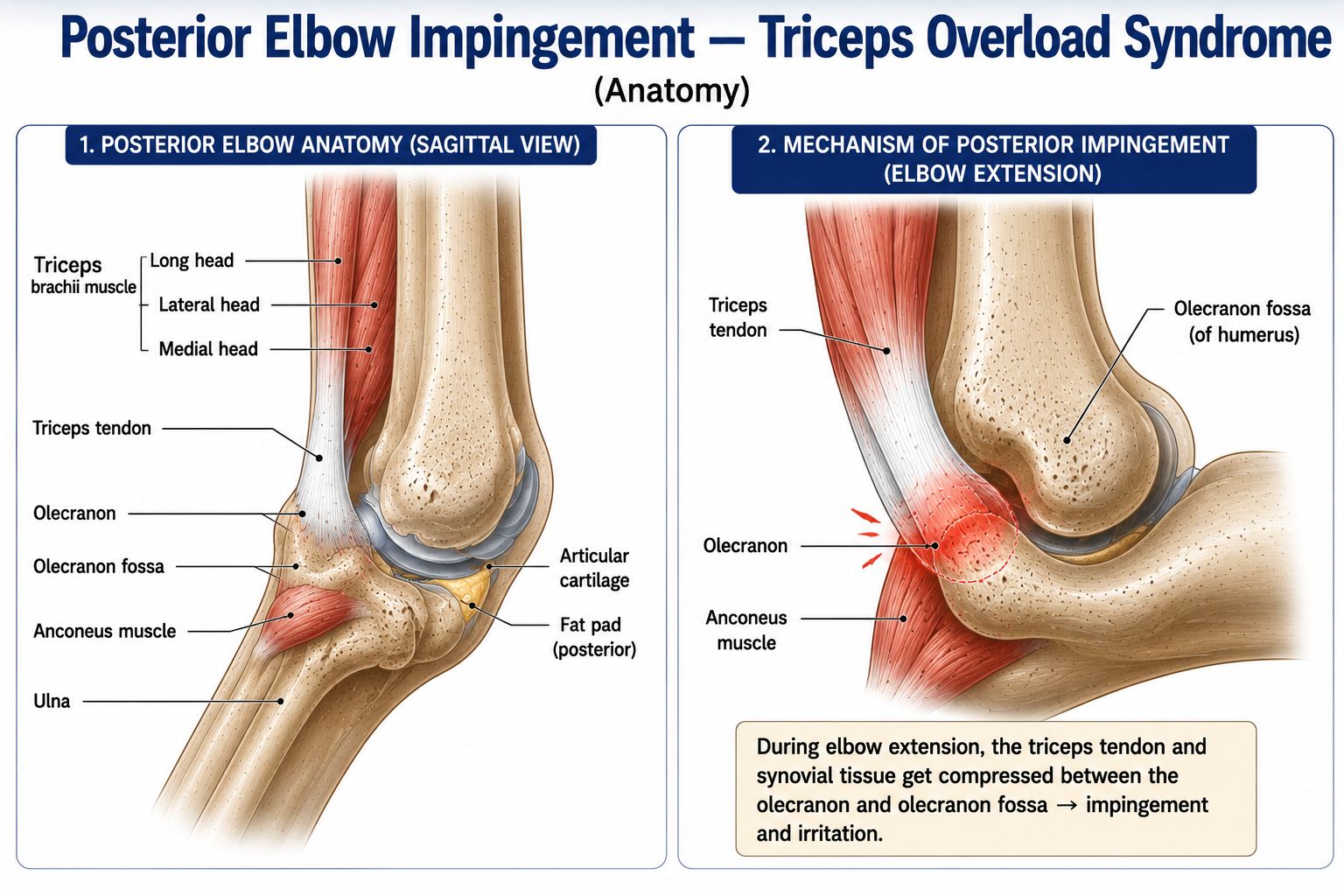
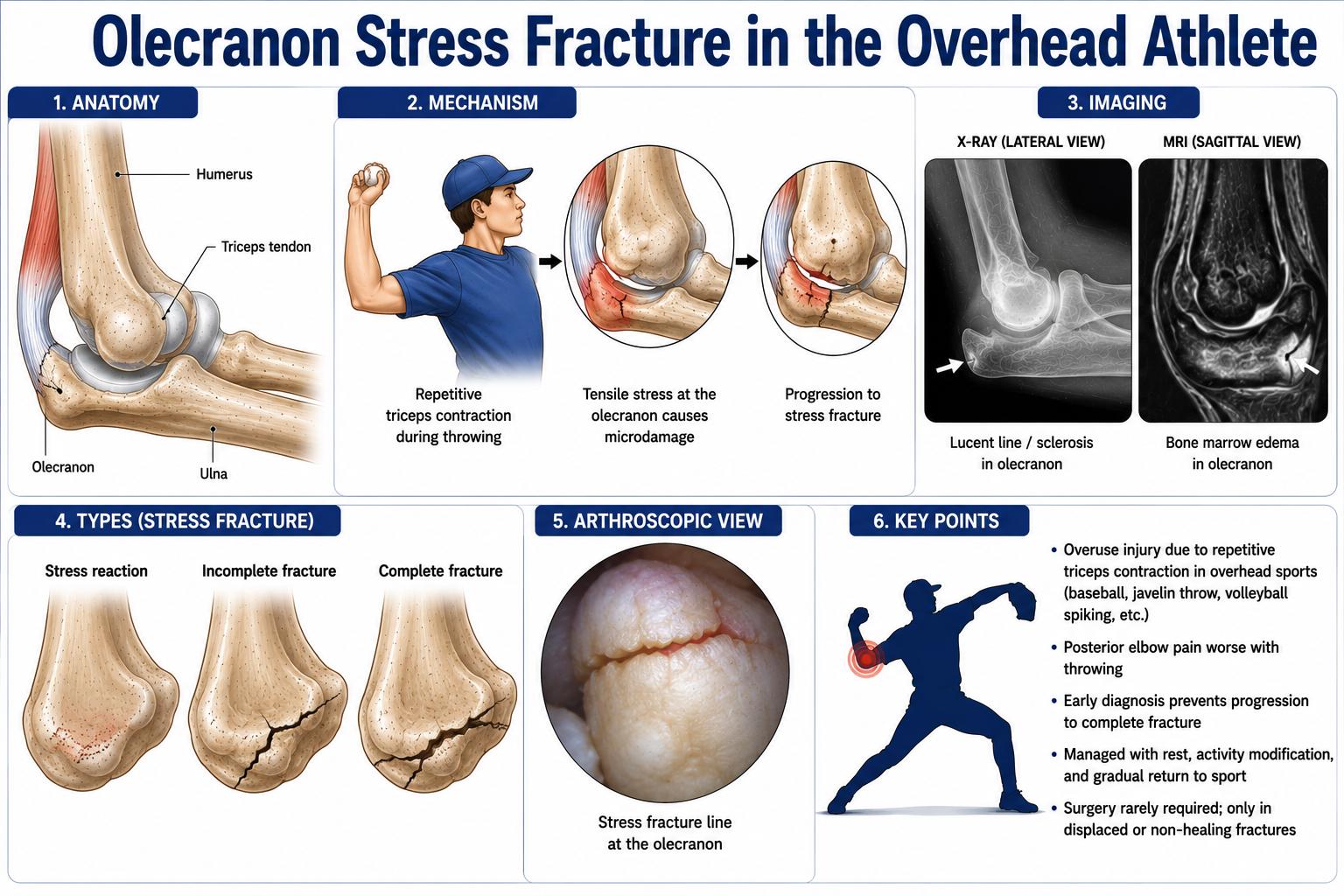
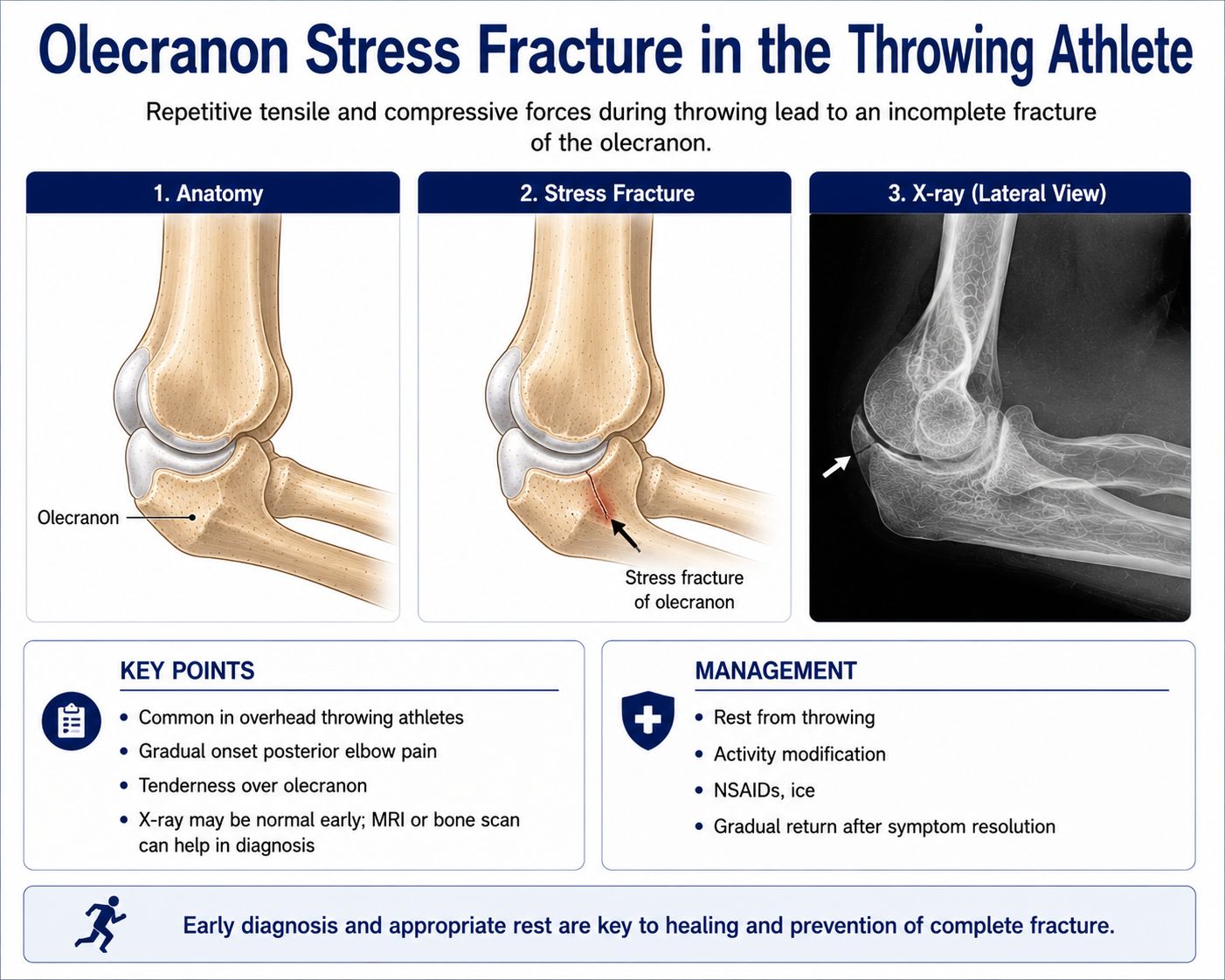
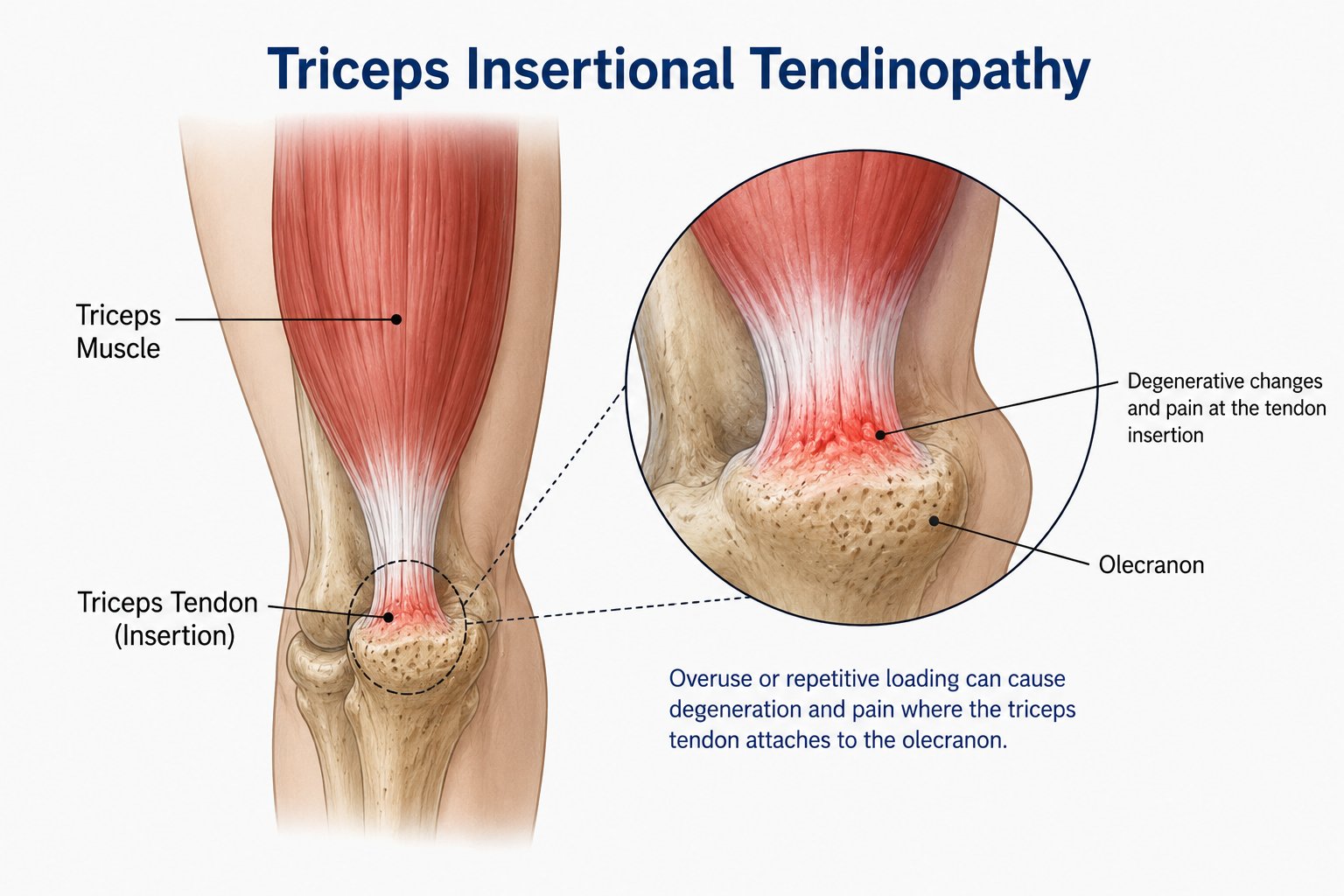
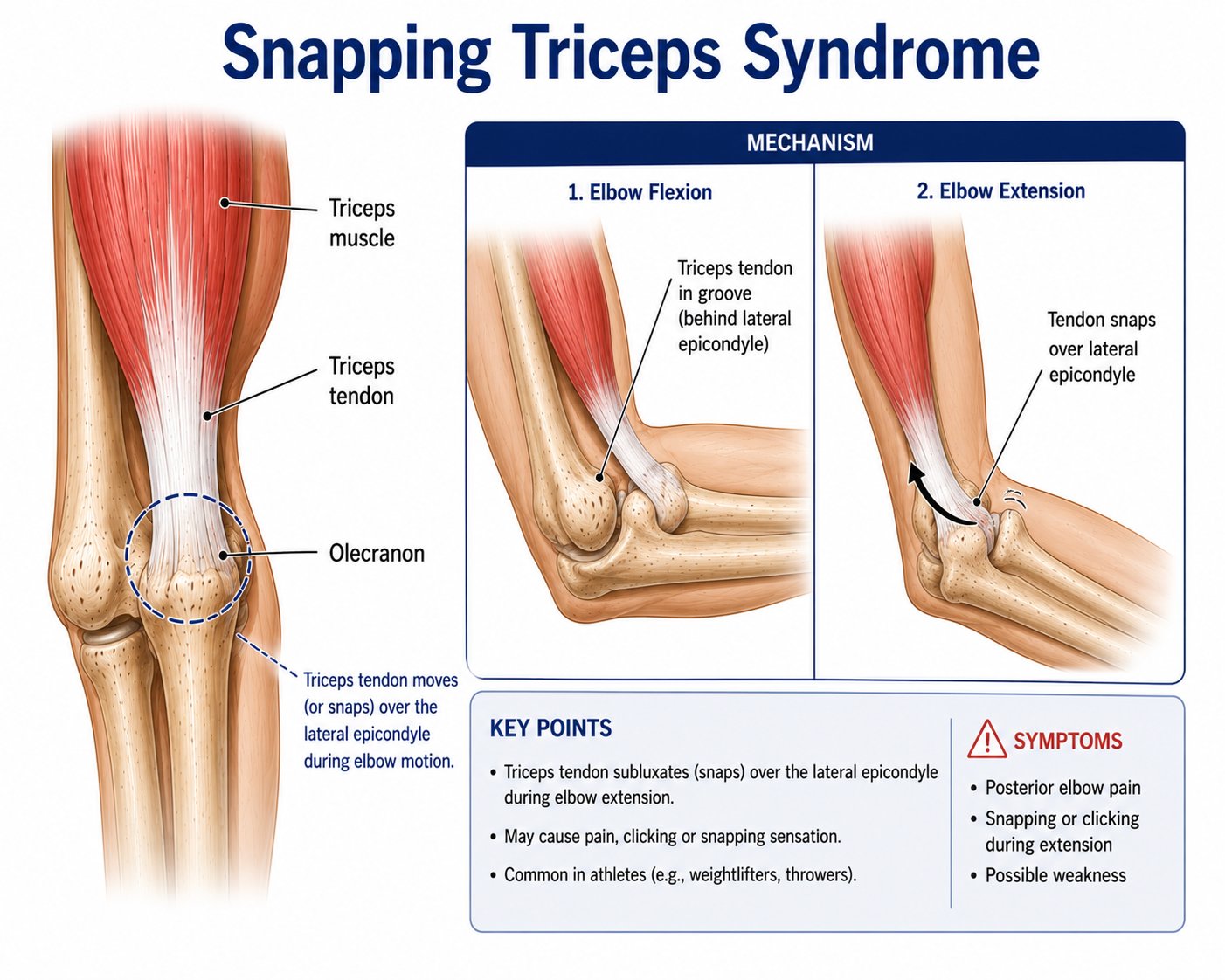
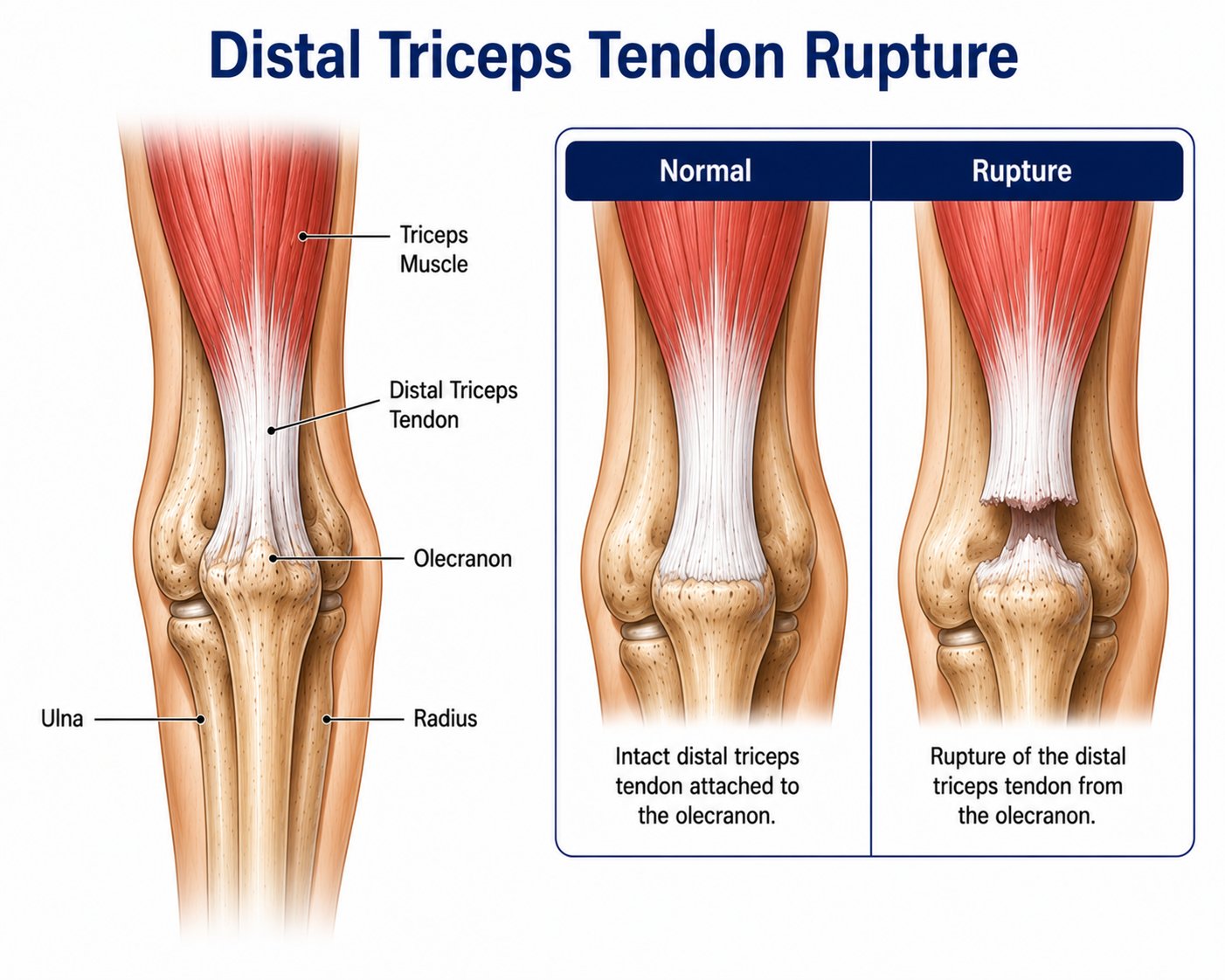
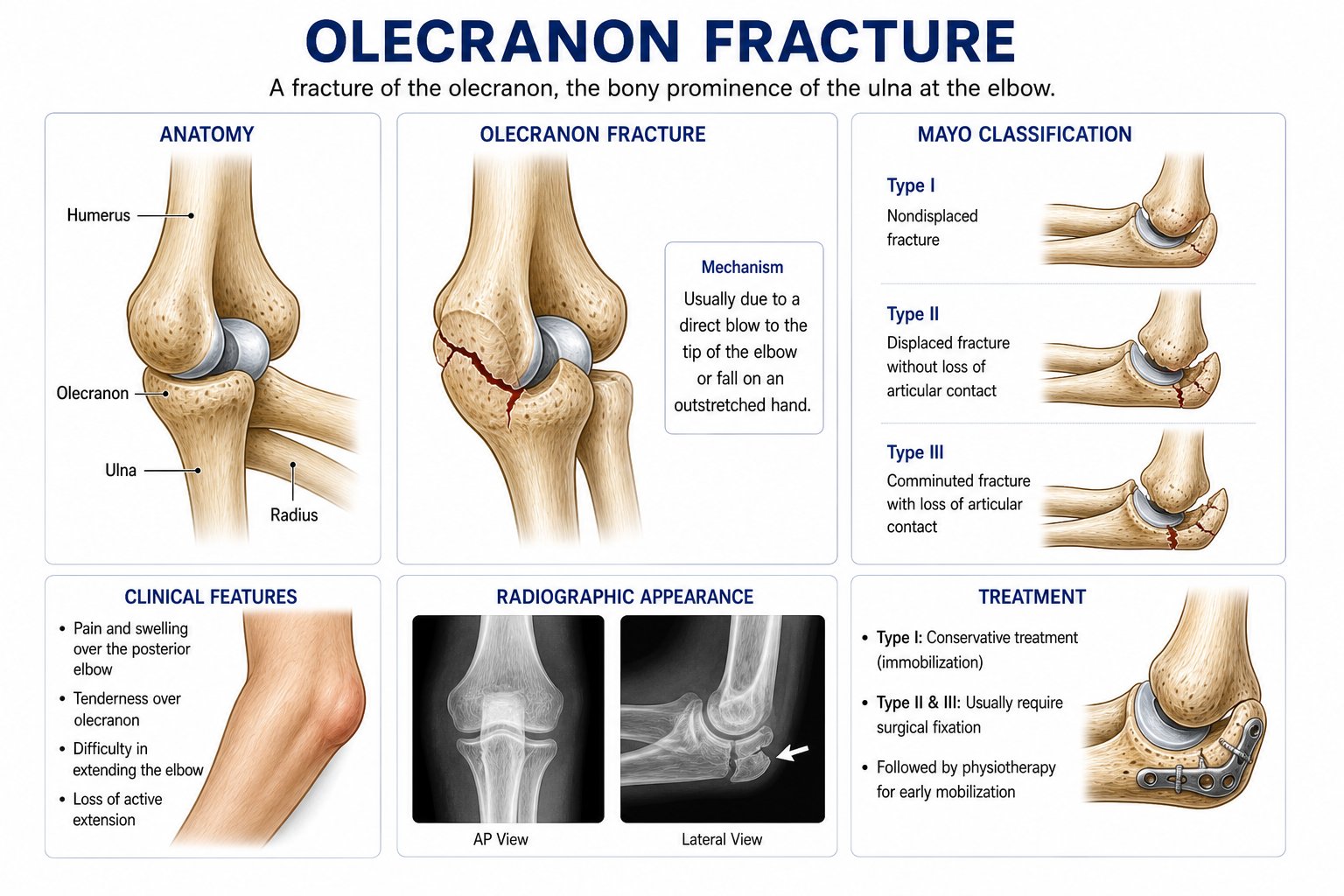
The olecranon is the bony prominence at the back of the elbow — the attachment point of the triceps muscle, responsible for extending the elbow (straightening the arm). An olecranon fracture disrupts this extensor mechanism, meaning the triceps can no longer extend the elbow against gravity unless the fracture is fixed.
Olecranon fractures occur through two main mechanisms: a direct blow (fall directly onto the elbow tip — common in elderly patients) or an avulsion mechanism (the contracting triceps pulls off the olecranon — typical in younger adults during a fall). The fracture pattern guides the choice of fixation.
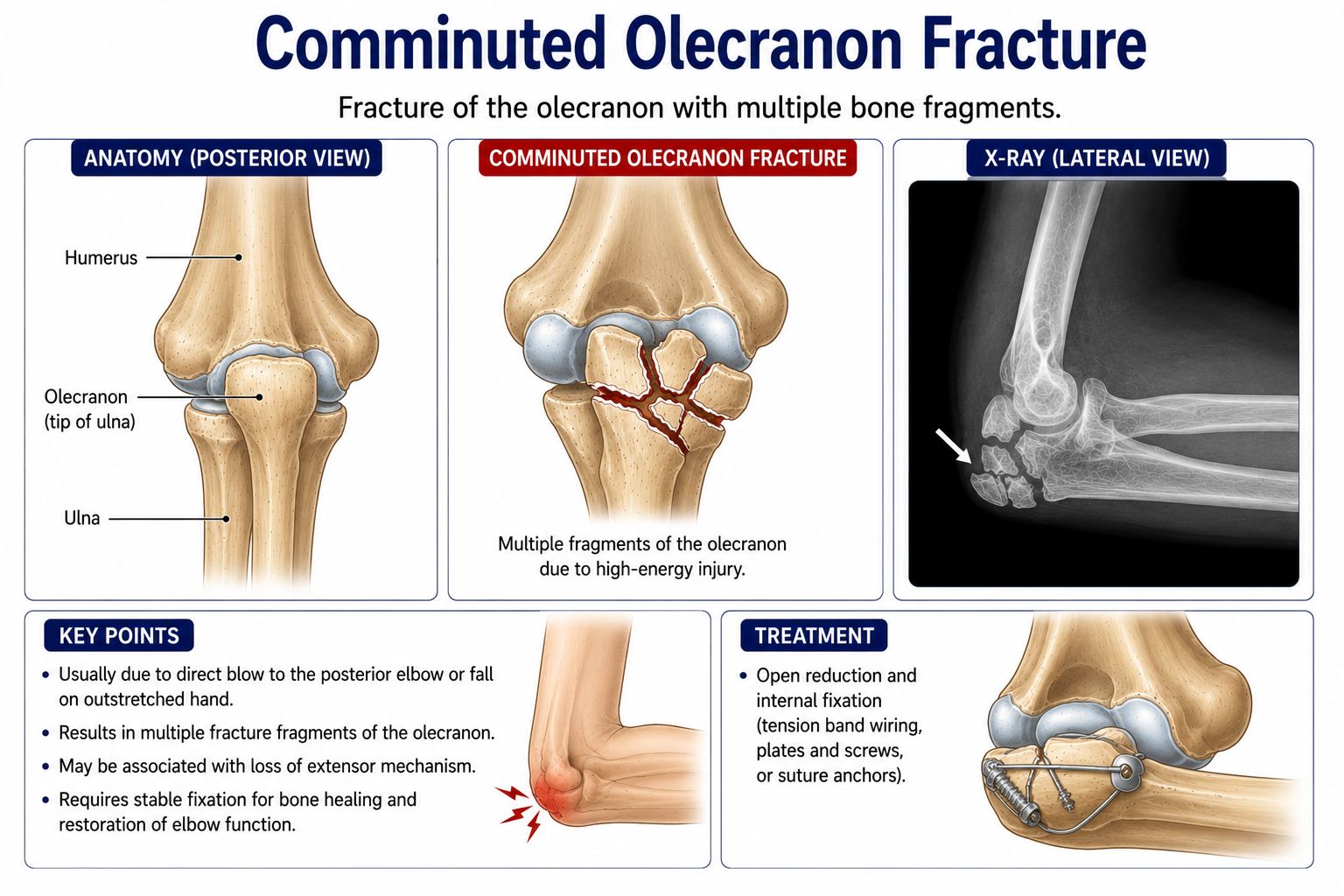
The majority of displaced olecranon fractures require surgery to restore the extensor mechanism and articular surface. The choice of fixation depends on fracture morphology, bone quality, and patient factors — from tension band wiring for transverse fractures to pre-contoured locking plates for comminuted patterns.
Quick Facts | Details |
Also Known As | Broken Elbow (posterior), Olecranon Process Fracture, Elbow Extensor Mechanism Fracture |
Affected Area | Olecranon process of the proximal ulna — the bony prominence forming the point of the elbow; attachment point of the triceps tendon |
Who It Affects | Bimodal distribution: young adults from high-energy injuries and elderly patients from low-energy falls; approximately 10% of all elbow fractures in adults |
Prevalence | Incidence approximately 12 per 100,000 per year; one of the most common fractures requiring operative management at the elbow |
Treatment | Non-displaced: non-operative; displaced: ORIF with tension band wiring (TBW) or locking plate; comminuted: pre-contoured locking plate; elderly: consider excision + triceps reattachment |
Causes & Risk Factors
- Direct fall onto the elbow — falling from standing height directly onto the elbow tip; most common in elderly
- Fall onto an outstretched hand — axial loading with the elbow extended; the contracting triceps avulses the olecranon
- Road traffic accident — motorcycle fall or dashboard; typically comminuted
- Sports injuries — contact sports, cycling falls, gymnastics
- Pathological fractures — through metastatic bone lesion or metabolic bone disease
Symptoms
- Acute posterior elbow pain — at the point of the elbow; localised to the olecranon
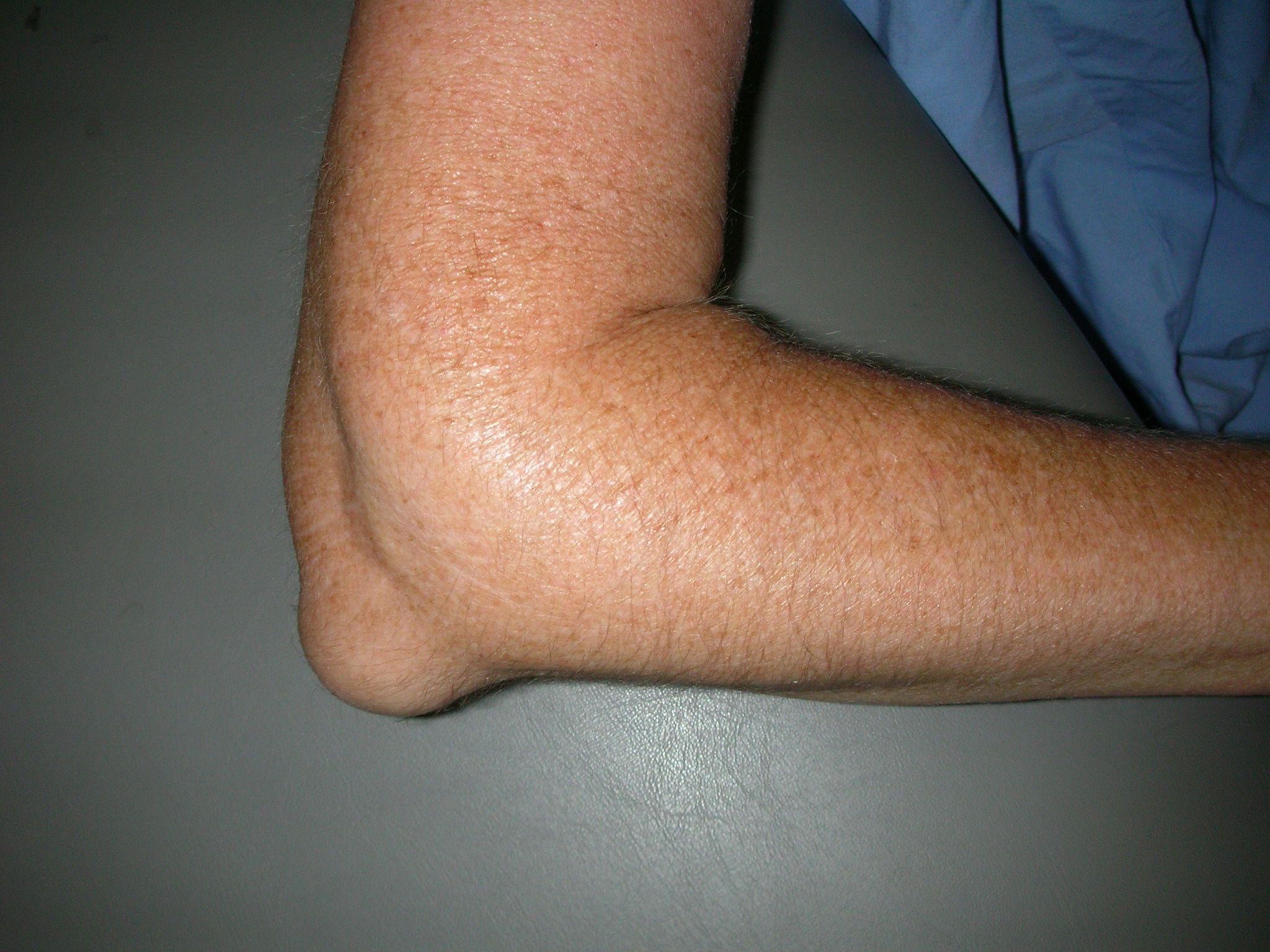
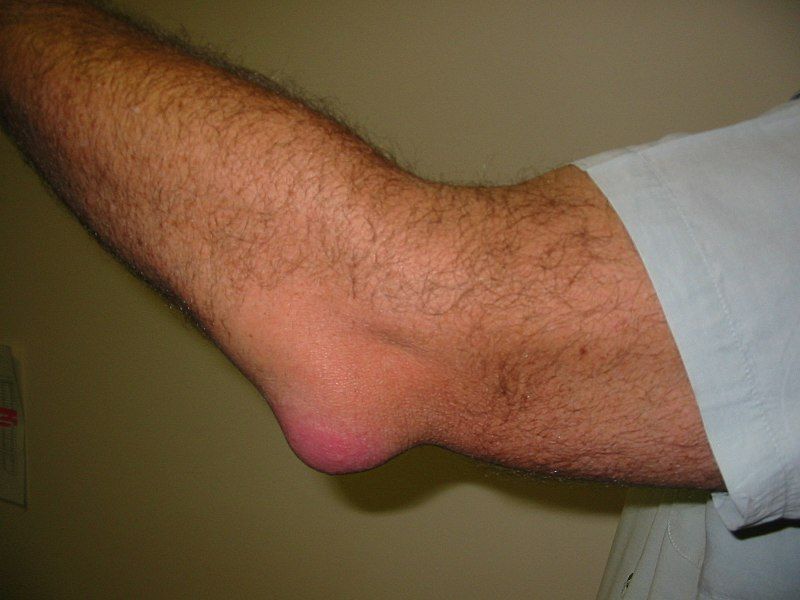
- Swelling and bruising — rapidly progressive posterior elbow haematoma
- Palpable gap — in displaced fractures, a defect can often be felt between the displaced fragment and the distal ulna
- Inability to extend the elbow against gravity — key clinical finding; extensor mechanism failure
- Skin tenting or lacerations — direct blow injuries may compromise skin; assess skin integrity carefully
- Ulnar nerve symptoms — tingling in ring and little fingers; nerve adjacent to medial side of olecranon
How is it Diagnosed?
- Clinical examination — can patient extend the elbow against gravity? (extensor mechanism test); palpable fracture gap; skin integrity; ulnar nerve function
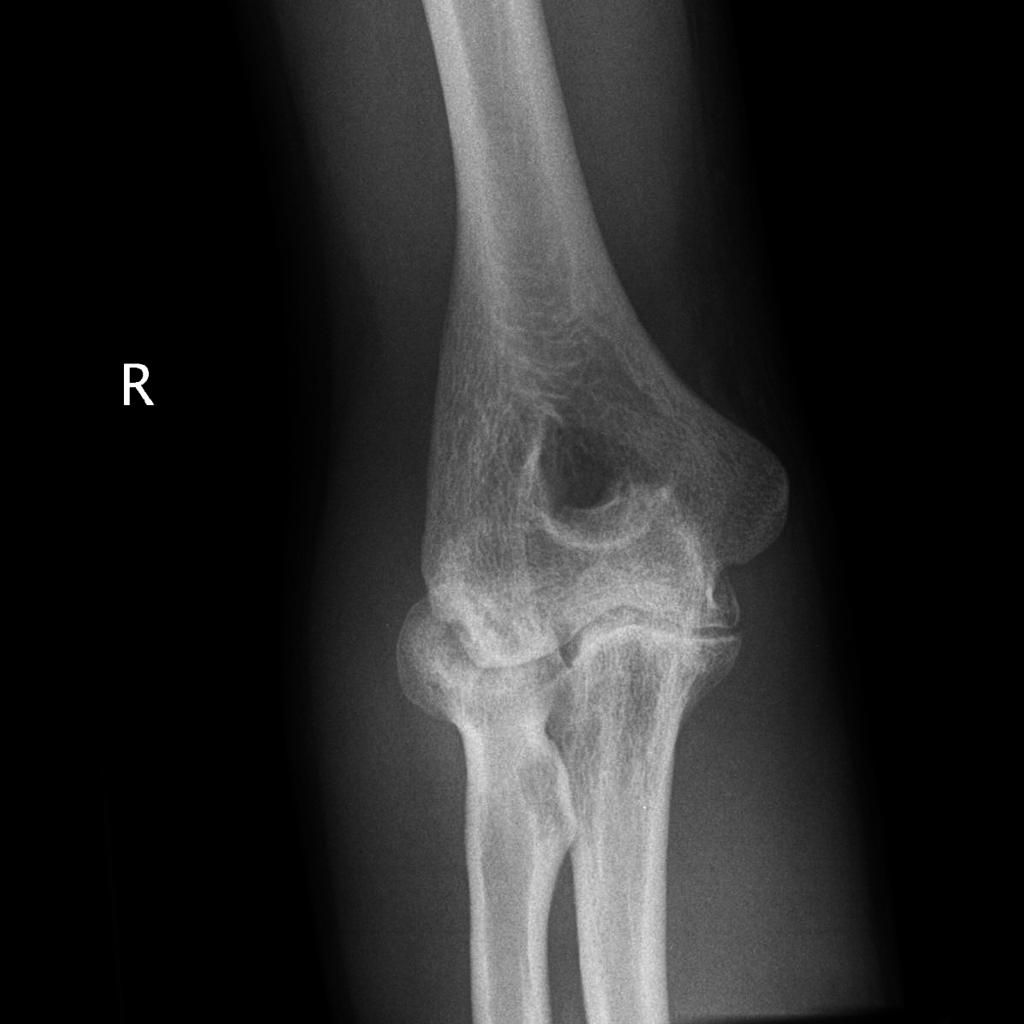
- Plain X-rays (AP + lateral) — lateral view most informative; Mayo Classification: Type I (non-displaced), Type II (stable displaced), Type III (unstable displaced)
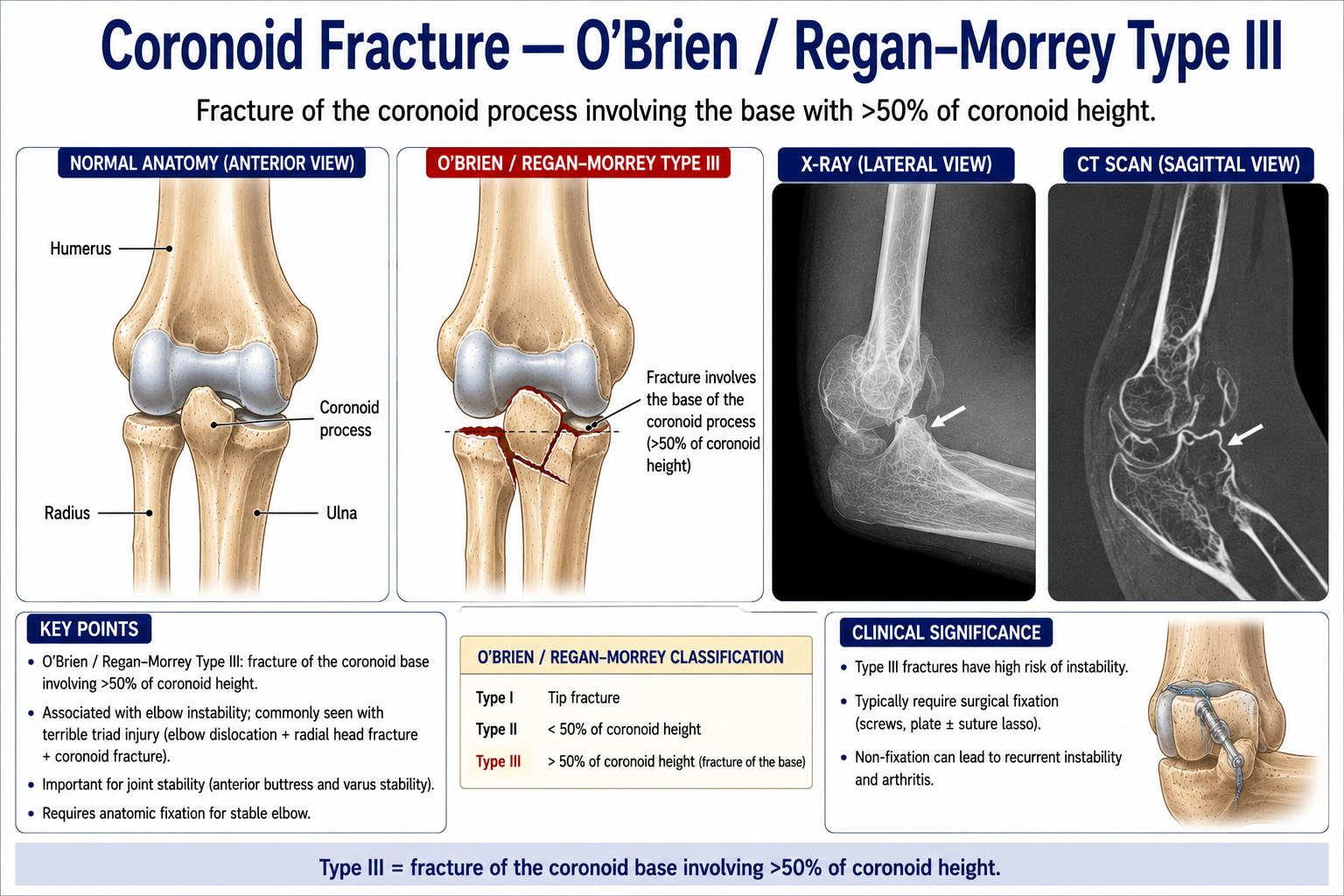
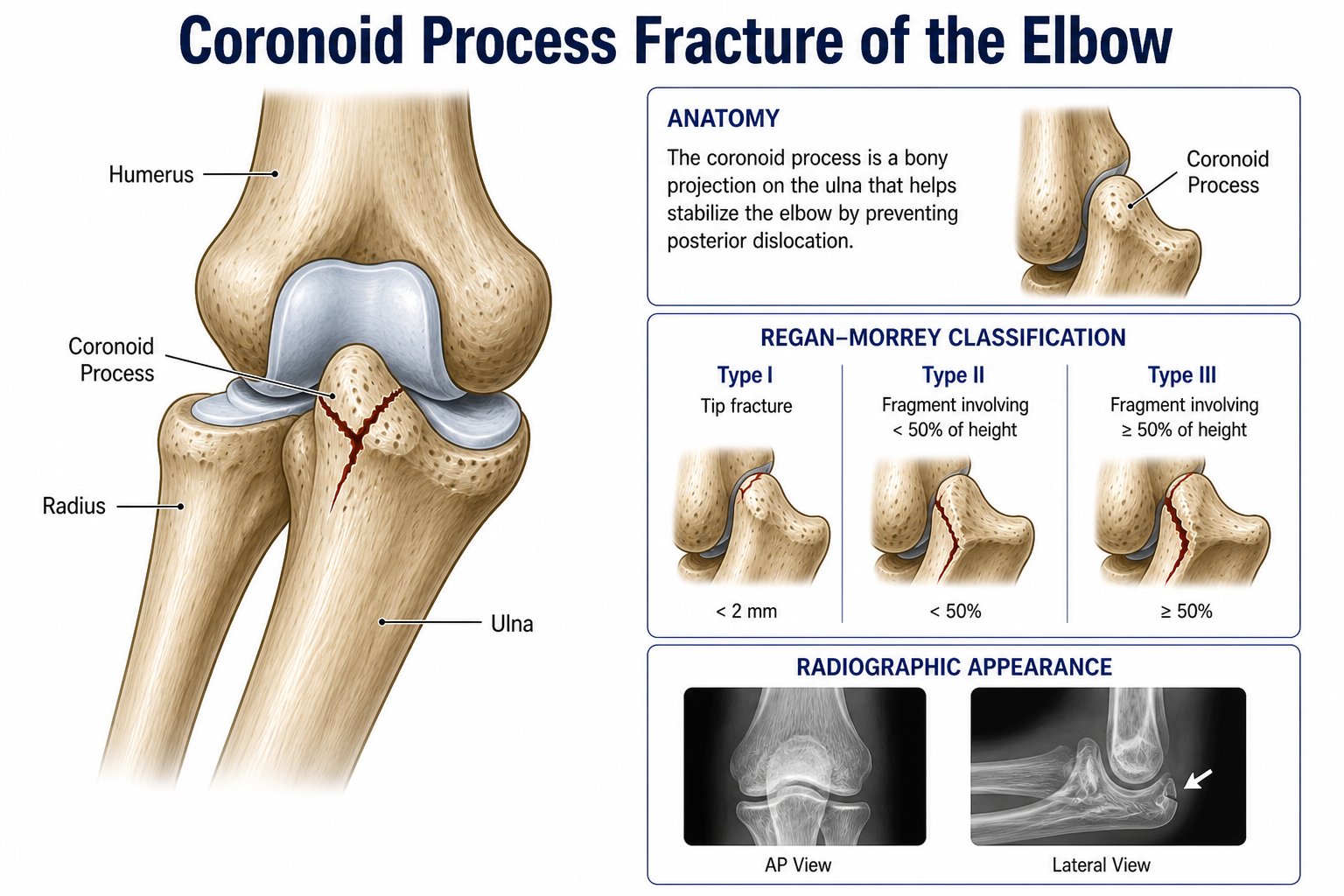
- CT scan — for comminuted fractures to plan fixation; identifies associated coronoid, radial head, or capitellum injuries
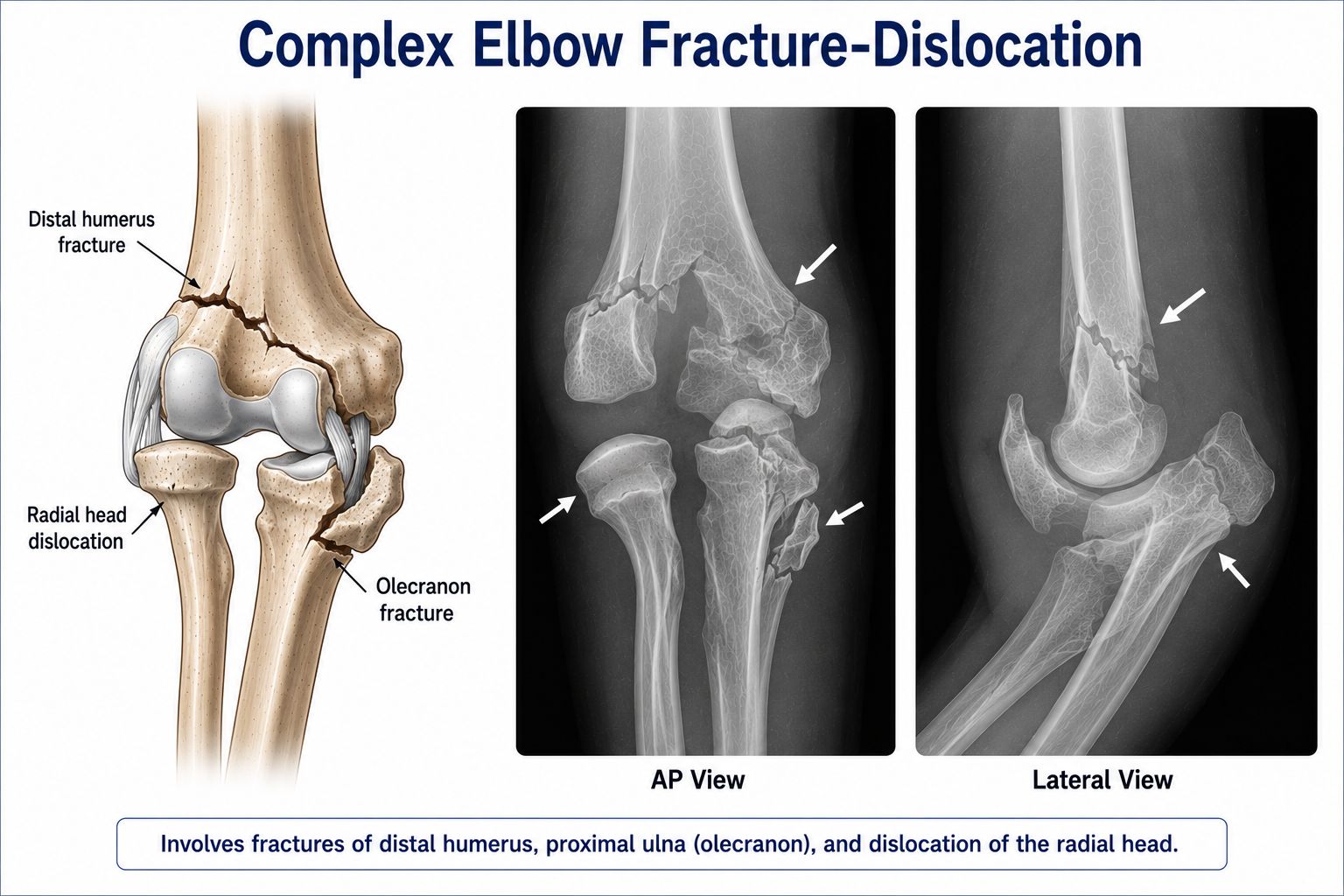
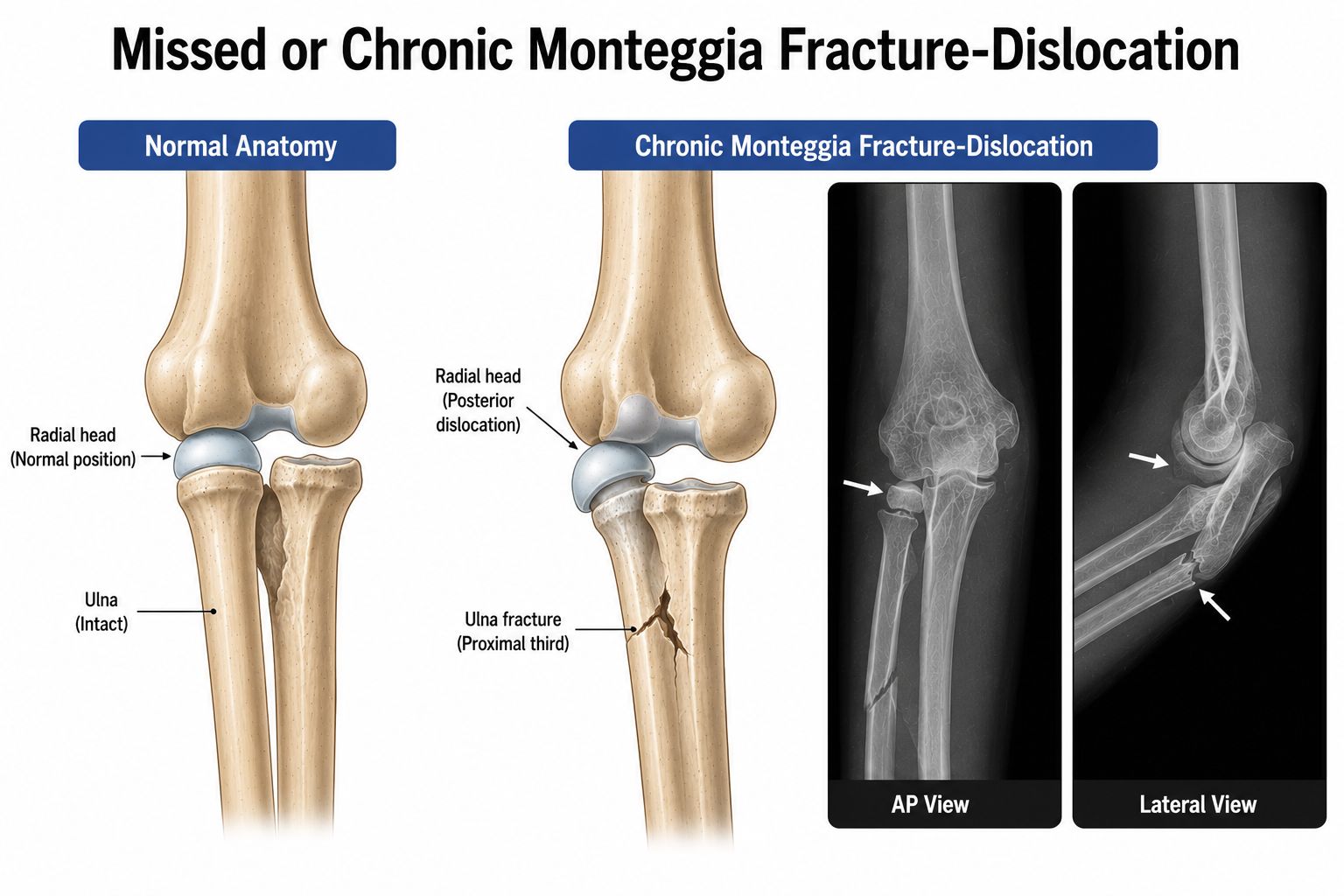
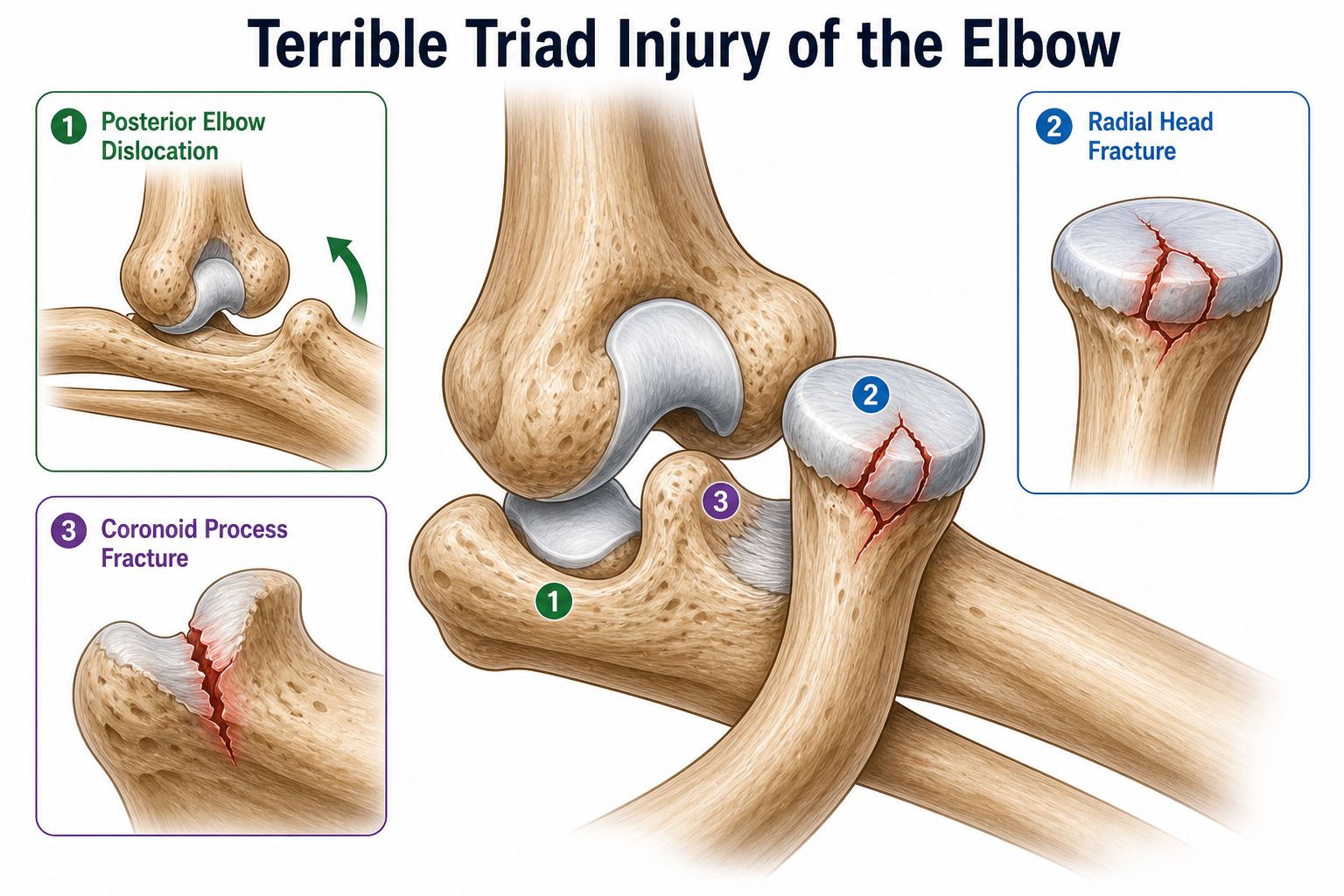
- Associated injuries — 10–20% have concurrent radial head, coronoid, or distal humerus injuries; assess carefully
Treatment Options
Treatment Type | Details |
Non-Operative (Non-Displaced) | Type I non-displaced: posterior splint in 90° flexion for 3 weeks; weekly X-ray; physiotherapy from week 3–4; full activity by 6–8 weeks |
ORIF — Tension Band Wiring (TBW) | For simple transverse or short oblique fractures in good bone; two K-wires + figure-of-8 wire; converts tensile to compressive force; effective and low-cost; high hardware removal rate (50–80%) due to prominent wires |
ORIF — Locking Plate (Pre-contoured) | Preferred for: comminuted fractures, oblique patterns, osteoporotic bone, fractures extending distal to the trochlear notch; lower hardware removal rate; anatomically pre-contoured |
Bone Graft | For fractures with bone loss or comminution; autograft or allograft; used with plate fixation |
Olecranon Excision + Triceps Reattachment | For elderly low-demand patients with severely comminuted fractures; excise small proximal fragment; reattach triceps through drill holes; avoids implant complications; good results for low-demand patients |
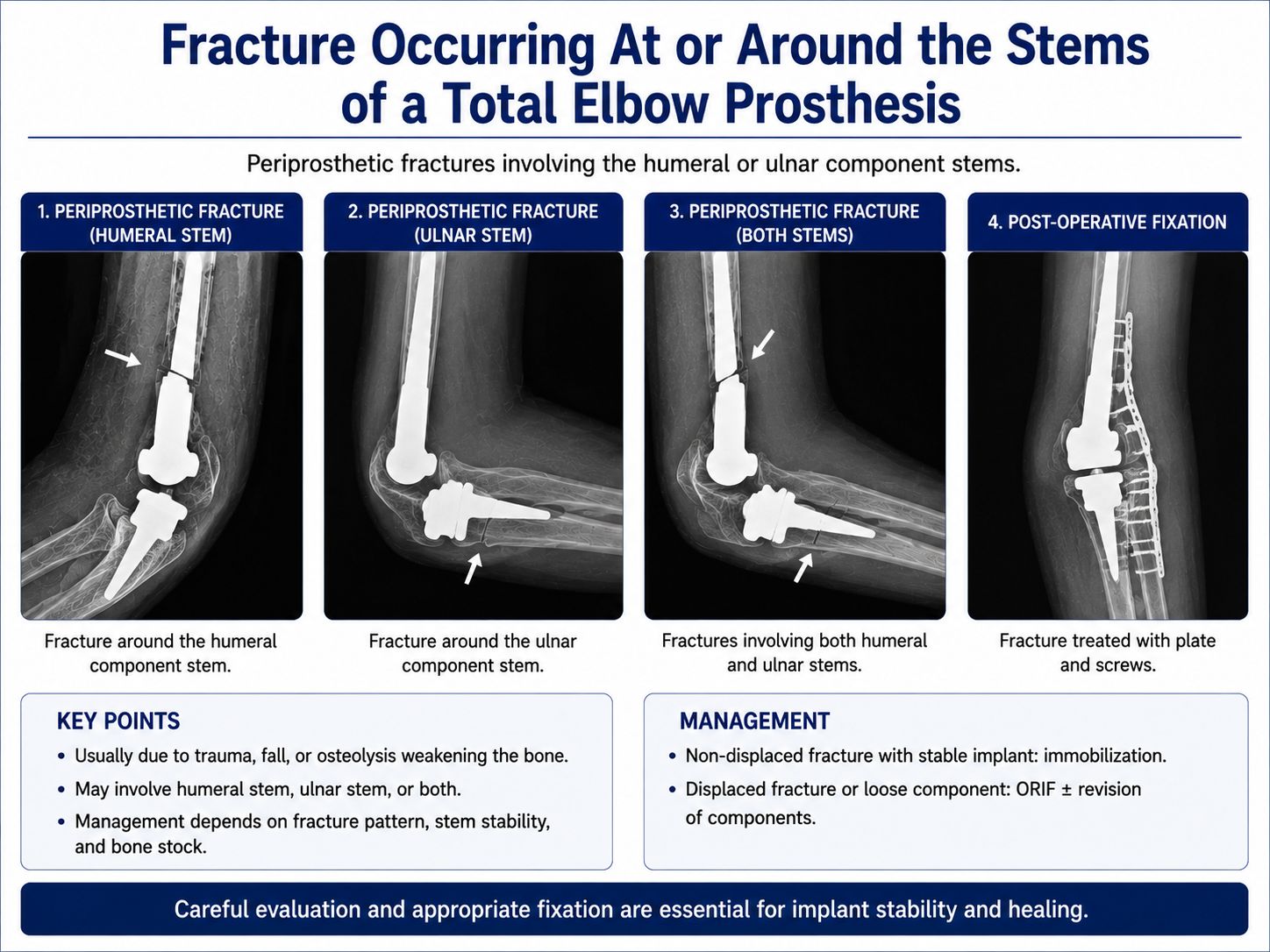
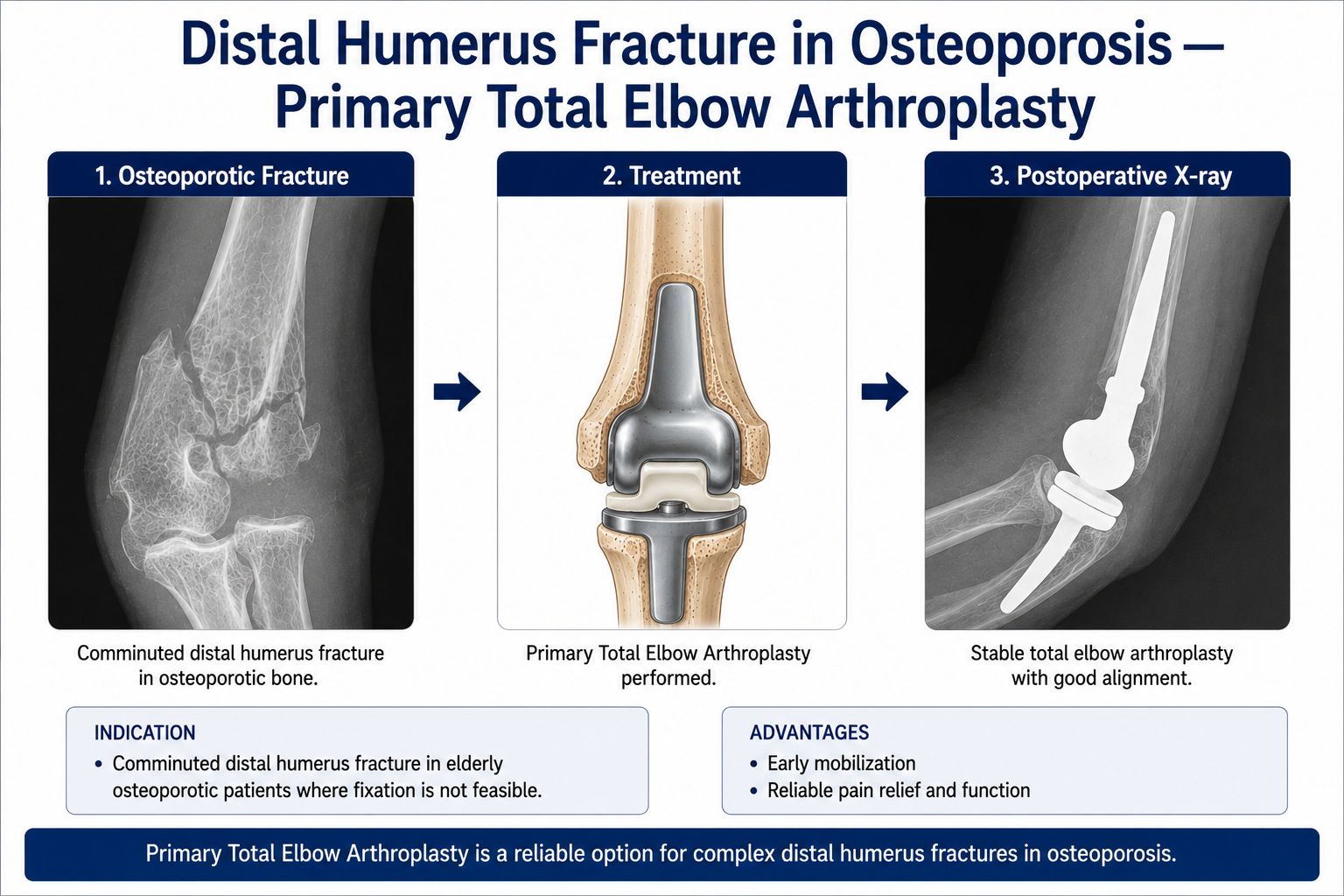
Elbow Arthroplasty (Very Elderly) | Severely comminuted fracture with pre-existing elbow arthritis in elderly; total elbow arthroplasty addresses both fracture and arthritis simultaneously; rare indication |
Recovery & Rehabilitation
- After TBW or locking plate ORIF: sling 48 hours; active-assisted motion from 48–72 hours; physiotherapy from week 1; full ROM targeted by 6 weeks; strengthening from week 6
- Return to work: office work 4–6 weeks; light manual work 8–12 weeks; heavy manual work 3–6 months
- Hardware removal after TBW: frequently needed at 12–18 months if hardware prominent; day-case procedure
- Expected outcome: >90% achieve good to excellent elbow function; full extension usually regained
- Complications: hardware prominence (most common with TBW); ulnar nerve irritation; wound breakdown over prominent hardware
Why choose Dr Senthilvelan?
Dr Senthilvelan performs the full range of olecranon fracture fixation techniques — tension band wiring, pre-contoured locking plate fixation, and olecranon excision with triceps repair — tailoring the approach to the fracture pattern, bone quality, and patient demands. Associated injuries are not missed and fixation is sufficiently stable to allow early post-operative physiotherapy.
Frequently Asked Questions
1. Can I move my elbow after olecranon fracture surgery?
Yes — one of the key goals of surgical fixation is to achieve stability sufficient to allow early movement. Active-assisted elbow flexion and extension typically begins within 48–72 hours of surgery, guided by the physiotherapist. Early motion is critical to prevent stiffness. Most patients regain a full functional arc within 6 weeks.
2. I have been told I need tension band wiring — what does this mean?
Tension band wiring (TBW) uses two parallel K-wires and a figure-of-8 stainless steel wire to fix the olecranon fracture. The clever biomechanics converts the pulling force of the triceps — which would normally distract the fracture — into a compressive force holding the fragments together. It is most effective for simple transverse fractures. The main downside is that K-wire tips can become prominent under the skin, requiring removal in many patients at 12–18 months.
3. Why does the K-wire hardware need to be removed after tension band wiring?
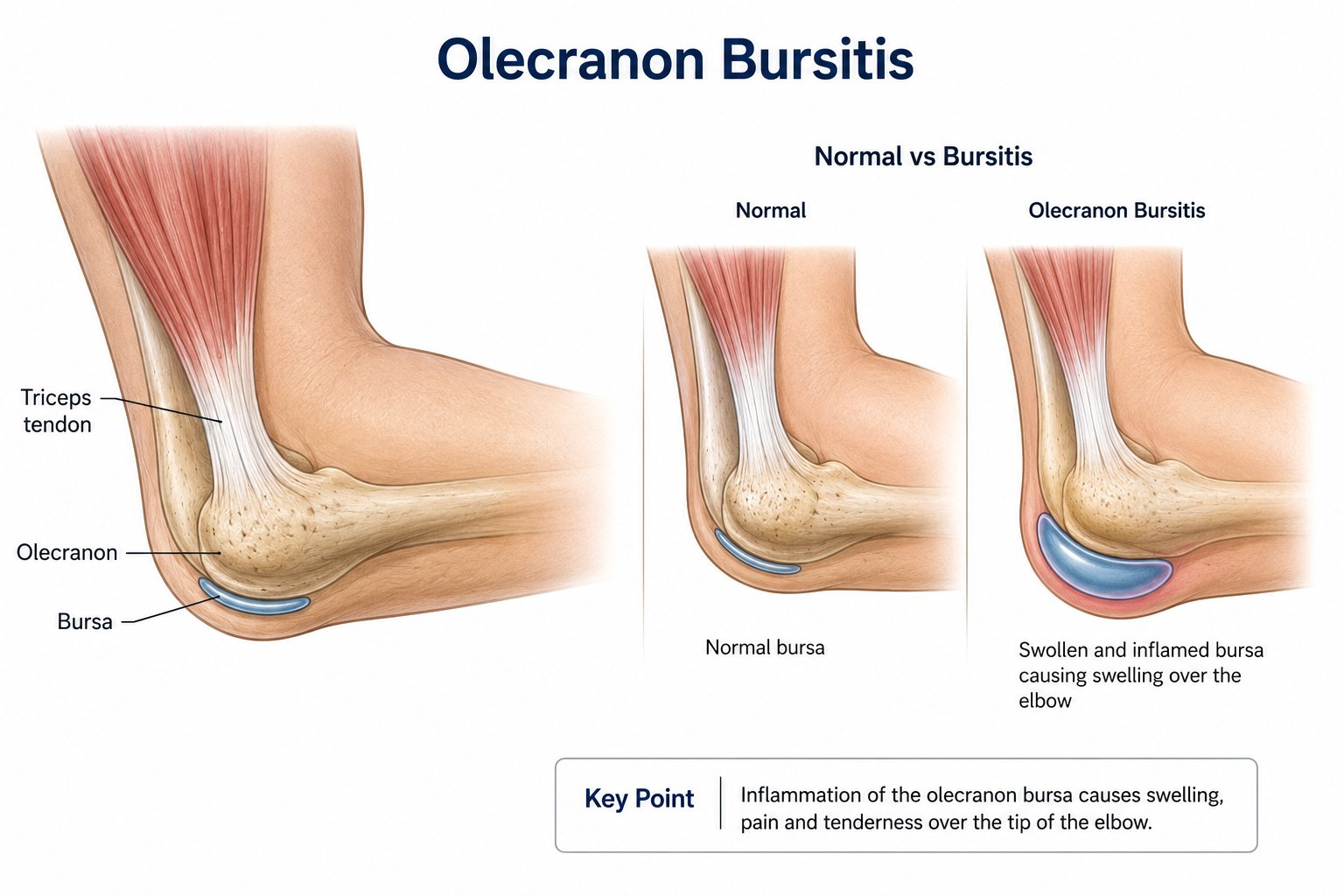
The K-wire tips of a TBW construct often migrate slightly to become prominent under the thin skin of the olecranon, causing pain, local irritation, and bursitis. Hardware removal is a day-case procedure performed once fracture healing is confirmed (typically 12–18 months post-op). Patients typically notice immediate improvement in local discomfort after removal.
4. I am 75 years old with a broken elbow — do I need surgery?
In elderly patients with displaced olecranon fractures, surgery is usually recommended if the extensor mechanism is disrupted — meaning you cannot straighten the elbow against gravity. Without surgical restoration, permanent weakness results. The surgical approach is tailored to age and activity: for a comminuted fracture in an elderly low-demand patient, olecranon excision with triceps reattachment is a simpler and very effective procedure.
5. How long until I can use my arm normally after olecranon fracture surgery?
Most patients can perform light daily activities within 2–4 weeks once initial pain has settled. Office work is possible by 4–6 weeks. Light manual tasks return at 8–12 weeks. Heavy lifting and repetitive work takes 3–6 months. Full strength returns over 3–6 months as the fracture heals and muscles strengthen through physiotherapy.