Overview
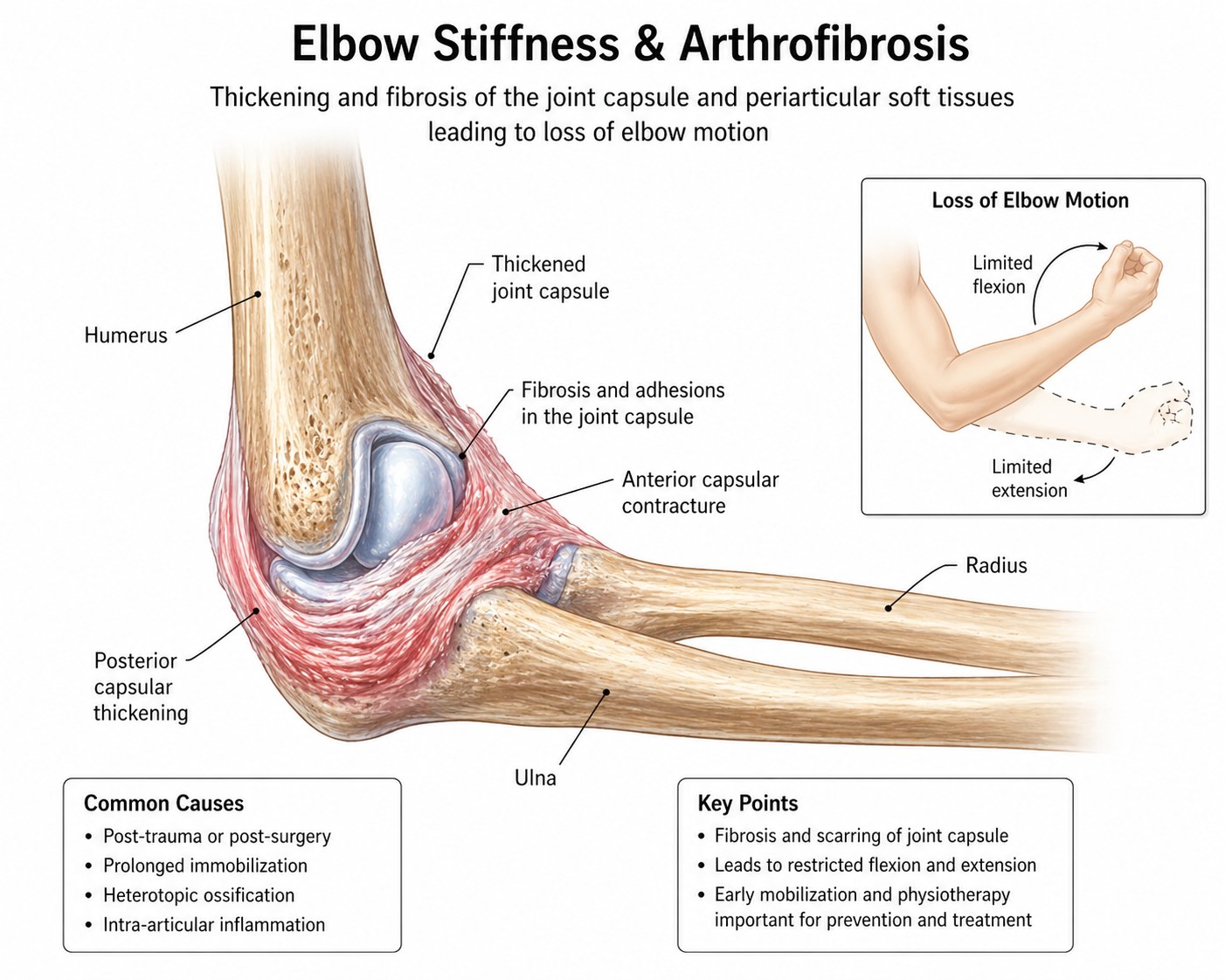
Elbow stiffness is the progressive loss of the normal range of motion — typically full extension (0°) to full flexion (145°) — due to contracture of the joint capsule, ligaments, or periarticular soft tissues. The elbow is the joint most prone to stiffness in the body because its tight capsule, multiple articulations, and proximity of neurovascular structures make it exquisitely sensitive to prolonged immobilisation and trauma.
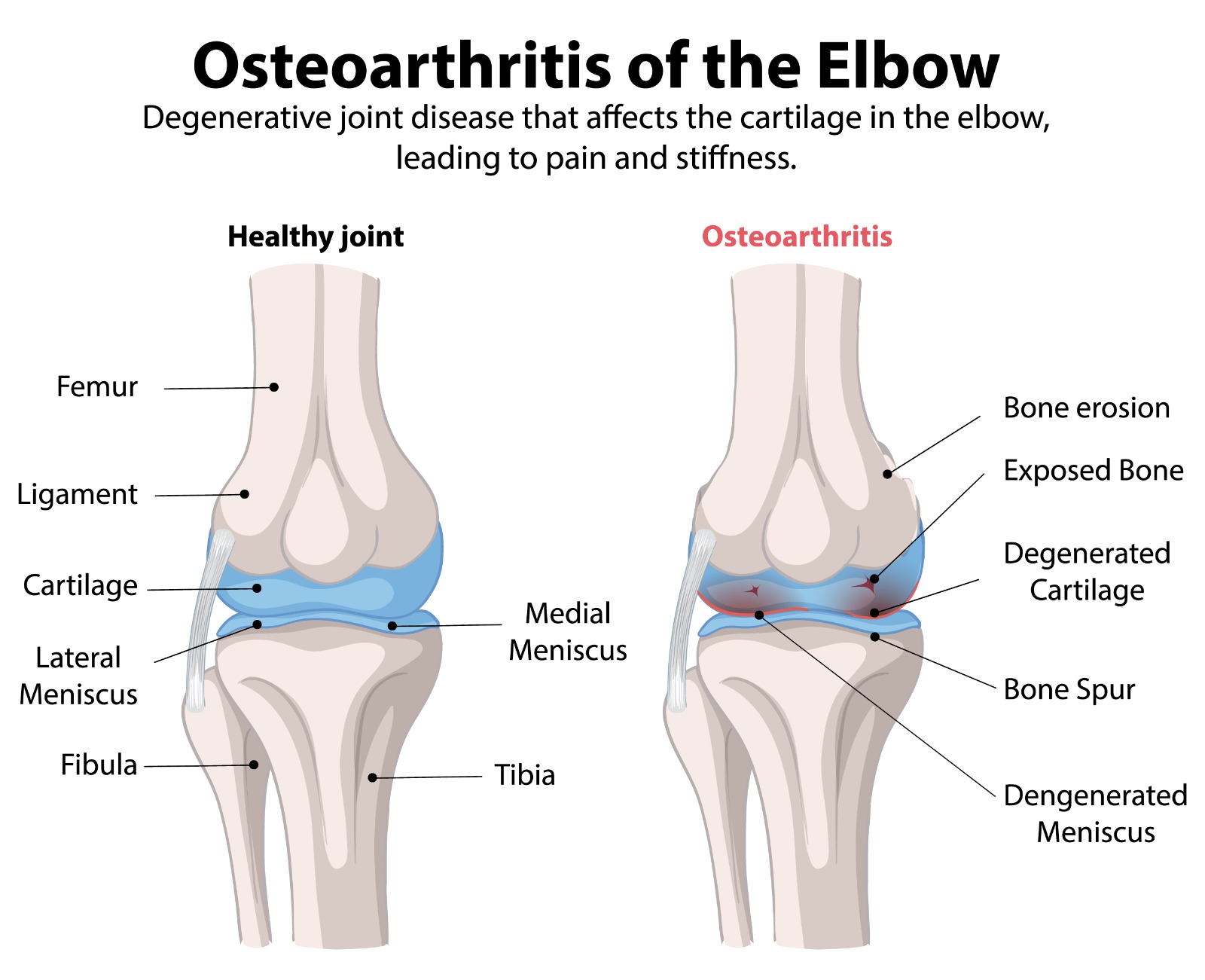
Stiffness is classified as intrinsic (intra-articular pathology — arthritic changes, loose bodies, adhesions) or extrinsic (extra-articular — capsular contracture, heterotopic ossification, skin scarring). Most post-traumatic cases involve both. The functional arc is 30–130° flexion-extension and 50–50° pronation-supination; losses outside this arc significantly impair daily activities.
The cornerstone of treatment is early, aggressive physiotherapy to maintain motion after any elbow injury or surgery. When stiffness is established, surgical capsular release — most commonly performed arthroscopically — can restore dramatic improvements in range of motion in carefully selected patients.
Quick Facts | Details |
Also Known As | Elbow Contracture, Elbow Arthrofibrosis, Post-traumatic Elbow Stiffness |
Affected Area | Anterior and posterior elbow capsule; collateral ligaments; periarticular soft tissues; may involve heterotopic bone |
Who It Affects | Anyone following elbow injury, surgery, prolonged immobilisation, burns, or neurological injury; the elbow is the joint with the highest rate of post-traumatic contracture of any joint in the body |
Prevalence | Post-traumatic elbow stiffness affects up to 60% of patients following elbow fracture-dislocation; clinically significant contracture requiring surgery occurs in approximately 20–30% |
Treatment | Physiotherapy and static progressive splinting first; arthroscopic capsular release for most cases; open release for severe contractures or heterotopic ossification |
Causes & Risk Factors
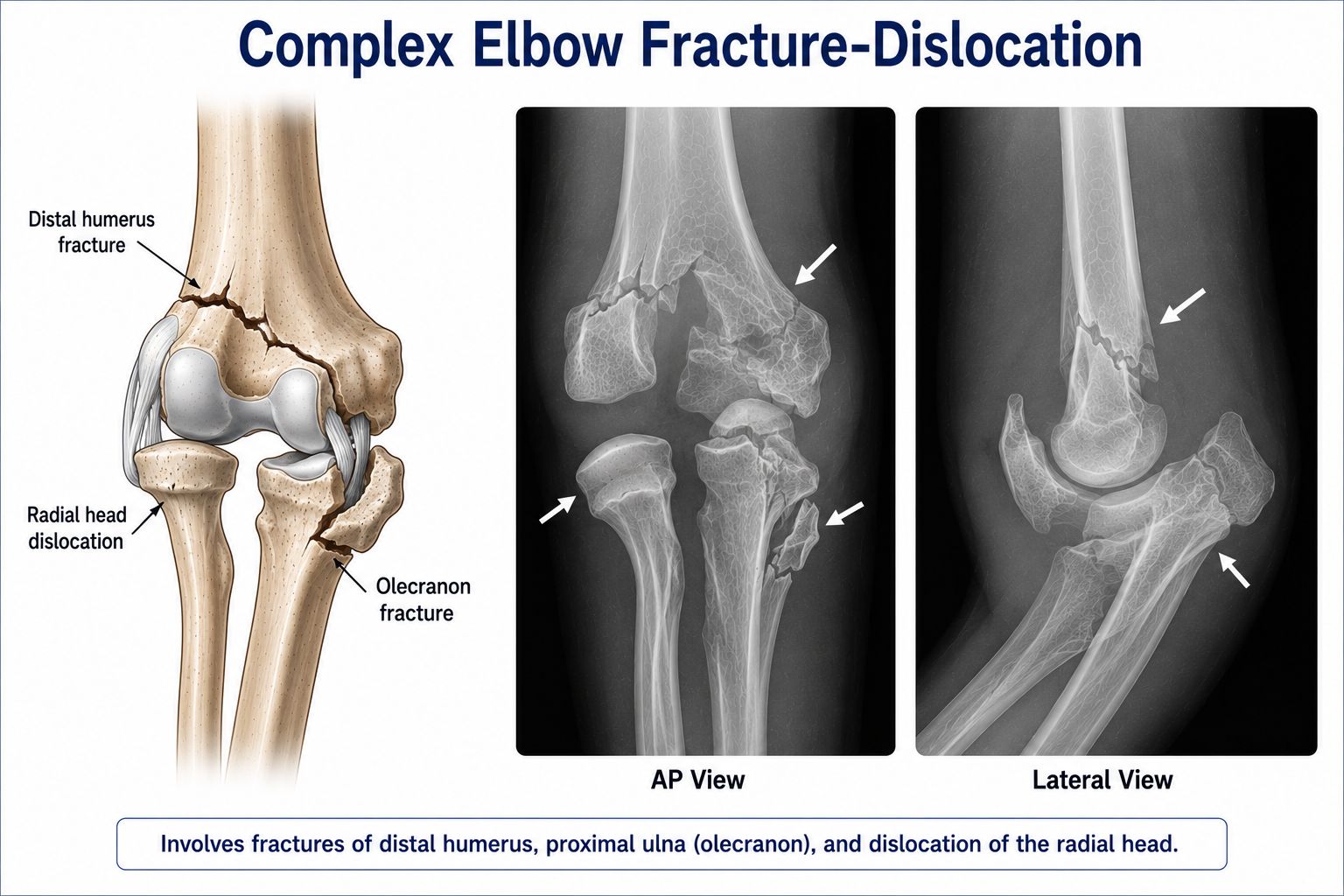
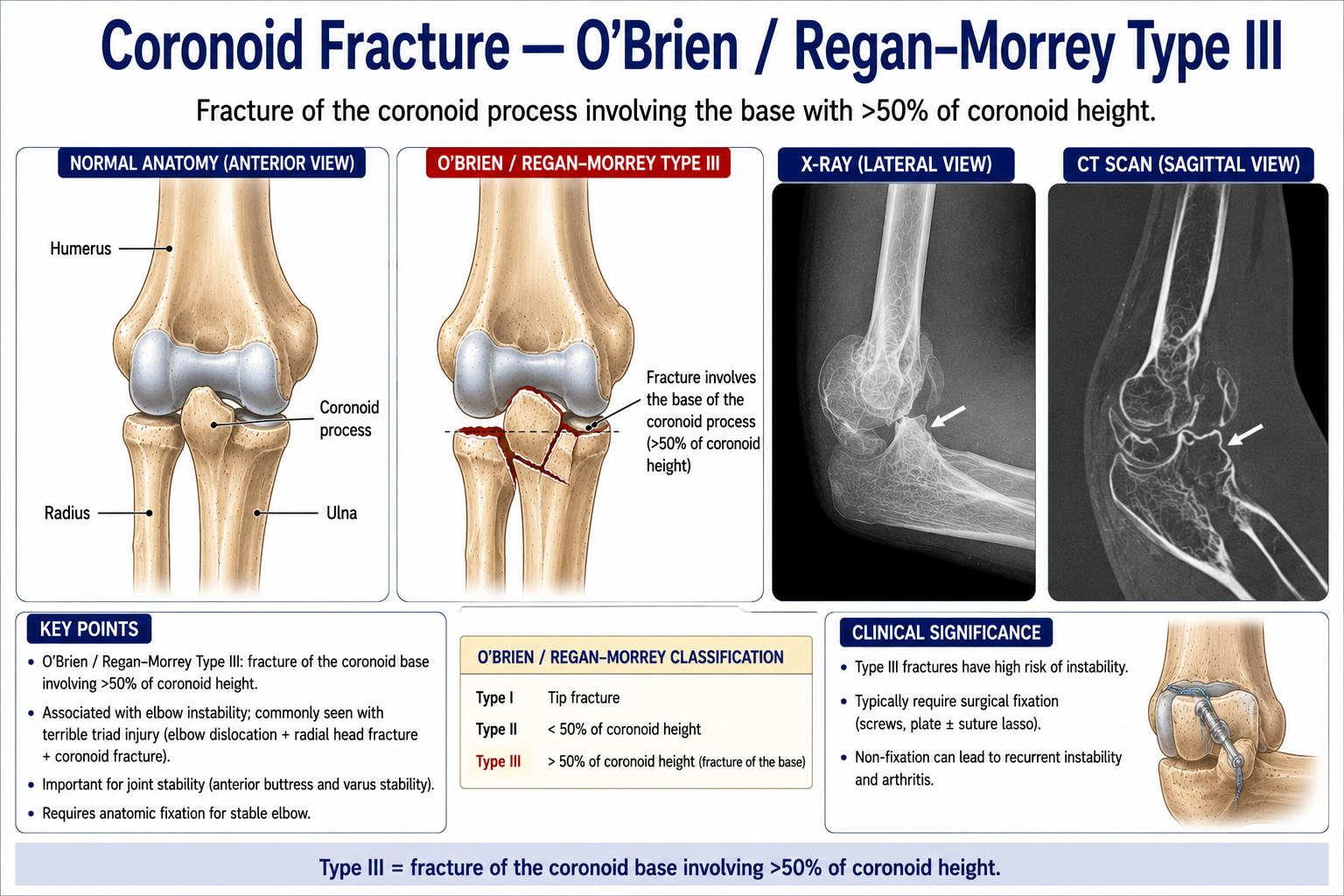
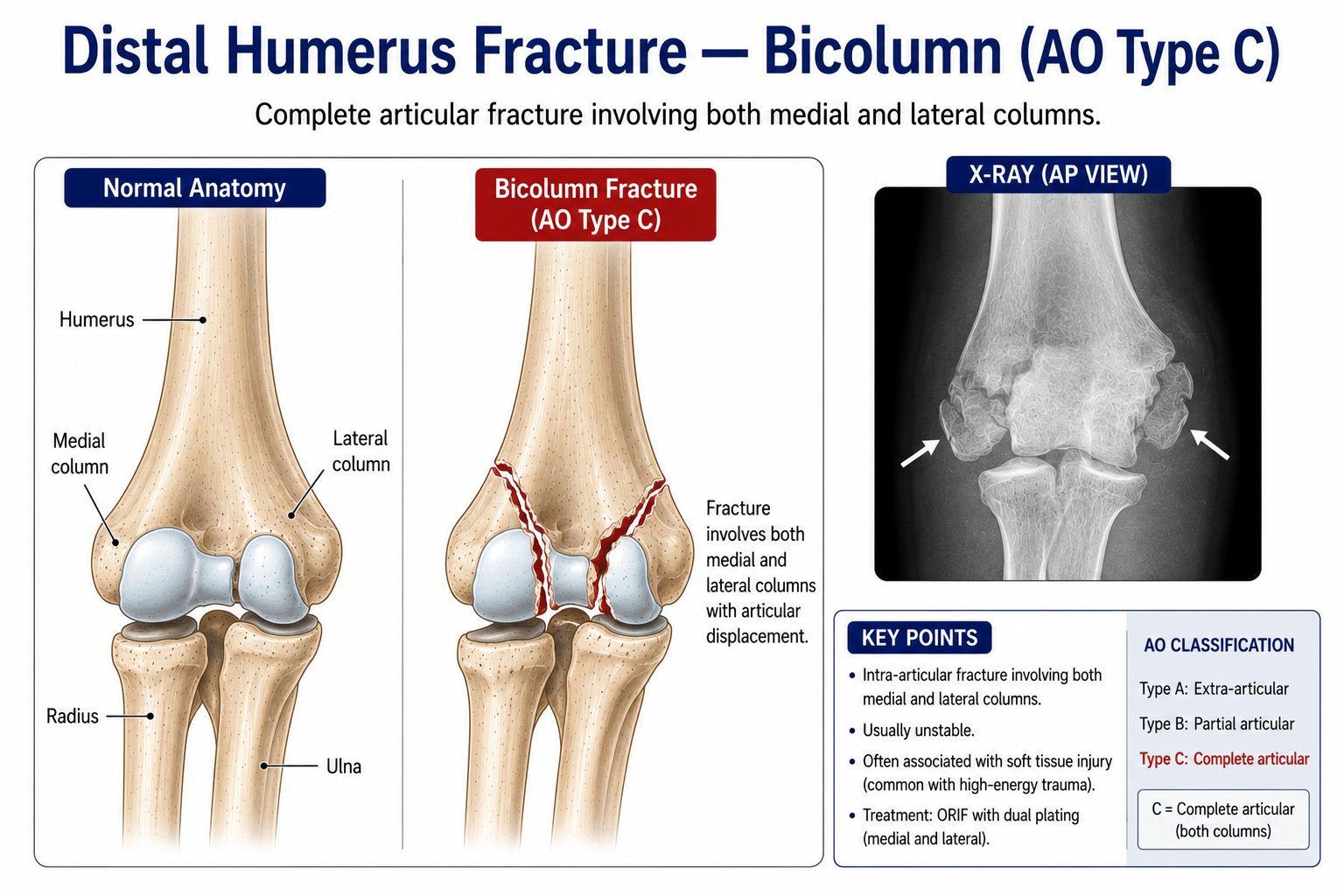
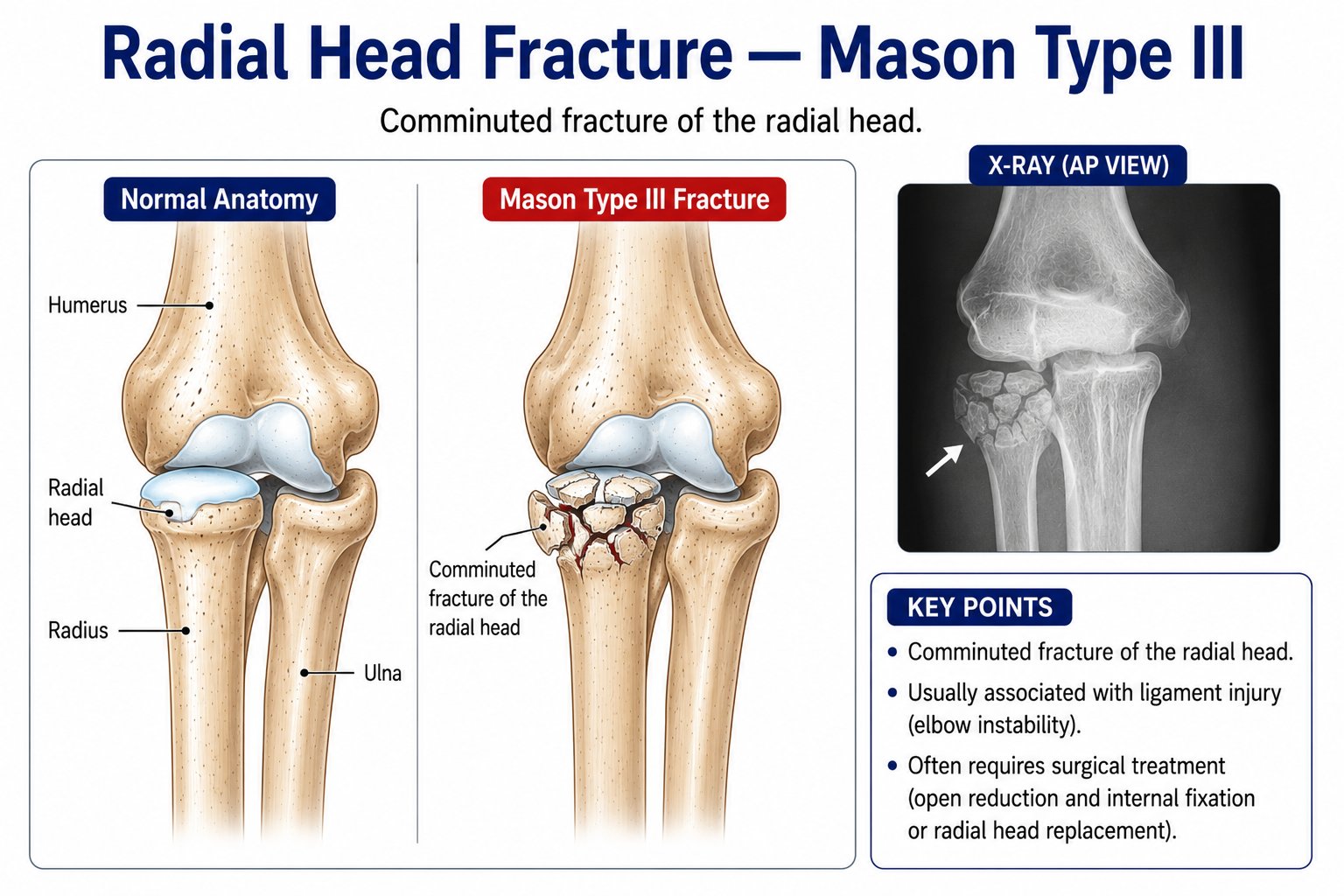
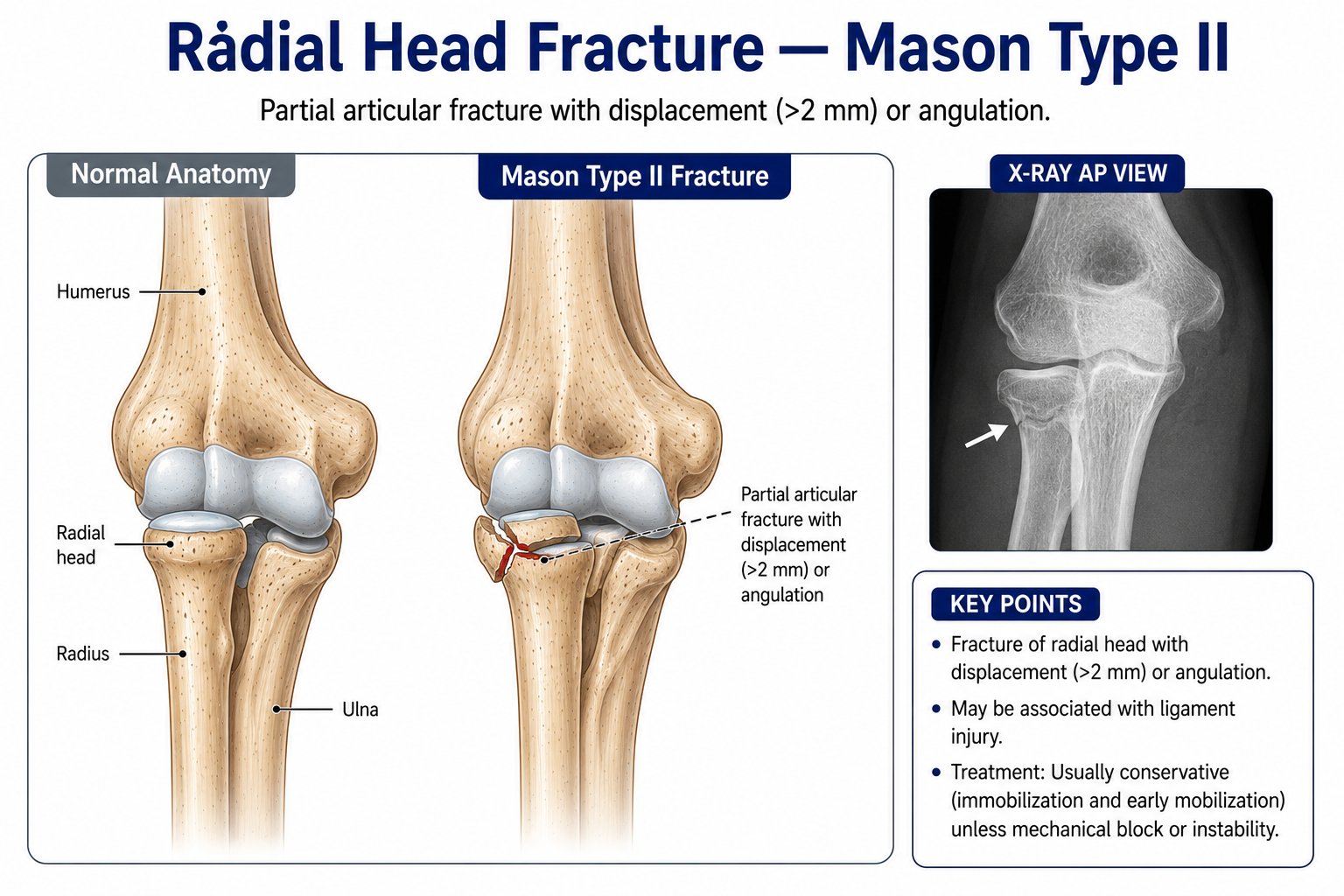
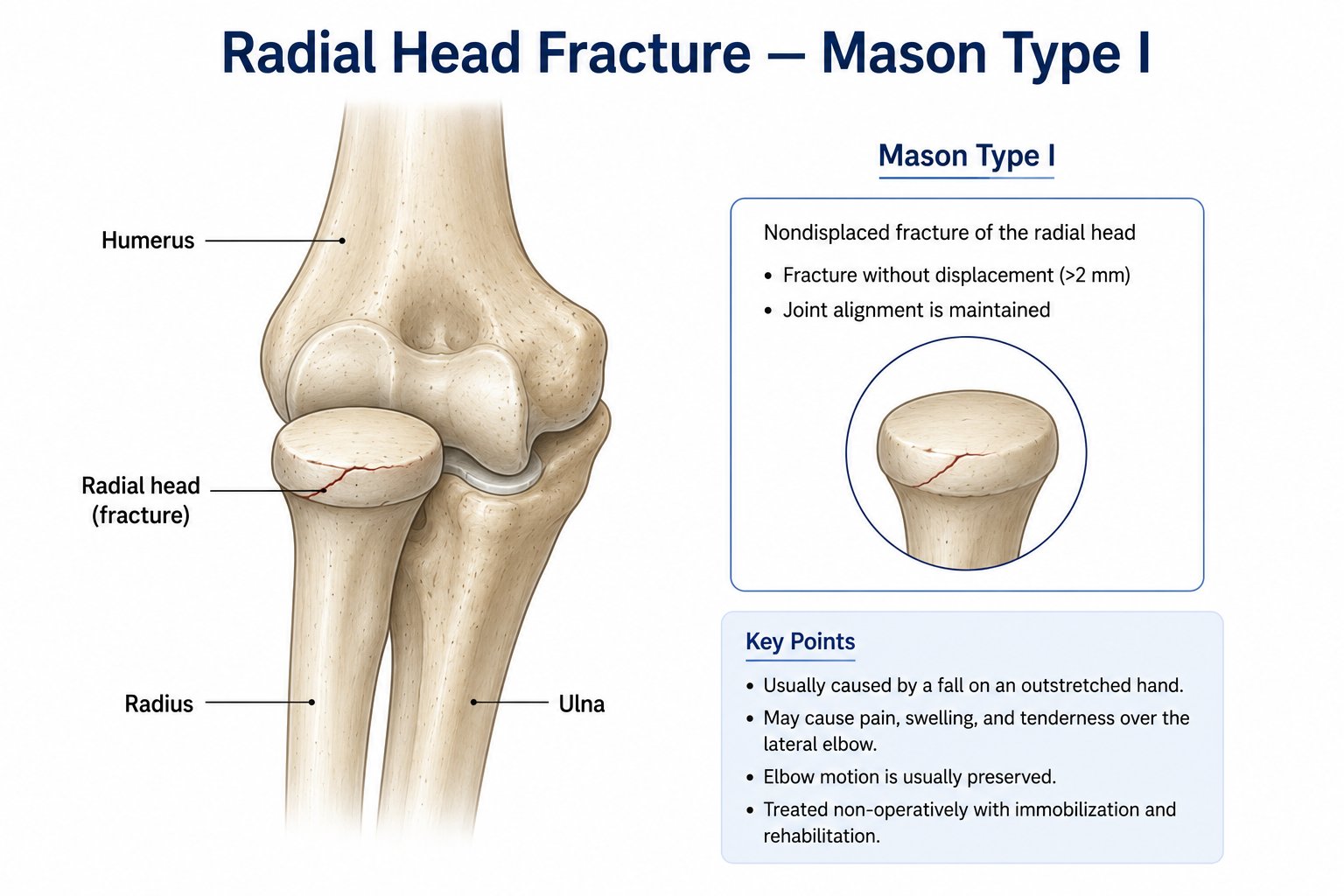
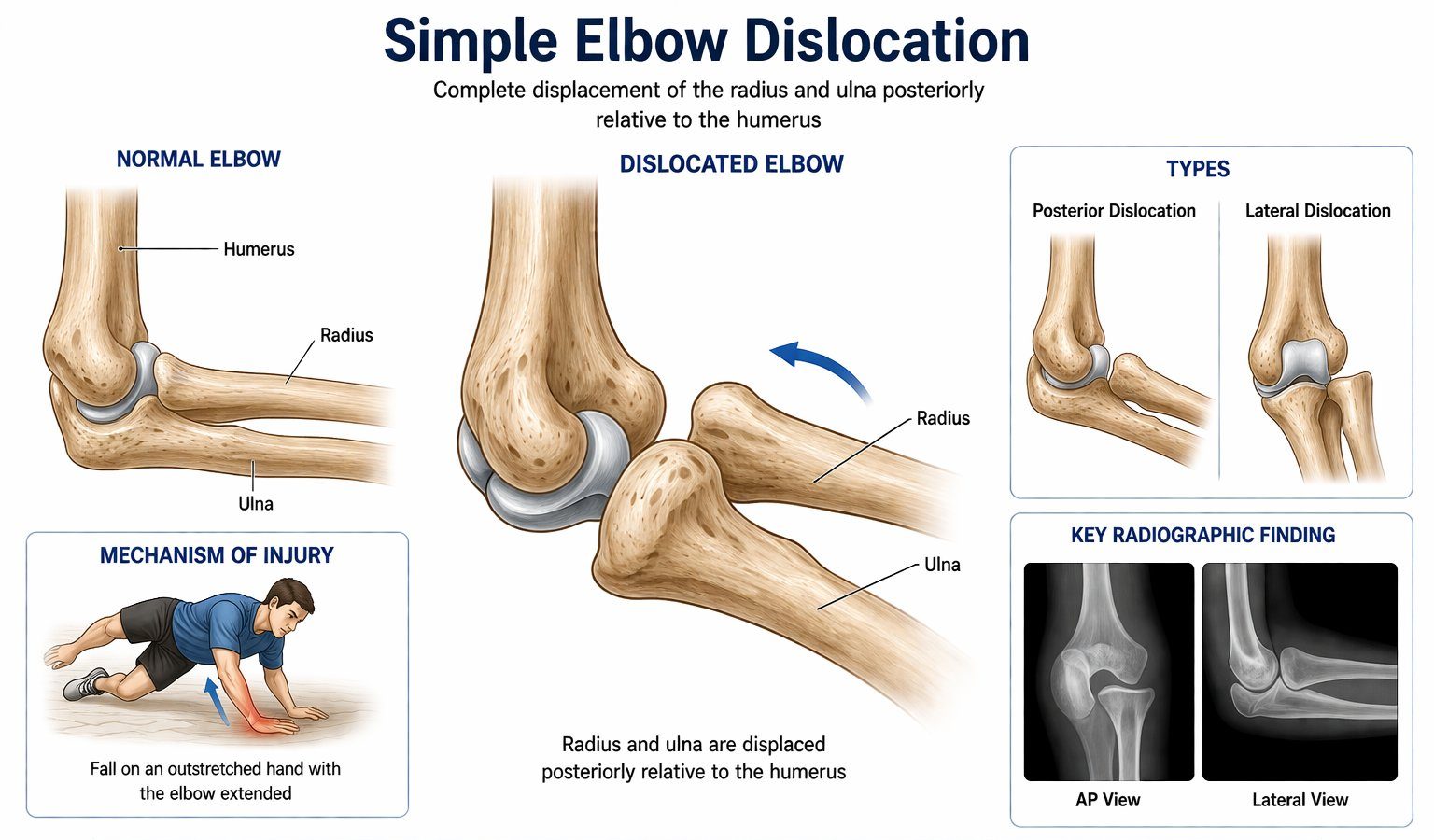
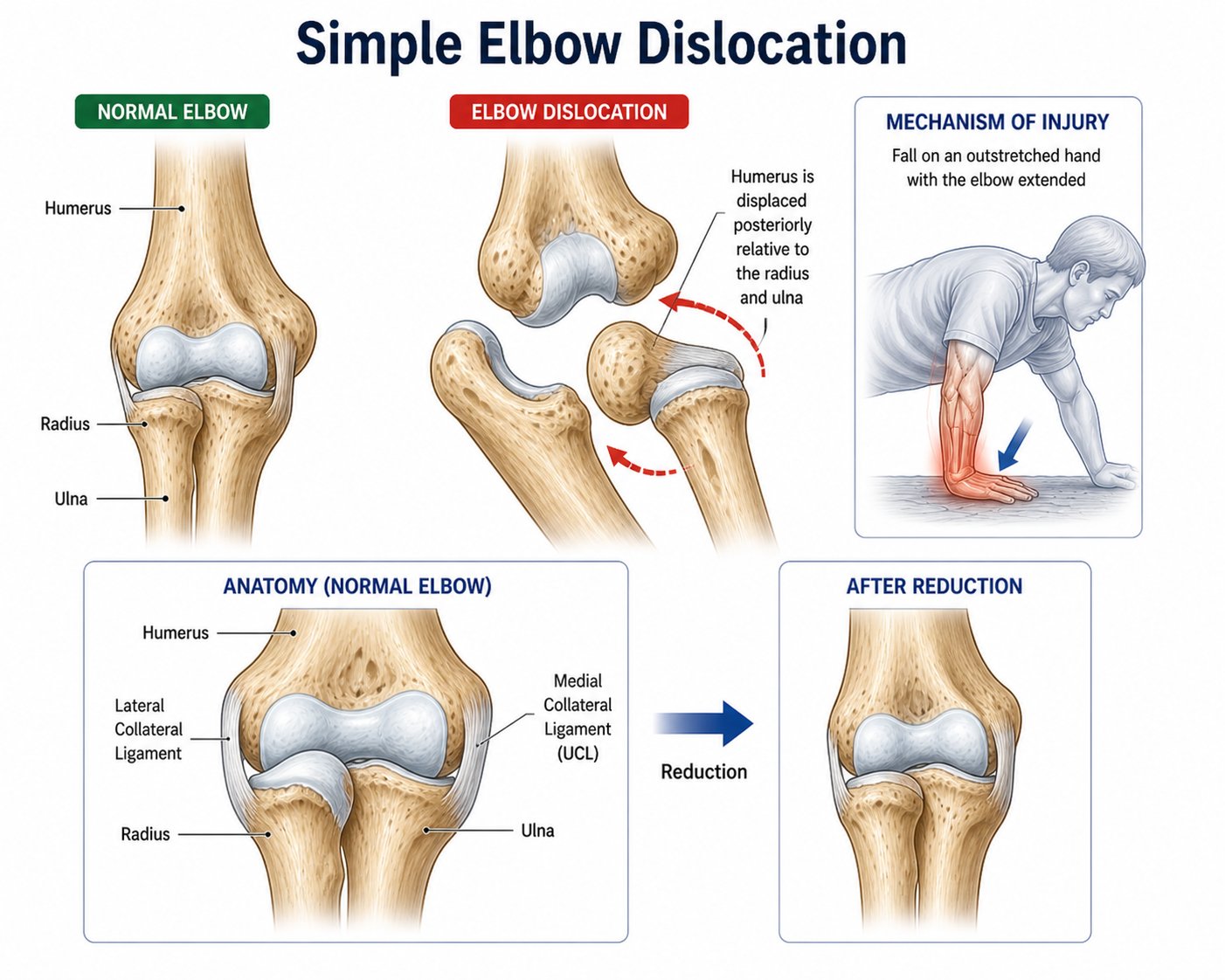
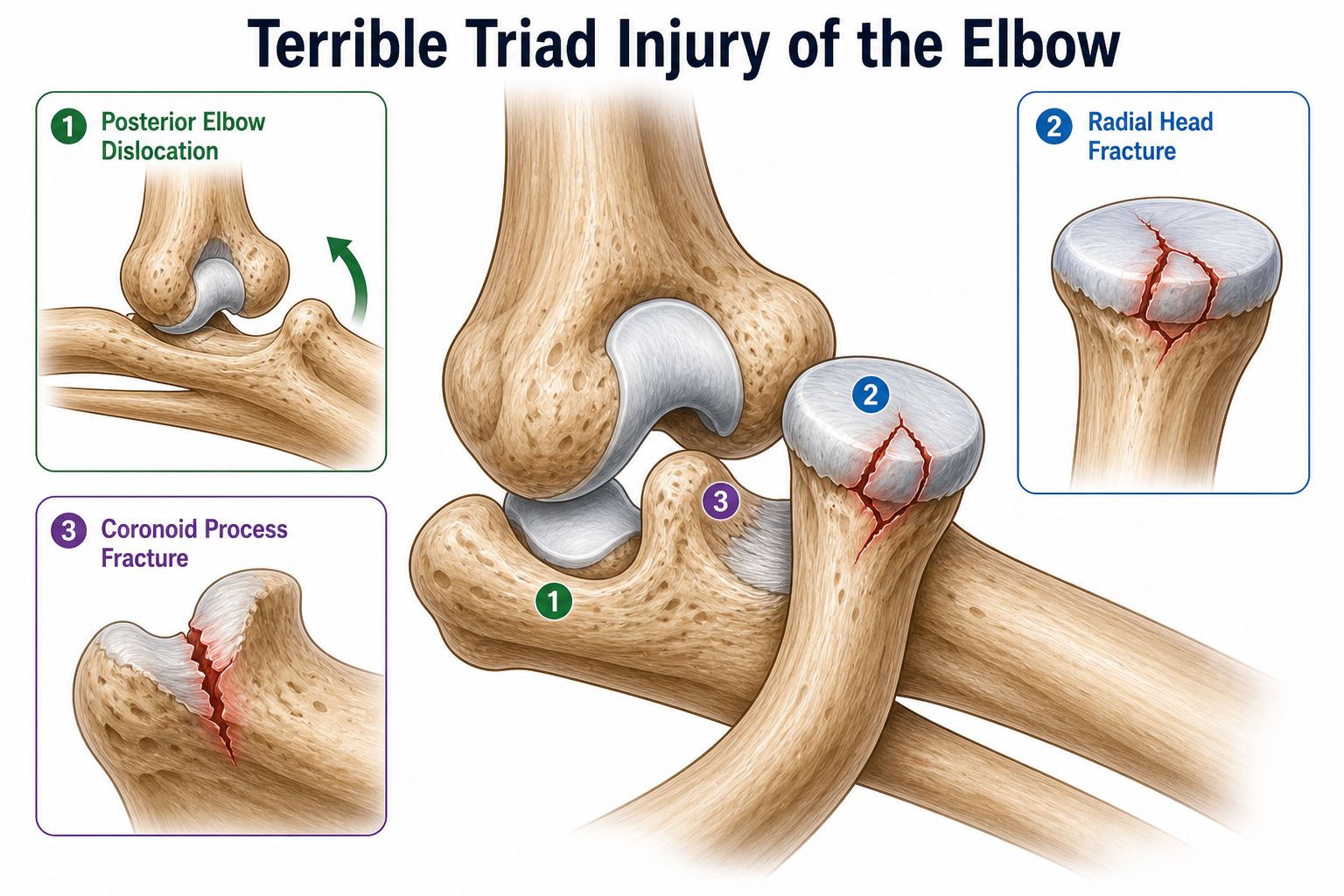
- Post-traumatic — most common: following distal humerus fractures, radial head fractures, terrible triad injuries, or elbow dislocation
- Prolonged immobilisation — any period of immobilisation >3 weeks significantly increases contracture risk; the capsule begins to shrink within days
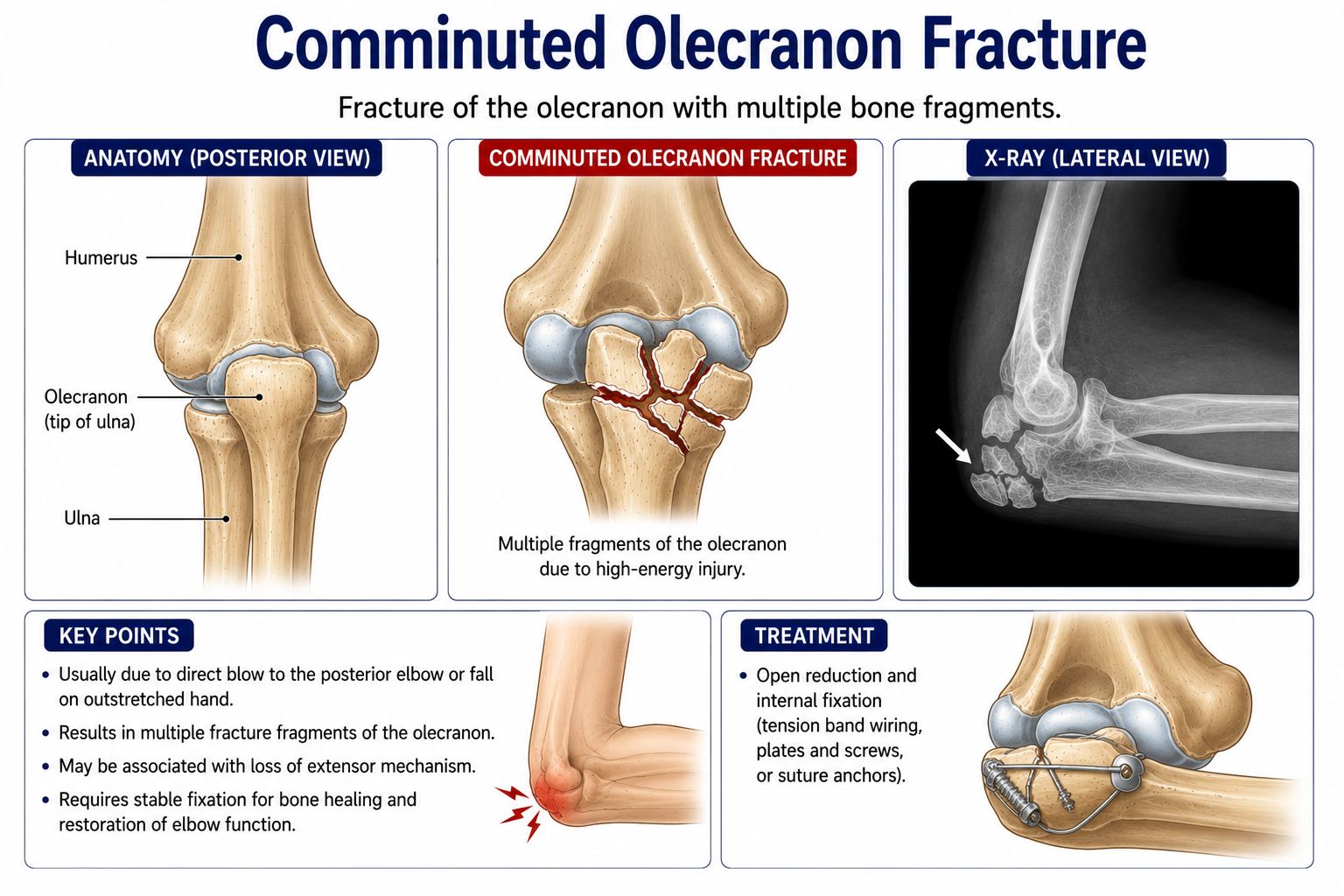
- Surgical trauma — following ORIF; hardware impingement; adhesion formation around implants
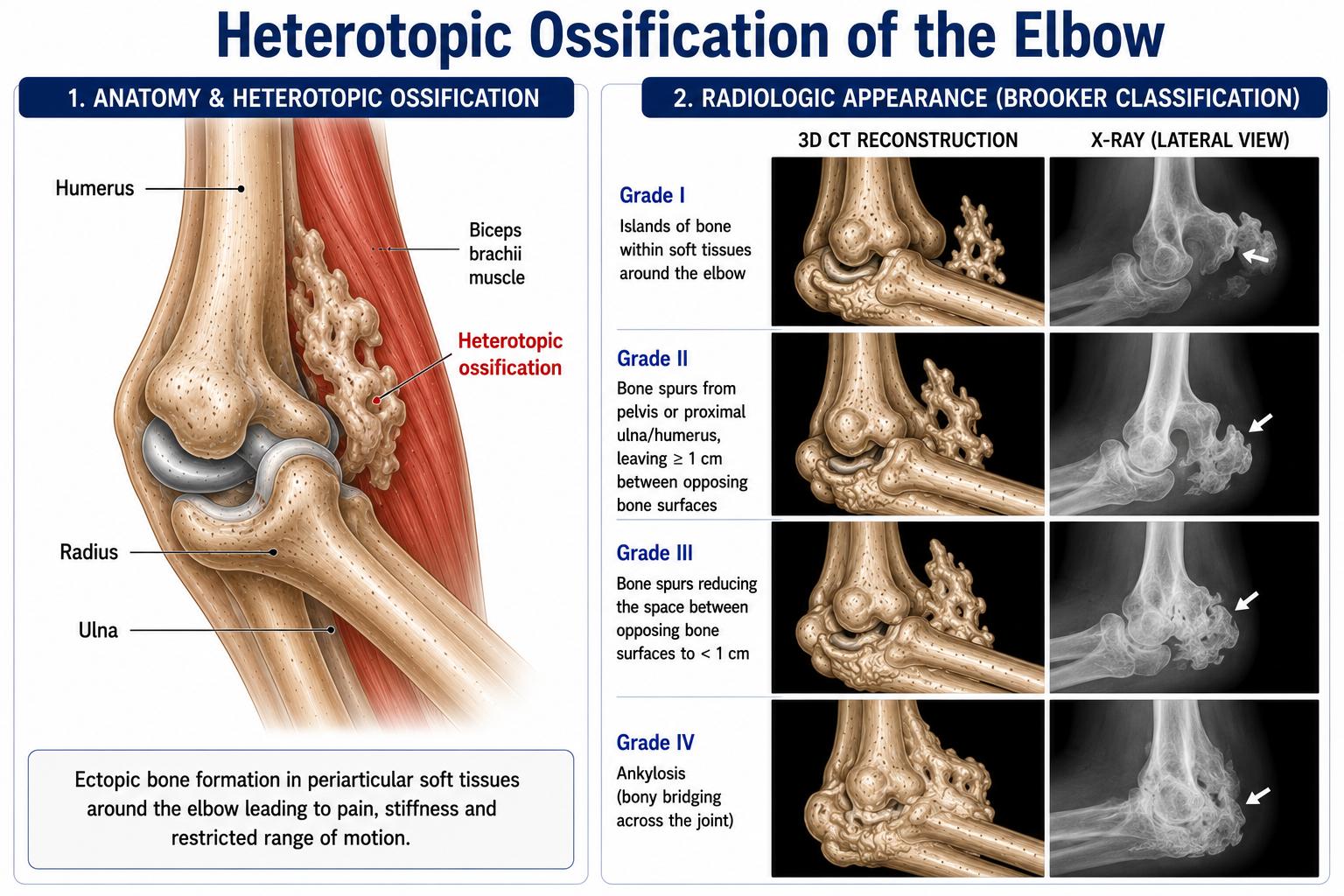
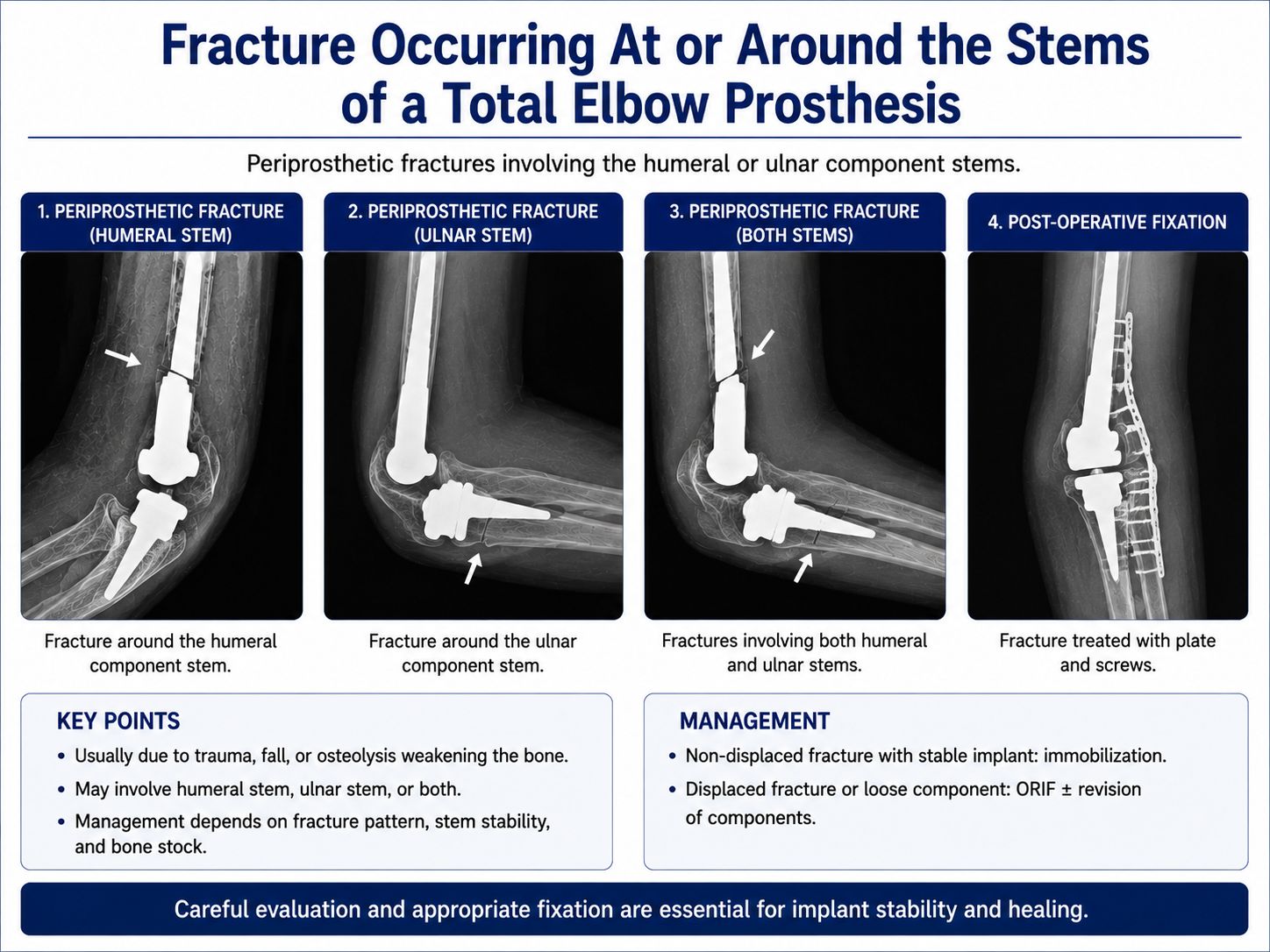
- Heterotopic ossification (HO) — pathological bone formation in periarticular soft tissues; occurs after 3–5% of elbow fractures
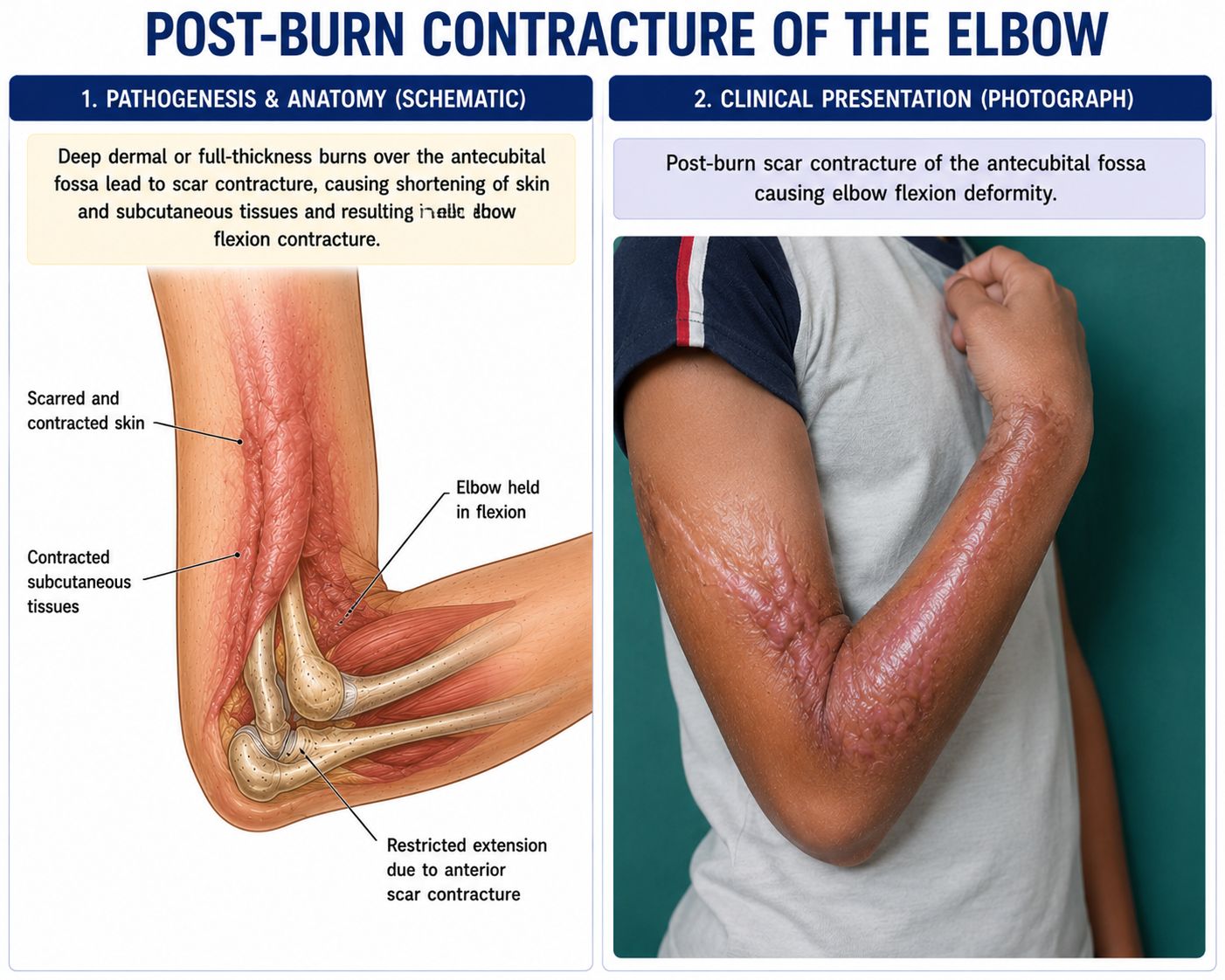
- Burns — thermal or chemical injury causes skin contracture and deep tissue scarring
- Septic arthritis — joint destruction and intra-articular adhesions following infection
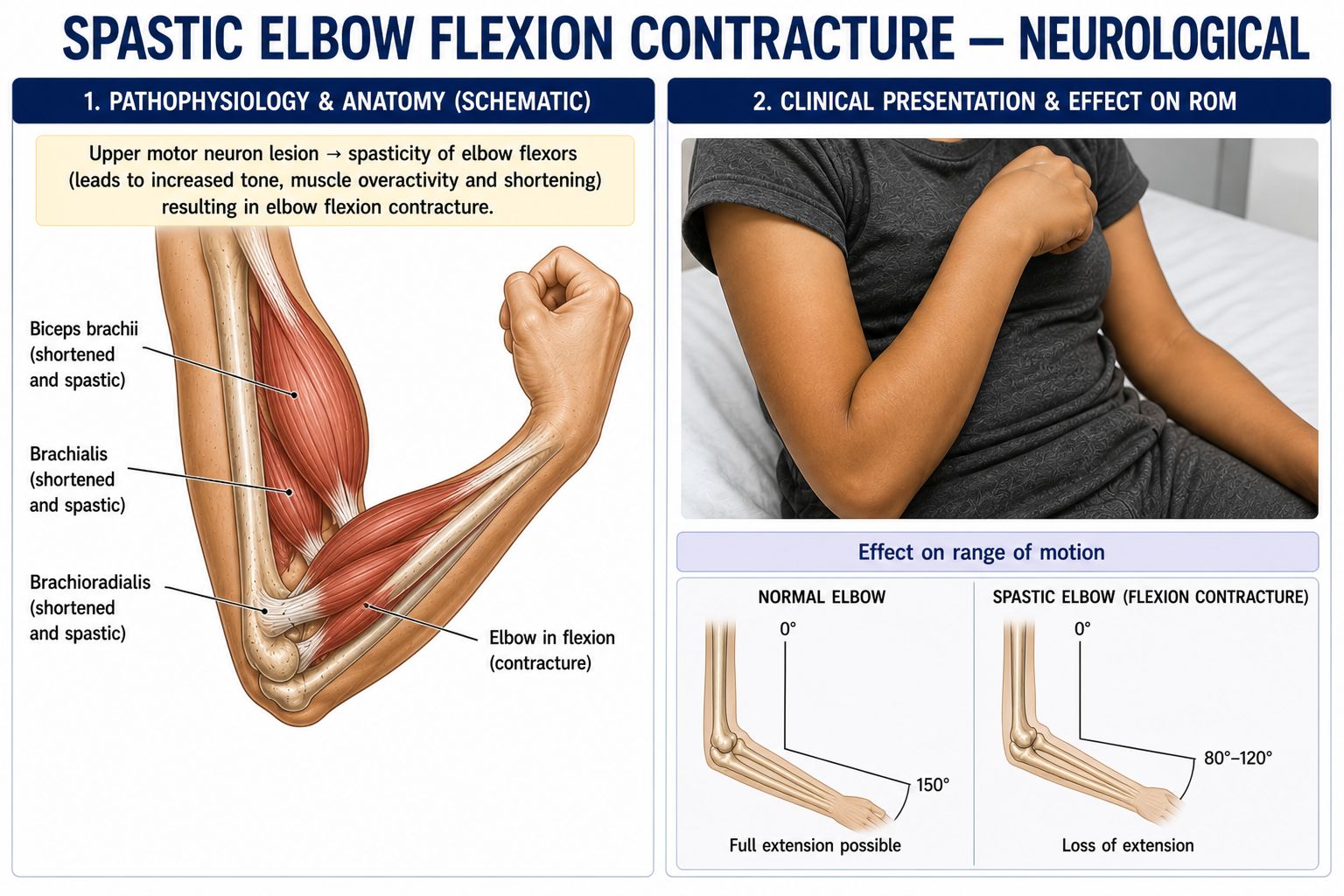
- Neurological injury — spasticity from stroke, cerebral palsy, or traumatic brain injury
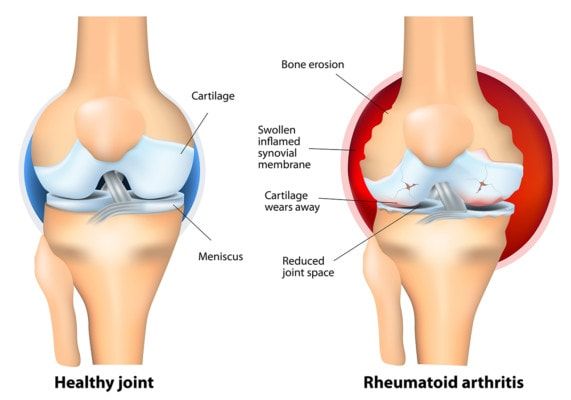
- Inflammatory arthritis — RA and reactive arthritis causing progressive stiffness from synovitis and pannus
Symptoms
- Loss of extension — flexion contracture; even 20–30° loss causes difficulty with reaching and pushing
- Loss of flexion — impairs ability to bring hand to face, eat, and perform self-care
- Loss of forearm rotation — restricted pronation and supination; impairs palm-up or palm-down tasks
- Pain at extremes of available movement — hard or firm block to movement
- Functional impairment — difficulty driving, personal hygiene, eating, dressing
- Mechanical symptoms — if concurrent loose bodies or osteophytes present
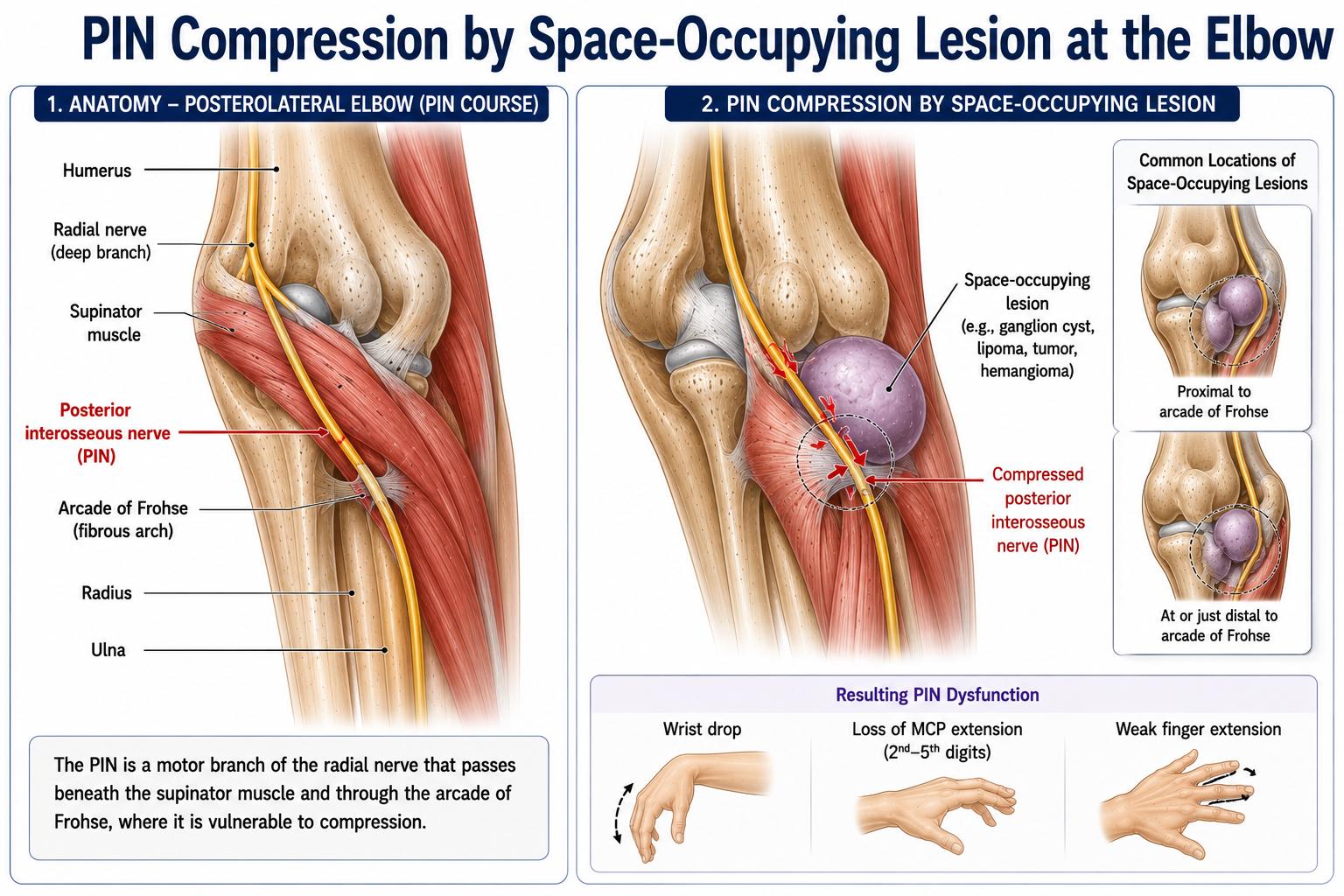
- Ulnar nerve tingling in ring and little fingers if medial structures involved in contracture
How is it Diagnosed?
- Clinical examination — precise goniometric ROM measurement; soft versus hard end-feel; neurological assessment
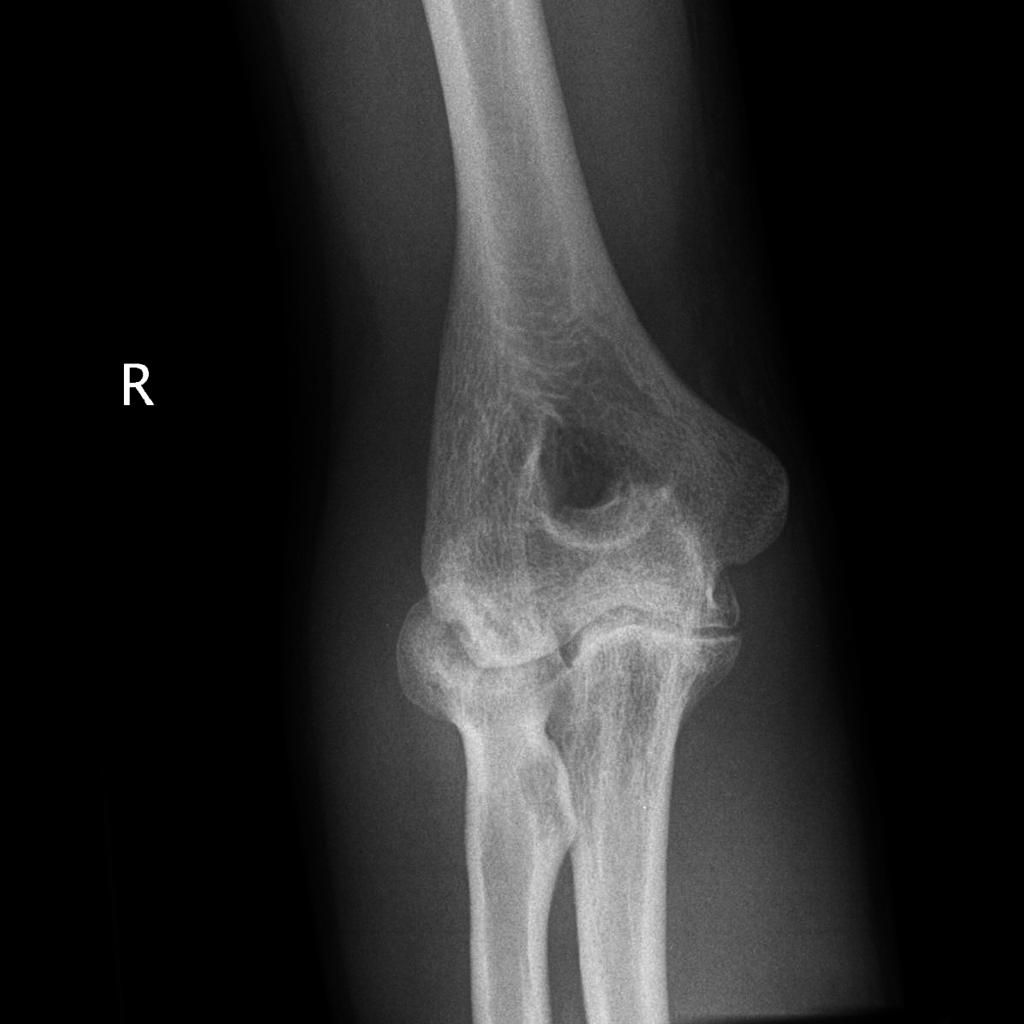
- Plain X-rays — osteophytes, loose bodies, heterotopic bone, malunion, hardware issues
- CT scan — essential for pre-operative planning; 3D mapping of osteophytes, loose bodies, and HO
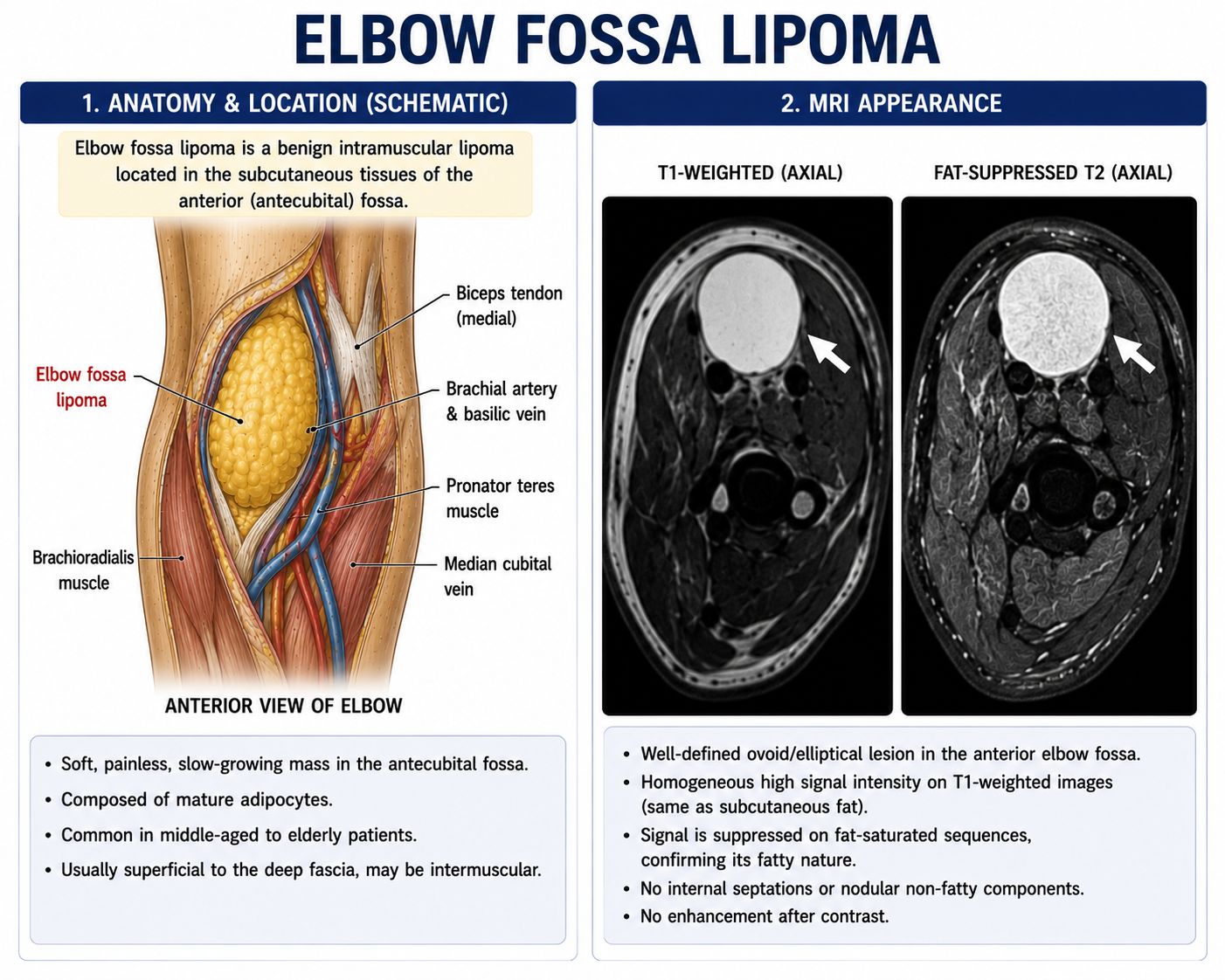
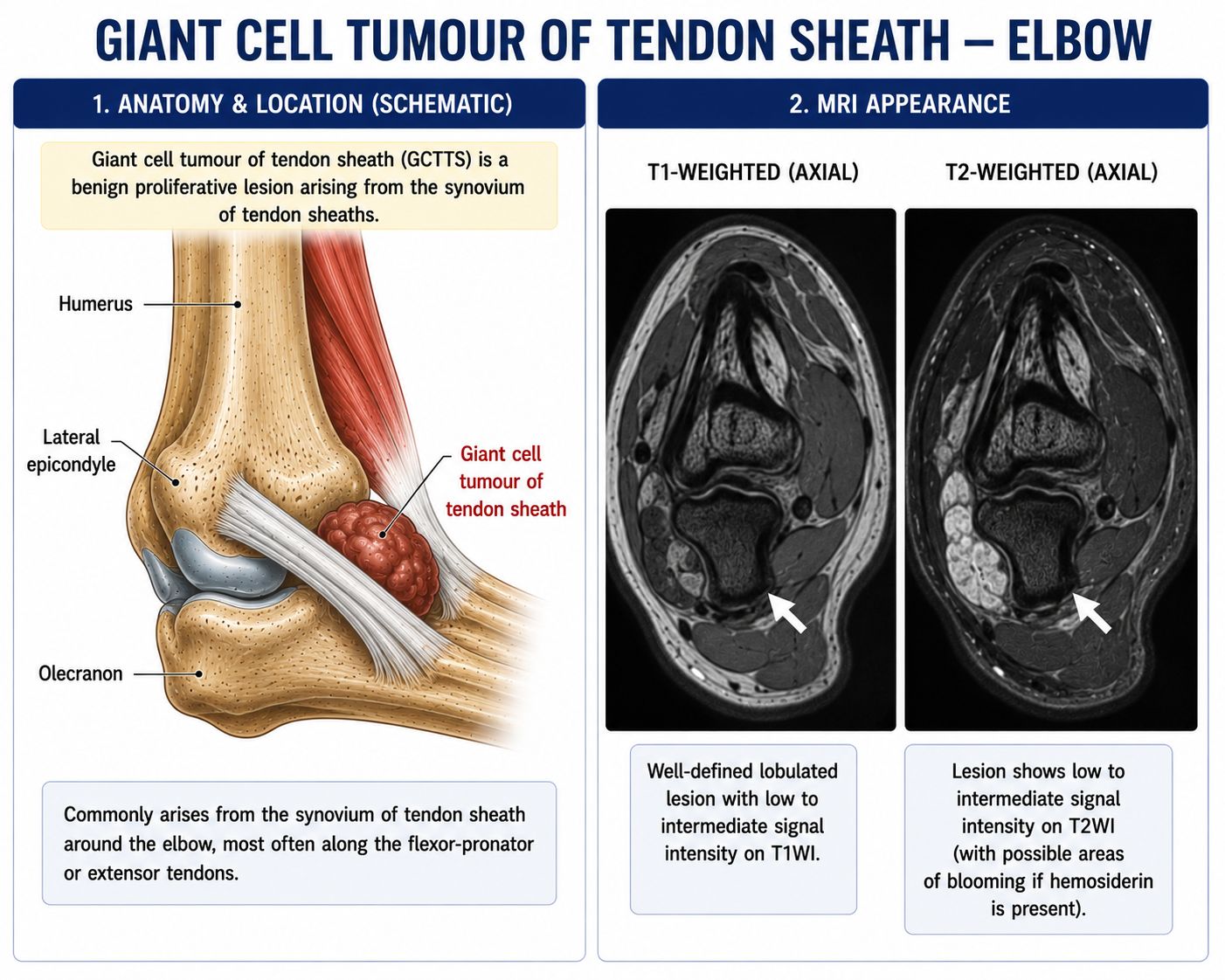
- MRI — soft tissue assessment; capsular thickening; concurrent ligament pathology; nerve involvement
- Bone scan (technetium) — if HO identified on CT: assess maturity before excision (cold scan = mature = safe to excise)
- EMG / nerve conduction — if ulnar nerve symptoms present; baseline neurophysiology before medial release

Treatment Options
Treatment Type | Details |
Physiotherapy | Active-assisted ROM; joint mobilisation; heat prior to stretching; cornerstone of both non-surgical and post-surgical treatment |
Static Progressive Splinting | Turn-buckle splints applied at extremes of motion; 30–60 min sessions 3× daily; most effective for contractures <60°; significant gains over 3–6 months |
Serial Casting | Circular casts applied at maximum passive ROM; changed every 1–2 weeks; effective for post-burn and neurological contractures |
Arthroscopic Capsular Release | Treatment of choice: anterior capsulectomy (improves extension) and posterior capsulectomy (improves flexion); osteophyte excision; loose body removal; day-case; ulnar nerve decompressed if medial release planned |
Open Contracture Release (Column Procedure) | Lateral column procedure; anterior and posterior capsule released through single lateral incision; combined with medial release if needed; for severe contractures or when arthroscopy not feasible |
Heterotopic Ossification Excision | Mature HO only (cold bone scan, 12–18 months post-injury); followed immediately by physiotherapy; adjuvant indomethacin or radiation to prevent recurrence |
Ulnar Nerve Management | Routine assessment before any medial release; decompression or transposition if symptomatic or at risk |
Recovery & Rehabilitation
- After arthroscopic capsular release: overnight stay; CPM machine from day 1; aggressive physiotherapy from 24 hours; typically gain 30–50° of motion; maximum improvement at 3–6 months
- After open release: 1–2 days hospital; physiotherapy from day 1; hinged brace; final ROM at 6 months
- Most critical window: first 2–4 weeks post-surgery — gains must be maintained before scar tissue re-forms
- Night-time extension splinting continued 3–6 months post-release to prevent recurrence
- Outcomes: 60–80° of motion gained; best in patients without HO and with shorter contracture duration (<12 months)
Why choose Dr Senthilvelan?
Elbow stiffness is one of the most challenging and functionally disabling upper limb problems. Dr Senthilvelan has extensive training in arthroscopic and open elbow contracture release — acquired during his UK fellowship at Royal Bournemouth Hospital. His systematic approach ensures all components of stiffness are addressed in a single surgical procedure.
Frequently Asked Questions
1. My elbow is stiff after a fracture 6 months ago — is it too late for physiotherapy to help?
No — physiotherapy remains the first-line treatment even 6 months or more after injury, provided the stiffness is due to soft tissue contracture rather than established bony heterotopic ossification. Static progressive splinting combined with active-assisted exercises can achieve significant gains even at this stage. If 3–6 months of dedicated physiotherapy fails to restore a functional arc, surgical capsular release is considered.
2. What is arthroscopic capsular release and what can I expect?
Arthroscopic capsular release involves removing the tight, contracted front and back portions of the elbow joint capsule through keyhole incisions. This allows the elbow to move through a greater arc. The procedure is performed under general anaesthetic, usually as a day-case or overnight stay. Physiotherapy begins the following day — this is critical. Most patients gain 30–50° of movement. Commitment to post-operative physiotherapy is the most important factor in outcome.
3. What is heterotopic ossification and does it affect treatment?
Heterotopic ossification (HO) is the abnormal formation of bone in the soft tissues around the elbow. It complicates approximately 3–5% of elbow fractures and is more common after head injuries, burns, or prolonged unconsciousness. HO significantly limits arthroscopic access and increases surgical complexity. Surgical excision must wait until it has matured — typically 12–18 months post-injury — confirmed by a cold bone scan. After excision, indomethacin or radiation is given to prevent re-formation.
4. How much movement can I expect to regain after elbow release surgery?
On average, patients gain 30–50° of motion after arthroscopic capsular release. Patients with shorter contracture duration (under 12 months), no heterotopic ossification, and preserved joint cartilage achieve the best results. A functional arc (30–130°) is restored in approximately 70–80% of carefully selected patients.
5. My doctor mentioned I need to wear a special splint after surgery — is this really necessary?
Yes — absolutely. After release, the elbow naturally tends to re-stiffen as scar tissue re-forms. Night-time extension splinting (holding the elbow straight while you sleep) is typically worn for 3–6 months post-operatively. Dynamic or progressive splinting supplements physiotherapy sessions during the day. Patients who commit to this regime consistently achieve better long-term outcomes.