Overview
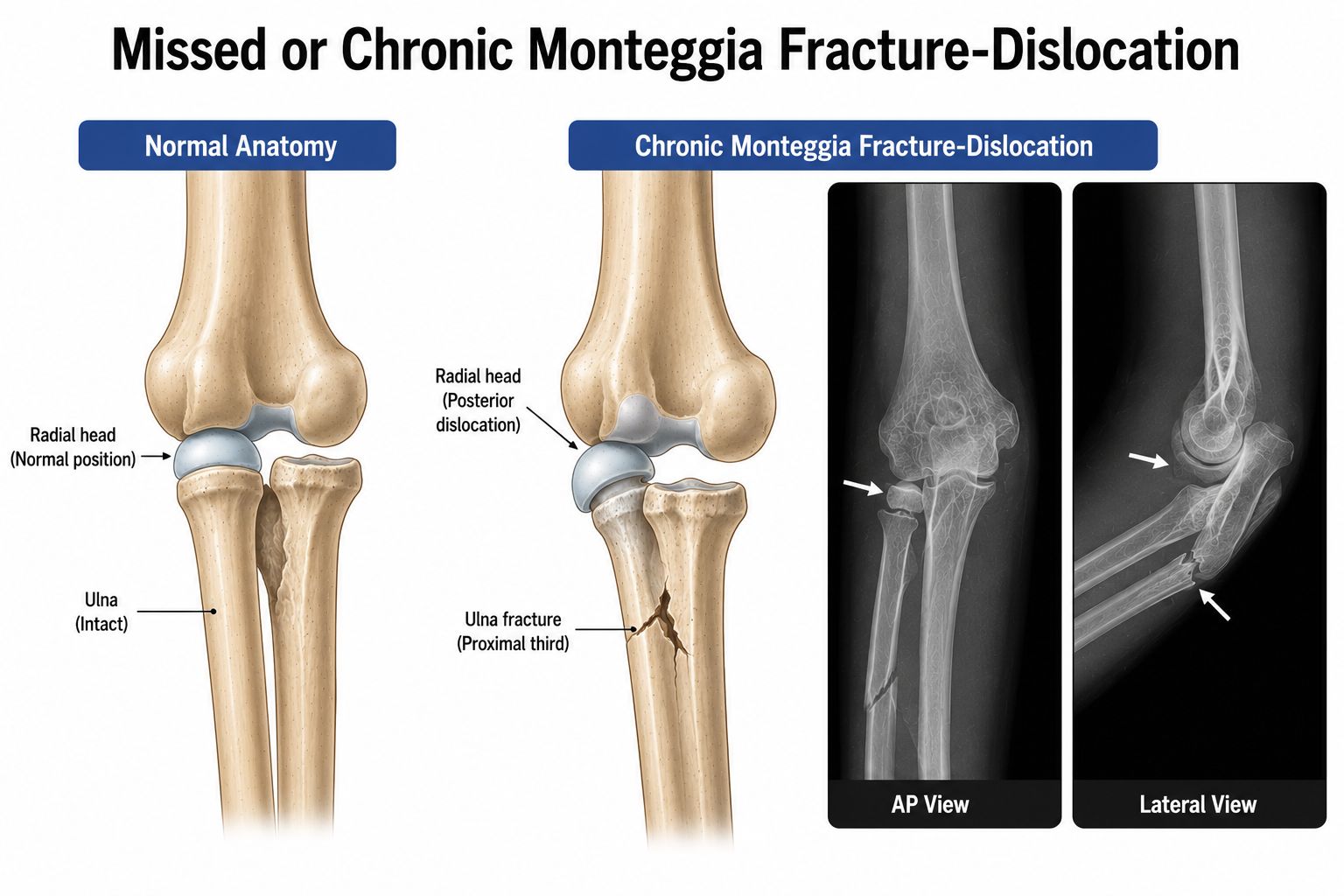
A missed Monteggia fracture-dislocation is an acute Monteggia injury that was not recognised at initial presentation — specifically, the radial head dislocation component was not identified. The ulna fracture heals (sometimes with angulation or malunion), but the radial head remains chronically dislocated because the annular ligament has not been repaired and the ulna has healed without the radial head in the correct position.
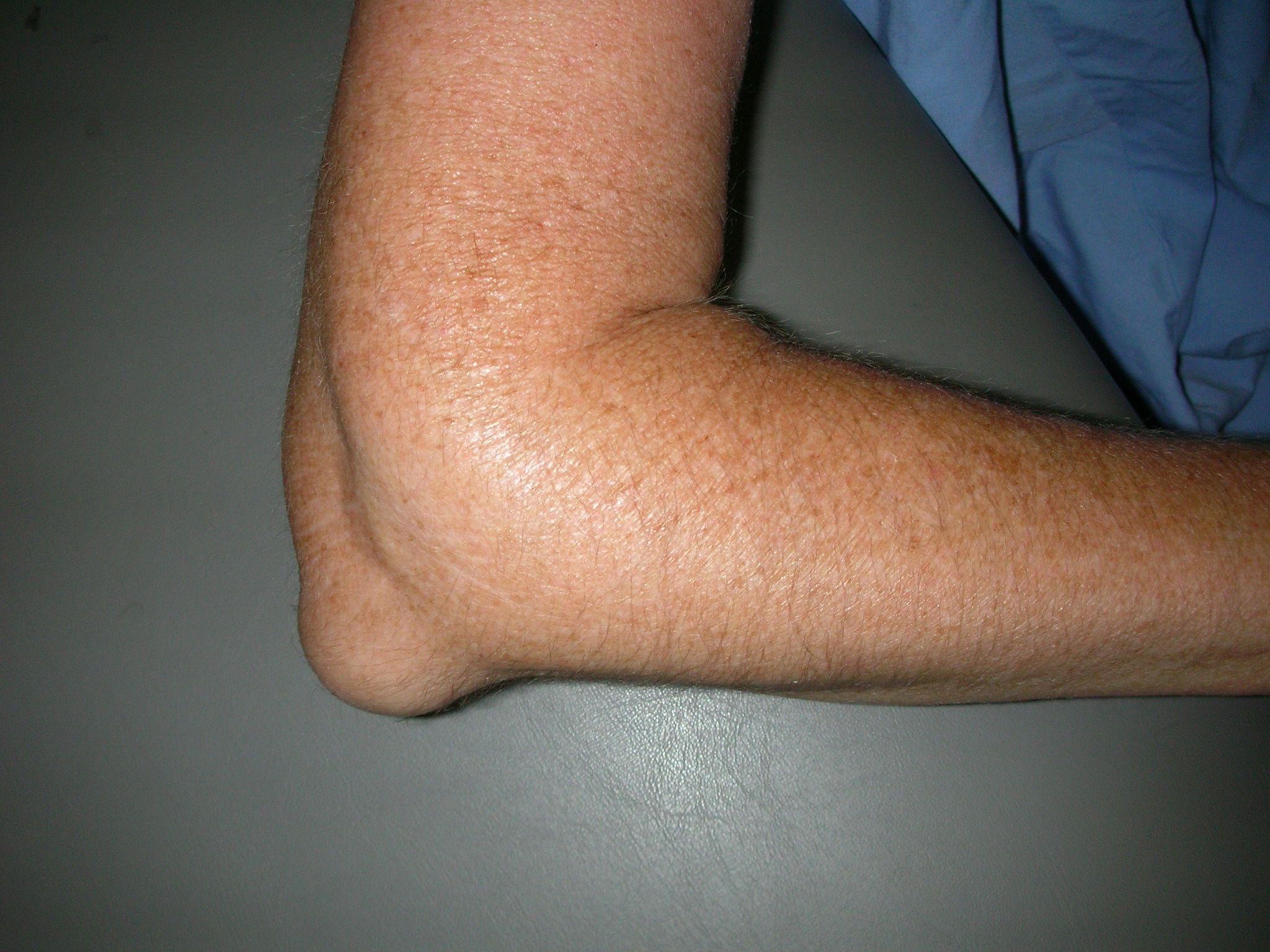
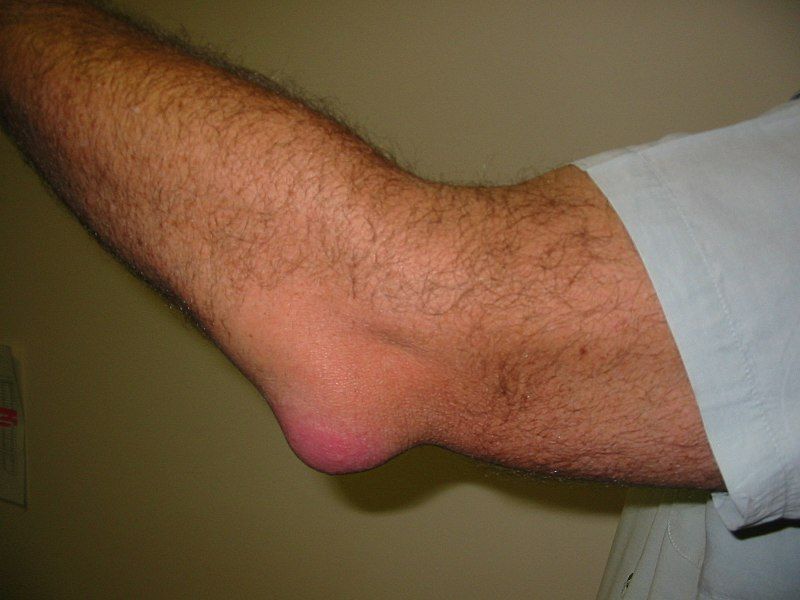
Over weeks to months, the annular ligament atrophies and becomes non-functional, the radial head remodels in a deformed shape (longer and more conical), the radiocapitellar articular surfaces become mismatched, and the radial head becomes increasingly difficult to reduce. The child may present with a visible or palpable lump on the lateral side of the elbow (the dislocated radial head), restricted forearm rotation (particularly pronation), elbow pain, or simply a parent noticing that the child’s arm “looks different”.
The key principle of reconstruction is that to reduce the radial head, the deformity of the ulna must first be recreated — a corrective osteotomy of the ulna is performed to re-angulate the bone to its original deformed position, which opens the space for the radial head to slide back into the radiocapitellar joint. The annular ligament is then reconstructed to hold the radial head in place.
Quick Facts | Details |
Also Known As | Missed Monteggia, Chronic Monteggia, Neglected Monteggia, Late Radial Head Dislocation |
Affected Area | Radial head (chronically dislocated); proximal ulna (malunited or healed in a deformed position); annular ligament (atrophied and non-functional); radiocapitellar joint (articular damage in longstanding cases) |
Who It Affects | Primarily children in whom the initial Monteggia injury was not diagnosed and the radial head remained dislocated as the ulna healed in a malunited position; occasionally adults with delayed presentation |
Prevalence | Missed Monteggia injuries account for approximately 25–30% of all Monteggia fracture-dislocations in some series; more common in settings where the full forearm is not included in the X-ray at initial presentation; a highly preventable complication |
Treatment | For chronic missed Monteggia in children: ulnar corrective osteotomy (recreates original deformity to allow radial head reduction) + annular ligament reconstruction with triceps fascia graft; radiocapitellar reduction essential — outcomes better the younger the patient and shorter the delay |
Causes & Risk Factors
- Failure to diagnose at initial presentation — the most common cause; X-ray of the forearm did not include the elbow; the radiocapitellar line was not assessed
- Subtle initial fracture — plastic deformation or greenstick ulnar fracture that was not recognised as an acute Monteggia
- Delayed presentation — some families present days or weeks after the initial injury when swelling has settled and the X-ray appearance of the dislocated radial head is misinterpreted
- Misdiagnosis as “pulled elbow” or “nursemaid’s elbow” — particularly in young children where the ulnar fracture is very subtle and the main clinical feature is pain and arm-holding
Symptoms
- Visible prominence on the lateral or anterior elbow — the chronically dislocated radial head forms a palpable lump
- Restricted forearm rotation — particularly pronation; the dislocated radial head blocks rotation
- Elbow flexion restriction — in long-standing cases
- Mild aching in the lateral elbow — from the dislocated radial head rubbing on adjacent structures
- Carrying angle abnormality — cubitus valgus may develop over time
- Cosmetic deformity — the lateral elbow appears abnormal; parents may notice the arm looks different from the other side
- In adults with long-standing missed Monteggia: pain, restricted rotation, reduced strength, and early lateral compartment arthritis
How is it Diagnosed?
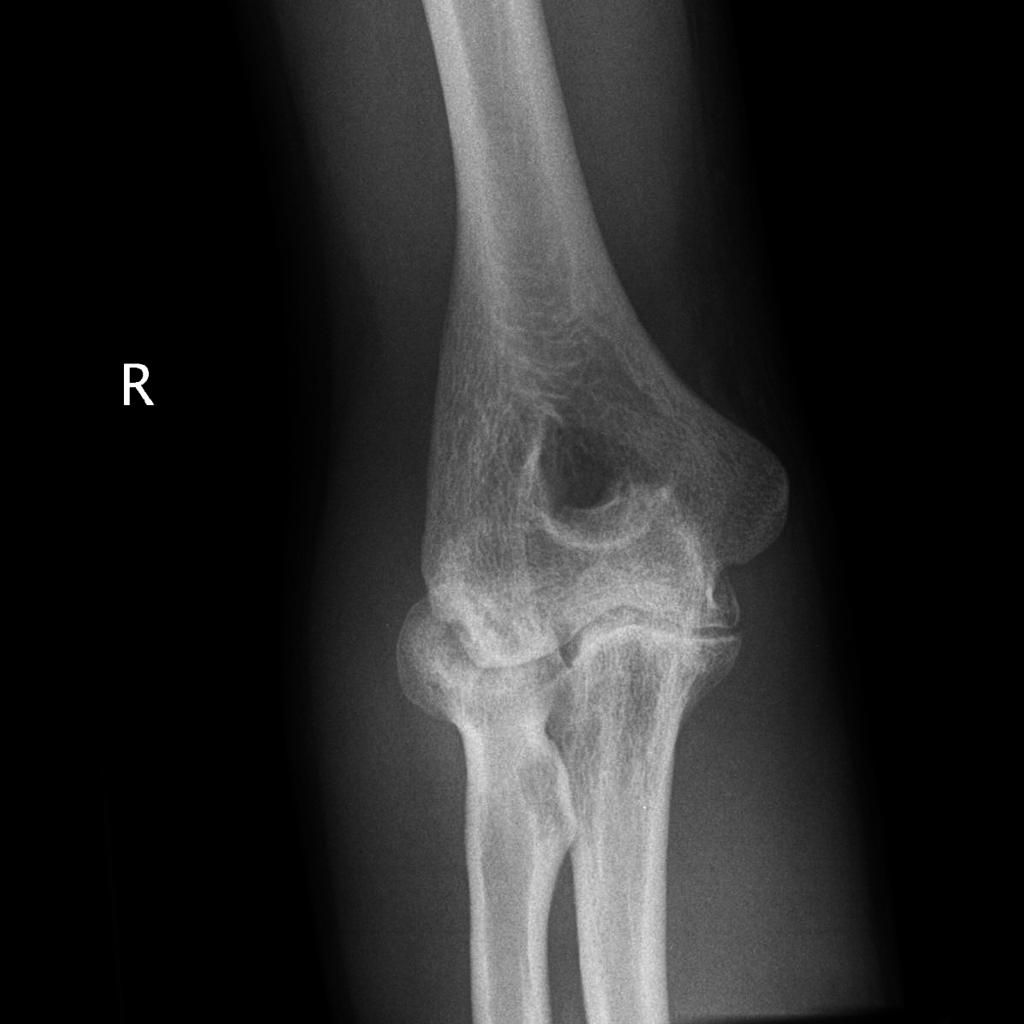
- Plain X-rays — dislocated radial head (radiocapitellar line does not pass through centre of capitellum); malunited ulna (healed with angulation); the deformity is often obvious once recognised
- CRITICAL: Check the radiocapitellar line on every paediatric forearm X-ray — a line through the centre of the radial head and neck must always pass through the centre of the capitellum on all views
- CT scan — defines the 3D deformity of the ulna (direction and degree of angulation), radial head morphology (remodelling), radiocapitellar articular damage, and proximal radioulnar joint anatomy; essential for surgical planning
- MRI — annular ligament status; articular cartilage of the radiocapitellar joint; soft tissue structures around the radial head

Treatment Options
Treatment Type | Details |
Ulnar Corrective Osteotomy (Core of Reconstruction) | The ulna is osteotomised at the site of malunion and re-angulated to recreate the original acute deformity (the apex of angulation is in the same direction as the original dislocation direction); this “opens” the space at the radiocapitellar joint; temporary fixation while the radial head is assessed for reduction |
Radiocapitellar Reduction | With the ulna re-angulated: attempt to reduce the radial head into the capitellum; if the radial head reduces freely: proceed to annular ligament reconstruction; if it does not reduce: fibrous tissue within the radiocapitellar joint must be excised; if articular damage is severe: consider radial head excision (in older children/adults) |
Annular Ligament Reconstruction | The native annular ligament is absent or non-functional; reconstruct with a strip of triceps fascia (the Seel-Bell technique) or a fascial autograft; the graft is looped around the radial neck and sutured to the ulna; this prevents re-dislocation after the osteotomy is healed |
Ulna Osteotomy Fixation | After confirming radial head reduction: fix the ulna osteotomy with a plate and screws (or K-wires in young children); the osteotomy must be maintained in the corrected position until healed (6–8 weeks) |
Radial Head Excision (Older Children / Adults) | For long-standing cases (>3 years) with significant radial head deformity, articular damage, or failed reduction attempts: excision of the radial head in older children (>10 years) or adults; not appropriate in young children due to growth and stability consequences |
Recovery & Rehabilitation
- After reconstruction: above-elbow cast or splint for 6–8 weeks until ulna osteotomy heals; physiotherapy begins from week 6–8; ROM recovery over 3–6 months
- Return to sport: 4–6 months after confirmed healing
- Outcomes: best in children under 3 years from injury with <12 months delay; outcomes deteriorate with increasing age and delay; articular damage from chronic dislocation limits prognosis
- Follow-up: serial X-rays to confirm maintained reduction and osteotomy healing; annual X-rays for 3 years to assess for re-dislocation or avascular necrosis
- Key message: early diagnosis of acute Monteggia is the most effective “treatment” — missed Monteggia reconstruction is complex, less predictable, and preventable
Why choose Dr Senthilvelan?
Missed Monteggia reconstruction is one of the most technically demanding paediatric elbow procedures, requiring systematic pre-operative 3D CT analysis, precise ulnar osteotomy planning, and annular ligament reconstruction. Dr Senthilvelan has specific training in complex paediatric elbow reconstruction and performs Monteggia reconstructions with meticulous surgical planning.
Frequently Asked Questions
1. My child had a forearm injury 6 months ago and now has a lump on the outside of their elbow — could this be a missed Monteggia?
Yes — this is a classic presentation of a missed Monteggia fracture-dislocation. The palpable lump on the lateral or anterior elbow in a child who had a forearm injury is almost certainly the dislocated radial head. An X-ray should be obtained urgently — if the radiocapitellar line does not pass through the centre of the capitellum, the radial head is dislocated and surgical reconstruction is required. The sooner this is addressed, the better the outcome — delay causes progressive articular damage, radial head deformity, and more difficult surgery.
2. Why did the radial head dislocation get missed initially?
The most common reason is that the X-ray of the forearm at initial presentation did not include the full elbow joint — specifically, a true lateral view of the elbow was not obtained, or the radiocapitellar line was not assessed. In children, the subtle plastic deformation or greenstick ulnar fracture may have appeared trivial, and the radial head dislocation — which requires specific knowledge of the radiocapitellar line to detect — was not recognised. This is why all paediatric forearm fracture X-rays must include both the elbow and the wrist, and the radiocapitellar line must be explicitly checked on every view.
3. Why does the ulna need to be cut and re-bent for the radial head to go back?
When the ulna healed in a malunited (deformed) position, the geometry of the forearm changed — the space at the radiocapitellar joint is no longer the same shape it was when the dislocation occurred. The radial head cannot simply be pushed back into place because the healed ulna is now blocking it. By performing a corrective osteotomy (surgically re-cutting the ulna at the malunion site and re-bending it to recreate the original deformity), the surgeon recreates the spatial geometry that allows the radial head to slip back into the radiocapitellar joint. Once reduced, the ulna is fixed in the corrected position and the annular ligament is reconstructed to maintain the reduction.
4. What is the annular ligament and how is it reconstructed?
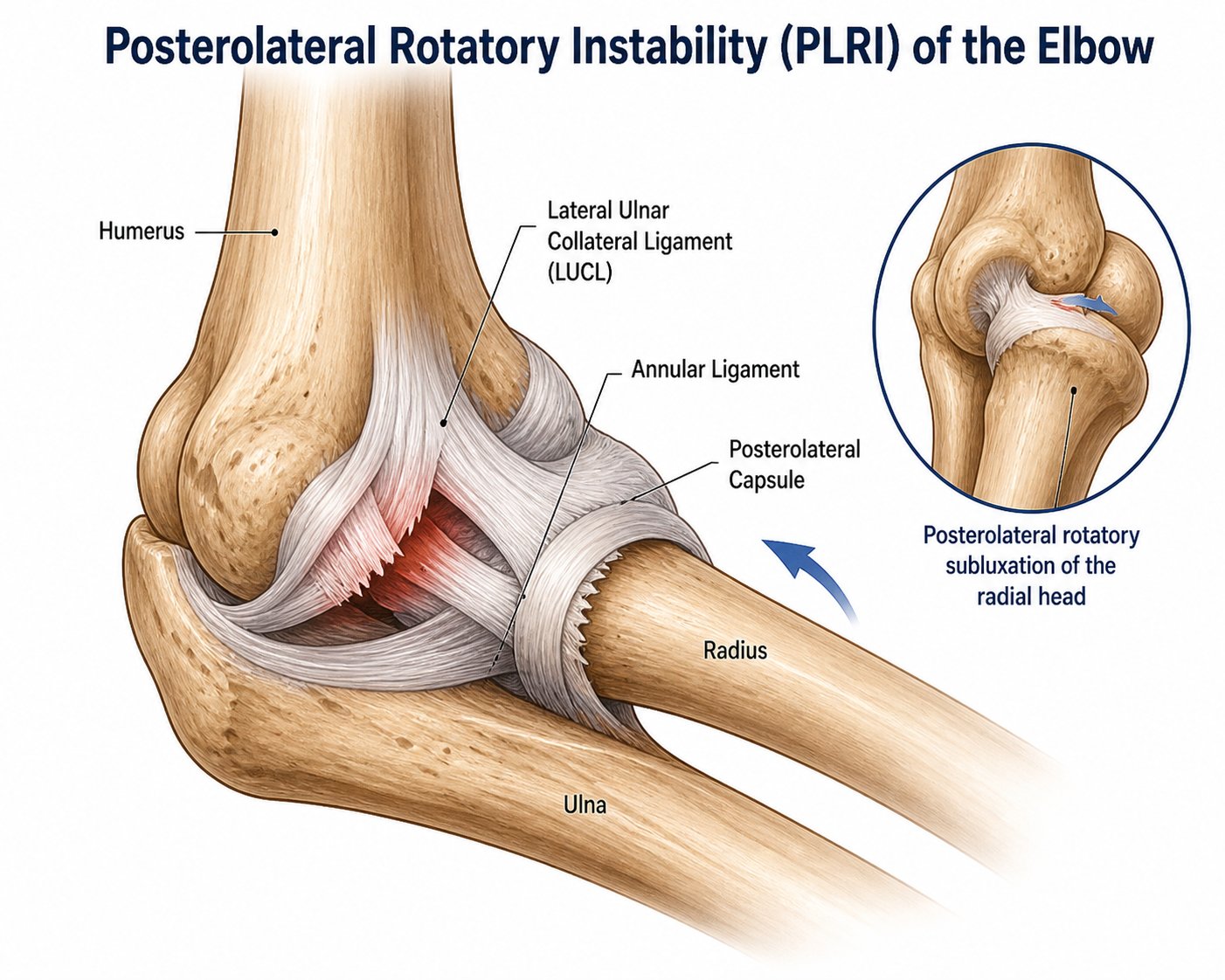
The annular ligament is a ring-shaped ligament that encircles the radial neck and attaches to the ulna on both sides of the radial notch, holding the radial head within the proximal radioulnar joint during forearm rotation. In a missed Monteggia, this ligament has been absent or non-functional for months — it cannot simply be repaired. Reconstruction involves harvesting a strip of triceps fascia (the tough sheet of tissue over the triceps muscle), looping it around the radial neck, and suturing it to the ulna to create a new functional annular ligament that holds the reduced radial head in position.
5. What happens if no surgery is done for a missed Monteggia?
Without surgical reconstruction, the radial head remains dislocated. Over time, this leads to: progressive remodelling and deformity of the radial head (making reduction increasingly difficult); damage to the articular cartilage of the radiocapitellar joint (leading to early lateral compartment arthritis); gradual development of cubitus valgus; and potential tardy posterior interosseous nerve palsy from the chronically dislocated radial head compressing the PIN. The longer treatment is delayed, the more complex and less effective the reconstruction becomes — making early recognition and timely surgical referral critical.