Overview
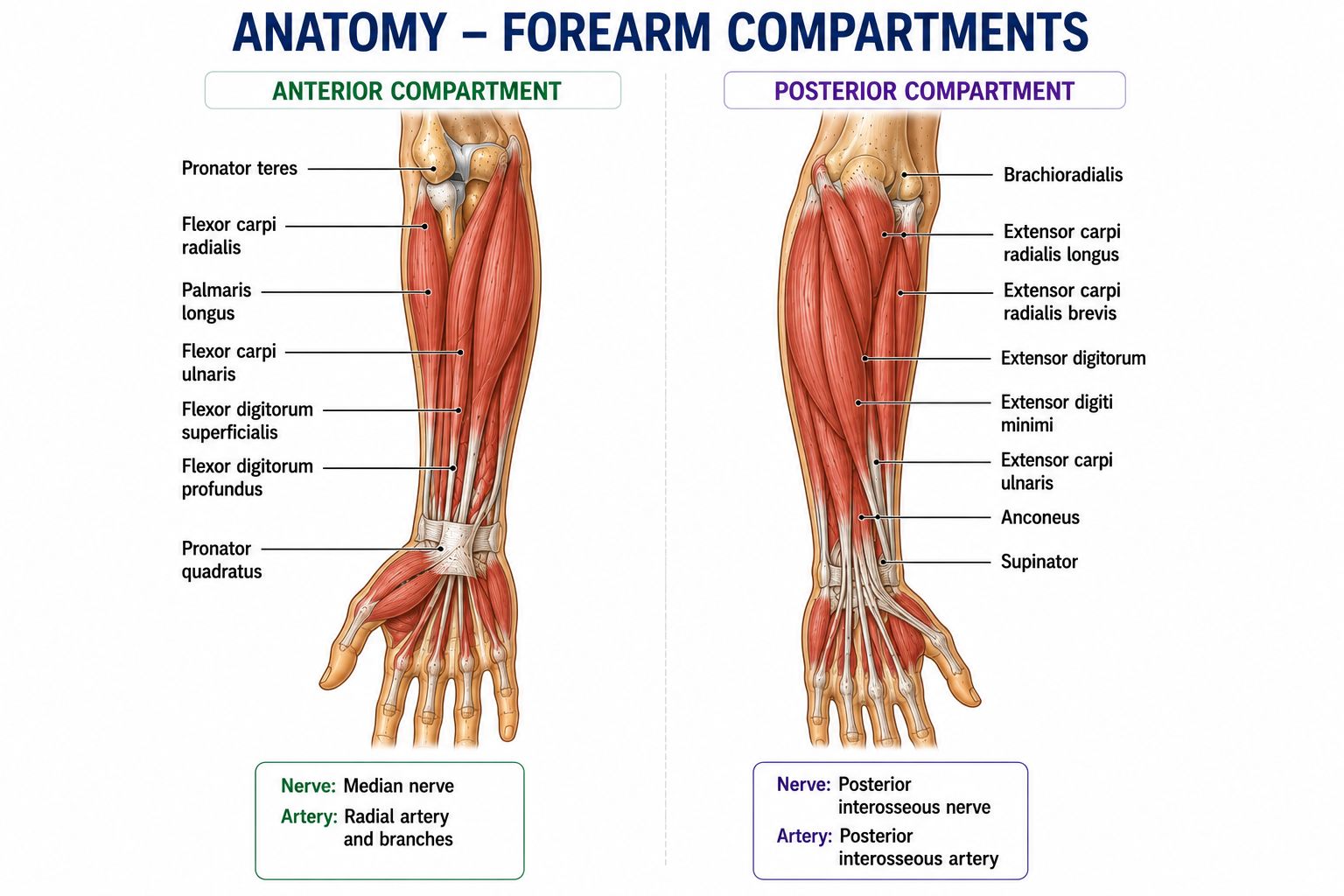
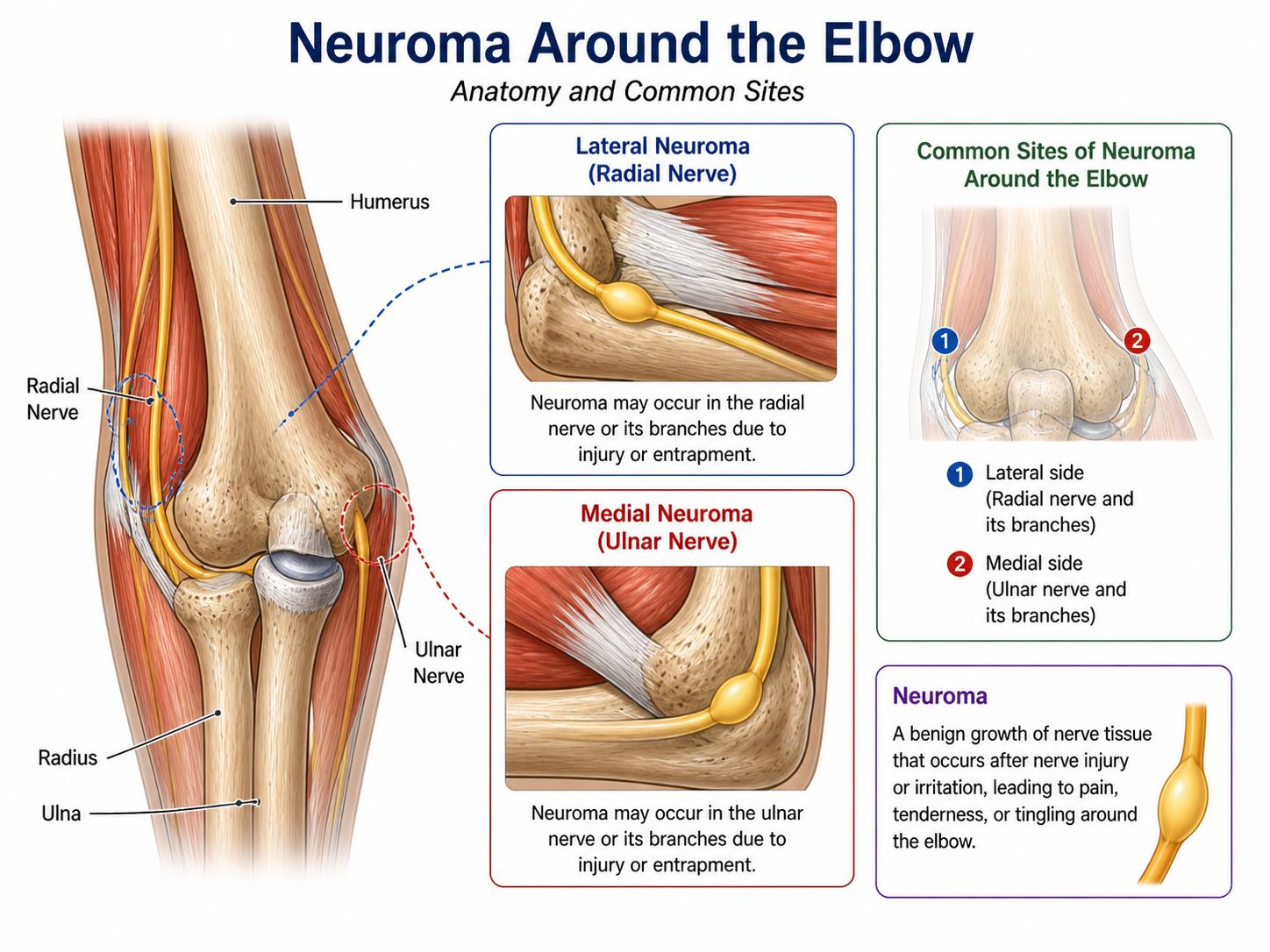
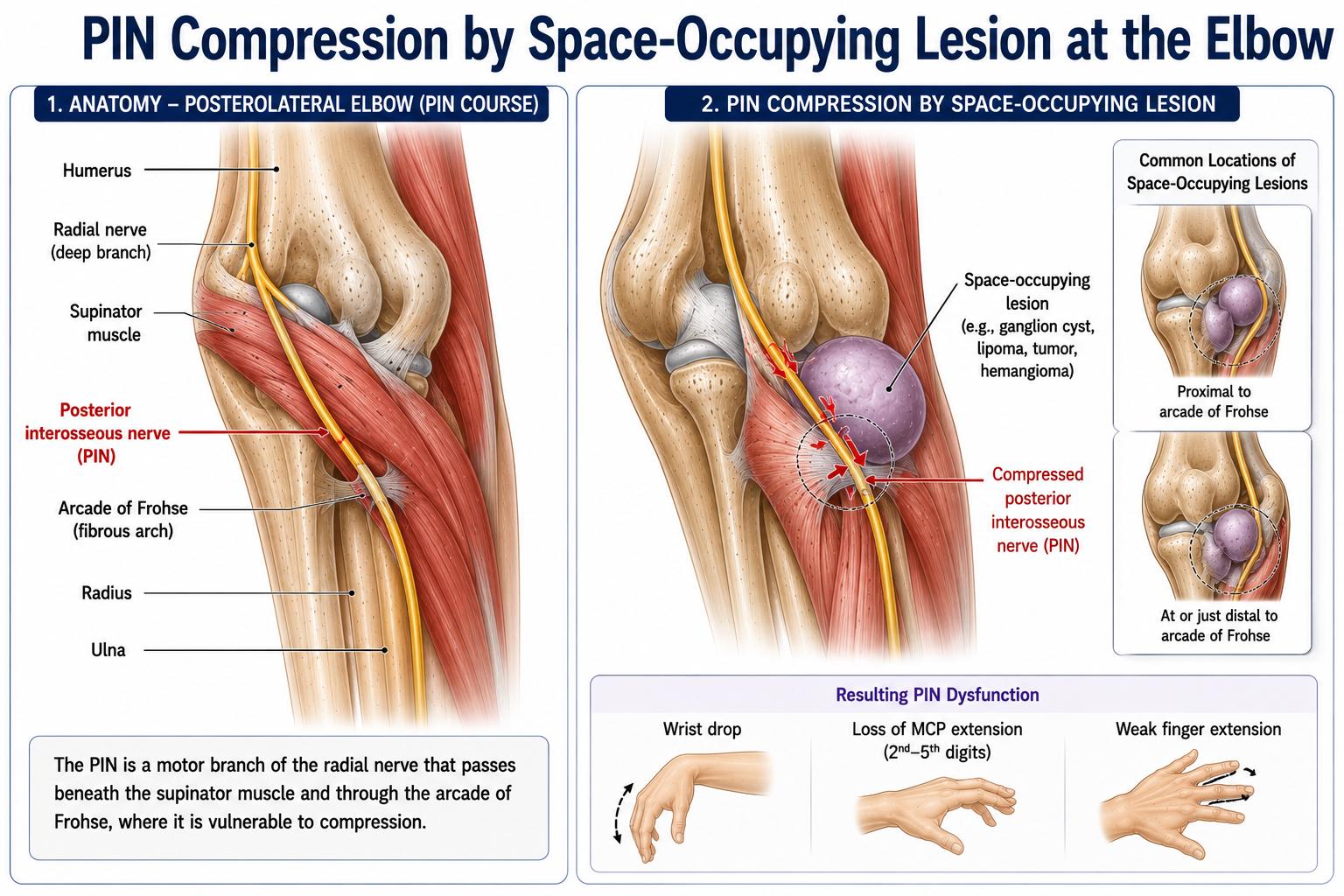
A space-occupying lesion in the radial tunnel can compress the posterior interosseous nerve (PIN) — the deep motor branch of the radial nerve that supplies all forearm extensor muscles distal to brachioradialis and ECRL. The result is PIN palsy: weakness or complete paralysis of finger and thumb extension without any sensory loss (the PIN is purely motor).
The most important message regarding PIN palsy from a space-occupying lesion is that MRI of the elbow is mandatory before labelling any non-traumatic PIN palsy as “idiopathic” or as pure radial tunnel syndrome. Ganglia arising from the radiocapitellar joint, lipomas in the radial tunnel, and synovial proliferation from rheumatoid arthritis can all compress the PIN and are entirely missed without MRI — yet all are treatable surgical conditions.
Surgical excision of the compressive mass combined with decompression of the arcade of Frohse (the fibrous supinator arch through which the PIN passes) provides the definitive treatment. The earlier the compression is relieved, the more complete the nerve recovery — making prompt diagnosis and timely surgery critical to outcome.
Quick Facts | Details |
Also Known As | Radial Tunnel Space-Occupying Lesion, Ganglion PIN Compression, Lipoma Radial Tunnel, PIN Palsy from Tumour |
Affected Area | Posterior interosseous nerve (deep branch of the radial nerve) within the radial tunnel — from the radiocapitellar joint to the arcade of Frohse; compressive masses typically at the radiocapitellar joint level |
Who It Affects | Adults of any age; any patient with a gradual onset PIN palsy (finger and thumb extensor weakness) without a history of acute trauma; ganglions and lipomas are the most common compressive masses; RA synovitis is also an important cause |
Prevalence | Space-occupying lesion compression of the PIN accounts for approximately 10–15% of all non-traumatic PIN palsies; ganglions and lipomas are the most common causes; MRI is the essential investigation before any PIN palsy is labelled idiopathic |
Treatment | MRI to identify and characterise the compressive mass; surgical excision of the mass + concurrent PIN decompression at the arcade of Frohse; neurophysiology before and after to document recovery; nerve recovery expected over 3–6 months post-decompression |
Causes & Risk Factors
- Ganglion cyst — arising from the radiocapitellar joint or proximal radioulnar joint capsule; the most common mass causing PIN compression; may be invisible on X-ray
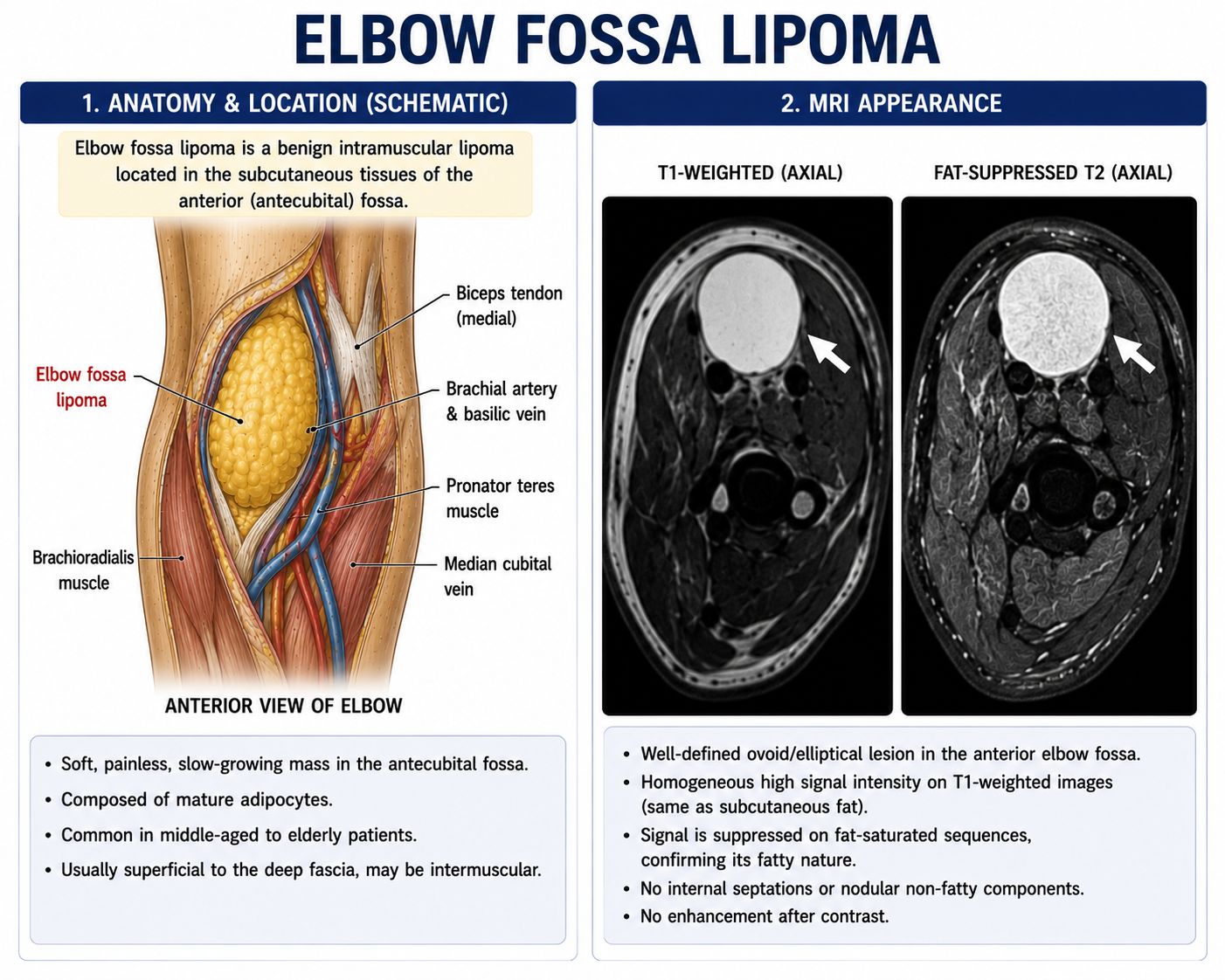
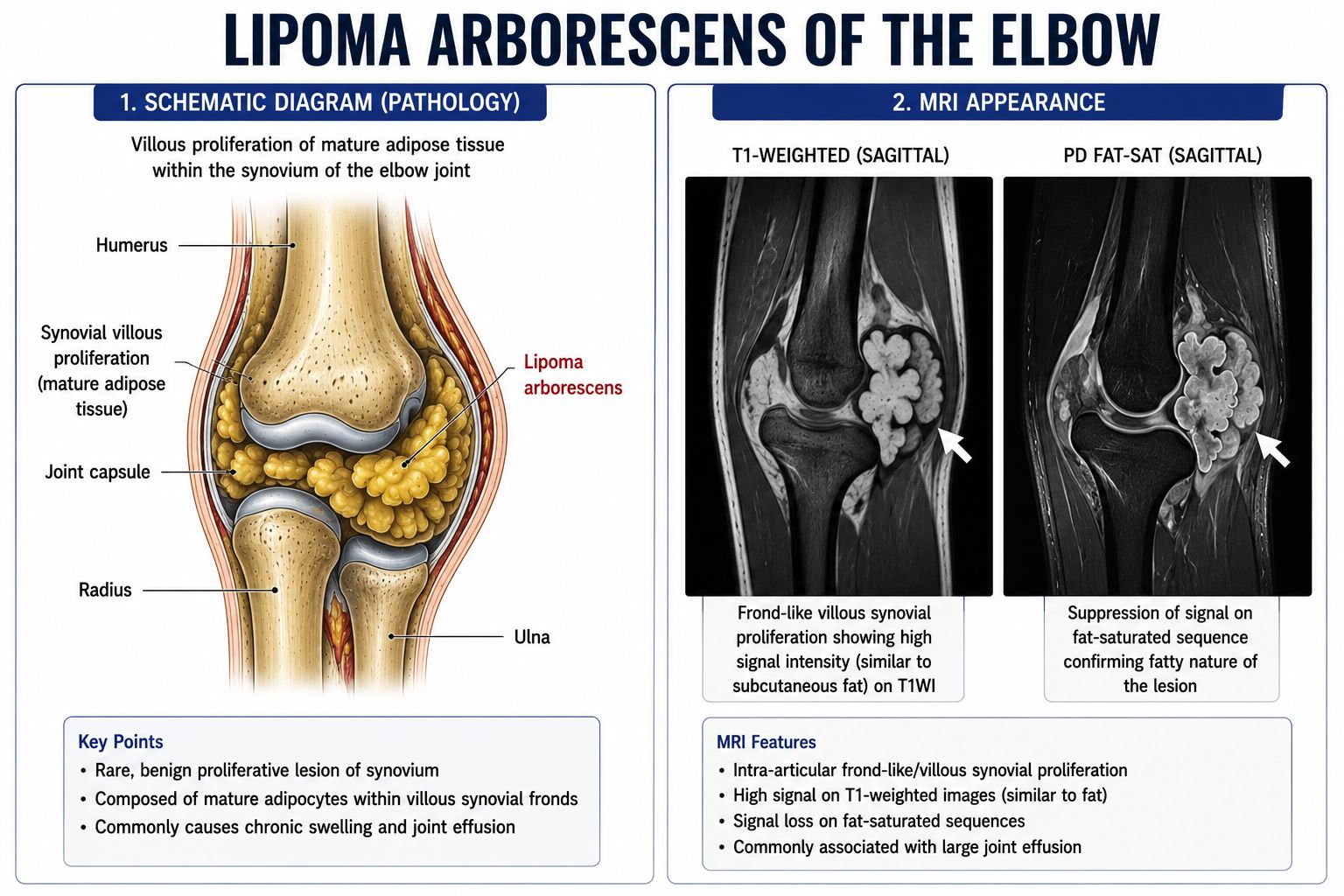
- Lipoma — benign fatty tumour in the radial tunnel anterior to the radial head; the classic parosteal lipoma pressing the PIN against the bony supinator; often large before causing symptoms
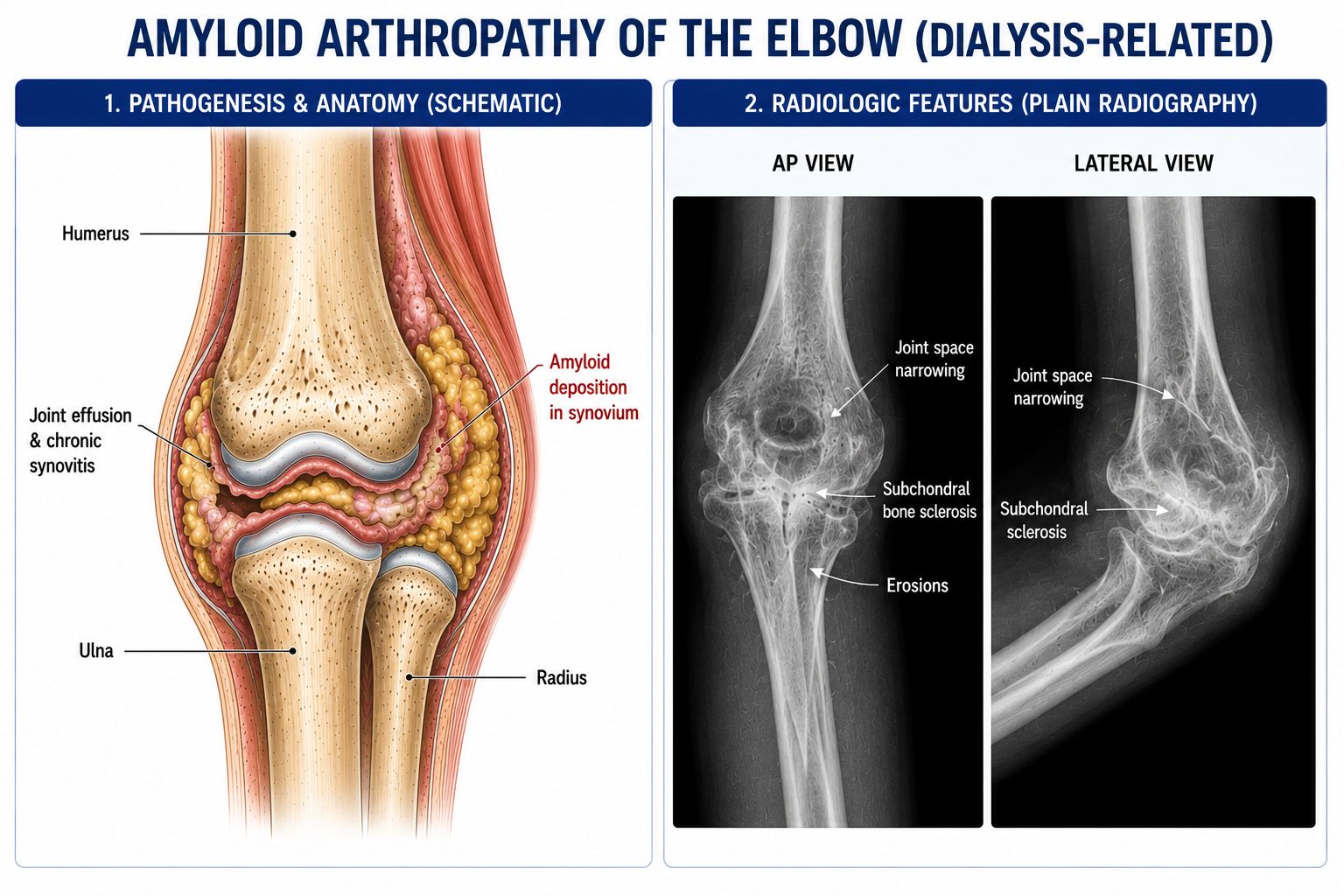
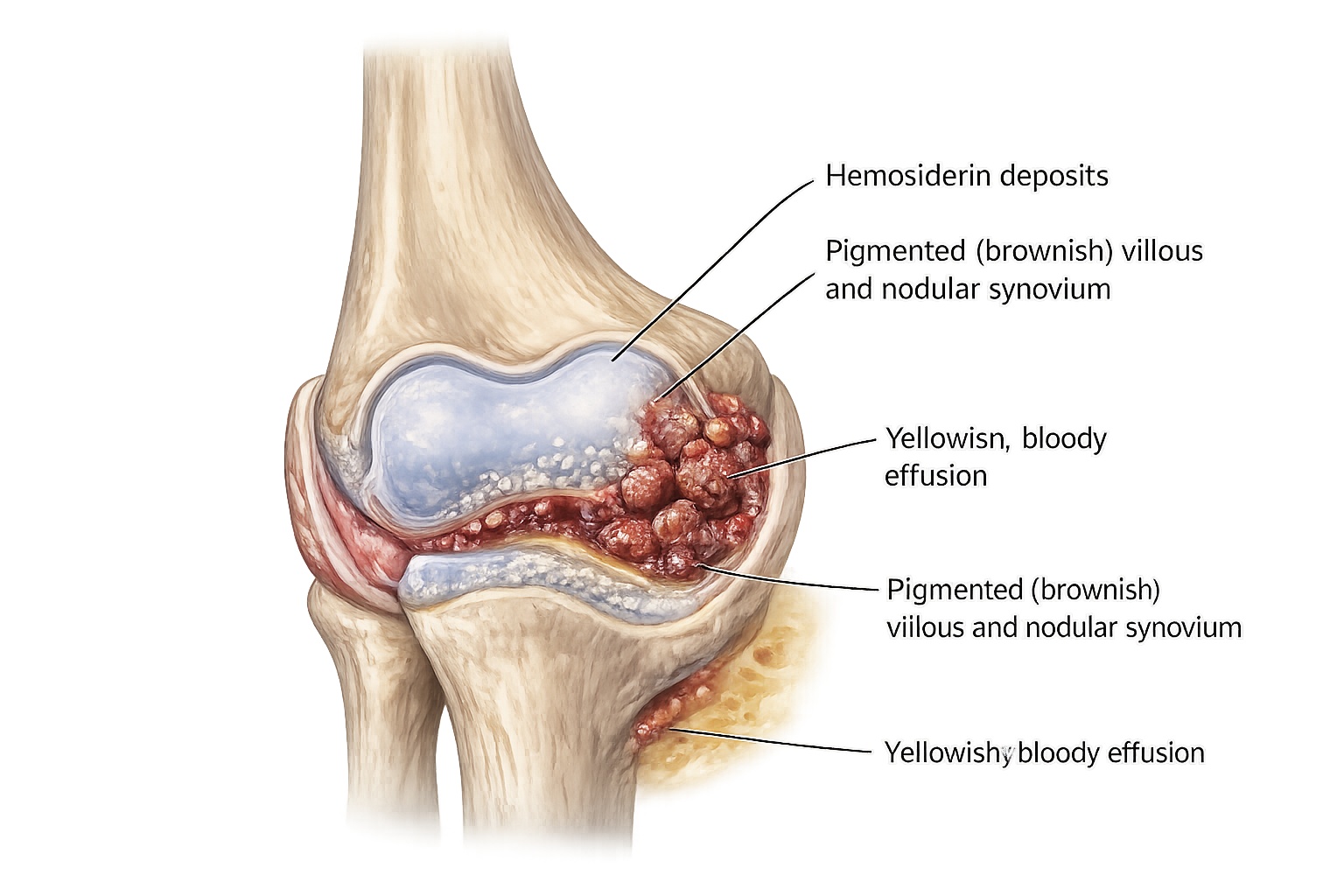
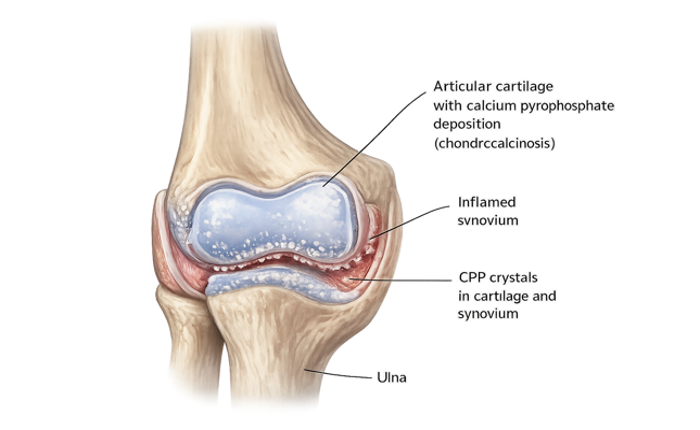
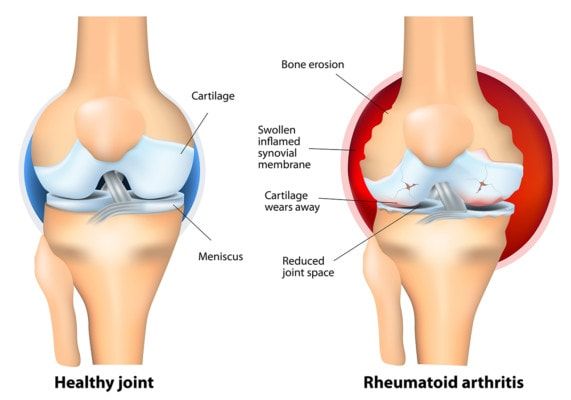
- Rheumatoid arthritis synovitis — proliferative synovium from the radiocapitellar joint compresses the PIN anteriorly; an important cause in RA patients with new finger extensor weakness
- Aneurysm of the anterior interosseous artery — a rare but important cause; pulsatile mass compressing the PIN; audible bruit sometimes present
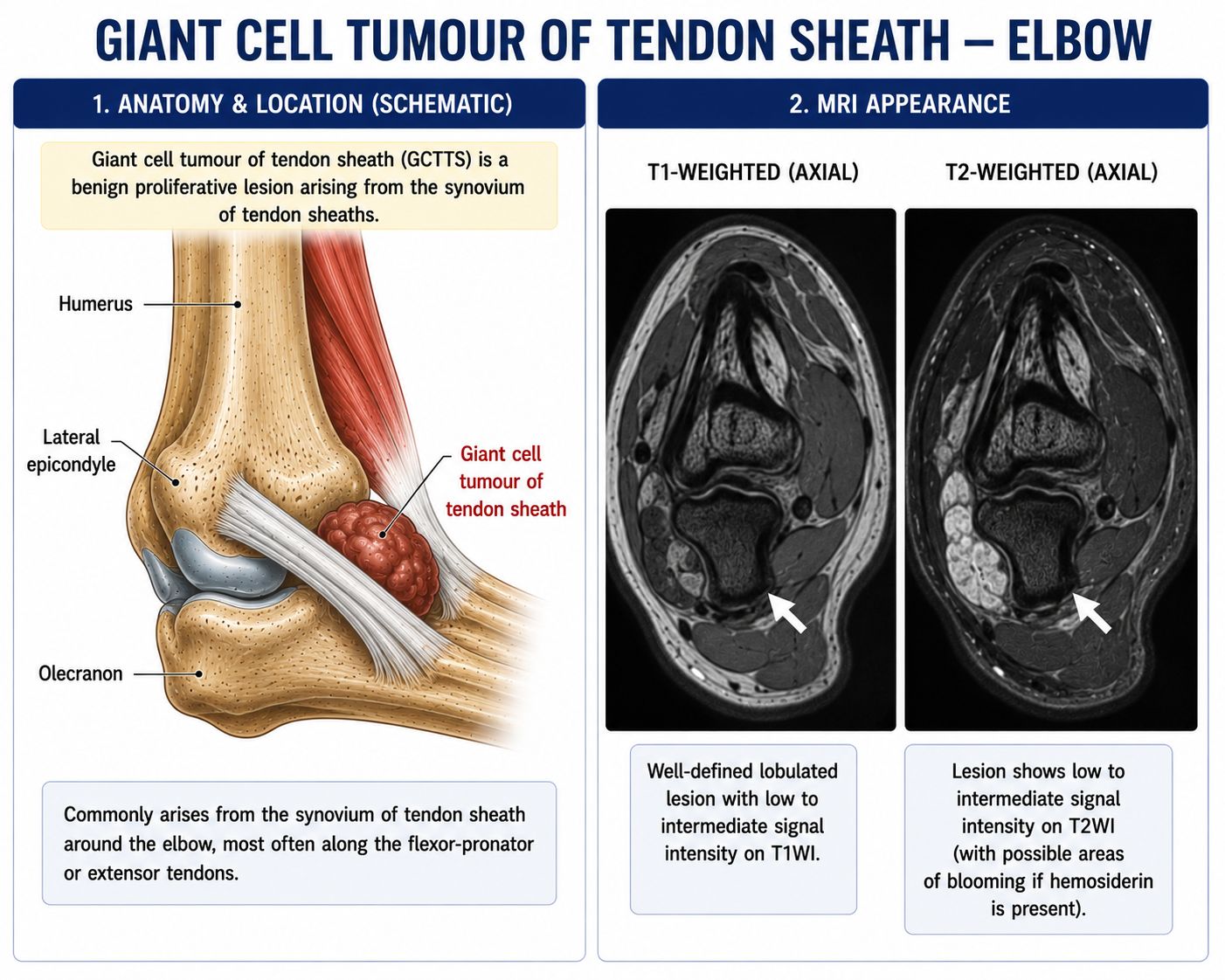
- Pigmented villonodular synovitis (PVNS) — rare; see Condition 9
- Benign and malignant tumours — lipomatous tumours, nerve sheath tumours; MRI distinguishes benign from potentially malignant lesions
Symptoms
- Gradual onset finger and thumb extensor weakness — inability to extend the fingers at the MCP joints; inability to extend and abduct the thumb; weakness develops over weeks to months rather than acutely
- No sensory loss — the PIN is purely motor; normal sensation distinguishes PIN compression from a more proximal radial nerve lesion
- No wrist drop — wrist extension is preserved via ECRL (proximal to PIN origin); radial deviation of the wrist on attempted extension
- Lateral forearm aching — variable; some patients have pain in the radial tunnel region, others have purely motor symptoms
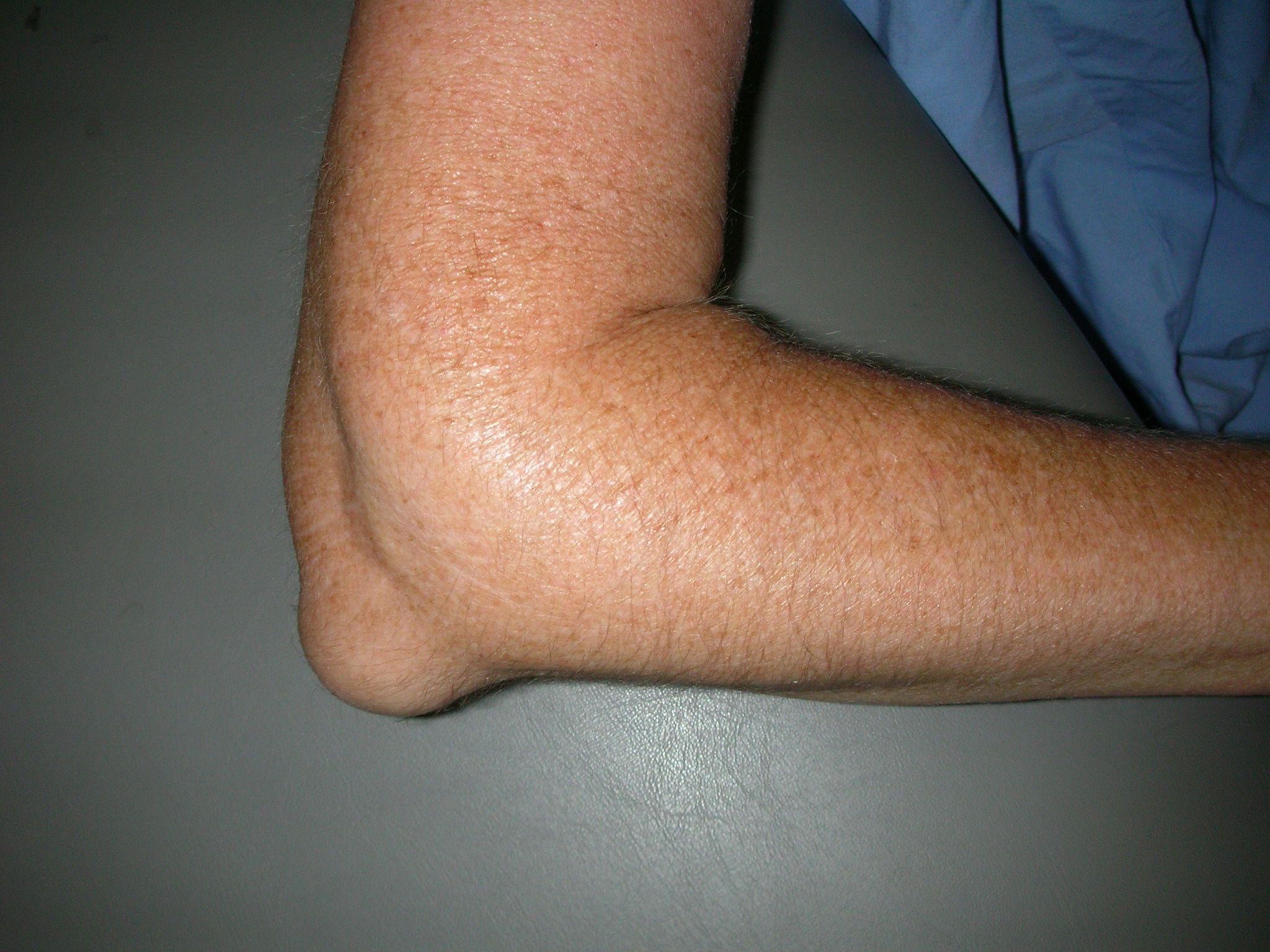
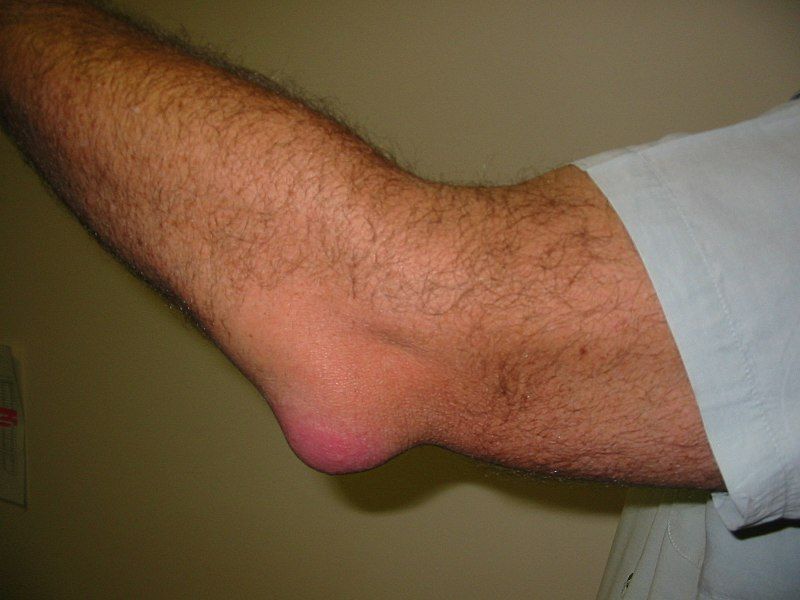
- Palpable mass — occasionally a firm or soft lump is palpable anterolateral to the radial head
- Progressive weakness — unlike traumatic PIN palsy (which presents acutely), compressive PIN palsy from a mass typically worsens gradually over weeks to months
How is it Diagnosed?
- Clinical examination — test finger MCP extension (absent in PIN palsy); thumb extension (EPL, EPB); wrist extension (preserved but radially deviated); confirm normal sensation
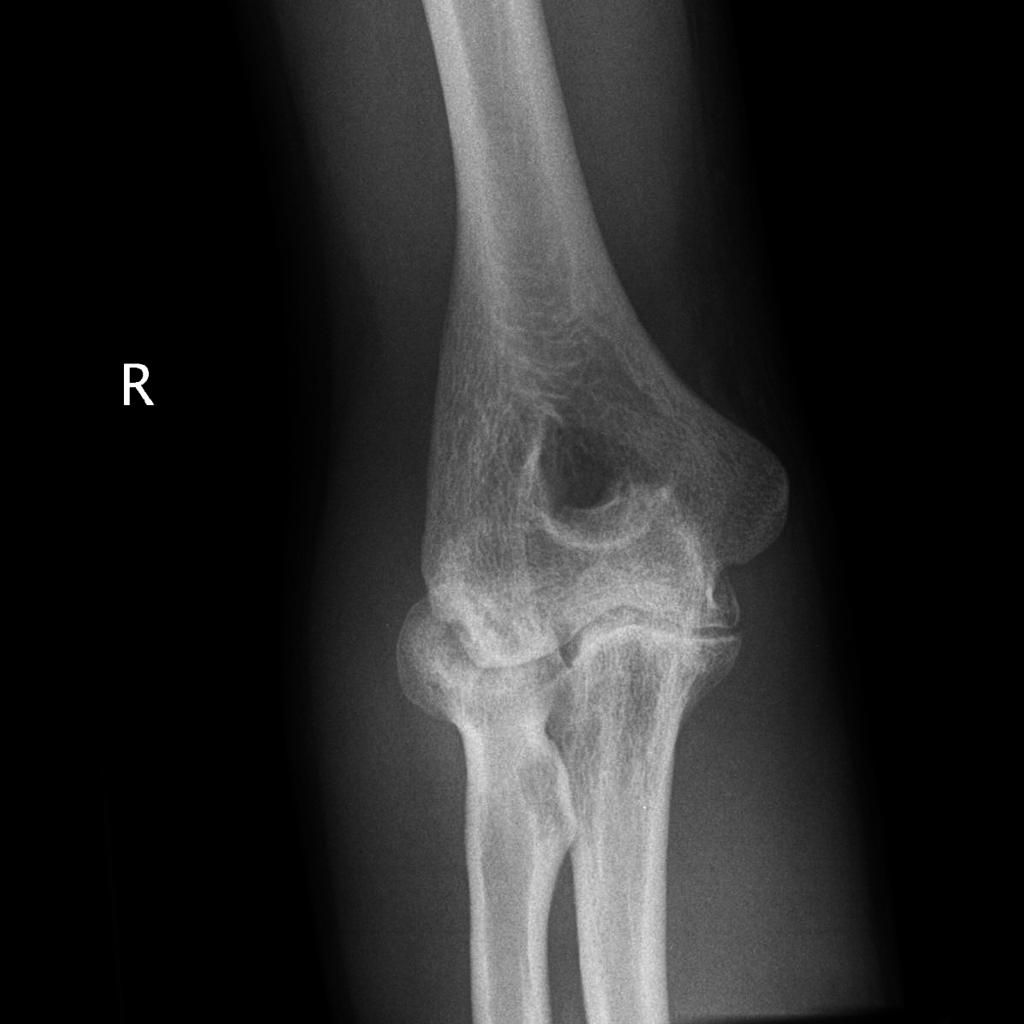
- MRI of the elbow — MANDATORY in all non-traumatic PIN palsy; identifies and characterises the compressive mass; differentiates ganglion from lipoma from synovitis; assesses nerve signal change; defines surgical approach
- Ultrasound — may identify mass lesion; can visualise the PIN; guides biopsy of uncertain lesions
- EMG/NCS — confirms PIN denervation in extensor muscles; rules out more proximal radial nerve or C7 radiculopathy; documents severity for baseline comparison and post-operative recovery monitoring
- CT scan — if lipoma or vascular lesion suspected; characterises bony involvement

Treatment Options
Treatment Type | Details |
MRI Characterisation | Always obtain MRI before surgery; characterise the lesion (ganglion: fluid signal; lipoma: fat signal; synovitis: T2 enhancement; vascular: flow voids); plan the surgical approach accordingly |
Surgical Excision + PIN Decompression | Anterior (Henry) or posterior (Thompson) approach to the radial tunnel; identify the PIN proximally and trace it distally to the compressive mass; excise the mass completely; decompress the arcade of Frohse (divide the supinator fibrous arch); wrist splint post-op to maintain wrist extension during recovery |
RA Synovitis — Concurrent Disease Management | For RA-related synovial compression: synovectomy + PIN decompression; concurrent optimisation of RA medical therapy; coordinate with rheumatology |
Vascular Aneurysm — Vascular Surgical Input | For anterior interosseous artery aneurysm: vascular surgical input for endovascular embolisation or open ligation concurrent with PIN decompression |
Post-operative Nerve Recovery Monitoring | EMG at 3 months post-op to confirm re-innervation signal in PIN muscles; clinical serial assessment of extension strength; wrist extension splinting until functional recovery |
Tendon Transfers (No Recovery) | If no recovery at 12–18 months post-decompression: tendon transfers for permanent PIN palsy (BR to EDC, PL to EPL, PT to ECRB); see Condition 25 |
Recovery & Rehabilitation
- After surgical excision and PIN decompression: wrist cock-up splint for 4–6 weeks during nerve recovery; hand physiotherapy to maintain passive ROM
- Nerve recovery timeline: approximately 1mm per day from the decompression site to the most distal muscle; full recovery of all PIN-supplied muscles may take 6–12 months depending on the lesion duration
- Early decompression (within 3–6 months of symptom onset) gives the best recovery — the earlier the mass is removed, the less axonal damage and the more complete the recovery
- EMG at 3 months: presence of nascent motor units confirms re-innervation is occurring
- Outcome: excellent recovery in most patients when surgery is performed promptly; prolonged compression (>12 months) may result in incomplete recovery
Why choose Dr Senthilvelan?
PIN compression from a space-occupying lesion is a treatable surgical condition that must not be missed. Dr Senthilvelan has a systematic protocol of MRI for all non-traumatic PIN palsies, ensuring that compressive masses are identified and surgically addressed promptly — giving the nerve the best chance of complete recovery.
Frequently Asked Questions
1. I have weakness in my fingers without any pain — what could this be?
Gradual onset weakness of finger and thumb extension without pain or sensory loss is the classic presentation of posterior interosseous nerve (PIN) palsy. The most important first investigation is an MRI of the elbow to look for a space-occupying lesion — a ganglion cyst, lipoma, or synovial mass — compressing the PIN in the radial tunnel. If such a lesion is found, surgical excision and nerve decompression can fully restore function. The earlier it is diagnosed and treated, the more complete the recovery.
2. Why is MRI essential before deciding on treatment?
MRI is essential because non-traumatic PIN palsy has several different causes, and the treatment depends on which one is present. A ganglion is treated differently from a lipoma, which is treated differently from RA synovitis or a vascular aneurysm. Without MRI, a compressive mass can be completely missed — and labelling the palsy as ‘idiopathic radial tunnel syndrome’ delays definitive treatment. MRI also characterises the lesion’s relationship to the PIN, guides the surgical approach, and provides a baseline for monitoring recovery.
3. Will my finger extension recover after surgery?
Recovery depends primarily on how long the compression has been present. The PIN can recover fully if decompressed early (within 3–6 months of onset). Recovery proceeds at approximately 1mm per day from the decompression site to the most distal muscle. For a typical radial tunnel lesion, full recovery of all PIN-supplied muscles takes 6–12 months. EMG at 3 months post-surgery is the objective measure of recovery — confirming whether re-innervation is occurring.
4. I have rheumatoid arthritis and now my fingers are weak — is this related?
Yes, possibly. Rheumatoid arthritis synovitis at the radiocapitellar joint can extend into the radial tunnel and compress the PIN directly. In an RA patient who develops new finger extensor weakness, PIN compression from synovial proliferation must be excluded. This is distinct from other causes of weak fingers in RA (tendon rupture, intrinsic muscle weakness). MRI of the elbow and EMG can confirm the diagnosis. Treatment involves concurrent synovectomy, PIN decompression, and optimisation of RA medical therapy.
5. What happens if the nerve does not recover?
If no motor recovery is occurring by 12–18 months after decompression (confirmed on serial EMG), tendon transfers are performed to restore functional finger and thumb extension. The most commonly used transfers are: brachioradialis to extensor digitorum communis (restores finger extension), palmaris longus to extensor pollicis longus (restores thumb extension), and pronator teres to ECRB (restores wrist extension). These reliably restore functional grip and extension in patients with permanent PIN palsy.