Overview
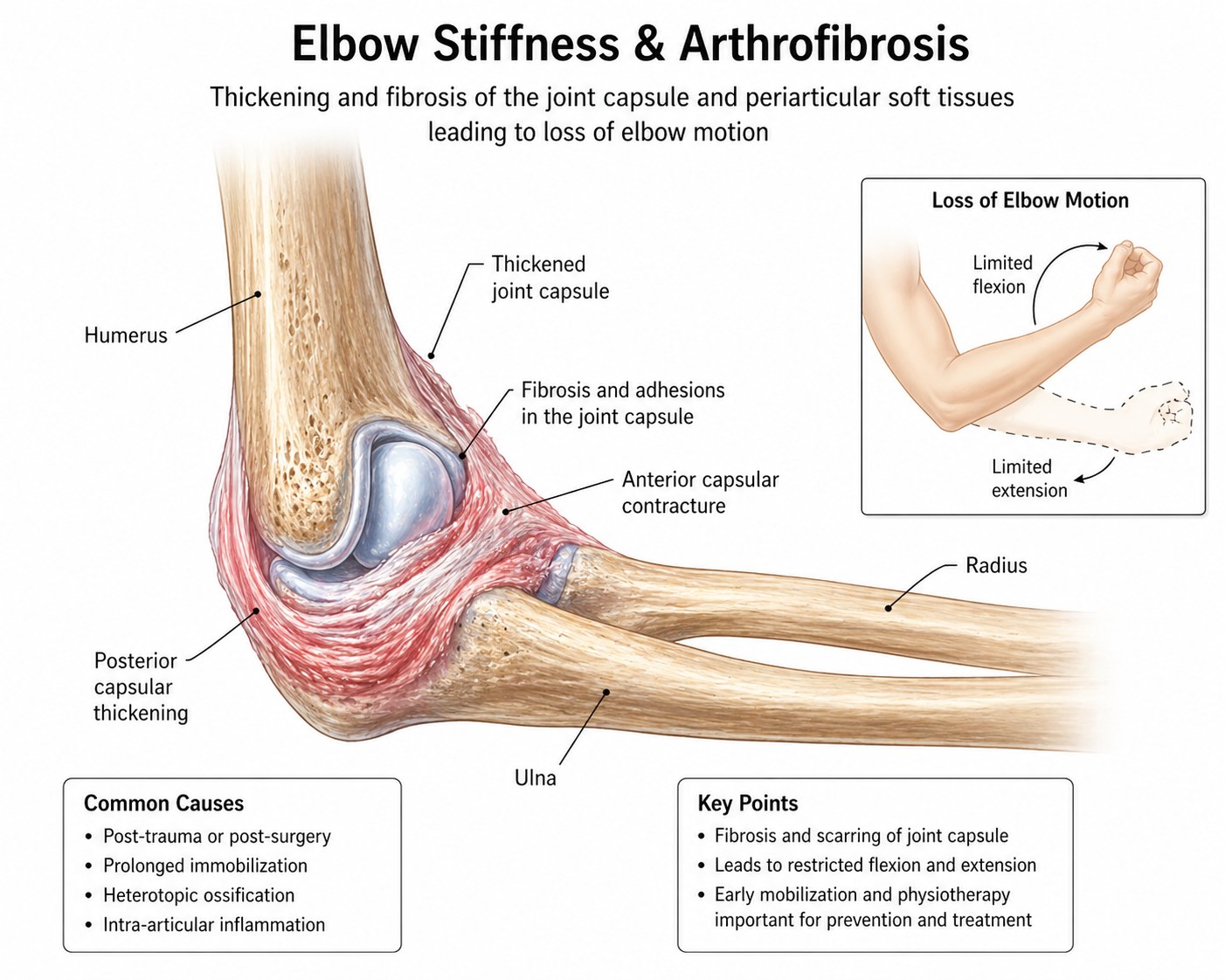
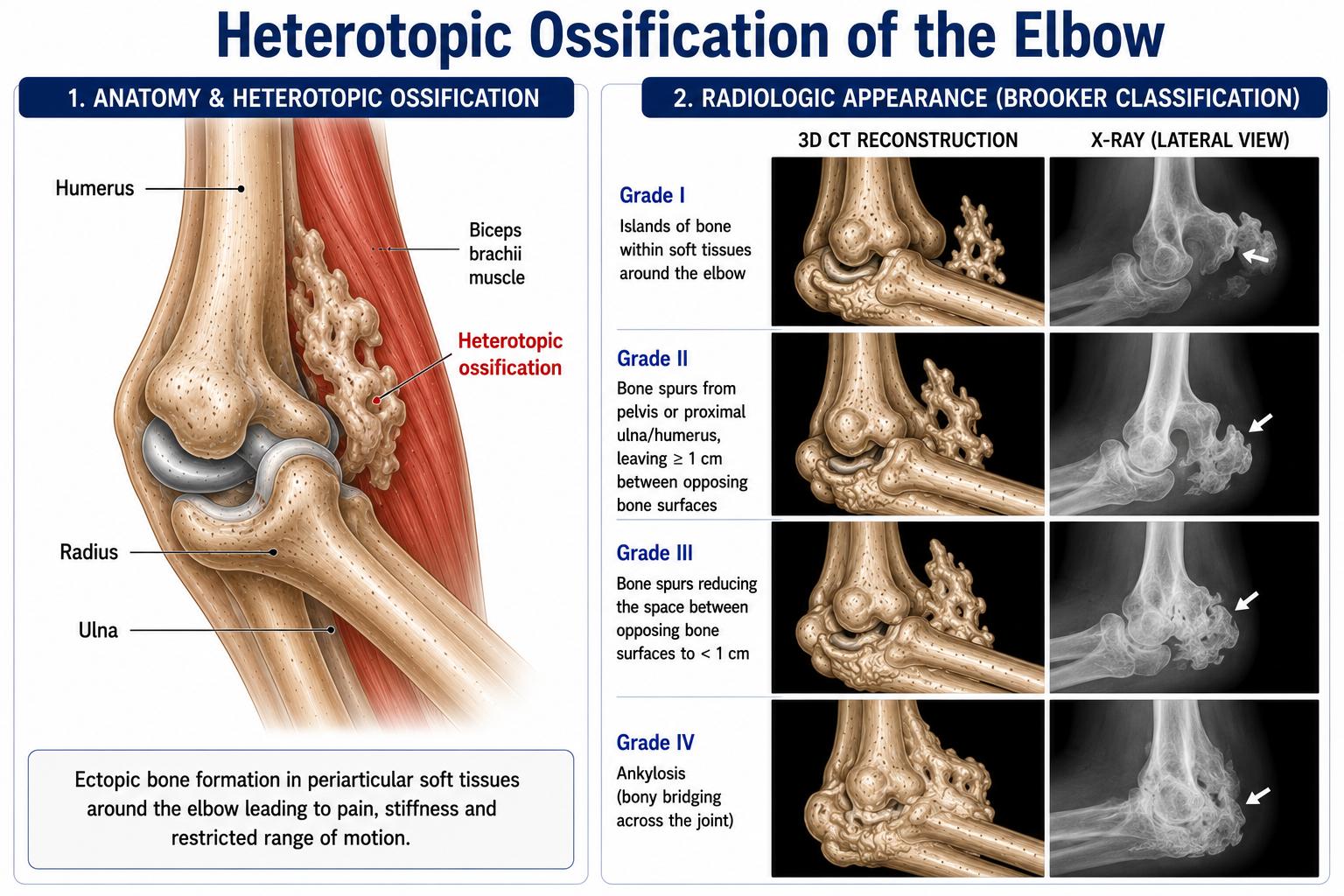
Heterotopic ossification (HO) is the abnormal formation of lamellar bone in soft tissues outside the skeleton — in muscles, capsule, and periarticular tissues around the elbow. It is a major cause of elbow stiffness and can completely ankylose (fuse) the elbow joint in severe cases. The elbow is particularly prone to HO — it is the joint most commonly affected in patients with spinal cord injury and the most common post-traumatic HO site overall.
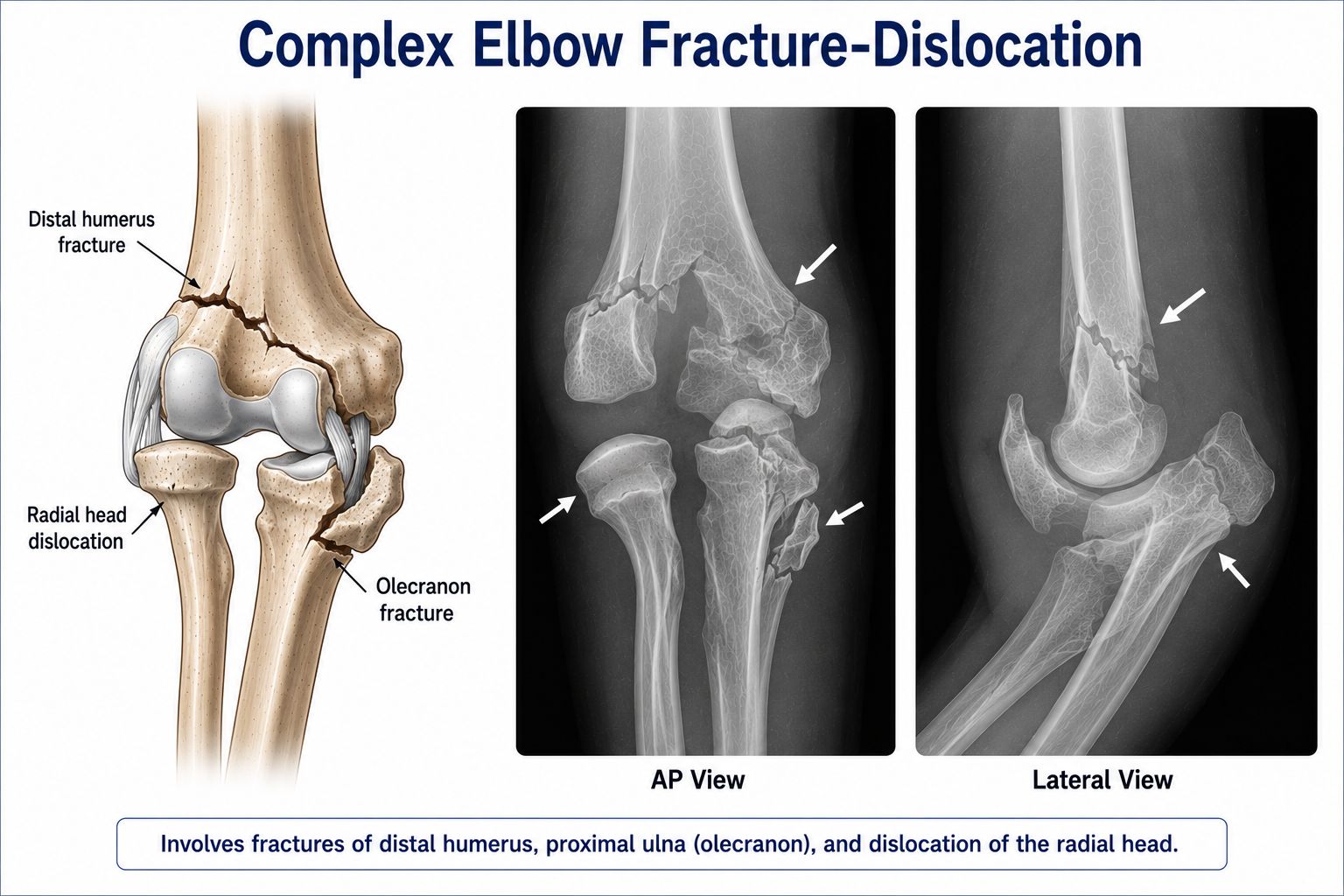
HO at the elbow forms in predictable locations based on the precipitating injury: after anterior dislocation, HO develops anteriorly in the brachialis muscle; after complex fracture-dislocations, it can develop circumferentially around the entire joint. The critical clinical management questions are: when to excise the HO (only when mature, to prevent recurrence), how to confirm maturity, and how to prevent recurrence after excision.
Prevention is far more effective than treatment — indomethacin for 6 weeks after high-risk procedures, or a single dose of radiation to the perioperative field within 72 hours of injury or surgery, dramatically reduces the incidence of clinically significant HO. Surgeons performing complex elbow fracture-dislocation reconstruction should routinely prescribe HO prophylaxis post-operatively.
Quick Facts | Details |
Also Known As | HO Elbow, Ectopic Ossification, Myositis Ossificans Traumatica — Elbow, Para-Articular Ossification |
Affected Area | Periarticular soft tissues of the elbow — anterior capsule, posterior capsule, medial or lateral columns, muscles; any compartment can be affected depending on the precipitating injury |
Who It Affects | Adults following elbow fracture-dislocation, ORIF, burns, head injury, spinal cord injury, or prolonged unconsciousness; elbow is the most commonly affected joint in HO overall; certain individuals appear genetically predisposed |
Prevalence | HO occurs in approximately 3–5% of elbow fractures and increases to 15–20% after complex fracture-dislocations; the incidence is much higher (up to 80%) after spinal cord injury or head injury combined with elbow trauma; one of the most common causes of severe elbow stiffness |
Treatment | Prevention: indomethacin 25mg three times daily for 6 weeks post-ORIF, or single-fraction radiation (700 cGy) within 72 hours; Established HO: confirm maturity with bone scan (cold) then surgical excision at 12–18 months; immediate post-excision physiotherapy; adjuvant prophylaxis to prevent recurrence |
Causes & Risk Factors
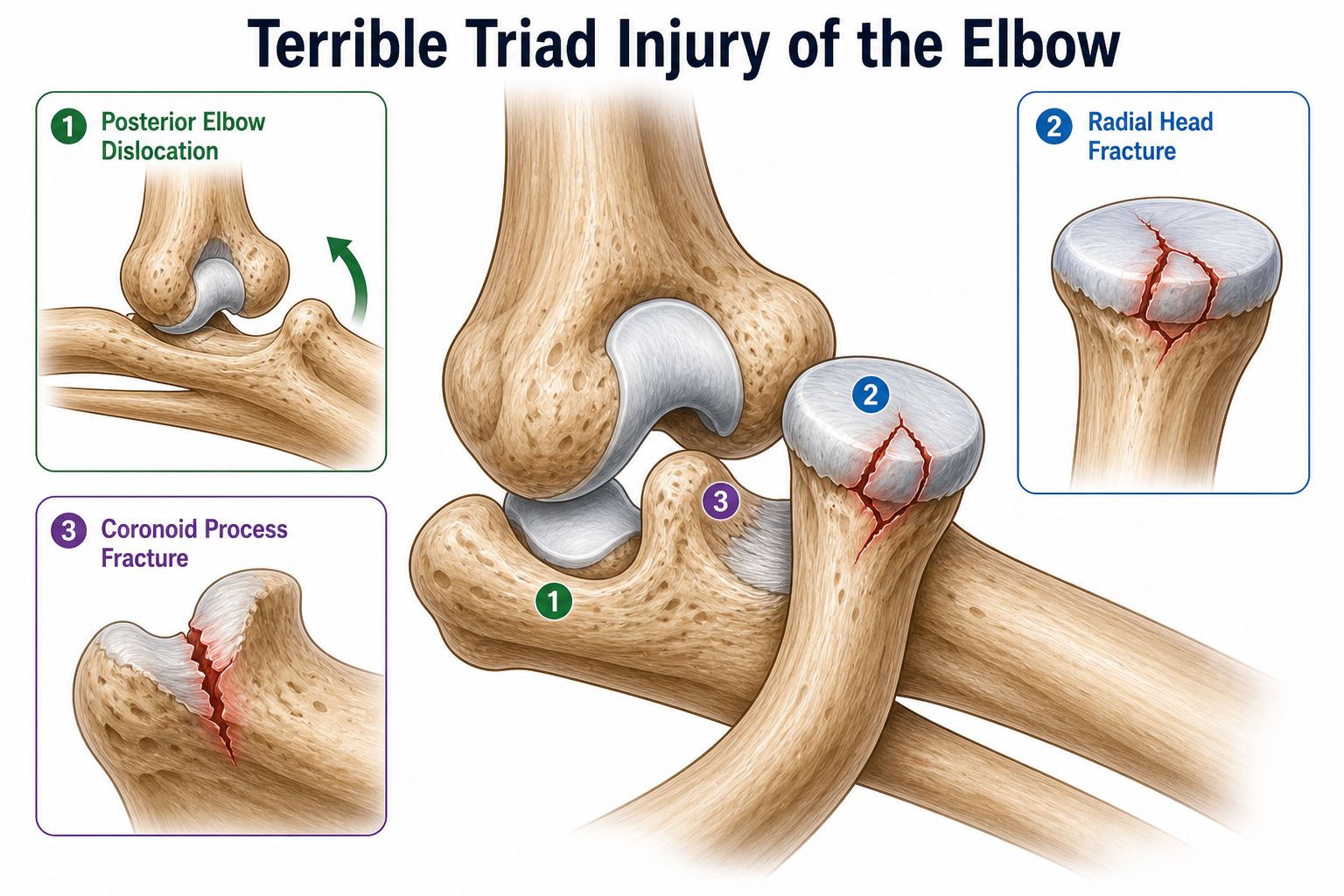
- Complex elbow fracture-dislocation — especially terrible triad injuries; the higher the energy and the more structures disrupted, the higher the HO risk
- Head injury (traumatic brain injury) — TBI dramatically increases the systemic propensity for HO; the mechanism is thought to involve circulating osteogenic factors from the injured brain
- Spinal cord injury — up to 80% of patients with cervical SCI develop some degree of elbow HO; the neurological injury creates a systemic environment promoting ectopic bone formation
- Burns — thermal injury both locally (at the elbow) and systemically (large body surface area) significantly increases HO risk
- Elbow ORIF without prophylaxis — especially after complex fracture-dislocations
- Prolonged immobilisation — immobilisation of the elbow after injury without early mobilisation
- Genetic predisposition — fibrodysplasia ossificans progressiva (FOP) is a rare genetic condition of extreme HO; relevant in the rare presentation of spontaneous HO without trauma
Symptoms
- Progressive loss of elbow range of motion — the hallmark; gradual reduction in both flexion and extension; the functional arc is progressively lost
- Palpable firm mass around the elbow — bony or firm masses in the periarticular soft tissues; increasingly palpable as HO matures
- Pain during the active (formative) phase — significant pain and warmth during the active ossification phase (4–12 weeks post-injury); pain decreases as HO matures
- Heat and redness around the elbow — in the active phase; can mimic septic arthritis or deep vein thrombosis
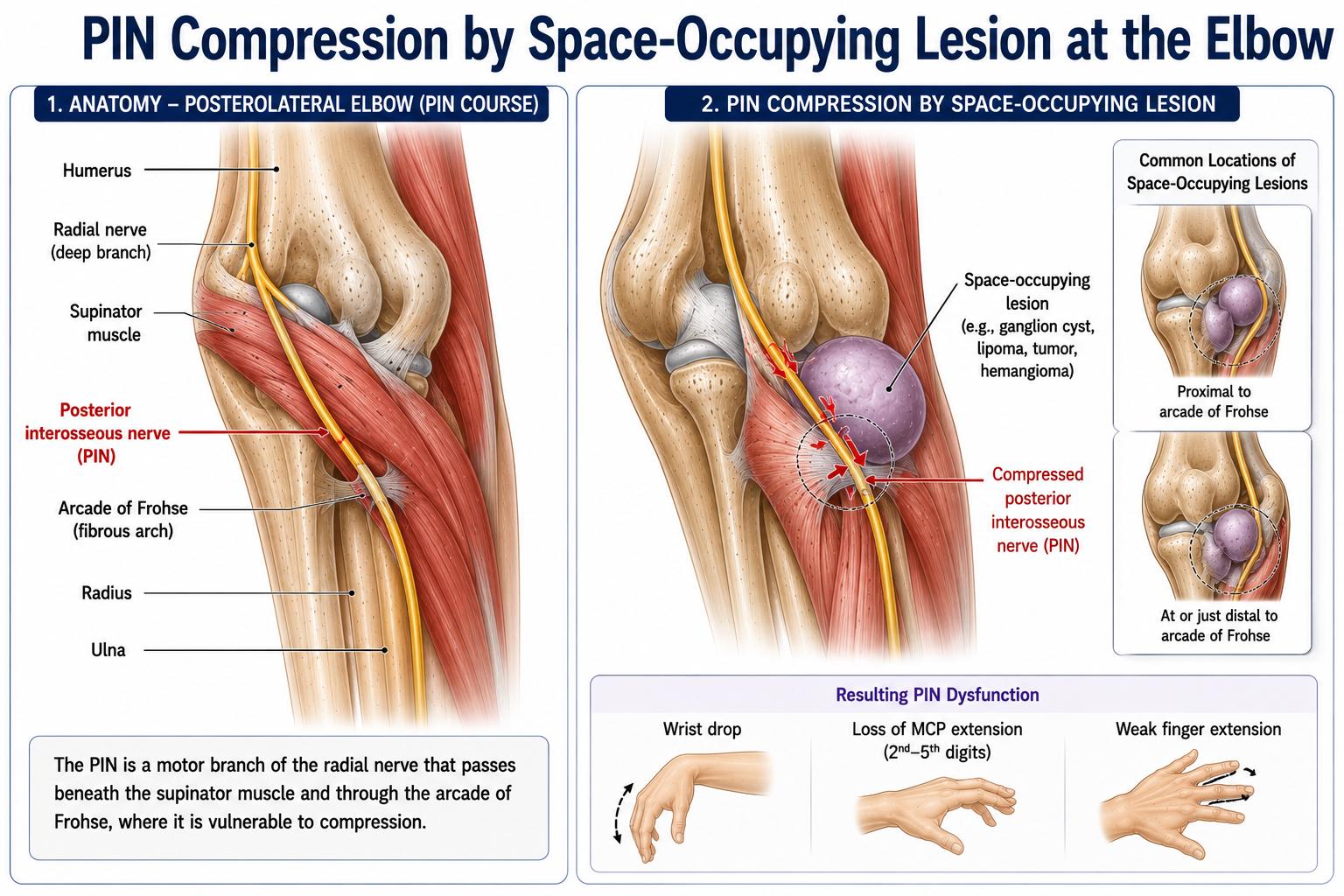
- Ulnar nerve symptoms — HO in the medial column can compress the ulnar nerve in the cubital tunnel
- Complete ankylosis — in severe cases, the elbow may become completely immobile; unable to flex or extend at all
How is it Diagnosed?
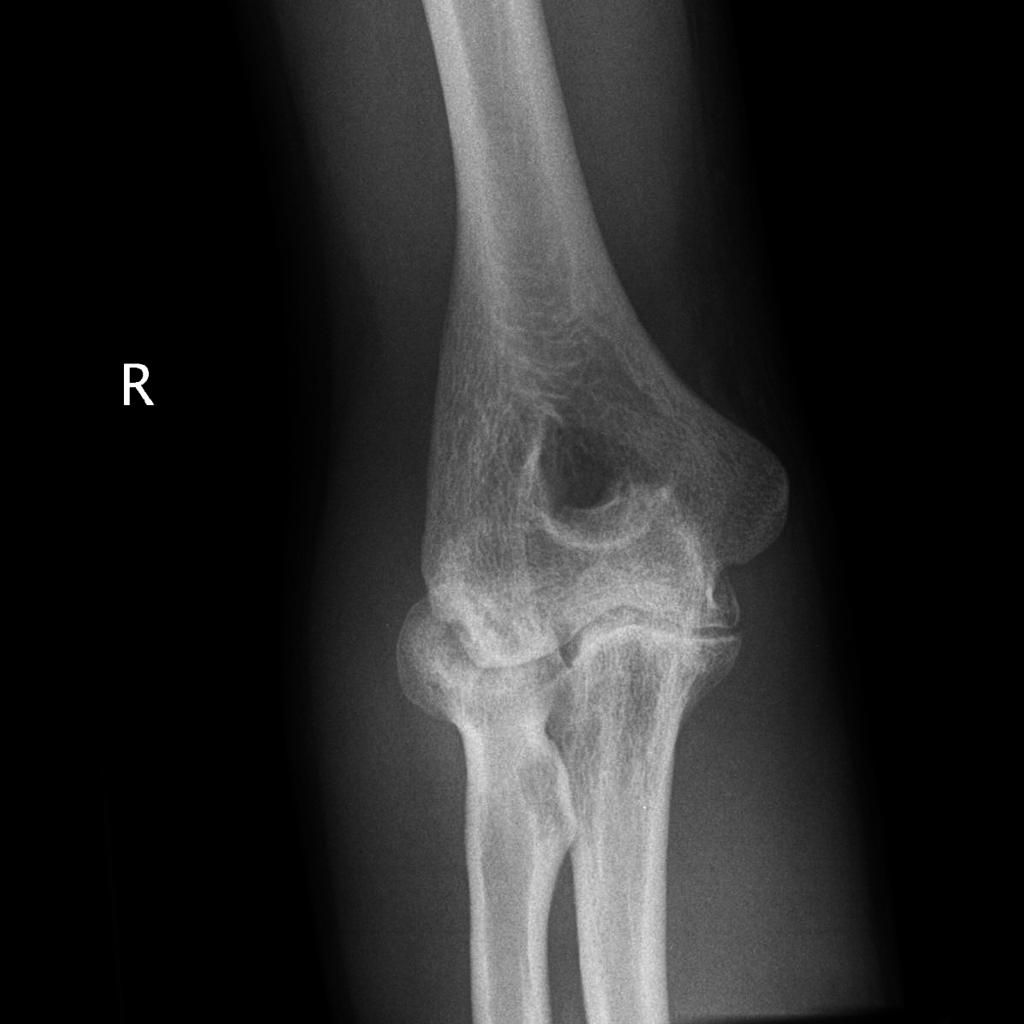
- Plain X-rays — HO appears as amorphous calcification in periarticular soft tissues, maturing to corticated bone; X-ray cannot reliably determine maturity
- Bone scan (technetium-99m) — the key investigation for maturity assessment: HOT scan = active HO (high turnover, risk of recurrence if excised); COLD scan = mature HO (low turnover, safe to excise); serial bone scans until cold (typically 12–18 months post-injury)
- CT scan — essential for pre-operative planning: 3D reconstruction of HO location, extent, relationship to the joint and neurovascular structures; identifies whether the joint space is preserved beneath the HO
- MRI — soft tissue assessment; nerve involvement (ulnar nerve in medial HO); concurrent joint pathology

Treatment Options
Treatment Type | Details |
Prevention — Indomethacin | 25mg three times daily for 6 weeks post-ORIF of complex elbow fractures or fracture-dislocations; reduces HO incidence by 60–70%; gastrointestinal prophylaxis with PPI required concurrently; avoid in patients with renal impairment or peptic ulcer disease |
Prevention — Single-Fraction Radiation | 700–800 cGy single fraction to the perioperative elbow field within 72 hours of injury or surgery; equivalent efficacy to indomethacin; preferred when indomethacin is contraindicated; minimal systemic effects; small theoretical sarcoma risk (very rare) |
Confirm Maturity Before Surgery | Bone scan must demonstrate a “cold” pattern (comparable activity to normal bone) before surgical excision; serial bone scans at 6-monthly intervals until cold; typical maturity: 12–18 months post-injury; operating on immature HO results in recurrence |
Surgical Excision of HO | Posterior approach for posterior HO; medial/lateral column approaches for column HO; protect ulnar nerve (always at risk in medial HO); meticulous subperiosteal dissection; excise all HO while preserving the joint capsule where possible; concurrent capsular release if stiffness is the primary complaint; send specimen for histology (rule out rare malignant variants) |
Post-Excision Prophylaxis | Resume indomethacin for 6 weeks after HO excision to prevent recurrence; OR single-fraction radiation within 72 hours of excision (preferred if indomethacin was ineffective initially); without prophylaxis after excision, recurrence rate is 50–80% |
Immediate Post-Excision Physiotherapy | Begin active-assisted ROM within 24 hours of excision; CPM machine for 48 hours post-op; the gains achieved in surgery are maintained only with aggressive immediate physiotherapy |
Recovery & Rehabilitation
- After HO excision: sling 48 hours; physiotherapy from day 1; CPM machine for 48–72 hours; ROM gains are most at risk in the first 2–4 weeks
- Expected ROM improvement: typically 40–60° of functional range gained after mature HO excision with concurrent capsular release
- Adjuvant prophylaxis (indomethacin or radiation): essential for preventing recurrence
- Long-term: annual X-ray for 2 years to monitor for HO recurrence; clinical ROM assessment at each visit
- Neurological monitoring: ulnar nerve function checked at each post-op visit; most nerve symptoms from medial HO resolve after excision
Why choose Dr Senthilvelan?
HO at the elbow is a condition where prevention is the most important intervention, and where surgical timing (confirmed maturity on bone scan) is the most critical surgical decision. Dr Senthilvelan prescribes HO prophylaxis routinely after all complex elbow procedures and performs bone-scan-guided excision with concurrent capsular release and immediate physiotherapy when established HO requires surgical treatment.
Frequently Asked Questions
1. What is heterotopic ossification and why does it happen at the elbow?
Heterotopic ossification (HO) is the abnormal formation of real, mature bone in soft tissues that do not normally contain bone — the elbow capsule, muscles, and periarticular tissues. The elbow is particularly prone to HO because it is the joint most affected by post-traumatic and neurogenic factors that trigger the bone-forming cascade. After a major elbow injury or surgery — particularly complex fracture-dislocations — mesenchymal cells in the periarticular tissues can transform into bone-forming cells, creating progressively calcifying masses that restrict elbow movement.
2. How do I prevent heterotopic ossification after elbow surgery?
Prevention is far more effective than treatment. The two evidence-based prophylactic strategies are: (1) indomethacin 25mg three times daily for 6 weeks after surgery (reduces HO incidence by 60–70%, with a PPI to protect the stomach); (2) a single dose of radiation (700–800 cGy) delivered to the elbow region within 72 hours of injury or surgery. Both strategies are equivalent in efficacy. Your surgeon should prescribe one of these routinely after any complex elbow fracture-dislocation or ORIF.
3. My elbow is getting stiffer months after surgery — could this be HO?
Yes — progressive elbow stiffness developing in the weeks to months after an elbow injury or surgery is one of the hallmark presentations of HO. Plain X-ray may already show periarticular calcification. The important next step is to confirm whether the HO is still active (on bone scan: hot) or mature (cold). Active HO should not be surgically excised — it will recur. Mature HO (typically at 12–18 months, confirmed by a cold bone scan) can be safely excised with a good chance of meaningful ROM recovery.
4. When is it safe to have HO removed?
HO must be confirmed as mature before surgical excision. The bone scan (technetium-99m) is the most reliable maturity test: a cold scan (activity comparable to normal bone) confirms that the ossification process has stopped and surgery can proceed safely. Serial bone scans are performed at 6-monthly intervals after injury; most HO is mature by 12–18 months. Operating on active (hot) HO results in recurrence in 50–80% of cases, which is why timing is critical.
5. Will physiotherapy alone help HO-related stiffness?
Physiotherapy is an important adjunct — it helps maintain the range of motion that exists and prevents additional soft-tissue contracture from developing alongside the HO. However, physiotherapy cannot dissolve or remove bone. Once HO has matured and is causing mechanical restriction of elbow movement, surgical excision is the only way to restore range of motion. Physiotherapy is most important immediately after surgical excision — the gains achieved in surgery must be actively maintained through aggressive post-operative rehabilitation.