Overview
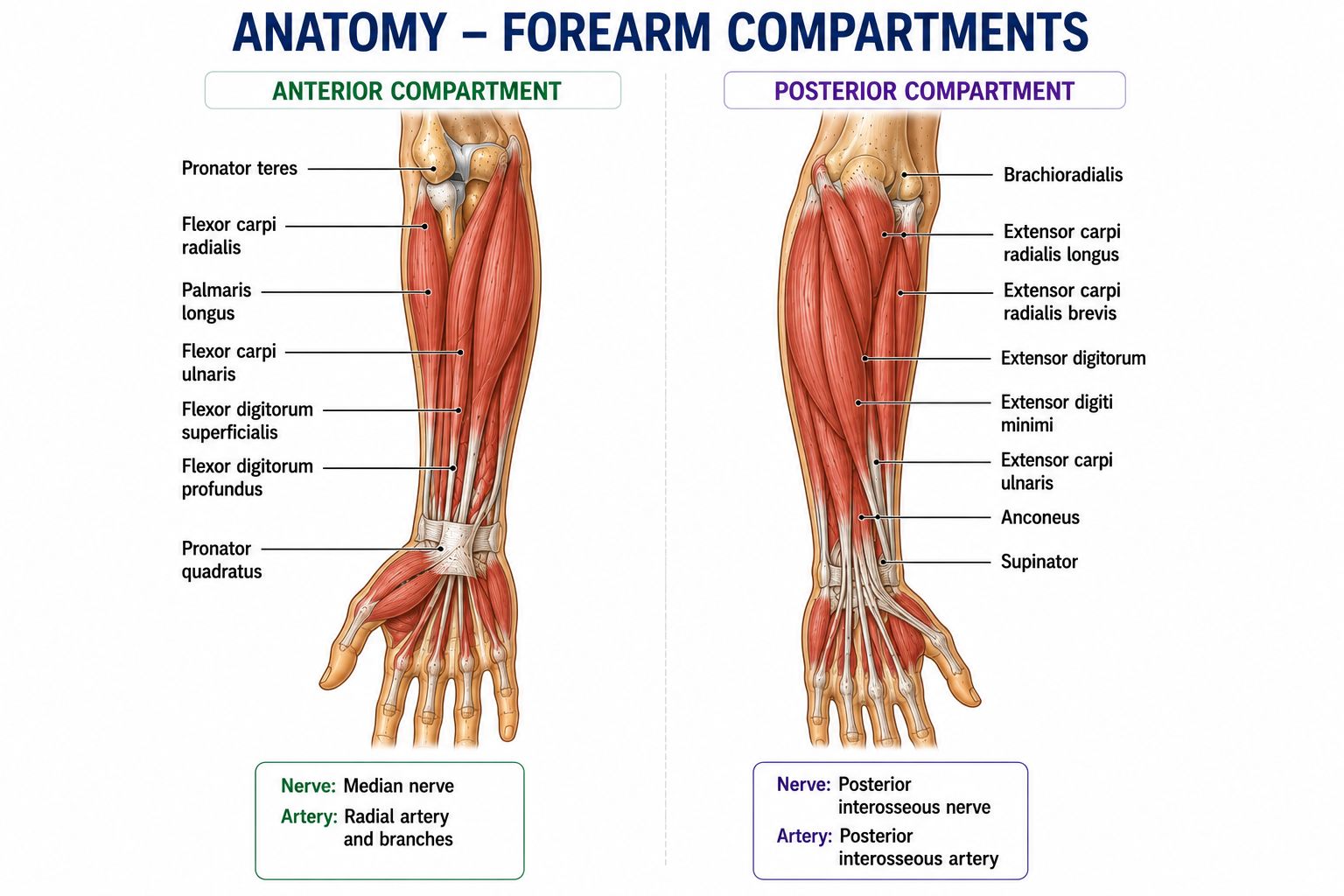
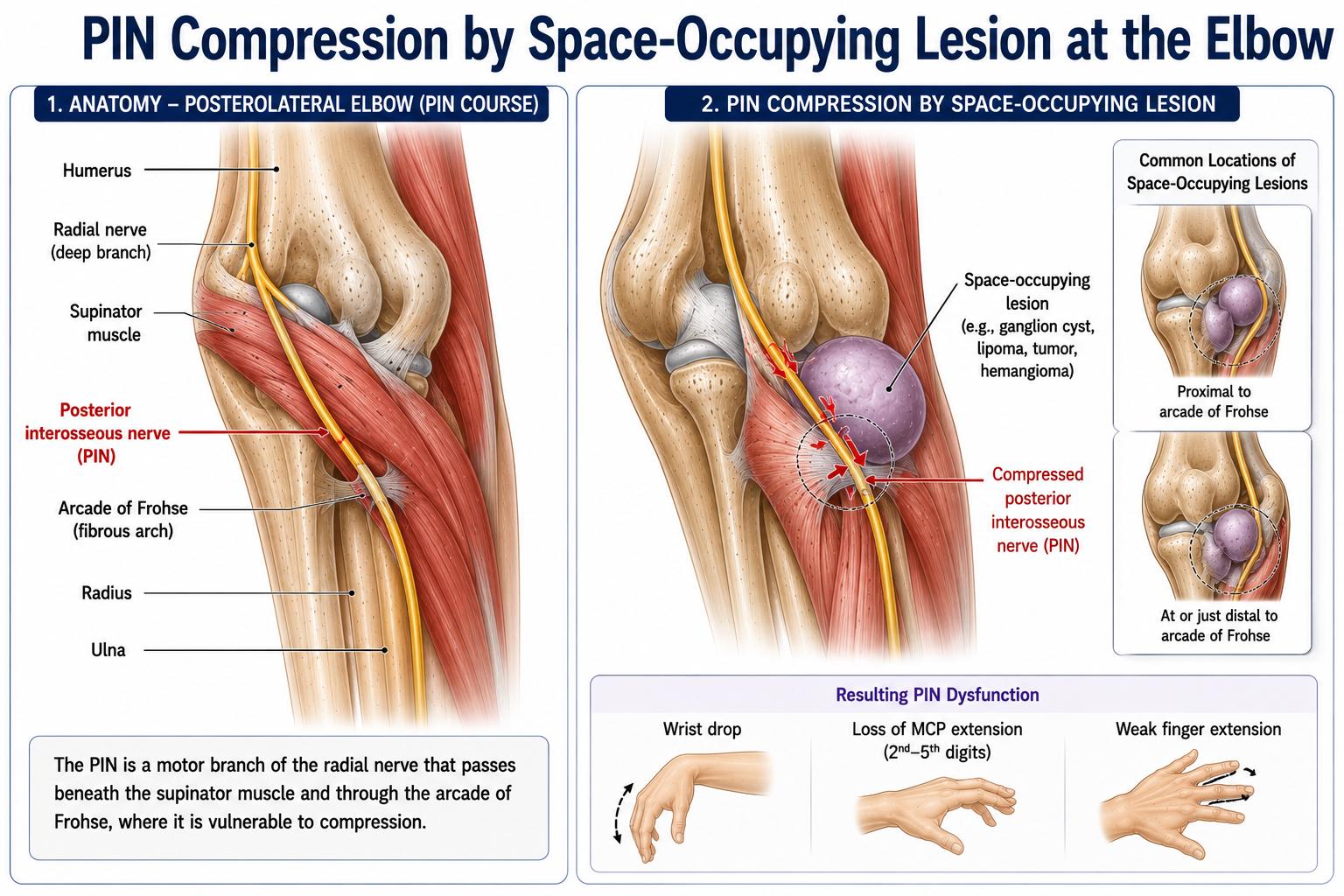
A lipoma in the antecubital fossa is a benign fatty tumour situated in the anterior elbow space — the narrow region between the biceps tendon, brachialis, and brachioradialis muscles. While lipomas are the most common soft tissue tumours in the body and the vast majority are entirely benign, their location in the elbow fossa makes them clinically important: even a moderate-sized lipoma in this region can compress the radial nerve, posterior interosseous nerve (PIN), or the brachial artery, causing symptoms disproportionate to the tumour size.
The clinical relevance of an elbow fossa lipoma depends on whether it is causing symptoms. An asymptomatic lipoma discovered incidentally on imaging requires no treatment — only observation with periodic clinical review. A symptomatic lipoma causing pain, nerve compression (PIN palsy — weakness of finger and thumb extension), or vascular compression requires surgical excision.
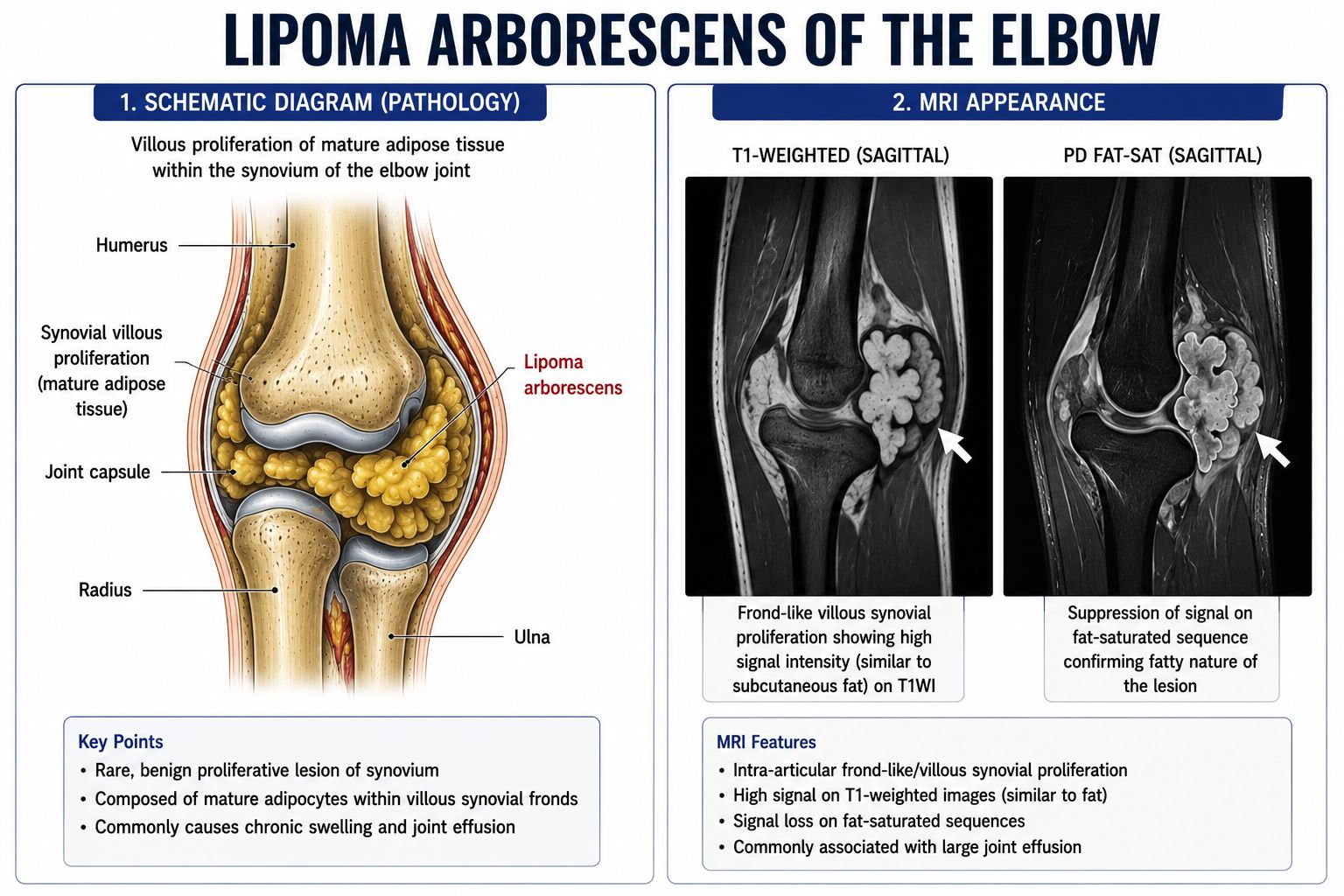
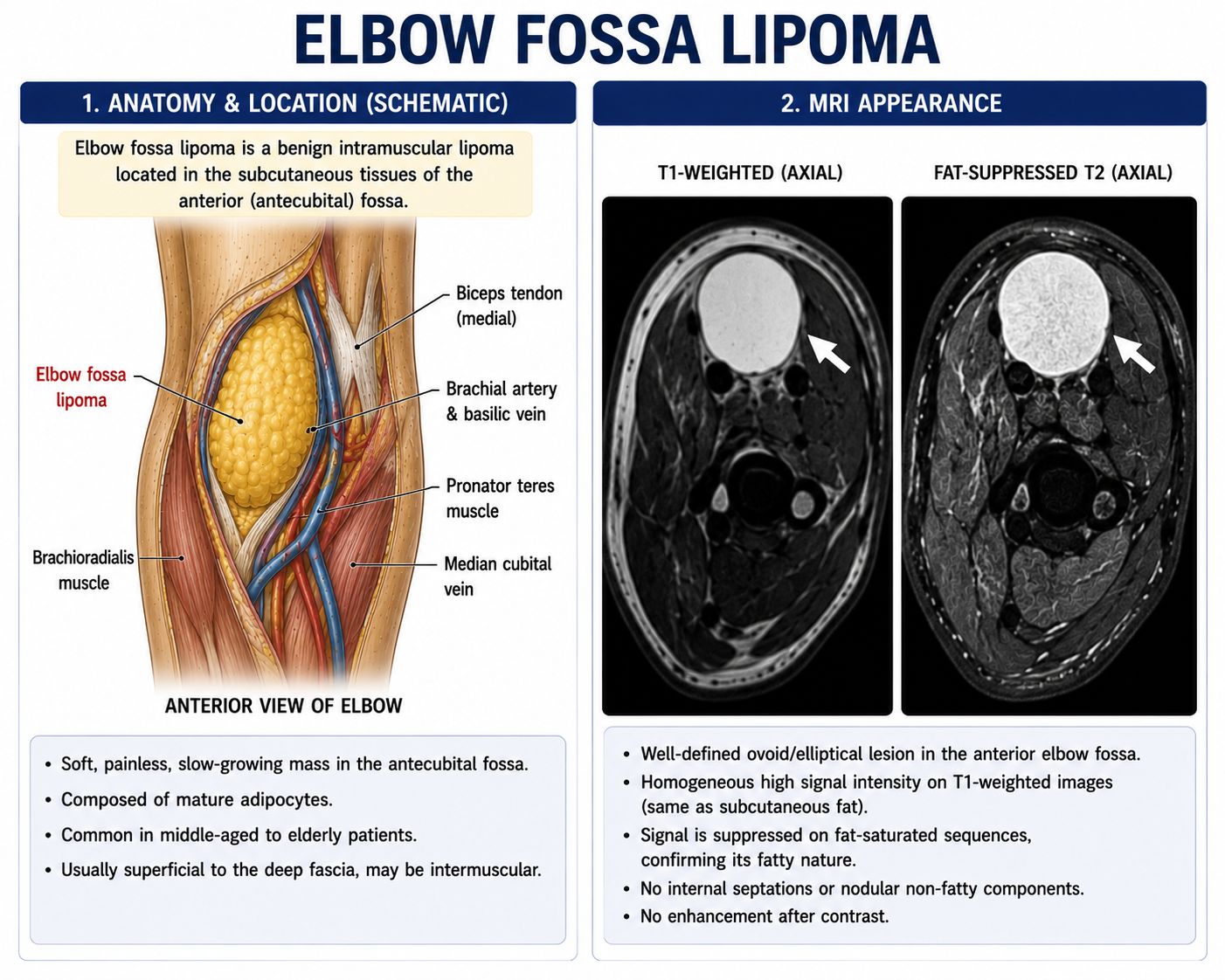
MRI characterisation is essential before surgical excision of any suspected elbow lipoma. The imaging characteristics of a benign lipoma (uniform fat signal, thin septa, no enhancing nodular areas) must be clearly confirmed — lipomatous sarcomas (liposarcoma) can occasionally mimic lipoma on clinical examination and ultrasound. MRI allows confident distinction between benign and potentially malignant fatty lesions.
Quick Facts | Details |
Also Known As | Antecubital Lipoma, Elbow Fossa Lipoma, Anterior Elbow Lipoma |
Affected Area | Antecubital fossa (front of the elbow crease) — the fatty tumour arises in the anterior elbow soft tissues between the biceps tendon, brachialis, and brachioradialis; may compress the PIN, radial nerve, or brachial artery |
Who It Affects | Adults of any age; lipomas can occur anywhere in the body; elbow fossa lipomas are notable because their anatomical location between important neurovascular structures can cause nerve or vascular compression |
Prevalence | Lipomas are the most common soft tissue tumours overall; elbow fossa lipomas are uncommon but clinically important because of their potential to compress the radial nerve, PIN, or brachial artery in this anatomically crowded space |
Treatment | Asymptomatic: observation; Symptomatic or compressive: surgical excision; MRI essential before excision — must differentiate lipoma from liposarcoma (a malignant tumour); concurrent nerve decompression if PIN or radial nerve compressed |
Causes & Risk Factors
- Idiopathic — lipomas arise from benign proliferation of adipocytes; no specific cause identified in the vast majority
- Genetic predisposition — familial multiple lipomatosis; multiple lipomas developing throughout the body
- Prior trauma — occasionally, lipomas develop at sites of prior fat necrosis
- Parosteal lipoma — a specific variant where the lipoma arises from the periosteum of the radius; closely associated with the PIN and more likely to cause nerve compression
Symptoms
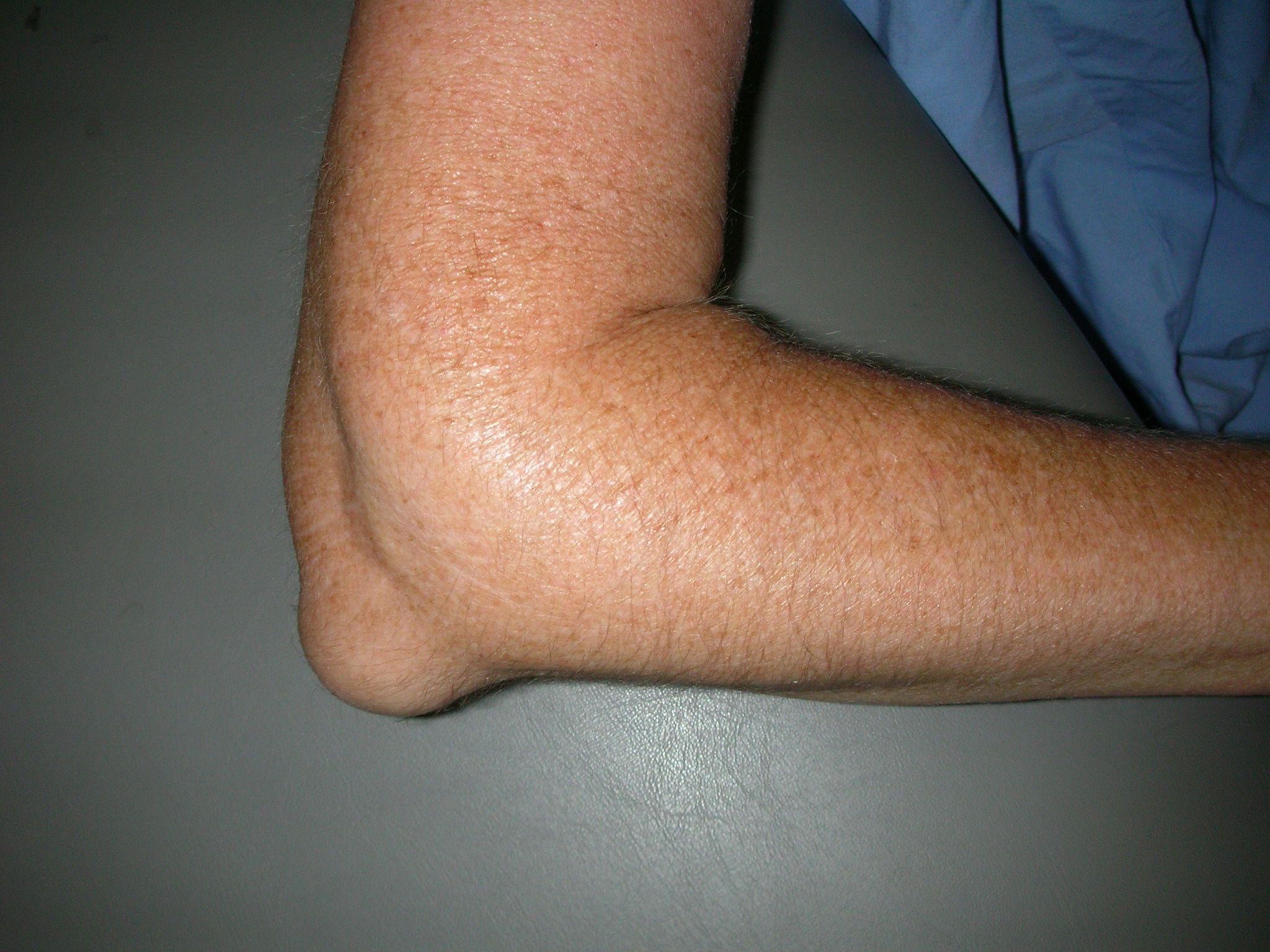
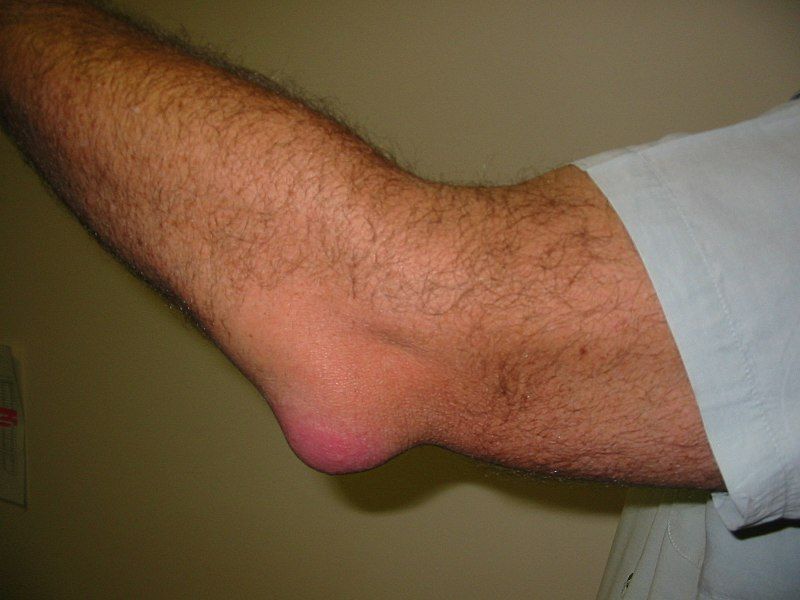
- Palpable mass in the antecubital fossa — soft, mobile, non-tender; grows slowly over years
- Mild aching or discomfort — particularly with elbow use; the mass causes a sense of fullness or pressure
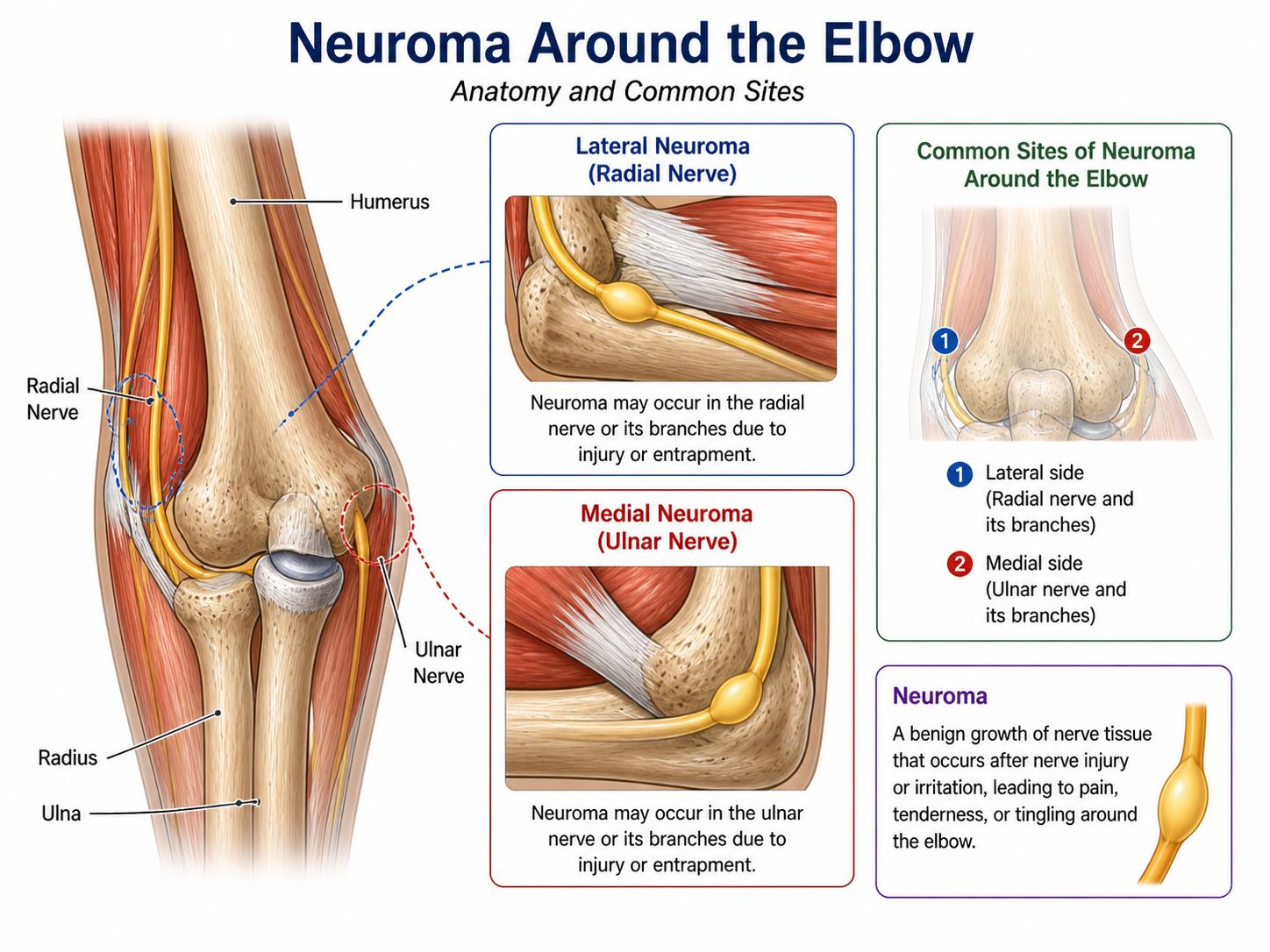
- PIN compression (if near the radial tunnel) — gradual onset finger and thumb extensor weakness; no sensory loss; see Condition 81
- Radial nerve compression (more proximal) — weakness of wrist extension + finger extension + sensory loss in the superficial radial nerve distribution
- Brachial artery compression (rare) — pulsatile lump; reduced radial pulse; arm fatigue with use
How is it Diagnosed?
- Clinical examination — soft, mobile, lobular mass in the antecubital fossa; assess PIN (finger extension), radial nerve (wrist extension, superficial radial nerve sensation); radial pulse
- MRI — gold standard for characterisation: benign lipoma shows uniform fat signal (T1 bright, T2 bright, completely suppressed on fat-suppressed sequences) with thin septa and no enhancing nodules; any enhancing nodular areas or thick septa raise concern for liposarcoma and require further assessment
- Ultrasound — hyperechoic fatty mass; can guide biopsy if MRI raises any concern
- EMG/NCS — if PIN or radial nerve compression is suspected; documents severity for baseline comparison

Treatment Options
Treatment Type | Details |
Observation (Asymptomatic) | Small asymptomatic lipomas with classic benign MRI features: annual clinical review; no intervention required |
MRI Characterisation (Before Any Surgery) | ALWAYS obtain MRI before surgical excision; confirm benign lipoma characteristics; any atypical features (thick septa, enhancing nodules) warrant referral to a musculoskeletal oncology team before surgery |
Surgical Excision | For symptomatic lipomas or those compressing adjacent structures; anterior elbow approach; careful dissection identifying and protecting all adjacent neurovascular structures (PIN, radial nerve, brachial artery and its branches, median nerve); excise the lipoma with its capsule intact where possible; all tissue for histology |
Concurrent PIN Decompression | If PIN compression is confirmed pre-operatively: decompress the arcade of Frohse at the same procedure; nerve recovery expected 3–6 months post-decompression |
Biopsy for Atypical Lesions | Any lipoma with atypical MRI features: core needle biopsy before excision; liposarcoma management is fundamentally different (wider excision, oncology input, possible radiation therapy) |
Recovery & Rehabilitation
- After surgical excision: wound healing 2 weeks; return to normal activity 3–4 weeks
- If concurrent nerve decompression: nerve recovery timeline 3–6 months; wrist splint during recovery
- Histology results: benign lipoma confirmed in the vast majority; review with patient; no further treatment needed for benign lipoma
- Recurrence: benign lipomas rarely recur after complete capsular excision
Why choose Dr Senthilvelan?
Elbow fossa lipomas require careful MRI characterisation to distinguish benign from potentially malignant lesions, and meticulous surgical dissection in an anatomically crowded space. Dr Senthilvelan performs complete capsular excision with systematic identification and protection of the PIN and other neurovascular structures in the antecubital fossa.
Frequently Asked Questions
1. I have a soft lump in the crease of my elbow — is it dangerous?
A soft, mobile, non-tender mass in the antecubital fossa is most likely a lipoma — a benign fatty tumour. Lipomas are the most common soft tissue tumours in the body and the vast majority are entirely harmless. However, a lump in this specific location should be assessed with MRI because the antecubital fossa contains important nerves (the posterior interosseous nerve and radial nerve) and blood vessels (brachial artery) that can occasionally be compressed by a lipoma in this space. MRI also confirms the benign nature of the lesion.
2. Does every elbow lipoma need to be removed?
No — asymptomatic elbow lipomas with classic benign MRI features can be safely observed with periodic review. Surgery is recommended when: the lipoma is causing symptoms (pain, nerve compression with weakness, or vascular compression); the lipoma is enlarging rapidly; or MRI shows any atypical features that raise concern about a potentially malignant lesion. Many people live with small lipomas indefinitely without any problems.
3. How do you tell if a lipoma is benign or malignant?
The most reliable way to distinguish a benign lipoma from a malignant liposarcoma is MRI. A benign lipoma shows completely uniform fat signal (bright on T1, suppressed on fat-suppressed sequences) with at most thin septa, and no enhancing (contrast-absorbing) solid nodules. Liposarcoma shows non-fatty areas within the mass — thick septa, globular enhancing foci, or solid components. Any atypical features require core biopsy and musculoskeletal oncology assessment before surgery.
4. My elbow lump is causing weakness in my fingers — what is happening?
This suggests the lipoma is compressing the posterior interosseous nerve (PIN) in the radial tunnel — a specific complication of anterior elbow lipomas. The PIN supplies the extensor muscles of the fingers and thumb, and its compression causes gradual weakness of finger and thumb extension (inability to lift the fingers and thumb at the knuckle level) without any sensory loss. MRI will show the lipoma’s relationship to the PIN, and EMG will document the severity of nerve involvement. Surgical excision of the lipoma combined with decompression of the PIN at the arcade of Frohse will relieve the compression and allow nerve recovery over 3–6 months.
5. Will the lipoma come back after surgery?
Benign lipomas rarely recur after complete capsular excision. The key technical point is to excise the lipoma with its capsule intact — if the capsule is ruptured during dissection and some fat cells spill into the wound, there is a slightly higher recurrence risk. After successful complete excision, most patients are cured and do not require further treatment or surveillance beyond standard wound healing review.