Overview
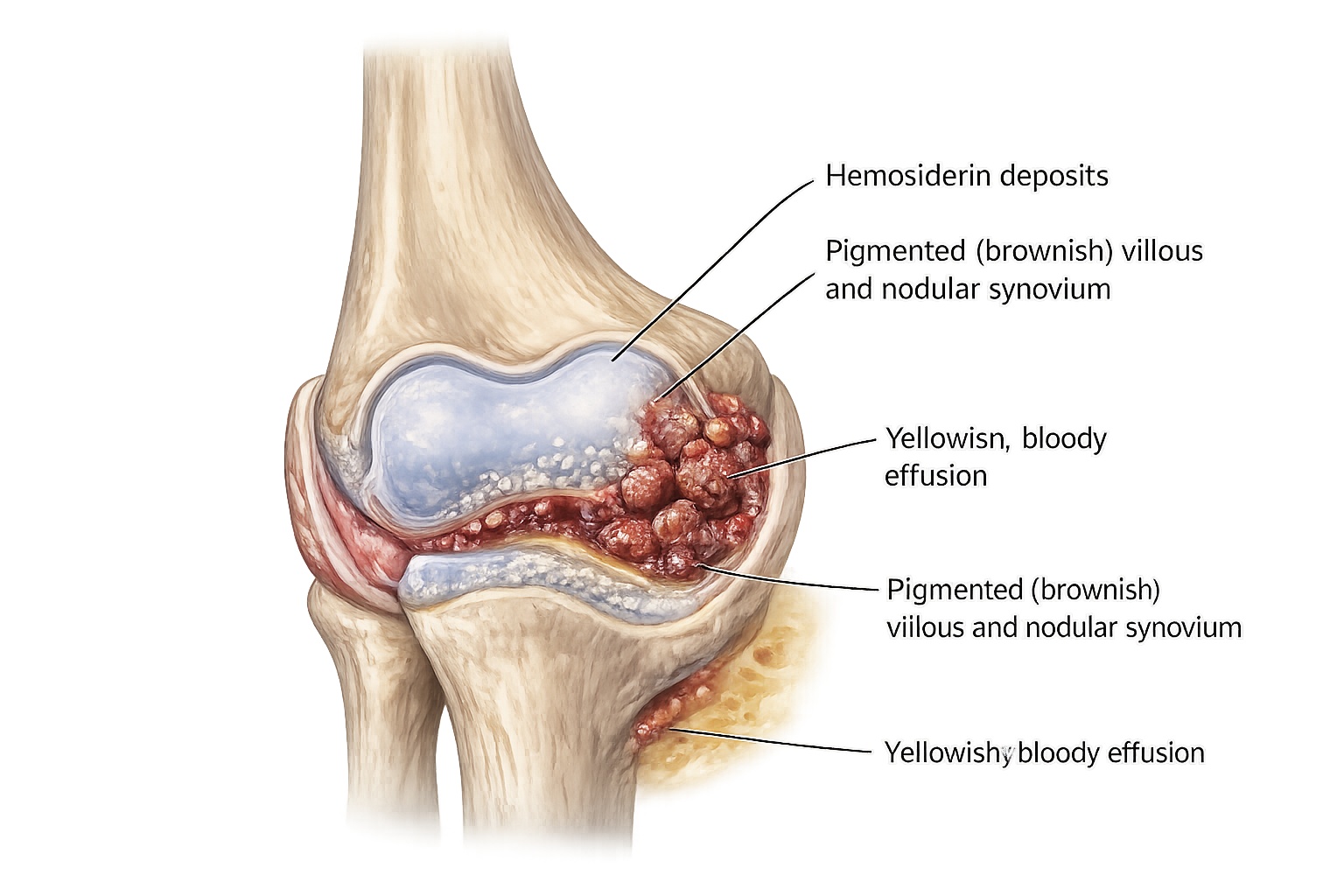
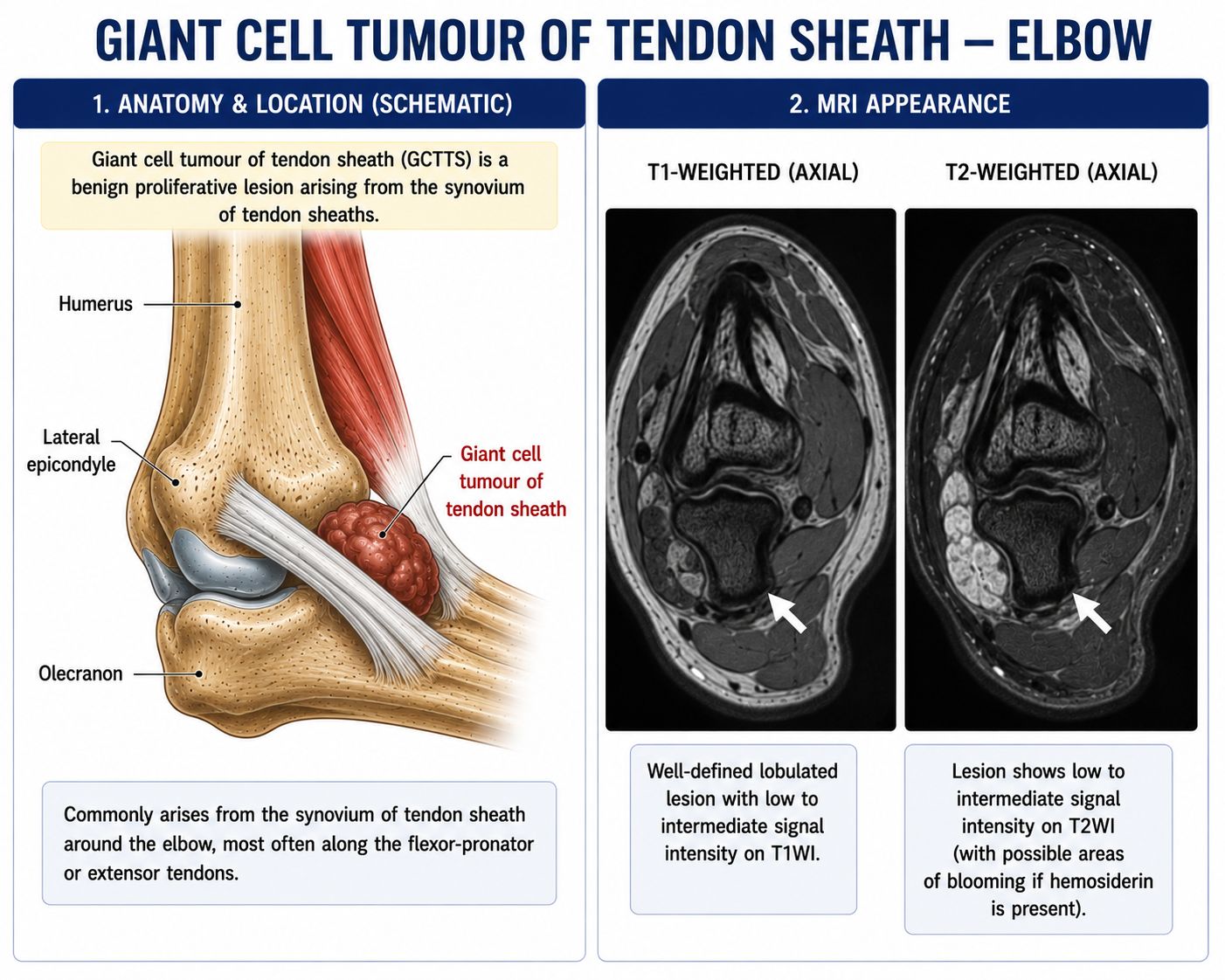
Giant cell tumour of tendon sheath (GCTTS) — now classified as a form of tenosynovial giant cell tumour (TGCT) — is a benign but locally aggressive proliferative lesion of the synoviocytes lining tendon sheaths and bursae. It is closely related to intra-articular PVNS (Condition 9) — both are driven by CSF1 gene translocation causing overexpression of colony-stimulating factor 1 — but presents as a localised, extra-articular nodule rather than diffuse synovial disease.
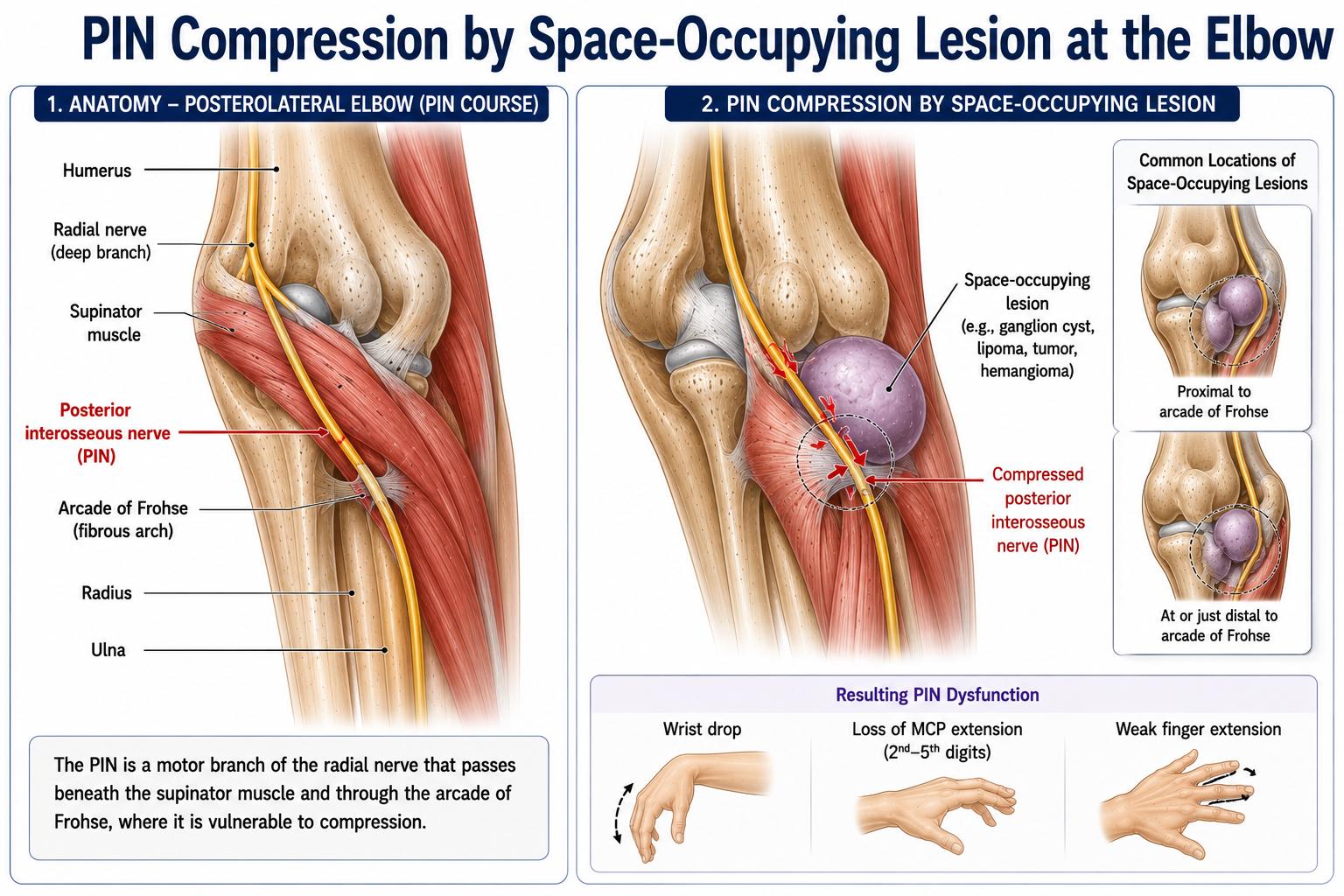
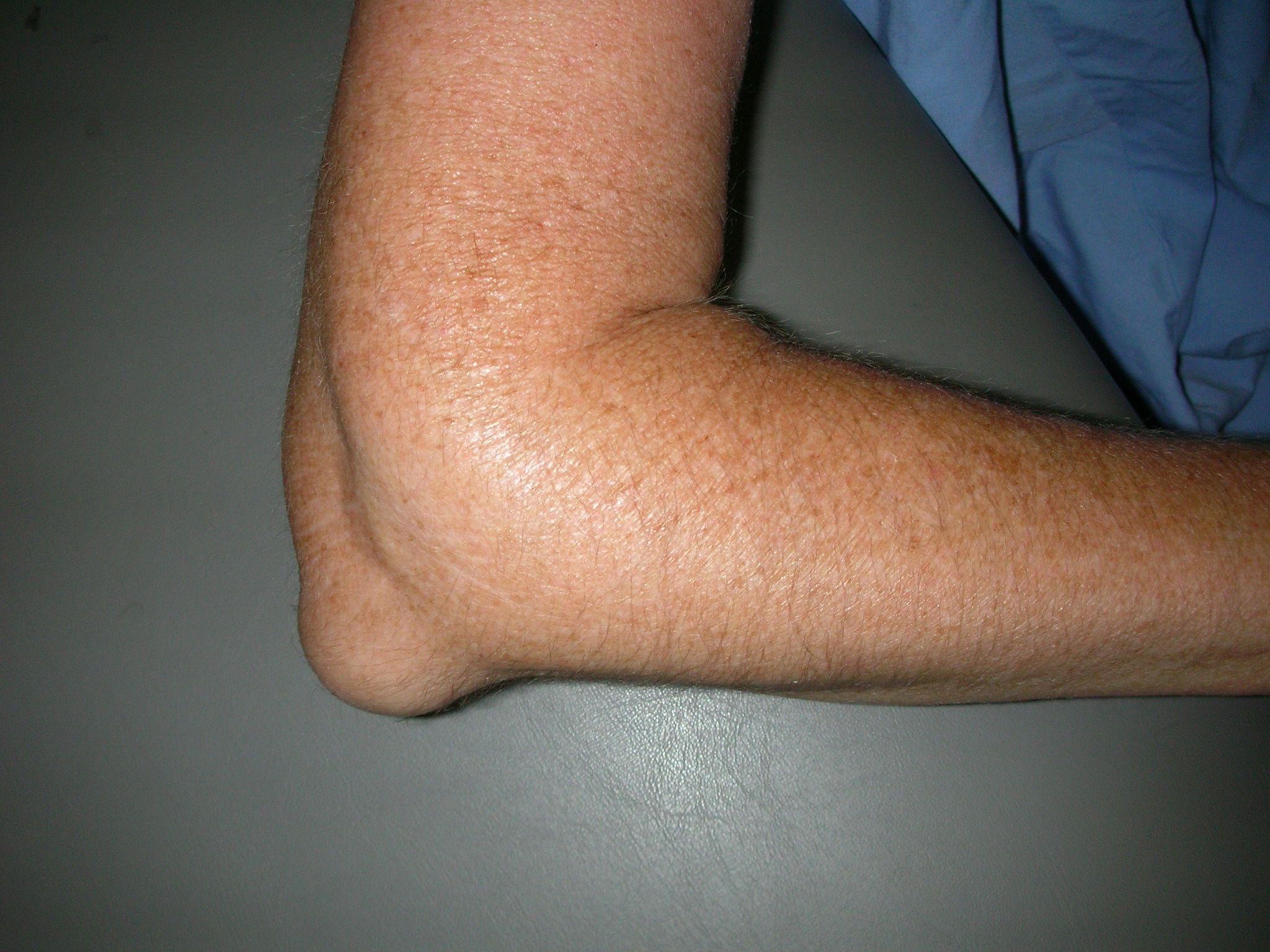
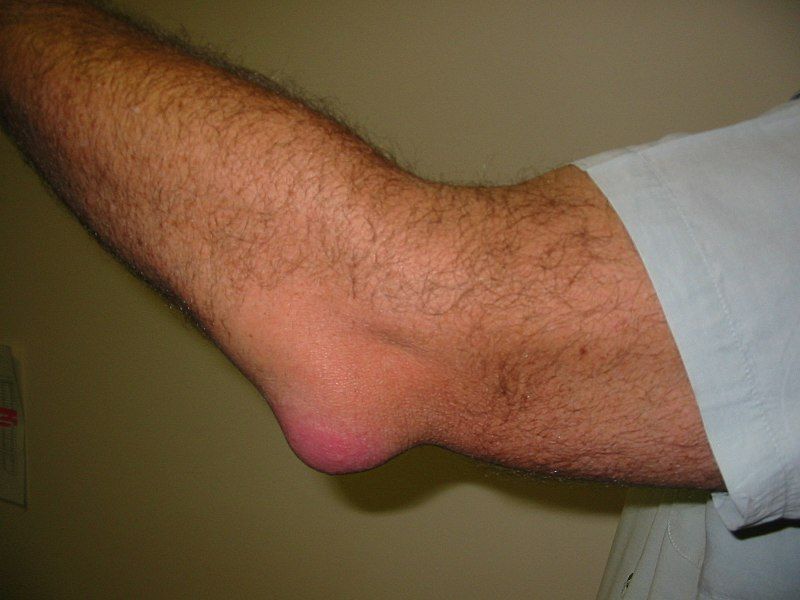
At the elbow, GCTTS presents as a firm, slowly enlarging nodule in the periarticular soft tissues, associated with one of the tendon sheaths or the olecranon bursa. It causes pain and swelling, and may restrict elbow movement if it impinges on adjacent structures. Occasionally it can compress the PIN or other adjacent nerves.
Histological confirmation is essential before and after excision — GCTTS must be distinguished from other elbow masses including rheumatoid nodules, fibromas, and rare malignant tumours. Marginal excision (removing the tumour with a thin surrounding cuff of normal tissue) is the primary treatment, but recurrence rates of 10–20% require surveillance.
Quick Facts | Details |
Also Known As | GCTTS, Tenosynovial Giant Cell Tumour (Extra-Articular), Nodular Tenosynovitis, Focal PVNS — Tendon Sheath |
Affected Area | Tendon sheaths and synovial bursae around the elbow — may involve the extensor or flexor tendons, olecranon bursa, or periarticular soft tissues |
Who It Affects | Adults aged 30–60 years; more common in women; the extra-articular (tendon sheath) form is distinct from intra-articular PVNS (Condition 9) but shares the same cellular origin (CSF1-overexpressing synoviocytes) |
Prevalence | Uncommon at the elbow; more commonly found at the fingers and wrist; the elbow accounts for a small proportion of GCTTS cases; important to distinguish from other periarticular soft tissue masses (lipoma, ganglion, RA nodule) |
Treatment | Marginal surgical excision with a thin cuff of normal tissue; arthroscopic excision if intra-articular or periarticular stalk is present; histological diagnosis is essential; recurrence surveillance at 1 and 3 years; pexidartinib for unresectable recurrent cases |
Causes & Risk Factors
- CSF1 gene translocation — overexpression of colony-stimulating factor 1 drives synoviocyte proliferation; the same molecular mechanism as intra-articular PVNS
- Not caused by trauma — though prior joint or tendon injury may occasionally be reported, GCTTS is a neoplastic (tumour) process rather than a reactive one
- Localised form — the extra-articular nodular form of TGCT; distinct from the diffuse intra-articular form (PVNS)
Symptoms
- Firm, slowly enlarging nodule — palpable in the periarticular soft tissues around the elbow; grows slowly over months to years
- Mild aching pain — localised to the nodule; may be surprisingly mild relative to the size
- Restriction of elbow movement — if the nodule impinges on the joint or adjacent structures
- Nerve compression — if near the PIN or ulnar nerve; may cause weakness or tingling
- Skin changes over the nodule — in some cases, the skin overlying a large GCTTS becomes stretched or indurated
How is it Diagnosed?
- Clinical examination — palpable firm nodule; transillumination usually negative (distinguishes from ganglion); non-tender in most cases; assess nerve function
- Ultrasound — solid, hypervascular nodule; lobular morphology; Doppler signal; demonstrates relationship to tendon sheath
- MRI — low signal on T1 and T2 (due to haemosiderin in the giant cells — the same appearance as PVNS); lobular nodule adjacent to a tendon sheath; bone erosion in some cases
- Histology (MANDATORY) — excisional biopsy or core needle biopsy confirms multinucleated giant cells, histiocytes, haemosiderin, and lipid-laden foam cells; distinguishes GCTTS from other masses including malignant tumours

Treatment Options
Treatment Type | Details |
Marginal Surgical Excision | Primary treatment; excision of the nodule with a thin cuff of surrounding normal tissue; performed through a carefully planned approach to avoid inadvertent nerve or tendon injury; ALL excised tissue sent for histology |
Arthroscopic Excision | For lesions with an intra-articular or periarticular stalk; arthroscopic identification and excision of the stalk combined with open excision of the nodule; reduces recurrence compared to simple open nodule excision alone |
Recurrence Management | For local recurrence (10–20%): repeat excision; wider margins; adjuvant pexidartinib (CSF1R inhibitor) for multiply recurrent or unresectable cases — same drug used for diffuse PVNS (Condition 9) |
Post-Operative Surveillance | Clinical and imaging review at 6 months, 12 months, and 3 years post-excision; ultrasound or MRI for suspected recurrence |
Recovery & Rehabilitation
- After excision: wound healing 2 weeks; return to normal activity 3–4 weeks; physiotherapy for ROM if joint movement was affected
- Histology: results within 1–2 weeks; confirm benign GCTTS; review with patient
- Recurrence: 10–20% local recurrence rate; caught early on surveillance; repeat excision is straightforward for small recurrences
Why choose Dr Senthilvelan?
Giant cell tumour of tendon sheath requires precise surgical excision — achieving clear margins without damaging adjacent tendons and nerves — and mandatory histological analysis. Dr Senthilvelan’s experience with periarticular soft tissue tumours ensures appropriate excision with accurate histological staging and recurrence surveillance.
Frequently Asked Questions
1. I have a firm lump near my elbow that is slowly growing — could this be a GCTTS?
A slowly growing, firm, non-tender nodule in the periarticular soft tissues around the elbow is a classic presentation of giant cell tumour of tendon sheath. Other possibilities include a rheumatoid nodule, fibroma, or ganglion cyst (but ganglions are usually soft and fluctuant, while GCTTS is firm). MRI of the elbow is the best investigation — GCTTS has a characteristic appearance (low signal due to haemosiderin) that is quite distinctive. Surgical excision and histological confirmation is both diagnostic and curative in most cases.
2. Is GCTTS a cancer?
No — giant cell tumour of tendon sheath is benign. It does not metastasise (spread to other organs) and is not life-threatening. However, it is locally aggressive — it can erode into adjacent bone or tendons, and it recurs in 10–20% of cases after excision. It is classified as a benign tumour and treated accordingly by marginal excision. Histological examination of the excised tissue confirms the diagnosis and rules out rare malignant mimics.
3. Will the lump grow back after surgery?
GCTTS has a recurrence rate of approximately 10–20% after marginal excision. Recurrence is more likely when the excision margin was close (the tumour was near a tendon or nerve that limited the surgeon’s ability to take a wide cuff) or when the intra-articular or periarticular stalk was not identified and removed. Surveillance with clinical examination and ultrasound at 6 months, 12 months, and 3 years post-excision allows early detection of any recurrence. Recurrent tumours are treated with repeat excision, which is typically straightforward.
4. Does GCTTS affect nearby nerves?
It can. GCTTS arising from tendon sheaths near the radial tunnel can compress the posterior interosseous nerve (PIN), causing finger extensor weakness. Lesions near the cubital tunnel can compress the ulnar nerve. If nerve symptoms are present, MRI will define the tumour-nerve relationship, and the surgical plan will include nerve protection or decompression as part of the excision. After removal of the compressive tumour, nerve recovery typically occurs over 3–6 months.
5. What is pexidartinib and when is it used for GCTTS?
Pexidartinib is a targeted drug that blocks the CSF1 receptor — the molecular driver of both GCTTS and intra-articular PVNS. It is approved for adults with symptomatic, advanced tenosynovial giant cell tumour that cannot be removed surgically or has recurred multiple times despite surgery. It causes significant tumour reduction in approximately 40% of patients but carries a risk of serious hepatotoxicity and is administered under oncology supervision. It is not used for first-line treatment of resectable GCTTS — surgery remains the standard first treatment.