Overview
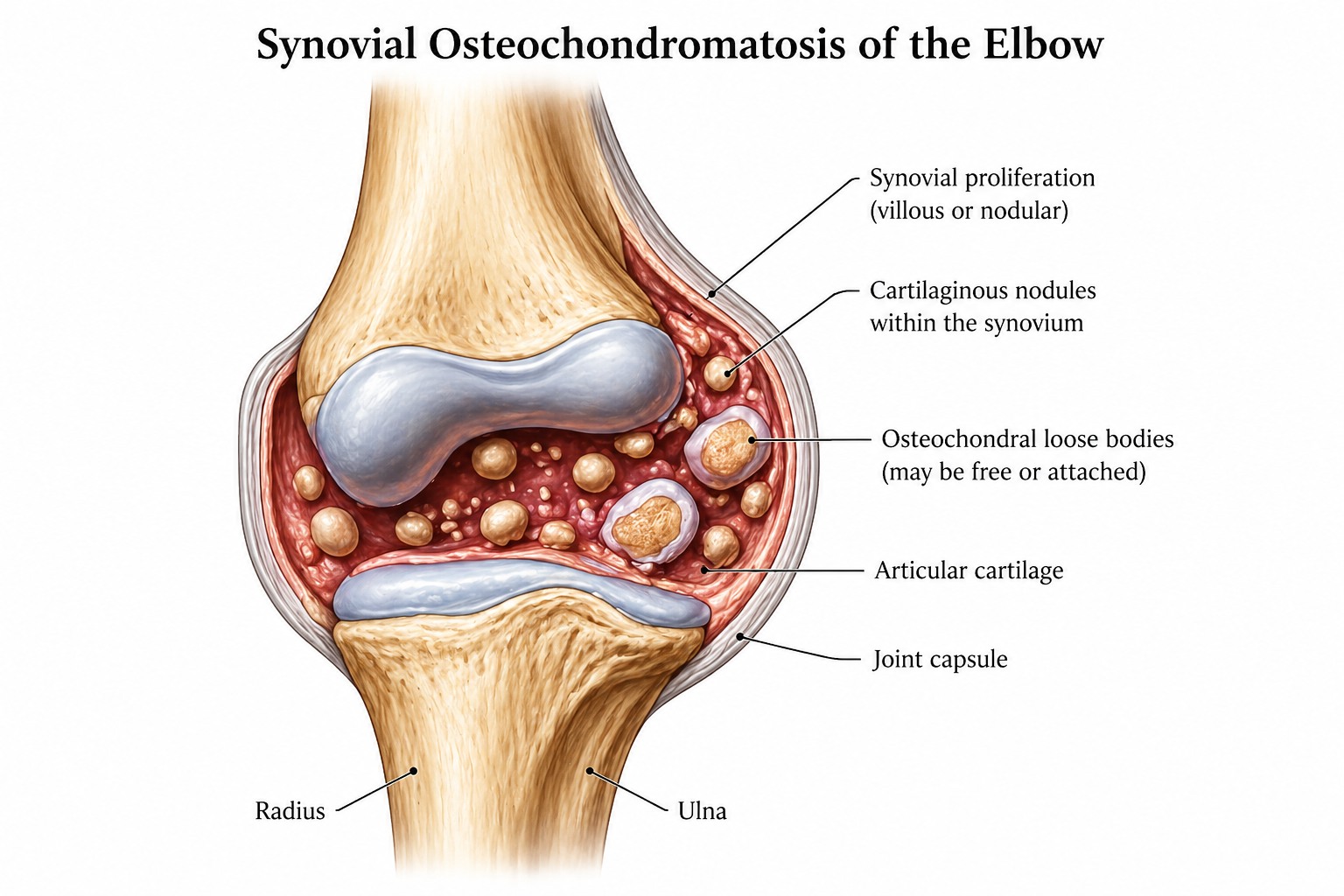
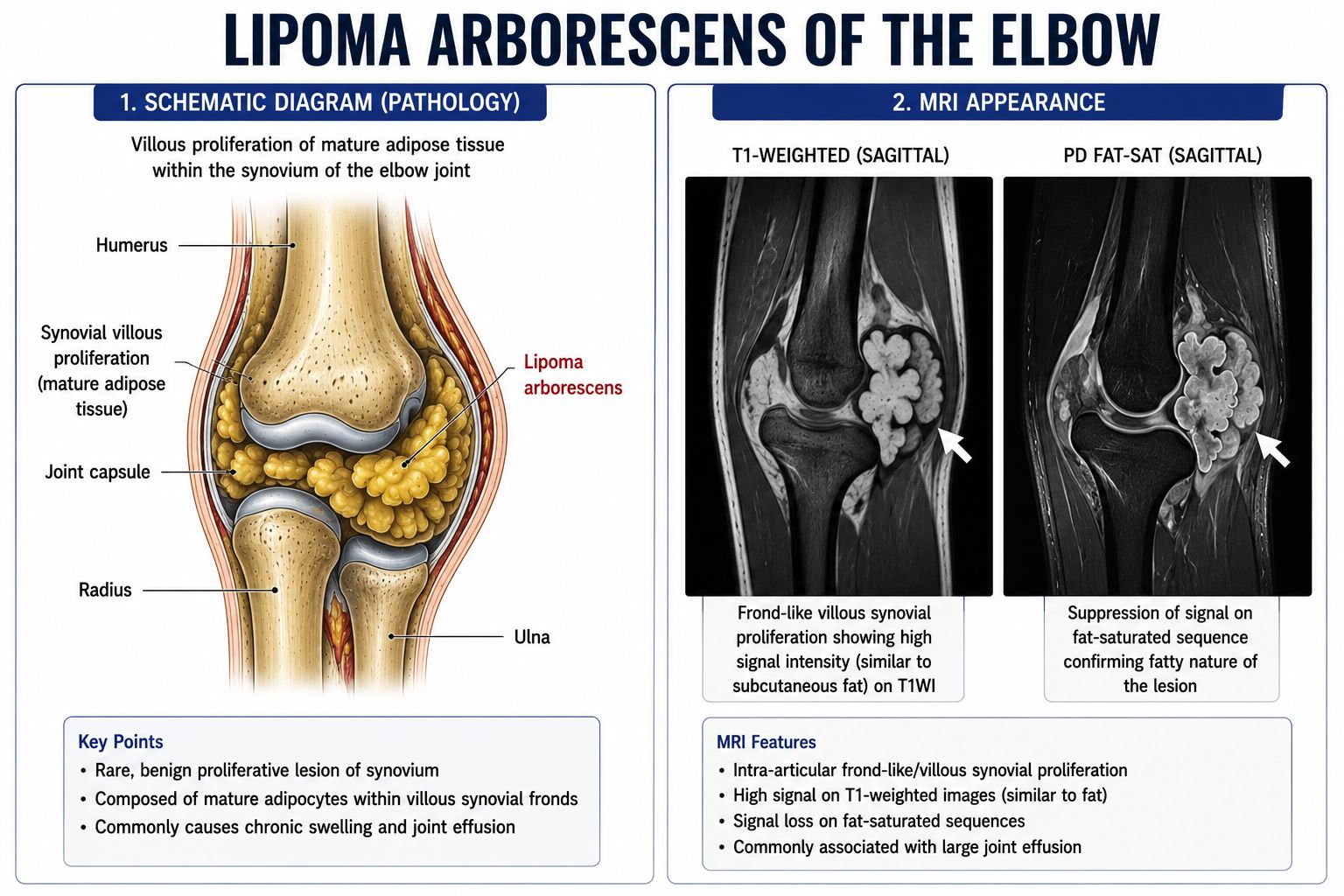
Lipoma arborescens is a rare condition characterised by diffuse replacement of the synovial lining of a joint by mature fatty (adipose) tissue — forming villous or frond-like projections of fat within the joint recesses. Unlike a discrete intra-articular lipoma (a single fatty mass), lipoma arborescens involves the entire synovial membrane diffusely, filling the joint with fatty villi that resemble a tree (arbor = tree in Latin).
At the elbow, lipoma arborescens presents with insidious onset of joint swelling, aching, and progressive restriction of movement. On MRI, the characteristic appearance — fat-signal villous projections throughout the joint — is pathognomonic. The condition is benign but causes progressive joint damage if left untreated, as the fatty proliferation occupies joint recesses, compresses articular surfaces, and promotes secondary synovitis.
Histological examination of all excised tissue is mandatory to distinguish lipoma arborescens (benign) from synovial liposarcoma (malignant) — a rare but important differential diagnosis. Synovectomy — either arthroscopic or open depending on the extent — is the definitive treatment.
Quick Facts | Details |
Also Known As | Intra-Articular Lipoma, Diffuse Articular Lipomatosis, Villous Lipomatous Proliferation of the Synovial Membrane |
Affected Area | Synovial lining of the elbow joint — lipomatous fatty tissue replaces and proliferates within the synovial membrane, filling the joint recesses with villi of fatty tissue |
Who It Affects | Adults predominantly; may affect any age; associated with degenerative joint disease, prior joint trauma, and inflammatory arthritis; rare condition; can affect any synovial joint but occurs at the elbow in a small proportion of cases |
Prevalence | Rare; the exact incidence at the elbow is unknown; lipoma arborescens (literally “tree-shaped lipoma”) is most commonly reported at the knee; elbow involvement is uncommon and requires specialist management |
Treatment | Arthroscopic synovectomy (removal of all lipomatous villous tissue) or open synovectomy for extensive involvement; send all excised material for histology (essential to exclude liposarcoma); post-operative physiotherapy to prevent stiffness |
Causes & Risk Factors
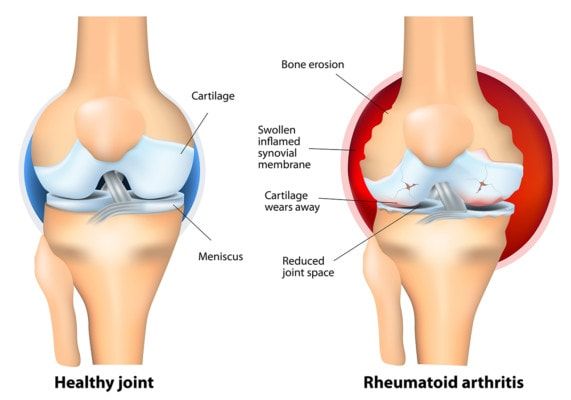
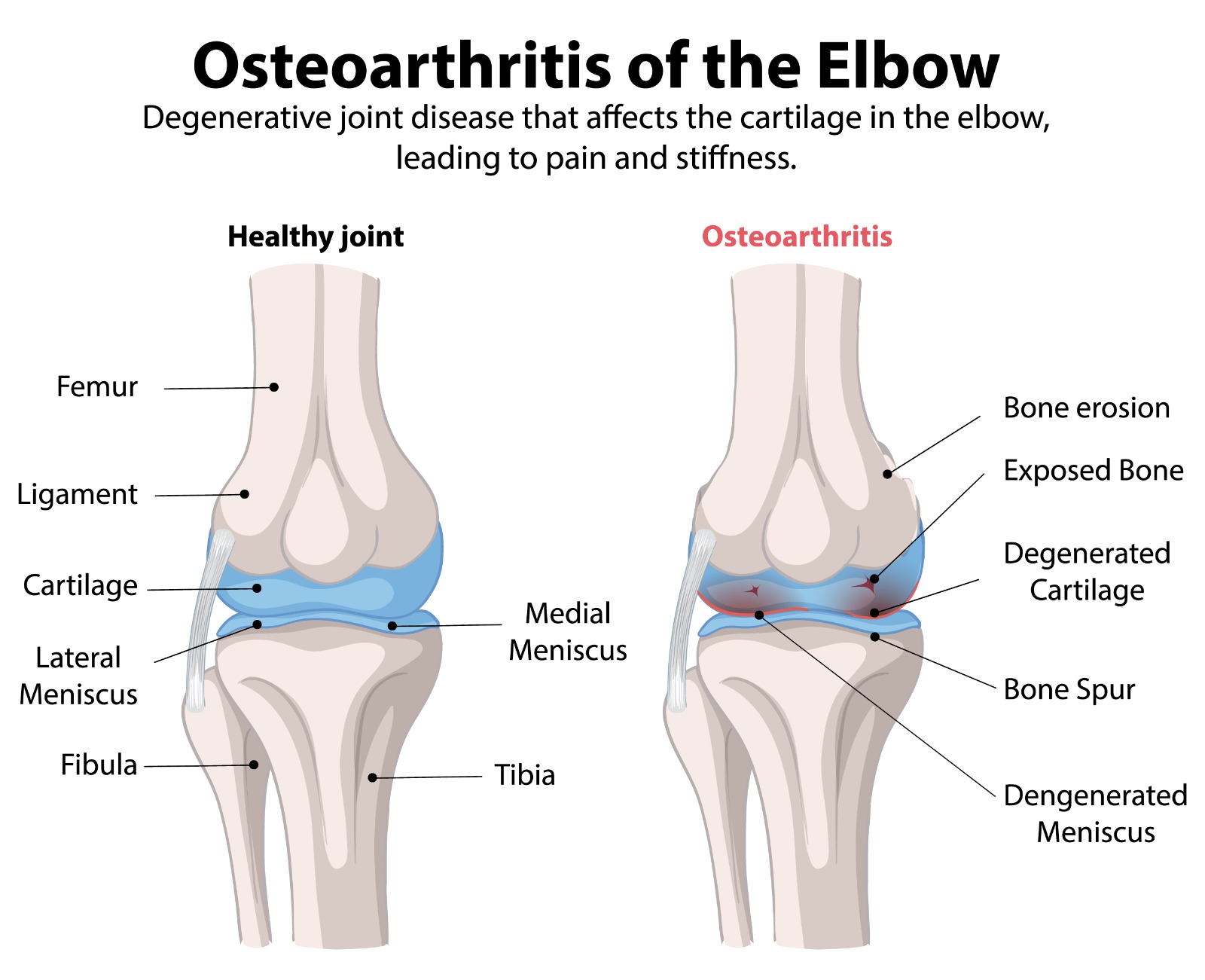
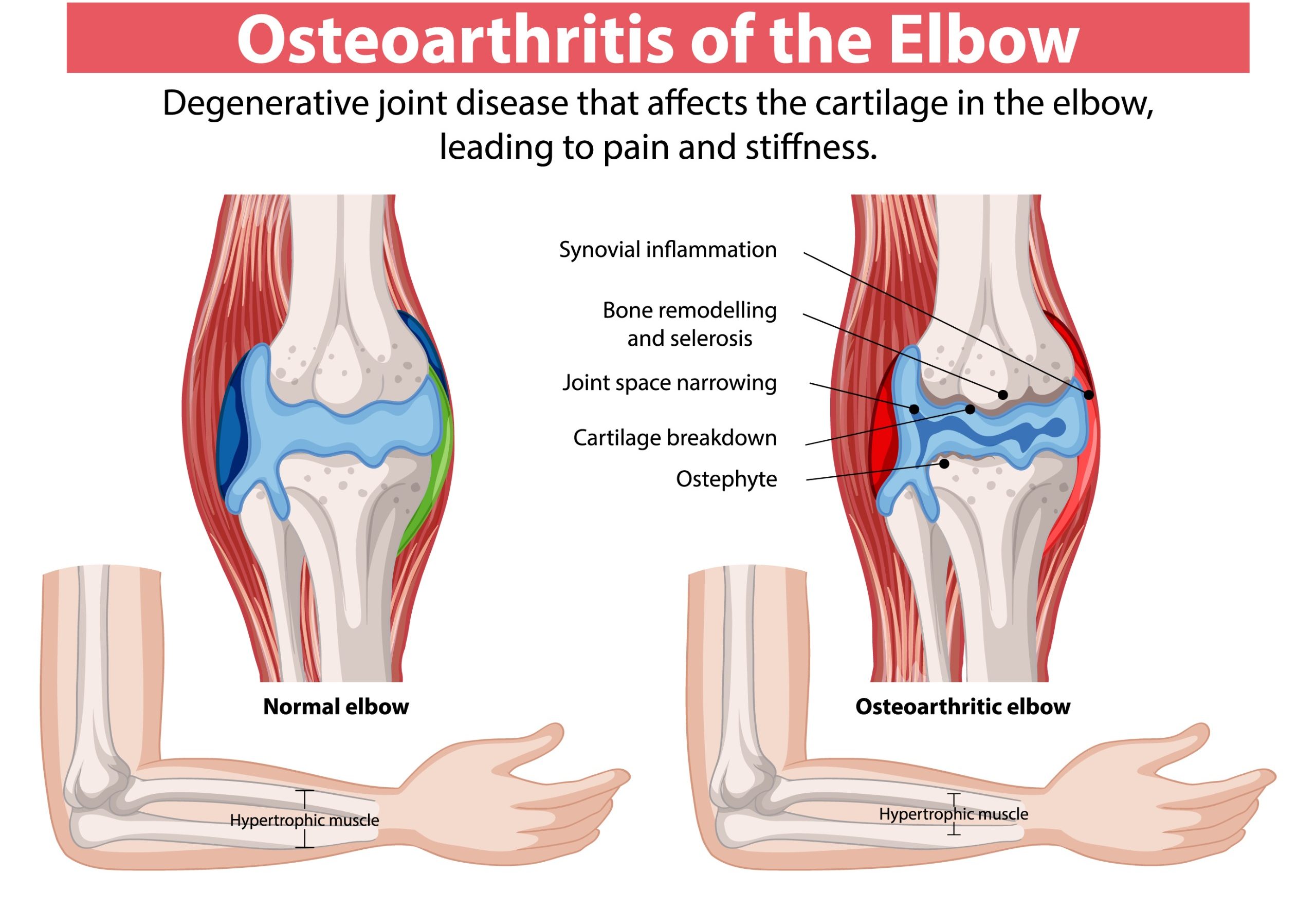
- Secondary form (most common) — associated with underlying joint pathology: osteoarthritis, rheumatoid arthritis, or prior joint trauma; the synovial metaplasia is driven by the chronic joint disease
- Primary idiopathic form — occurs in the absence of identifiable joint disease; less common
- Degenerative joint changes — the association with OA and chronic synovitis suggests that fatty metaplasia of the synovium may be driven by chronic inflammatory or degenerative stimuli
- No malignant potential — lipoma arborescens itself does not undergo malignant transformation; however, synovial liposarcoma (which can mimic it) is a true malignancy requiring exclusion by histology
Symptoms
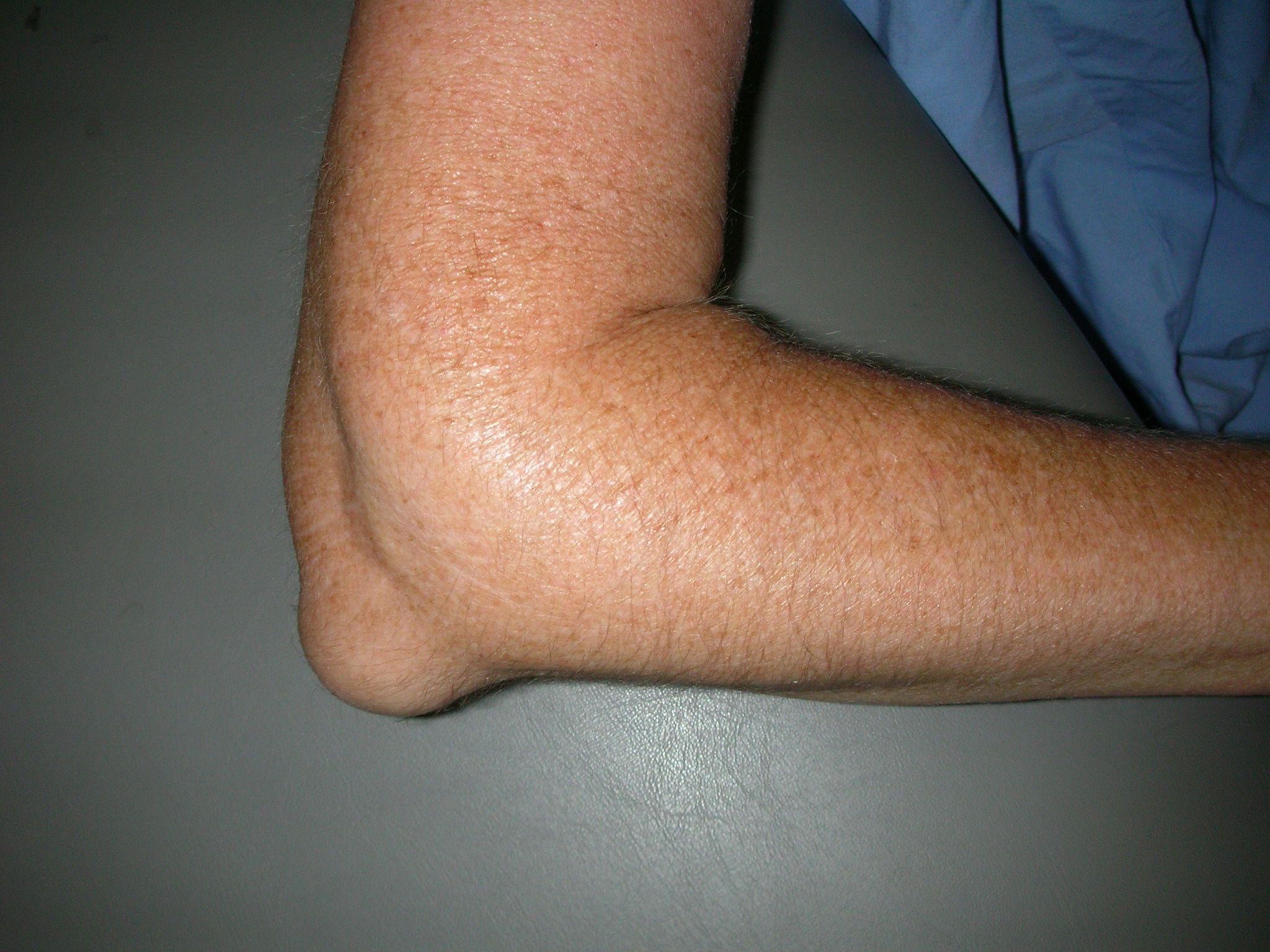
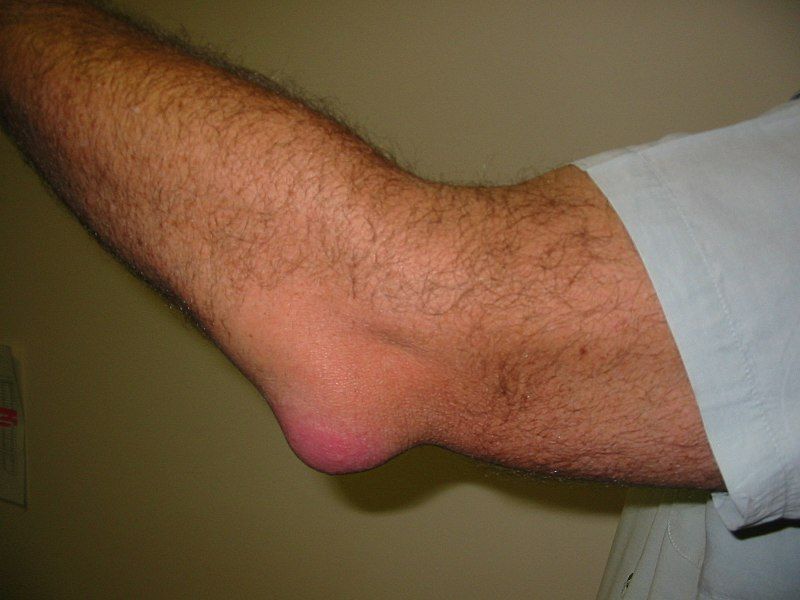
- Insidious joint swelling — gradual onset; the elbow becomes persistently swollen with a soft, fluctuant effusion; unlike simple joint effusion, the swelling may feel lobular or nodular
- Aching joint pain — dull, activity-related aching; may be surprisingly mild relative to the degree of joint swelling
- Progressive restriction of movement — both flexion and extension limited as the joint fills with fatty tissue
- Soft crepitus — a soft, rubbery crepitus during elbow movement
- History of underlying joint disease — prior arthritis, RA, or elbow injury in many cases
How is it Diagnosed?
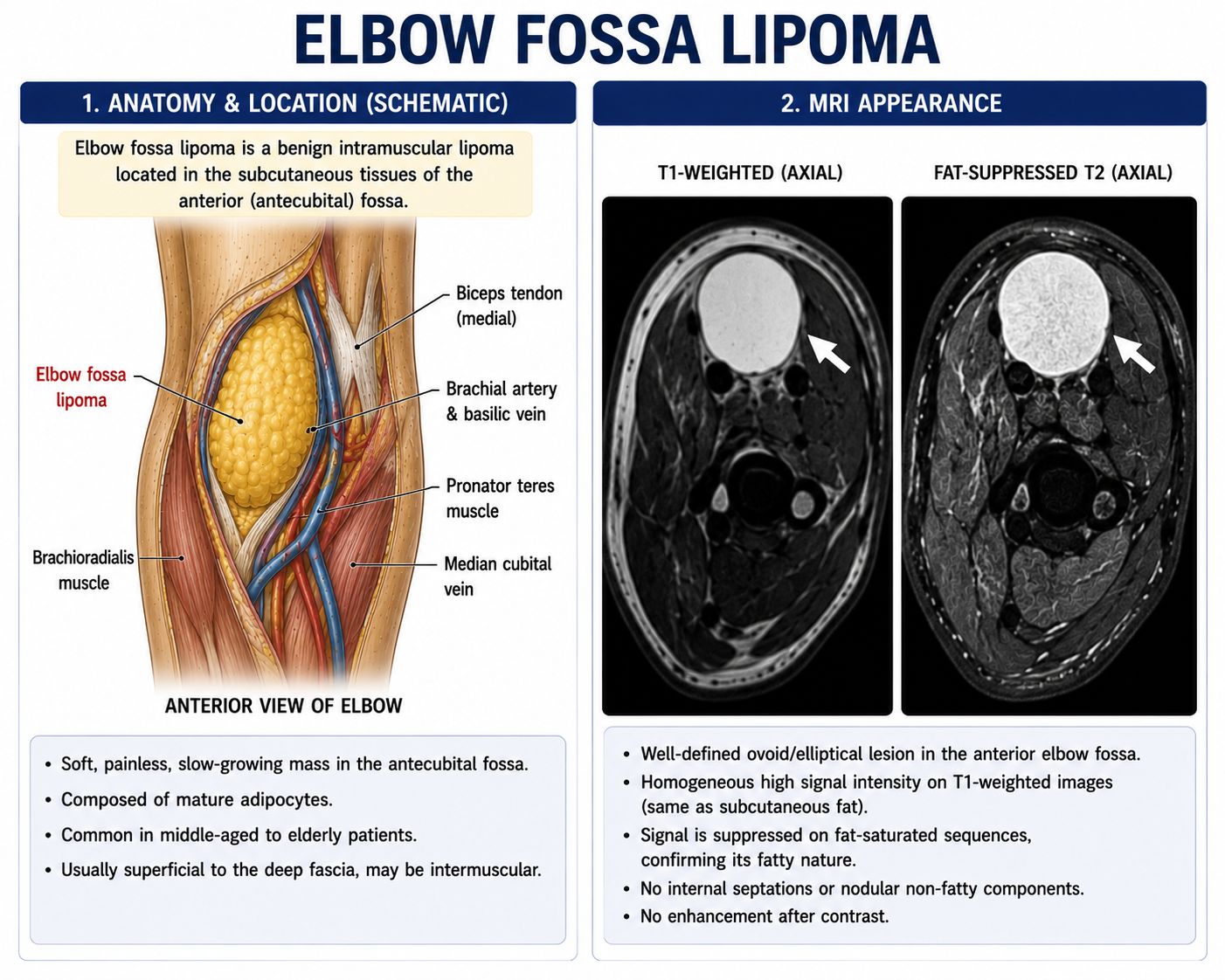
- MRI (diagnostic) — pathognomonic appearance: fat-signal (T1 bright, suppressed on fat-sat sequences) villous projections filling all joint recesses; joint effusion; secondary chondral changes; no discrete mass; this appearance is virtually diagnostic and distinguishes lipoma arborescens from other synovial conditions
- Ultrasound — highly echogenic material within the joint recesses; can identify the villous nature of the process
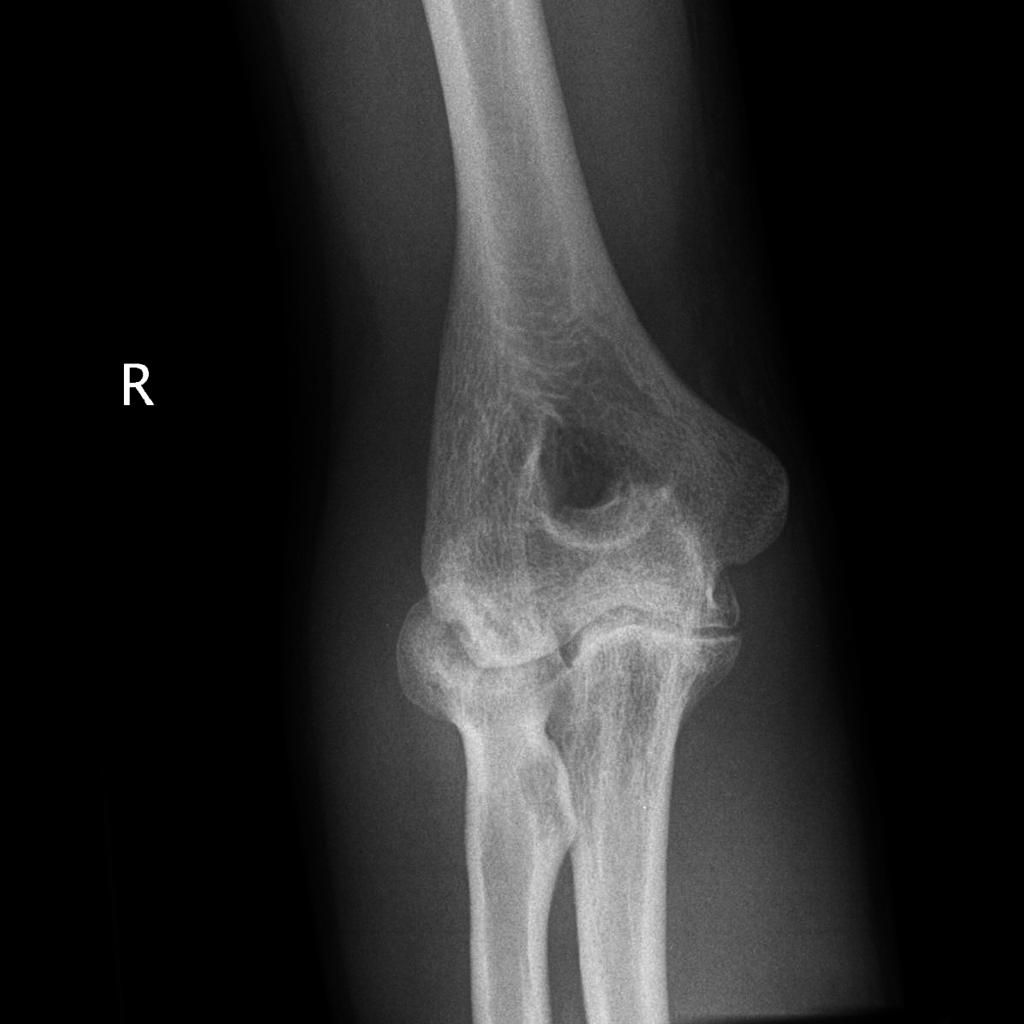
- Plain X-rays — joint space widening; soft tissue density within the joint; secondary OA changes if long-standing
- Histology — MANDATORY: all excised tissue sent for examination; confirms mature adipose tissue within synovial villi (benign); excludes synovial liposarcoma (malignant) which requires a very different management

Treatment Options
Treatment Type | Details |
Arthroscopic Synovectomy (Primary Treatment) | Systematic arthroscopic survey of all joint compartments; resection of all accessible fatty villous tissue using arthroscopic shaver and electrocautery; 8-zone survey ensures complete coverage; sent ALL excised tissue for histology; day-case or overnight; preferred for moderate involvement |
Open Synovectomy (Extensive Involvement) | For diffuse extensive involvement beyond arthroscopic access; Bryan-Morrey or dual approach; complete synovectomy; all material for histology; longer recovery than arthroscopic approach |
Address Underlying Joint Disease | Concurrent OA or RA: address joint pathology concurrently; RA: optimise DMARD/biologic therapy post-operatively to prevent synovial recurrence |
Post-operative Physiotherapy | Immediate active ROM from day 1; physiotherapy from day 2; essential to prevent post-operative stiffness; maintain range of motion gained at surgery |
Recovery & Rehabilitation
- After arthroscopic synovectomy: sling 48 hours; physiotherapy from day 1; return to normal activity 2–4 weeks
- Histology results: received 1–2 weeks post-op; confirms benign diagnosis; review with patient; continued surveillance if concurrent joint disease is present
- Recurrence: possible if underlying joint disease drives continued synovial proliferation; serial MRI at 1 and 2 years post-treatment; repeat arthroscopic synovectomy for symptomatic recurrence
Why choose Dr Senthilvelan?
Lipoma arborescens at the elbow is a rare condition that requires accurate MRI diagnosis, systematic arthroscopic synovectomy with histological confirmation, and coordination of underlying joint disease management. Dr Senthilvelan’s comprehensive arthroscopic approach ensures complete synovial resection with mandatory histological analysis of all excised tissue.
Frequently Asked Questions
1. What is lipoma arborescens and is it dangerous?
Lipoma arborescens is a benign condition in which the synovial lining of the joint is replaced by fatty tissue, forming tree-like fatty fronds within the joint. It is not a cancer and does not spread to other parts of the body. However, it must be distinguished from synovial liposarcoma — a rare malignant tumour that can look similar on imaging — which is why all excised tissue is sent for histological examination. If histology confirms lipoma arborescens (as it does in the vast majority of cases), the condition is entirely benign and treated by synovectomy.
2. Why does my elbow keep swelling even though no fluid is found on aspiration?
In lipoma arborescens, the joint swelling is caused by the fatty villous tissue filling the joint recesses — not by fluid accumulation. When a needle is inserted to aspirate what appears to be a joint effusion, little or no fluid comes out because the ‘swelling’ is composed of fatty tissue rather than synovial fluid. MRI is the key investigation: it shows the characteristic fat-signal villous filling of the joint recesses and confirms the diagnosis.
3. How is the surgery performed?
The preferred approach is arthroscopic synovectomy — a keyhole surgery performed through standard elbow arthroscopy portals. The arthroscope and a motorised shaver are used to systematically remove all the fatty villous tissue from all accessible joint recesses (an 8-zone survey). The removed tissue is sent for histology. Recovery is rapid: physiotherapy begins within 24 hours and normal activities resume within 2–4 weeks. Open synovectomy is used for cases where the extent of fatty involvement is beyond arthroscopic access.
4. Will the lipoma arborescens come back after surgery?
Recurrence is possible, particularly when lipoma arborescens is associated with underlying joint disease (OA or RA). The synovium that remains after synovectomy retains the potential to undergo fatty metaplasia again, especially if the underlying joint condition continues. Serial MRI at 1 and 2 years monitors for recurrence. Managing the underlying arthritis — with physiotherapy, anti-inflammatory treatment, and (for RA) biologic therapy — reduces the drive for synovial proliferation and lowers the recurrence risk.
5. Could this be a malignant tumour?
Lipoma arborescens is a benign condition, but synovial liposarcoma — a malignant tumour of the synovial lining — can occasionally have a similar appearance on imaging. This is why histological examination of all excised tissue is mandatory. In practice, synovial liposarcoma is very rare and the MRI appearance of lipoma arborescens (diffuse fat-signal villous proliferation throughout the joint) is quite distinct from that of synovial liposarcoma (a discrete mass with aggressive features). The histology result definitively distinguishes the two and determines subsequent management.