Overview
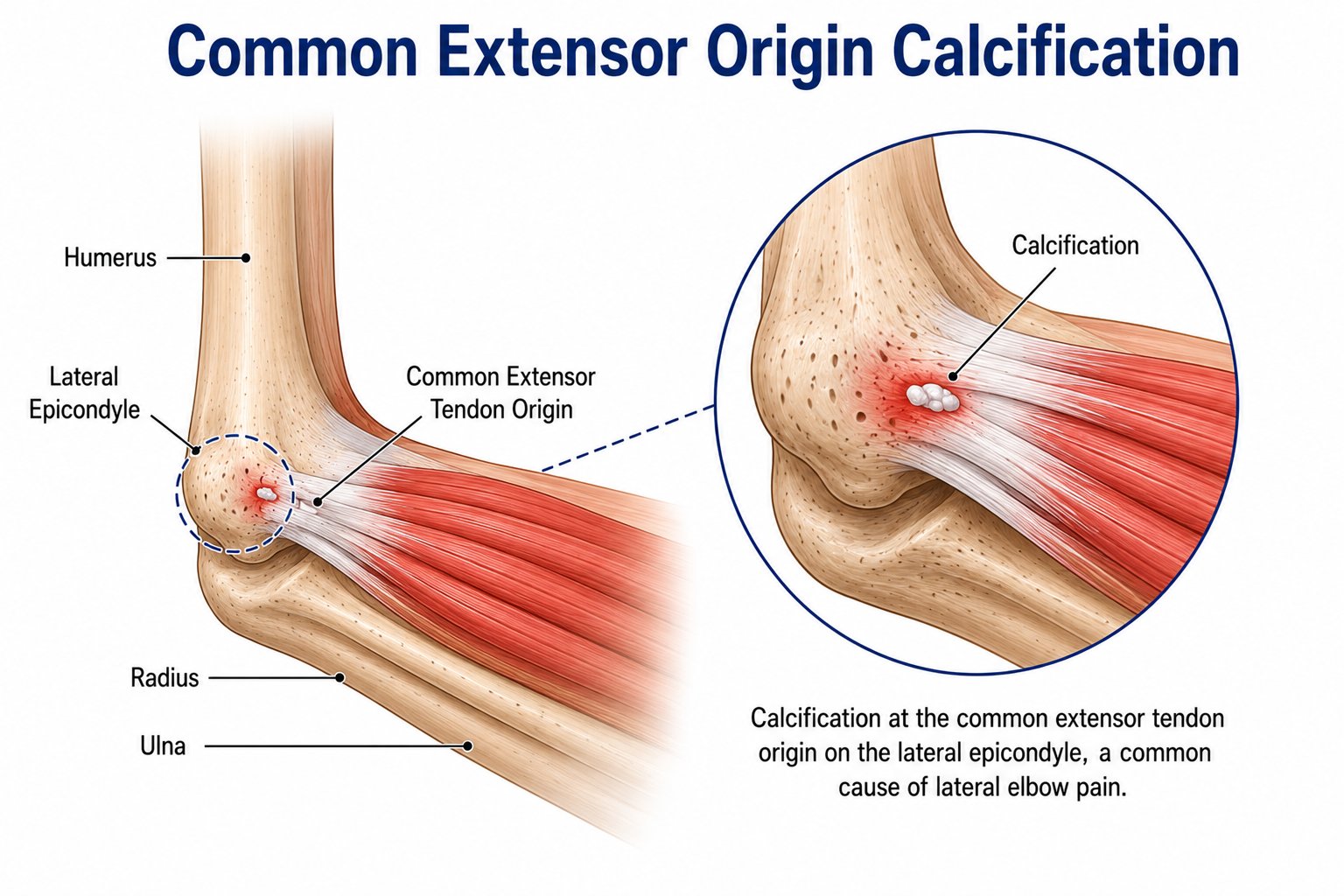
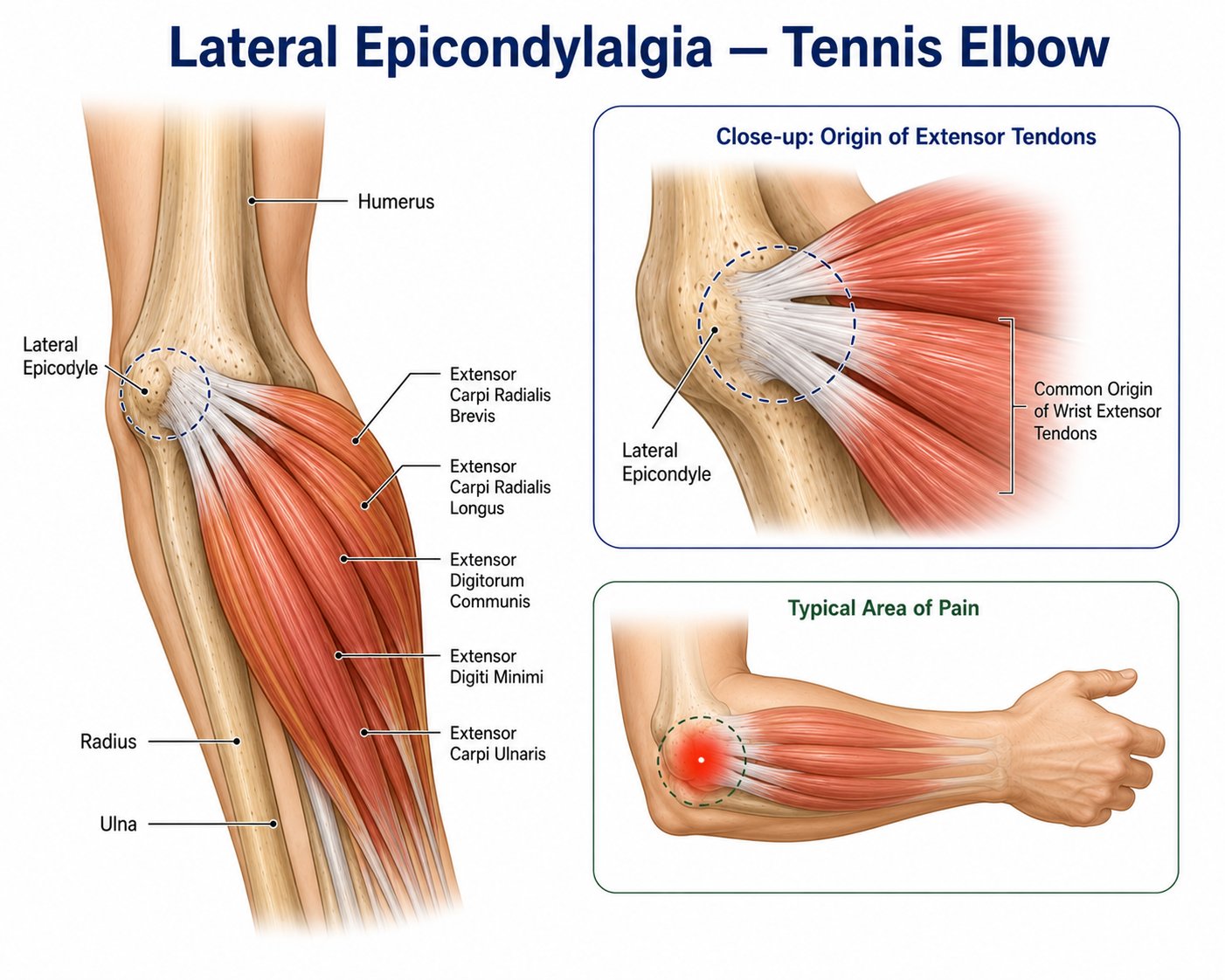
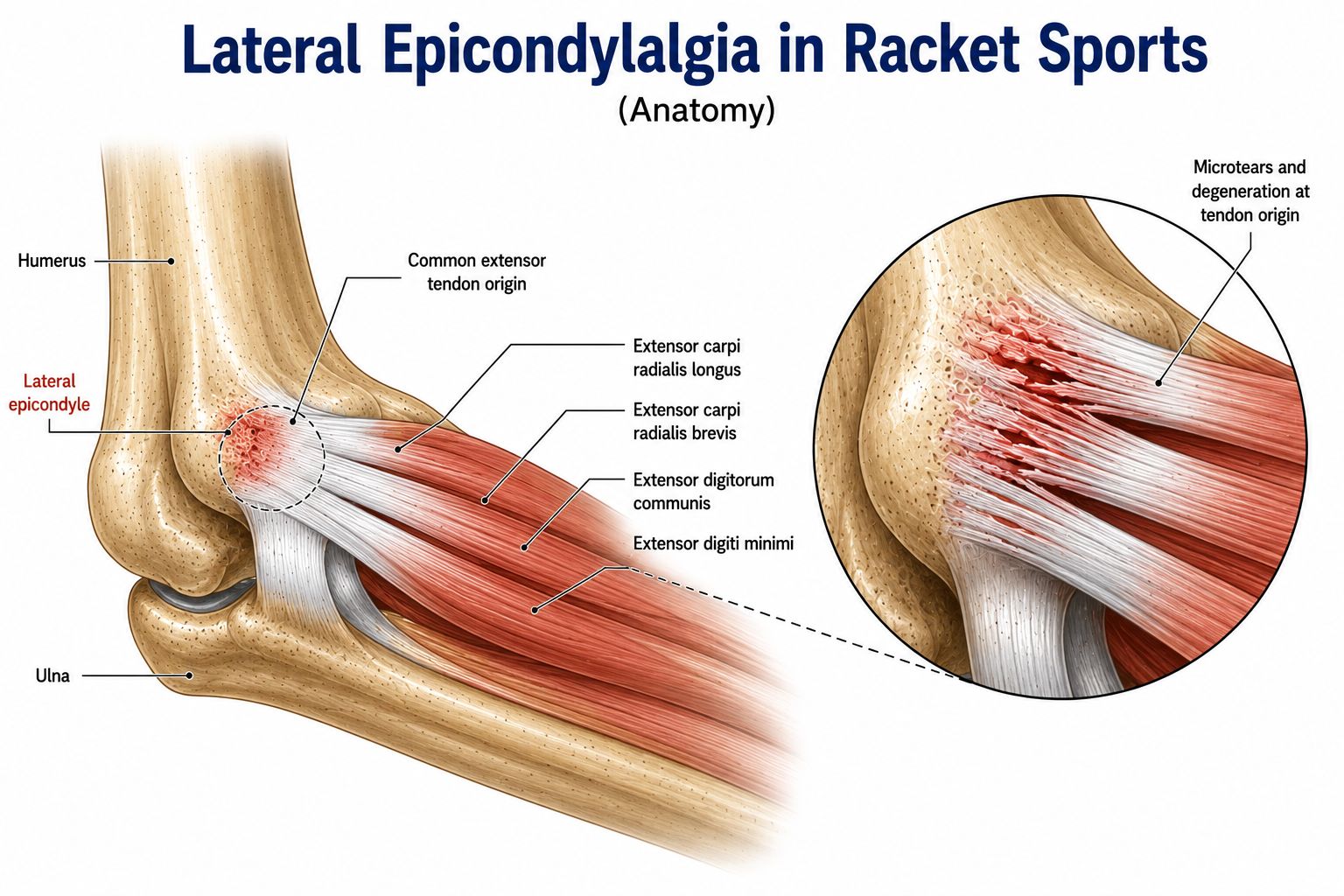
Lateral epicondylalgia (tennis elbow) in racket sport players is caused by the repetitive loading of the extensor carpi radialis brevis (ECRB) tendon during racket use — particularly the backhand stroke, overhead serves, and grip-intensive movements. While the condition is named “tennis elbow”, the same tendinopathy occurs with equal frequency in badminton, squash, and padel players.
The racket sport context introduces specific management considerations that do not apply to the general population: equipment modification (grip size, string tension, racket weight), stroke technique correction, and targeted muscle conditioning are all evidence-based interventions that can prevent recurrence and assist recovery. Understanding these sport-specific factors is essential for achieving a durable outcome.
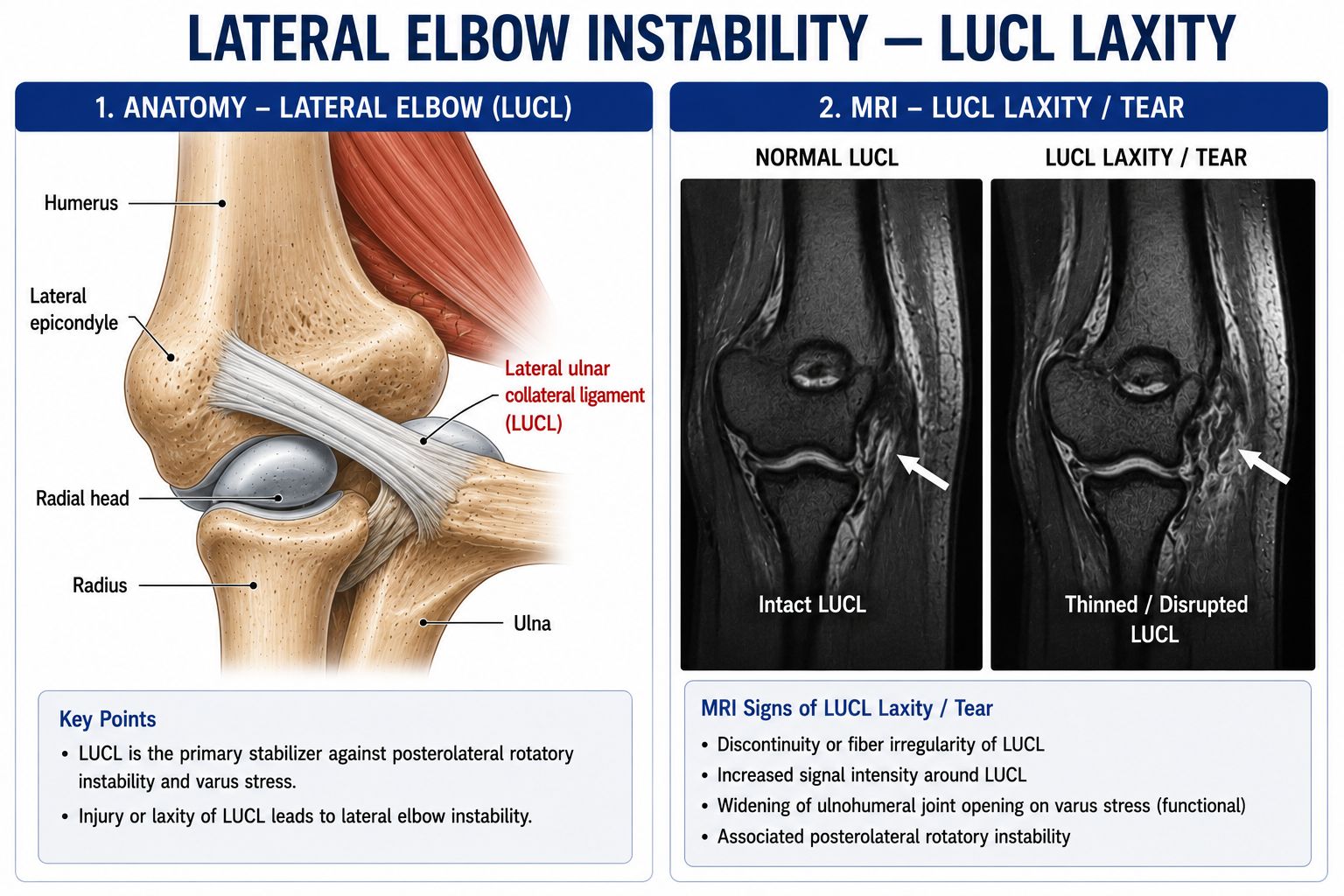
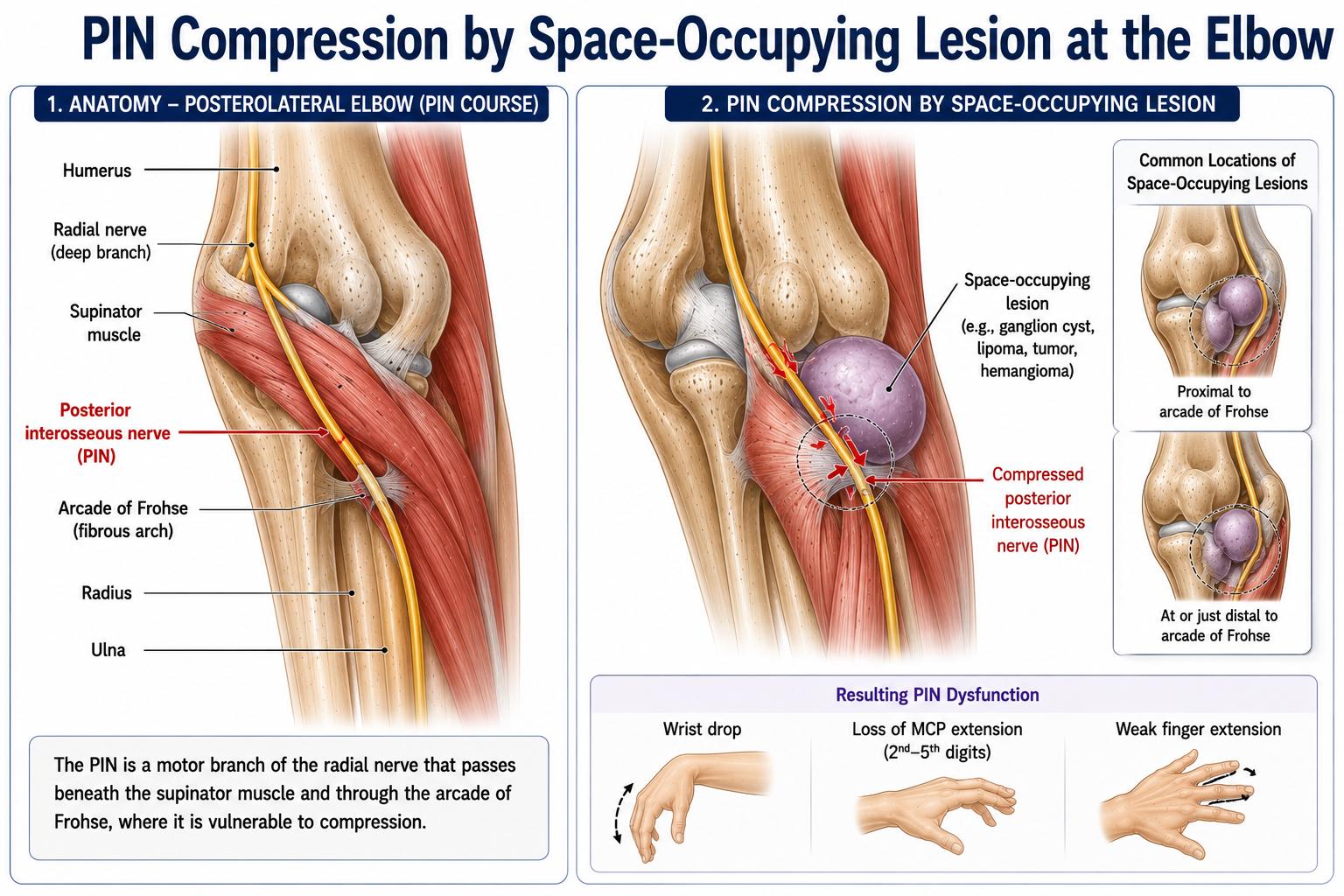
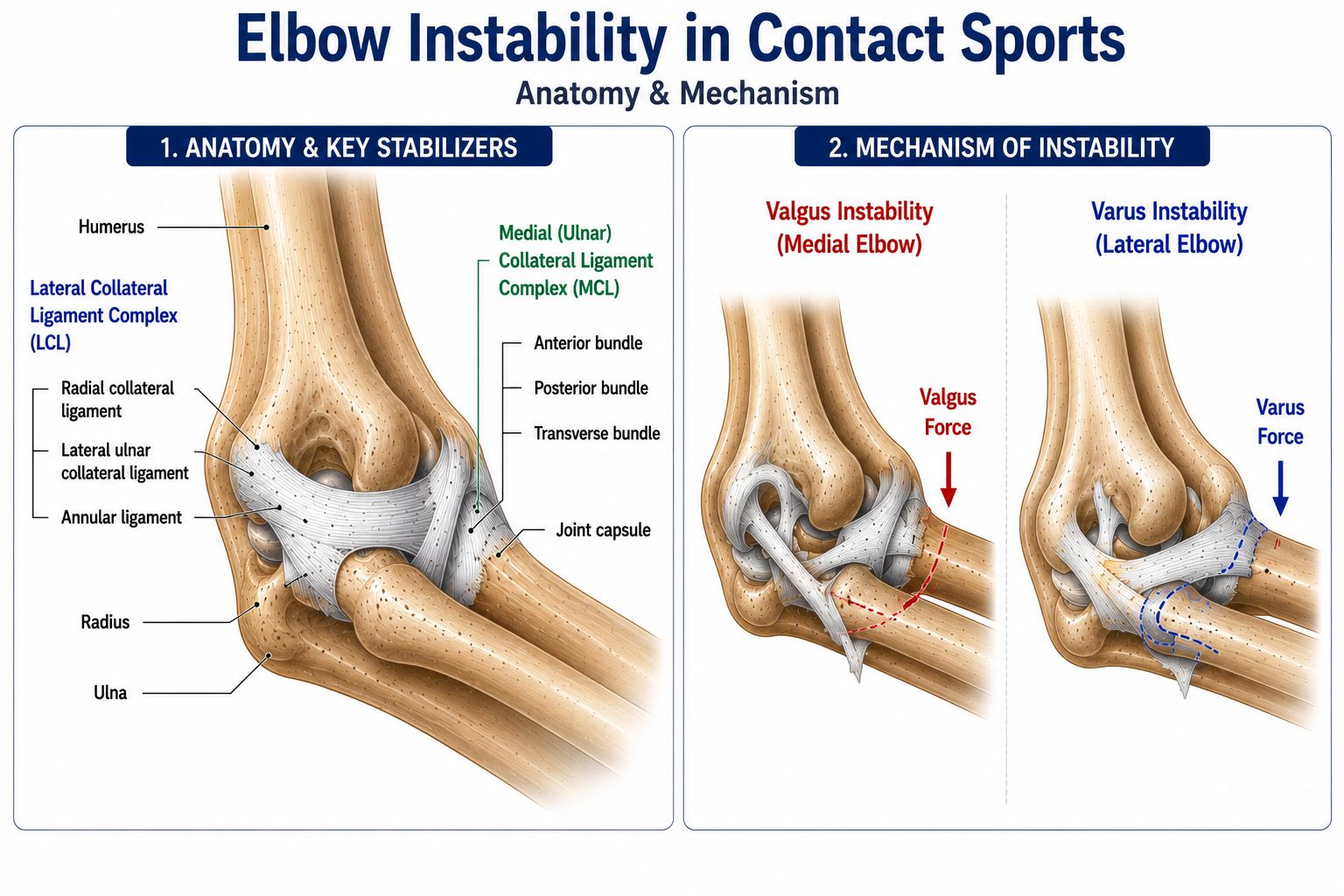
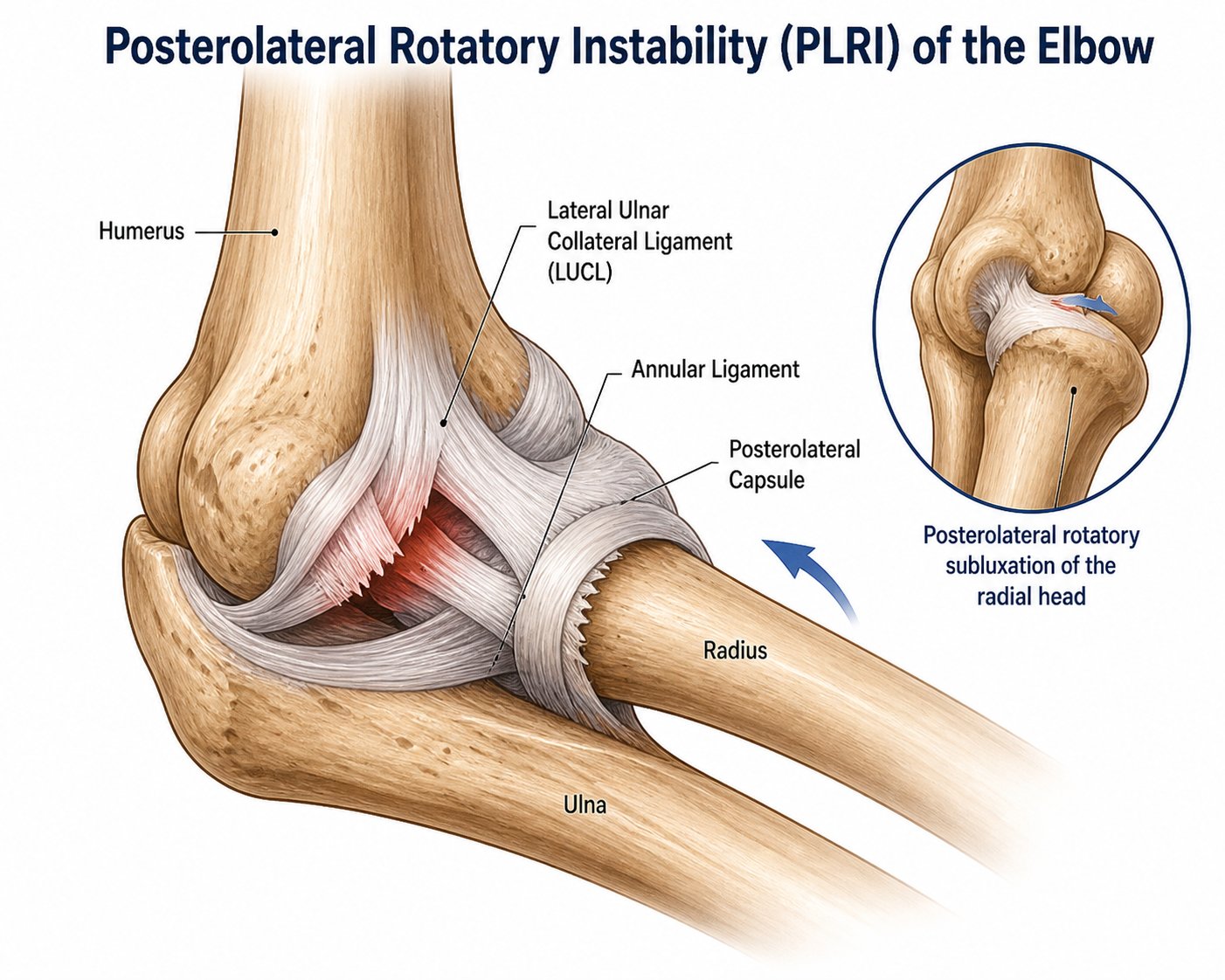
The pathophysiology is identical to non-sporting lateral epicondylalgia (angiofibroblastic degeneration of the ECRB origin) but the loading patterns and recovery context are sport-specific. Before committing to surgery, careful exclusion of two important differential diagnoses that cause failed treatment is essential: radial tunnel syndrome (Condition 24) and posterolateral rotatory instability
Quick Facts | Details |
Also Known As | Tennis Elbow (Racket Sport), ECRB Tendinopathy — Racket Athlete, Lateral Epicondylitis |
Affected Area | Common extensor origin — primarily the extensor carpi radialis brevis (ECRB) tendon at the lateral epicondyle; the radiocapitellar joint may be involved in severe cases |
Who It Affects | Racket sport players of all levels — tennis, badminton, squash, padel, table tennis; predominantly aged 35–55 years; typically affecting the dominant arm; both recreational and competitive players |
Prevalence | The most common musculoskeletal complaint in tennis players; affects up to 50% of recreational tennis players at some point in their career; the most common overuse injury in badminton and squash; up to 3% of the general population and much higher in active racket sport players |
Treatment | Equipment modification (grip size, string tension, racket weight) + physiotherapy eccentric programme first-line; NSAIDs; PRP injection for persistent tendinopathy; arthroscopic ECRB release for refractory cases >6 months; concurrent PLRI exclusion in failed cases |
Causes & Risk Factors
- Backhand stroke — the one-handed backhand loads the ECRB eccentrically; particularly with poor technique (leading with the elbow, late contact, improper wrist position)
- Overhead serve — the serving motion loads the wrist extensors during the contact phase
- Grip loading — gripping the racket handle activates the ECRB throughout play
- Equipment factors — racket too heavy, grip too small (causes over-gripping and increased ECRB activation), string tension too high (increases shock transmission to the forearm), sweet spot not used
- Sudden increase in playing frequency — taking up tennis or badminton, or dramatically increasing session length
- Fatigue — continued play when muscles are fatigued leads to increased tendon loading as muscle shock absorption diminishes
- Age-related tendon degeneration — the ECRB undergoes progressive degeneration after age 35
Symptoms
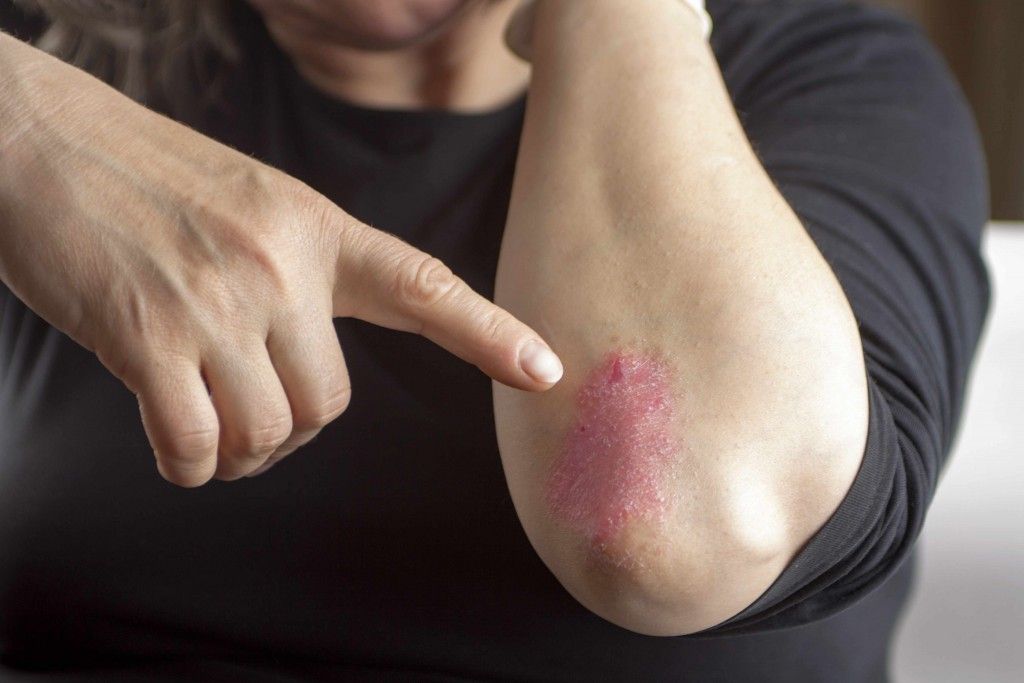
- Lateral elbow pain — at the lateral epicondyle, specifically provoked by racket use; initially only during play, later also after play and at rest
- Pain with the backhand stroke — the most characteristic symptom in tennis players
- Weak and painful grip — difficulty holding the racket at full strength; may drop items
- Pain reproduced by Cozen’s test — resisted wrist extension with the elbow extended
- Morning stiffness — aching and stiffness at the lateral elbow after rest; warms up with activity
- Tenderness over the ECRB origin — 1–2cm distal and anterior to the lateral epicondyle; the point of maximum tenderness
How is it Diagnosed?
- Clinical examination — Cozen’s test; Mill’s test; point tenderness at ECRB origin; exclude radial tunnel syndrome (tenderness 4–5cm distal to epicondyle, positive middle finger test); exclude PLRI (lateral pivot shift test)
- Ultrasound — hypoechoic tendinopathy at ECRB origin; Doppler neovascularity; partial tear; concurrent PLRI assessment if suspected
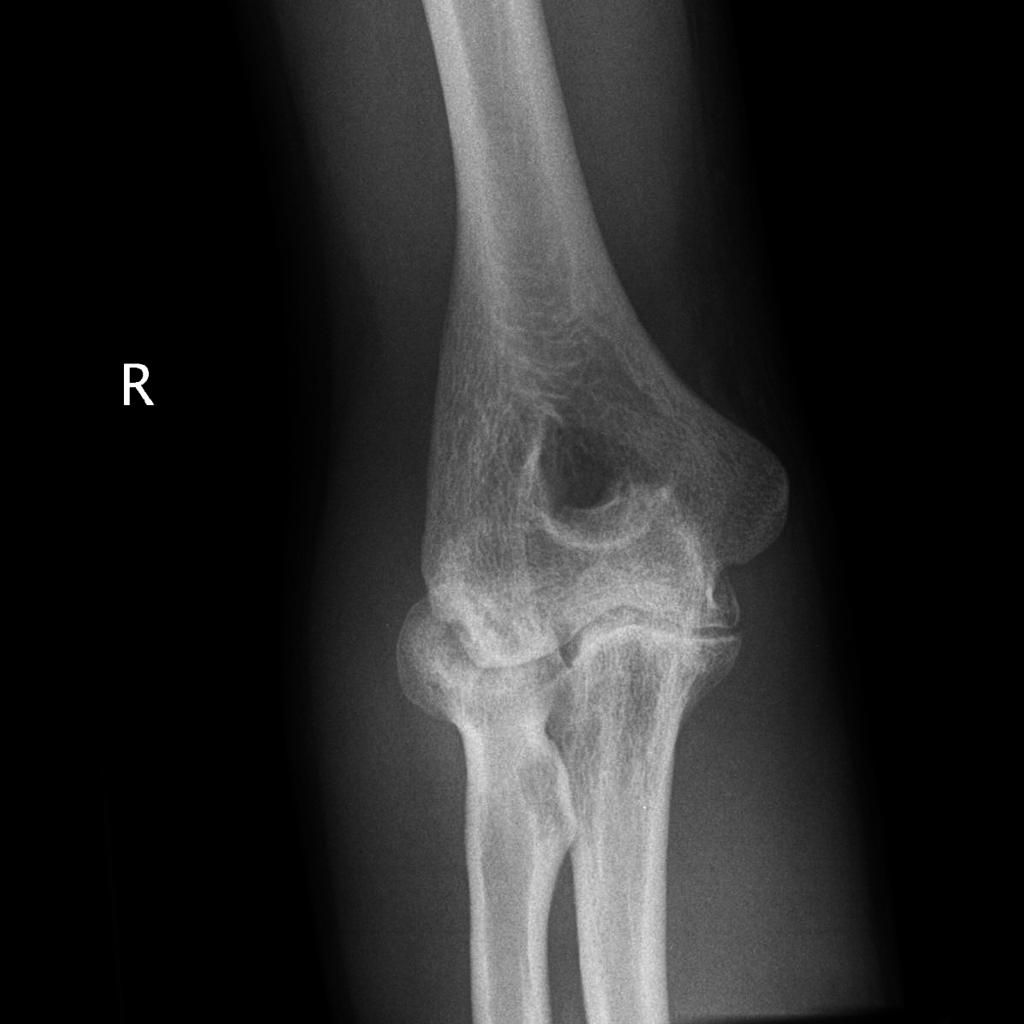
- MRI — T2 signal changes at ECRB origin; assess LUCL (exclude PLRI); exclude posterior lateral compartment pathology
- Equipment assessment — evaluate racket grip size, string tension, racket weight, and balance point; a sports physiotherapist or tennis coach can assist

Treatment Options
Treatment Type | Details |
Equipment Modification (First-Line) | Increase grip size by 1/4–1/2 inch if currently small (reduces ECRB activation); reduce string tension by 10–15% (reduces shock transmission); use a lighter racket; ensure the sweet spot is correctly positioned; avoid topspin-heavy technique on backhand |
Physiotherapy — Eccentric Programme | Eccentric wrist extension exercises (Tyler twist protocol using Therabar) 3 sets x 15 reps daily; the most evidence-based conservative intervention for racket sport tennis elbow; continue for minimum 8–12 weeks |
Stroke Technique Review | Tennis coach biomechanical assessment: two-handed backhand if ECRB loading is excessive; shoulder rotation-led forehand; avoid leading with the elbow; correct wrist position at contact |
NSAIDs & Topical Treatment | Oral or topical NSAIDs for 2–4 weeks; topical diclofenac directly over the lateral epicondyle; for pain management during rehabilitation |
PRP Injection | Ultrasound-guided PRP into the ECRB tendinopathy zone; 6–12 weeks of protected activity after injection; superior long-term outcomes compared to corticosteroid; preferred for chronic tendinopathy unresponsive to physiotherapy |
Corticosteroid Injection | Short-term (4–8 weeks) pain relief only; does not address the underlying tendinopathy; maximum 3 injections; avoid intratendinous injection; useful to allow physiotherapy engagement when pain is limiting exercise tolerance |
Arthroscopic ECRB Release | For refractory cases >6 months despite PRP and physiotherapy; excise the degenerate ECRB origin; day-case; check LUCL during arthroscopy; 85–90% good-excellent results in appropriately selected patients; return to racket sport 3–6 months post-op |
Recovery & Rehabilitation
- Conservative: most (80–90%) resolve within 6–12 months with equipment modification + eccentric physiotherapy
- PRP injection: 6 weeks of protected activity (reduce playing frequency); gradual return to full racket use 8–12 weeks; maintenance eccentric programme continues
- After arthroscopic ECRB release: sling 48 hours; immediate ROM; return to racket sport 3–6 months; equipment modification maintained long-term
- Prevention: maintain eccentric conditioning programme 3 days per week throughout the playing season; use appropriate equipment; incorporate rest days
- Recurrence: most common after premature return to high-volume play or failure to correct technique and equipment
Why choose Dr Senthilvelan?
Tennis elbow in racket sport players requires a management approach that integrates equipment modification, technique correction, targeted injection, and — when needed — surgical treatment. Dr Senthilvelan combines clinical treatment with sport-specific advice and always excludes radial tunnel syndrome and PLRI before committing to surgical management of what appears to be refractory tennis elbow.
Frequently Asked Questions
1. Does my tennis racket cause tennis elbow?
Your racket may be contributing significantly. The most important equipment factors are: grip size (too small a grip causes over-gripping, dramatically increasing ECRB muscle activation); string tension (higher tension reduces dwell time and increases shock transmission to the forearm); and racket weight and balance (heavy, head-heavy rackets increase the torque at the lateral elbow). Increasing grip size by 1/4 inch and reducing string tension by 10–15% are the two most evidence-based equipment interventions for tennis elbow. These changes alone often produce meaningful symptom relief.
2. What is the Tyler twist exercise and how do I do it?
The Tyler twist (developed by physical therapist Tim Tyler) is the most evidence-based eccentric exercise for lateral epicondylalgia. Using a Therabar (a flexible rubber bar), hold one end in each hand, wrists up. Fully pronate both forearms (so both thumbs point down) by twisting the bar. Keeping the affected arm pronated, slowly extend the affected wrist against the bar’s resistance (this is the eccentric phase — lowering). Supinate back using the unaffected arm and repeat. Perform 3 sets of 15 repetitions daily. Pain during exercise is acceptable; significant pain increase afterwards is not. This exercise has shown superior results to standard eccentric exercises in multiple randomised trials.
3. I have had 3 steroid injections for tennis elbow and it keeps coming back — what now?
Multiple failed corticosteroid injections are a strong signal that the underlying ECRB tendinopathy has not been addressed — only the inflammatory pain cycle has been temporarily interrupted. The next steps are: PRP injection (to actually stimulate tendon healing); 8–12 weeks of the Tyler twist eccentric programme; equipment modification review; and if PLRI or radial tunnel syndrome has not been excluded, specialist assessment now. If these measures also fail after 6 months, arthroscopic ECRB release is highly effective (85–90% good results) in patients who have completed a genuine conservative trial.
4. Can I continue playing badminton or squash while treating tennis elbow?
Usually yes — with modification. The key is reducing the volume and intensity of play to a level where symptoms are not aggravating (a mild ache during play is acceptable; significant worsening of pain during or after play is not). A tennis elbow brace (counterforce strap) worn just below the elbow during play can reduce ECRB loading and allow continued participation at a lower intensity. Equipment modifications (grip size, string tension) should be made immediately. As the eccentric programme takes effect over 8–12 weeks, the volume of pain-free play can progressively increase.
5. I have had surgery for tennis elbow but I still have lateral elbow pain — why?
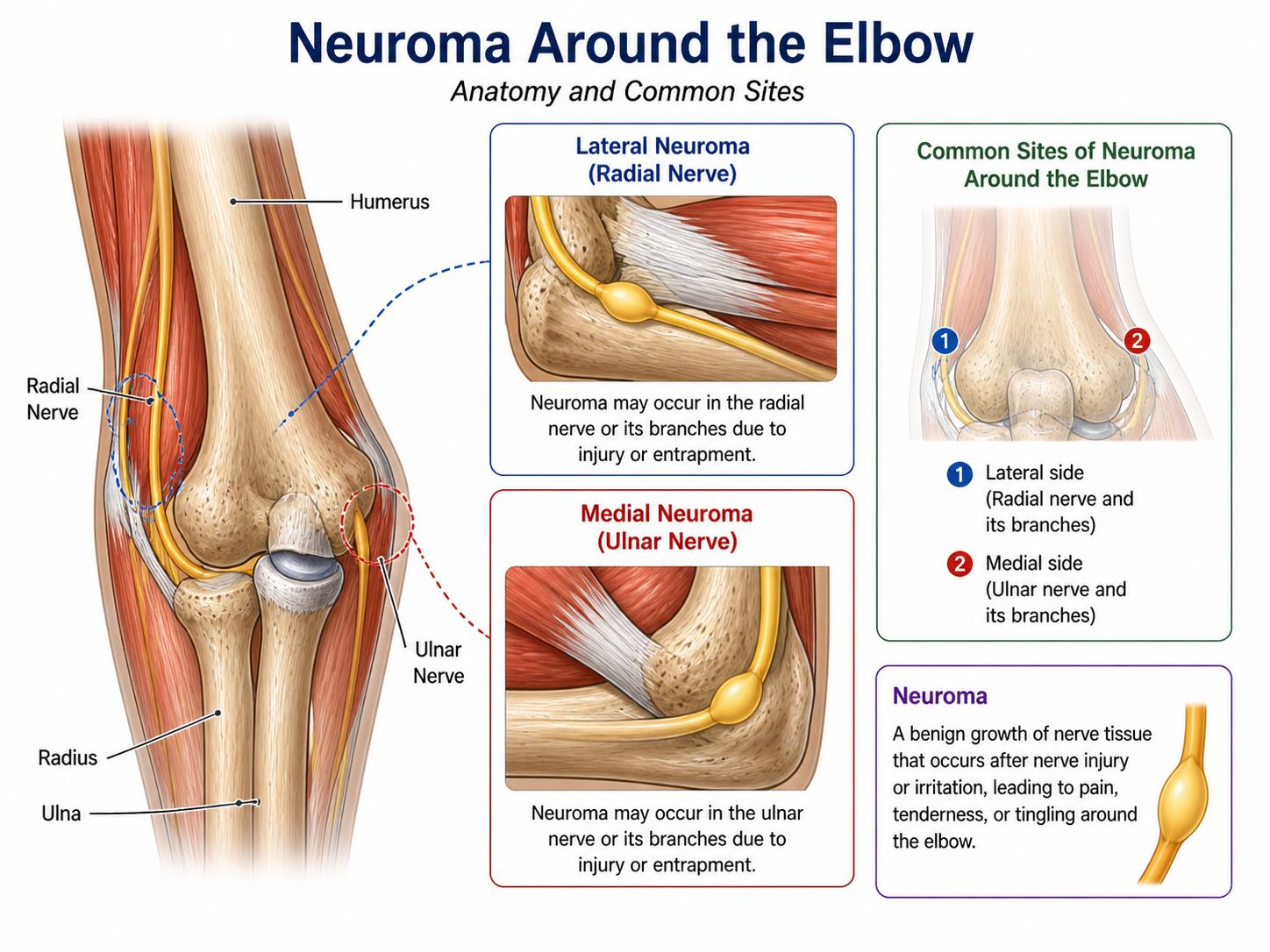
Persistent lateral elbow pain after technically successful ECRB release most commonly has one of three explanations: (1) the diagnosis was not purely ECRB tendinopathy — if PLRI or radial tunnel syndrome was present but not identified, the ECRB release would not address these conditions; (2) the release was incomplete — not all the degenerate ECRB tissue was removed; or (3) a new neuroma has formed on a cutaneous nerve injured during surgery (the LABC nerve is at risk). Re-evaluation with MRI, clinical examination for PLRI (lateral pivot shift test), and radial tunnel testing is the appropriate next step.