Overview
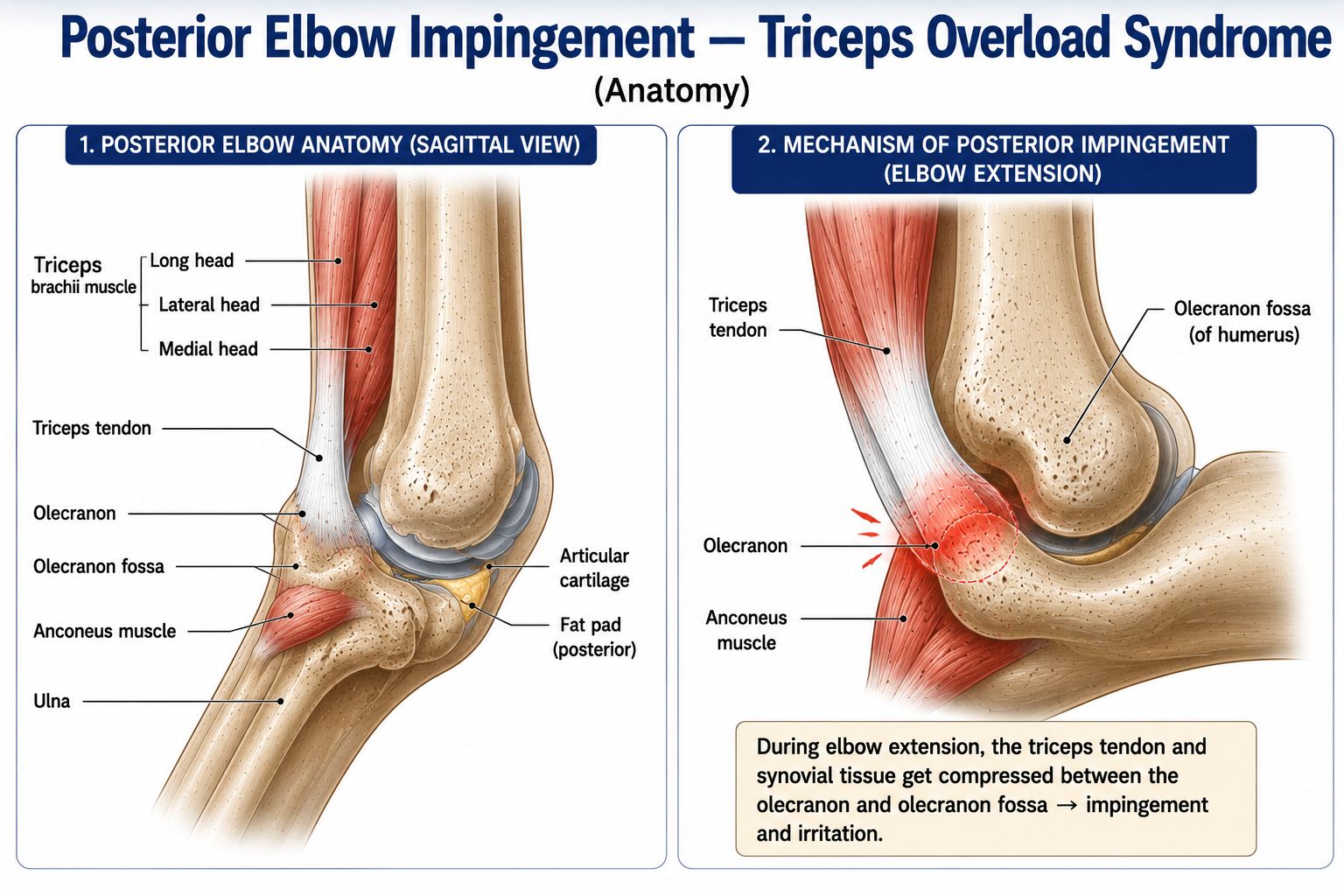
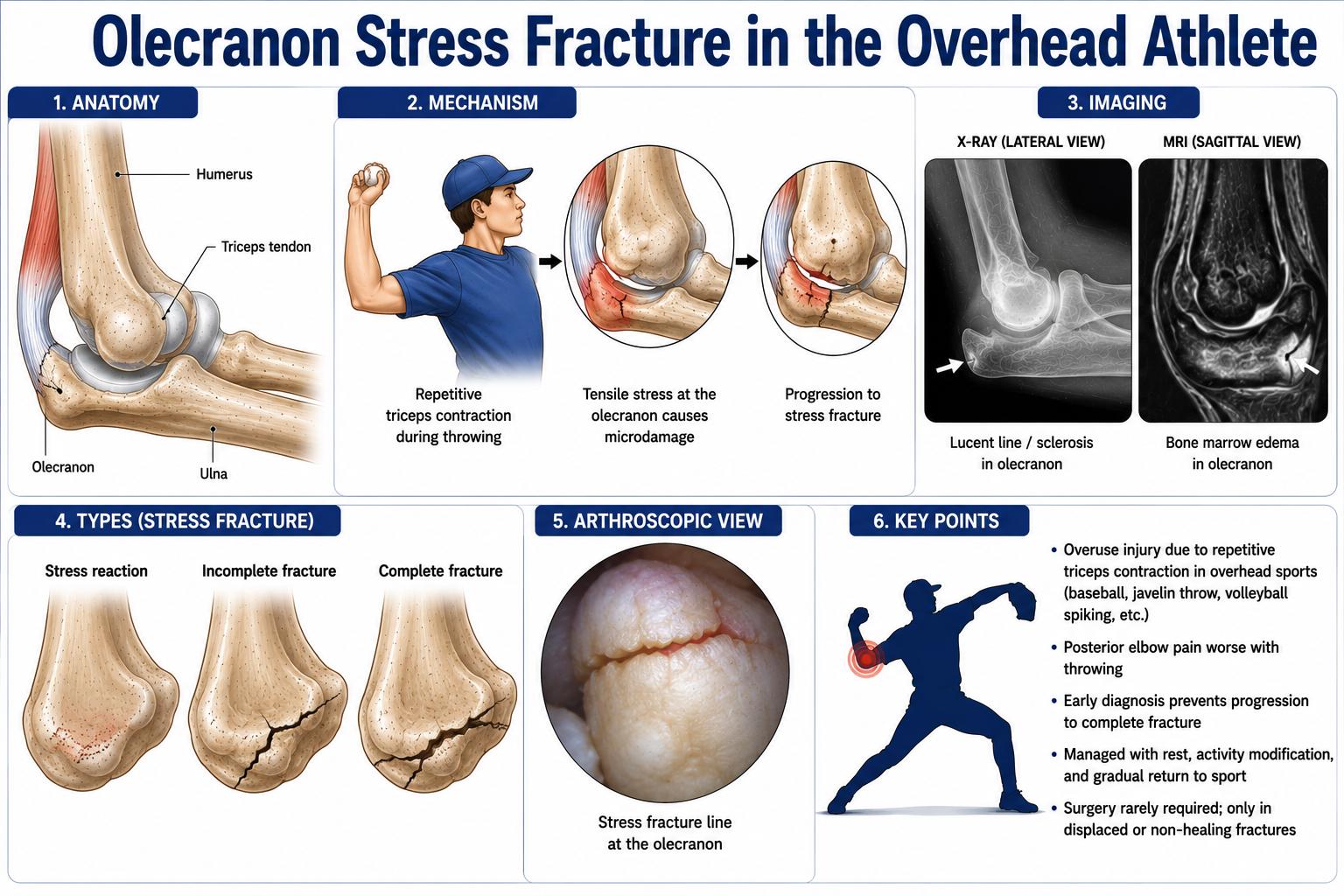
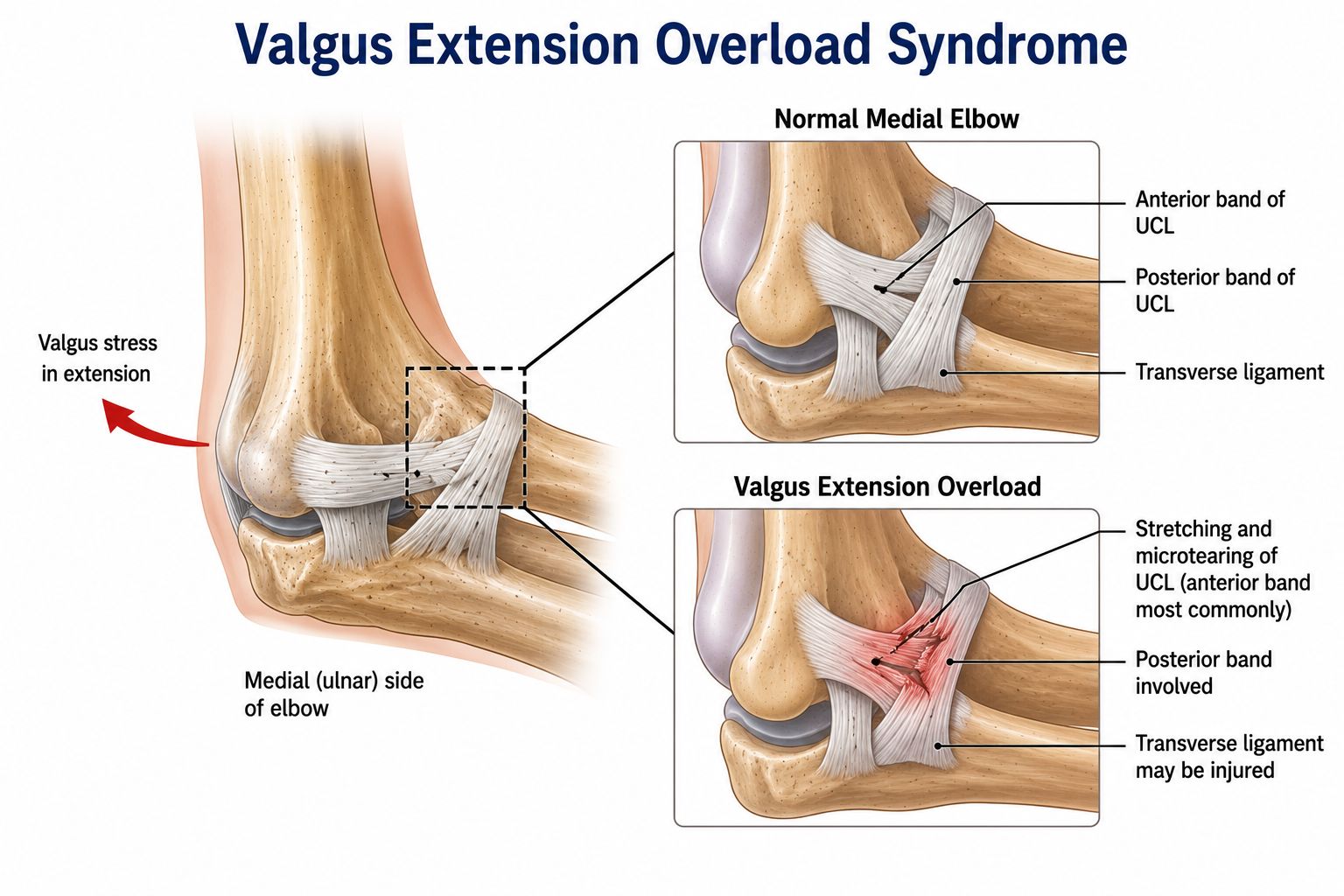
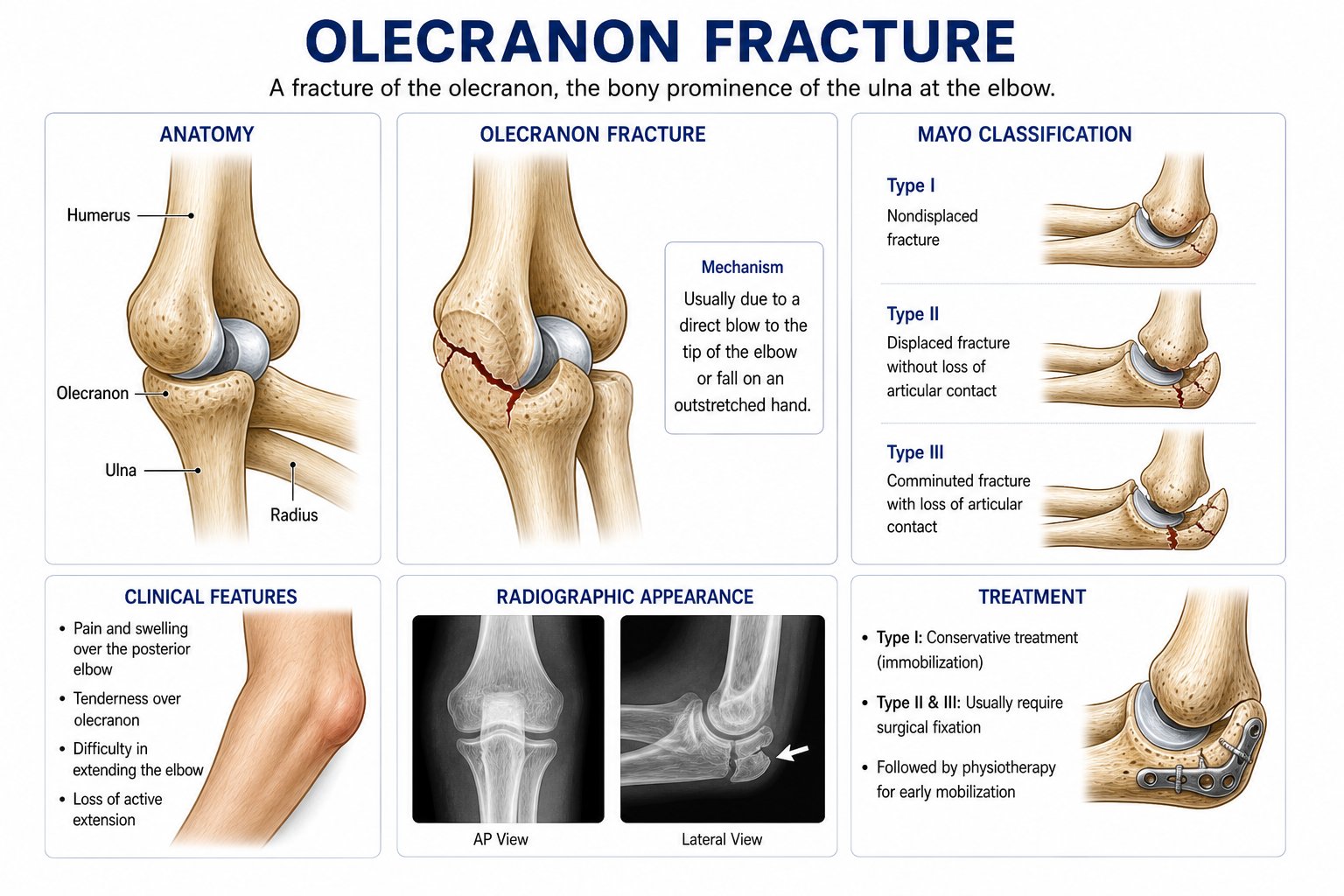
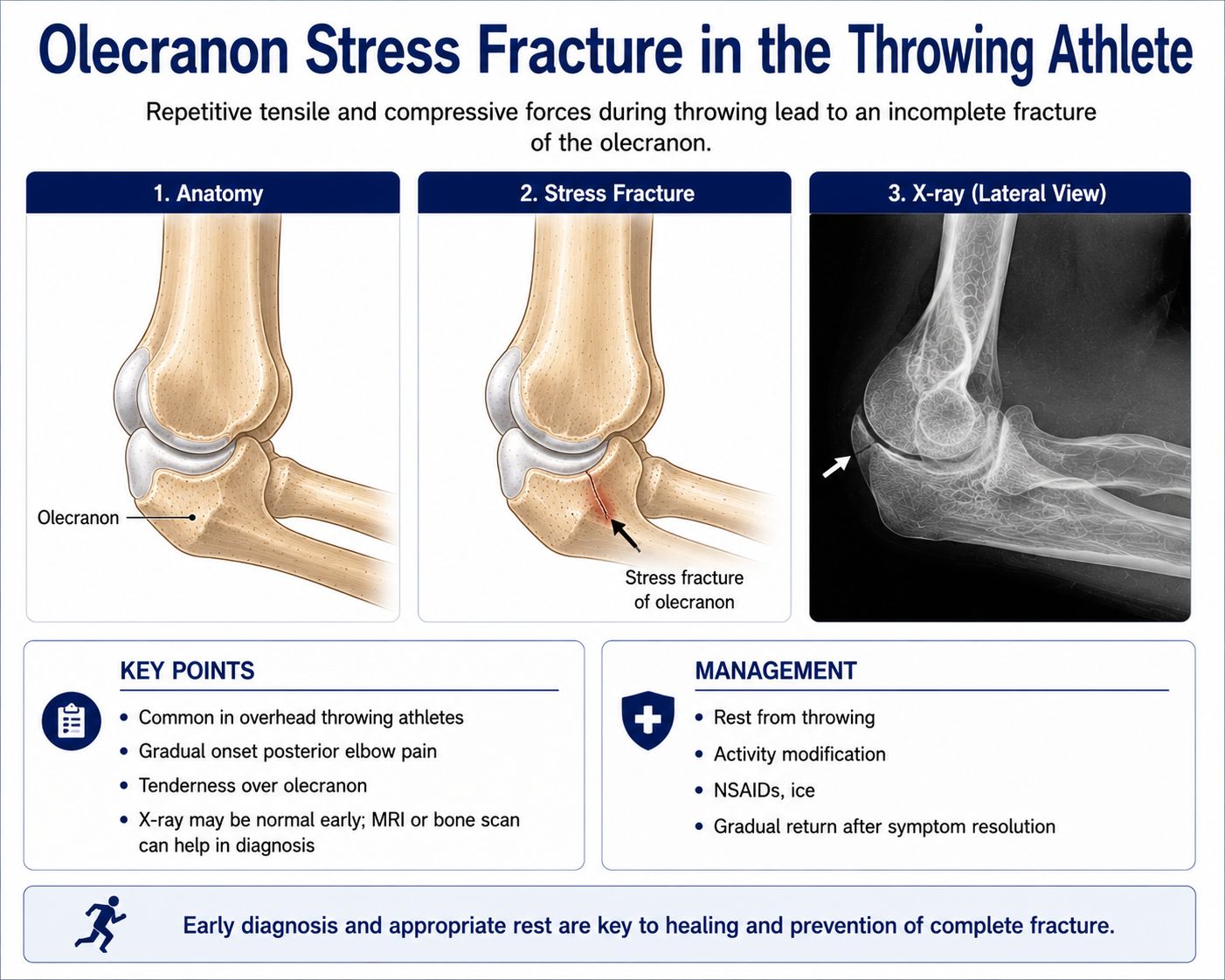
Olecranon stress fractures in throwing athletes are fatigue fractures caused by the repetitive high-force loading of the olecranon during the throwing action. During the deceleration phase of throwing, the olecranon is subjected to extreme tensile stress through the pull of the contracting triceps — combined with the shear and bending forces of valgus extension overload. This repetitive loading exceeds the bone’s fatigue resistance, causing microscopic crack propagation that eventually produces a stress fracture through the midolecranon.
The classic clinical presentation is an insidious onset of posterior elbow pain during or after throwing, well-localised to the olecranon, with no specific acute injury event. The diagnosis requires a high index of suspicion — plain X-rays are often initially normal and the fracture is only visible on MRI or bone scan. Any overhead athlete with persistent posterior elbow pain at the olecranon that is not responding to rest should have MRI to exclude a stress fracture.
The most important principle in management is that the athlete must stop throwing — immediately and completely. Continuing to throw through olecranon stress pain risks displacement of the fracture, non-union, or complete fracture requiring more complex and disabling surgery. When properly rested, most stress fractures heal within 3–6 months. Those that do not respond to rest, or those with displacement, require intramedullary screw fixation.
Quick Facts | Details |
Also Known As | Olecranon Fatigue Fracture, Throwing Olecranon Stress Fracture, Overhead Athlete Elbow Stress Fracture |
Affected Area | Olecranon process of the proximal ulna — stress fracture through the midolecranon, typically at the junction of the proximal and middle thirds; perpendicular to the triceps pull direction |
Who It Affects | Competitive overhead athletes — fast bowlers (cricket), baseball pitchers, javelin throwers, volleyball players; adolescent and adult; typically affects the dominant arm |
Prevalence | Uncommon but important in overhead athletic populations; the incidence in professional fast bowlers may be as high as 5–10% over a career; significantly career-threatening if not managed correctly |
Treatment | Non-displaced: rest from throwing 3–6 months + bone stimulator; ORIF with intramedullary screw if non-union, displacement, or failed conservative treatment; return to competitive throwing 6–12 months post-op |
Causes & Risk Factors
- Valgus extension overload — the combination of valgus stress and extension at the medial olecranon during the deceleration phase of throwing creates maximum tensile stress at the midolecranon
- Excessive throwing load — high training volume, year-round throwing without adequate off-season, rapid increase in intensity
- Inadequate recovery — insufficient rest between training sessions; poor periodisation
- Mechanical factors — poor bowling or throwing mechanics that increase the olecranon stress; trunk mechanics particularly important
- Relative energy deficiency in sport (RED-S) — insufficient caloric intake relative to training load; impairs bone remodelling capacity
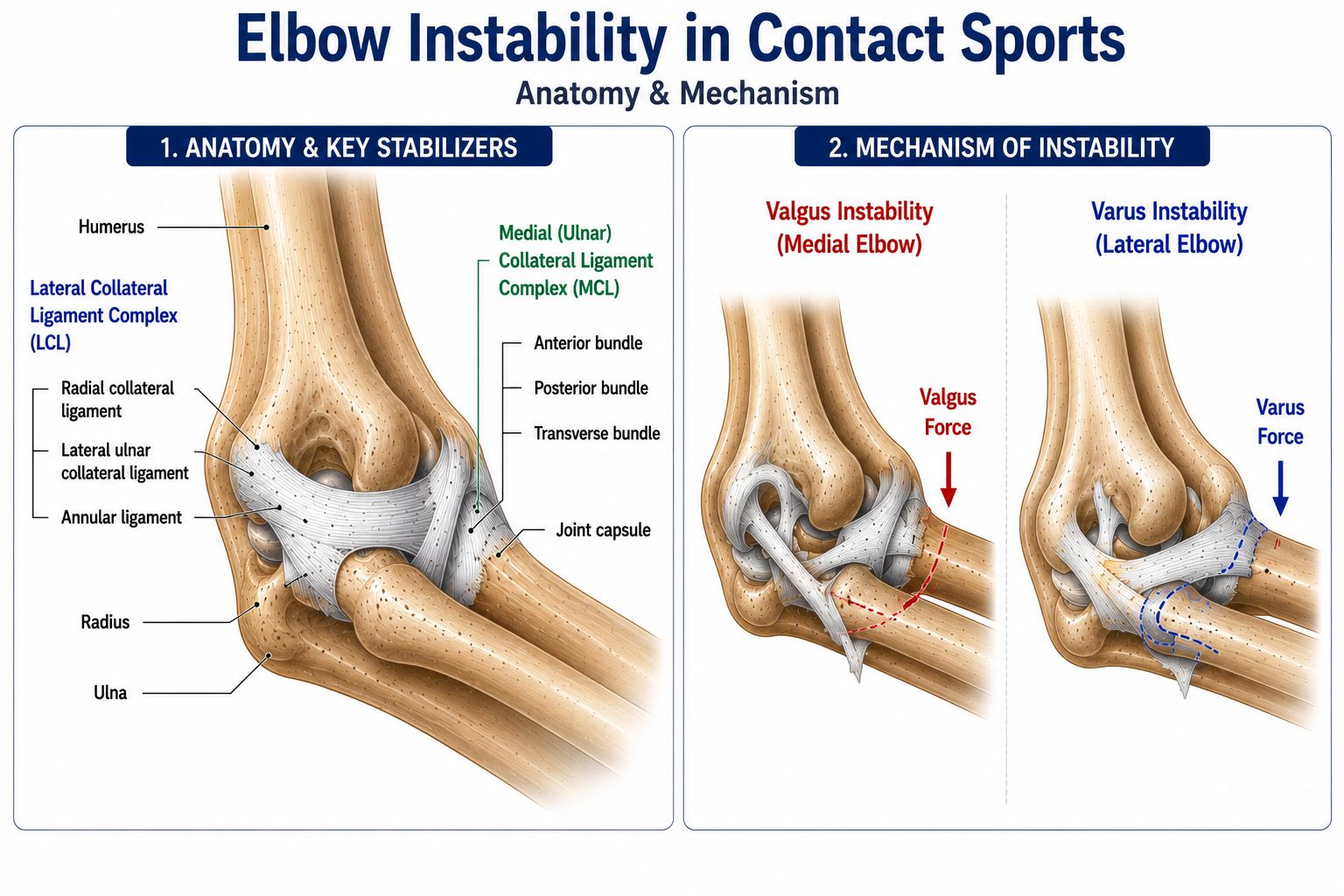
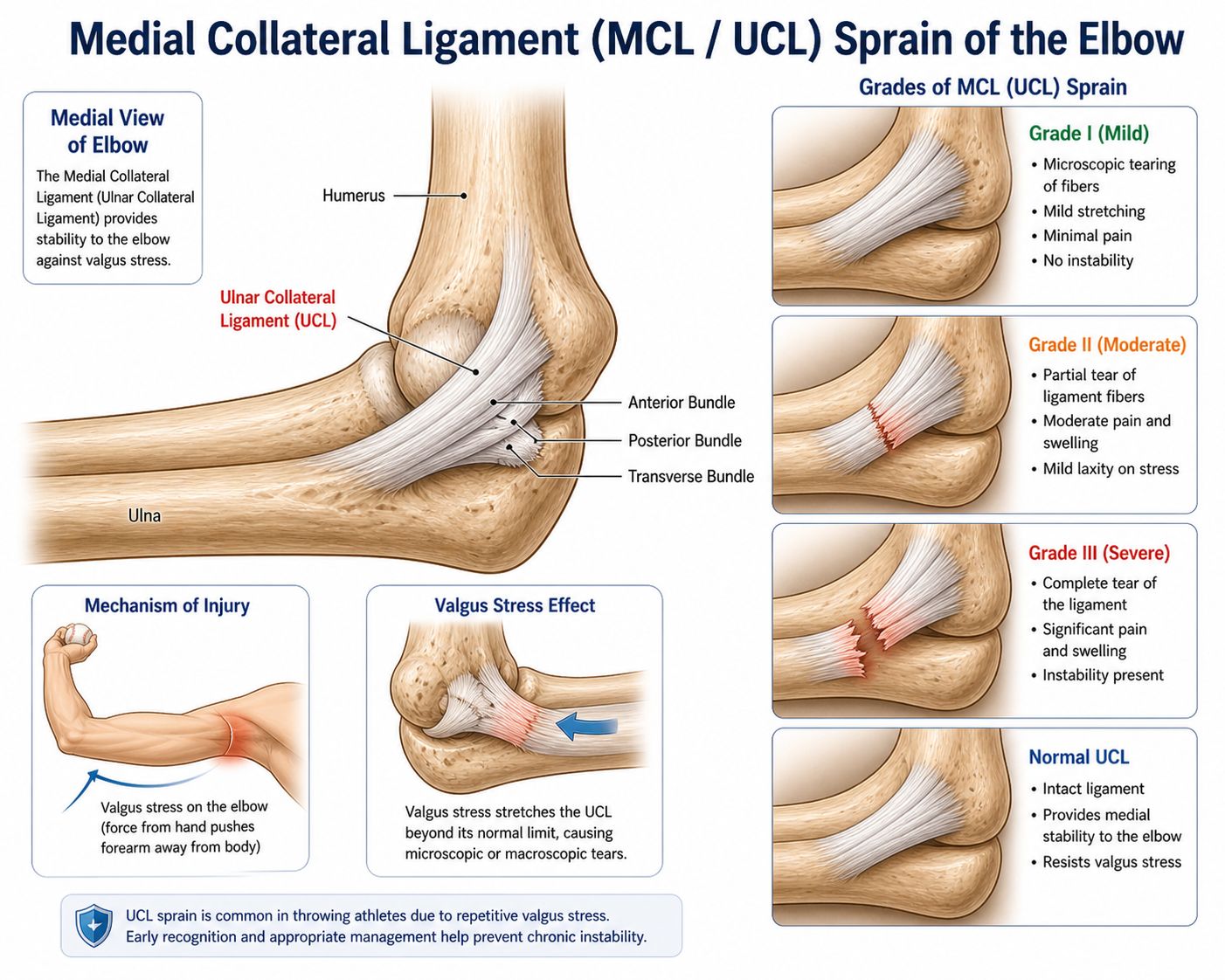
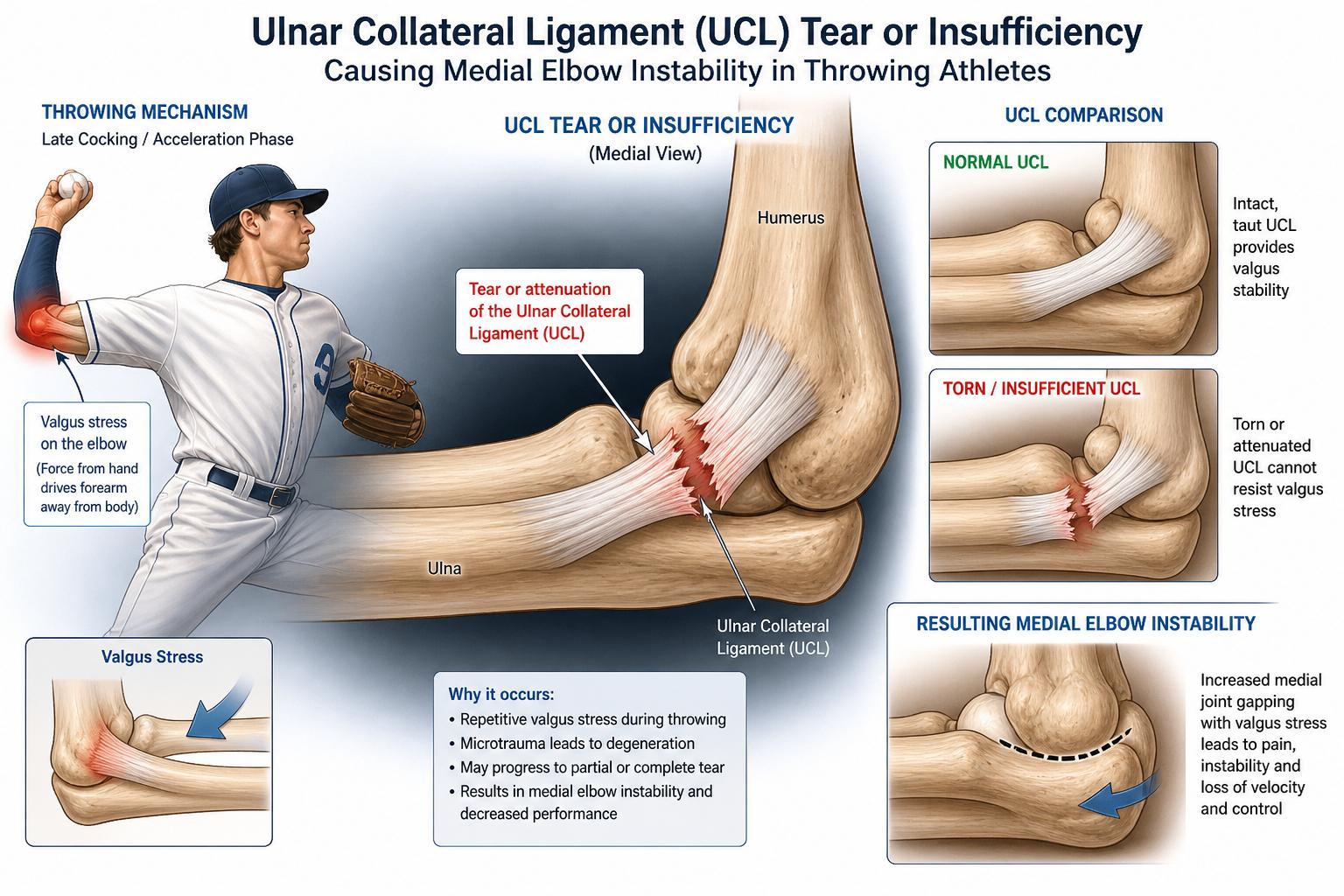
- Concurrent UCL insufficiency — when the UCL is deficient, the bony structures (olecranon, posteromedial osteophytes) take more load during throwing
Symptoms
- Posterior elbow aching — insidious onset; initially only after throwing, progresses to pain during throwing and eventually at rest
- Point tenderness at the midolecranon — the fracture site is exquisitely tender on direct palpation over the posterior olecranon; typically at the junction of the proximal and middle thirds
- Pain with resisted elbow extension — the triceps pull stresses the fracture
- No acute injury event — the onset is gradual without a specific traumatic episode; this distinguishes it from acute olecranon fracture
- Pain with the late deceleration phase specifically — athletes can often localise the pain to a specific phase of their action
- Reduced throwing performance — unconscious compensation to protect the painful elbow
How is it Diagnosed?
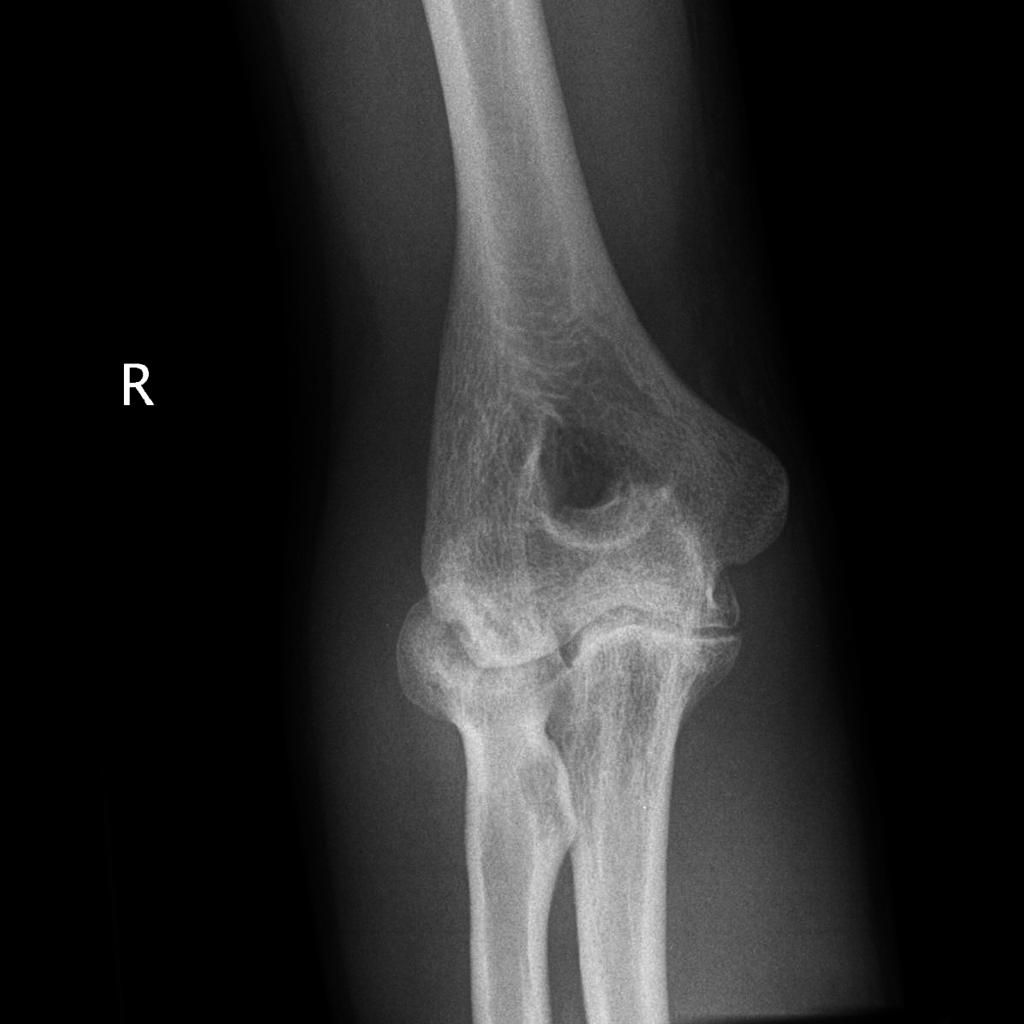
- Plain X-rays — often NORMAL in early stress fractures; a subtle periosteal reaction or fracture line may be visible in established cases; a displaced or complete fracture is clearly visible
- MRI (investigation of choice) — T2 bone marrow oedema signal at the stress fracture site; periosteal oedema; fracture line (dark on all sequences); confirms diagnosis when X-ray is normal; also assesses UCL and other concurrent pathology
- CT scan — defines the fracture line precisely when MRI shows oedema but X-ray is unclear; best for assessing displacement and cortical disruption
- Bone scan (SPECT) — historically used; increased uptake at the olecranon; less specific than MRI but available if MRI contraindicated

Treatment Options
Treatment Type | Details |
Complete Rest from Throwing (Non-Displaced) | Absolute cessation of all throwing for 3–6 months; the single most important treatment; activity modification to pain-free activities only; serial MRI at 3 and 6 months to confirm healing progression |
Bone Stimulator | Low-intensity pulsed ultrasound (LIPUS) or electromagnetic bone stimulation applied daily; accelerates bone healing; recommended concurrently with rest for all stress fractures; worn for 20 minutes daily |
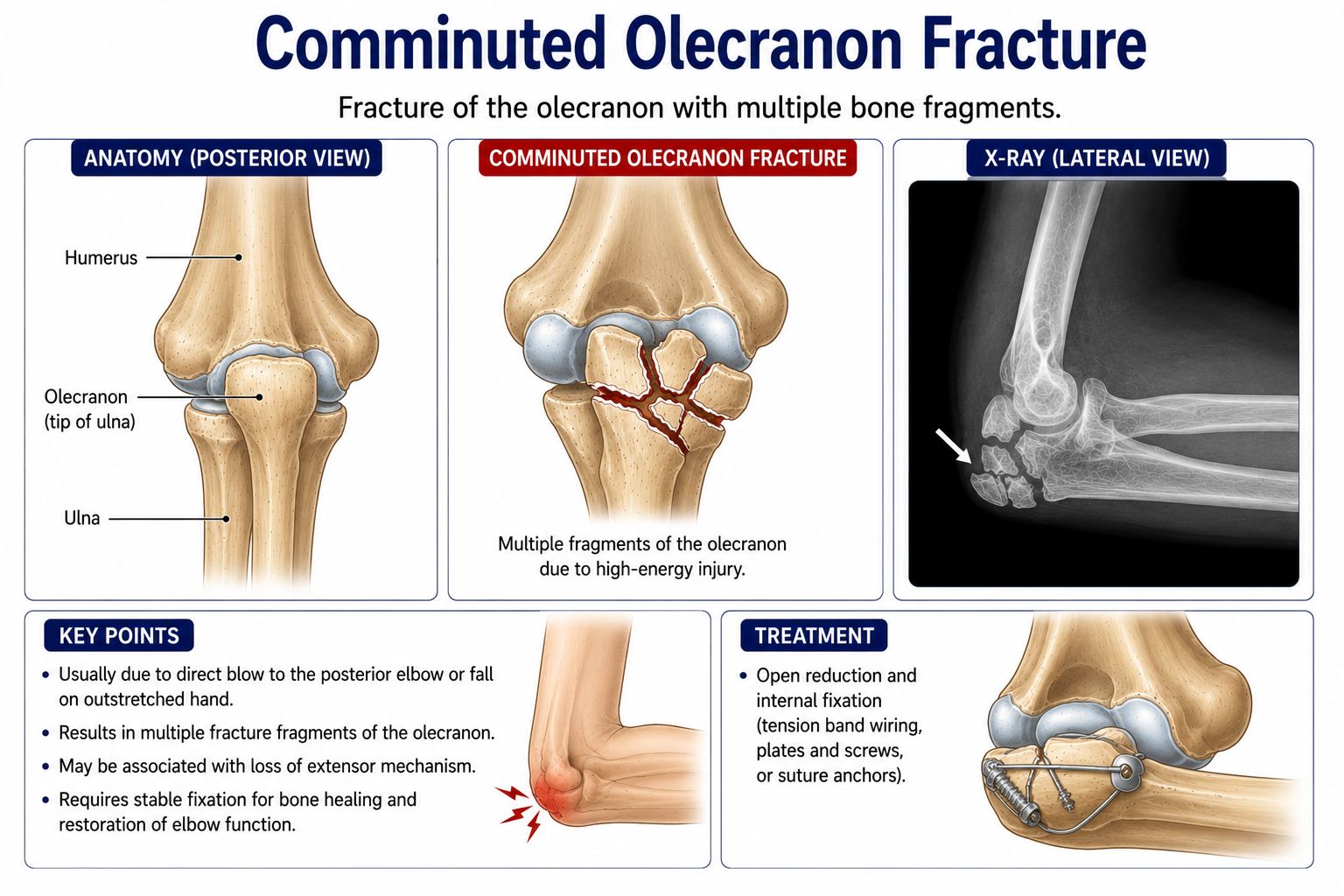
ORIF — Intramedullary Compression Screw | For: fractures failing 3 months of conservative treatment (no MRI healing); displaced fractures; complete fractures; established non-unions; posterior approach; screw inserted along the intramedullary axis of the olecranon; large partially-threaded cancellous screw (or headless compression screw) achieves compression across the fracture; excellent biomechanics — the screw orientation is parallel to the tensile stress direction |
Bone Grafting (Non-Union) | For established non-unions (>6 months persistent fracture line): curettage of the non-union site; autologous bone graft (iliac crest or local olecranon bone); intramedullary screw fixation |
Address Concurrent UCL Insufficiency | If concurrent UCL insufficiency identified on MRI: plan staged management (stress fracture healing first, then UCL reconstruction when clinically appropriate) |
Biomechanics Review | Mandatory for all throwing athletes recovering from olecranon stress fractures: video analysis of bowling/pitching action; identify and correct mechanical faults that increase olecranon stress; coach involvement essential |
Recovery & Rehabilitation
- Conservative: 3–6 months complete rest from throwing; if MRI confirms healing at 3 months, graduated return-to-throw programme begins; return to competitive throwing 6–9 months
- After intramedullary screw fixation: sling 2 weeks; progressive ROM from week 2; interval throwing programme begins month 2; return to competitive throwing 4–6 months post-op
- Biomechanics correction: concurrent with recovery; the mechanical faults that caused the stress fracture must be addressed before return to competitive throwing
- Annual MRI for 2 years post-healing to confirm no recurrence
- Recurrence: 15–20% recurrence rate if loading is premature or mechanics not corrected
Why choose Dr Senthilvelan?
Olecranon stress fractures in competitive athletes require accurate diagnosis (MRI is essential), precise screw fixation when indicated, and expert guidance on return-to-throw protocols. Dr Senthilvelan has specific experience in this injury in high-level cricket bowlers and other overhead athletes, including the biomechanical assessment component of return to sport.
Frequently Asked Questions
1. My X-ray was normal but my elbow is still very sore at the olecranon — could I still have a stress fracture?
Yes — stress fractures in the olecranon are frequently invisible on plain X-ray in the early stages because there is no displacement and the fracture line may not yet be wide enough to see on two-dimensional films. MRI is the investigation of choice: it shows characteristic bone marrow oedema (a diffuse increase in signal on T2 sequences) at the stress fracture site even before a fracture line is visible. Any overhead athlete with persistent posterior olecranon pain not responding to rest should have an MRI regardless of a normal X-ray.
2. If I rest for 3 months, will the fracture definitely heal?
Most non-displaced olecranon stress fractures heal with 3–6 months of rest from throwing — the bone’s natural remodelling capacity is sufficient when the loading stress is completely removed. However, some fractures do not heal with rest alone, particularly in athletes with: concurrent metabolic issues (relative energy deficiency, vitamin D deficiency); very established fracture lines with sclerotic margins; or fractures that have been partially loaded during the rest period. Serial MRI at 3 months assesses healing progress. If no healing has occurred at 3 months, surgical fixation with an intramedullary screw is recommended rather than extending conservative management further.
3. Will the screw need to be removed?
The intramedullary screw used for olecranon stress fracture fixation is typically removed after the fracture has healed and the athlete has returned to sport — usually at 12–18 months post-insertion. This is because the screw occupies the medullary canal and a retained screw in an actively throwing athlete represents a stress riser that could predispose to re-fracture around the screw tip. Removal is a straightforward day-case procedure through the original posterior incision.
4. Can I ever bowl or pitch at the same level again after this injury?
Yes — with correct management and thorough biomechanics correction, the majority of competitive throwing athletes return to the same or higher level of performance. Key determinants of return-to-performance success are: adequate rest (not rushing the healing period); confirmed MRI healing before loading; systematic biomechanics review (addressing the mechanical faults that created the excessive olecranon stress in the first place); and a formal, graduated return-to-throw programme. Athletes who rush the return or fail to address the biomechanical causes have a significant recurrence risk.
5. Could my UCL also be injured alongside the stress fracture?
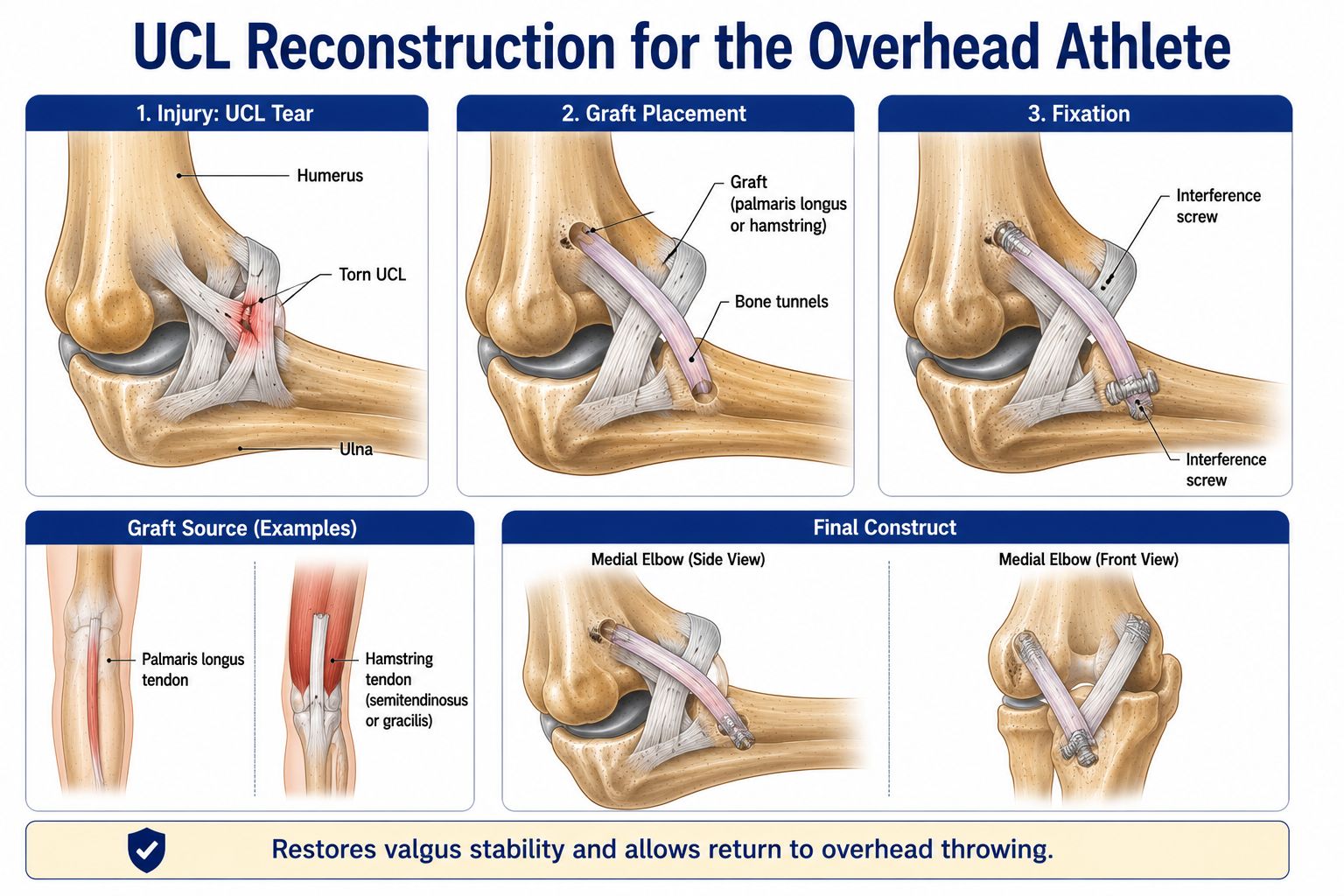
Yes — UCL insufficiency and olecranon stress fractures frequently coexist because both are caused by the same underlying problem: valgus extension overload from repetitive throwing. When the UCL is deficient, the bony structures (olecranon, medial column) take more load during throwing — creating the repetitive mechanical stress that causes the stress fracture. MRI should specifically evaluate the UCL in every throwing athlete with an olecranon stress fracture. If UCL insufficiency is confirmed, it typically needs to be addressed (with UCL reconstruction) as part of the overall management — otherwise the mechanical overload on the olecranon will recur.