Overview
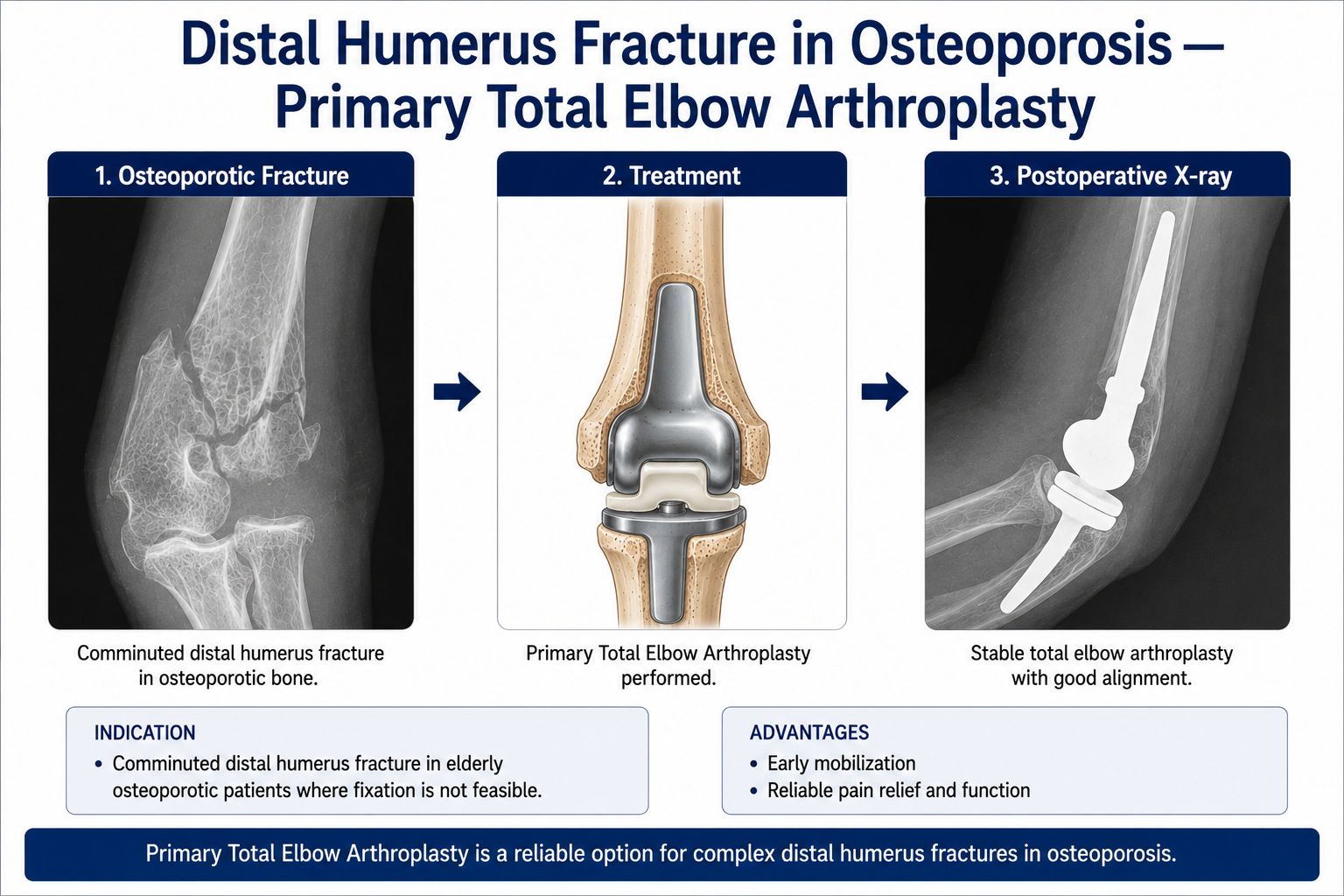
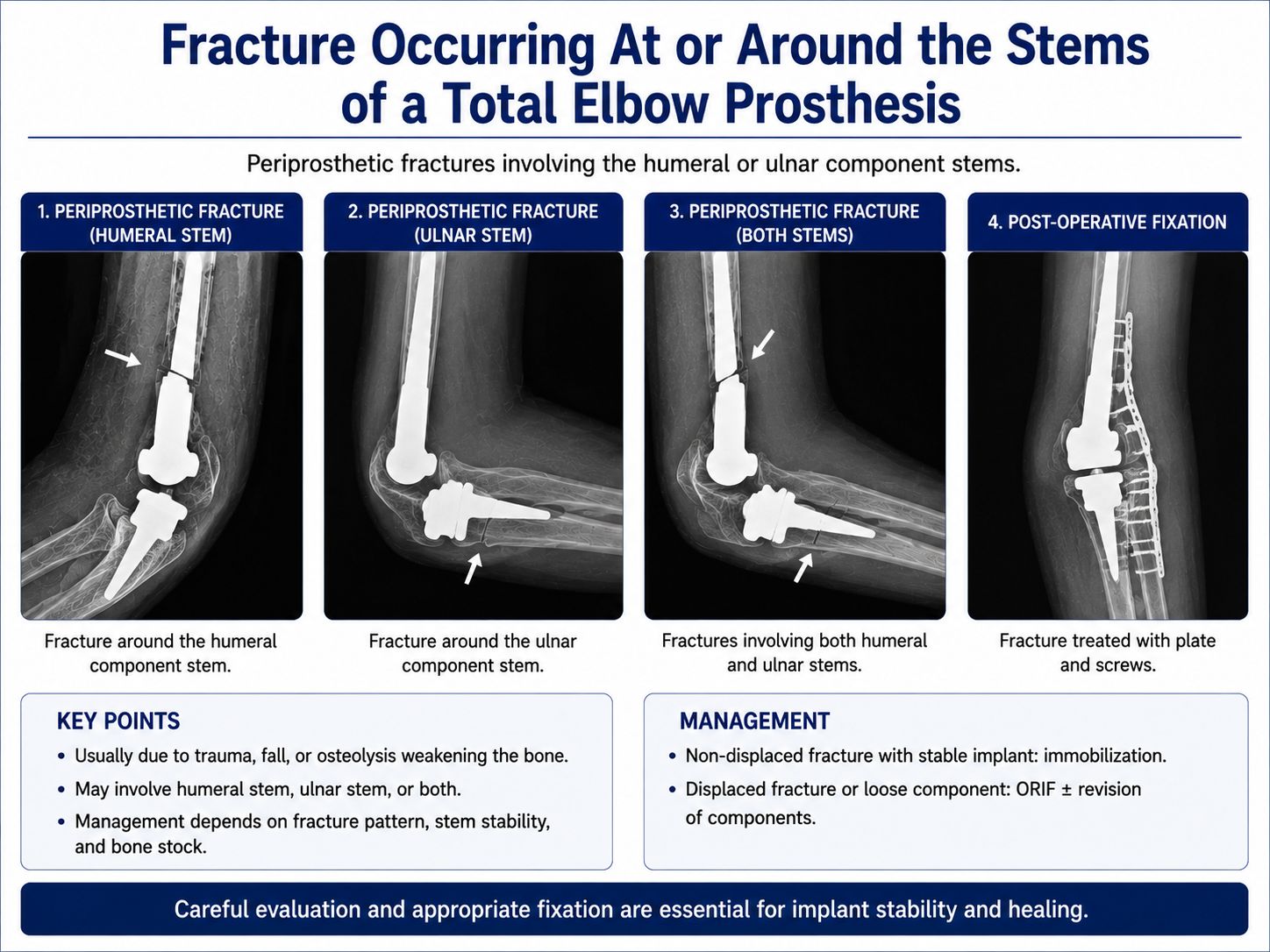
Periprosthetic fractures around total elbow arthroplasty are an increasingly encountered complication as the population of elbow replacement recipients grows. These fractures present unique challenges: the bone adjacent to a prosthesis is often osteoporotic and already partially replaced by the implant; standard ORIF techniques may not be feasible (bicortical screws cannot be placed through the stem); and the question of whether the implant stem is loose (requiring revision) or well-fixed (allowing fracture fixation alone) determines the entire surgical strategy.
The Mayo classification for periprosthetic elbow fractures guides management: fractures are classified by location (humeral component: A, B, C; ulnar component: I, II, III) and by stem stability (the critical determinant). A well-fixed stem allows ORIF of the fracture with unicortical locking screws and cerclage cables. A loose stem necessitates long-stem revision of the implant combined with fracture fixation.
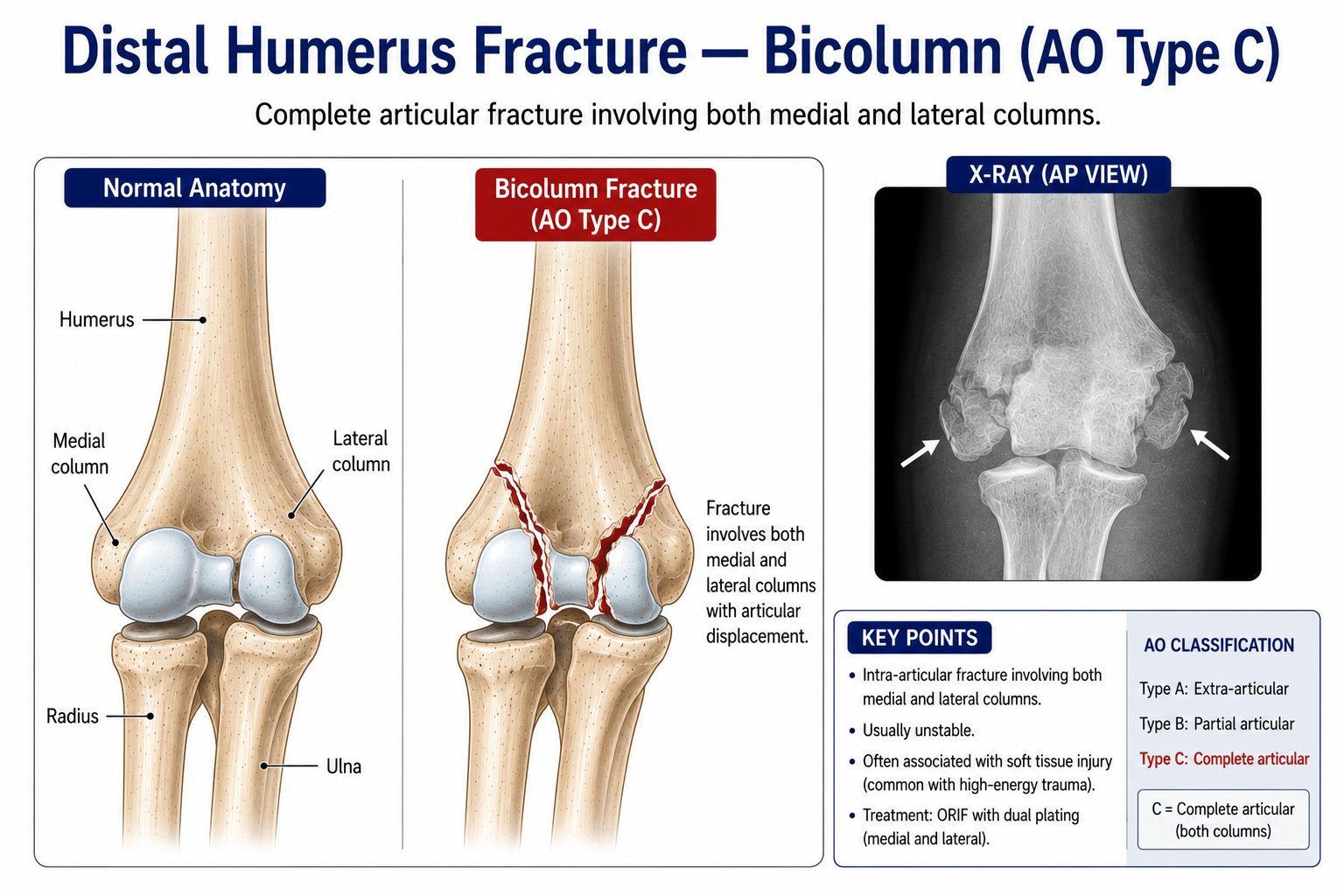
The thin, cortical bone of the distal humerus adjacent to a cemented prosthesis stem is the most common fracture site. The medial and lateral columns of the distal humerus around the humeral component are particularly vulnerable — stress shielding from the implant weakens the surrounding bone over time.
Quick Facts | Details |
Also Known As | TEA Periprosthetic Fracture, Periprosthetic Humeral or Ulnar Fracture |
Affected Area | Bone at or adjacent to the humeral or ulnar stem of a total elbow prosthesis; may involve the humerus shaft (above the humeral component), the ulna (around the ulnar component), or the olecranon (posterior) |
Who It Affects | Patients with existing total elbow arthroplasty; more common in the elderly, particularly those with osteoporosis, RA, or revision arthroplasty; typically from falls; the incidence is increasing as the number of elbow replacements grows |
Prevalence | Incidence approximately 2–5% of total elbow arthroplasty implants over a 10-year follow-up; increasing with the growing population of elbow replacement recipients; among the most challenging elbow fractures to manage |
Treatment | Classification by fracture location and stem stability; stable stem + distal humerus/ulna fracture: ORIF with unicortical locking plates + cerclage; loose stem: long-stem revision + ORIF; olecranon: plate or TBW |
Causes & Risk Factors
- Fall onto the arm — the most common precipitating event; even a low-energy fall can fracture osteoporotic periprosthetic bone
- Stress shielding — the stiff metal stem transfers load away from the adjacent bone, causing progressive cortical thinning and bone loss
- Osteolysis from wear particles — particle-induced bone resorption around a loose implant weakens the periprosthetic bone
- Intraoperative fracture — fracture of the humeral or ulnar cortex during implant insertion (iatrogenic periprosthetic fracture); particularly during revision surgery
- Cortical erosion from osseointegration failure — stress concentration at the stem tip causes cortical fracture at this point
Symptoms
- Acute pain in the arm or elbow — following a fall or minor trauma
- Visible or palpable deformity — deformity may be subtle due to the stiffening effect of the prosthesis within the bone
- Loss of elbow function — the arm cannot be used; this is the predominant complaint
- Pre-existing implant symptoms — if the prosthesis was already loosening, there may be a history of progressive pain, clicking, or loss of ROM before the fracture
- Neurovascular assessment — ulnar nerve (always at risk at the medial elbow); radial nerve (humeral shaft fractures above the prosthesis)
How is it Diagnosed?
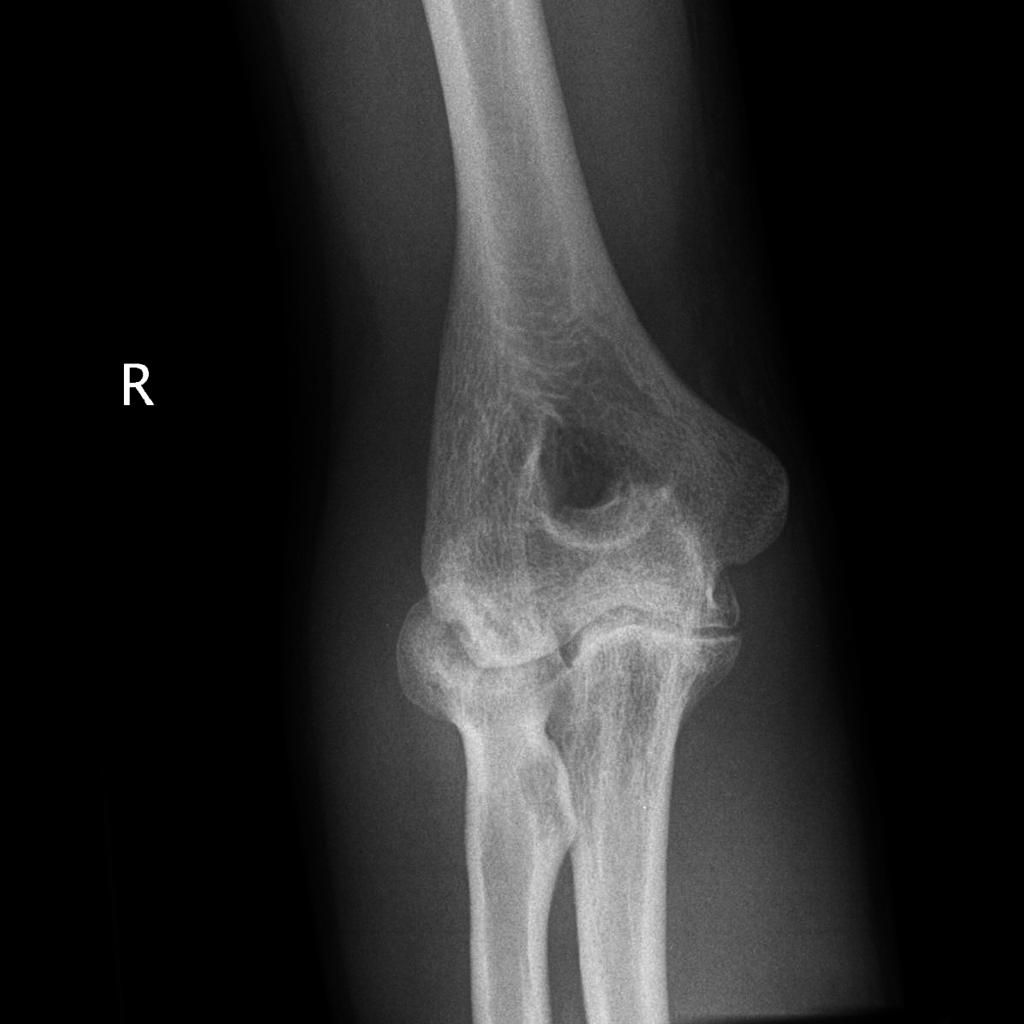
- Plain X-rays (AP + lateral of the entire arm including both joints) — identify fracture location, pattern, and comminution; assess stem position (subsidence, cement mantle fracture indicating looseness)
- CT scan — defines fracture morphology, stem stability signs, cortical thickness, and 3D fracture geometry
- Implant identification — identify the prosthesis manufacturer and model; obtain the surgical implant notes if available; this determines which revision components are compatible
- Looseness assessment — clinical (pain at rest, pain on torsional stress testing); radiological (radiolucency at the cement-bone interface, stem migration/subsidence on serial X-rays)
Treatment Options
Treatment Type | Details |
ORIF with Unicortical Locking Plates + Cerclage (Well-Fixed Stem) | Long plate applied to the medial or lateral column; unicortical locking screws placed in the cortex (bicortical impossible due to the stem); supplemented with cerclage cables (around the cortex and stem) for additional stability; indirect fracture reduction to preserve blood supply |
Long-Stem Revision + ORIF (Loose Stem) | Remove the loose component; insert a long-stem revision implant extending well beyond the fracture; the fracture is reduced around the new long stem and fixed with unicortical locking plates ± cerclage; the long stem bypasses and bridges the fracture zone |
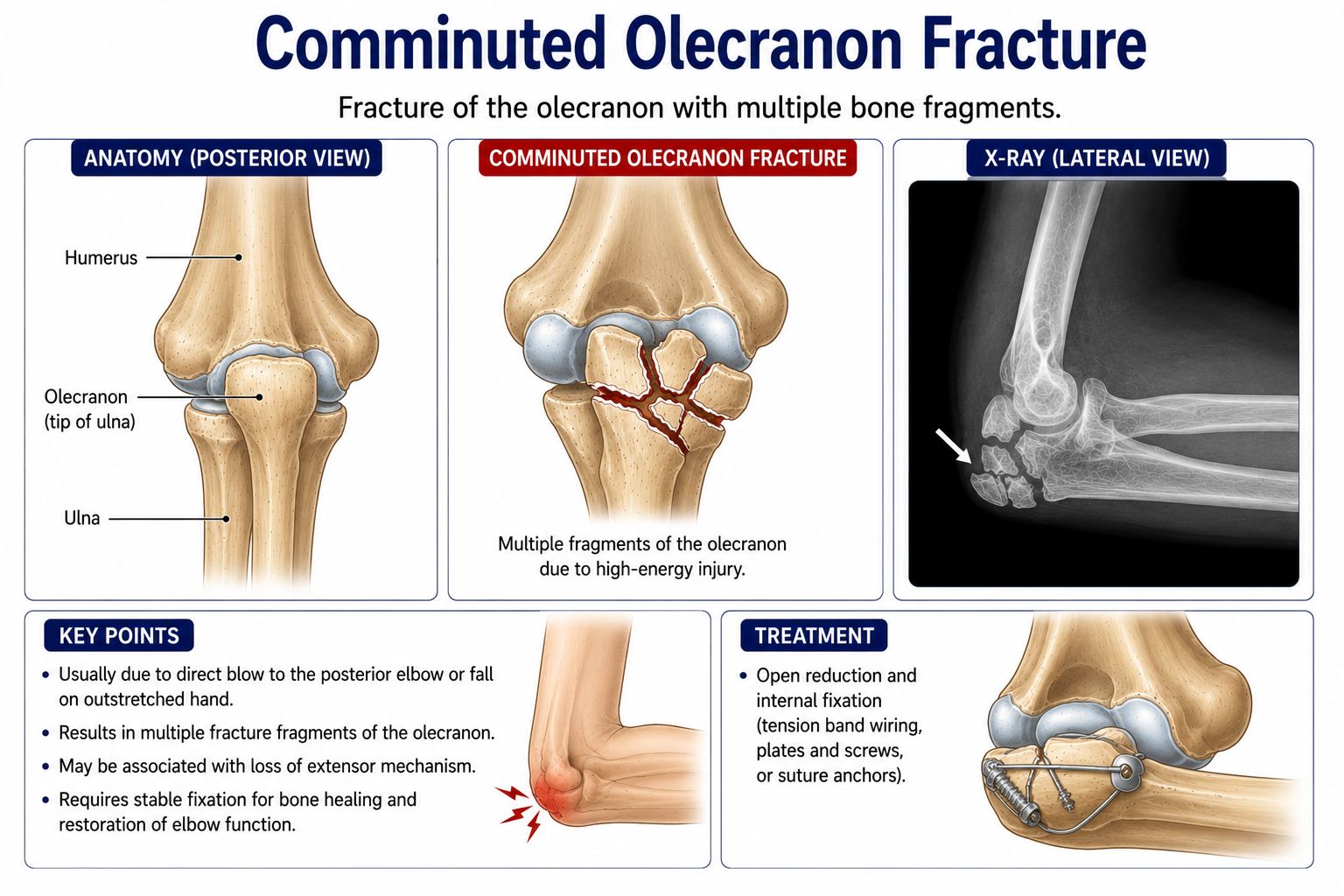
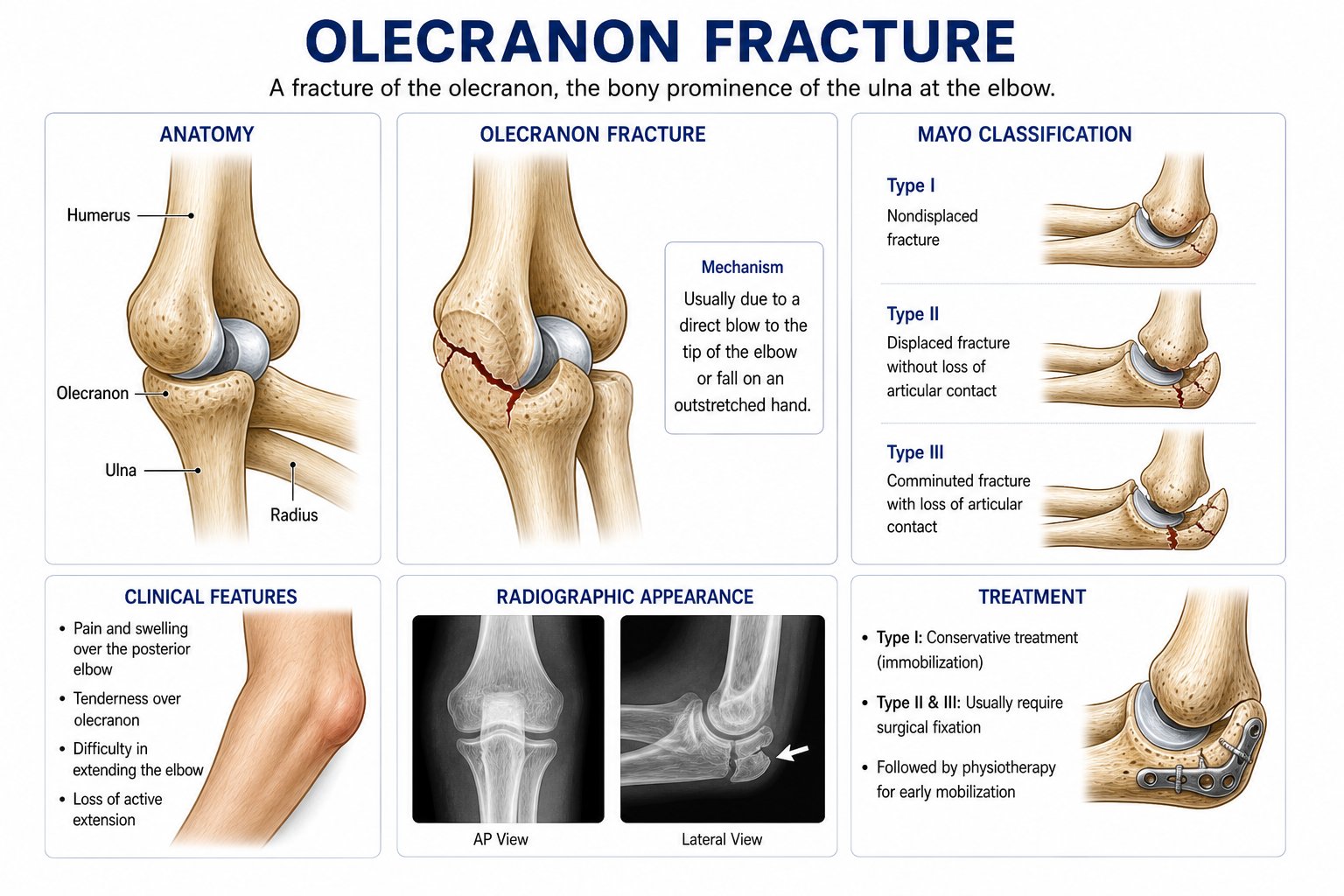
Olecranon Periprosthetic Fracture | ORIF with pre-contoured locking plate or TBW depending on fracture pattern; the ulnar stem is usually well-fixed; the fracture is distal to the stem |
Cortical Strut Allograft | For significant cortical bone loss: allograft strut fixed to the deficient cortex with cerclage cables; provides structural support for the plate and stem; improves bone stock for future revision if needed |
Conservative (Undisplaced, Well-Fixed Stem, Low Demand) | For undisplaced fractures in very elderly, frail patients: plaster or brace immobilisation for 6–8 weeks; accept residual deformity risk; reserved for patients unable to tolerate surgery |
Recovery & Rehabilitation
- After ORIF (well-fixed stem): sling 4–6 weeks for fracture protection; gentle ROM from week 2–3; strengthening from 8–12 weeks; return to function at 3–4 months
- After long-stem revision: same protocol as primary TEA recovery; physiotherapy from day 1; permanent 1kg restriction maintained (or re-counselled if changed)
- Outcome: good functional recovery in 70–80% of cases; outcome limited by bone quality and the number of prior procedures
- Complications: hardware failure, non-union, infection (increased risk in revision setting), and further stem loosening
Why choose Dr Senthilvelan?
Periprosthetic elbow fractures require specialist knowledge of elbow arthroplasty implants and revision techniques in addition to fracture fixation expertise. Dr Senthilvelan’s experience in elbow arthroplasty ensures that implant assessment (stable vs loose), surgical planning, and the decision between fracture fixation and revision are made correctly.
Frequently Asked Questions
1. I have an elbow replacement and I fell — how do I know if the prosthesis is still intact?
After any fall onto an arm with an elbow replacement, you should seek urgent orthopaedic assessment. X-rays will determine whether a periprosthetic fracture has occurred and whether the implant components are still in their correct position. Even if the immediate X-ray appears normal, a fracture through osteoporotic periprosthetic bone can sometimes be subtle. If you have significant new pain or loss of function after a fall, do not delay assessment.
2. Can the fracture be fixed without replacing the joint again?
Yes — if the prosthesis stems are still well-fixed within the bone (confirmed on X-ray by no cement mantle fractures, no stem migration, and no significant bone resorption around the stem), the fracture can be treated by fixing the bone around the implant using special unicortical locking plates and cerclage cables. The prosthesis does not need to be revised in this scenario. However, if the stem was already loose before the fracture, a new longer-stemmed revision implant is required to bridge and stabilise the fracture zone.
3. Why is this fracture so difficult to treat compared to a normal broken arm?
Several factors make periprosthetic fractures particularly challenging. The bone around the prosthesis is often very thin and osteoporotic due to stress shielding. Standard bicortical screws cannot be placed through the metal stem — requiring unicortical screws which have less purchase. The stem itself must be assessed for looseness. The blood supply to the periprosthetic bone may already be compromised. And the fixation must withstand the forces of the mechanical articulation while the bone heals.
4. Will my lifting restriction change after treatment for a periprosthetic fracture?
No — the 1kg single-hand lifting restriction that applies to total elbow arthroplasty is maintained after periprosthetic fracture treatment. In fact, the fracture is a reminder of why this restriction is so important — the bone around the implant is more vulnerable than normal bone, and exceeding the load limit risks both fracture recurrence and implant loosening. The restriction is permanent and non-negotiable for implant longevity.
5. How can periprosthetic fractures be prevented?
The most important preventive measures are: strict adherence to the 1kg single-hand lifting restriction (which reduces the mechanical stress on the periprosthetic bone); fall prevention strategies in elderly patients (physiotherapy, home assessment, anti-osteoporotic medication); regular follow-up X-rays to detect early signs of stem loosening (which allows elective revision before a fracture occurs); and bone-protecting medication (bisphosphonates or denosumab) where appropriate for osteoporosis management.