Overview
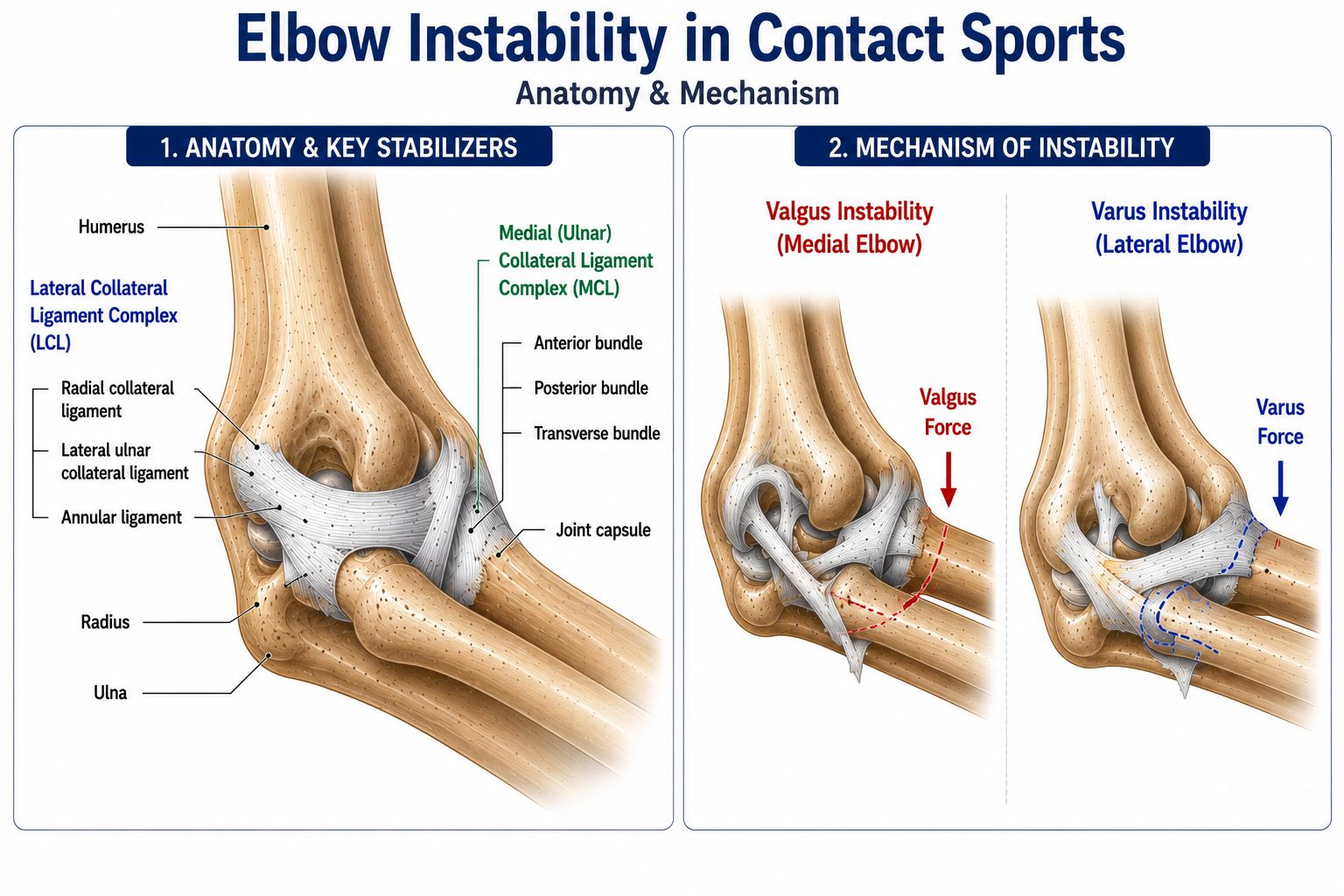
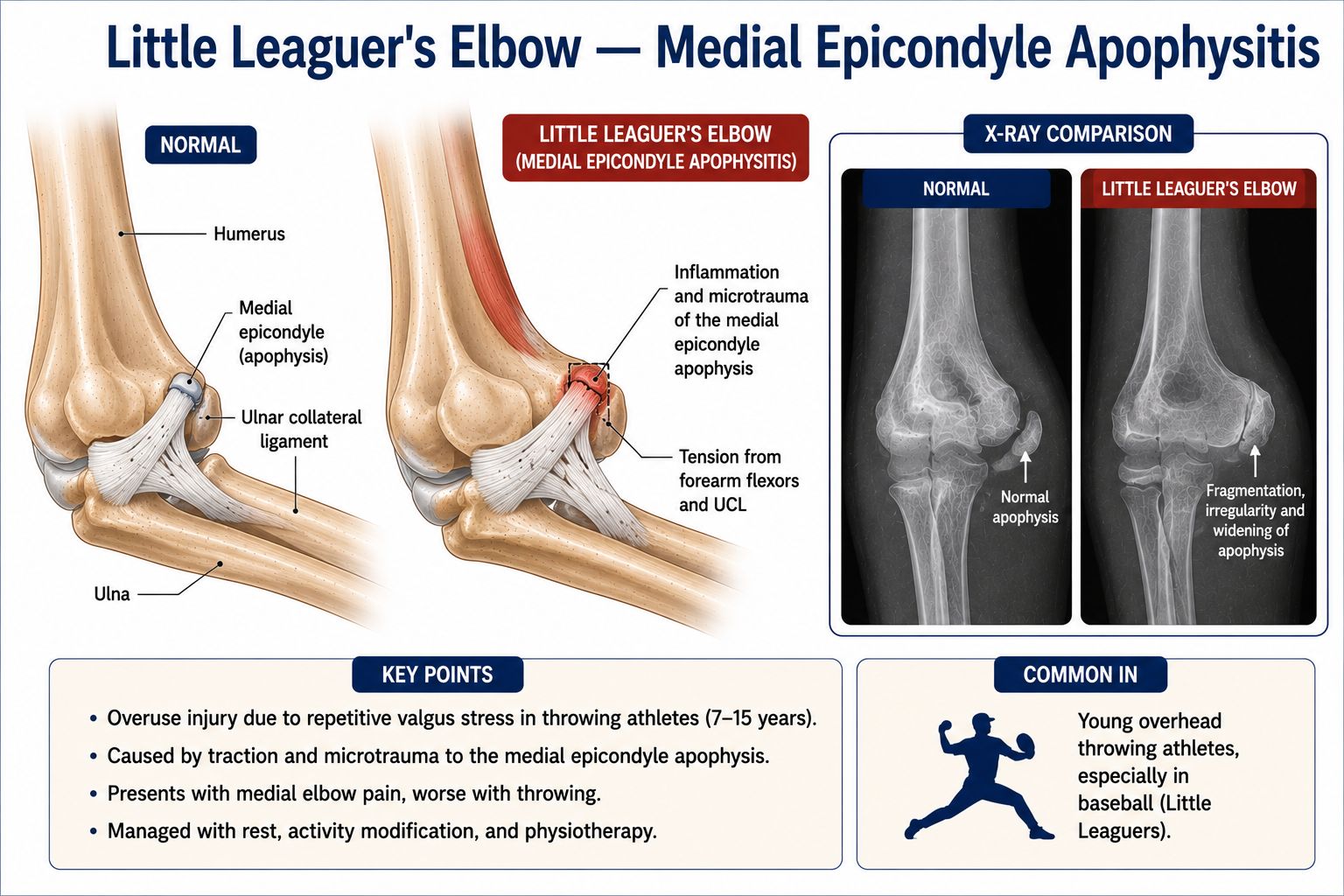
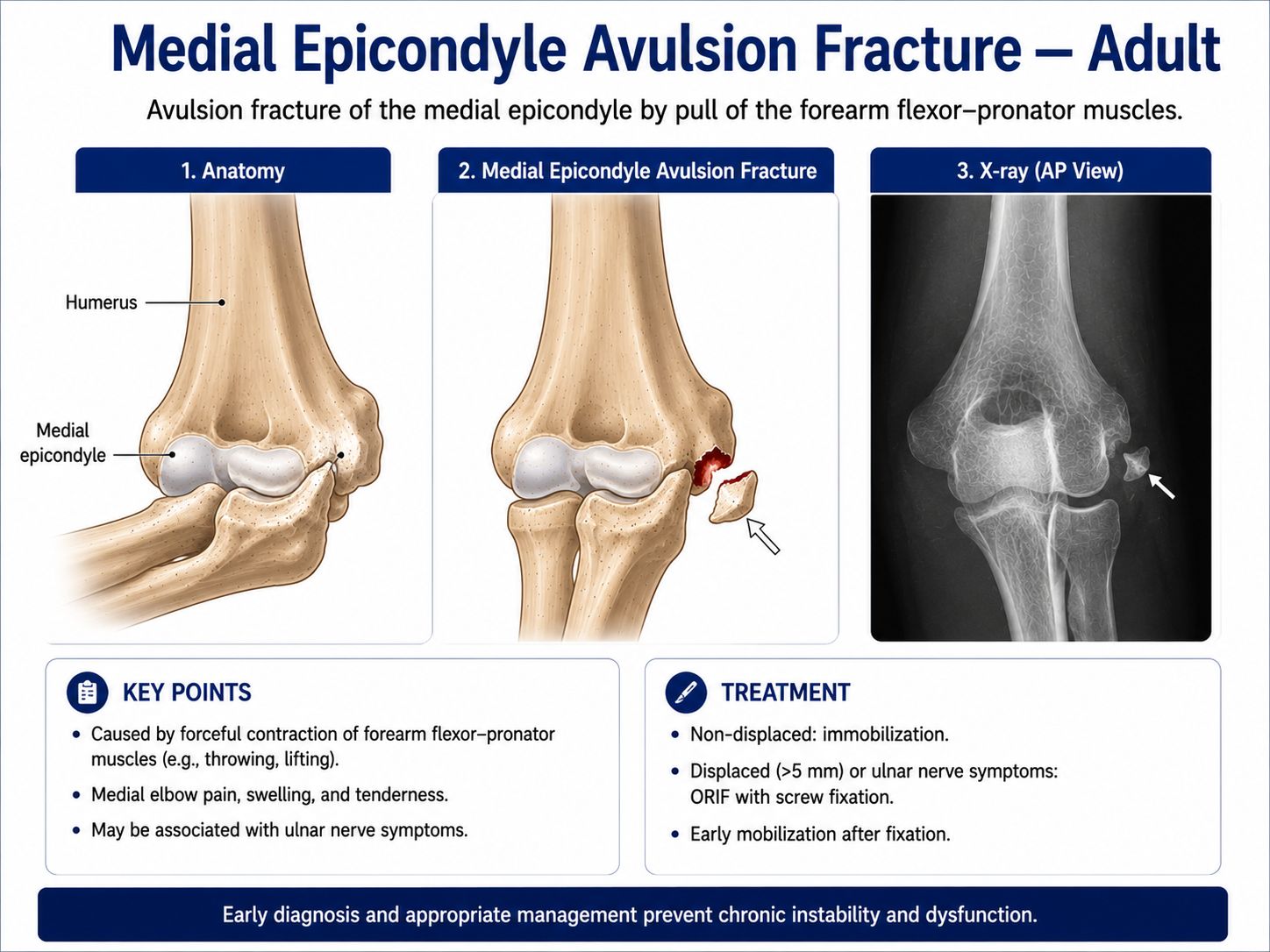
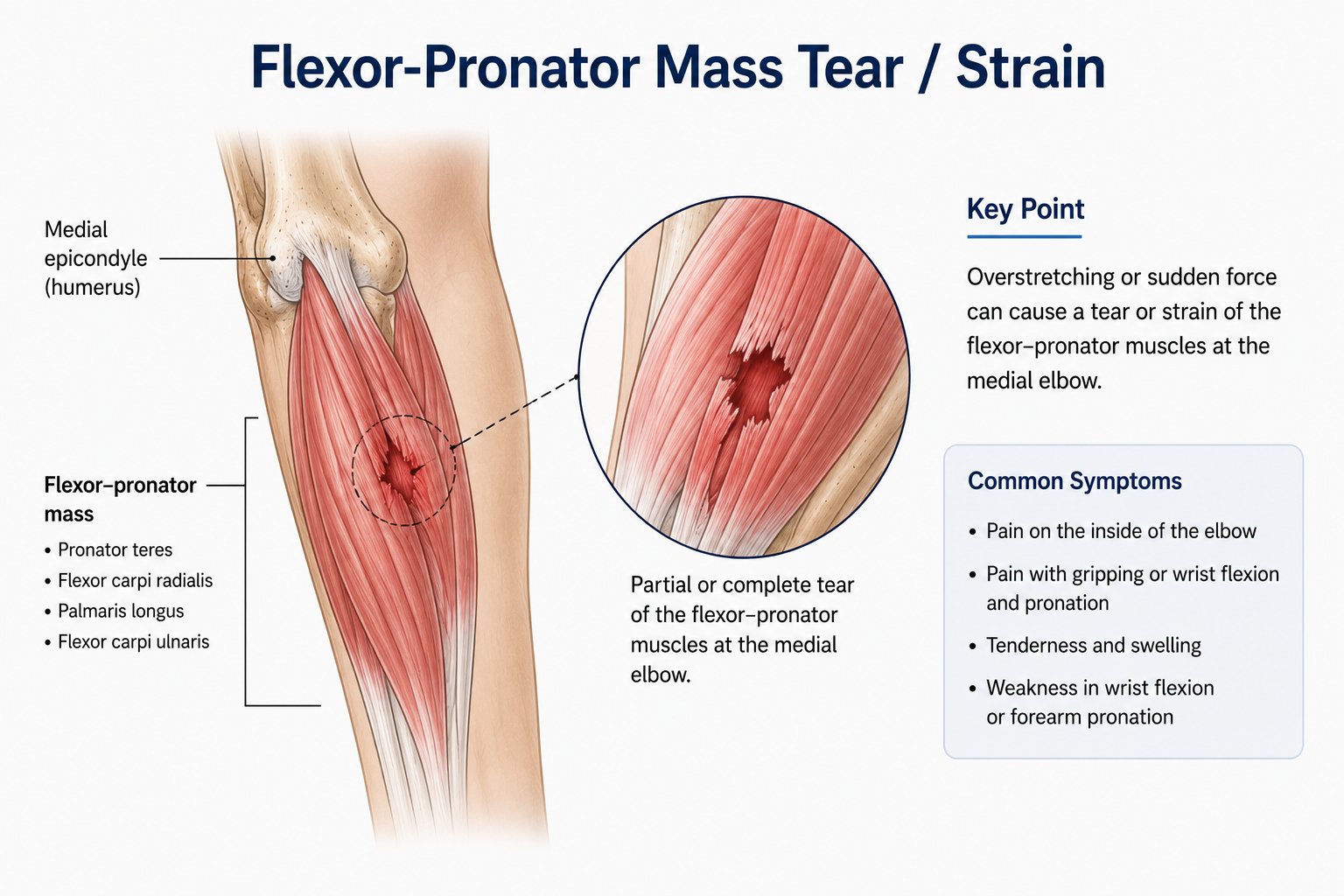
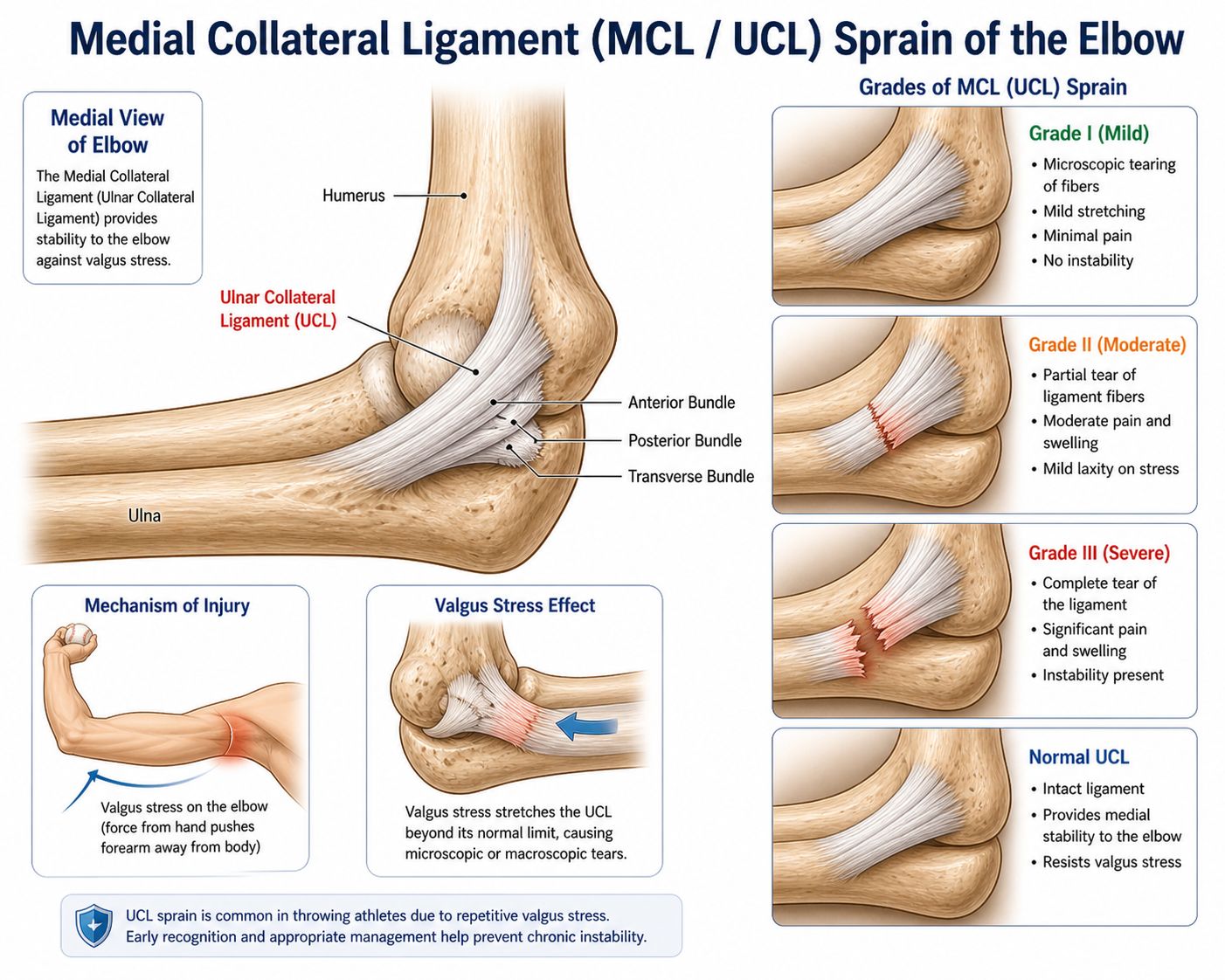
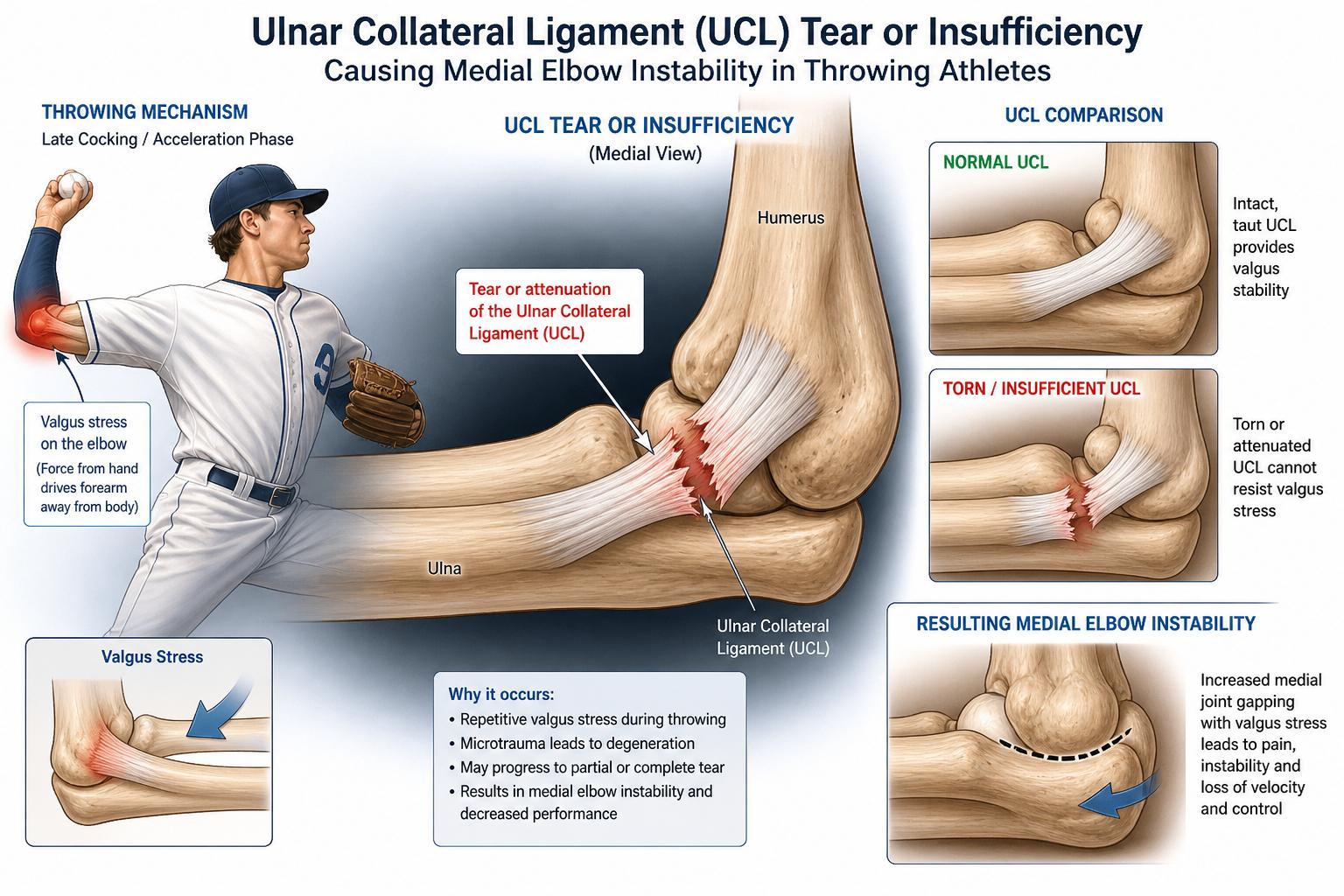
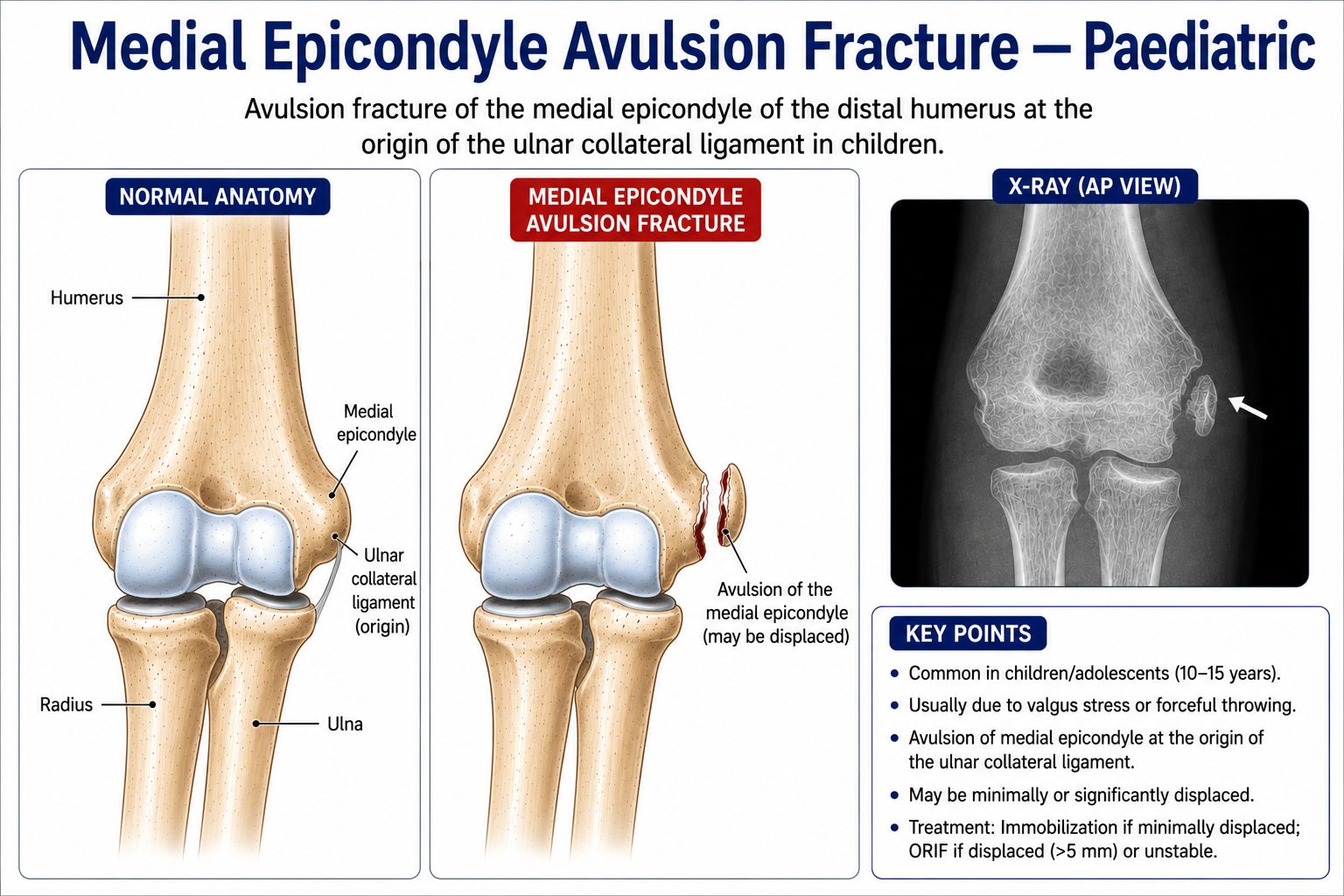
The medial epicondyle in children and adolescents is an apophysis — a secondary ossification centre attached to the humerus by a cartilaginous growth plate rather than solid bone. Until this apophysis fuses (typically at age 15–17 years), it represents a weak point in the medial elbow that can be avulsed by the combined pull of the common flexor-pronator origin and the UCL during acute valgus loading or elbow dislocation.
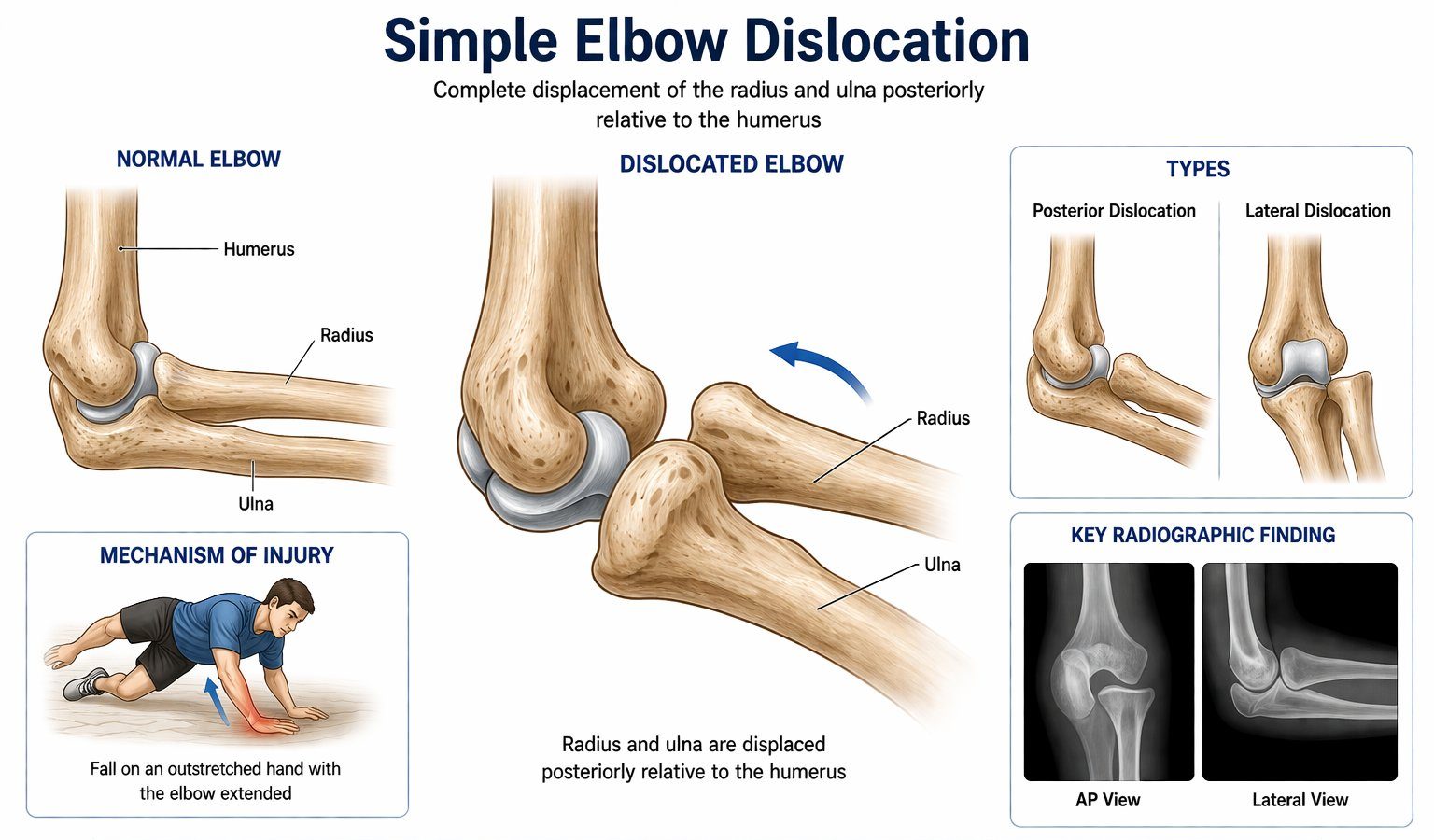
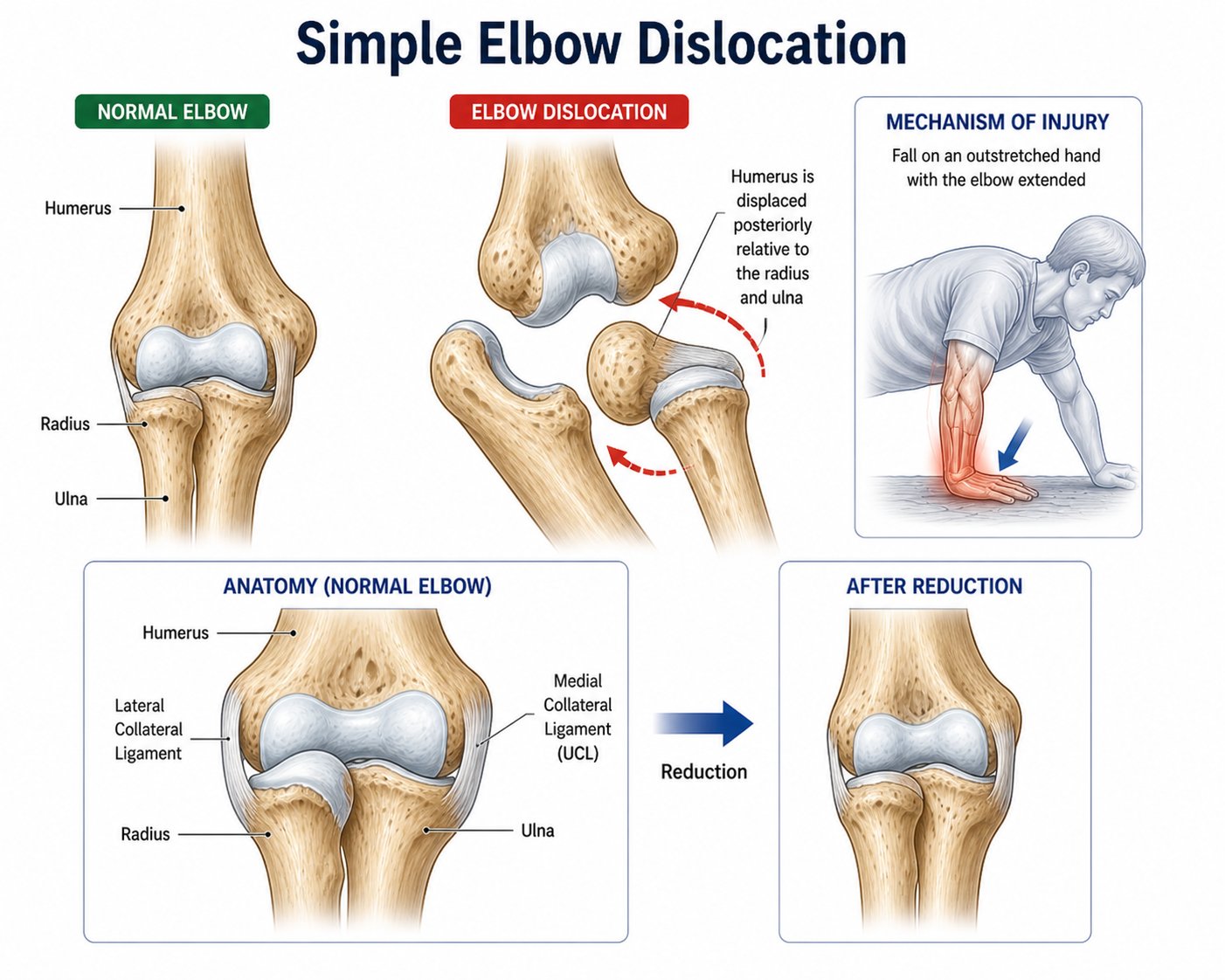
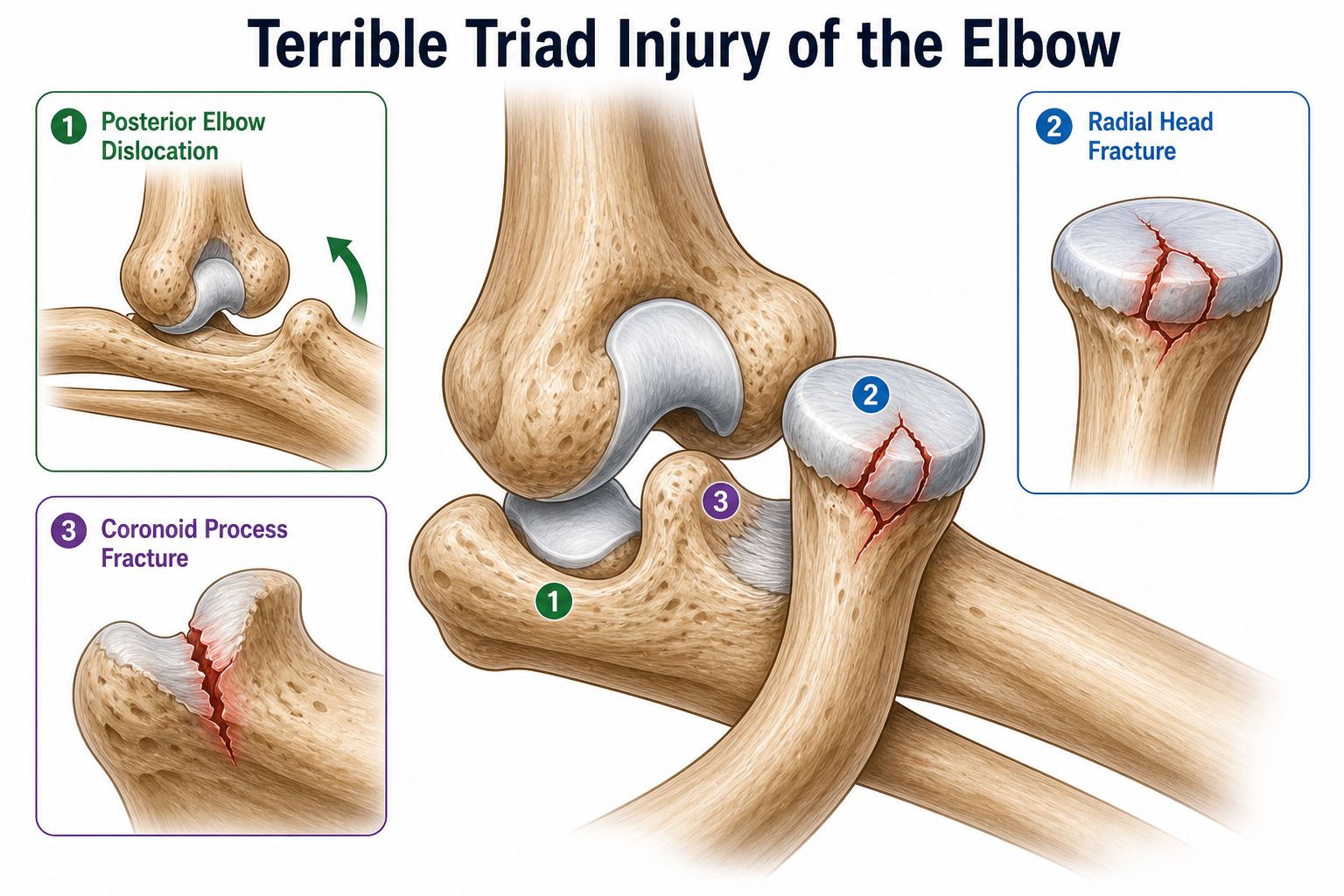
Medial epicondyle avulsion fractures occur in three main contexts: (1) a sudden acute valgus stress or fall avulses the apophysis; (2) elbow dislocation — in approximately 50% of paediatric elbow dislocations, the medial epicondyle is avulsed by the UCL; and (3) chronic repetitive loading (Little Leaguer’s elbow in its severe form). The most dangerous complication is incarceration of the medial epicondyle fragment within the joint — where it becomes trapped between the articular surfaces after the dislocation reduces.
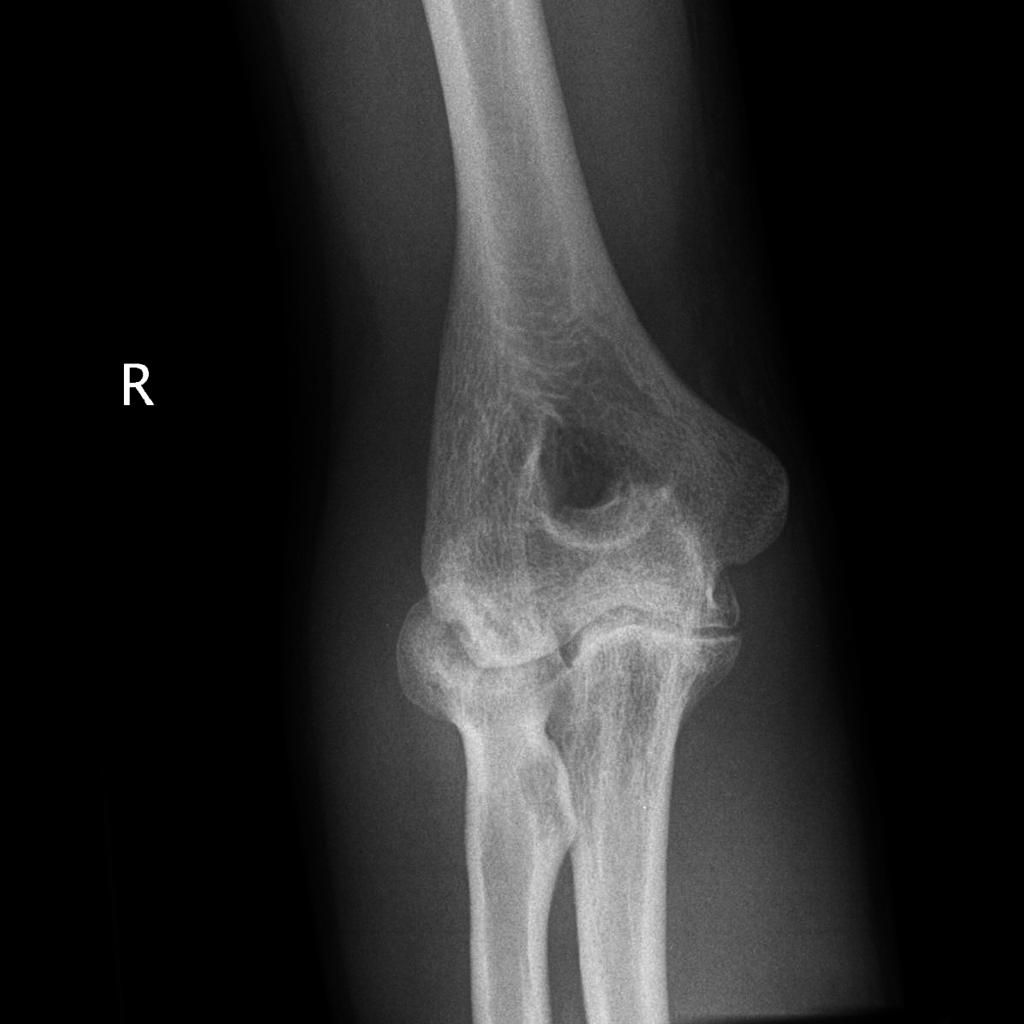
The critical diagnostic challenge is identifying incarcerated fragments — on plain X-ray, the medial epicondyle that should be visible on the AP view of a child’s elbow is absent when incarcerated. The “absent medial epicondyle” sign in a child following an elbow dislocation mandates urgent surgical retrieval of the fragment from the joint.
Quick Facts | Details |
Also Known As | Medial Epicondyle Apophyseal Avulsion, Little Leaguer’s Elbow (severe), Medial Epicondyle Pull-Off Fracture |
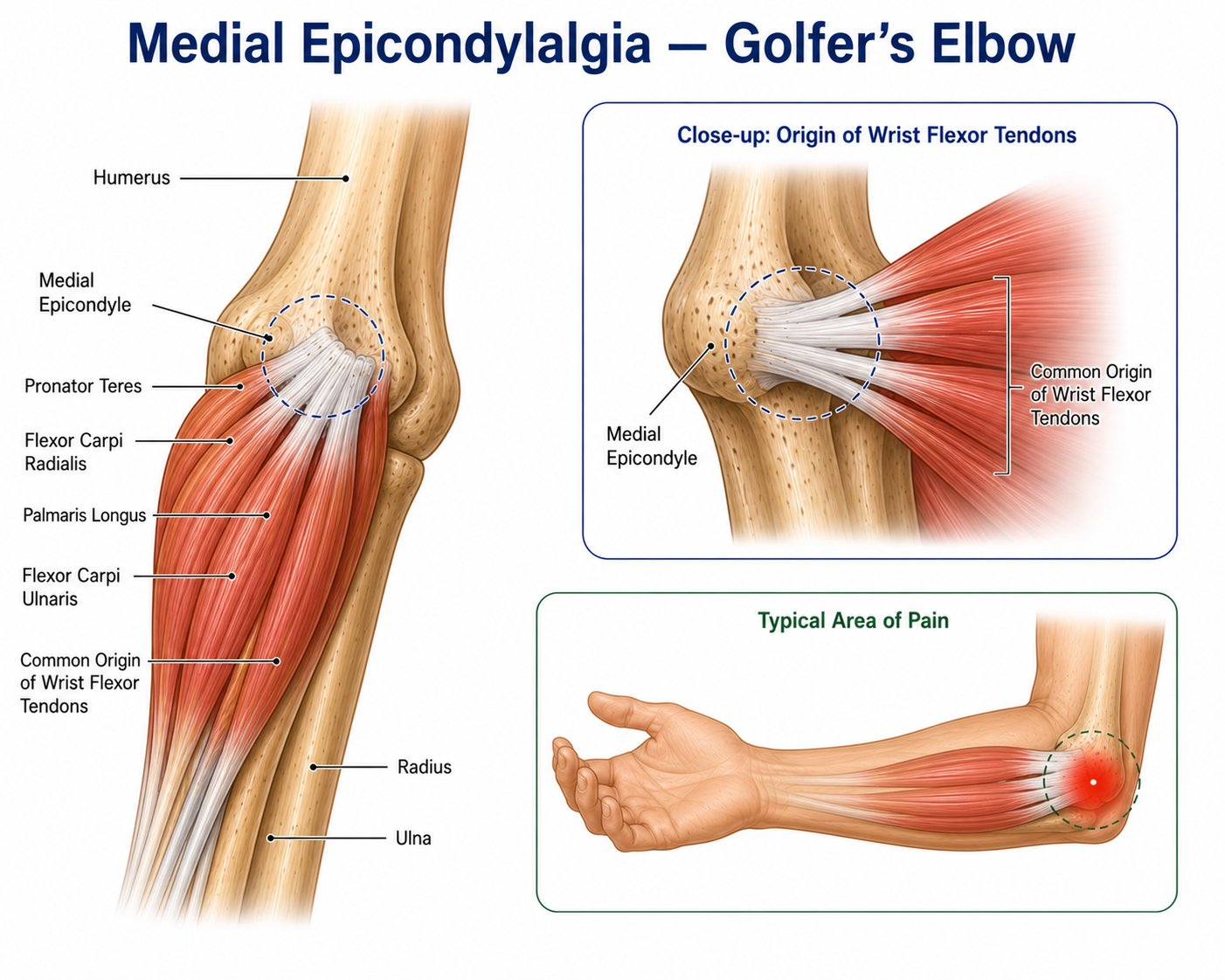
Affected Area | Medial epicondyle apophysis of the distal humerus — the growth plate (apophysis) at the medial epicondyle, which serves as the attachment for the common flexor-pronator origin and the UCL |
Who It Affects | Children and adolescents aged 9–15 years; predominantly boys; throwing athletes (cricket, baseball, tennis), gymnasts, and contact sport participants; the medial epicondyle apophysis does not fuse until age 15–17 years |
Prevalence | Accounts for approximately 12% of paediatric elbow fractures; the fourth most common elbow fracture in children; very commonly associated with elbow dislocation (incarceration of the fragment in the joint is the most dangerous complication) |
Treatment | Undisplaced (<5mm): non-operative with sling and physiotherapy; Displaced (>5mm) + throwing athlete or valgus instability: ORIF with single compression screw; Fragment incarcerated in joint: urgent ORIF |
Causes & Risk Factors
- Acute valgus stress — a fall or tackle applying sudden valgus force to the extended elbow; the UCL avulses the apophysis
- Elbow dislocation — the medial epicondyle is avulsed by the pulling UCL as the elbow dislocates; seen in 50% of paediatric dislocations
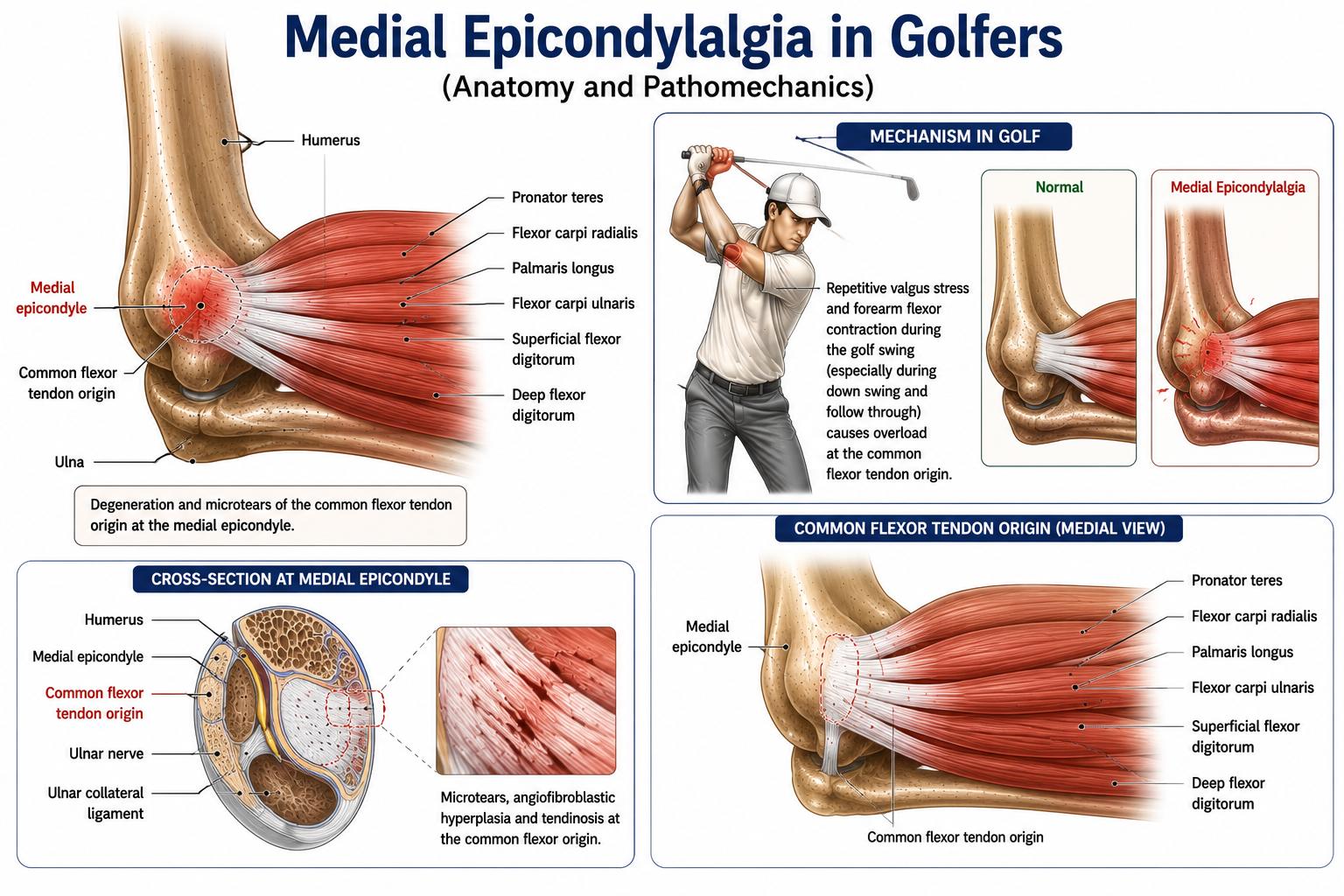
- Throwing overload (chronic) — repeated valgus stress during throwing causes progressive apophyseal stress in young throwers; can culminate in acute avulsion with a single high-effort throw
- Gymnastics — vaulting and floor work loads the medial elbow in younger athletes
- Contact sports — rugby, wrestling, judo tackles creating sudden valgus stress
Symptoms
- Acute medial elbow pain — following a specific injury event; well-localised to the medial epicondyle
- Swelling and bruising — over the medial elbow; ecchymosis within 24 hours
- Tenderness directly over the medial epicondyle — the apophysis is the site of maximum tenderness
- Restricted elbow movement — guarding; the child will not move the elbow
- Valgus instability — in significantly displaced fragments where the UCL attachment is disrupted
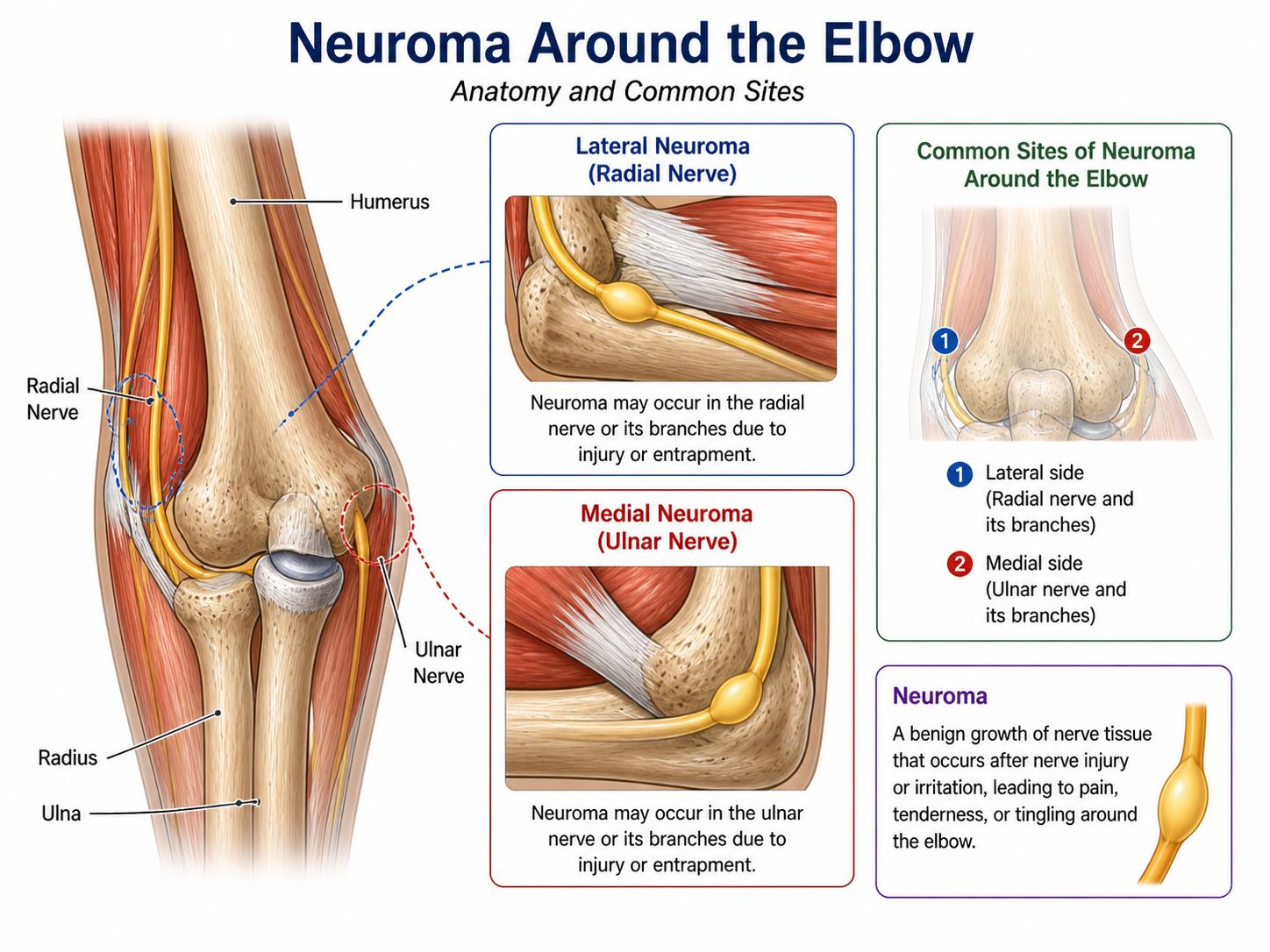
- Ulnar nerve symptoms — tingling in ring and little fingers; the ulnar nerve is adjacent to the medial epicondyle
- Incarcerated fragment: after a dislocation that has been reduced, inability to fully extend the elbow with a visible gap where the medial epicondyle should be on X-ray — URGENT presentation
How is it Diagnosed?
- Plain X-rays (AP + lateral + oblique) — displacement of the medial epicondyle apophysis; the “absent medial epicondyle” sign (incarceration): on AP view of a child’s elbow, the medial epicondyle ossification centre is missing from its normal position
- Compare with opposite elbow X-ray — in young children with multiple ossification centres, comparison films of the normal side help identify abnormal position or absence of the medial epicondyle
- CT scan — defines exact displacement, fragment size, concurrent fractures, and confirms whether fragment is intra-articular
- MRI — soft tissue assessment; UCL integrity; useful in complex cases or when physis involvement is uncertain
- CRITOE mnemonic — normal elbow ossification order in children: Capitellum (1y), Radial head (3y), Internal (medial) epicondyle (5y), Trochlea (7y), Olecranon (9y), External (lateral) epicondyle (11y); medial epicondyle appears before trochlea — if trochlea is visible but medial epicondyle is not, the epicondyle is incarcerated

Treatment Options
Treatment Type | Details |
Non-Operative (<5mm Displacement) | Above-elbow sling for 2–3 weeks; early mobilisation after sling removal; physiotherapy; weekly X-ray to confirm no displacement; suitable for non-throwing children with minimal displacement and stable elbow |
ORIF — Single Compression Screw (>5mm, Thrower, Instability) | Open medial approach; identify and protect the MABC nerve and ulnar nerve; retrieve fragment; reduce anatomically onto medial epicondyle; single 4mm partially-threaded or cannulated compression screw; avoid the growth plate of the distal humerus; above-elbow sling 3–4 weeks; K-wires as alternative in very young children |
Urgent ORIF — Incarcerated Fragment | SURGICAL EMERGENCY; the fragment trapped in the joint must be retrieved; gentle manipulation under GA may dislodge the fragment (apply valgus stress under fluoroscopy while flexing the elbow); if fails: open exploration; reduce and fix the fragment; urgent because the trapped fragment prevents joint reduction and causes articular damage |
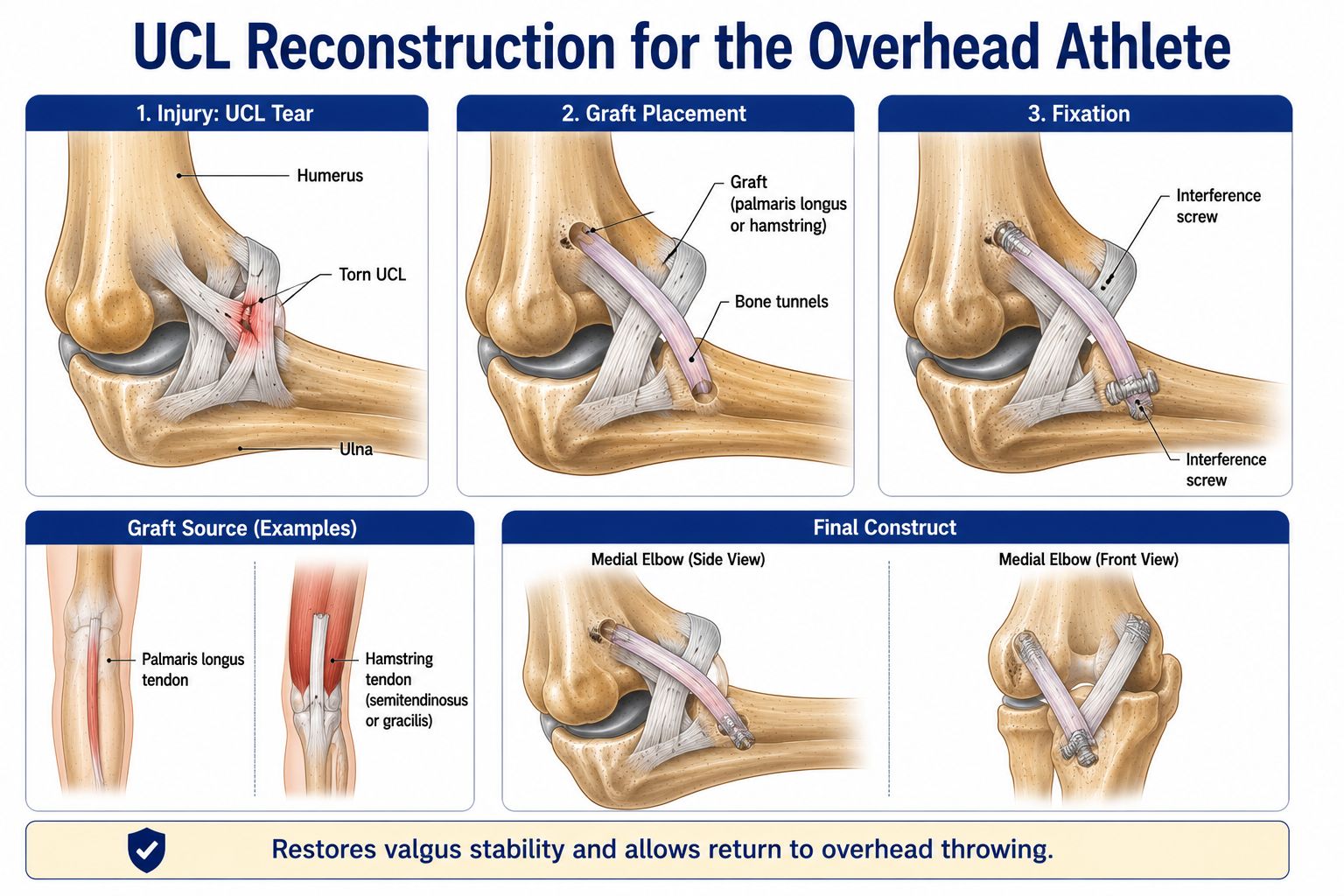
UCL Assessment | After fixation, assess elbow stability under fluoroscopy; if residual valgus instability: plication of UCL fibres to the reduced apophysis; in adolescents approaching skeletal maturity: UCL repair or reconstruction if tissue quality poor |
Throwing Athlete Management | After ORIF: gradual return-to-throw programme 3–4 months; enforce age-appropriate pitching/bowling limits; biomechanics coaching to reduce medial elbow load |
Recovery & Rehabilitation
- Non-operative: sling 2–3 weeks; physiotherapy; return to sport 4–8 weeks; throwing athletes return to full throwing at 3 months
- After ORIF: above-elbow sling 3–4 weeks; ROM from week 3–4; physiotherapy; return to throwing 3–4 months; return to competitive sport 4–6 months
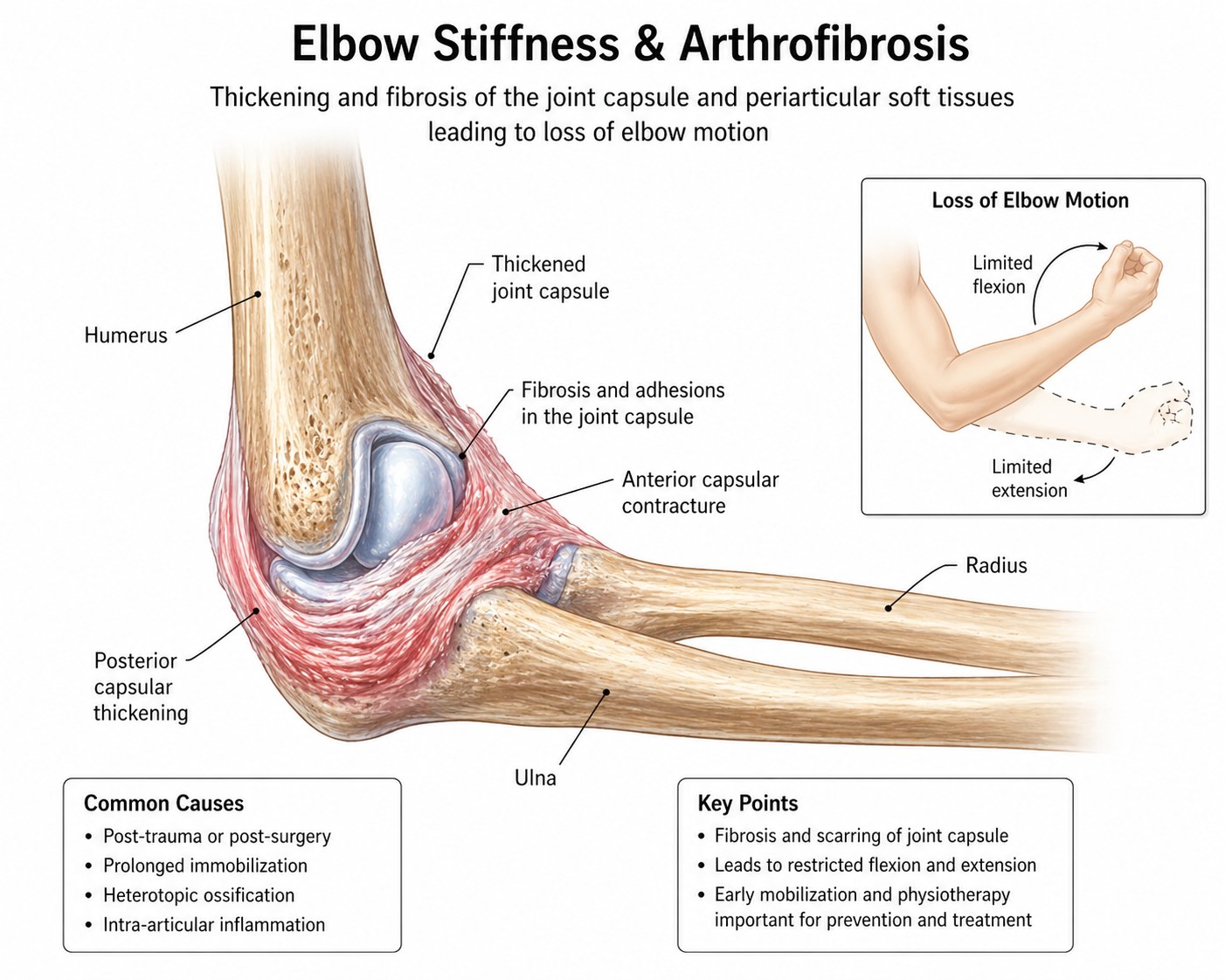
- Incarcerated fragment: recovery longer if joint damage present; ROM may be affected if cartilage was damaged
- Ulnar nerve: if transient tingling present peri-operatively, monitor; most neuropraxias recover within 6–12 weeks
- Long-term: healed medial epicondyle avulsion has excellent prognosis for elbow function; return to throwing at the same level achievable in most case
Why choose Dr Senthilvelan?
Paediatric medial epicondyle avulsion fractures require clinical vigilance — particularly for the incarcerated fragment after elbow dislocation, which is a surgical emergency. Dr Senthilvelan has specific expertise in paediatric elbow fractures and performs both conservative management and ORIF with careful nerve protection and early mobilisation protocols.
Frequently Asked Questions
1. My child dislocated their elbow and I was told a bone fragment might be trapped inside — how serious is this?
This is a surgical emergency. When the medial epicondyle fragment becomes trapped (incarcerated) between the joint surfaces after an elbow dislocation, it prevents full joint reduction and can cause ongoing cartilage damage. The trapped fragment must be retrieved urgently — either by a manipulation technique under general anaesthesia (applying valgus stress to dislodge it) or by open surgical retrieval if manipulation fails. Missing an incarcerated medial epicondyle is one of the most serious errors in paediatric elbow fracture management.
2. How do I know if the medial epicondyle is trapped in the joint?
On the AP X-ray of a child’s elbow, there are several normal ossification centres visible at different ages. The medial epicondyle normally appears at around 5 years old. If an elbow dislocation has been reduced and the medial epicondyle ossification centre — which should be visible on the AP view — is absent or appears to be inside the joint space, this is the diagnostic clue for incarceration. A useful memory aid is the CRITOE mnemonic: if the trochlear ossification centre is visible but the medial epicondyle is not, the epicondyle is almost certainly incarcerated.
3. Does my child need surgery for a medial epicondyle fracture if it is not displaced much?
Not necessarily. Fractures with less than 5mm displacement in non-throwing children with a stable elbow can be managed with a sling and close follow-up. However, in throwing athletes (young cricketers, baseball players), even moderate displacement is more likely to need surgical fixation to ensure the medial epicondyle — the UCL attachment point — is precisely reduced. Surgical repair gives throwing athletes the best chance of returning to full competitive throwing performance.
4. Can my child return to cricket or baseball after a medial epicondyle fracture?
Yes — with appropriate treatment, the majority of children return to throwing sport at their previous level. After ORIF, a formal graduated return-to-throwing programme typically begins at 3 months and returns to competitive throwing at 4–6 months. The coaching component is also important — a biomechanics review of the throwing action to reduce medial elbow load (often a contributing factor to the original injury) is recommended before full return to competitive play.
5. Will the screw need to be removed after surgery?
In most cases, the compression screw used for medial epicondyle fixation is left in place permanently — it causes no problems and removal is an additional procedure. Removal is considered if: the screw causes local discomfort over the medial elbow; it is near the growth plate of a young child and may interfere with growth; or if the screw becomes prominent as the child grows. If the fragment was fixed with K-wires (in very young children), these are routinely removed at 3–4 weeks as an outpatient procedure.