Overview
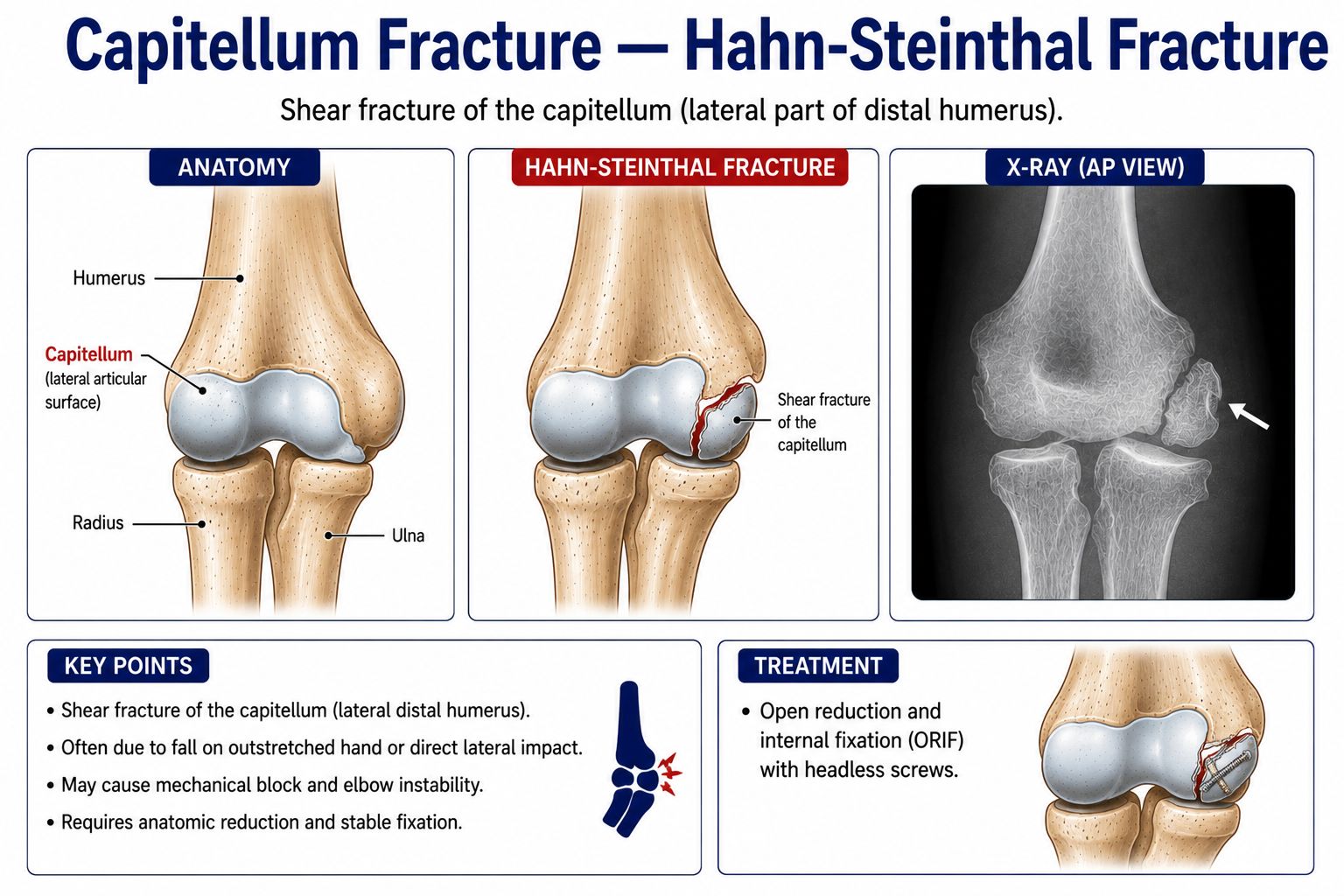
Capitellum fractures are shear fractures of the rounded lateral articular prominence of the distal humerus that articulates with the radial head. The injury occurs when a fall onto an outstretched hand generates an axial compressive force through the radial head against the capitellum, shearing off the anterior articular surface of the capitellum as a large osteochondral fragment.
The fracture is classified by the Dubberley system (Type I: capitellum only; Type II: capitellum + trochlea; Type III: comminuted capitellum; each with subtype A for intact posterior ridge and B for comminuted posterior ridge). The most important prognostic factor is whether the posterior lateral condyle (lateral column) is intact — an intact posterior ridge allows stable fixation without collapse.
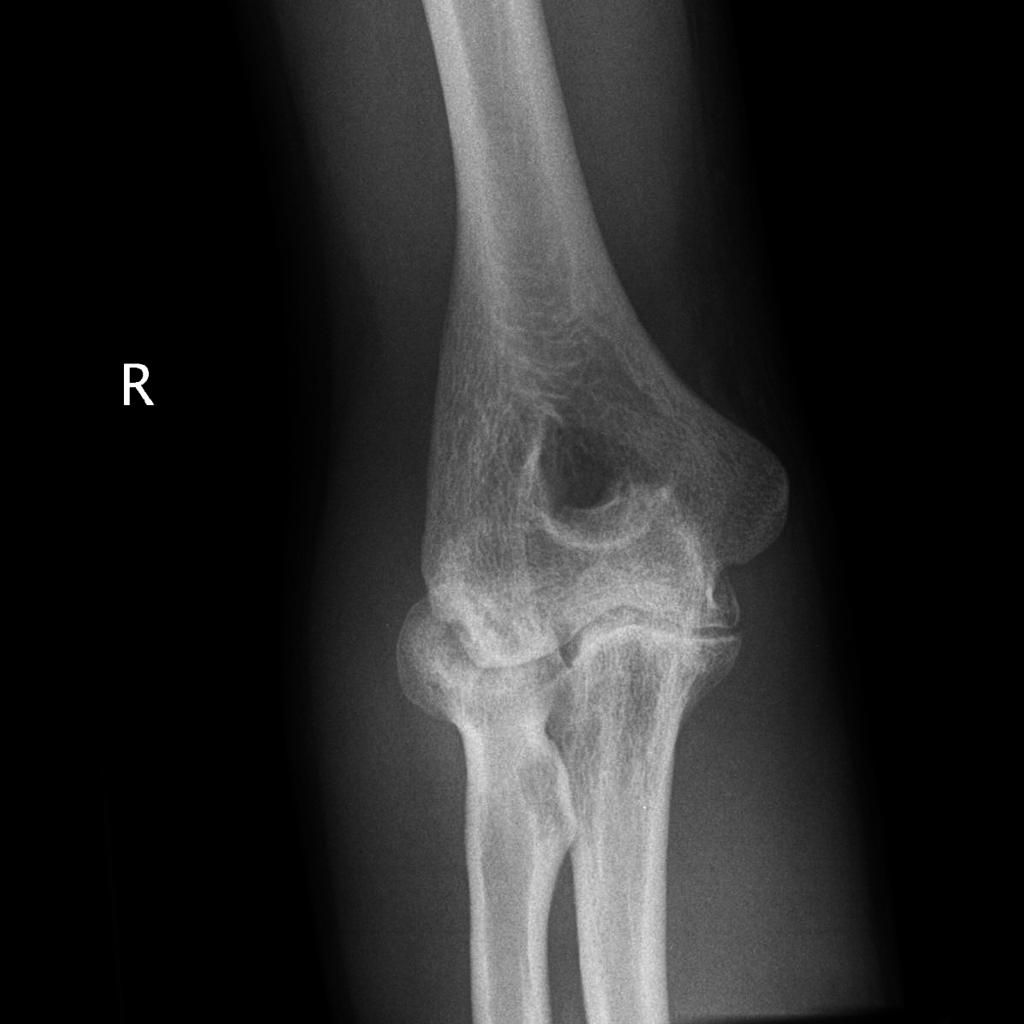
The most important clinical challenge is diagnosis — capitellum fractures are notoriously missed on AP X-rays (the fragment is seen “en face” and may not be obvious) but are clearly visible as a displaced articular block on the lateral view (the “double arc” or “blank tile” sign). Any patient with a fall onto an outstretched hand, lateral elbow pain, and restricted forearm rotation should have a high-quality lateral X-ray scrutinised for capitellar fragment displacement.
Quick Facts | Details |
Also Known As | Hahn-Steinthal Fracture, Capitellum Shear Fracture, Coronal Shear Fracture of the Capitellum |
Affected Area | Capitellum of the distal humerus — the rounded lateral articular surface that articulates with the radial head |
Who It Affects | Adults of any age; more common in women; typically from a fall onto an outstretched hand; must be distinguished from radial head fracture (both cause lateral elbow pain) — capitellar fractures are less common and carry a higher risk of avascular necrosis |
Prevalence | Uncommon; accounts for approximately 1–6% of distal humerus fractures; frequently misdiagnosed or missed on standard radiographs; the fragment is often not visible on AP X-ray and may appear only on the lateral view |
Treatment | ORIF with headless compression screws from anterior to posterior (Bryan-Morrey or anterior approach); early mobilisation from day 1 post-op; excision only for very small or comminuted fragments that cannot be fixed |
Causes & Risk Factors
- Fall onto an outstretched hand — axial loading through the radial head against the capitellum creates a shear force
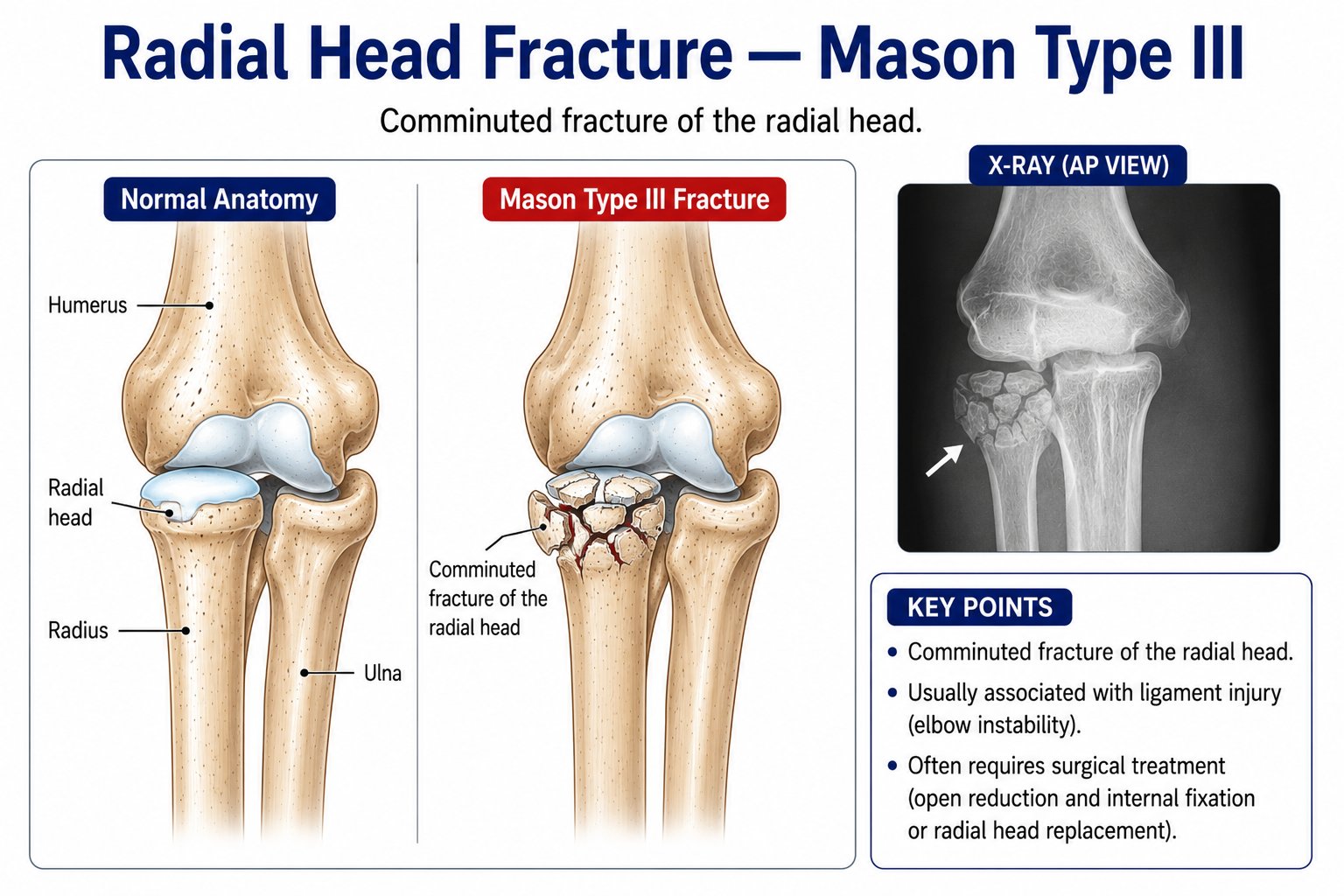
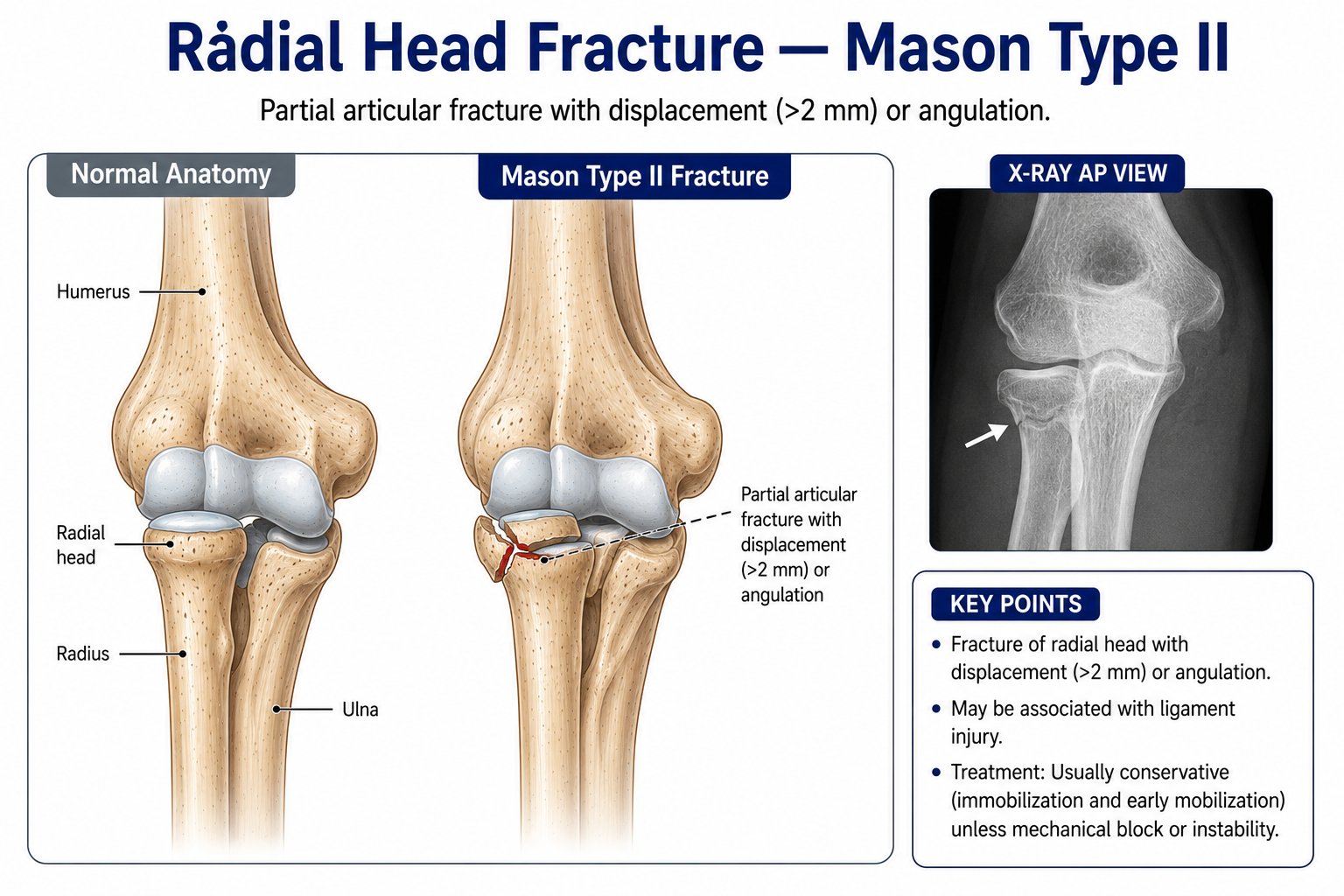
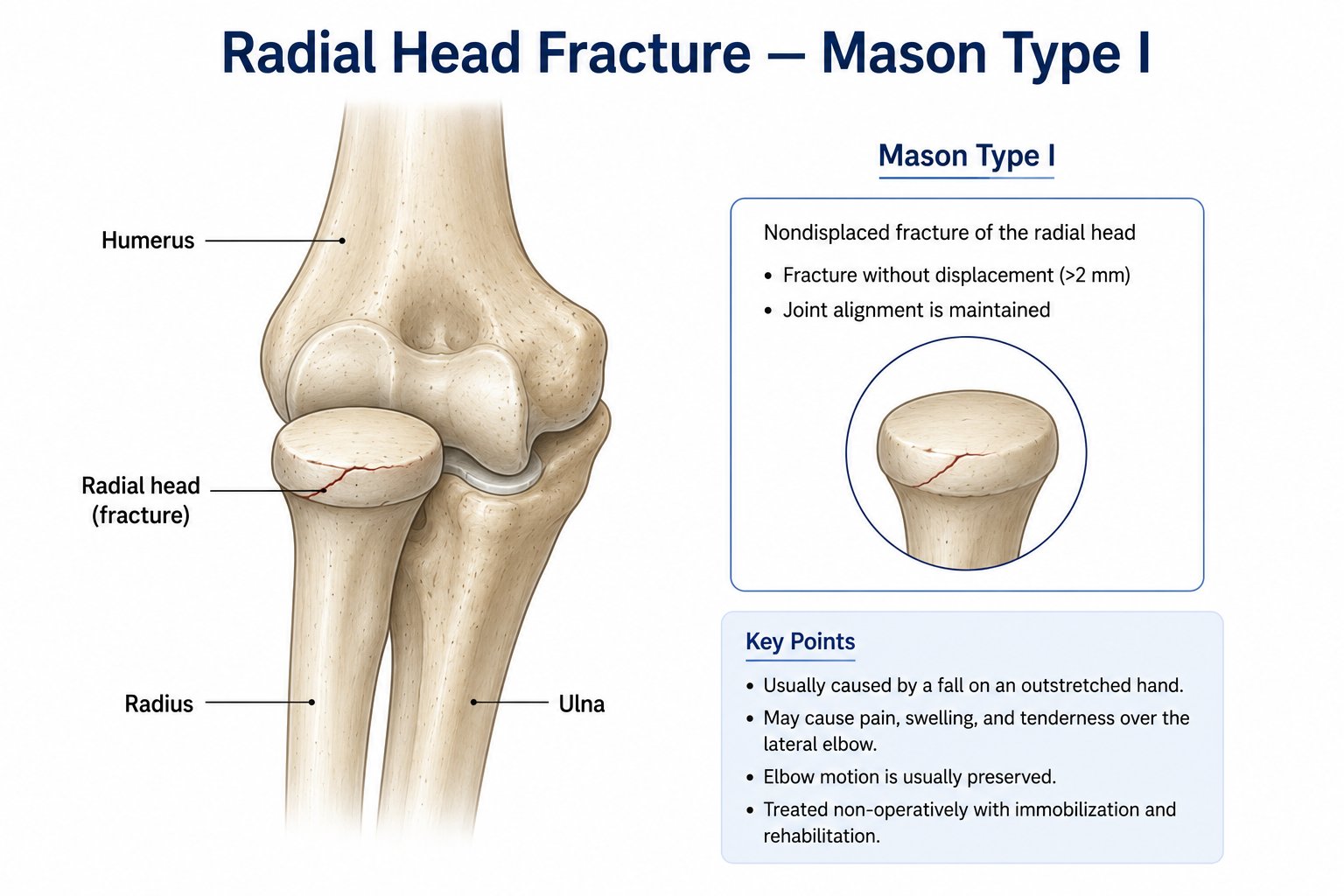
- Associated radial head fracture — approximately 20–30% of capitellum fractures are associated with concurrent radial head fractures; the combined injury pattern must be addressed together
- Valgus loading — a component of valgus force adds to the shear mechanism
- Elbow dislocation — capitellum fractures can occur as part of a complex elbow fracture-dislocation
- Low-energy falls in the elderly — osteoporosis predisposes to capitellar shear fractures with relatively modest trauma
Symptoms
- Lateral elbow pain — over the lateral column; often severe initially
- Restricted forearm rotation — particularly impaired supination, as the radial head cannot rotate smoothly over the fractured capitellum
- Restricted elbow flexion — the displaced capitellar fragment blocks full flexion
- Tenderness over the capitellum — at the radiocapitellar junction, 2–3cm distal to the lateral epicondyle
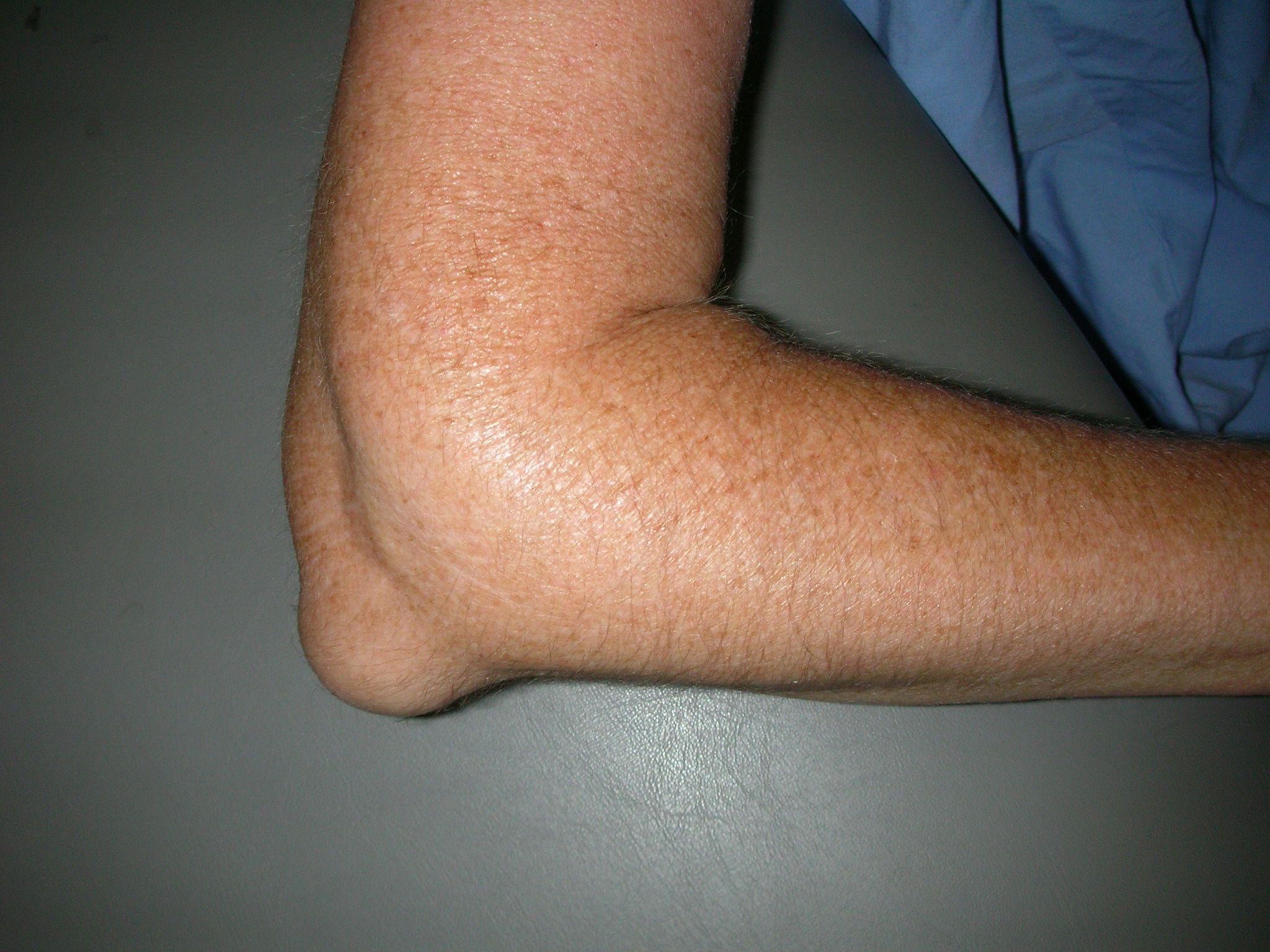
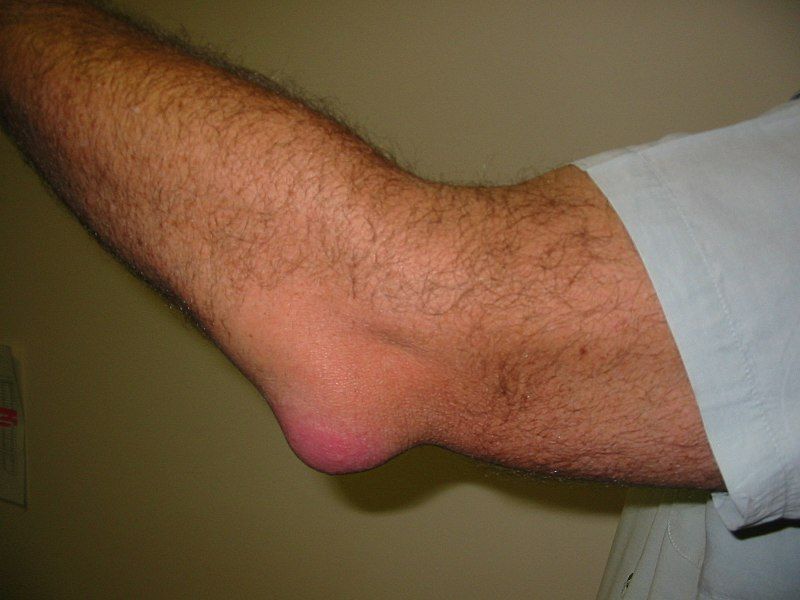
- Haemarthrosis — lateral elbow swelling with fat pad sign on X-ray
- Crepitus — felt and heard during forearm rotation over the displaced fragment
How is it Diagnosed?
- Plain X-rays — AP: the “double crescent” or absent capitellum sign; LATERAL VIEW (critical): a free osteochondral fragment anterior and distal to the capitellum; the “blank tile sign” or “double arc sign”; always carefully scrutinise the lateral view in any patient with lateral elbow pain after a fall
- CT scan — ESSENTIAL; Dubberley classification; fragment size, location, and posterior column integrity; concurrent radial head and trochlear involvement; 3D reconstruction for surgical planning
- MRI — useful if CT is equivocal; identifies cartilage viability; assessment for concurrent injury
Treatment Options
Treatment Type | Details |
ORIF — Headless Compression Screws (Anterior to Posterior) | Standard treatment; lateral approach (Kocher or Kaplan); articular surface reduced and fixed with 2–3 mini headless compression screws (Acutrak 2 mini, 2.5mm) inserted from anterior to posterior through the articular cartilage and countersunk below the surface; concurrent trochlear extension addressed from medial side if needed; early mobilisation from day 1 |
Anterior Approach | For large, isolated Type I fractures: Bryan-Morrey anterior approach with direct visualisation and screw placement; excellent articular exposure; avoid if concurrent posterior column reconstruction needed |
Excision (Very Small or Comminuted) | For fragments too small to fix (<25% of capitellum), Dubberley Type III with severe comminution, or in elderly low-demand patients; excision with concurrent radial head replacement if radial head is also fractured |
AVN Prevention | Minimise periosteal stripping during fragment reduction; avoid excessive soft tissue devascularisation; gentle handling of the fragment; important as capitellum blood supply is retrograde (end artery) |
Recovery & Rehabilitation
- After ORIF: active-assisted ROM from day 1; sling for comfort 48 hours; forearm rotation and elbow flexion exercises begin immediately
- Full ROM targeted by 6–8 weeks
- Return to work: office work 2–4 weeks; manual work 2–3 months
- Outcome: 80–85% good-excellent results with anatomical reduction; lateral column continuity is the primary prognostic factor
- Avascular necrosis (AVN): most feared complication; occurs in approximately 10–20% of cases; related to initial vascularity disruption; presents as capitellum collapse on follow-up X-ray; may require salvage procedure
- Stiffness: second most common complication; prevented by early mobilisation from day 1
Why choose Dr Senthilvelan?
Capitellum fractures are challenging precisely because they are frequently missed on initial X-ray and because their fixation requires precise anterior-to-posterior screw placement in a small articular fragment with a fragile blood supply. Dr Senthilvelan has specific training in coronal shear fractures and performs ORIF with meticulous vascular preservation and early mobilisation protocols.
Frequently Asked Questions
1. Why is the capitellum fracture easily missed on X-ray?
On the standard AP (front-to-back) X-ray view of the elbow, the capitellum fracture fragment is seen ‘en face’ — the X-ray beam is perpendicular to the fracture line, making the fragment very difficult to see against the normal bone shadow. The fracture is much more obvious on the lateral view, where the displaced fragment appears as a separate bony or osteochondral body anterior to the capitellum. This is why reviewing the lateral X-ray carefully is essential in any patient with lateral elbow pain and restricted forearm rotation after a fall.
2. What is avascular necrosis and why does it happen to the capitellum?
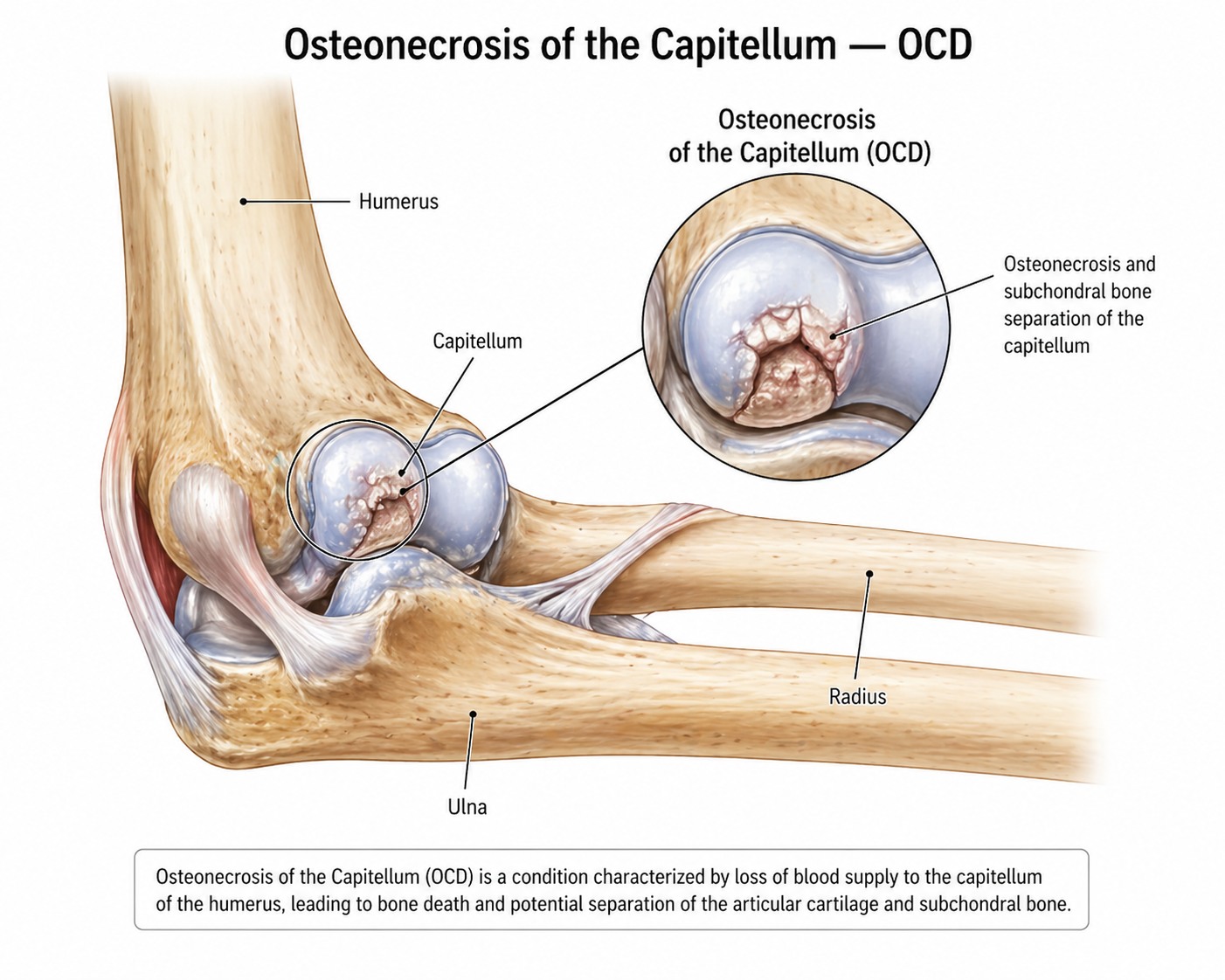
Avascular necrosis (AVN) means death of the bone due to loss of blood supply. The capitellum receives its blood supply from vessels that enter from the posterior (retrograde supply) — and these are vulnerable to disruption when the anterior articular surface is sheared off. If the blood supply is disrupted by the fracture or by surgical stripping of the soft tissue attached to the fragment, the bone cells die and the capitellum can collapse over subsequent months. AVN is detected on follow-up X-ray and MRI. Minor AVN may be asymptomatic; significant collapse requires surgical management.
3. Will I regain full forearm rotation after capitellum fracture surgery?
Yes — the goal of surgery is to restore the smooth articular surface of the capitellum so the radial head can glide normally, and early mobilisation begins from the first post-operative day. Most patients regain near-full or full forearm rotation within 6–8 weeks. The most important threat to rotation recovery is stiffness from delayed mobilisation — which is why physiotherapy begins on day 1 and is continued consistently throughout recovery.
4. What happens if the fragment is too small to fix?
If the capitellar fragment is very small (involving less than 25% of the capitellum) or too comminuted to reconstruct accurately, excision is the appropriate treatment. After excision, the radial head articulates with the remaining distal humerus — functional results are generally acceptable. If the concurrent radial head is also fractured and unreconstructable, both the capitellar fragment and the radial head may require addressing — the radial head with a metal replacement and the small capitellar fragment with excision.
5. Can a capitellum fracture be treated without surgery?
Non-operative management is rarely appropriate for capitellum fractures because: the displaced articular fragment causes a mechanical block to forearm rotation; articular incongruity predisposes to early post-traumatic arthritis; and the fragment may become a loose body if not reattached. Surgical fixation achieves anatomical reduction and allows immediate movement — consistently giving better outcomes than immobilisation. Excision (rather than fixation) is considered for very small or comminuted fragments that cannot be stably fixed, but this is a surgical decision, not a non-operative one.