Overview
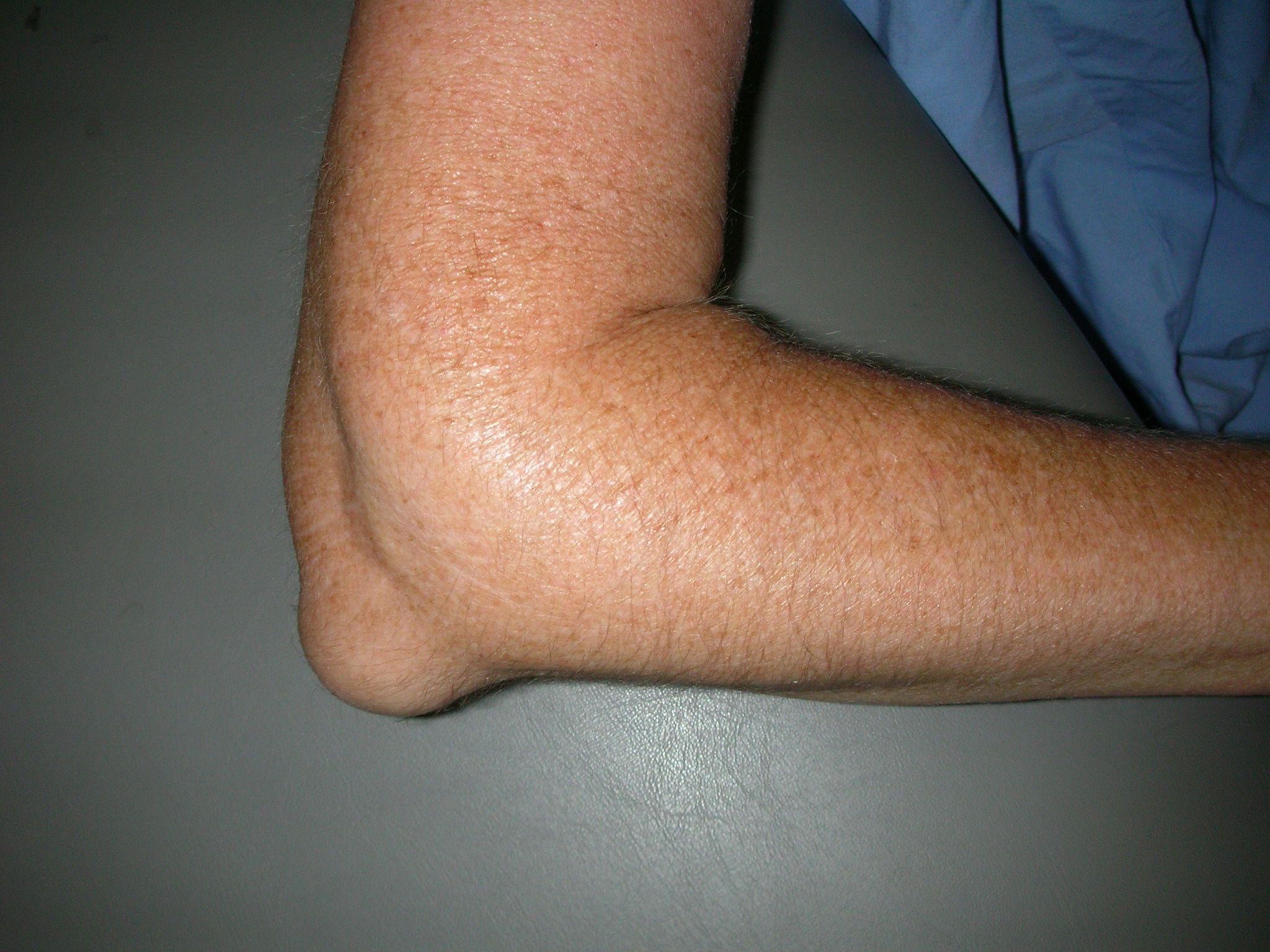
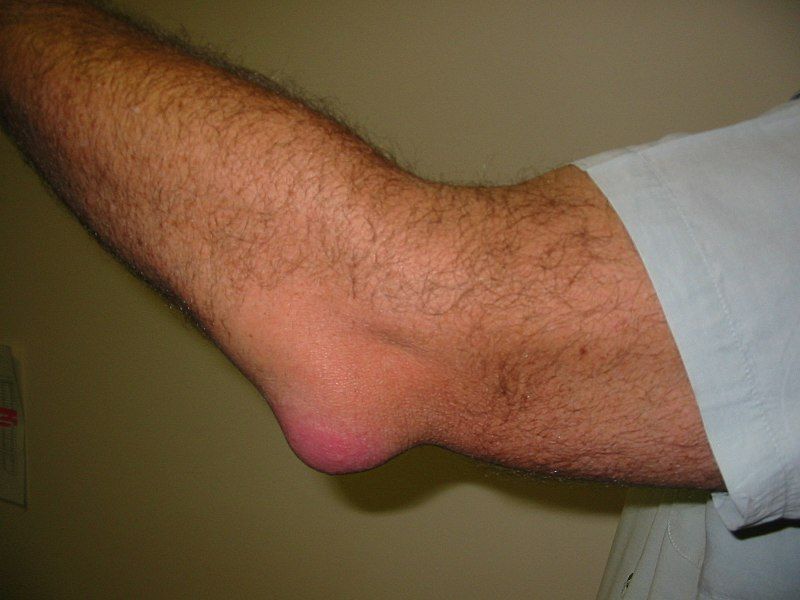
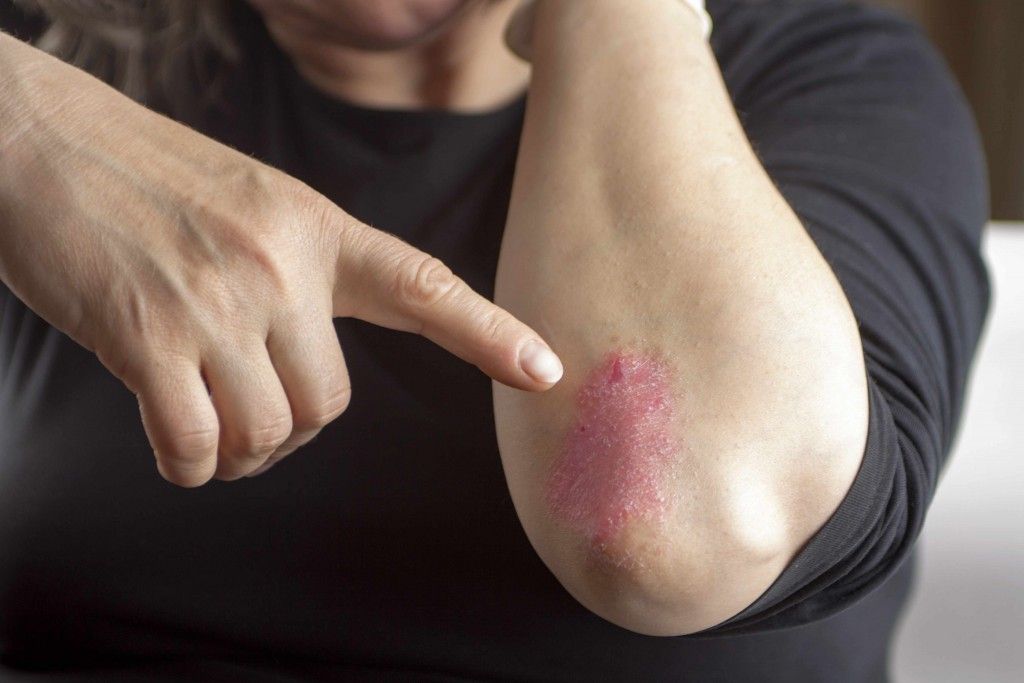
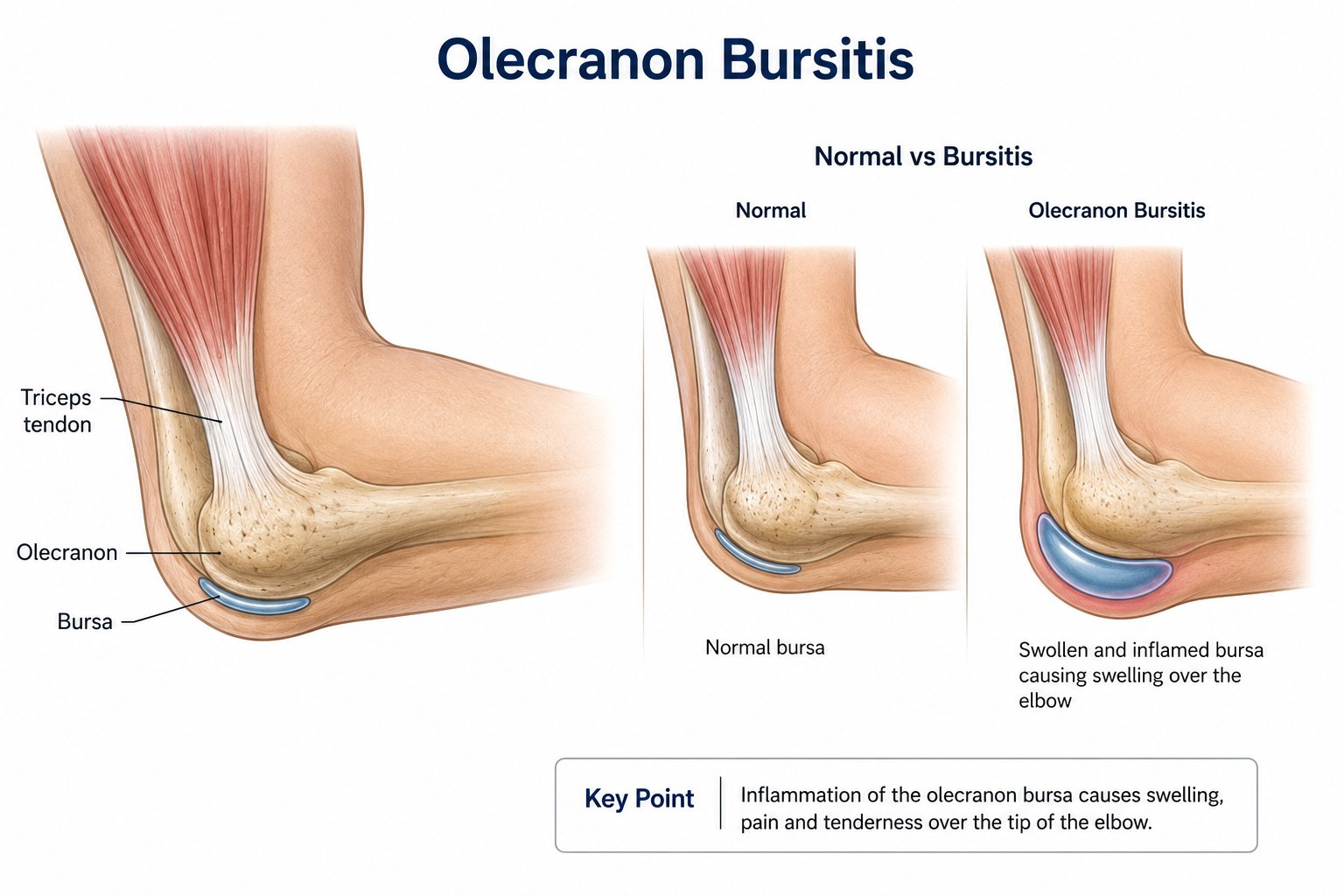
Olecranon bursitis is the inflammation and abnormal fluid accumulation within the olecranon bursa — a small, normally flat, fluid-filled sac sitting over the olecranon tip. The bursa functions to reduce friction between the skin and the olecranon during elbow movement. When inflamed, the bursa fills with fluid and becomes a visible, often dramatic-looking swelling at the elbow tip — ranging from golf-ball to lemon size.
Olecranon bursitis is classified as traumatic/mechanical (from direct blows or repetitive pressure), inflammatory (from gout, CPPD, rheumatoid arthritis), or septic (infected — from skin breach, puncture wound, or haematogenous spread). Distinguishing septic from non-septic bursitis is the critical clinical decision, as septic bursitis requires urgent antibiotic treatment and often surgical drainage.
The diagnosis is primarily clinical, but bursal fluid analysis (aspirated for cell count, crystals, Gram stain, and culture) is essential to guide management and confirm or exclude infection. Many patients first notice the swelling without significant pain, which is reassuring — septic bursitis typically causes systemic features (fever, red streaking) in addition to localised signs.
Quick Facts | Details |
Also Known As | Student’s Elbow, Miner’s Elbow, Olecranon Swelling, Elbow Bursitis |
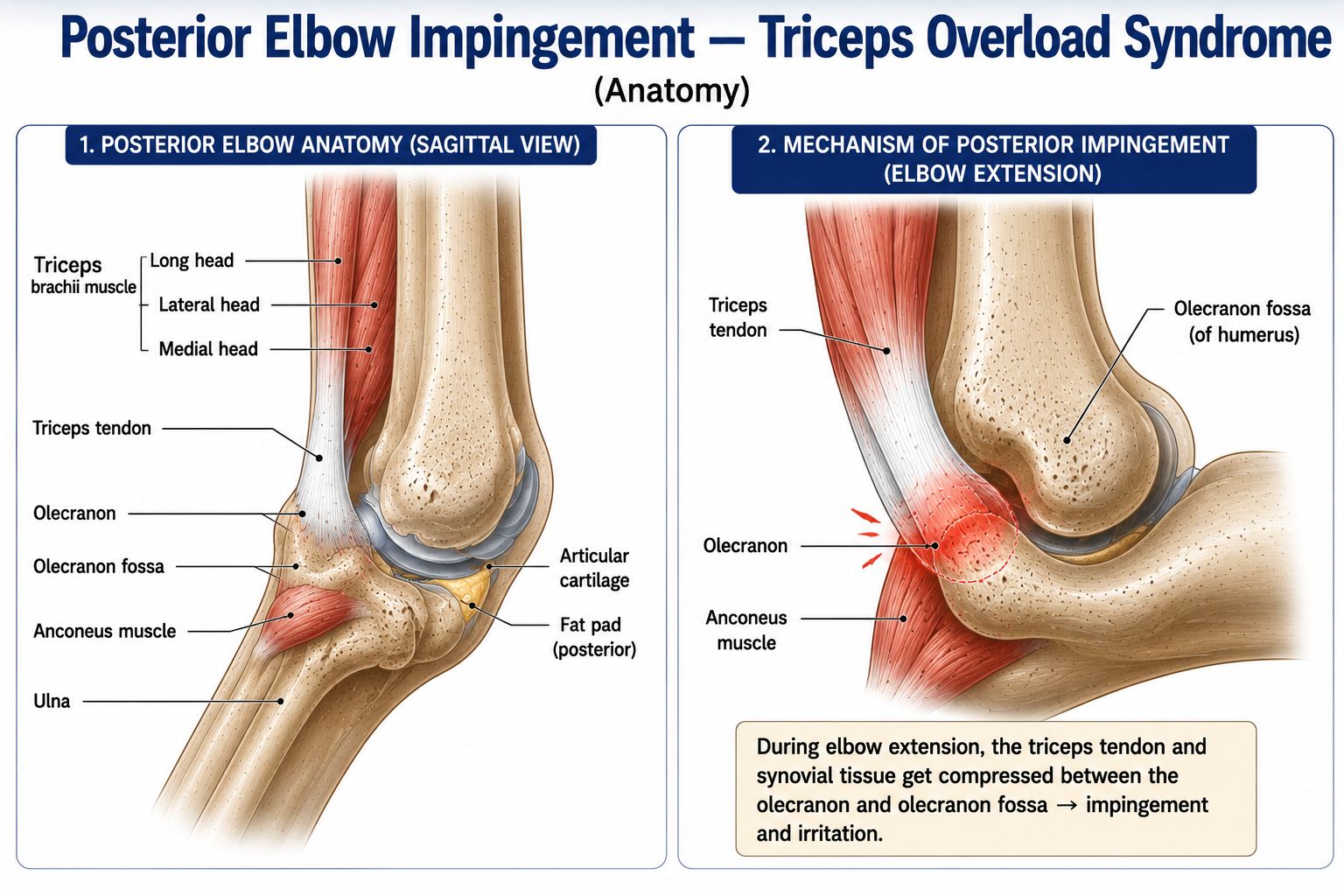
Affected Area | Olecranon bursa — the subcutaneous fluid-filled sac lying directly over the olecranon process at the posterior tip of the elbow |
Who It Affects | Adults of any age; more common in men; associated with repetitive pressure on the elbow (leaning on hard surfaces), direct trauma, gout, RA, septic conditions, and occupational elbow pressure |
Prevalence | Very common; one of the most frequently encountered bursitis conditions; accounts for a significant proportion of elbow swelling presentations; the superficial location makes it prone to repeated trauma and infection |
Treatment | Non-infectious: aspiration + compression bandage; corticosteroid injection if recurrent; septic: urgent aspiration + culture + antibiotics; surgical bursectomy for chronic, recurrent, or infected refractory cases |
Causes & Risk Factors
- Repetitive pressure — leaning on hard surfaces (desk edge, workshop bench, floor); occupational: miners, plumbers, gardeners (historically called “miner’s elbow” and “student’s elbow”)
- Direct trauma — a single hard blow to the olecranon tip can cause acute traumatic bursitis
- Gout — monosodium urate crystal deposition in the bursa; very common; produces acute or recurrent olecranon bursitis; bursal fluid shows urate crystals
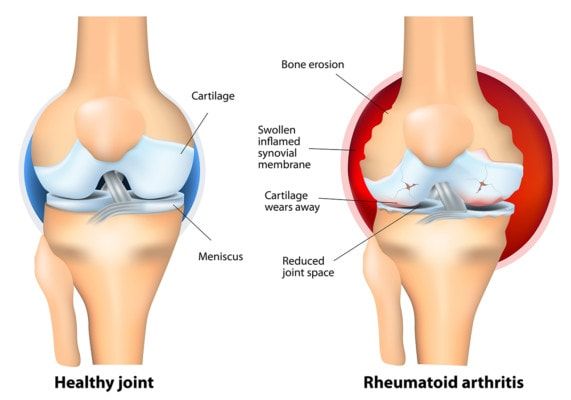
- Rheumatoid arthritis — RA nodules and synovial proliferation extend into the olecranon bursa; RA bursitis is often bilateral
- Septic bursitis — most commonly Staphylococcus aureus (MRSA increasing); enters through skin abrasion, puncture wound, or cellulitis over the olecranon
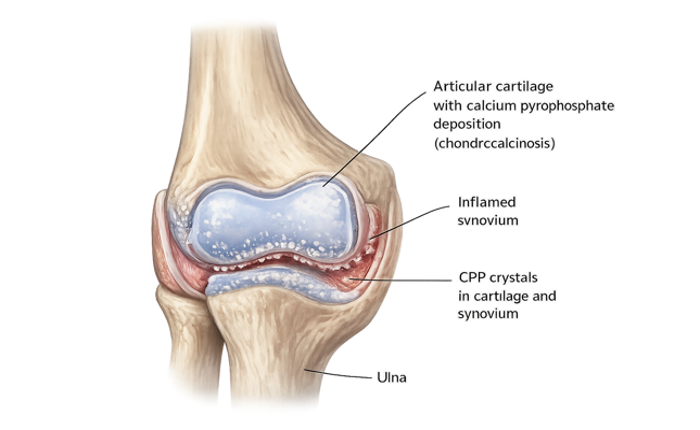
- CPPD / crystal arthropathy — calcium pyrophosphate crystals may deposit in the bursa
- Idiopathic — no identifiable cause in many cases; the bursa simply becomes reactive without obvious trauma
Symptoms
- Visible swelling at the olecranon tip — the hallmark; a soft, fluctuant lump at the point of the elbow; can range from small to dramatic in size
- Non-septic bursitis: swelling is the primary complaint; often surprisingly little pain; full elbow ROM preserved; minimal systemic features
- Septic bursitis: swelling + significant localised pain + warmth + erythema (redness) extending beyond the bursal margins; systemic features (fever >38°C, malaise); may have skin breach, scratch, or portal of entry
- Tenderness on direct pressure — over the olecranon tip; pain with resting the elbow on hard surfaces
- Skin changes — thickening and callus formation over the olecranon in chronic bursitis; in septic: erythema, warmth, and red tracking lymphangitis
- Associated underlying conditions — ask about gout (prior attacks), RA (other joint involvement), recent skin trauma
- Range of motion: typically preserved; pain at extremes of flexion (stretches the bursal skin) in large bursitis
How is it Diagnosed?
- Clinical examination — assess bursal size, fluctuation, temperature, erythema; identify any portal of entry (skin breach); check lymph nodes; systemic features; distinguish cellulitis from bursitis
- Bursal aspiration and fluid analysis — ESSENTIAL for all new presentations; send for: WBC (>50,000 = septic; <50,000 = non-septic), crystal examination (urate for gout; CPP for CPPD), Gram stain and culture (identify organism and sensitivities)
- Blood tests — WBC, CRP, ESR if septic bursitis suspected; uric acid; RF, anti-CCP for RA
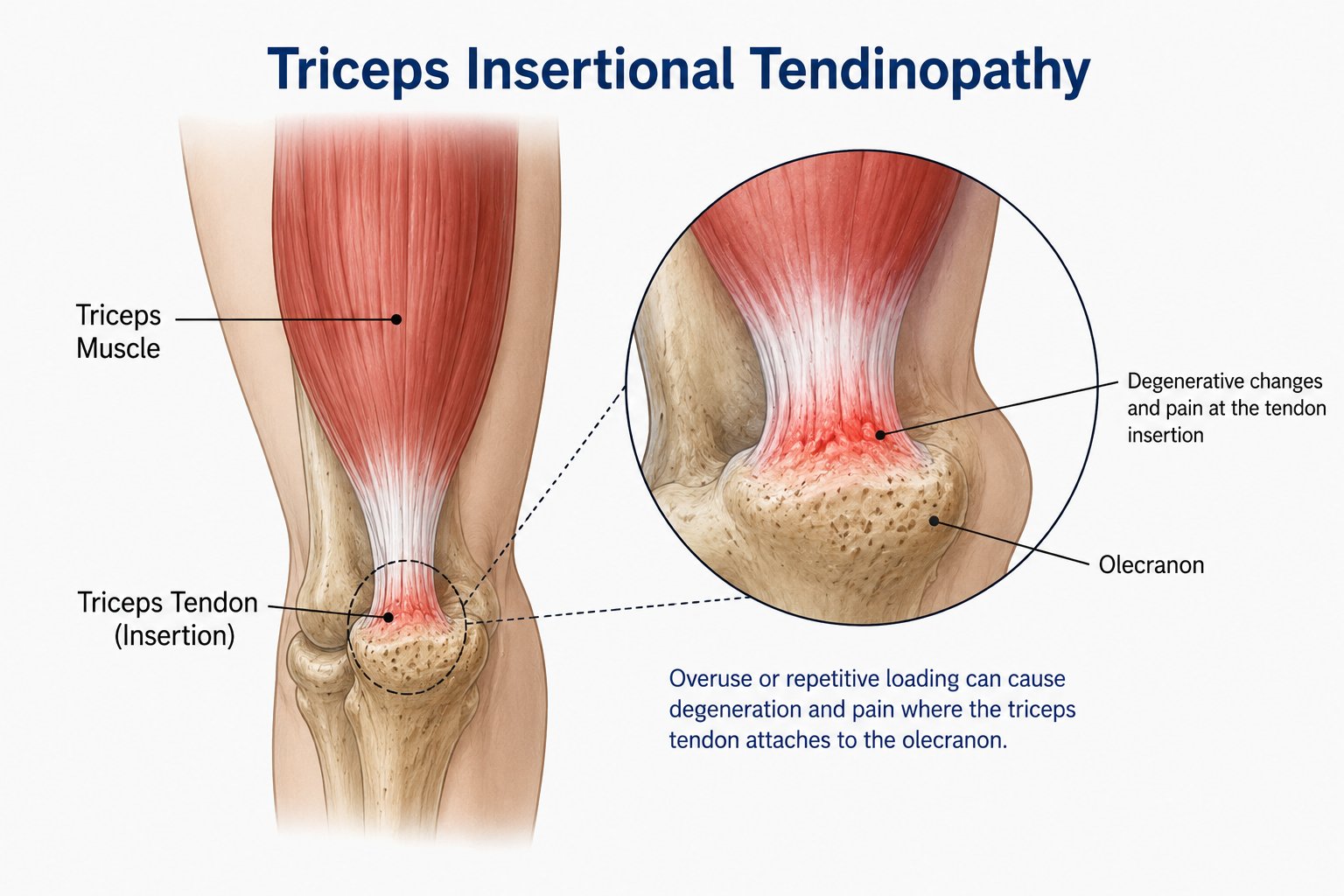
- Ultrasound — confirms bursal fluid; identifies bursal wall thickening; septations; concurrent triceps tendon assessment; guides aspiration
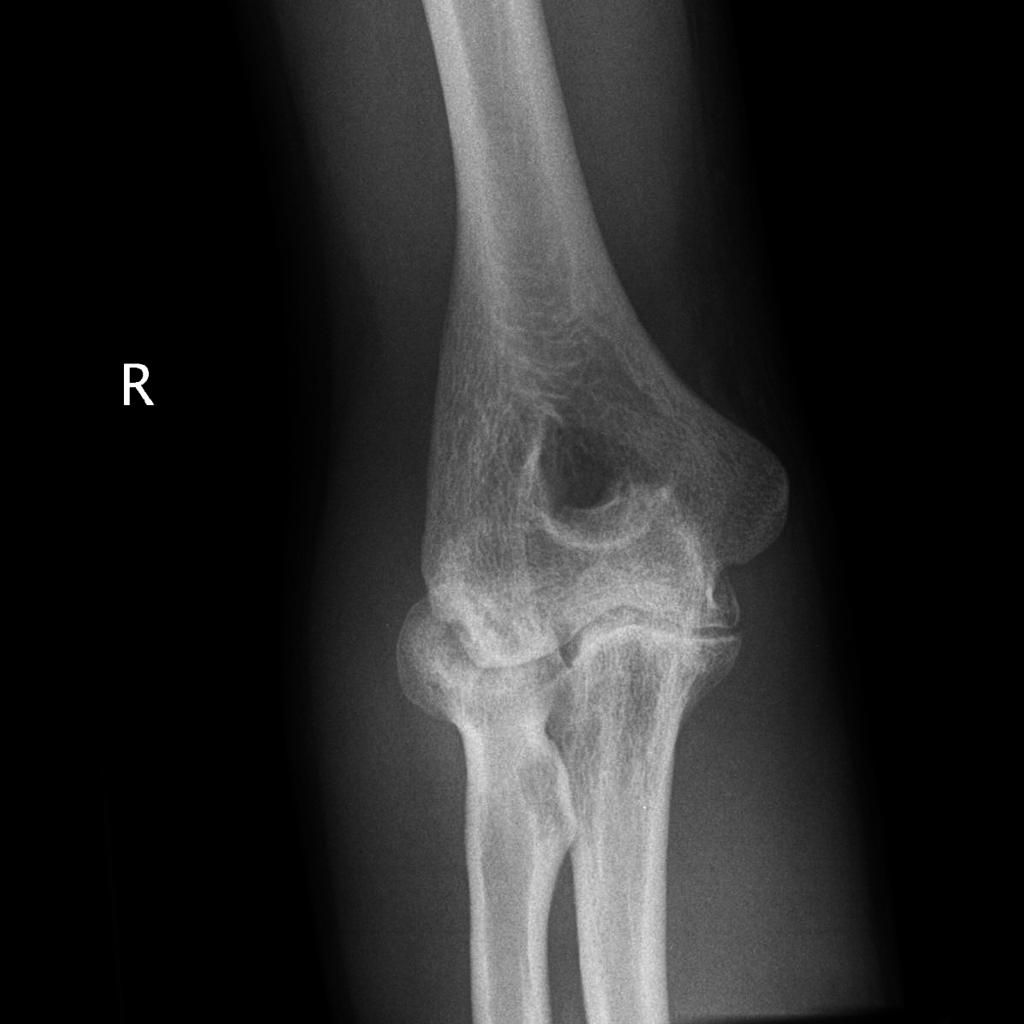
- X-rays — olecranon osteophyte; tophi (gout); calcification (CPPD)
- MRI — reserved for complex cases with suspected bone involvement or osteomyelitis

Treatment Options
Treatment Type | Details |
Aspiration + Compression Bandage | Needle aspiration of bursal fluid under sterile technique; compression bandage and padding to prevent re-accumulation; repeat if recurs; first-line for non-septic bursitis |
Corticosteroid Injection (Non-Septic) | After confirming non-septic and non-crystal status on fluid analysis; triamcinolone injected into the bursal cavity after aspiration; reduces recurrence; AVOID in suspected septic bursitis — can mask infection and worsen outcome |
Protective Elbow Padding | Foam or gel elbow pad to eliminate pressure on the olecranon; essential for patients whose bursitis is related to repetitive elbow pressure; prevents recurrence |
Antibiotics (Septic Bursitis) | IV or oral antibiotics (flucloxacillin for MSSA; vancomycin for MRSA risk); guided by culture and sensitivities; 2–4 weeks course; repeat aspiration every 2–3 days until dry |
Surgical Drainage (Septic Refractory) | For septic bursitis not responding to antibiotics and repeated aspiration; open incision and drainage; leave wound open or pack; delayed closure; IV antibiotics continued post-drainage |
Surgical Bursectomy (Chronic Non-Septic) | For chronic recurrent bursitis that has failed multiple aspirations and injections; complete excision of the bursal sac; protect triceps tendon; close in layers; compression dressing; day-case procedure; low recurrence rate |
Recovery & Rehabilitation
- Non-septic: aspiration + compression bandage resolves most cases over 2–4 weeks; protective padding prevents recurrence
- After corticosteroid injection: fluid re-accumulation reduced significantly; 70–80% long-term resolution after single injection + padding
- Septic bursitis: clinical improvement within 48–72 hours of antibiotics and repeated aspiration; complete resolution 2–4 weeks; monitor CRP
- After surgical bursectomy: dressing for 1 week; compression bandage 4 weeks; return to normal activity 3–6 weeks; recurrence rare (<5%)
- Key message: always aspirate and analyse bursal fluid before any injection — injecting corticosteroid into an infected bursa is a serious error
Why choose Dr Senthilvelan?
Olecranon bursitis management hinges on the correct identification of septic vs non-septic disease through bursal fluid analysis. Dr Senthilvelan performs all bursal aspirations under ultrasound guidance with immediate fluid analysis, ensuring safe, targeted treatment — and performs surgical bursectomy for chronic cases with minimal risk of recurrence.
Frequently Asked Questions
1. My elbow has a large, soft swelling but it is not very painful — should I be worried?
A soft, fluctuant, relatively painless swelling at the tip of the elbow is the classic presentation of non-septic olecranon bursitis, which is very common and not dangerous. However, fluid should be aspirated and sent for analysis to confirm it is not infected (septic bursitis) or crystal-related (gout, CPPD). Non-septic bursitis is managed with aspiration, compression, and protective padding. The most important step is confirming the fluid is not infected before deciding on the management approach.
2. How do I know if my bursa is infected?
The signs that distinguish septic (infected) bursitis from non-septic bursitis are: significant pain (out of proportion to the swelling); warmth and redness extending around the bursal margin and into the forearm; systemic features like fever, chills, and malaise; and possibly a visible skin breach, scratch, or portal of entry. Septic bursitis requires urgent aspiration and culture, followed by antibiotics. If you have these features, seek urgent assessment — infected bursitis can progress rapidly if untreated.
3. Will the bursitis come back after aspiration?
Olecranon bursitis has a tendency to recur after simple aspiration, particularly if the underlying cause (repetitive pressure) is not addressed. Combining aspiration with corticosteroid injection (in confirmed non-septic cases) significantly reduces recurrence. Consistent use of an elbow protection pad is the single most effective measure for preventing recurrence in patients whose bursitis is related to elbow pressure at work or during sports. Recurrent bursitis that has failed multiple aspirations and injections is most definitively treated by surgical bursectomy.
4. Can gout cause olecranon bursitis?
Yes — gout is one of the most common causes of olecranon bursitis. Urate crystal deposition within the bursa causes acute inflammation with rapid fluid accumulation and intense pain. The diagnosis is confirmed by aspirating the bursal fluid and examining it under a polarising microscope — urate crystals are needle-shaped and negatively birefringent. Gout-related olecranon bursitis is treated with NSAIDs or colchicine for the acute attack, and with long-term urate-lowering therapy (allopurinol) to prevent recurrence.
5. Is surgery always needed for olecranon bursitis?
No — the majority of olecranon bursitis cases resolve with aspiration, compression bandaging, and protective padding. Surgery is reserved for: chronic bursitis that has recurred despite multiple aspirations and a corticosteroid injection; thickened, organised bursitis that cannot be fully aspirated; infected bursitis unresponsive to antibiotics and repeated aspiration; or patients with a very large chronic bursa causing functional limitation. Surgical bursectomy is a straightforward day-case procedure with low recurrence.