Overview
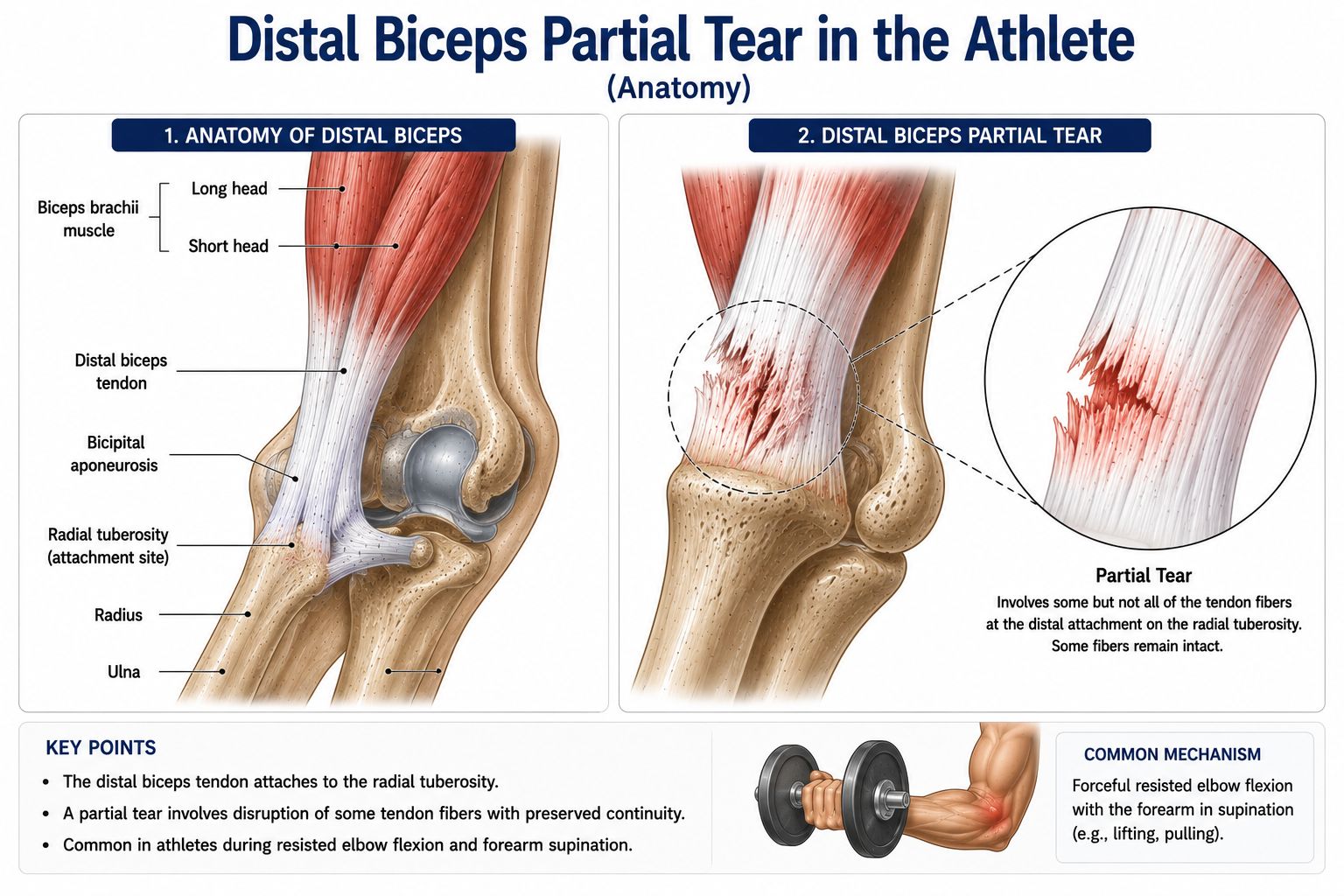
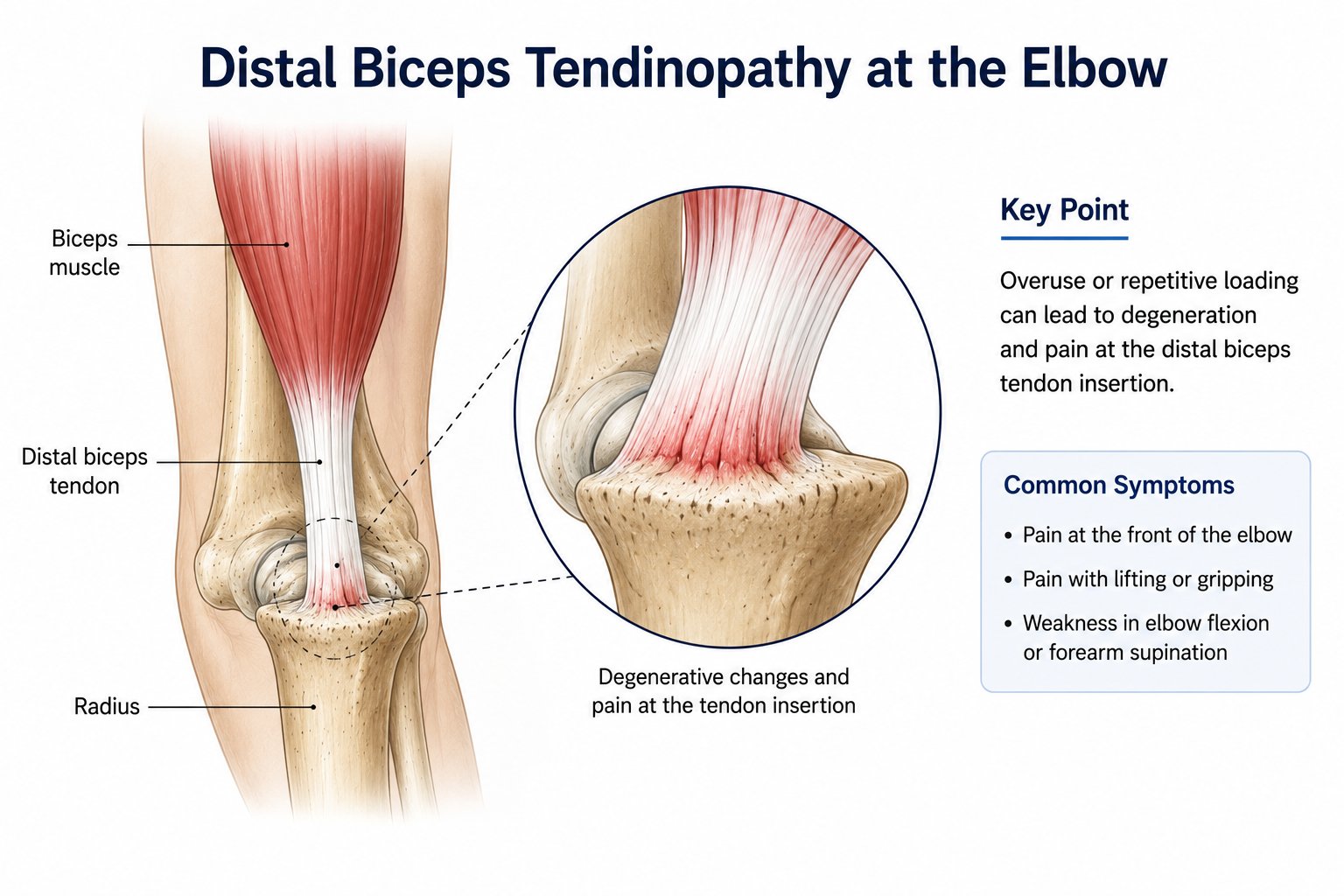
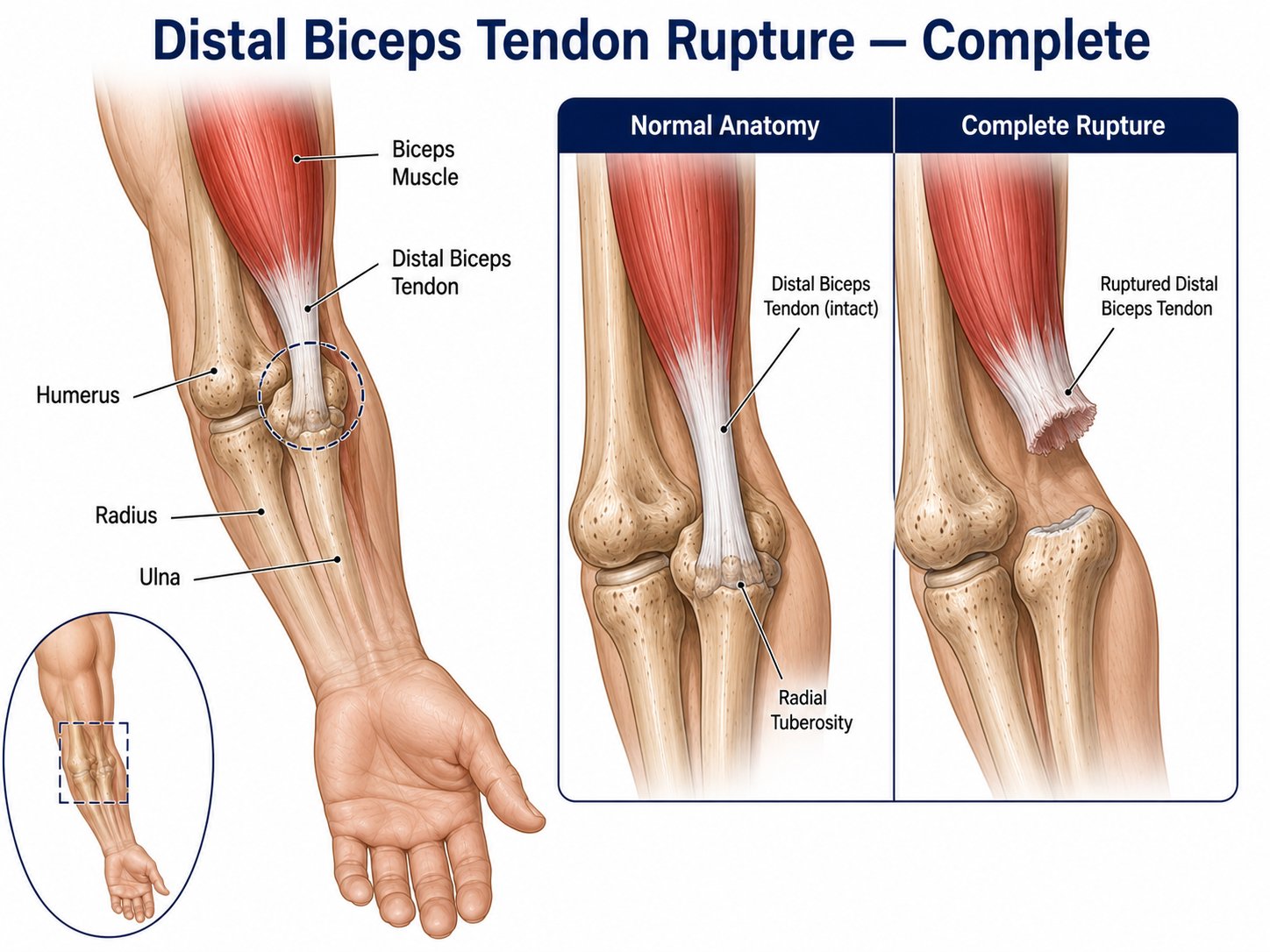
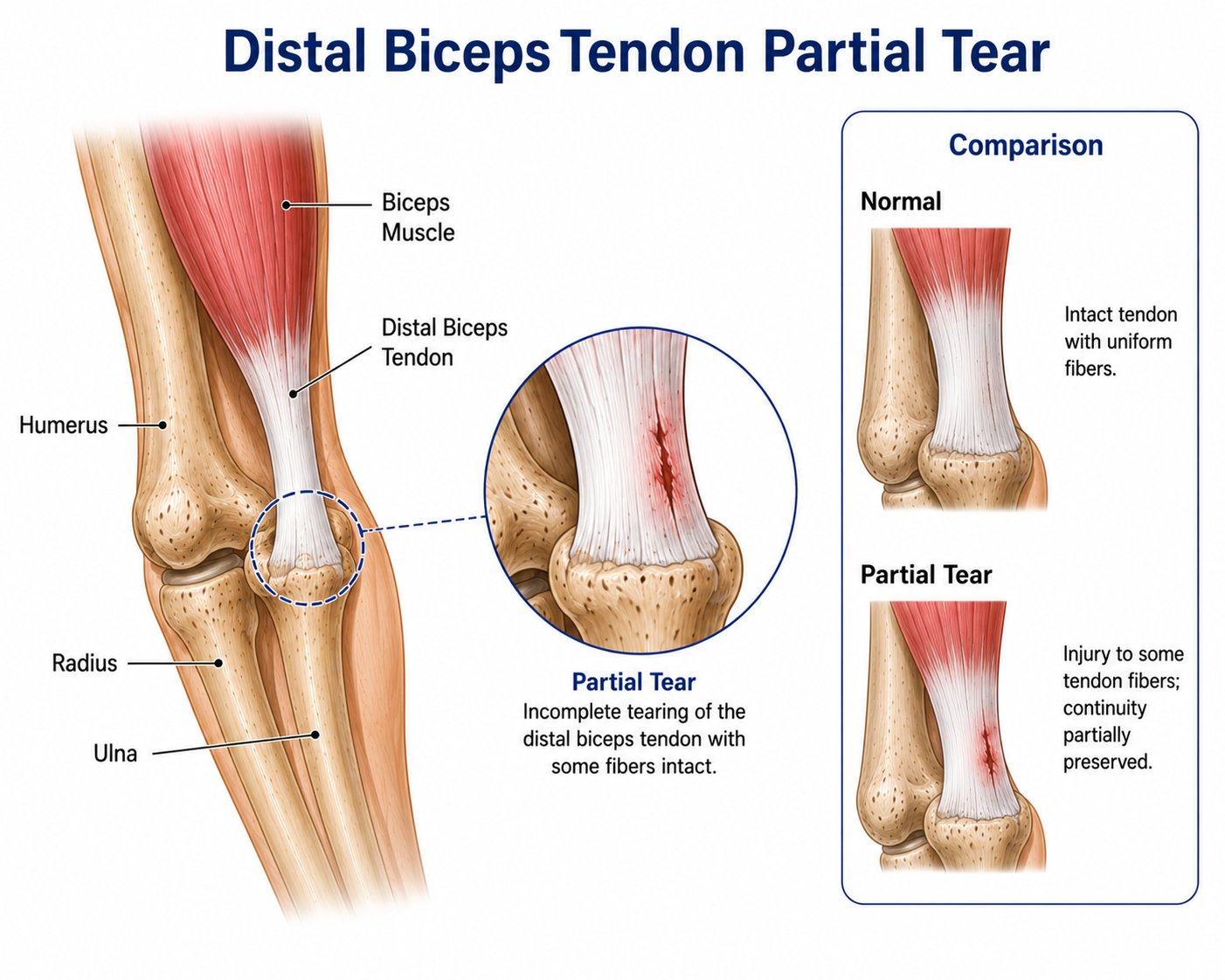
A partial distal biceps tendon tear is an incomplete disruption of the biceps tendon at or near its insertion onto the radial tuberosity. Unlike a complete rupture — which causes the characteristic Popeye deformity and significant functional loss — a partial tear presents more subtly: anterior elbow pain with activity, particularly supination and elbow flexion under load, without the visible deformity or the dramatic sudden onset.
Partial tears are classified by the percentage of tendon thickness disrupted (on MRI): tears involving less than 50% of the tendon typically respond well to conservative management and PRP injection. Tears involving more than 50% have a higher risk of progressing to complete rupture and are more likely to require surgical repair.
The distinction between a partial tear and bicipitoradial bursitis, distal biceps tendinopathy without tear, and a complete tear can be difficult clinically — MRI with the FABS position (forearm fully supinated, arm abducted, with the elbow flexed at 90°) or a dynamic ultrasound examination by an experienced musculoskeletal radiologist provides the definitive assessment.
Quick Facts | Details |
Also Known As | Partial Distal Biceps Tear, Distal Biceps Tendinopathy with Partial Tear, LABT Partial Tear |
Affected Area | Distal biceps tendon at or near the radial tuberosity insertion; bicipitoradial bursa |
Who It Affects | Men aged 35–60 years; similar demographic to complete rupture; often associated with chronic overuse (weightlifters, manual workers) before an acute-on-chronic event; less dramatic presentation than complete rupture |
Prevalence | Partial distal biceps tears are thought to be underdiagnosed; incidence is uncertain; MRI studies suggest they account for approximately 30–40% of distal biceps pathology presenting with anterior elbow pain |
Treatment | <50% thickness tears: conservative 3–6 months + PRP injection; >50% or persistent pain: surgical repair or augmentation (suture anchor or endobutton); MRI essential to classify |
Causes & Risk Factors
- Chronic overuse — repetitive supination and elbow flexion loading causes progressive tendon degeneration at the insertion; seen in weightlifters, manual workers, and overhead athletes
- Acute-on-chronic mechanism — a sudden eccentric load (the same mechanism as complete rupture) on a previously degenerated tendon causes a partial tear rather than complete avulsion
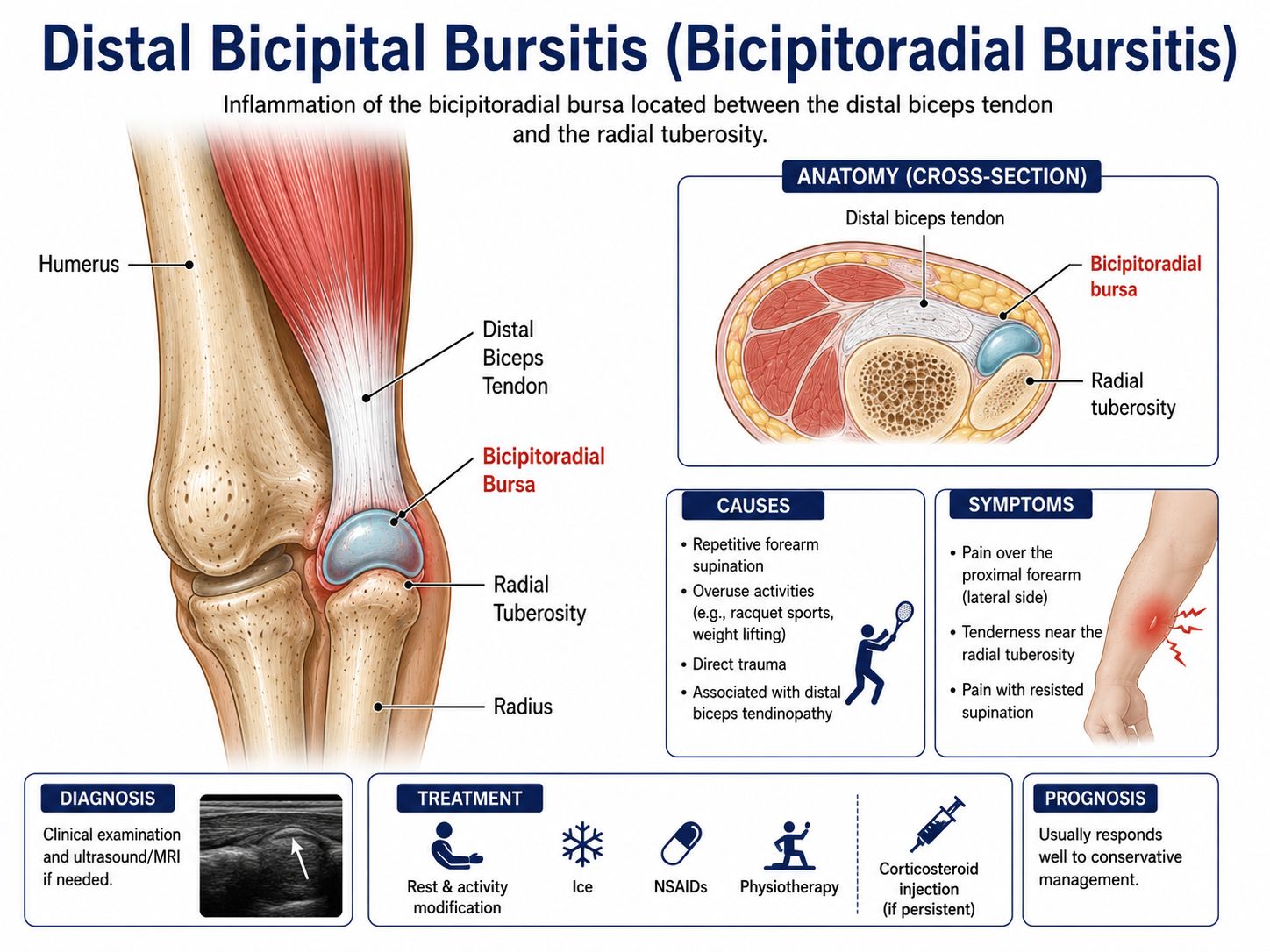
- Bicipitoradial bursitis — chronic bursitis at the bicipitoradial bursa can cause tendon degeneration and partial tearing at the tendon-bone interface
- Intratendinous degeneration — angiofibroblastic changes within the tendon substance predispose to partial tearing, particularly at the point where the tendon wraps around the radial tuberosity
- Anabolic steroid use and smoking — same risk factors as complete rupture; both weaken tendon collagen quality
- Age-related tendon vulnerability — the vascular watershed zone of the distal biceps tendon (approximately 1–2cm proximal to insertion) is particularly prone to degeneration
Symptoms
- Anterior elbow pain — in the antecubital fossa; typically a dull ache that becomes sharp with resisted supination or elbow flexion
- Pain reproduced by resisted supination — the most consistent provocative manoeuvre
- Pain with lifting, turning screwdrivers, and forearm-intensive activities
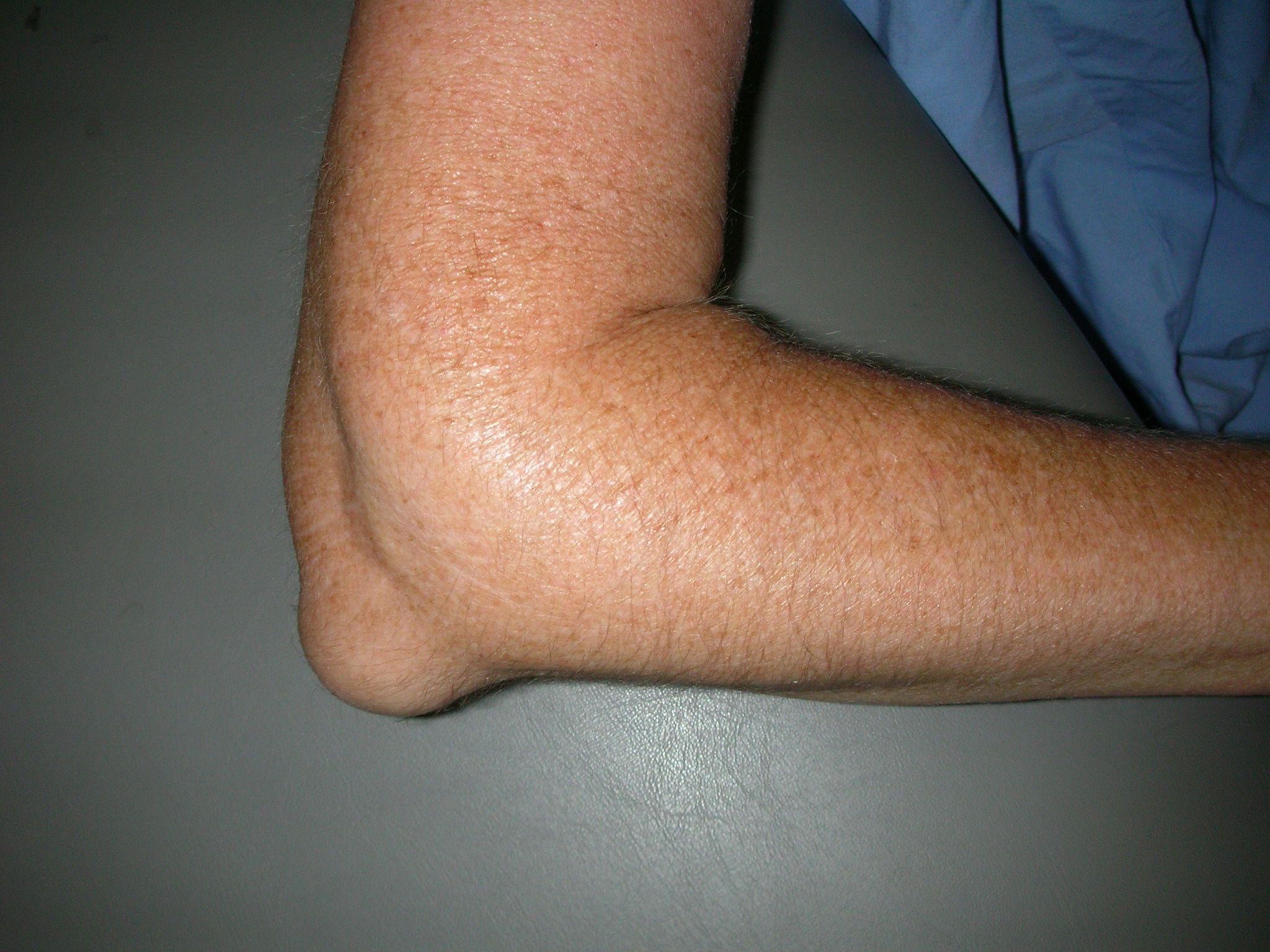
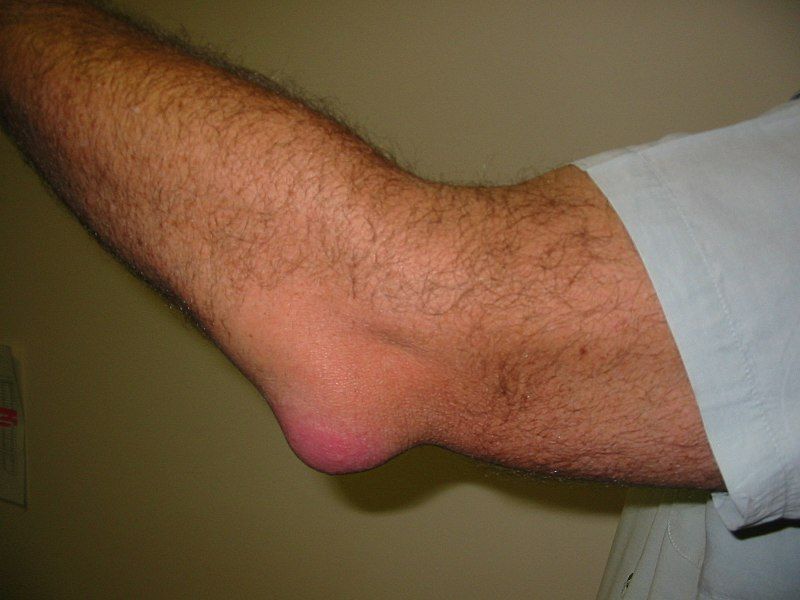
- Swelling — mild fullness in the antecubital fossa; may represent bicipitoradial bursitis coexisting with the partial tear
- Tenderness on palpation — directly over the distal biceps tendon in the antecubital fossa
- Hook test variable — the hook test is positive only for complete tears; a partially torn tendon may still feel as a firm cord on hook test but is painful with palpation
- No Popeye deformity — the tendon is still partially or completely in continuity; no proximal retraction
- Mild supination weakness — modest (20–30%) reduction in supination strength vs the contralateral side; less pronounced than complete rupture
How is it Diagnosed?
- Clinical examination — anterior elbow tenderness over the distal biceps tendon; resisted supination pain; hook test (assesses continuity); compare supination strength bilaterally
- MRI with FABS sequence — patient positioned supine with the arm extended above the head, forearm supinated (FABS position); this straightens the biceps tendon and optimises visualisation of the insertion; T2 signal change in the tendon, partial tendon disruption, bursal fluid; MRI is the gold-standard investigation
- Ultrasound — experienced musculoskeletal sonographer can identify partial tearing; dynamic assessment with forearm rotation; bicipitoradial bursa size; guides injection
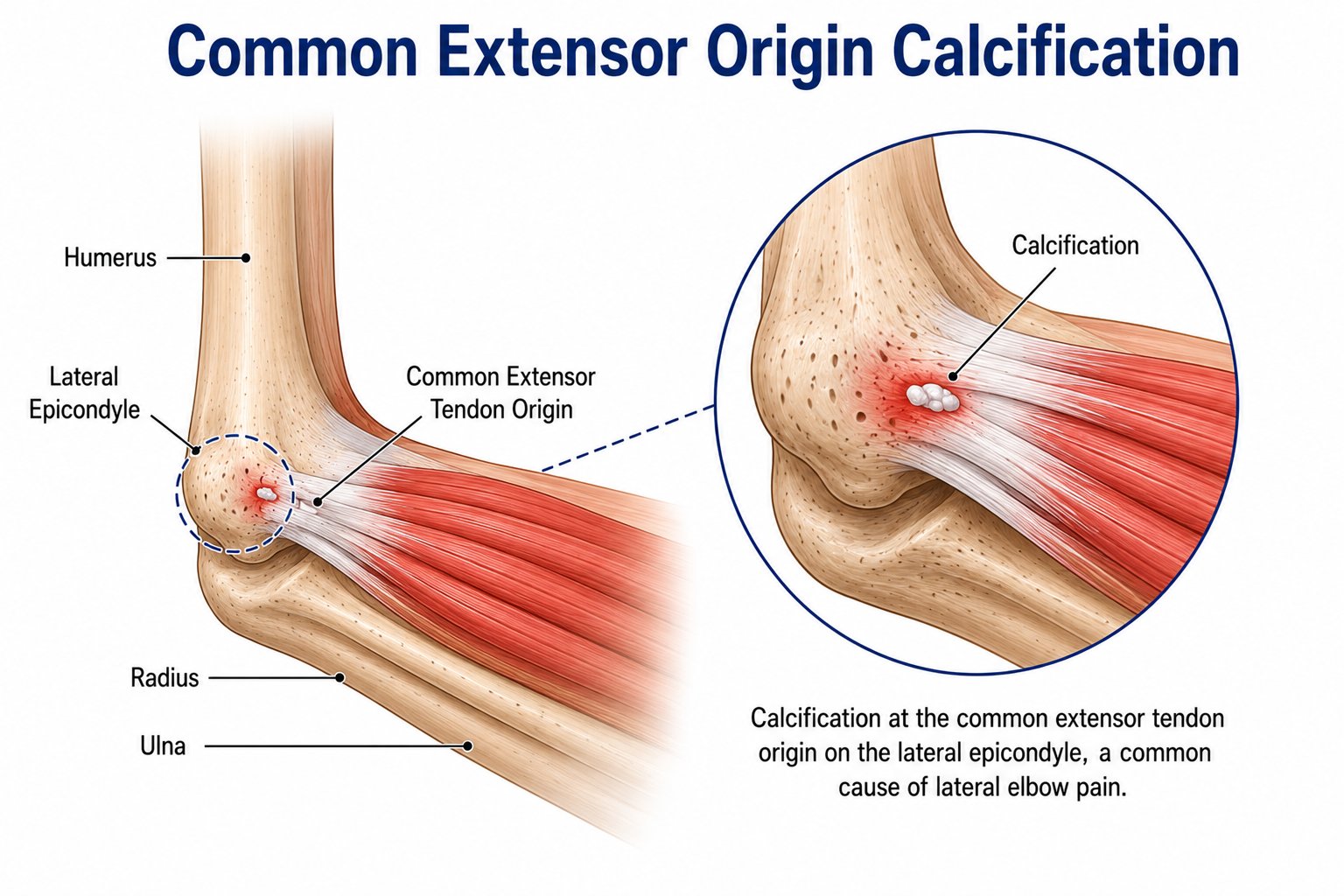
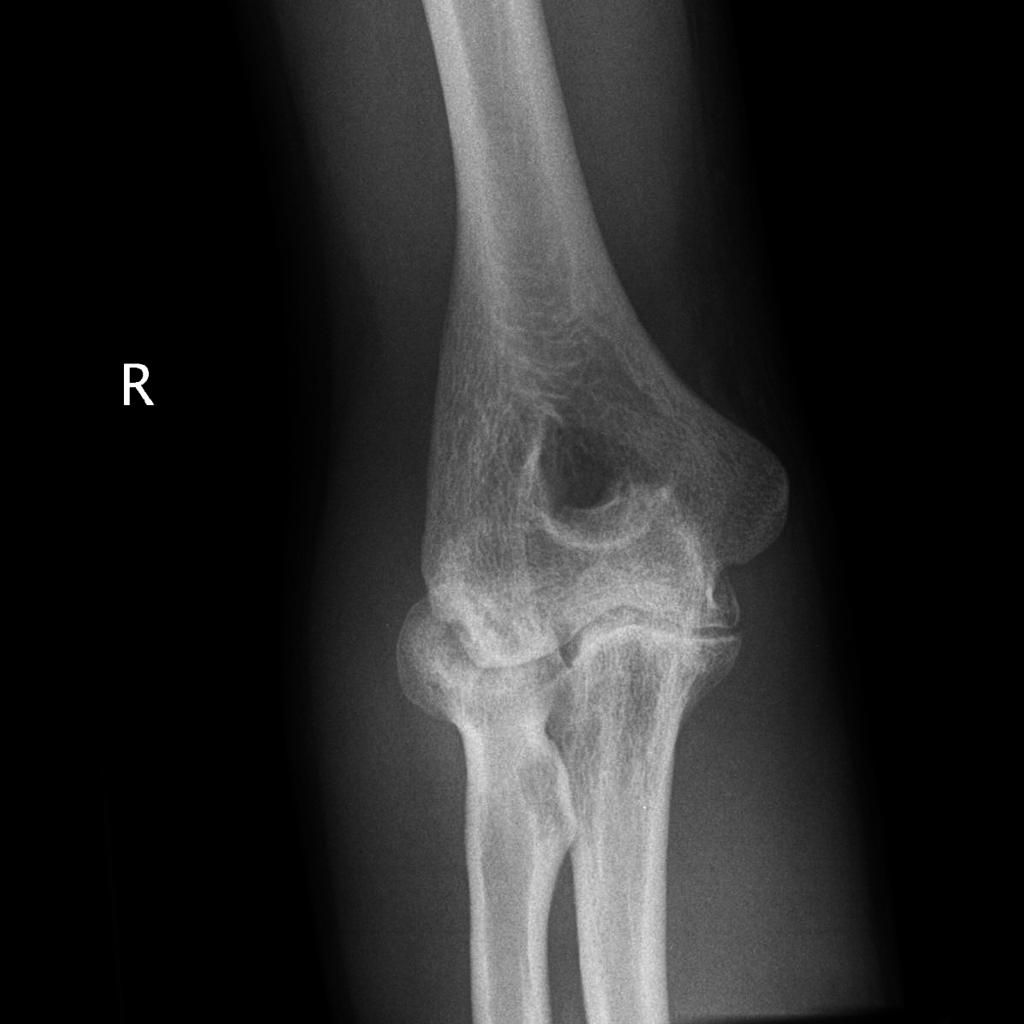
- X-rays — usually normal; may show a small calcification or avulsion fragment at the tuberosity in chronic cases

Treatment Options
Treatment Type | Details |
Conservative — Rest & Activity Modification | Rest from provocative activities (heavy lifting, repeated supination); sling for comfort in acute phase; 4–6 weeks; most effective for <50% tears |
Physiotherapy | Graduated tendon loading programme after initial rest; eccentric biceps and supinator exercises; progressive return to activity |
PRP Injection | Ultrasound-guided PRP injection at the tear site or into the degenerated tendon zone; promotes tendon healing; particularly effective for <50% partial tears and tendinopathy; 6 weeks rest after injection; 50–70% of appropriately selected patients avoid surgery |
Corticosteroid Injection (Bicipitoradial Bursa) | If significant bicipitoradial bursitis is present and contributing to symptoms: ultrasound-guided injection into the bursa (NOT into the tendon); provides pain relief; does not treat the partial tear itself; risks tendon weakening with repeated injection |
Surgical Repair (>50% Tear or Failed Conservative) | Indications: tear >50% thickness, persistent pain >3–6 months despite conservative treatment, or progressive tendon enlargement suggesting impending complete rupture; single anterior incision; débridement of degenerative tendon tissue; suture anchor or endobutton reinsertion onto radial tuberosity; PIN protection throughout |
Augmentation (Large Defect) | If significant tendon tissue loss: augmentation with acellular dermal allograft or autologous tendon strip to reinforce the repair and restore length |
Recovery & Rehabilitation
- Conservative: 3–6 months of rehabilitation; most <50% tears achieve pain-free function with appropriate management
- After PRP: 6 weeks rest from supination loading; graduated return to activity 8–12 weeks
- After surgical repair: posterior splint 2 weeks; active ROM from week 2; full ROM by week 6; strengthening from week 6; return to full loading at 4–6 months
- Outcome after surgery: 85–90% return to full activity without pain
- Risk of progression: untreated partial tears >50% thickness have a significant risk of progressing to complete rupture — particularly with continued loading; this is the primary indication for surgical repair in larger tears
Why choose Dr Senthilvelan?
Partial distal biceps tears require precise MRI interpretation and a careful risk-stratification decision regarding conservative vs surgical management. Dr Senthilvelan uses FABS-sequence MRI and ultrasound to accurately grade the extent of the tear and directs treatment based on tear size, functional demands, and the patient’s response to initial conservative management.
Frequently Asked Questions
1. How do I know if my distal biceps tear is partial or complete?
A complete tear typically causes a visible deformity (the Popeye sign — the biceps muscle belly bunched up in the mid-arm) and immediate, significant weakness in forearm supination. A partial tear does not cause visible deformity and presents with pain and mild weakness rather than complete functional loss. The hook test — hooking a finger under the biceps tendon cord at the front of the elbow — helps distinguish: a palpable cord is felt in both intact tendons and partial tears, but is absent in complete ruptures. MRI with the FABS position definitively quantifies the extent of the tear.
2. Can a partial biceps tear heal on its own?
Yes — many partial distal biceps tears, particularly those involving less than 50% of the tendon thickness, can heal with appropriate rest, physiotherapy, and PRP injection without requiring surgery. The tendon has some capacity for intrinsic repair, particularly in the early stages and when loading is reduced. PRP injection can accelerate this healing by delivering concentrated growth factors directly to the tear site. The key is accurate classification on MRI — larger tears (>50%) are less likely to heal conservatively and have a significant risk of progressing to complete rupture.
3. What happens if I ignore a partial biceps tear and keep training?
Continuing to load a partial distal biceps tear — particularly one involving more than 50% of the tendon thickness — significantly increases the risk of progression to a complete rupture. This can occur suddenly during a routine lift, and the consequences of a complete rupture (permanent 50% supination strength loss if not repaired, or a more complex surgical repair if delayed) are much worse than treating the partial tear electively. If you have been diagnosed with a partial tear, a structured management plan is essential.
4. Is PRP effective for distal biceps partial tears?
PRP is a well-supported treatment for partial distal biceps tears, particularly those involving less than 50% of the tendon thickness. Ultrasound-guided injection places the concentrated growth factors directly within the tear zone, stimulating fibrocyte activity and collagen synthesis at the site of degeneration. Studies show that 50–70% of appropriately selected patients with partial tears achieve pain-free function and avoid surgery with PRP, combined with a 6-week period of relative rest from supination loading.
5. If I need surgery for a partial tear, is it the same operation as for a complete tear?
The surgical approach is similar — typically a single anterior incision in the antecubital fossa — but the operation for a partial tear is less urgent and the tendon end has not retracted, making it technically easier in many ways. The surgeon débrides the degenerative tendon tissue, freshens the radial tuberosity, and secures the tendon back to bone using suture anchors or an endobutton device. The recovery is essentially the same as for a complete tear repair, with the first 6 weeks protecting the repair and progressive loading thereafter.