Overview
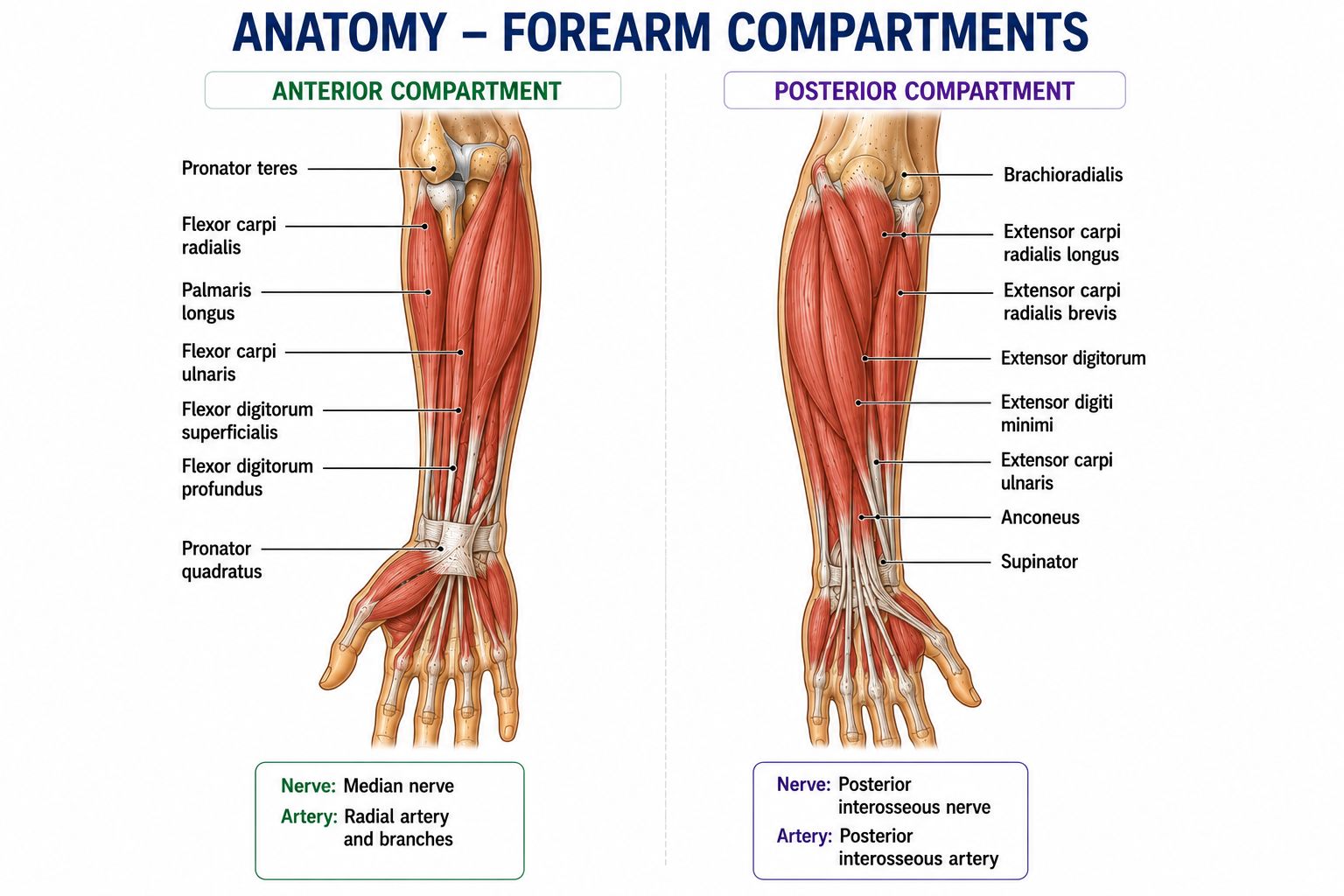
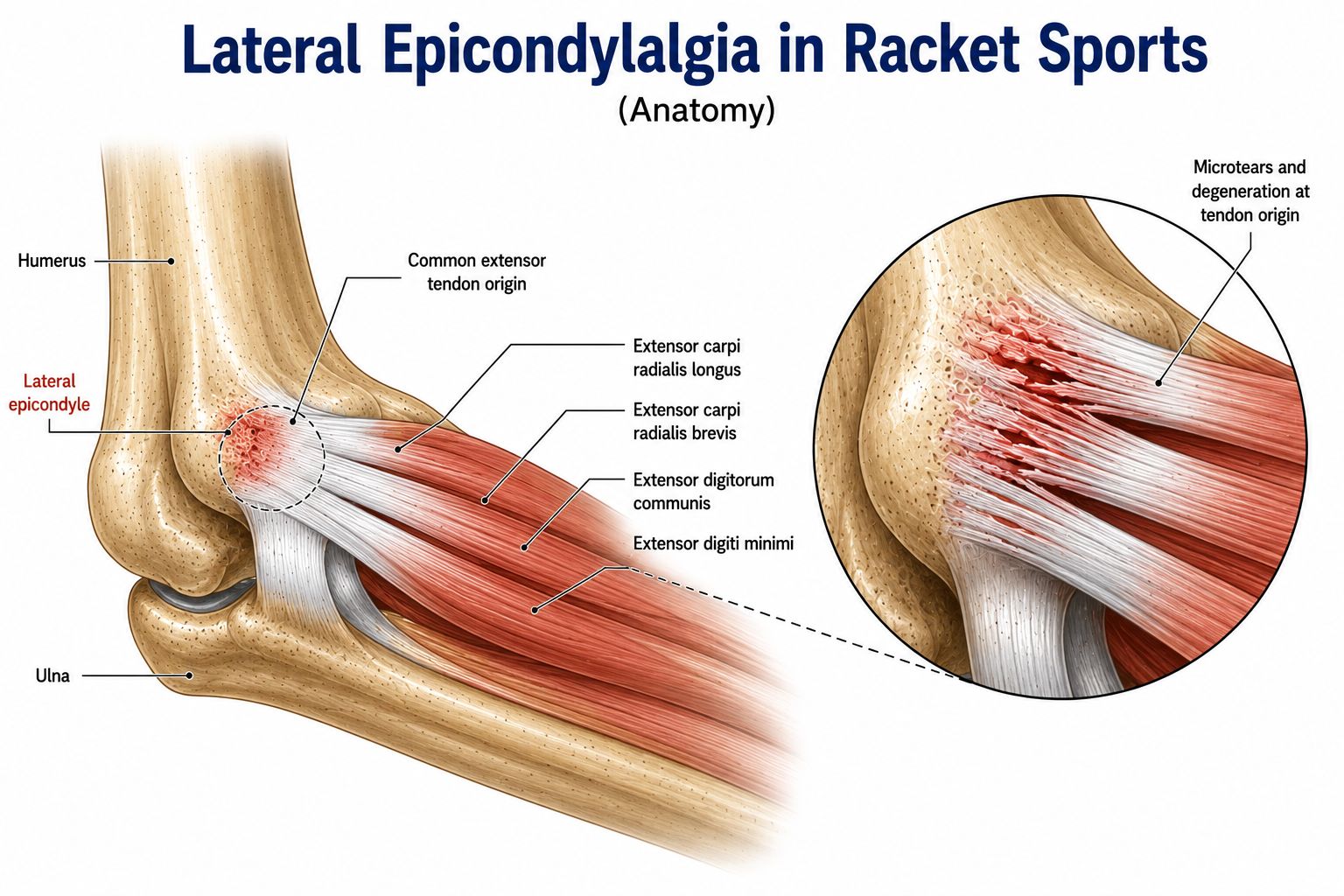
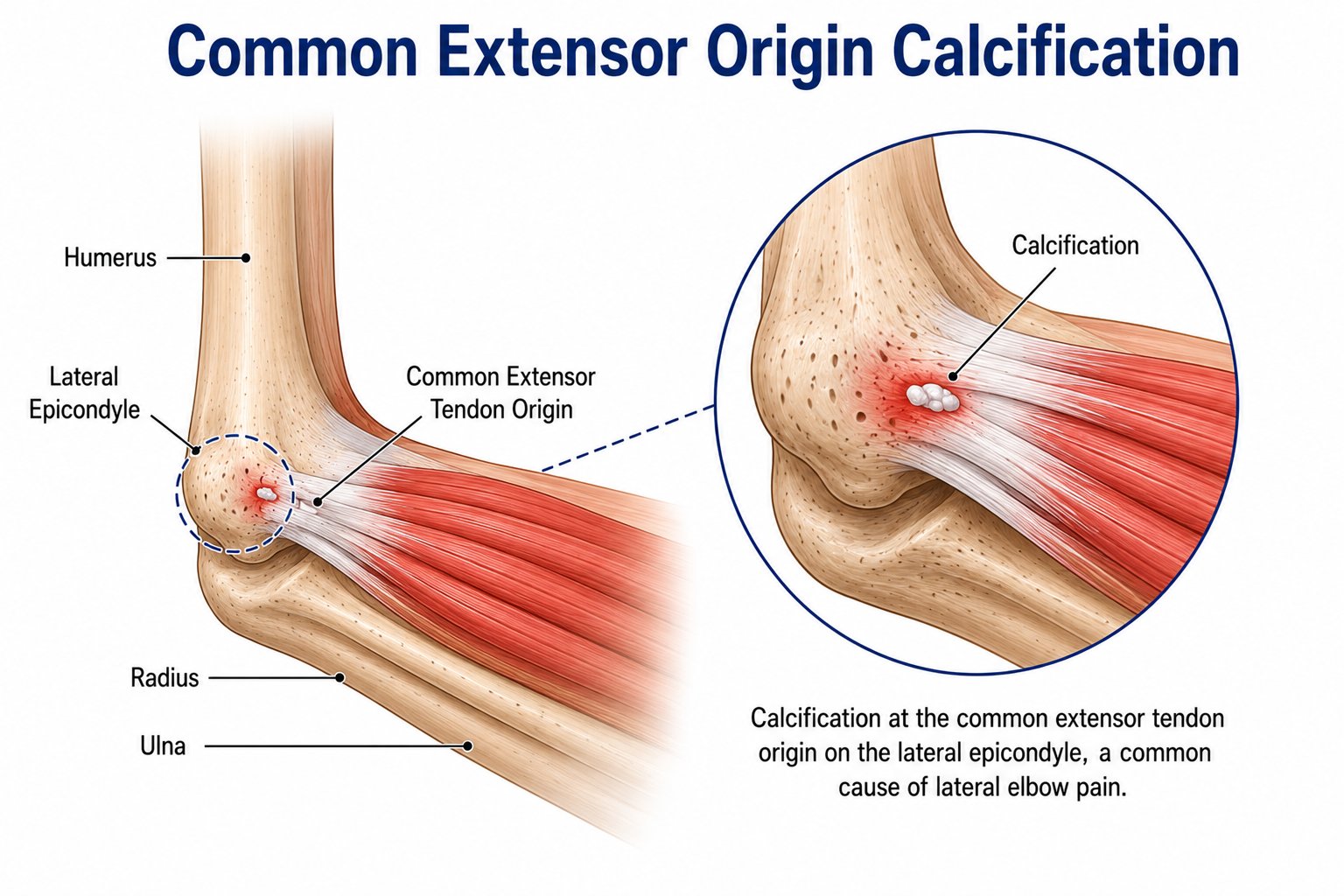
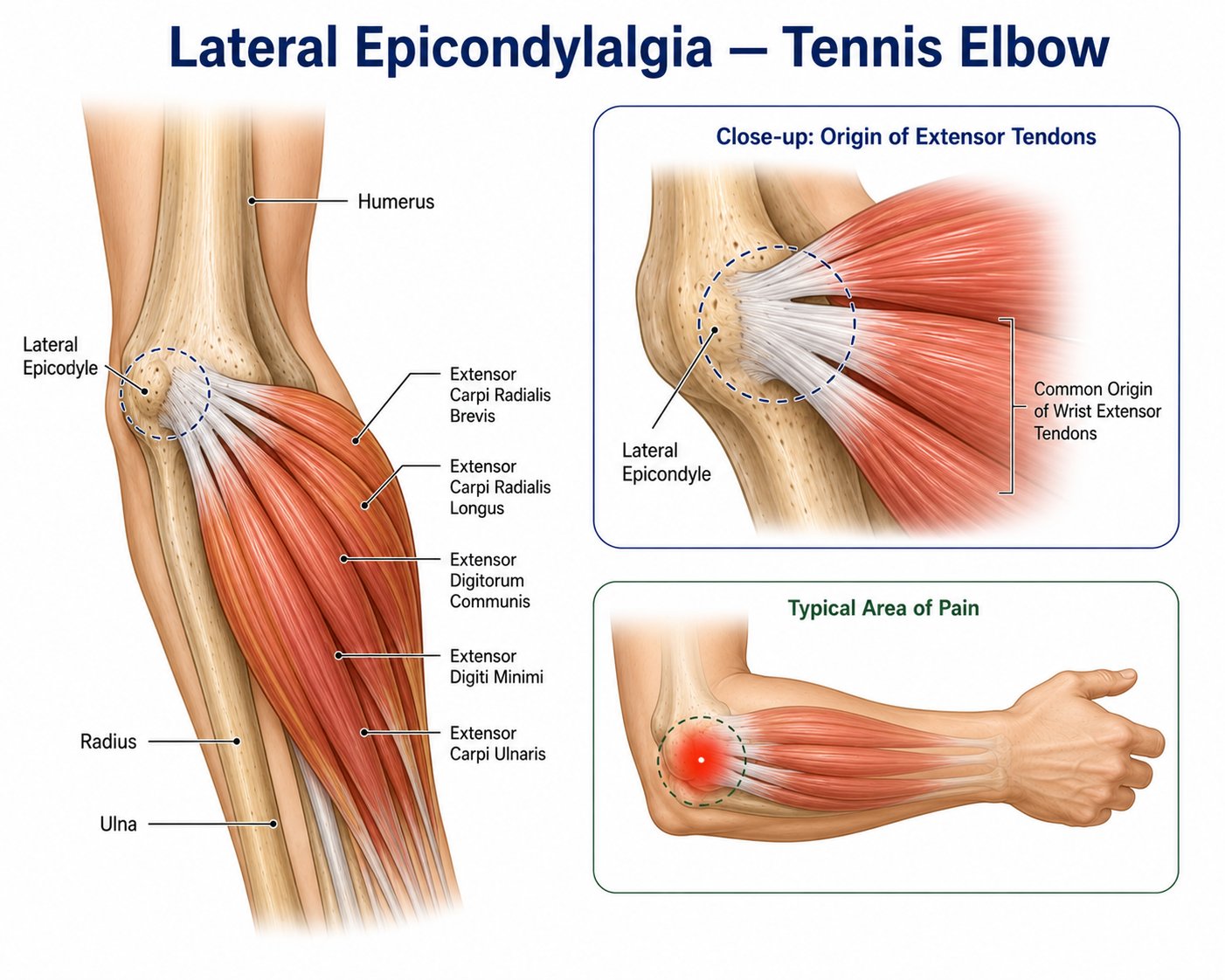
Lateral epicondylalgia (commonly called tennis elbow) is a chronic degenerative condition of the common extensor tendon origin at the lateral epicondyle of the humerus — specifically the extensor carpi radialis brevis (ECRB) tendon. Contrary to what was previously believed, the condition is not primarily inflammatory (hence the shift from “epicondylitis” to “epicondylalgia” or “tendinopathy”) — histological studies consistently show angiofibroblastic degeneration and disorganised collagen, not inflammatory cells.
The condition develops through repetitive microtrauma to the ECRB tendon origin — from gripping, lifting, forearm rotation, and overhead activities — that exceeds the tendon’s capacity for repair, resulting in progressive tendon degeneration. The pain arises from the highly sensitised degenerative tendon tissue and from the local neurochemical environment of the tendinopathy.
Although tennis elbow is common and most cases resolve with time and appropriate conservative treatment, a significant minority (10–20%) develop persistent pain lasting more than a year. These patients benefit from PRP injection or surgical ECRB release when conservative measures fail. Understanding that this is a degenerative rather than inflammatory condition changes the treatment approach significantly.
Quick Facts | Details |
Also Known As | Tennis Elbow, Lateral Epicondylitis, Common Extensor Origin Tendinopathy, ECRB Tendinopathy |
Affected Area | Common extensor origin — primarily the extensor carpi radialis brevis (ECRB) tendon at the lateral epicondyle of the humerus |
Who It Affects | Adults aged 35–55 years; manual workers, computer users, racket sport players; more common in the dominant arm; affects 1–3% of the working population; named “tennis elbow” but only 10% of patients play tennis |
Prevalence | The most common cause of lateral elbow pain; affects approximately 1–3% of the adult population; incidence 4–7 per 1,000 per year; accounts for the majority of elbow GP consultations |
Treatment | First-line: activity modification, physiotherapy (eccentric programme), NSAIDs; PRP injection for persistent cases; surgical ECRB release (open or arthroscopic) for failed conservative treatment >6 months |
Causes & Risk Factors
- Repetitive gripping and forearm rotation — the ECRB is the primary wrist extensor during power grip; repetitive loading causes cumulative micro-damage
- Manual occupational exposure — assembly workers, carpenters, plumbers, painters; jobs requiring repetitive forearm use
- Racket sports — the backhand stroke in tennis (particularly with improper technique or a heavy racket) loads the ECRB; badminton, squash, and padel also implicated
- Computer use — sustained wrist extension while typing loads the ECRB; mouse use with the arm extended
- Age-related tendon degeneration — tendon vascularity and collagen quality decline after 35 years of age, reducing the tendon’s reparative capacity
- Poor technique or equipment — incorrect grip size, heavy racket head, or improper backhand technique increase ECRB loading
- Sudden increase in activity — taking up a new sport or significantly increasing training volume without adequate conditioning
Symptoms
- Pain at the lateral epicondyle — the hallmark; typically a well-localised ache or sharp pain at the bony prominence on the outer side of the elbow
- Tenderness on direct palpation — over the ECRB origin, 1–2cm distal and anterior to the lateral epicondyle
- Pain with grip activities — shaking hands, lifting a kettle, turning a doorknob, wringing a cloth
- Pain with resisted wrist extension — reproduces lateral epicondyle pain on clinical testing
- Cozen’s test positive — pain with resisted wrist extension with the elbow extended
- Mill’s test positive — pain reproduced by passive wrist flexion with the elbow extended and forearm pronated
- Reduced grip strength — patients avoid strong gripping due to pain
- Radiation into the forearm — pain may radiate down the forearm along the extensor muscle group; rarely to the hand
How is it Diagnosed?
- Clinical examination — Cozen’s test, Mill’s test, and point tenderness at ECRB origin; assess grip strength; exclude radial tunnel syndrome (Condition 24) and PLRI (Condition 14)
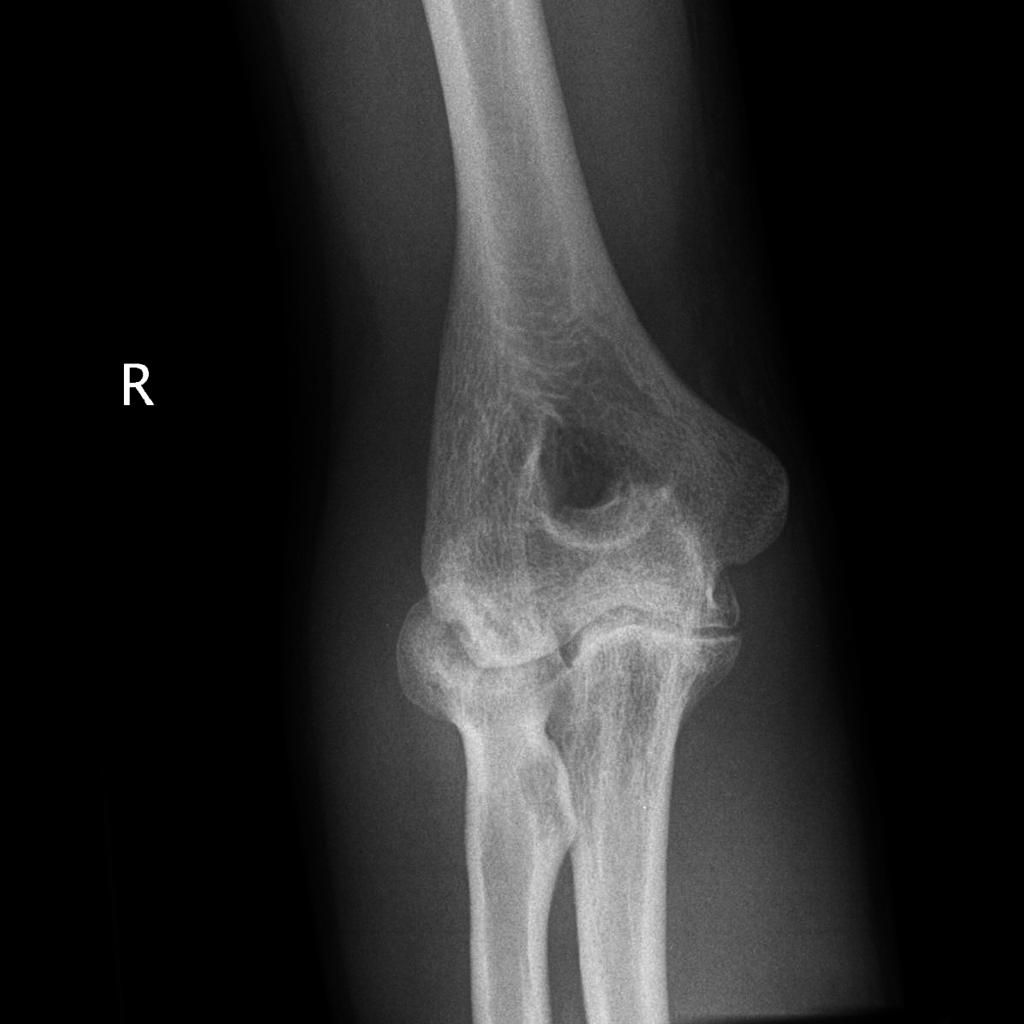
- Plain X-rays — usually normal; may show periosteal reaction or calcification at the lateral epicondyle in chronic cases
- Ultrasound — hypoechoic area within the ECRB tendon at the epicondyle (tendinosis); Doppler signal (neovascularity); calcification; partial tendon tear; most useful for injection guidance
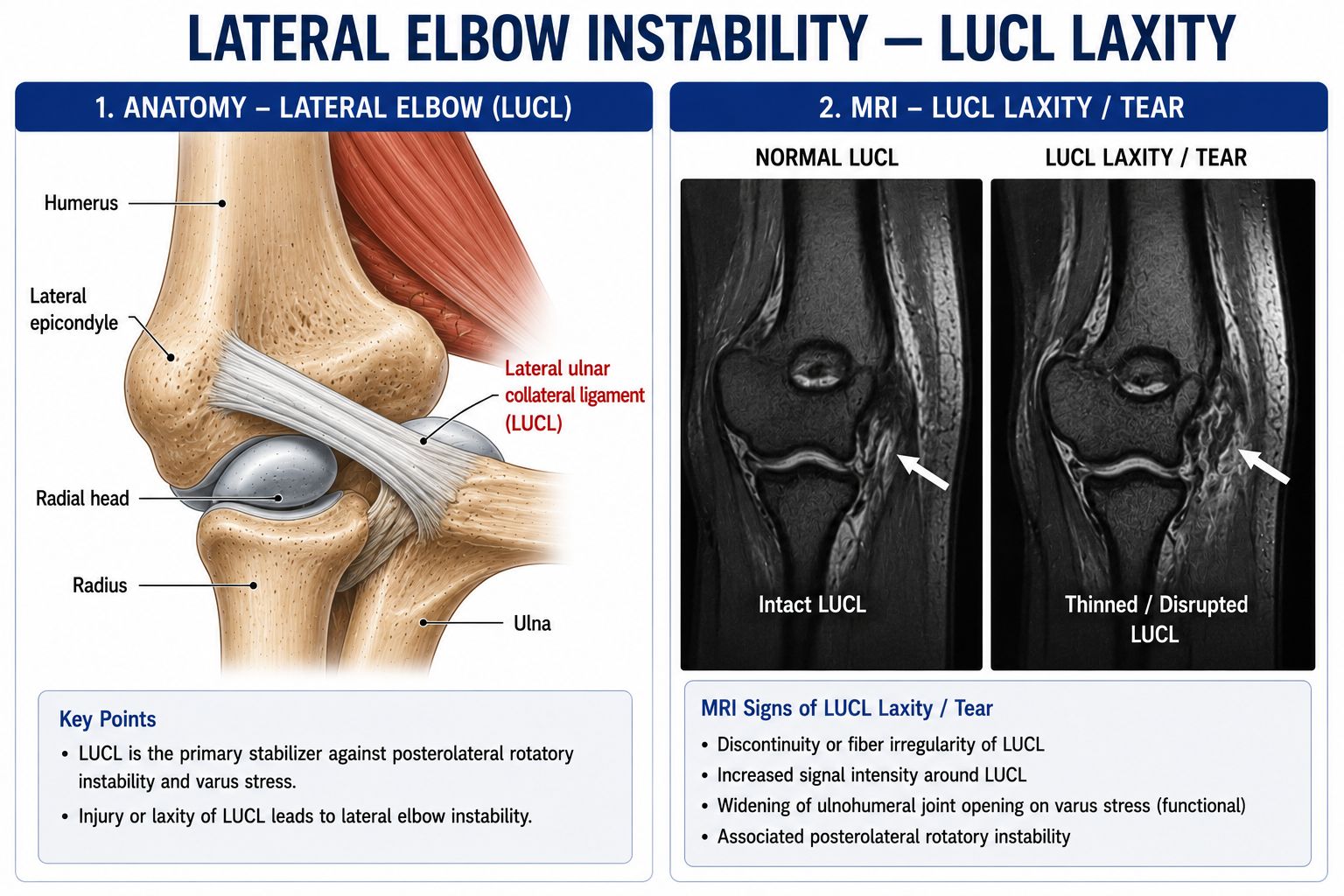
- MRI — T2 signal changes in the ECRB origin (tendinopathy or partial tear); useful for surgical planning and excluding concurrent pathology (lateral compartment, LUCL)
- EMG/NCS — normal; used to exclude radial tunnel syndrome or PIN palsy if any motor weakness present

Treatment Options
Treatment Type | Details |
Activity Modification | Reduce or modify the provocative activity; ergonomic assessment; adjust grip size, equipment weight; technique coaching in tennis or racket sport |
Physiotherapy — Eccentric Programme | Evidence-based: eccentric wrist extension exercises (Tyler twist with Therabar, eccentric loading programme); 6–12 weeks; addresses underlying tendinopathy by stimulating collagen remodelling |
NSAIDs — Oral or Topical | Oral ibuprofen or naproxen for pain management; topical diclofenac gel directly applied to the lateral epicondyle; short courses; do not address the underlying tendinopathy |
Corticosteroid Injection | Ultrasound-guided peritendinous injection; provides significant short-term (4–8 weeks) pain relief; evidence shows inferior long-term outcomes compared to physiotherapy; maximum 3 injections; avoid intratendinous injection (risk of tendon rupture) |
PRP Injection (Platelet-Rich Plasma) | Ultrasound-guided injection of autologous PRP into the ECRB tendinopathy zone; stimulates growth factor-mediated tendon healing; superior long-term outcomes compared to corticosteroid; 6–12 weeks protection from provocative activity after injection; preferred for chronic tendinopathy unresponsive to physiotherapy |
Extracorporeal Shockwave Therapy (ESWT) | Focused or radial shockwave delivered over the lateral epicondyle; stimulates tendon repair via mechanotransduction; 3–5 sessions; comparable to PRP in selected patients; available at MIOT International |
Surgical ECRB Release (Open or Arthroscopic) | Indicated when 6+ months of conservative treatment including PRP has failed; Open Nirschl technique: excise the degenerative “grey, fishflesh” ECRB tendon origin from the lateral epicondyle, with freshening of the bone to stimulate healing; Arthroscopic: ECRB release from inside the joint; equivalent outcomes; day-case procedure |
Recovery & Rehabilitation
- Conservative treatment: most cases (80–90%) resolve within 12 months with appropriate physiotherapy and activity modification
- PRP injection: 4–6 weeks of relative rest from provocative activities; gradual return to full activity 8–12 weeks; outcomes superior to corticosteroid at 6 months
- After surgical release: sling 48 hours; immediate finger and wrist motion; physiotherapy from week 1; return to office work 2–3 weeks; manual work 4–8 weeks; racket sport 3–6 months
- Expected surgical outcome: 85–90% good-excellent results in appropriately selected patients (failed >6 months conservative therapy)
- Key message: corticosteroid injection gives the fastest short-term relief but the worst long-term outcome; physiotherapy and PRP give slower but more durable results
Why choose Dr Senthilvelan?
Tennis elbow is extremely common but frequently undertreated — patients cycle through multiple corticosteroid injections without addressing the underlying tendinopathy. Dr Senthilvelan offers the full evidence-based spectrum from eccentric physiotherapy and PRP through to arthroscopic ECRB release, with a clear pathway that avoids unnecessary interventions and achieves durable recovery.
Frequently Asked Questions
1. Is "tennis elbow" actually caused by playing tennis?
Despite its name, the majority of tennis elbow sufferers never play tennis. Only about 10% of patients with lateral epicondylalgia are tennis players. The condition is actually most common in manual workers, computer users, and anyone who performs repetitive gripping and forearm rotation activities. The tennis connection comes from the classic mechanism of the backhand stroke loading the ECRB — but any activity producing sustained or repetitive wrist extension loading can cause the same tendon degeneration.
2. Is tennis elbow inflammatory or degenerative — does it matter for treatment?
This distinction is critically important for treatment. Despite the name ‘epicondylitis’ (implying inflammation), biopsies from tennis elbow tissue consistently show degenerative changes — disorganised collagen, angiofibroblastic tissue, and micro-tears — without inflammatory cells. This is why anti-inflammatory treatments (corticosteroid injections, NSAIDs) provide only temporary pain relief without addressing the underlying tendon degeneration. Treatments that stimulate tendon repair and collagen remodelling — eccentric loading exercises, PRP, and shockwave — are more effective for long-term recovery.
3. Why do corticosteroid injections not give lasting relief?
Corticosteroid injections reduce the chemical sensitisation and neurochemical pain signals around the ECRB tendinopathy very effectively in the short term — which is why they give fast, significant pain relief. However, they do not treat the underlying degenerative tendinopathy, and there is evidence that repeated cortisone injections may actually weaken the tendon over time, impair tendon healing, and increase the risk of tendon rupture. Relief typically lasts 4–8 weeks, after which symptoms recur. PRP and physiotherapy address the tendon degeneration itself and provide more durable improvement.
4. What is PRP and how does it help tennis elbow?
Platelet-rich plasma (PRP) is produced by taking a small blood sample from the patient, processing it in a centrifuge to concentrate the platelets, and then injecting the platelet-rich fraction directly into the ECRB tendinopathy zone under ultrasound guidance. Platelets are rich in growth factors (PDGF, TGF-beta, VEGF, IGF-1) that stimulate collagen synthesis, fibroblast recruitment, and vascularisation of the tendon — all the processes needed to repair the degenerative tissue. Multiple randomised trials show PRP is superior to corticosteroid at 6–12 months.
5. When should I consider surgery for tennis elbow?
Surgery is recommended when: you have had at least 6 months of well-executed conservative treatment (physiotherapy eccentric programme, one or two PRP injections, activity modification) and symptoms remain significantly affecting function and quality of life. Surgery is highly effective in this group — achieving good to excellent results in 85–90% of appropriately selected patients. It should not be performed before a genuine conservative trial as the majority of patients eventually recover without it.