Overview
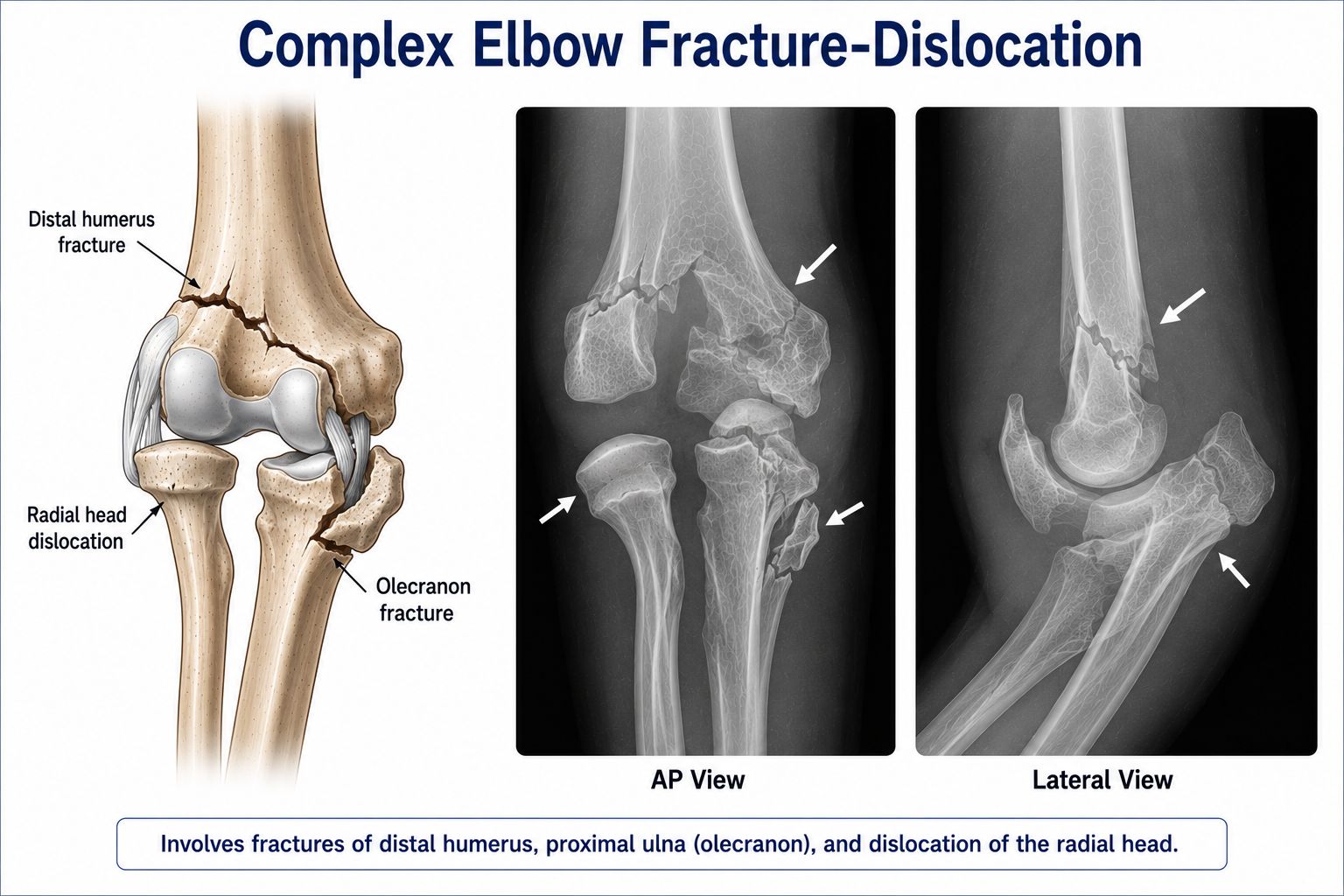
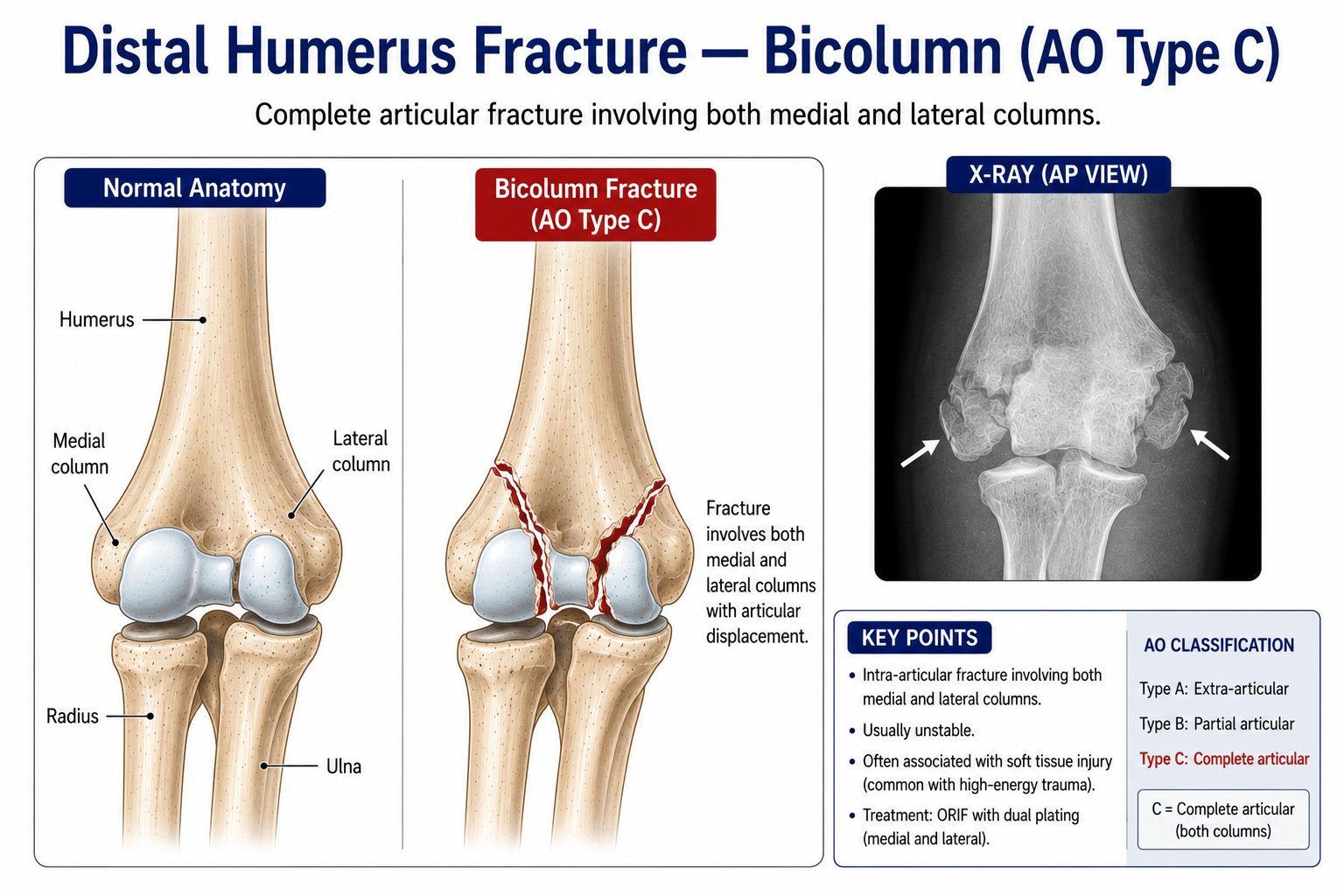
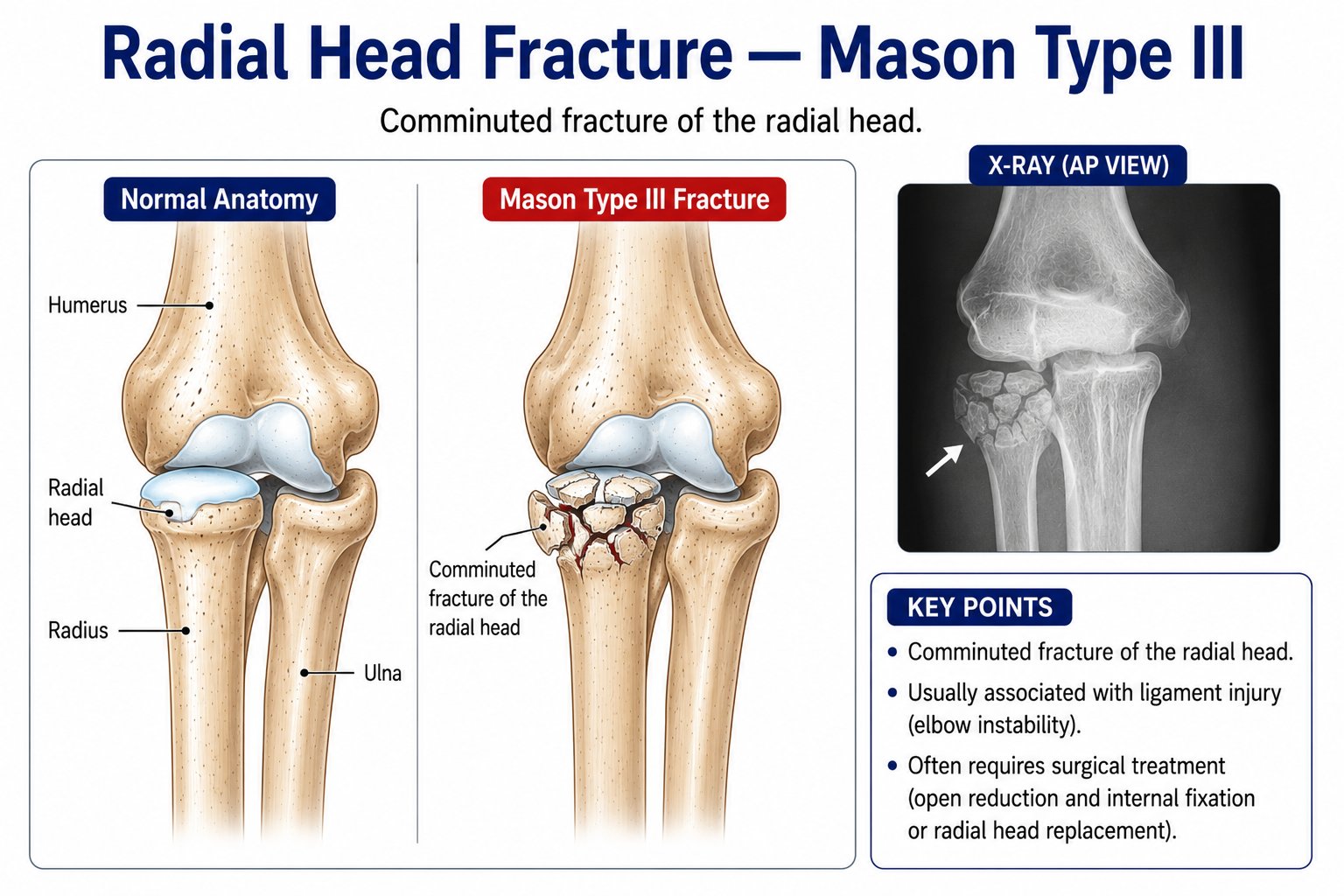
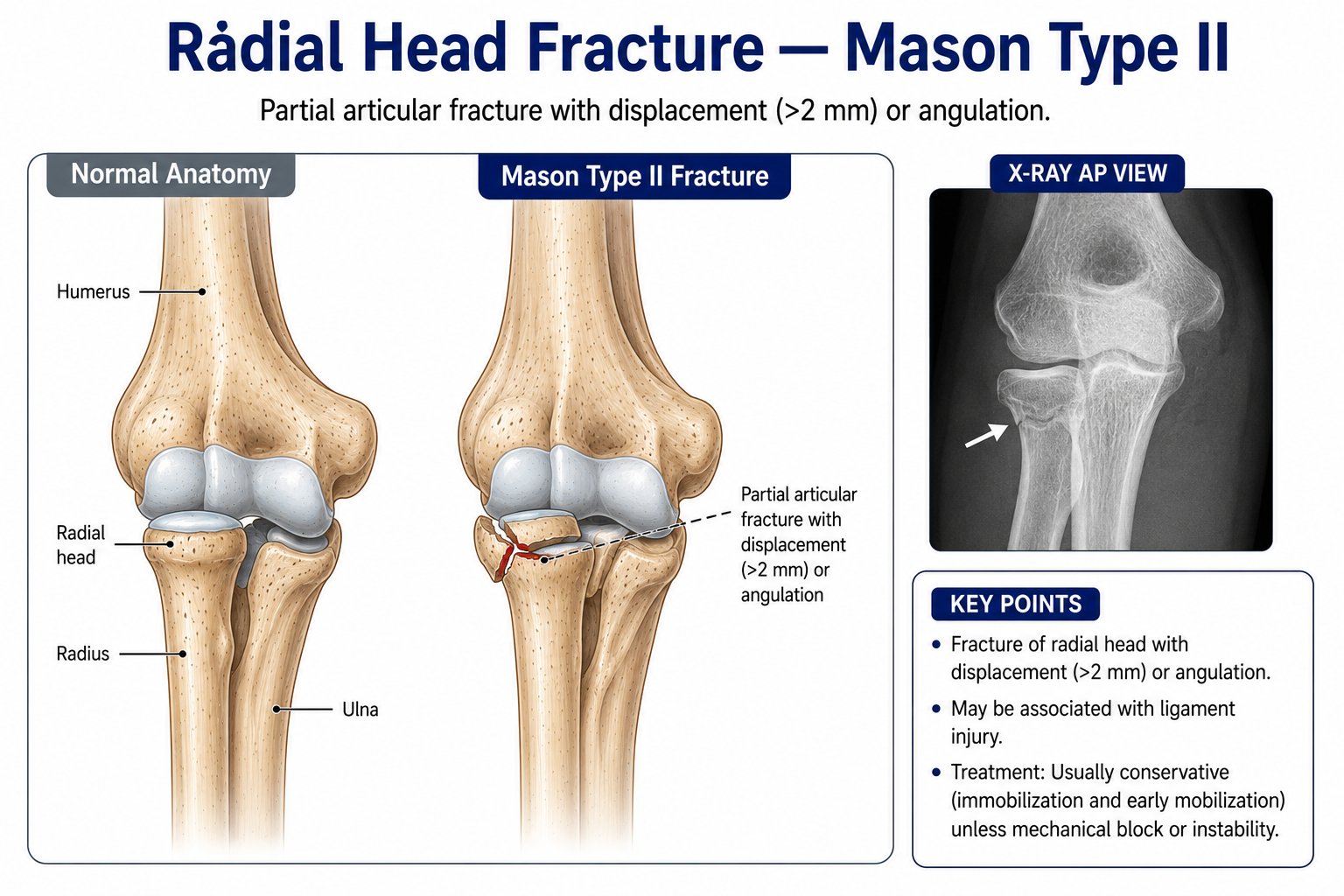
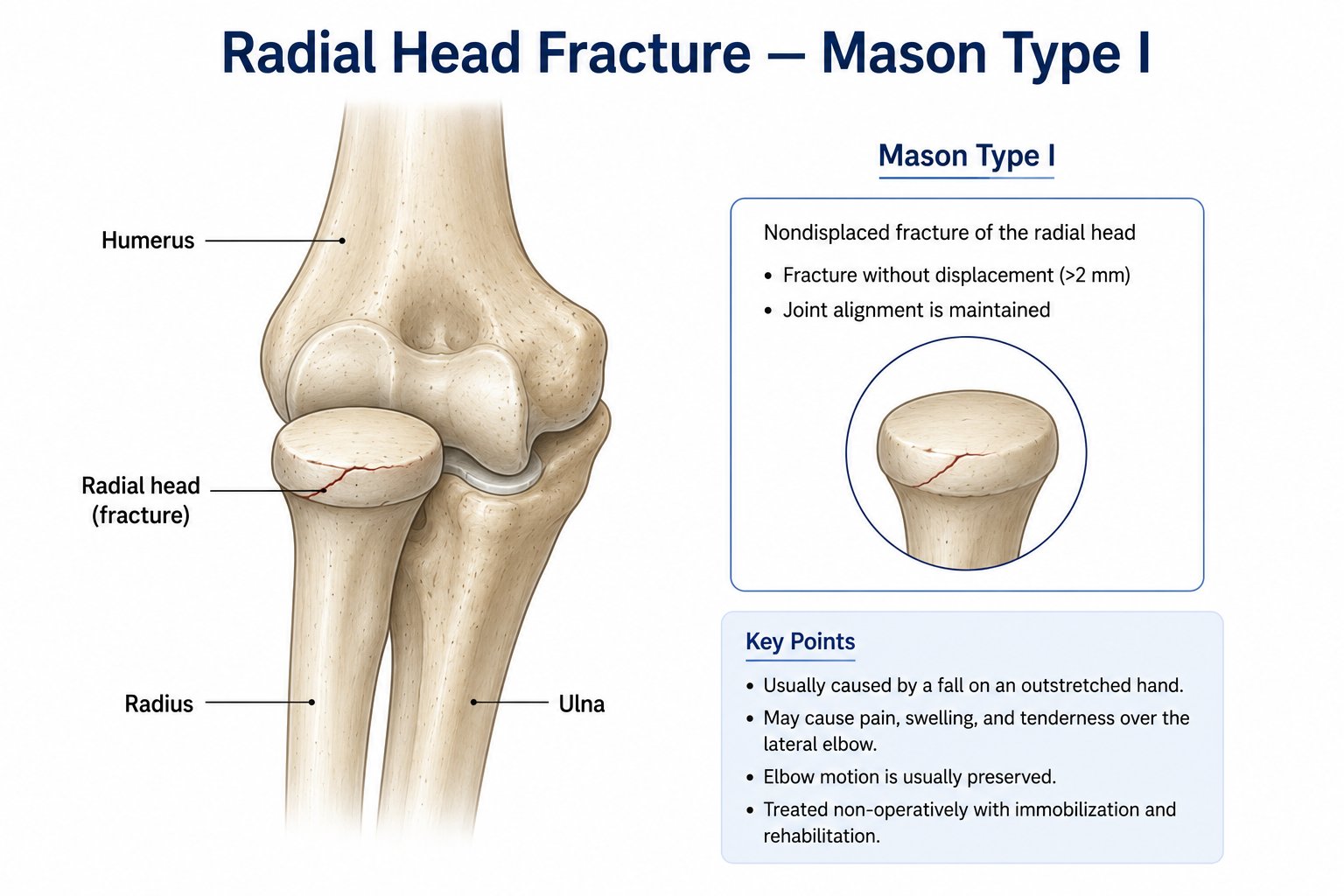
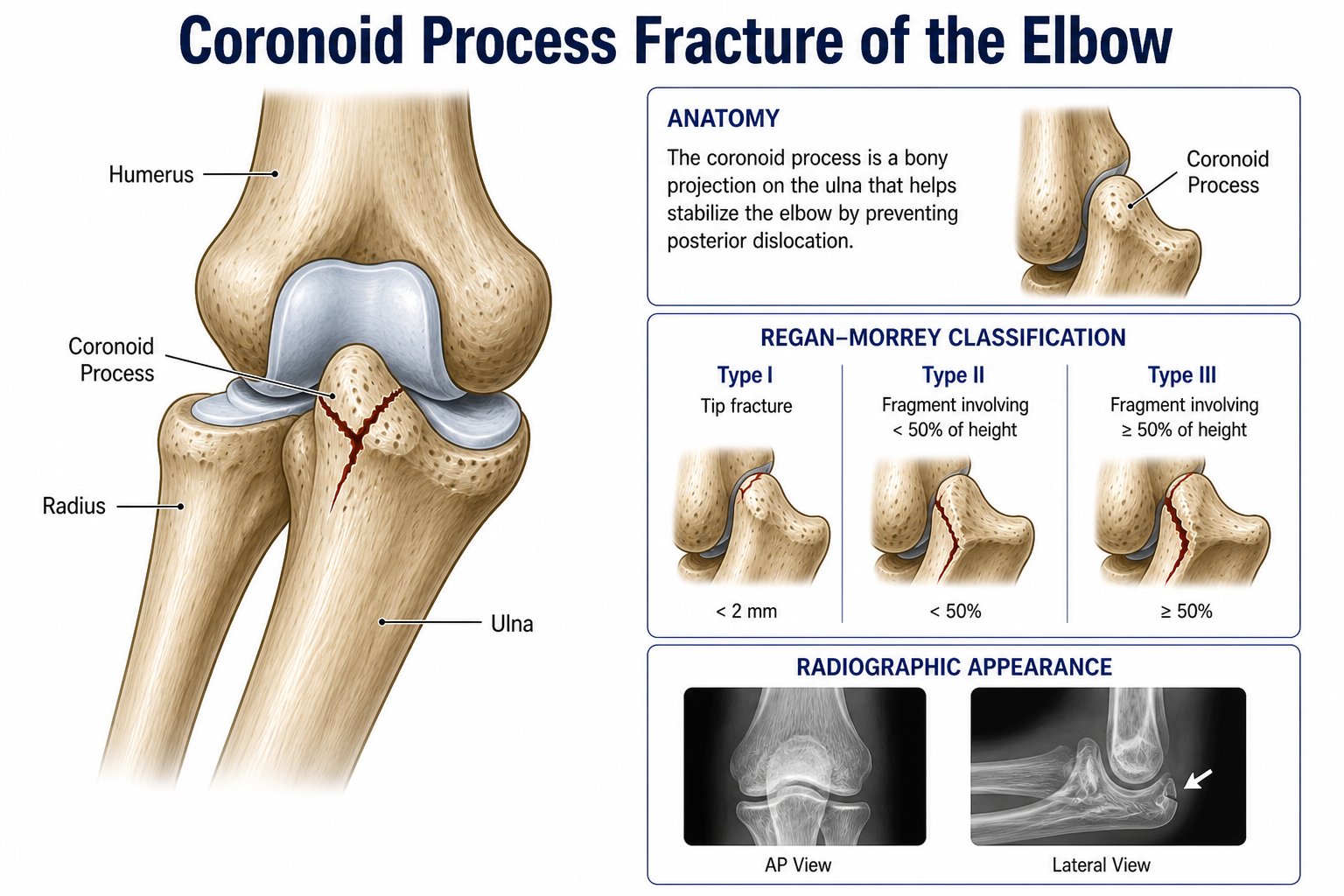
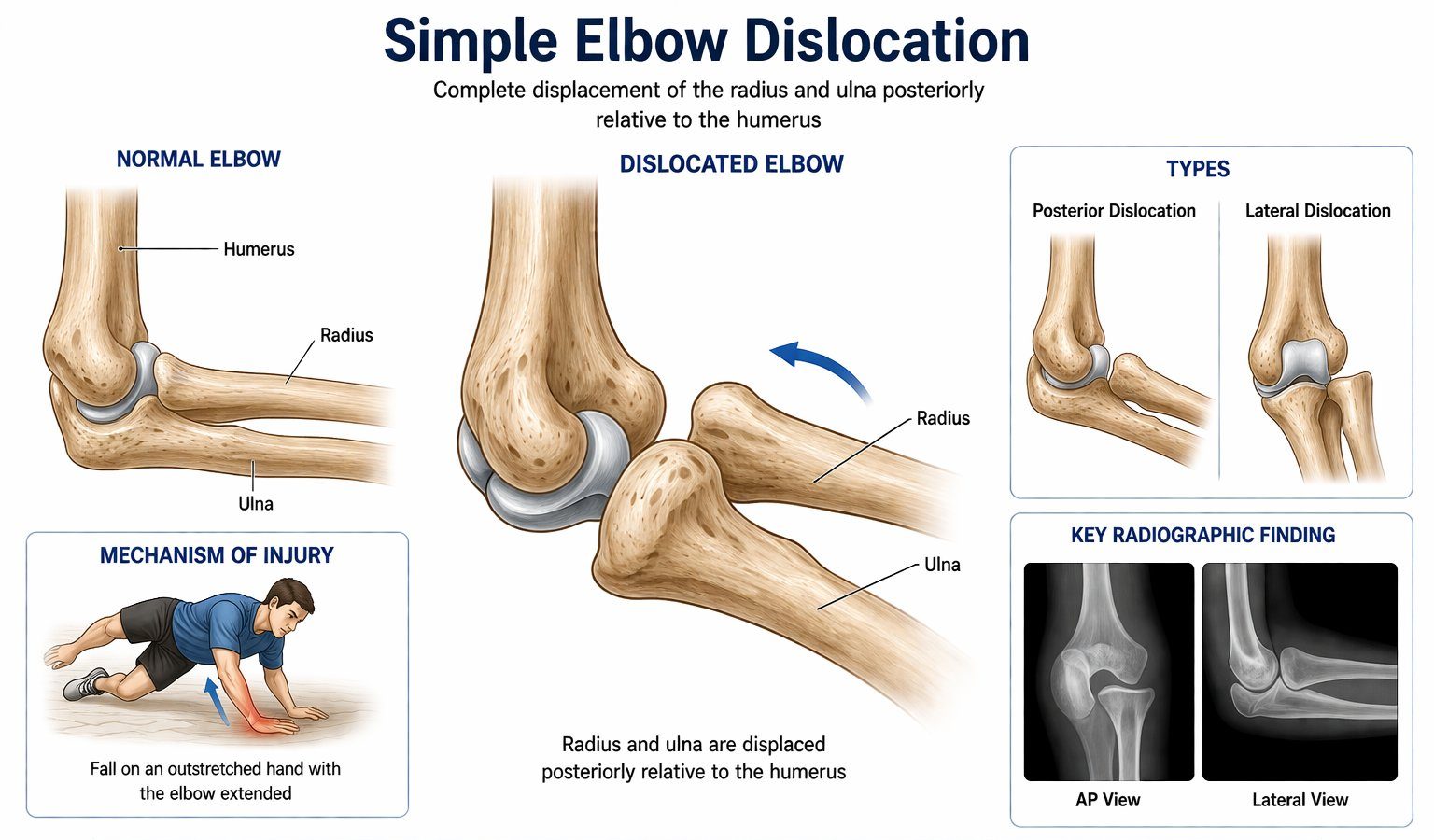
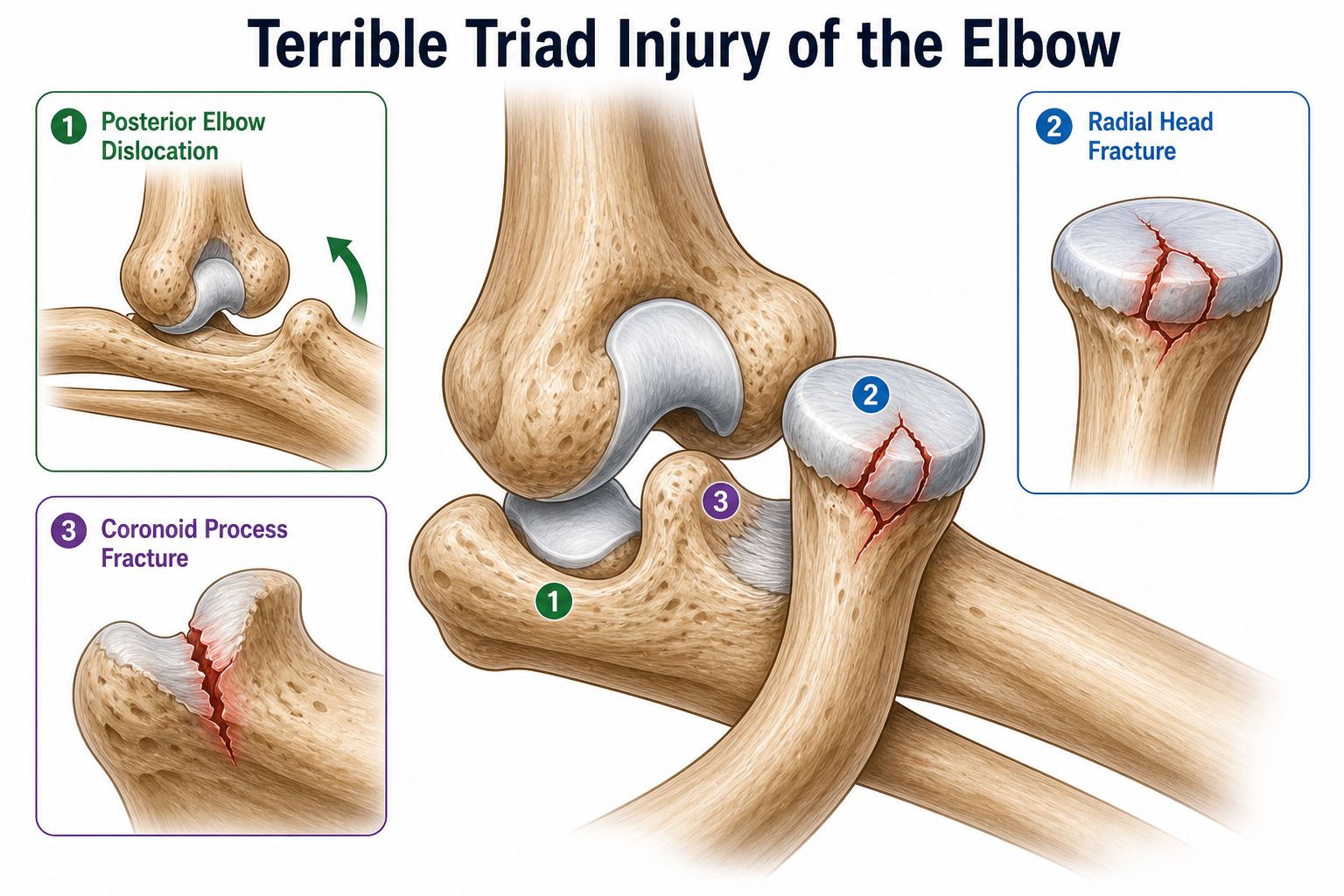
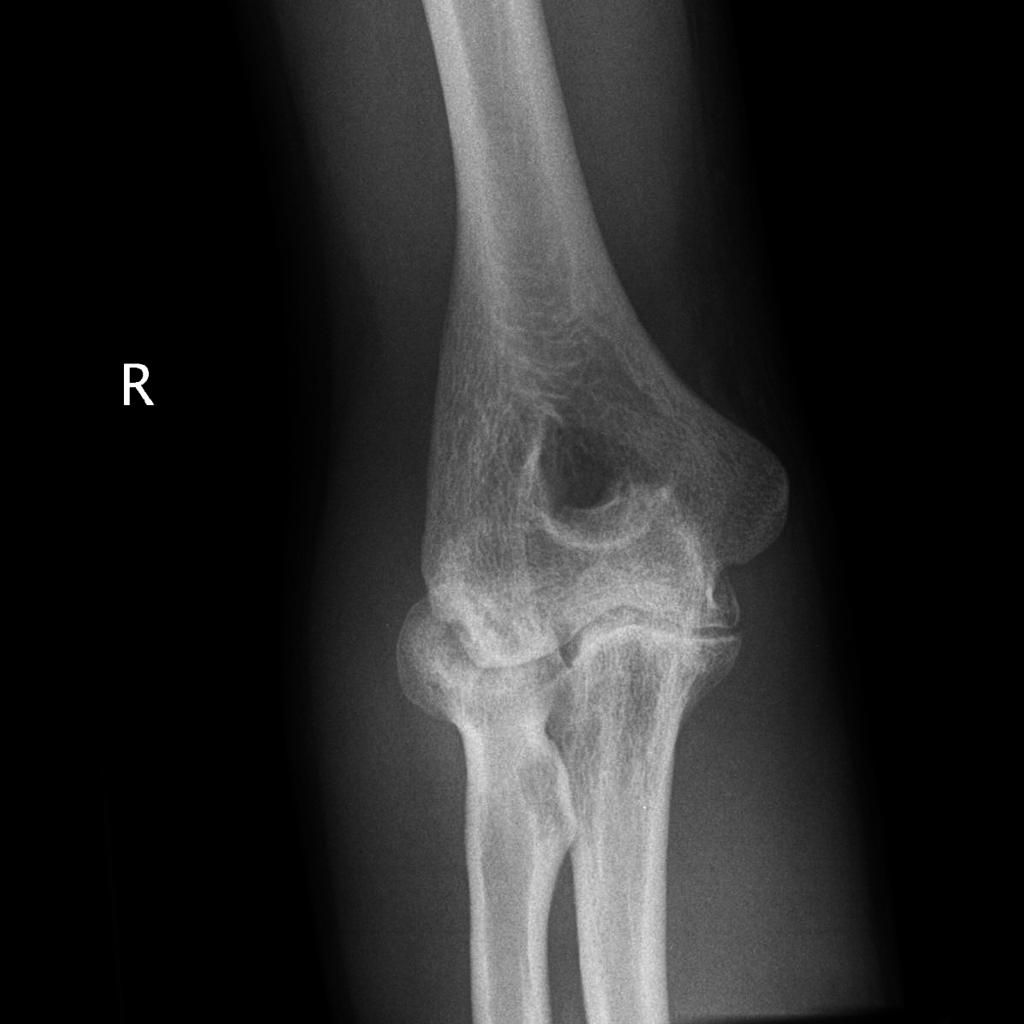
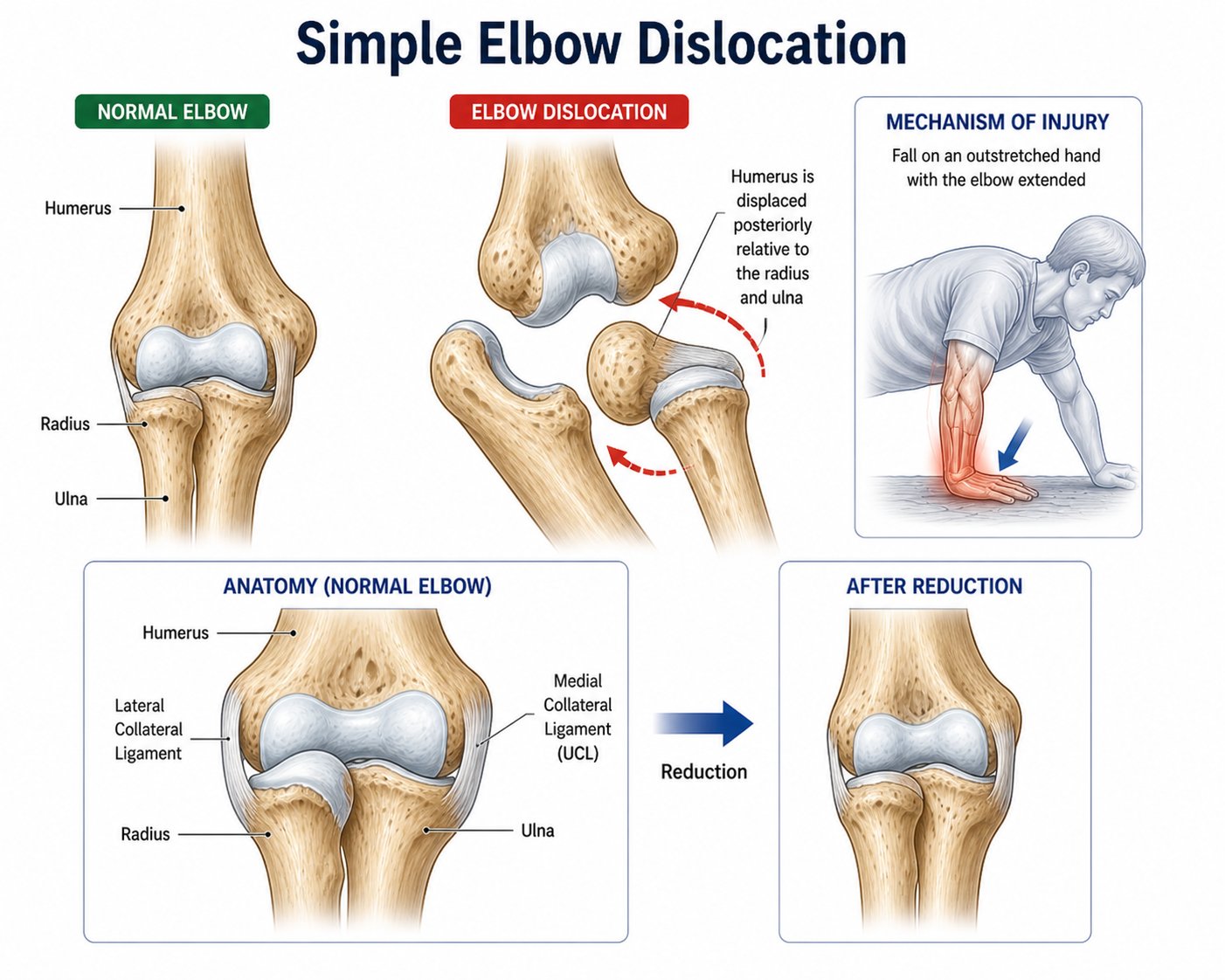
An elbow dislocation occurs when the normal articulation between the forearm bones and the humerus is disrupted. The vast majority are posterior dislocations. A ‘simple’ dislocation occurs without associated fracture; a ‘complex’ dislocation is accompanied by fracture (most commonly radial head or coronoid — see Condition 16).
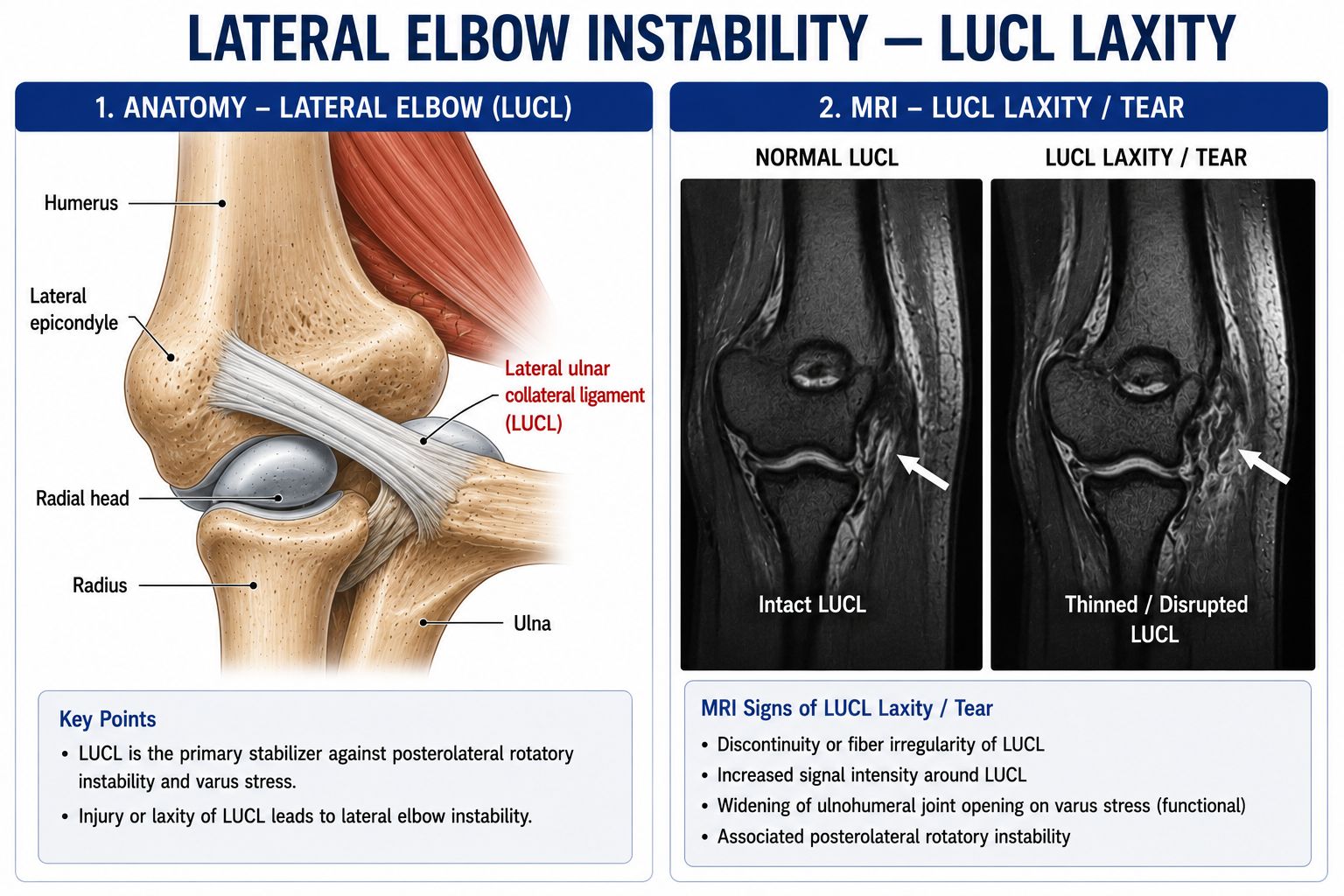
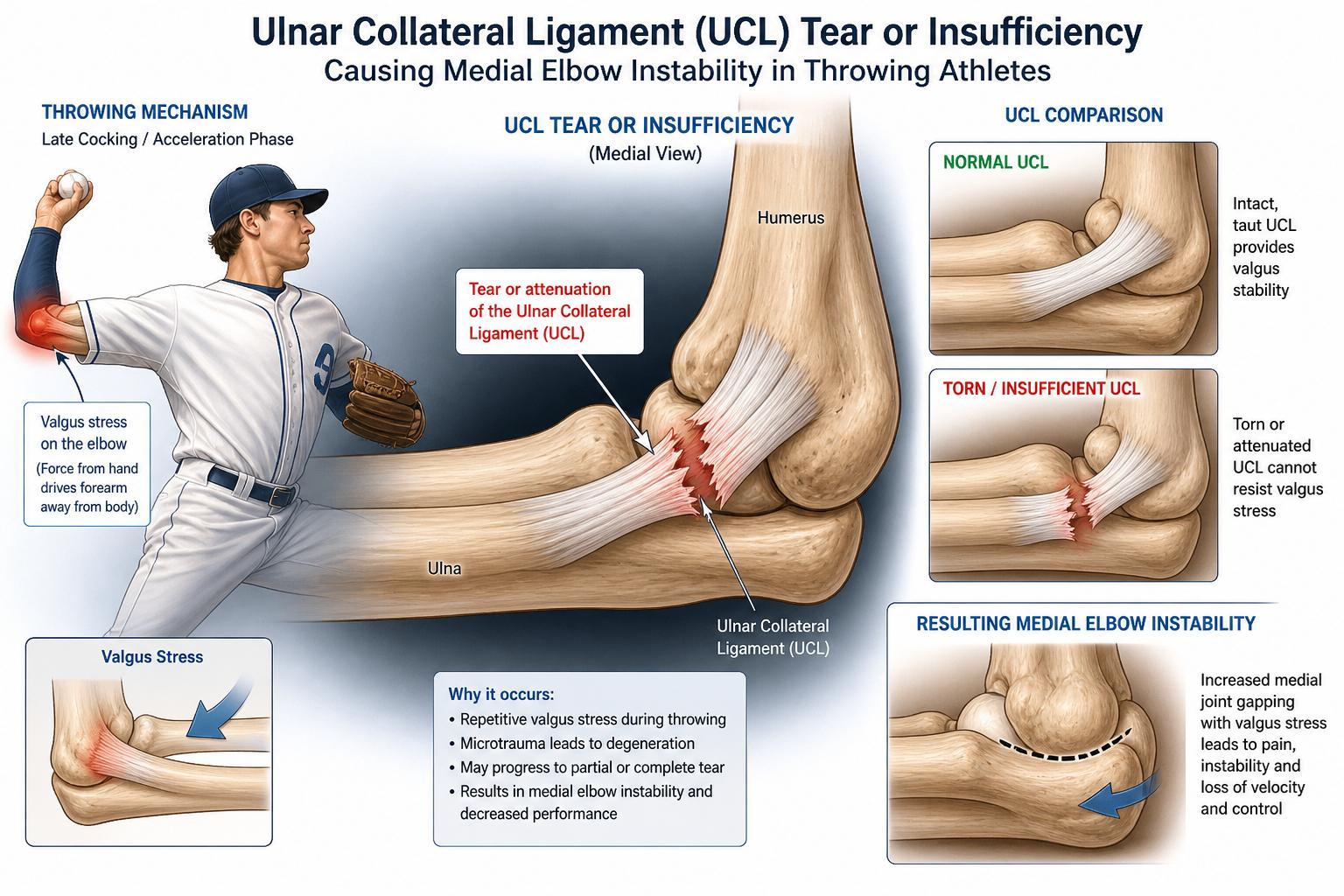
Elbow dislocations occur through a common mechanism: a fall onto an outstretched hand with the elbow in extension, generating axial load, valgus stress, and forearm supination that sequentially tears the lateral and then medial collateral ligaments.
Prompt, gentle closed reduction restores joint congruence and significantly reduces pain. The most critical decision after reduction is whether the elbow is stable through a functional range — which determines whether early mobilisation is safe or surgery is needed.
Quick Facts | Details |
Also Known As | Posterior Elbow Dislocation, Elbow Luxation |
Affected Area | Ulnohumeral joint; radiocapitellar joint; lateral and medial collateral ligaments; anterior capsule |
Who It Affects | Bimodal distribution: young adults (sport and falls) and elderly (low-energy osteoporotic falls); the second most commonly dislocated large joint after the shoulder |
Prevalence | Incidence approximately 6 per 100,000 per year; most common in males aged 10–30 years; elbow dislocation without fracture is termed “simple”; with fracture it becomes “complex” |
Treatment | Prompt closed reduction under sedation; check concentric reduction on X-ray; hinged elbow brace and early mobilisation within 1–2 weeks; surgery only for irreducible or persistently unstable dislocations |
Causes & Risk Factors
- Fall onto an outstretched hand — most common mechanism; axial load + valgus + supination forces
- Sports injuries — contact sports (rugby, judo, wrestling), cycling falls, gymnastics
- Motor vehicle accidents — dashboard or steering wheel injuries
- Elderly falls — low-energy falls in osteoporotic individuals; more commonly associated with fractures
- Ligamentous laxity — generalised hypermobility predisposes to dislocation with low-energy mechanisms
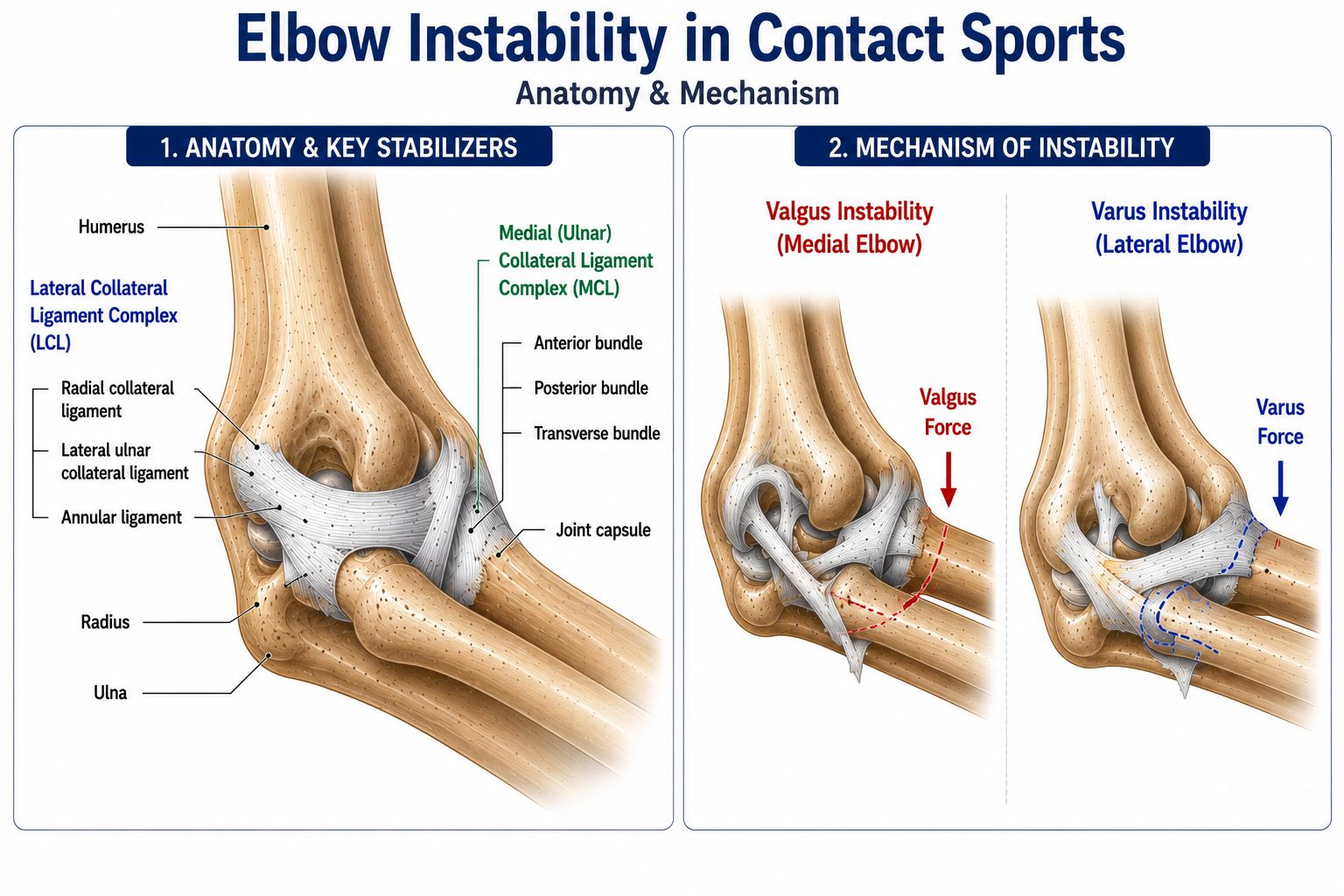
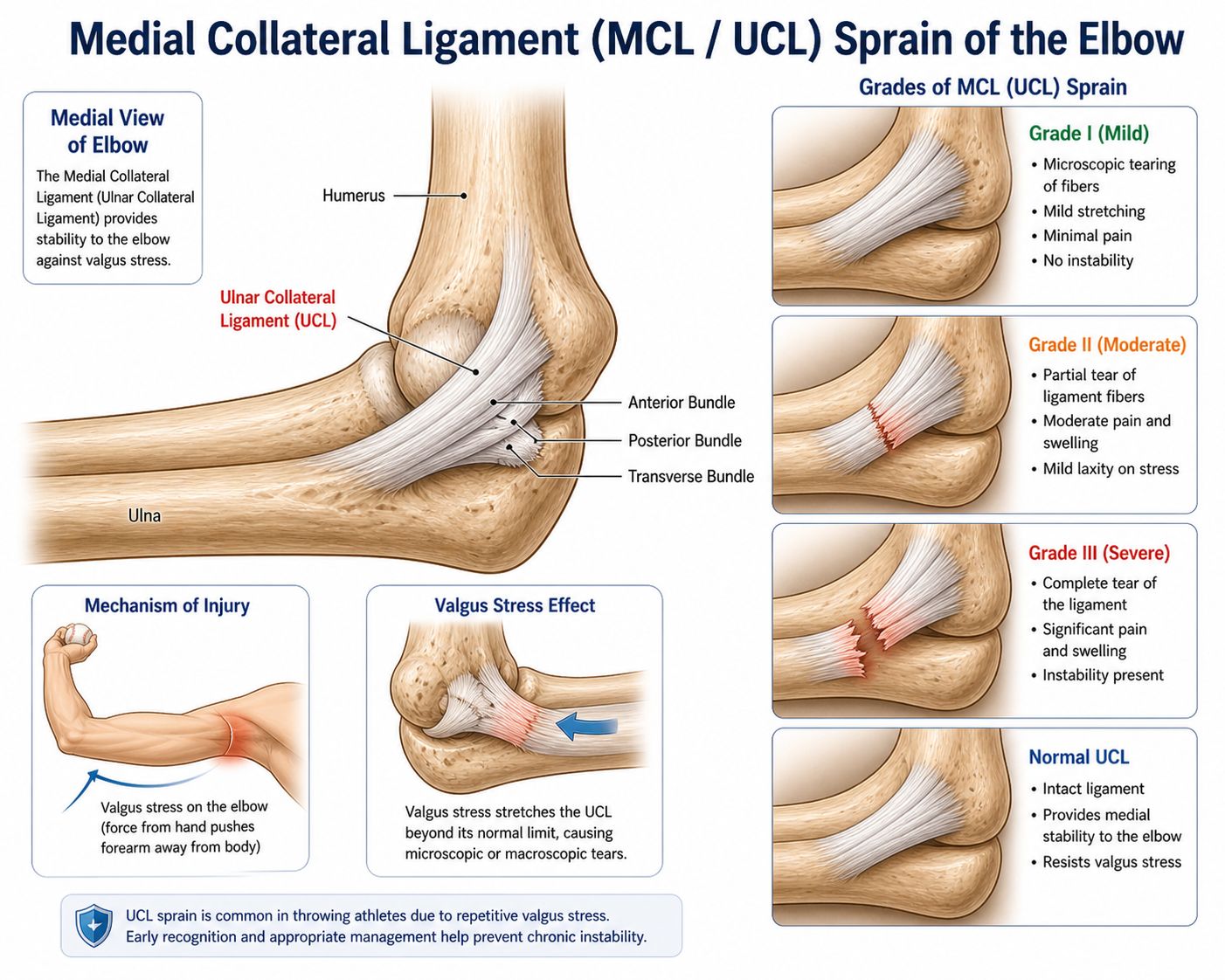
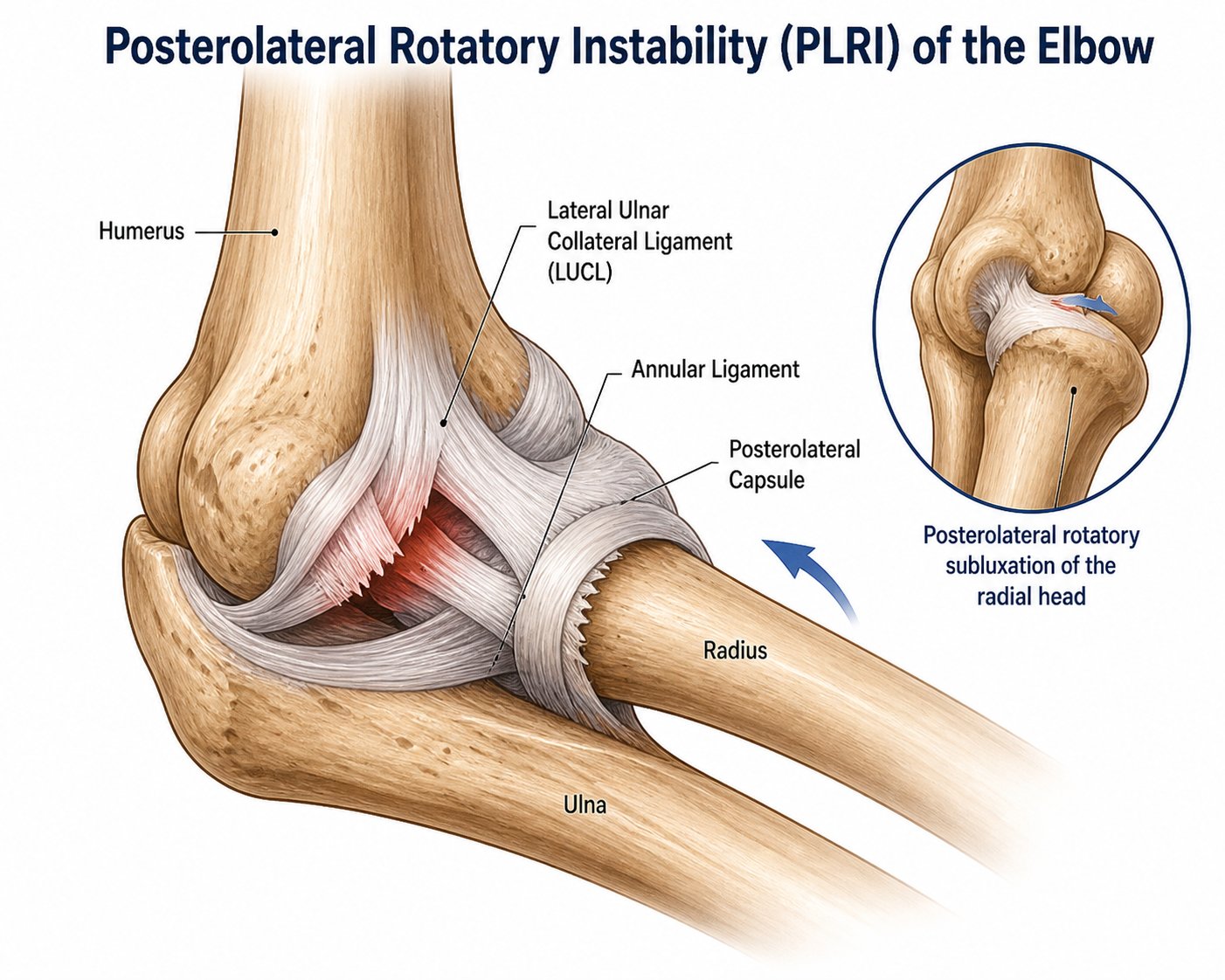
- Sequential ligament failure: LCL fails first, followed by anterior capsule, then MCL/UCL as forearm pivots posteriorly
Symptoms
- Acute severe elbow pain — immediately after injury; patient supports the forearm with the other hand
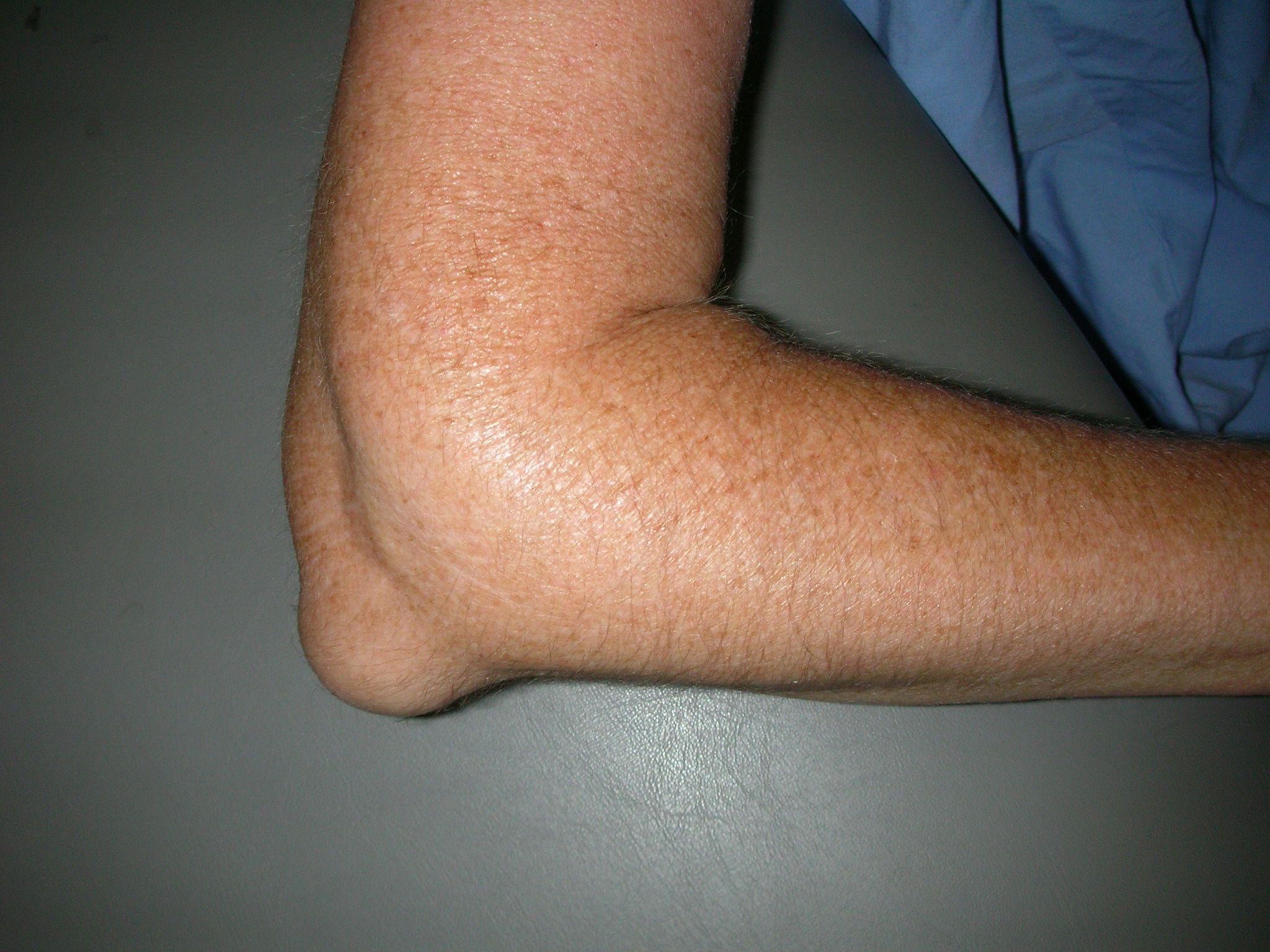
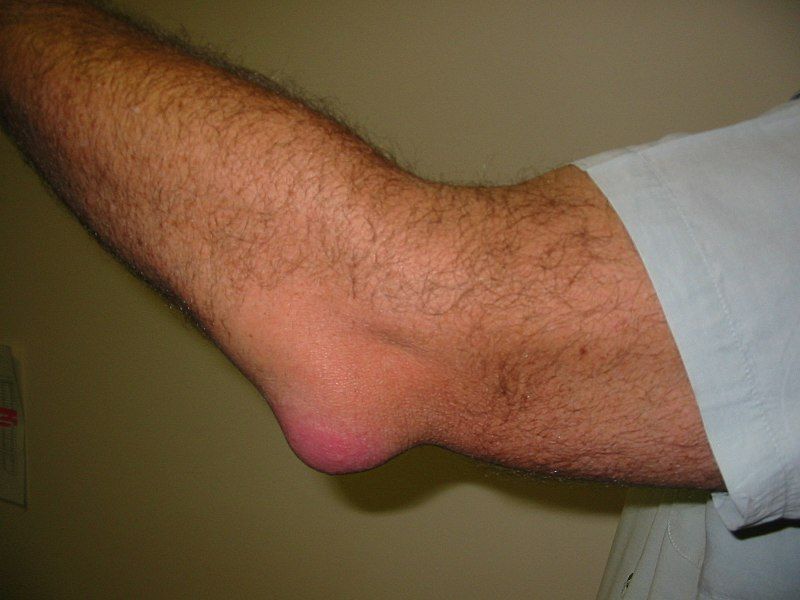
- Visible deformity — elbow shortened and posteriorly angulated; olecranon prominent posteriorly
- Inability to move the elbow — locked in position; extremely painful with any movement
- Rapid swelling and bruising — haemarthrosis within minutes
- Neurovascular changes — AIN most commonly injured; assess thumb and index finger pinch; check radial pulse
- Medial bruising — indicates significant MCL disruption
How is it Diagnosed?
- Clinical examination — document neurovascular status BEFORE any reduction attempt; assess for skin tenting or open injury
- Plain X-rays (AP + lateral, pre-reduction) — confirm direction; look for associated fractures; post-reduction X-ray confirms concentricity
- Post-reduction stability assessment — assess range of stable motion; stable 0–130°: early mobilisation; unstable at <50–60° flexion: consider surgical stabilisation
- CT scan — if post-reduction X-ray shows suspicious fragment or asymmetry; defines associated fractures
Treatment Options
Treatment Type | Details |
Closed Reduction | Under procedural sedation or regional nerve block; forearm supinated, countertraction on humerus, distal traction on forearm, gentle flexion restores reduction; check X-ray immediately |
Post-reduction Assessment | Assess full ROM and stability; fluoroscopic assessment if uncertain; stable: early mobilisation; unstable: surgery |
Hinged Elbow Brace | For stable post-reduction elbow; set 0–130°; protects ligament healing while allowing motion; wean at 6 weeks |
Sling Alone (Selected Cases) | For very stable simple dislocations in compliant patients; sling for comfort 1–2 weeks followed by physiotherapy |
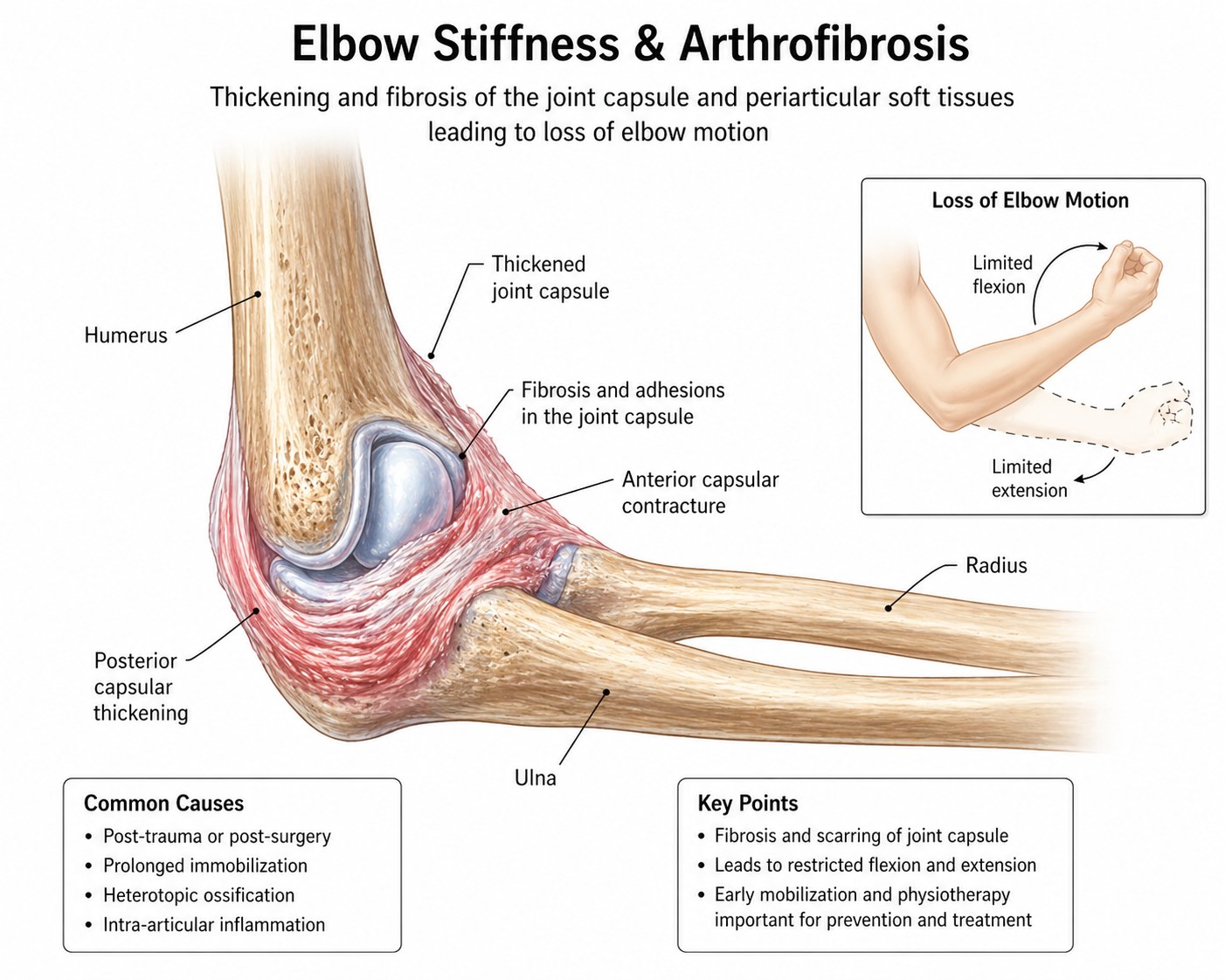
Early Mobilisation | KEY: begin active-assisted elbow motion within 1–2 weeks; prolonged immobilisation significantly increases stiffness risk |
Surgical Stabilisation (Unstable) | LCL ± MCL repair via suture anchors; rarely needed for simple dislocations; consider if unstable at >50° flexion |
Irreducible Dislocation | Open reduction under general anaesthesia if closed reduction fails |
Recovery & Rehabilitation
- Swelling and pain improve significantly within 48–72 hours of reduction
- Physiotherapy: gentle active-assisted motion from week 1–2; full motion targeted by 6 weeks
- Return to work: office work 2–4 weeks; light manual work 6–8 weeks; contact sport 3–4 months
- Stiffness: most common long-term complication; prevented by early mobilisation; rarely needs surgery
- Complete recovery: >90% of patients achieve full or near-full function; medial column injuries have longer recovery
Why choose Dr Senthilvelan?
Elbow dislocation management requires expert assessment of stability after reduction and early, guided mobilisation to prevent the stiffness that complicates prolonged immobilisation. Dr Senthilvelan has extensive experience managing the full spectrum of elbow dislocations — from simple posterior dislocations through to complex fracture-dislocations requiring systematic reconstruction.
Frequently Asked Questions
1. How is an elbow dislocation reduced — is it painful?
Elbow dislocation reduction is performed with procedural sedation (intravenous medication that relaxes muscles and reduces awareness of pain) or under regional nerve block. With adequate sedation, reduction is relatively quick and straightforward — the surgeon applies gentle traction to the forearm while slowly flexing the elbow, allowing the forearm bones to slide back into position with an audible clunk. Post-reduction X-rays confirm correct reduction.
2. Should I have my elbow in a cast after dislocation?
Current evidence strongly supports early mobilisation rather than prolonged immobilisation in a cast. Immobilisation beyond 1–2 weeks significantly increases stiffness risk. A hinged elbow brace, which protects the ligaments while allowing motion within a safe range, is used for 4–6 weeks, with physiotherapy commencing within 1–2 weeks of injury.
3. I reduced my elbow dislocation myself — do I still need to see a doctor?
Yes — absolutely. Assessment by an orthopaedic specialist is essential to: confirm concentric reduction on X-ray (sometimes a fragment or soft tissue is interposed giving an incomplete reduction); assess for associated fractures; assess elbow stability after reduction (which determines whether surgery is needed); and document neurovascular function.
4. I have tingling in my fingers after an elbow dislocation — will it get better?
Nerve injuries with elbow dislocation are usually neuropraxias (stretch injuries) that recover fully within 6–12 weeks. The AIN and ulnar nerve are most frequently affected. Persistent or worsening neurological symptoms beyond 3 months warrant nerve conduction studies and consideration of surgical decompression. In the acute phase, the priority is restoring elbow reduction.
5. Can I return to sport after an elbow dislocation?
Yes — the majority of patients return to sport at their previous level. For non-contact sports, return is typically at 6–12 weeks once full ROM is regained and the elbow is stable and pain-free. For contact sports, return is at 3–4 months when ligament healing is more complete. A protective brace may be recommended during the first competitive season back.